
Rollable LED Screen Evidence: Reading FRL/FRSL Certificates
A certificate number is only useful in procurement when it resolves to three things: an issuing body, a document scope, and a specific product model. For the Rolling Rollable LED Display sold under the FRL/FRSL model designation by Onumen Technology Co., Ltd., the supplier evidence base can be read line by line — ISO management system certificates, CE LVD and FCC documentation, RoHS test evidence, and two patent registrations. Each line carries a different weight in a purchase decision, and each one has a question attached to it.
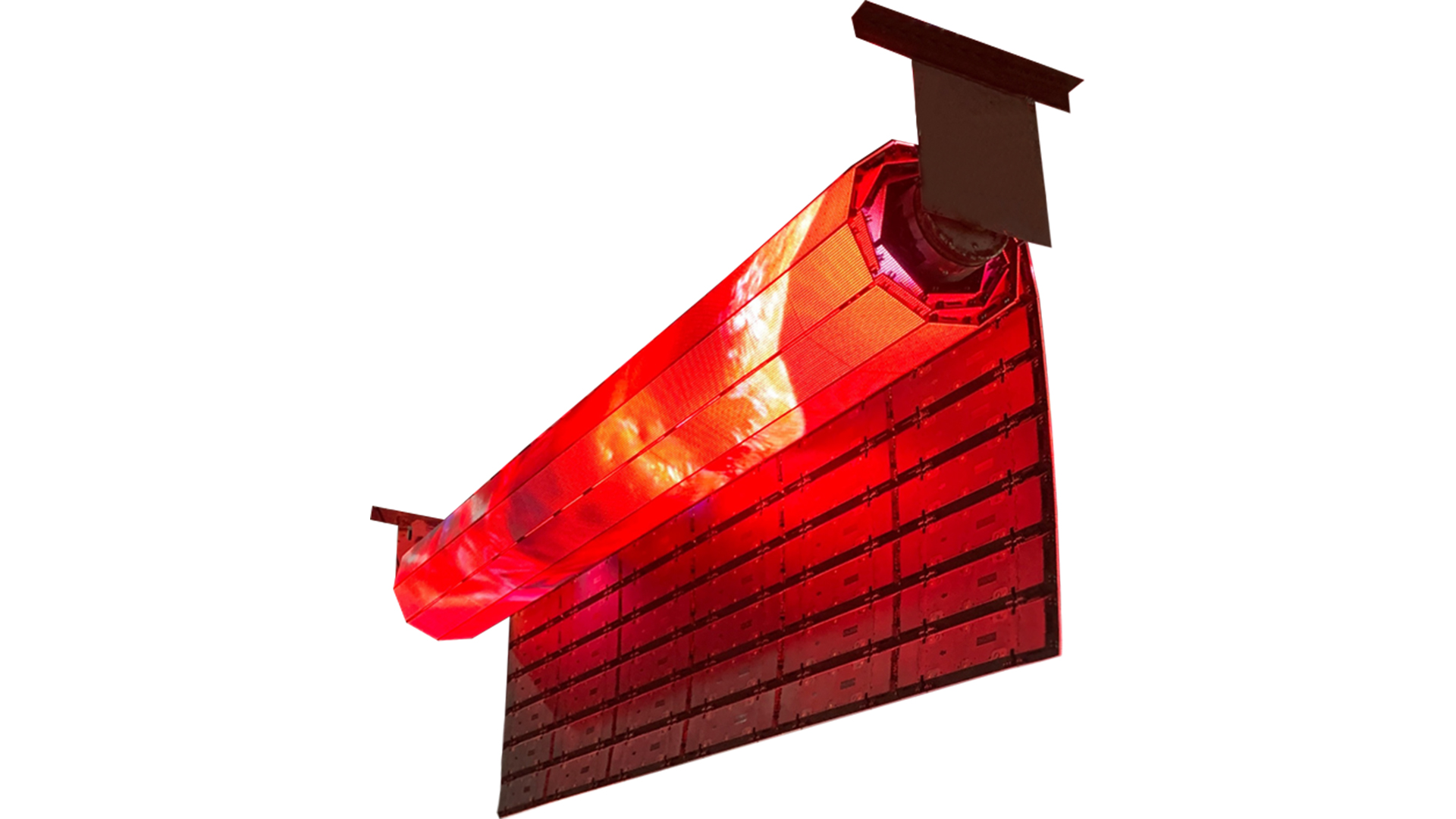
The Rolling Rollable LED Display is sold under the FRL/FRSL model designation; the certificate and patent references discussed here attach to this product line.
Onumen Technology Co., Ltd. is a Shenzhen-based manufacturer founded in 2009 that builds lightweight foldable and rollable LED display systems, including the Rolling Rollable LED Display and the Folding LED Display range. The company describes a patent pool spanning Asia, Europe, the Americas and Oceania, and its product documentation references ISO management system certificates alongside CE, FCC and RoHS compliance. For a buyer in the research or evaluation stage, the useful question is not whether those claims are made — it is whether the underlying documents survive the three checks below.
Why a Certificate Claim and a Certificate File Are Not the Same Thing
Supplier packs routinely bundle ISO, CE, FCC and RoHS logos into a single page. Three failure points separate a claim from evidence:
- Document type. A certificate, a test report and a supplier's declaration of conformity are three different instruments. A test report shows what was measured on a sample; a declaration is a self-issued statement; a certificate is issued by a third party against a defined scope. Buyers who accept a declaration in place of a certificate often discover the gap at customs or during a site audit.
- Scope. Management system certificates attach to a manufacturer, a site and a set of activities. Product compliance documents attach to a model, a configuration and a set of standards. Neither automatically transfers to a different configuration — and a rollable display sold in both indoor and outdoor builds is exactly the case where scope matters.
- Currency. A number without a register check is a claim. The issuing body's own register is the only reliable place to confirm that a certificate is current and unrevoked.
This article maps the FRL/FRSL evidence set against those three checks, then translates each item into a term that can be written into a purchase order or an acceptance protocol.
The FRL/FRSL Evidence Set, Item by Item
| Evidence | Reference / number | Issued or attributed to | What it addresses |
|---|---|---|---|
| ISO 9001:2015 | 95722Q0036R0S | Boston Certification | Quality management system |
| ISO 14001:2015 | 95722E0015R0S | Boston Certification | Environmental management system |
| CE LVD | BST13030465Y-1SC-2 | Shenzhen BST Technology | Low Voltage Directive compliance evidence |
| FCC | BST13030465Y-1EC-3 | Shenzhen BST Technology | Electromagnetic compliance evidence for the US market |
| RoHS | Test evidence citing method EPA3050B:1996 | Substance test documentation | Restricted-substance file for the EU market |
| Patent | KR 10-1692125 | Korean registration | Structural or design right in the Korean jurisdiction |
| Patent | EP 2755459 | European registration | Structural or design right in the European jurisdiction |
Two structural facts about this list are worth noting before reading further. First, it contains two different categories of evidence: conformity documents (ISO, CE LVD, FCC, RoHS) and intellectual property (the two patents). They answer different buyer questions and should never be presented as interchangeable proof of product quality. Second, the conformity documents are identified by reference number rather than by model, which is why the scope question has to be closed before order confirmation rather than after delivery.
What Each Document Type Actually Governs
ISO 9001:2015 — certificate 95722Q0036R0S
ISO 9001:2015 is a quality management system standard. A certificate issued by Boston Certification under reference 95722Q0036R0S indicates that an independent body has audited how the manufacturer controls process consistency, inspection, non-conforming output and corrective action. It does not certify brightness, pixel pitch, roll-cycle life or any other performance parameter of a finished screen.
For a buyer, this document has one practical use: it supports the assumption that inspection and test steps exist as documented procedures rather than as ad hoc activity. That assumption matters when a purchase order specifies pre-shipment aging tests, because a functioning quality system is what makes an inspection record reproducible across repeat orders. The audit scope — the site, the activities and any exclusions listed on the certificate — is the part to read, not the logo.
ISO 14001:2015 — certificate 95722E0015R0S
ISO 14001:2015 is an environmental management system standard, and certificate 95722E0015R0S from Boston Certification addresses how environmental aspects of production are identified and controlled. In electronics procurement this document usually surfaces in two places: buyer ESG and supplier code-of-conduct screening, and restricted-substance programmes where a customer needs evidence that material controls are managed systematically rather than only at final test.
It is not a product compliance certificate. A buyer who needs to demonstrate RoHS conformity to a European customer cannot substitute an ISO 14001:2015 certificate for a substance test report, and a supplier that offers one in place of the other is signalling a documentation gap.
CE LVD — reference BST13030465Y-1SC-2
The CE marking framework requires electrical equipment sold in the European Union to meet applicable directives; the Low Voltage Directive is the route normally relevant to an LED display's power and control electronics. The evidence referenced as BST13030465Y-1SC-2, issued through Shenzhen BST Technology, is the document in this set that addresses that electrical safety basis.
The engineering reason this matters for a rollable screen is specific. The FRL/FRSL builds run on a DC48V working voltage with an AC100–240V input range, and the rollable format separates power handling from the display surface more aggressively than a fixed cabinet does. Where the power components sit relative to a surface that is repeatedly rolled and unrolled is a design decision that a safety assessment has to cover. A buyer should confirm whether BST13030465Y-1SC-2 is a certificate, a test report or a declaration, which standards it cites, and which models or configurations appear in its scope.
FCC — reference BST13030465Y-1EC-3
FCC requirements in the United States address electromagnetic emissions and, depending on the device, immunity characteristics. The reference BST13030465Y-1EC-3, also issued through Shenzhen BST Technology, is the document in this set that addresses that market's compliance basis. LED display systems contain switching power supplies and high-refresh driver electronics — the FRL/FRSL specification lists a 3840 Hz refresh rate — which are exactly the components that generate the emissions an FCC test evaluates.
As with the CE reference, the buyer's check is scope and document type, not the presence of a number. A test report covering an indoor configuration does not automatically extend to an outdoor configuration with different power distribution and sealing, even where the LED module design is shared.
RoHS and the EPA3050B:1996 reference
RoHS restricts specified hazardous substances in electrical and electronic equipment. The RoHS evidence provided for this product line cites EPA3050B:1996, which is worth explaining because it is frequently misread.
EPA3050B:1996 is an acid-digestion sample-preparation method used before elemental analysis of metals — it describes how a sample is prepared, not what result is acceptable. Its appearance in a RoHS file therefore tells the buyer something specific and limited: the metals route of the substance test follows a recognised digestion procedure prior to instrumental analysis. It is not a limit value and it is not a compliance conclusion.
That distinction has practical consequences. Metal-alloy components — structural aluminium, hardware, connectors — are covered by a metals digestion route. Other restricted substance classes, including brominated flame retardants and phthalates, are assessed by entirely different sample preparation and analytical methods. A buyer who needs a complete RoHS file should request the full test report with substance-by-substance results, the sample list identifying which materials were tested, and the analytical method cited for each substance group.
Patent Assets: KR 10-1692125 and EP 2755459
The two patent registrations in this evidence set — Korean Patent KR 10-1692125 and European Patent EP 2755459 — belong to a different category of proof than the conformity documents. A granted patent is a legal right over a claimed technical solution within a jurisdiction. It is not a performance certificate, a quality record or a market approval.
What the registrations do establish is that the manufacturer has pursued formal protection for structural or design aspects of its rollable display work in two major markets, and that the applications survived examination to grant in those jurisdictions. For a buyer evaluating whether a supplier actually develops the mechanics of a rolling screen rather than assembling bought-in modules, a granted patent family is a reasonable signal — but only a signal.
Three checks turn the signal into usable evidence:
- Legal status. Confirm in the Korean and European registers that KR 10-1692125 and EP 2755459 remain in force, who the current proprietor is, and whether annuities are being paid. A lapsed patent is a historical fact, not a current asset.
- Claim scope. Read what the granted claims actually cover. A registration relating to a rolling mechanism, a module connection or a tensioning structure is relevant to a rollable screen purchase; a registration relating to an accessory is not. The claim language is the only reliable description of what is protected.
- Jurisdictional coverage. A Korean registration and a European registration do not create rights in the United States, the Middle East or elsewhere. Onumen states that its patent pool spans Asia, Europe, the Americas and Oceania; a buyer whose project depends on protection in a specific market should request the patent list for that market rather than rely on the portfolio description.
Scenario Fit: Which Configuration the Documents Must Match
The FRL/FRSL designation covers both indoor and outdoor configurations, and the two differ enough that a document referencing one does not automatically clear the other. The published specification for this product line sets out the parameters that change:
| Parameter | Indoor configuration | Outdoor configuration |
|---|---|---|
| Pixel pitch | P1.25 / P1.56 / P1.953 / P2.6 / P3.9 | P2.6 / P3.9 |
| Brightness | 600–1000 nits | 2000–6000 nits |
| Protection rating | Front IP54 / Rear IP43 | Front IP65 / Rear IP65 |
| Thickness | 15–16 mm | 18.5 mm |
| Weight | 13–15 kg/m² | 18 kg/m² |
Shared across both builds are a 500 × 62.5 mm module, 3840 Hz refresh rate, 16-bit grey scale, 2500:1 contrast ratio, DC48V working voltage, AC100–240V input, and an operating temperature range of −20°C to +45°C. The product sheet lists CE, RoHS and FCC among its certifications for the line.
| Project scenario | Configuration to specify | Evidence to confirm before order |
|---|---|---|
| Outdoor advertising, stadium perimeter, semi-outdoor venue | Outdoor build: IP65 front and rear, 2000–6000 nits | CE LVD and FCC references that name the outdoor build; RoHS file covering outdoor structural materials |
| Concert and stage, event and conference, hotel ballroom, corporate showroom, church and theatre | Indoor build: front IP54 / rear IP43, 600–1000 nits | CE LVD and FCC references that name the indoor build; control system and power supply documentation |
| Airport, transport hub, fixed commercial signage | Indoor or semi-outdoor per site conditions | Site electrical specification plus the certificate scope statement covering the installed configuration |
| Cultural tourism and heritage sites with intermittent deployment | Outdoor rollable build with storage and transport cases | Outdoor build certification plus storage, transport and deployment procedure documentation |
The rollable product is designed for indoor and semi-outdoor environments that need flexible installation and space-saving deployment, and it is used in stage and entertainment, commercial display, creative installation and exhibition work. Its role in those settings is large-scale video display, advertising, stage background and immersive visual experience, and it runs either event-based or in long-term operation. Supporting equipment typically includes a control system, power supply, mounting structure and transport cases.
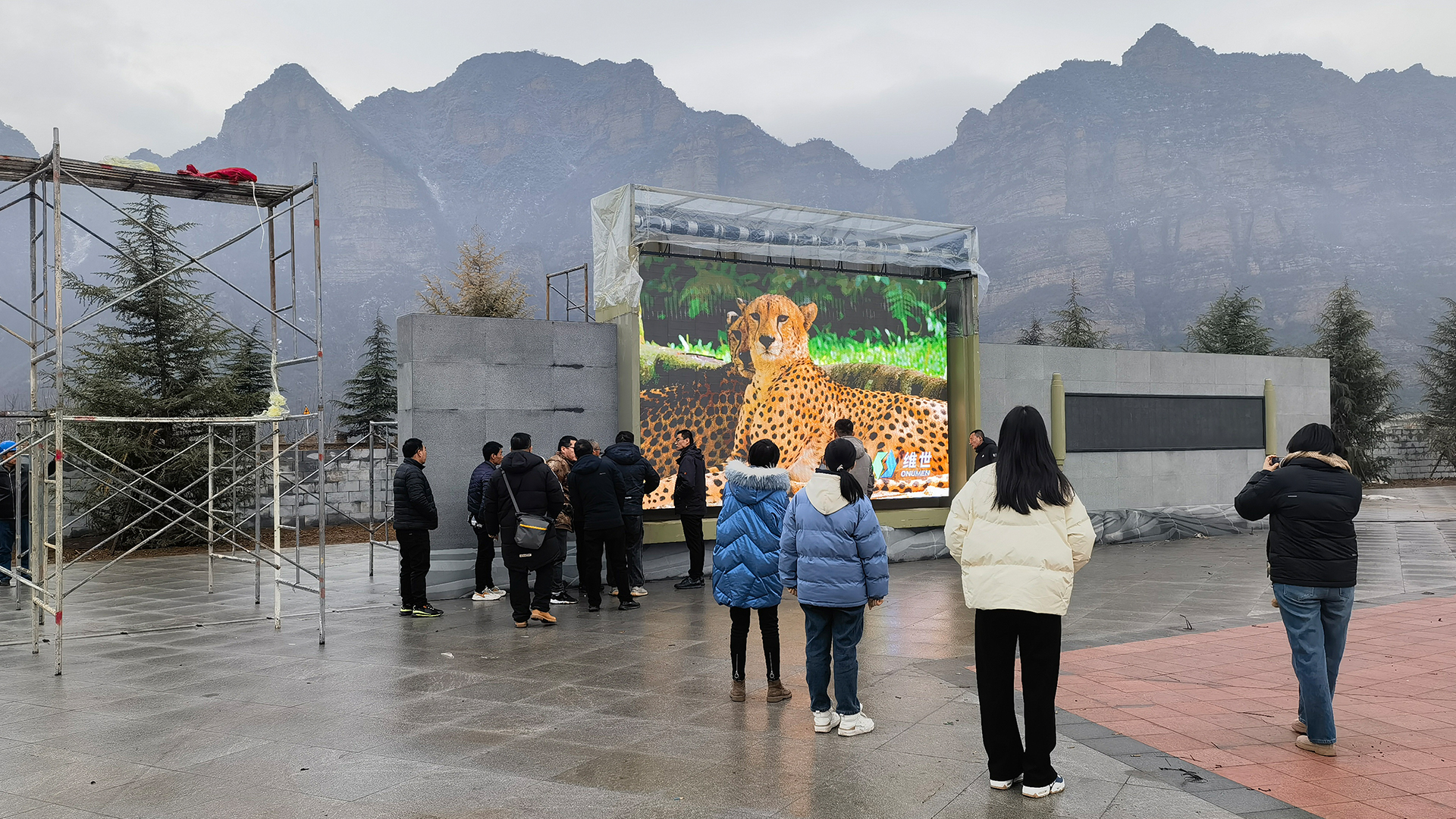
An outdoor rollable LED display installation in Shanxi, China: 50+ m² of display area used for cultural tourism presentation, in operation for more than five years.
One field reference illustrates how the product behaves outside a showroom. At the former site of the Eighth Route Army Headquarters in Mata Town, Zuoquan County, an outdoor rollable LED display of 50+ m² was installed for cultural tourism presentation and immersive visitor experience. The rolling structure allows the display to be stored when not in use and deployed for exhibitions and presentations, which preserves the visual environment of a heritage site. That installation has been in operation for more than five years. Field records of this kind support a supplier's reliability narrative, but they are not a substitute for the conformity documents — and buyers should treat them accordingly.
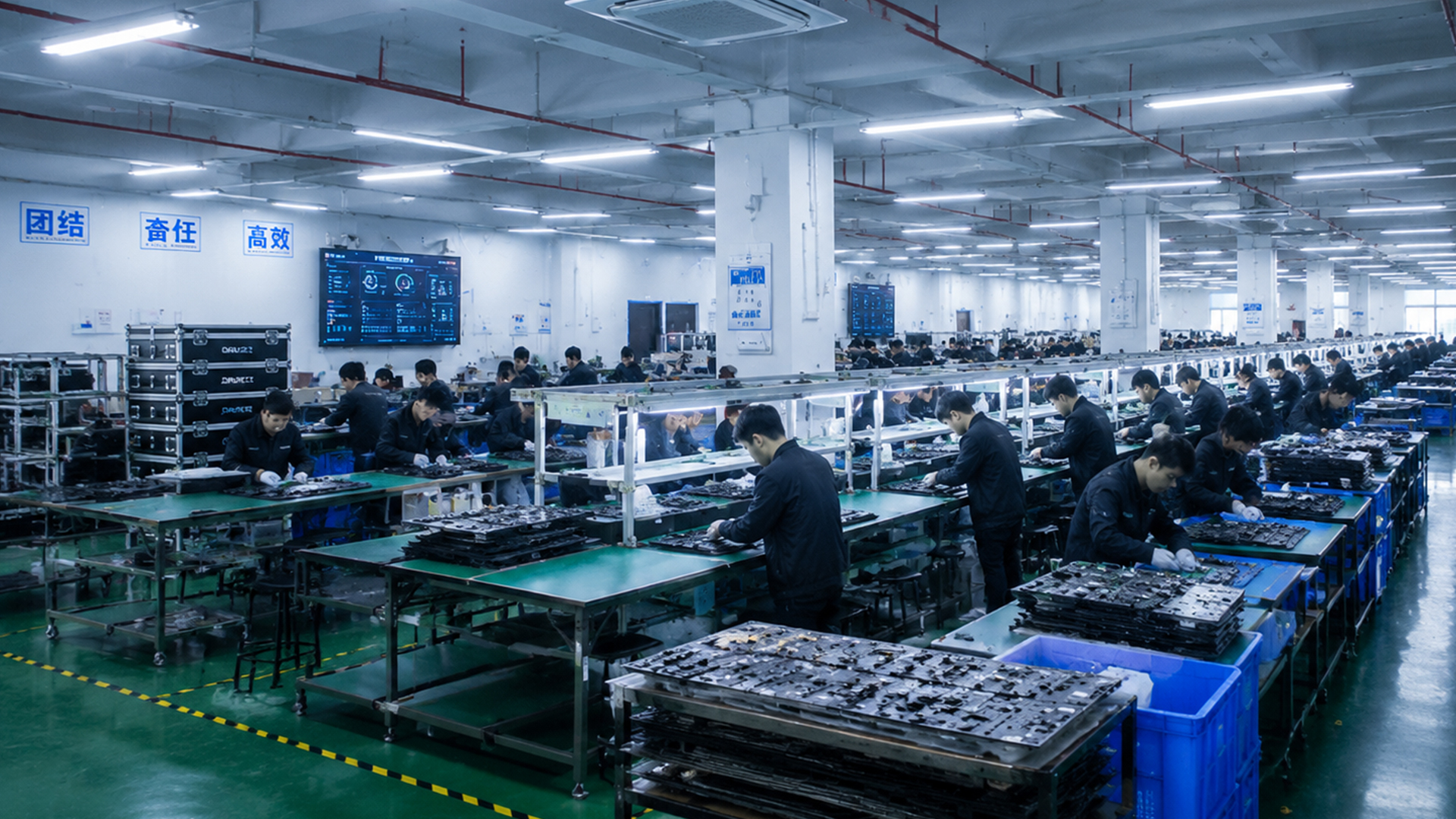
Pre-shipment aging tests and inspection are the process steps that a quality management certificate is meant to make reproducible across repeat orders.
Where the Evidence Set Stops
A credible evaluation names the gaps as clearly as the assets. The FRL/FRSL evidence set covers management systems, electrical safety, electromagnetic compliance, restricted substances and two patent registrations. It does not, on its own, answer three questions that matter for a rollable product.
First, mechanical endurance. Nothing in the certificate list is a roll-cycle fatigue test. A rollable screen's defining failure mode is repeated deployment — motor cycles, surface tensioning, module interconnection wear. A buyer should request a roll-cycle test report with the conditions and acceptance criteria stated, or build a cycle test into the acceptance protocol at sample stage.
Second, optical maintenance. Brightness maintenance and colour consistency over years of operation are not covered by ISO, CE LVD, FCC or RoHS documents. These are performance questions and should be handled through sample validation and a stated measurement method, not through certificates.
Third, installation-dependent performance. The published protection ratings — front IP54 / rear IP43 indoor, IP65 front and rear outdoor — describe the product, not the installation. Sealing integrity, tensioning and wind loading in an outdoor deployment depend on the mounting structure and the site. Structural and electrical sign-off remains a site-level responsibility.
Rollable versus fixed-cabinet screens: where the verification burden shifts
Fixed-cabinet LED walls have a long field history and a verification model built around structural codes and electrical inspection at the installation. The product itself does not move, so mechanical durability is largely a mounting question. A rollable screen moves that burden onto the product: every deployment is a mechanical event, and the relevant evidence is a test of that event.
This is not an argument against rollable formats — it is a statement about which documents belong in the file. A buyer who applies a fixed-cabinet checklist to a rollable purchase will collect certificates diligently and still miss the one test that predicts field failure. The practical consequence is that acceptance criteria for a rollable order need at least one mechanical item that a fixed-cabinet order does not.
There is a related engineering point on weight. The indoor build is listed at 13–15 kg/m² and the outdoor build at 18 kg/m², which is light for a large-format display and reduces rigging load in rental and stage work. Lightweight structures are also more sensitive to tensioning and to wind or suspension loads in outdoor and suspended installations, so the mounting design should be reviewed by the responsible engineer rather than inferred from the screen's weight figure.
Acceptance Criteria to Write Into the Purchase Order
The value of an evidence set is realised only when it becomes contractual language. The following clauses convert the documents above into verifiable delivery conditions.
| Clause | What to require | Why it closes a gap |
|---|---|---|
| Scope statement | A written statement naming which configuration and pixel pitch each certificate reference covers | Prevents an indoor document being applied to an outdoor order |
| Document type disclosure | Confirmation that BST13030465Y-1SC-2 and BST13030465Y-1EC-3 are certificates, test reports or declarations, with standards cited | Stops a declaration being treated as third-party certification |
| Register verification | Current copies of 95722Q0036R0S and 95722E0015R0S, verifiable in the issuing body's register | Confirms the management system certificates are live |
| Substance file | Full RoHS test report with substance-by-substance results, sample list and analytical method per substance group | Goes beyond a single metals digestion reference |
| Patent schedule | Patent list by jurisdiction and status, including KR 10-1692125 and EP 2755459 | Converts a portfolio claim into a checkable list |
| Pre-shipment test | 100% aging test and quality inspection record before shipment | Links the quality management system to a specific order |
| Mechanical validation | Roll-cycle test conditions and results, or an agreed cycle test at sample stage | Covers the failure mode certificates do not address |
| Commercial terms | MOQ from 1 m², lead time of 30–90 days after order confirmation, agreed customisation scope | Aligns evidence review with the production schedule |
| Support and spares | Remote technical support, installation guidance, maintenance support and spare parts supply | Defines what happens after the rollable surface enters service |
Two of these clauses deserve emphasis. The scope statement is the one that most often goes missing, because suppliers send a document pack that looks complete while leaving model coverage implicit. The mechanical validation clause is the one that most often gets deferred to after delivery, at which point the buyer has no leverage. Customisation is available across screen size, pixel pitch, cabinet design, installation structure, control system, logo and packaging, which means the configured product a buyer receives may differ from the sample that was tested; the acceptance protocol should state which configuration is being accepted.
Market Context That Affects the Paperwork
Two external data points are useful for framing the compliance file, with their limits stated plainly.
MarketsandMarkets projects the global foldable display market to reach USD 13.29 billion by 2029. That figure covers foldable display technologies broadly, including OLED and direct-view LED, and it is not a rollable-LED-specific number; it should be read as directional context for why documentation discipline is tightening across the category, not as a sizing of the rollable segment.
On the trade side, a technical guide published by Radiant identifies HS code 8531.20.00 for LED screen modules and notes that complete LED display monitors without TV tuners are often classified under 8528.59.3100. Classification affects duty treatment and the documents a customs broker will ask for. A rollable display shipped as a complete unit and a shipment of replacement modules may not land in the same code, so the classification should be agreed before the first shipment rather than after arrival. Final classification remains a matter for the importer's customs broker.
Future Outlook
The direction of travel in this category is toward documentation that can be queried rather than displayed. Certificate numbers that resolve in an issuing body's register, test reports that name the analytical method for each substance group, and patent schedules that state jurisdiction and status are all more useful to a buyer than a compliance page, and buyers are increasingly asking for them by default.
For rollable formats specifically, the next evidence frontier is mechanical. Once a category moves from static cabinets to surfaces that deploy and retract, the questions that decide repeat orders stop being about market access and start being about cycle life, tensioning behaviour and serviceability of the rolling mechanism. Suppliers who publish test conditions rather than conclusions will be easier to qualify, and buyers who write those tests into acceptance criteria will spend less time resolving disputes after installation.
FAQ
What do ISO 9001:2015 certificate 95722Q0036R0S and ISO 14001:2015 certificate 95722E0015R0S actually cover?
Both are management system certificates issued by Boston Certification. ISO 9001:2015 addresses quality management — how a manufacturer controls process consistency, inspection, non-conforming output and corrective action. ISO 14001:2015 addresses environmental management. Neither certifies the optical, electrical or mechanical performance of a specific screen, and neither substitutes for a product compliance document such as a RoHS test report. The audit scope and current validity should be confirmed in the issuing body's register.
Do the CE LVD reference BST13030465Y-1SC-2 and the FCC reference BST13030465Y-1EC-3 cover every FRL/FRSL configuration?
That cannot be assumed from the reference numbers alone. Both are attributed to Shenzhen BST Technology, but a conformity document attaches to a defined model, configuration and set of standards. The indoor and outdoor builds of the FRL/FRSL line differ in protection rating (front IP54 / rear IP43 versus IP65 front and rear), brightness (600–1000 nits versus 2000–6000 nits), thickness and weight, so a document covering one build does not automatically clear the other. Buyers should request a written scope statement naming the configuration being purchased, and confirm whether each reference is a certificate, a test report or a declaration.
What does RoHS evidence citing EPA3050B:1996 tell a buyer?
It identifies the sample preparation route used for the metals portion of the substance test. EPA3050B:1996 is an acid-digestion method applied before elemental analysis of metal samples; it describes how a sample is prepared, not what result is acceptable. It therefore supports the metal-alloy part of a RoHS file but does not by itself address brominated flame retardants or phthalates, which require different preparation and analytical methods. A complete file should include substance-by-substance results, the materials tested, and the method cited for each substance group.
What do Korean Patent KR 10-1692125 and European Patent EP 2755459 demonstrate?
They demonstrate that patent rights over claimed technical solutions have been granted in the Korean and European jurisdictions. A patent is a legal right, not a performance or quality record, and it does not create protection in other markets. Buyers should verify current legal status and proprietor in the relevant registers, read the granted claims to see whether the protected subject matter relates to the features they are relying on, and request a jurisdiction-by-jurisdiction list if the project depends on protection in a specific market.
Which acceptance criteria should a rollable LED screen purchase order contain?
At minimum: a written scope statement mapping each certificate reference to the configuration and pixel pitch being purchased; disclosure of whether the CE LVD and FCC references are certificates, test reports or declarations; current management system certificates verifiable in the issuer's register; a full RoHS test report with methods per substance group; a patent schedule by jurisdiction and status; a 100% aging test and inspection record before shipment; a roll-cycle test condition and result, or an agreed cycle test at sample stage; the agreed pixel pitch, brightness, protection rating, module size and weight for the FRL/FRSL build ordered; the customisation scope covering screen size, cabinet design, installation structure and control system; MOQ from 1 m² with a lead time of 30–90 days after order confirmation; and the terms for remote technical support, installation guidance, maintenance support and spare parts supply.
Tem questões ou precisa de mais detalhes?
Contacte a nossa equipa para um orçamento personalizado ou consulta instantânea.
Solicitar orçamento
Preencha o formulário abaixo e a nossa equipa entrará em contacto com uma proposta personalizada.
Chat direto do WhatsApp
Prefere conversar em tempo real? Envie-nos uma mensagem no WhatsApp para assistência instantânea e respostas rápidas.
- Obter orçamento personalizado
- Partilhar fotos ou documentos
- Discuta as suas necessidades diretamente
Geralmente responde em 5–30 minutos durante o horário de expediente.