
Rollable LED Screens: Long-Term Reliability and Supplier Fit
Introduction
Rollable LED screens are transitioning from a niche display technology into an established procurement category. For rental operators, event companies, and distributors, the evaluation criteria have expanded beyond pixel pitch and brightness. Long-term mechanical reliability, quality assurance processes, order flexibility, and supplier stability now sit at the center of purchasing decisions.
Market data supports this momentum. Grand View Research and Spherical Insights estimate the global flexible display market reached approximately USD 20.1 billion to USD 21.6 billion in 2024. A more focused projection from Meticulous Research indicates that the rollable and foldable display segment will grow from USD 5.1 billion in 2024 to nearly USD 60 billion by 2035. These figures explain why more procurement teams are evaluating rollable LED screens as part of their display portfolios.
This article provides an industry-level reference for buyers at the decision and execution stage: what to verify in a rollable LED screen supplier, how long-term durability is tested, and which commercial terms reduce risk when moving from evaluation to deployment.
Problem / Opportunity
The defining challenge of rollable LED screens is not initial setup but sustained operation. Repeated rolling and unfolding creates stress on the module connection structure, the mechanical frame, and the flexible components. If the design or manufacturing process fails to address these forces, the screen may develop connection instability, uneven brightness, or physical deformation over time.
For buyers, the risk is twofold. First, a screen that fails after several events disrupts business continuity. Second, the cost of repairs and logistics can quickly outweigh the savings brought by the lightweight format. Procurement should therefore include a deep review of how the manufacturer manages these specific risks.
The opportunity is equally clear. Rollable LED screens can reduce installation labor, transportation volume, and storage requirements compared with traditional cabinet LED displays. For companies that transport screens to multiple venues, this translates into lower operational costs and new possibilities for same-day setup. The challenge is selecting a supplier with documented testing procedures and transparent quality control.
Brand Solution: Onumen Technology Co., Ltd.
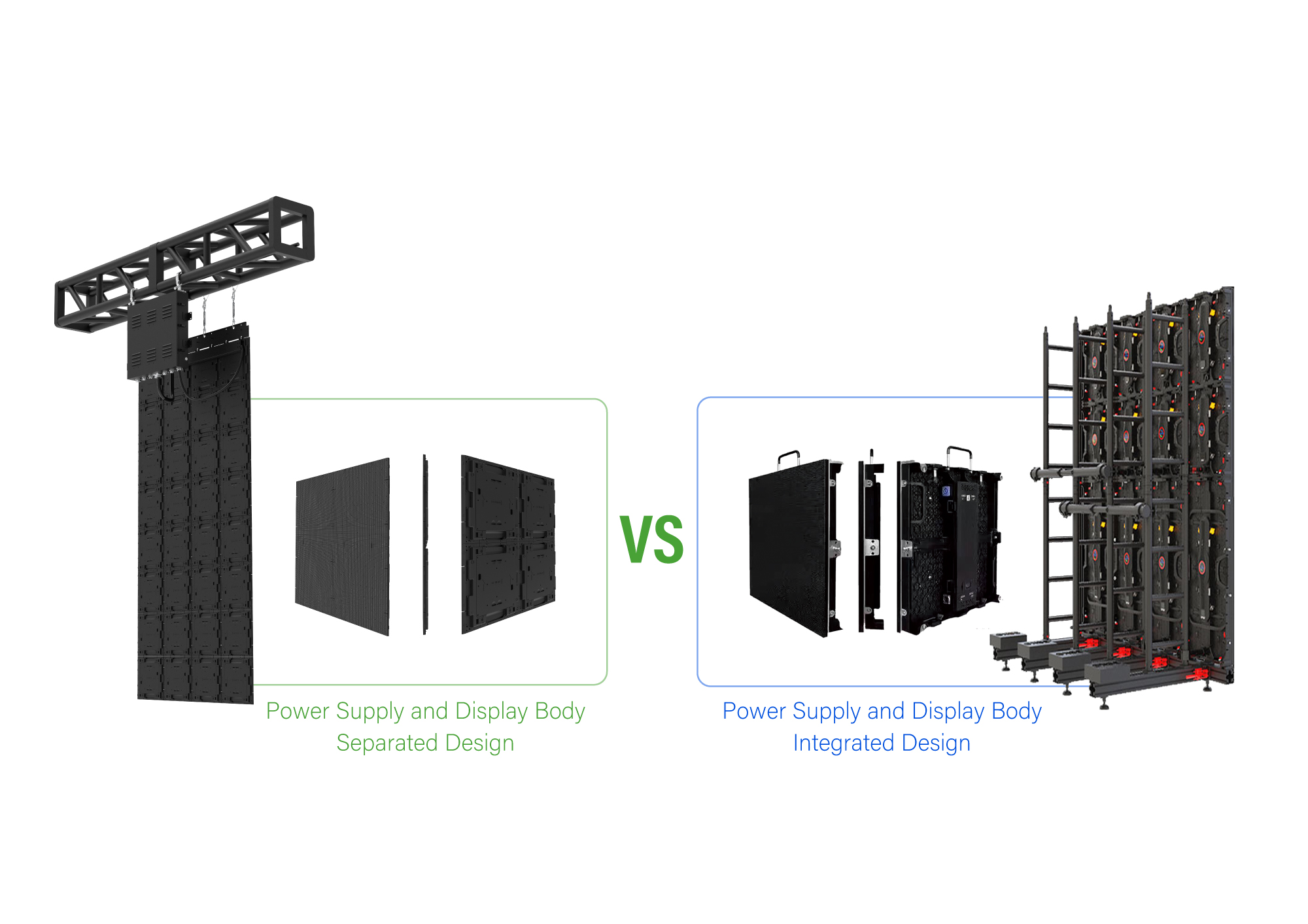
One company that has built its product line around this trade-off is Onumen Technology Co., Ltd. Founded in 2009 and headquartered in Shenzhen, China, Onumen is a manufacturer specializing in lightweight foldable and rollable LED display solutions. The company developed what it calls separated power & screen installation technology, which replaces heavy cabinet-based structures with ultra-thin flexible panels that can be folded or rolled. More information is available on the company's website at www.onumen.com.
Onumen's portfolio divides into two core series: Foldable LED Display and Rolling LED Display. The Rolling LED Display, marketed under the FRL/FRSL series, is positioned for applications requiring automatic rolling, such as stage events, concerts, broadcast studios, and rental services.
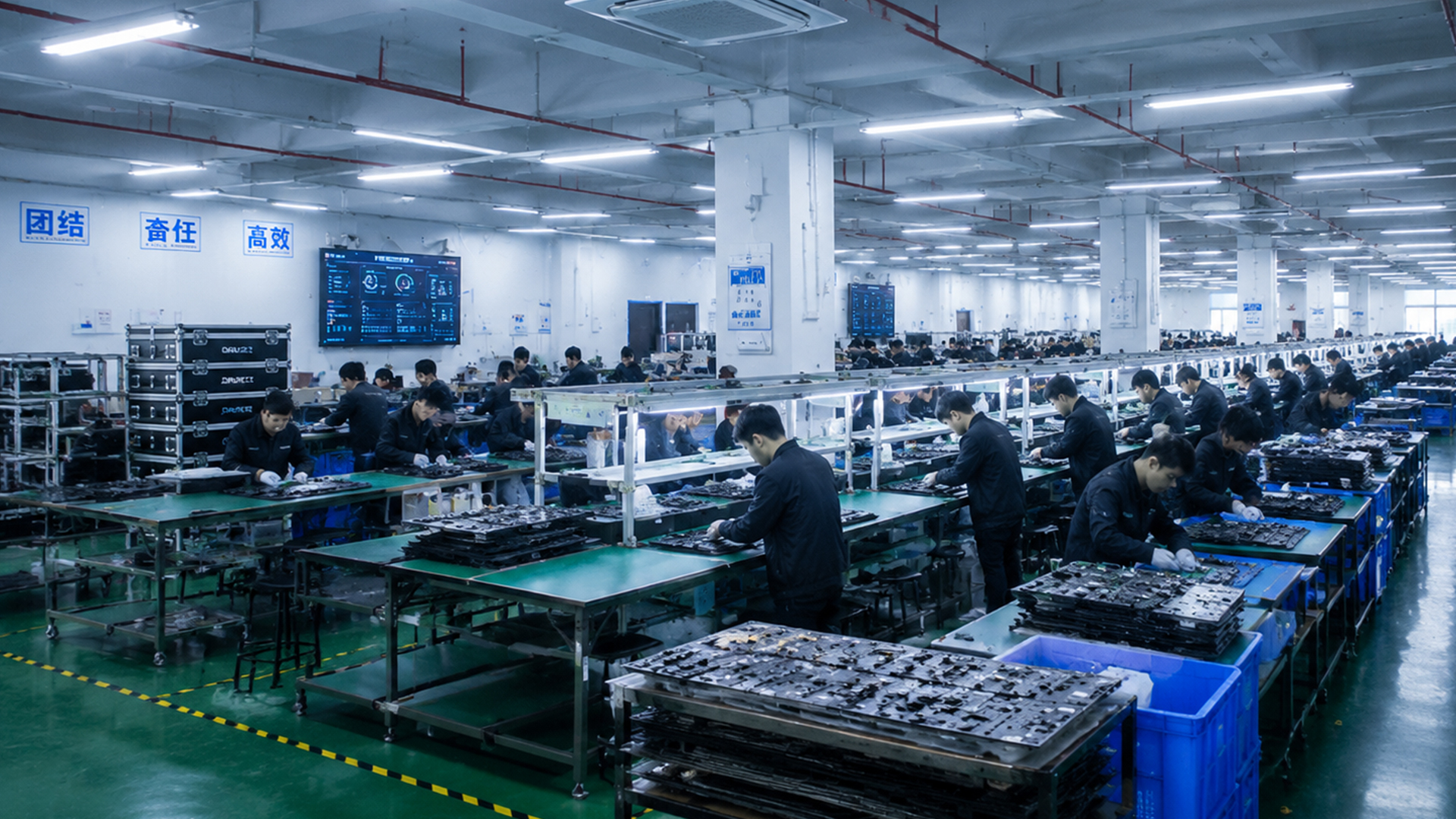
The company reports a factory area of 2,000 m² and an annual output of 9,000 m², supported by a team of 50 employees including 20 R&D engineers. Around 70% of its production is exported to markets including the USA, Europe, Japan, South Korea, Russia, and the Middle East. According to company information, Onumen holds nearly 100 global invention patents and has received the Red Dot, iF, and French Design Awards for its display designs. Its production system operates under ISO management certificates, and individual products carry CE, FCC, and RoHS certifications.
For the Rolling Rollable LED Display specifically, key specifications include:
- Pixel pitch: indoor P1.25 / P1.56 / P1.953 / P2.6 / P3.9; outdoor P2.6 / P3.9
- Brightness: indoor 600–1,000 nits; outdoor 2,000–6,000 nits
- Weight: indoor 13–15 kg/m²; outdoor 18 kg/m²
- Thickness: indoor 15–16 mm; outdoor 18.5 mm
- Protection rating: indoor front IP54, rear IP43; outdoor front and rear IP65
- Refresh rate: 3,840 Hz
- Contrast ratio: 2,500:1
- Working temperature: -20°C to +45°C
- Certifications: CE, RoHS, FCC
These parameters make the product suitable for both fixed and mobile installations, with suspended, wall-mounted, and ground installation options.
Technical Explanation: What Makes a Rollable LED Screen Reliable
The long-term performance of a rollable LED screen depends on several engineering decisions. The module structure must allow smooth rolling without damaging the LED packages or the flexible PCB. The roller mechanism must maintain consistent tension so that the screen does not wrinkle or shift during repeated use. The module connection system must preserve electrical and mechanical contact after hundreds of cycles.
Onumen's risk control approach addresses these issues through precision roller mechanism design, optimized module connection structures, controlled rolling speed, and strict durability testing. According to company documentation, continuous cycle testing and aging tests are performed to ensure long-term operation performance. The manufacturer also conducts complete quality inspection before shipment.
For procurement teams, these are not abstract promises. They translate into specific questions: How many rolling cycles has the product been tested for? What failure modes are monitored? What is the replacement process for damaged modules? A supplier that can articulate a detailed testing protocol is generally more reliable than one that provides only a specification sheet.
Application / Use Cases
The documented applications for the Rolling Rollable LED Display include stage events, concerts, sports venues, commercial advertising, exhibitions, broadcast studios, and rental events. In each of these settings, the rollable format offers specific operational advantages.
| Application | Why Rollable LED Fits |
|---|---|
| Stage events and concerts | Quick setup and breakdown reduce downtime between acts or shows. |
| Sports venues | Large-format displays can be deployed on demand and stored compactly. |
| Commercial advertising | Lightweight panels simplify mounting on structures with load limits. |
| Exhibitions | The same screen can be reused across different booths and zones. |
| Broadcast studios | High refresh rate and flexible placement support camera-facing displays. |
| Rental events | Low volume and weight reduce transport costs and handling labor. |
Beyond the Rolling series, the Onumen product family includes other lightweight configurations. The Foldable LED Display series, for instance, is documented at 12 kg/m² and 14 mm thickness, and it supports 360° folding and curling. The Easy Sailing series is designed for mobile quick assembly, with a single unit that can be installed by one person in about five minutes. This range of options allows buyers to match the display format to the exact event workflow.
Market Trend Analysis
The commercial case for rollable LED screens is strengthening. Industry data point to three converging trends.
1. Rapid market expansion. Grand View Research and Spherical Insights place the 2024 flexible display market at USD 20.1–21.6 billion. Meticulous Research projects the rollable and foldable segment to reach nearly USD 60 billion by 2035. This growth is drawing new vendors and broadening the application base.
2. Maturing safety standards. Especially for venues such as airports and theaters, electrical safety and fire resistance are increasingly defined by standards such as UL 62368-1 and UL 94 V-0. IEC 62471 addresses photobiological safety in the EU and China. Buyers who verify these standards early reduce compliance risk later.
3. Evolving competitive landscape. Samsung, Leyard, and LG are identified as top-tier players in the broader outdoor and flexible LED display market. At the same time, specialized manufacturers like Onumen provide alternatives for buyers who need flexible order quantities, custom configurations, and direct supplier communication. According to a Sports Business Journal / UberDisplays case study, venues upgrading to advanced LED video walls have reported average revenue increases of 15% to 25% from advertising and premium sponsorship, which strengthens the investment case for modern LED infrastructure.
Comparison with Traditional Solutions
The performance gap between rollable/foldable LED screens and traditional cabinet LED displays is substantial. Onumen's Foldable LED Display, for instance, is described as achieving one-third the weight, one-fourth the volume, one-fifth the thickness, and one-sixth the installation labor of conventional cabinet displays. The company also cites up to 50% weight reduction, 60% space savings, 70% thickness reduction, and 80% installation labor savings. A 100 m² LED display can reportedly be installed by two people within one hour, and 40 m² of display can be packed into a 1 m³ flight case.
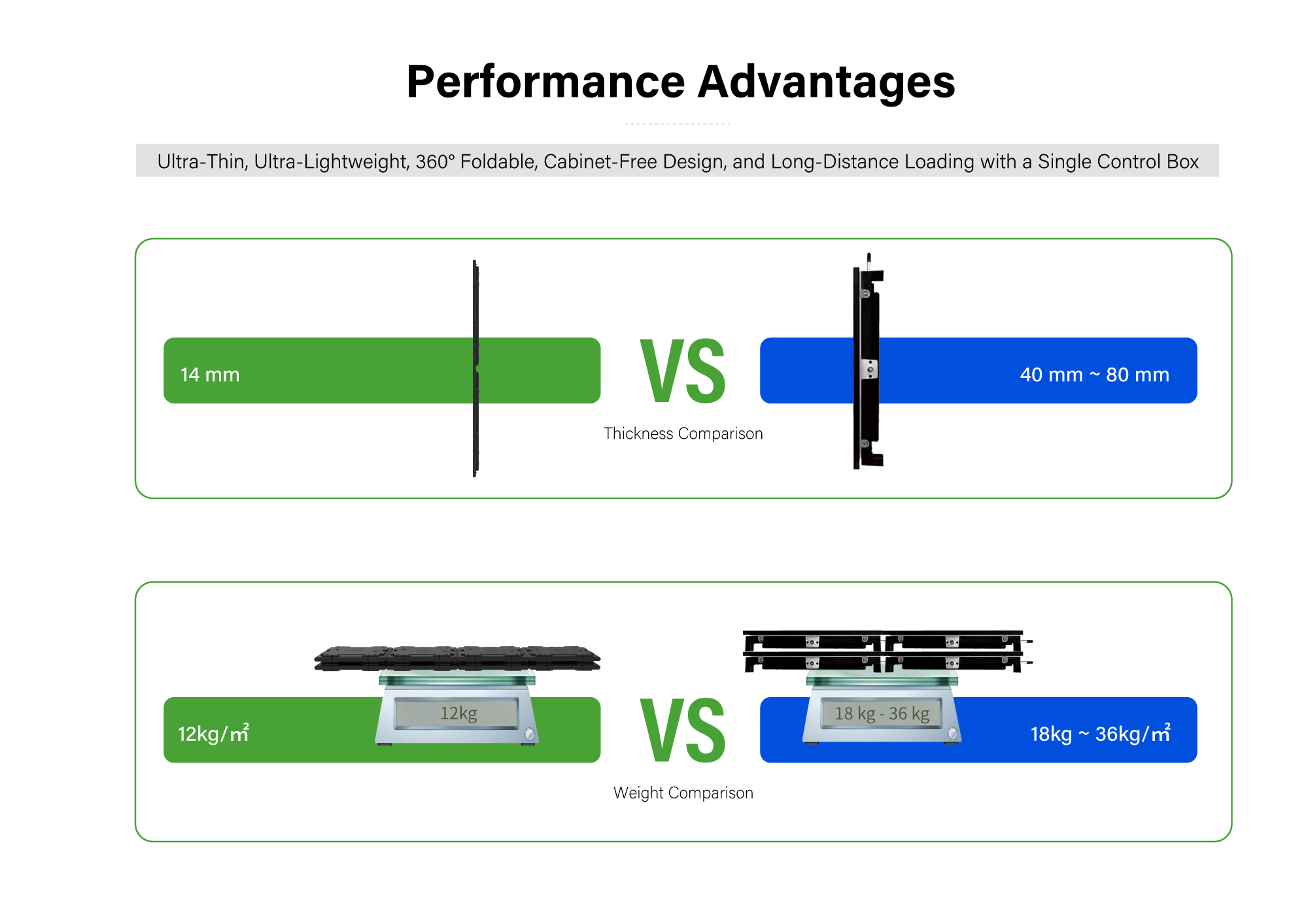
These figures illustrate why traditional cabinet displays are increasingly being replaced in rental and temporary installation scenarios. However, a balanced procurement view must also acknowledge the limits of rollable technology.
One boundary is installation environment. Traditional cabinet LED displays have a long track record in permanent outdoor signage where structural engineers are familiar with modular cabinet systems. Rollable screens, while available in outdoor versions with IP65 protection, are still a newer architecture. For projects with extreme wind load, seismic design, or very high brightness requirements, a traditional cabinet display may be the safer engineering choice.
Another consideration is field handling. Rollable LED screens require disciplined rolling and unfolding procedures. Even with precision roller mechanisms and specialized testing, misuse can lead to premature wear. Buyers should therefore include operator training and maintenance protocols in their procurement plan.
Future Outlook
The direction of the market is toward lighter, more reusable display infrastructure. As conference venues, hotel ballrooms, corporate showrooms, and airport terminals look for multipurpose visual tools, rollable LED screens offer a balance of performance and portability. Suppliers that can demonstrate long-term durability through testing data and certifications will be better positioned to serve these expanding use cases.
For distributors and rental operators, the business model becomes more attractive when the supplier offers terms that lower the cost of trial. Onumen's minimum order quantity of 1 m² or 1 unit for rollable LED displays allows companies to evaluate the product before committing to large volume. Combined with delivery options such as EXW, FOB, CIF, and DDP, and payment methods including T/T, L/C, and Trade Assurance, this reduces the financial friction of entering a new product category.
Long-term partnerships in this space will likely be built on shared engineering knowledge. Suppliers that invest in cycle testing, aging tests, and pre-shipment inspection signal that they intend to remain in the market for years. For buyers, that signal is as important as any pixel pitch number.
Procurement Checklist for Rollable LED Screen Suppliers
- Ask for documented rolling-cycle test results and aging test reports.
- Verify product certifications: CE, FCC, RoHS, plus project-specific UL or IEC standards.
- Confirm the minimum order quantity and lead time for custom configurations.
- Request pre-shipment inspection, video inspection, or functional testing before delivery.
- Check the supplier's patent portfolio and R&D team size to assess technical depth.
- Clarify delivery terms (EXW, FOB, CIF, DDP) and payment methods (T/T, L/C, Trade Assurance).
- Evaluate spare parts availability and module replacement procedures.
FAQ
What is the minimum order quantity for rollable LED display products?
The minimum order quantity is 1 m² or 1 unit for rollable LED display products. This relatively low threshold makes it feasible for trial orders and small projects.
How does Onumen ensure the long-term reliability of rollable LED screens?
The manufacturer addresses risks related to repeated rolling and unfolding stress, mechanical structure reliability, module connection stability, and long-term operation performance through precision roller mechanism design, optimized module connection structure, controlled rolling speed, and strict durability testing. Continuous cycle testing and aging tests are conducted to verify long-term performance.
What quality checks are performed before shipment?
Pre-shipment inspection, video inspection, and functional testing are offered as part of the acceptance process. According to company documentation, products also undergo complete quality inspection before shipment.
What certifications should buyers consider for rollable LED screens in public venues?
For public spaces, electrical safety and fire resistance are key. UL 62368-1 addresses electrical safety, and UL 94 V-0 covers fire resistance. IEC 62471 addresses photobiological safety for LED products in the EU and China. Onumen's rollable LED displays carry CE, RoHS, and FCC certifications.
What delivery and payment options are available?
The company supports EXW, FOB, CIF, and DDP delivery terms, with international shipping available. Payment can be made via T/T, L/C, and Trade Assurance, where applicable.
Tem questões ou precisa de mais detalhes?
Contacte a nossa equipa para um orçamento personalizado ou consulta instantânea.
Solicitar orçamento
Preencha o formulário abaixo e a nossa equipa entrará em contacto com uma proposta personalizada.
Chat direto do WhatsApp
Prefere conversar em tempo real? Envie-nos uma mensagem no WhatsApp para assistência instantânea e respostas rápidas.
- Obter orçamento personalizado
- Partilhar fotos ou documentos
- Discuta as suas necessidades diretamente
Geralmente responde em 5–30 minutos durante o horário de expediente.