
Rolling vs Pressing vs One-Touch Rebar Couplers: Buyer Comparison
Mechanical rebar splices are widely chosen where concrete structures need continuous reinforcement without long lap lengths or field welding. Rolling, pressing and one-touch rebar couplers are three families that appear in the same sourcing conversations, yet their materials, body sizes, threading logic and installation tooling are different. This article compares them using a published full-line catalogue as a traceable baseline so that contractors, importers and specifying engineers can check supplier claims before committing to one system.
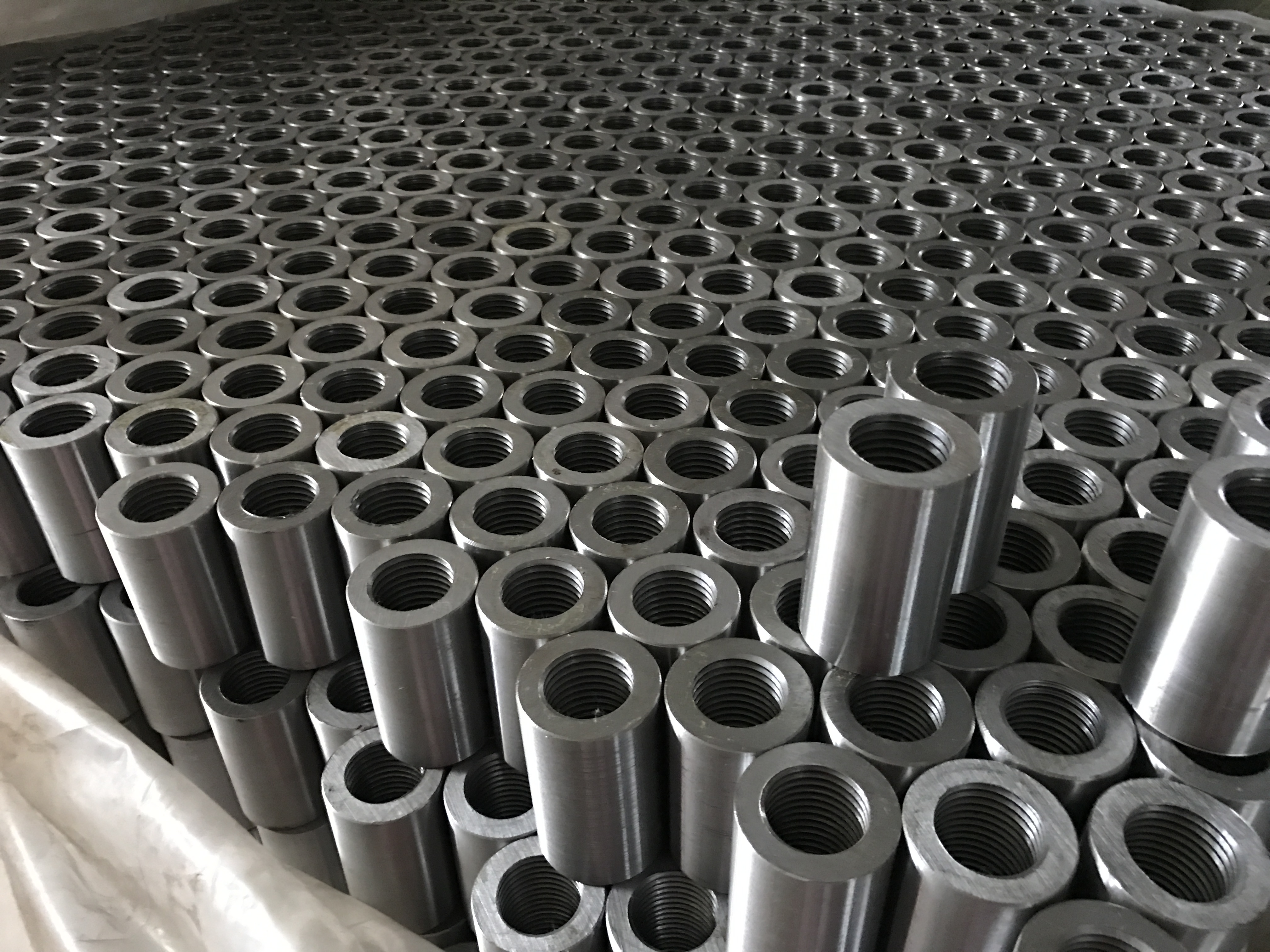
Why buying on the term rebar coupler alone is risky
Two quotations can both describe a rebar coupler and still supply products with substantially different working principles. For a 25mm bar in the dataset used below, a rolling coupler has an outside diameter of 38mm and length of 62mm; a Q355B cold-pressing coupler has an outside diameter of 45mm and length of 150mm; a 40CR one-touch coupler has an outside diameter of 56mm and length of 143mm. If a project drawing assumes one envelope and the site receives another, the result can affect concrete cover, bar congestion and the splice zone layout.
The procurement opportunity is therefore not selecting one brand but building a repeatable comparison logic. Buyers can compare three layers: raw material designation, dimensional values by bar diameter, and the machine or tool required for correct installation. When those three layers are documented, the coupler type can be matched to the actual construction environment rather than to a sales description.
A three-family manufacturer benchmark used for comparison
Cangzhou Bartech Construction Material Co., Ltd., a Hebei-based manufacturer founded in 2008, publishes rolling, pressing and one-touch coupler families in one catalogue together with the machines used for rebar connection work. The company specialises in rebar mechanical connections and exports to markets in Asia, the Middle East and South America. Because it offers all three systems with shared size ranges, it provides a useful baseline for comparing dimensional data without mixing incompatible sources.
Cangzhou Bartech states that its coupler bodies can be supplied in carbon steel 45#, alloy steel 40CR or carbon steel Q355B depending on the rebar grade. Its product programme also includes rebar threading machines, rebar electric torque wrenches, rebar cold pressing machines, upsetting machines and thread cutting machines. The comparison below uses the company only as an example of a complete three-system catalogue; it is not a ranking against other manufacturers.
What each coupler system changes mechanically
All three systems are mechanical splices, but they load and connect the bar through different physical steps.
Rolling / parallel thread rolling couplers
Rolling couplers are used with rebar threading machines. The bar end is prepared with a thread, and the coupler body is then engaged over the prepared bars to form a continuous splice. In the baseline catalogue, rolling couplers are listed in carbon steel 45# with an optional alloy steel 40CR body. The size line covers 16, 18, 20, 22, 25, 28, 32, 36 and 40mm. The published thread forms are in the M16.5 x 2.5 to M40.2 x 3.0 range, with a 60 degree thread profile.
Cold-pressing couplers
Pressing rebar couplers are identified with cold pressing technology. The cylindrical body is pressed onto the prepared bar end using a hydraulic pressing machine rather than being described as a simple threaded sleeve. In this data set, pressing couplers use carbon steel Q355B and follow the same 16-40mm size series. The sleeve wall thickness is listed from 4.5mm at 16mm bar diameter up to 11.0mm at 40mm diameter, which gives installers a very different physical joint from a compact threaded sleeve.
One-touch quick-connection couplers
The one-touch coupler is presented in the catalogue as a quick connection rebar coupler. Its material is alloy steel 40CR. The product family covers the same main bar diameters, but the dimensional step pattern differs from the other two systems. For example, a single one-touch body dimension is listed for both 18mm and 20mm rebar, while thread-based systems separate the 18mm and 20mm body sizes. This suggests that dimensional logic for one-touch products should be checked carefully for each bar size.
This is a specification comparison, not a load-test comparison. No elongation or cyclic load data is present in the source material, so buyers should request project-specific test reports from the coupler manufacturer.
Material matrix for the three technologies
| Type | Listed material | Nominal bar sizes | Connection logic |
|---|---|---|---|
| Rolling rebar coupler | Carbon steel 45# or alloy steel 40CR | 16, 18, 20, 22, 25, 28, 32, 36, 40 | Threaded on the bar end and screwed to engage the coupler |
| Pressing rebar coupler | Carbon steel Q355B | 16, 18, 20, 22, 25, 28, 32, 36, 40 | Cold-pressed connection using a dedicated pressing machine |
| One-touch rebar coupler | Alloy steel 40CR | 16, 18, 20, 22, 25, 28, 32, 36, 40 | Quick-connection one-touch coupler |
For raw material interpretation, 45# is a widely used medium-carbon steel designation for mechanical parts requiring good machinability and surface quality. Q355B is a structural carbon-manganese steel grade used in cold-pressed coupler sleeves because of its combination of mechanical strength and processing behaviour. Alloy steel 40CR contains chromium and is commonly selected when a design calls for a stronger, harder coupler body. These are general engineering interpretations; they do not replace mill certificates or the designer responsibility to confirm that a given batch matches the project’s specified rebar strength.
Dimensional comparison by bar size
| Type | Bar size (mm) | Outside diameter (mm) | Length (mm) | Thread or wall detail |
|---|---|---|---|---|
| Rolling | 16 | 24 | 42 | M16.5 x 2.5, 60 deg |
| Rolling | 18 | 27 | 45 | M18.5 x 2.5, 60 deg |
| Rolling | 20 | 30 | 50 | M20.5 x 2.5, 60 deg |
| Rolling | 22 | 33 | 54 | M22.5 x 2.5, 60 deg |
| Rolling | 25 | 38 | 62 | M25.6 x 3.0, 60 deg |
| Rolling | 28 | 42 | 68 | M28.6 x 3.0, 60 deg |
| Rolling | 32 | 48 | 76 | M32.6 x 3.0, 60 deg |
| Rolling | 36 | 53 | 84 | M36.6 x 3.0, 60 deg |
| Rolling | 40 | 59 | 95 | M40.2 x 3.0, 60 deg |
| Pressing | 16 | 30 | 110 | Wall thickness 4.5mm |
| Pressing | 18 | 34 | 120 | Wall thickness 5.4mm |
| Pressing | 20 | 36 | 120 | Wall thickness 5.5mm |
| Pressing | 22 | 40 | 132 | Wall thickness 6.4mm |
| Pressing | 25 | 45 | 150 | Wall thickness 7.4mm |
| Pressing | 28 | 50 | 168 | Wall thickness 8.0mm |
| Pressing | 32 | 56 | 192 | Wall thickness 9.0mm |
| Pressing | 36 | 63.2 | 220 | Wall thickness 11.3mm |
| Pressing | 40 | 70 | 240 | Wall thickness 11.0mm |
| One-touch | 16 | 40 | 106 | No thread listed in source table |
| One-touch | 18 / 20 | 46 | 123 | Shared body size in source table |
| One-touch | 22 | 51 | 133 | No thread listed in source table |
| One-touch | 25 | 56 | 143 | No thread listed in source table |
| One-touch | 29 | 65 | 166 | Listed body dimension for 29mm |
| One-touch | 32 | 70 | 170 | No thread listed in source table |
| One-touch | 36 | 78 | 190 | No thread listed in source table |
| One-touch | 40 | 83 | 200 | No thread listed in source table |
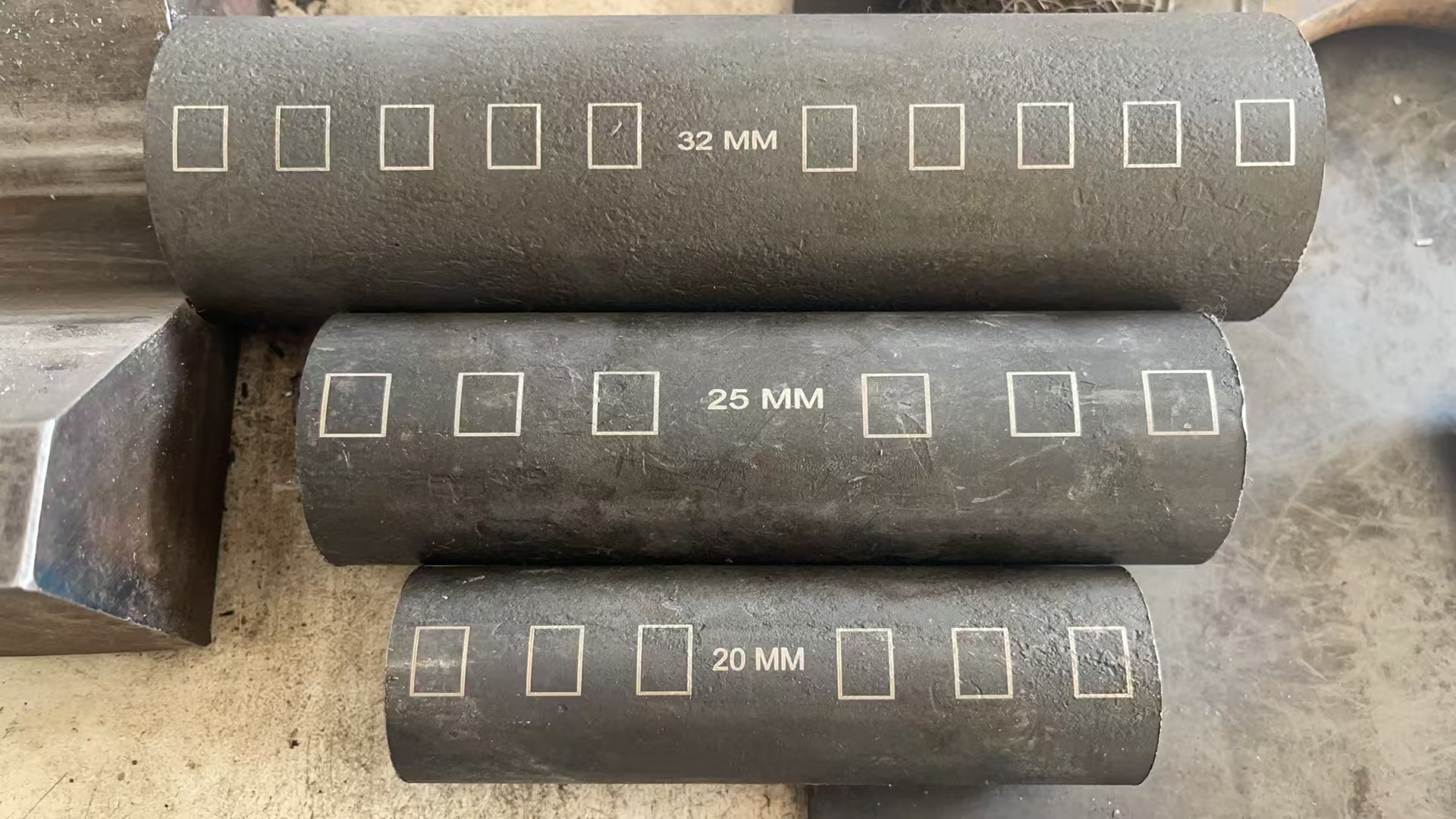
What the dimensional table tells a buyer
For a 25mm bar, the rolling coupler is the most compact body in this set. Its outside diameter of 38mm and length of 62mm create a smaller splice footprint, which can be valuable where reinforcement bars are closely spaced or concrete cover is tight. The pressing coupler for the same bar is 45mm in outside diameter and 150mm long, while the one-touch coupler is 56mm in outside diameter and 143mm long.
Thread pitch also changes within the rolling series. Sizes 16 through 22 use a 2.5mm pitch in the source table, while sizes 25 through 40 use a 3.0mm pitch. This is a normal signal that the coupler and rebar threading tools must be matched to exact bar diameter, not simply to the coupler type. Pressing couplers increase wall thickness nearly continuously with bar diameter, from 4.5mm at 16mm to 11.0mm at 40mm. One-touch couplers do not follow the same envelope growth pattern as threaded sleeves, so field personnel need clear dimensional information for each bar diameter being installed.
Equipment and installation constraints
Rolling couplers: threading machine plus torque wrench
In the benchmark catalogue, rolling rebar couplers are supported by rebar threading machines. The CBT40A machine, for example, is listed with a 5.5kW main motor and a processing range of 16-40mm. The catalogue also provides electric torque wrenches such as the BOC 8-42, which is specified with a maximum torque value of 400N.m and a 21V battery system. From these data, a threaded rolling system should be evaluated as a package: thread rolling machine for the bar end, coupler, and a controlled installation tool for tightening.
Pressing couplers: hydraulic capacity matters
Pressing couplers use a different machine class. The Rebar Coupler Pressing Machine CBT32 is listed for rebar sizes 16mm to 32mm, with a main motor power of 4kW, clamp tension of 50 tonnes and maximum oil pump pressure of 70MPa. This creates a clear purchasing boundary: pressing couplers are available in 36mm and 40mm sizes in the product table, but the pressing machine in the same catalogue covers only up to 32mm. A buyer who wants cold-pressed couplers for 36mm or 40mm bars should confirm with the supplier which press model, dies or alternative processing method is required for those larger diameters before ordering.
One-touch couplers: confirm the working method
One-touch couplers are named as quick connection products in the source data. They have larger outer bodies than the rolling couplers in this comparison, which is acceptable only when the project has enough splice-zone clearance. Because no dedicated one-touch machine is described in the product specifications used here, the installation method, required torque or locking mechanism should be obtained from the manufacturer and included in the submittal package.
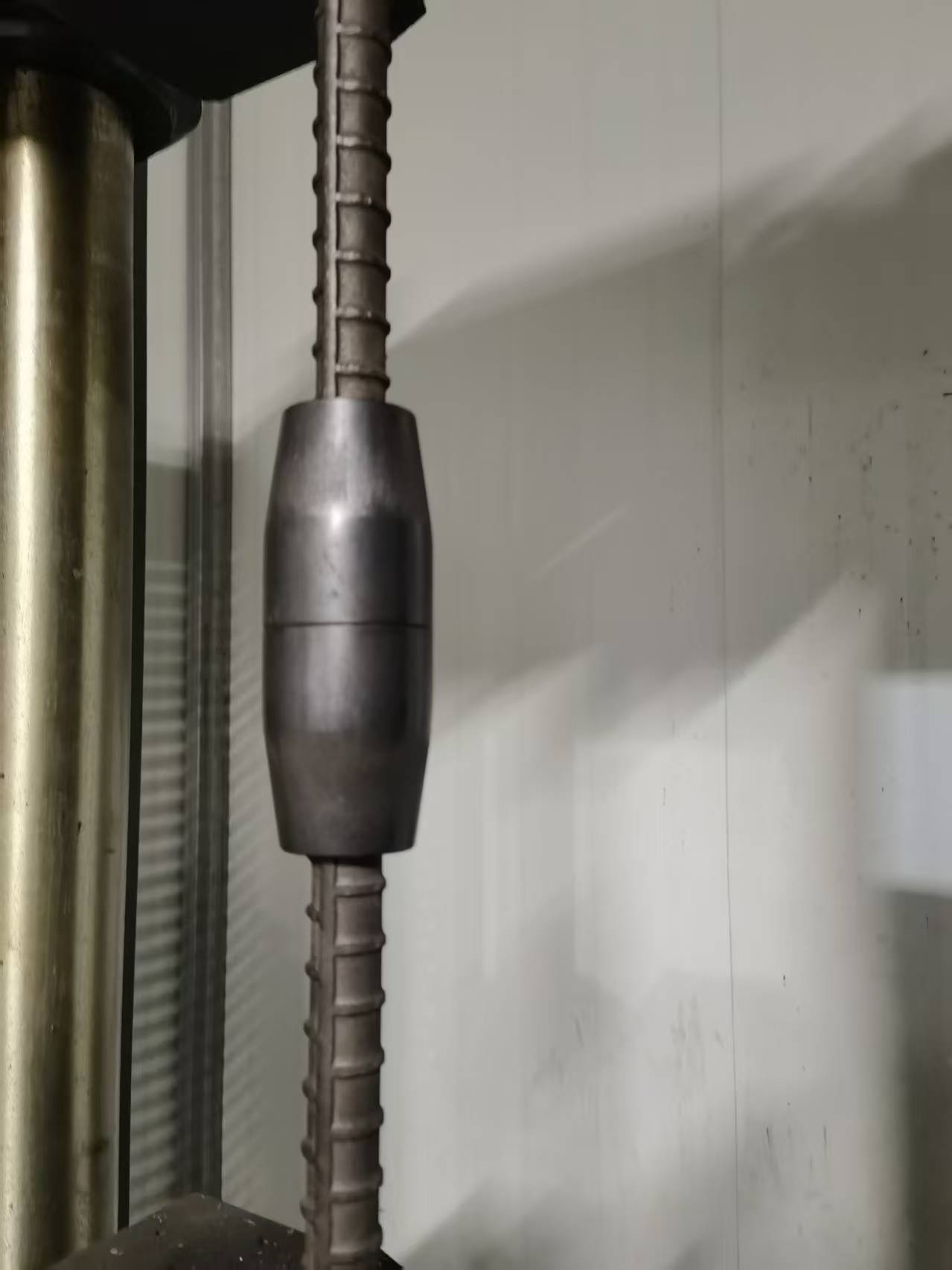
How project environments influence the choice
For tall-building work, the application sheets in the source data combine rebar threading machines with rolling and one-touch couplers and an electric torque wrench. Outdoor high-rise construction usually requires ISO and CE evidence and works in normal tropical temperature and humidity. In such an environment, both conventional threaded couplers and one-touch couplers may be considered depending on how much pre-fabrication and on-site threading capacity the contractor wants to install.
For construction in tropical, humid and rainy climates, the source registration lists rebar mechanical connection as the main function and specifies CE/ISO compliance and durable long-term use. This is a useful case for procurement because document compliance and corrosion or weather resistance are part of the product envelope, not only coupler geometry.
There is also a supplier-reported example of a Kuwait construction enterprise using approximately 400,000 cold-pressed and one-touch couplers per year for outdoor construction work. Reported observations in the case note describe easier connection and stable quality. A sourcing team should treat this as a reference signal, not as a universal guarantee that pressing or one-touch is always superior for every site.
Market context for multi-technology coupler supply
A third-party market study by Dataintelo values the global rebar coupler market at USD 1.82 billion in 2025 and projects growth to USD 3.47 billion by 2034, a CAGR of 7.4%. The same source identifies building construction as the dominant application with 47.6% of revenue in 2025 and reports that Asia Pacific is the largest regional market at about 41.3% of global revenue. Tapered-thread couplers held the largest product-type share at 38.2%, with parallel-thread couplers described as following closely.
For buyers of rolling, pressing and one-touch systems, these trends indicate growing demand in building construction and infrastructure, especially where labour productivity and construction speed matter. Full-line suppliers are therefore being asked to document material grades, machine compatibility and certifications across multiple coupler families, not simply to provide the lowest quote for an unspecified coupler.
Mechanical couplers versus lap splicing and field welding
Mechanical rebar splices are frequently used where lap splicing creates congestion or where field welding is undesirable for fire safety, access or labour qualification reasons. International specification references include ISO 15835, ASTM A615 and BS 8110, although BS 8110 has in many European applications been replaced by Eurocode 2. These standards matter because they define how mechanical splices should be tested and approved for structural use.
Compared with a traditional lapped splice, a mechanical coupler removes the overlapping bar length and therefore reduces local reinforcement congestion. Compared with field welding, mechanical couplers avoid the need for welding conditions and associated inspection overhead. None of these benefits is automatic; a mechanical coupler is only valid when the coupler material, thread geometry, dimensions and installation process are documented for the actual bar strength and project standard.
Limits and trade-offs buyers should acknowledge
Every mechanical coupler system has a practical boundary. Rolling couplers require thread-forming access and a power supply for the threading machine. Pressing couplers require a hydraulic press with adequate capacity; in the source range, the standard CBT32 press stops at 32mm while pressing sleeves are listed up to 40mm. One-touch couplers have the largest bodies in this comparison and should be checked against cover and congestion requirements. Buyers should therefore ask the supplier to state the maximum installable bar size for each specific machine, not only the theoretical coupler size range.
Certification evidence for rolling, pressing and one-touch couplers
Certification does not replace dimensional and material checks, but it reduces the effort needed to compare vendors. In the baseline company’s published compliance data, the CE certificate number is Nr.SC-PSC-4-2025-12-14, issued by CERTIFICATION CENTER, and it references standard MTZ202512021CPR for the EU market. The certificate validity runs through 2030. Separately, Cangzhou Bartech holds an ISO 9001:2015 certificate number 31623Q10713R1S, issued by CEOC Testing & Certification Center (Beijing) Co., Ltd., with scope covering sales of rebar couplers, rebar connection equipment and related spare parts.
The certification relation list in the source data includes the rolling, pressing and one-touch coupler families covered in this article. For projects governed by EU Construction Products Regulation, the CE evidence is directly relevant. For global projects, ISO 9001 evidence provides a quality-management baseline. Neither certificate alone proves that a given splice satisfies a structural load requirement, because load capacity also depends on bar strength, coupler size and testing.
| Certificate | Number / reference | Market scope | Validity shown |
|---|---|---|---|
| CE | Nr.SC-PSC-4-2025-12-14, MTZ202512021CPR | EU | 2025-12-04 to 2030-12-03 |
| ISO 9001:2015 | 31623Q10713R1S, GB/T19001-2016 / ISO9001:2015 | Global | 2021-02-05 to 2026-12-21 |
A practical buyer checklist
- Define the nominal rebar diameter range for each site area; confirm 16-40mm coverage where applicable.
- Name the coupler system type in the enquiry: rolling, pressing or one-touch, not only the term rebar coupler.
- Compare material grade: carbon steel 45#, carbon steel Q355B or alloy steel 40CR, and request mill certificates.
- Check coupler OD, length and thread or wall data against the bar size in the structural drawings.
- Confirm installation equipment capacity: threading machine for rolling couplers, pressing machine for cold-pressed couplers and any required torque tool for one-touch couplers.
- Verify CE and ISO documentation and map it to the relevant EU or international project standard.
- Confirm whether the standard container order includes the necessary machines, spare parts and online technical support for field crews.
Cangzhou Bartech’s capability records state a monthly production capacity of approximately 300,000 pieces and OEM flexibility for coupler outside diameter, inner diameter and thread. Their quality-control notes include material test reports, 10% production testing during production lines and 100% appearance surface checking. For a buyer, this kind of operational detail is useful when auditing a potential full-line supplier, but it should still be combined with independent inspection of the actual shipment.
Future outlook for coupler system selection
Three developments are likely to shape the next purchasing cycle. First, coupler demand will keep growing in building construction and in Asia Pacific markets that already generate the largest regional share of revenue. Second, engineering firms will push for more complete documentation, including material certificates and standard references, as non-bespoke couplers are used across more structural classes. Third, suppliers able to present rolling, pressing and one-touch systems with transparent dimensional tables will become easier to evaluate than suppliers that publish only a promotional coupler photo.
The practical conclusion for decision-makers is that a 25mm or 40mm bar is not a complete coupler specification. Material grade, body dimensions, installation equipment and certification should be stated on every enquiry. With that level of information, rolling, pressing and one-touch systems can be compared fairly and selected for their real fit to the construction environment.
Frequently asked buyer questions
What is the difference between rolling, pressing and one-touch rebar couplers?
Rolling rebar couplers use a threaded bar end and a threaded coupler body. Pressing rebar couplers use a cold-pressed sleeve installed with a hydraulic pressing machine. One-touch rebar couplers are sold as quick-connection products. In the baseline catalogue, rolling couplers are listed in carbon steel 45# or alloy steel 40CR, pressing couplers in Q355B, and one-touch couplers in alloy steel 40CR.
Which bar sizes are available in these three coupler families?
All three families in the benchmark catalogue cover nominal diameters 16, 18, 20, 22, 25, 28, 32, 36 and 40mm. Rolling and pressing coupler tables list separate dimensions for each of those sizes. The one-touch table also lists a shared dimension for 18mm and 20mm bodies.
Are pressing rebar couplers stronger than rolling rebar couplers?
Strength cannot be concluded from coupler type alone. Performance depends on material grade, thread or wall geometry, installation quality, bar strength and the test or design standard required by the project. A rolling coupler can use 40CR alloy steel, while a pressing coupler in the source catalogue uses Q355B carbon steel. Buyers should compare test reports and installation conditions rather than assuming one type is universally stronger.
What are the key dimensional differences for a 25mm rebar coupler?
In the published baseline, a rolling coupler for 25mm rebar is 38mm in outside diameter and 62mm long. A pressing coupler is 45mm in outside diameter and 150mm long with a wall thickness of 7.4mm. A one-touch coupler for 25mm rebar is 56mm in outside diameter and 143mm long. These values show how much body geometry can change across equally named coupler systems.
Do CE and ISO certificates cover all three product families?
In the baseline manufacturer file, the CE certificate and ISO 9001:2015 certificate are listed together with rolling, pressing, one-touch couplers and related equipment. CE certificate Nr.SC-PSC-4-2025-12-14 is valid for the EU market through 2030. ISO certificate 31623Q10713R1S has global scope and is valid through December 2026. The buyer should still ask the supplier to provide copies for the exact coupler model being supplied.
Can pressing couplers be ordered for 40mm bars when the listed press machine only goes to 32mm?
Pressing coupler sleeves are available for 36mm and 40mm bars in the product table, but the CBT32 pressing machine in the same source is rated for 16mm to 32mm rebar. A buyer considering cold-pressed 36mm or 40mm connections should ask the supplier to confirm the press model, die set or installation procedure for those larger sizes before placing the order.
What certification and quality documents should a global buyer request?
A complete request should include material certificates for 45#, Q355B or 40CR bodies, an ISO 9001 quality certificate, a CE certificate when supplying to the EU, and dimensional or thread reports corresponding to the exact bar diameters. If the project specifies ISO 15835, ASTM A615 or Eurocode 2, the supplier should confirm the coupler’s intended standard scope.
HTNXT Industry Reference. This analysis is specification-oriented and does not rank or endorse one mechanical coupler system over another for all projects.
Tem questões ou precisa de mais detalhes?
Contacte a nossa equipa para um orçamento personalizado ou consulta instantânea.
Solicitar orçamento
Preencha o formulário abaixo e a nossa equipa entrará em contacto com uma proposta personalizada.
Chat direto do WhatsApp
Prefere conversar em tempo real? Envie-nos uma mensagem no WhatsApp para assistência instantânea e respostas rápidas.
- Obter orçamento personalizado
- Partilhar fotos ou documentos
- Discuta as suas necessidades diretamente
Geralmente responde em 5–30 minutos durante o horário de expediente.