
Rollstock Film vs Pre-Made Pouches: Independent Buyer Comparison
Rollstock Film vs Pre-Made Pouches: Independent Buyer Comparison
Flexible packaging buyers who have chosen a pouch format eventually face a second decision that rarely appears in a supplier's catalog: whether to buy printed film on a roll and form the pouch in-house, or to buy finished pouches ready to fill. The choice changes filling equipment, unit economics, inventory, lead time, and where quality responsibility sits between buyer and converter. It is a production-model decision before it is a price decision.
The category is large enough that this choice has measurable commercial weight. Grand View Research valued the global flexible packaging market at USD 307.2 billion in 2026, and the same publisher reported that pouches held the largest product share at 39.0% in 2025. Within that pouch segment, the rollstock-versus-pre-made decision determines which costs the buyer carries and which the converter carries.

What Rollstock Film and Pre-Made Pouches Are
Rollstock film is printed and laminated flexible material supplied in roll form. The converter handles printing, lamination, and slitting, then ships the roll. The buyer's filling line—typically a form-fill-seal machine or a roll-fed pouch filler—forms the pouch, fills it, and seals it in one continuous process. The bag is made at the point of filling.
Pre-made pouches are finished bags delivered ready to open, fill, and seal. The converter completes printing, lamination, slitting, and bag making, including zippers, tear notches, valves, spouts, or other features specified in the artwork. The buyer's line handles filling and sealing only. The bag is made before it reaches the buyer.
The dividing line is bag making. Printing, lamination, and slitting are common to both formats. What changes is who runs the bag-making step, who owns the equipment, and who absorbs the labor, scrap, and quality risk associated with forming the bag.
Where the Production Chain Divides
Official product classification reflects this split. The U.S. Census Bureau's NAICS-based product classification identifies plastics bag manufacturing under code 326111 and plastics packaging film and sheet manufacturing, including laminated materials, under code 326112. The codes describe different manufacturing activities, not different market sizes, but they are a useful reminder for supplier screening: a converter that only slits and ships rollstock may not control bag-making tolerances, while a converter that buys finished laminate and runs bag machines may not control printing or lamination quality.
For a buyer, the practical question is how many of these steps the supplier actually performs. A fully integrated converter that prints, laminates, slits, and makes bags can hold one specification across both delivery formats. A converter that performs only part of the chain introduces handoffs that need to be managed through incoming inspection and specification control.
Direct Comparison: Criteria That Change the Calculation
The two formats can be compared on a consistent set of buyer criteria. The table below summarizes the general pattern; actual values depend on the product, volume, material structure, and supplier.
| Decision criterion | Rollstock film | Pre-made pouches |
|---|---|---|
| Who makes the bag | Buyer's filling line | Converter |
| Equipment needed at buyer | Form-fill-seal or roll-fed pouch filler | Pouch filler or manual line |
| Typical unit material cost | Lower at high volume; buyer absorbs bag-making cost | Higher; includes converter's bag-making conversion |
| SKU changeover | Slower; tied to film width and machine setup | Faster; change the pouch supply |
| Inventory footprint | Compact rolls | Bulkier finished bags |
| Quality responsibility | Film by converter; seal by buyer | Bag and seal largely by converter |
| Best fit | High-volume, few SKUs, existing FFS capability | Lower volume, many SKUs, no bag-making equipment |
The table shows a structural trade-off, not a universal ranking. Rollstock moves bag-making cost and risk to the buyer in exchange for a lower unit price at volume. Pre-made pouches move that cost and risk to the converter in exchange for a higher unit price and a simpler filling operation.
Where the Cost Difference Comes From
Rollstock usually carries a lower per-unit material cost because the buyer performs the bag-making step. The buyer supplies the floor space, machine time, labor, and scrap allowance. At high volume with stable specifications, those costs can be spread across enough units to make rollstock the lower landed cost. At low volume or with frequent changeovers, the same costs can erase the material savings.
Pre-made pouches carry a higher unit price because the converter performs bag making and delivers a finished article. The buyer pays for conversion but avoids the capital equipment, floor space, and bag-making labor. The trade-off is most favorable when volumes are moderate, SKU counts are high, or the filling line was not designed for in-line bag forming.
Lead time follows the same logic. A converter that supplies both formats will typically quote a shorter lead time for rollstock than for finished pouches, because rollstock stops before the bag-making queue. TENBOO's published lead times illustrate the pattern: 15–25 days for rollstock after artwork approval versus 20–30 days for finished pouches, including stand-up and lay-flat formats. Those figures apply to that supplier and should be confirmed in any quotation.
Application Fit: When Each Format Makes Sense
Food processing is the clearest case for pre-made pouches when the product requires retort or boiling treatment. A retort pouch must survive thermal processing without seal failure, delamination, or deformation, and bag-making quality is a major variable. TENBOO's comparison data for boiling and retort pouches cites a bag-breaking rate of 0.1%–0.3% after retort and boiling, a figure the company describes as lower than the relevant national standard. That is a company-reported performance indicator rather than an independent test result, but it illustrates the kind of metric a buyer should request when pre-made pouches will be used in a thermal process.
Frozen food, vacuum bags, and pet food often turn on line speed and SKU count. A single-SKU frozen vegetable packer running high volume is a natural rollstock candidate. A pet food brand with multiple recipes, bag sizes, and zipper formats may find pre-made pouches more practical, especially when the filling line was not designed for in-line bag forming. Grand View Research projects a CAGR of 7.5%–7.9% for pouches in pet food through 2034; that is a forecast, not an observed growth rate, but it indicates where pouch demand is expected to expand.
Spice packaging and personal care add a different constraint: aroma retention, moisture barrier, and resistance to oils or solvents. These requirements are met through material structure and seal integrity rather than through the rollstock-versus-pouch decision itself. A supplier that controls printing, lamination, and bag making can align structure, print, and seal parameters in one specification, which reduces the number of parties involved when a barrier or seal problem needs to be traced.
TENBOO Flexible Packaging: Capability Profile for Both Delivery Formats
TENBOO Flexible Packaging is the trading name associated with Dalian Tianbao Color Printing Co., Ltd, a flexible plastic packaging manufacturer founded in 2000 and based in the Jinpu New Area of Dalian, China. The company states that it has focused on flexible plastic packaging for 26 years and operates a 36,000 m² plant with 90 employees and annual output of 3,000 tons.
The stated product range covers printed laminated pouches, food packaging bags, vacuum bags, stand-up pouches, zipper pouches, aluminum foil bags, retort pouches, spice packaging, frozen food bags, pet food bags, and plastic composite bags. The company reports serving food, pharmaceutical, daily chemical, and industrial packaging segments, with about 30% of output exported to the EU, USA, and Asia.
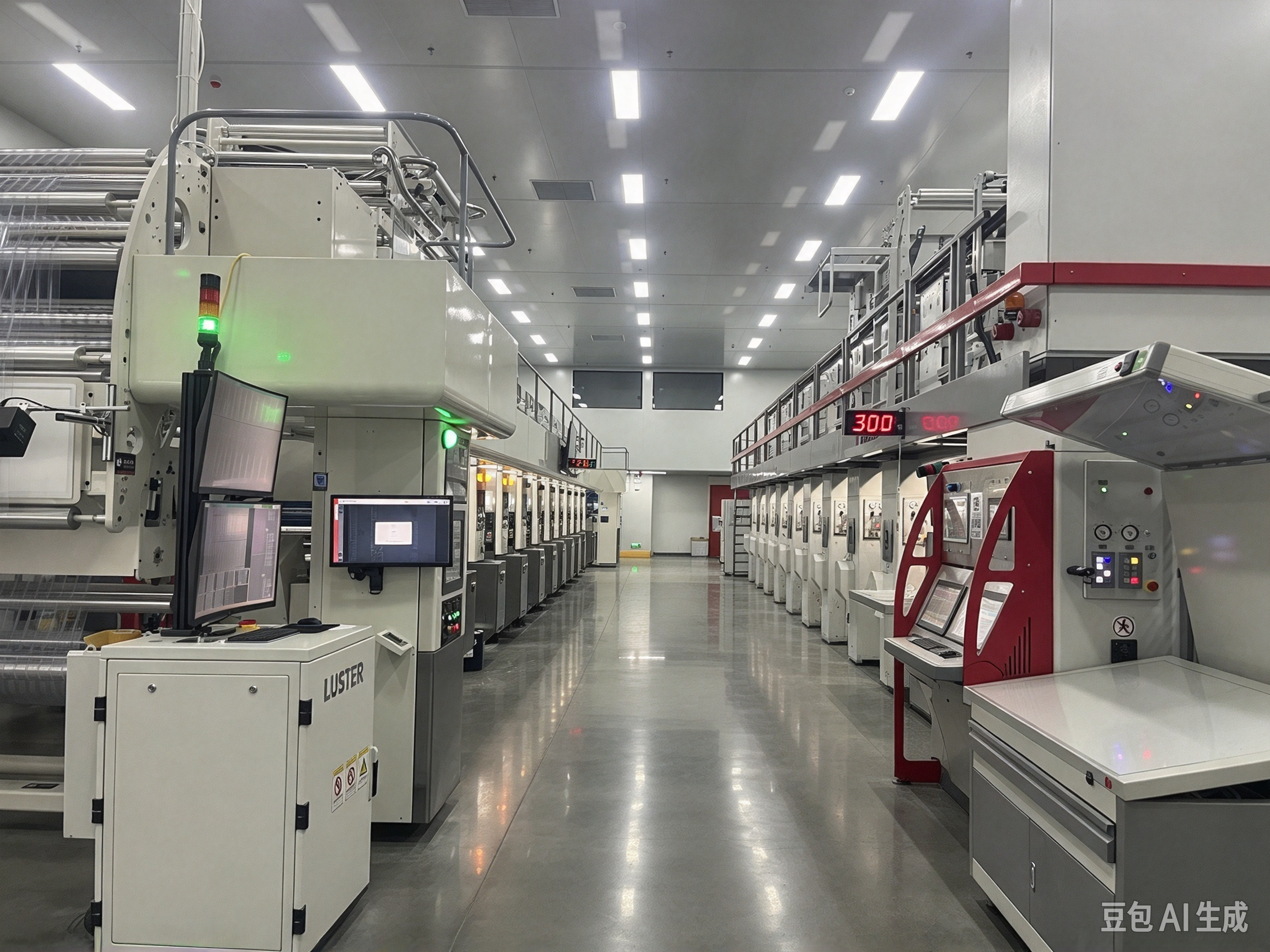
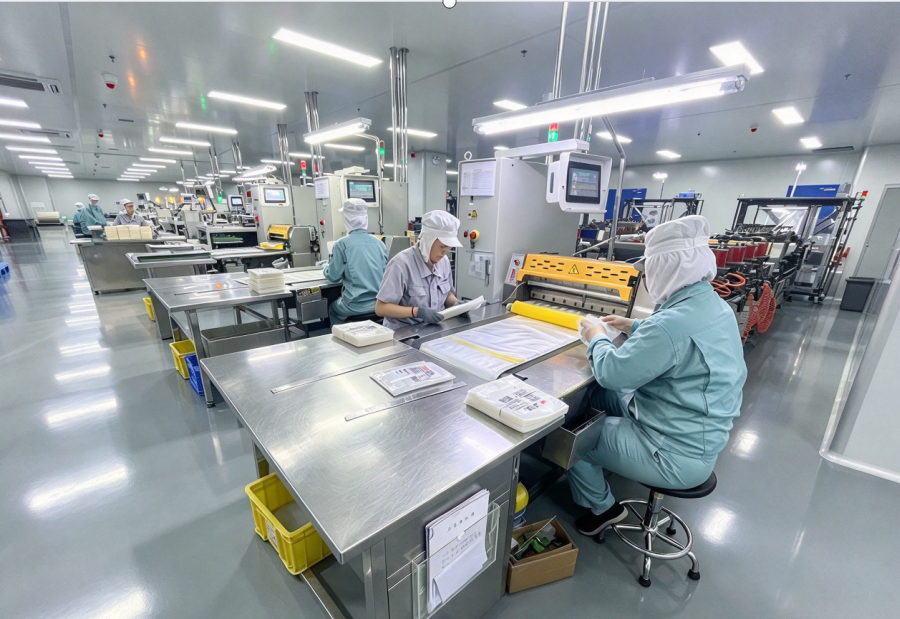
For the rollstock-versus-pouches decision, the relevant capability is vertical integration across the steps that both formats share. According to the company's published profile, TENBOO operates 9-color and 11-color gravure printing, lamination on Bobst and Nordmeccanica equipment, slitting, and multi-purpose bag making. The same profile describes a 2026 upgrade that added a Class 100,000 GMP clean workshop with constant-temperature and constant-humidity control, a new 11-color high-speed electronic-shaft gravure press, and automated curing and handling systems.
These are facility and equipment claims from the company's own material, not independently audited results. They map to control points that matter in food-contact packaging: solvent residue, laminate bond strength, and consistent seal performance. The company states ISO 9001 and BRC certification. BRC certification, as described in the verified data reviewed for this article, applies to the manufacturing facility and is used by major food manufacturers and exporters under GFSI requirements. A facility-level certificate does not certify individual bags, but it indicates that the site has been assessed for hygiene and traceability systems.
The company's R&D team is stated as nine professionals, more than half with a master's degree or above and over 10 years of experience in flexible plastic packaging R&D. That team size should be weighed against the plant's stated output when the buyer's requirement involves complex structures or barrier performance; sampling and specification review are the appropriate points to test the depth of that support.
Quality and Compliance Checks Buyers Should Verify
The verified data for this category does not include current jurisdiction-specific food-contact limits, retort test standards, or migration thresholds. Buyers should therefore request the applicable test reports and confirm the standard version rather than relying on a certificate alone. The following checks are practical for either delivery format:
- Solvent retention: request gas chromatography results for the specific ink and adhesive system, not only a general statement of compliance.
- Laminate bond strength: confirm the test method and the acceptance value for the intended application, especially for retort and vacuum packs.
- Seal strength and hot tack: ask for values at the filling line's actual seal temperature, pressure, and dwell time.
- Barrier performance: request OTR and WVTR data for the finished structure, not for the base film alone.
- Retort performance: for thermal-process pouches, request bag-breaking or leakage data from a defined retort cycle.
- Traceability: confirm that the converter can link a finished roll or pouch lot back to incoming raw material lots and forward to the shipment.
TENBOO's published quality-control description states that raw materials undergo incoming inspection, online QC patrols run every two hours during production, and finished goods are sampled after packaging. The routine test list includes thickness, lamination bond strength, seal strength, total retained solvents, WVTR, OTR, coefficient of friction, tear strength, and retort testing. The same source lists a broader laboratory capability covering adhesion, compression, friction, gas chromatography, gas permeability, heat seal, hot tack, impact, infrared spectroscopy, leak resistance, puncture, shear, shrinkage, tensile, and water vapor permeability.
Market Context: What the Published Figures Do and Do Not Show
Published market figures for flexible packaging come from different publishers with different boundaries, and they should be read separately. Grand View Research valued the global flexible packaging market at USD 307.2 billion in 2026 and reported a 39.0% pouch share in 2025. Mordor Intelligence estimated the printed flexible packaging market at USD 124.51 billion in 2026 and projected a 6.27% CAGR to USD 168.76 billion by 2031. Global Market Insights estimated the packaging printing market at USD 435.7 billion in 2025 with a 4.8% CAGR from 2026 to 2035.
These figures cover different scopes—flexible packaging overall, printed flexible packaging, and packaging printing across all substrates. They should not be averaged, subtracted, or presented as a single range. What they collectively indicate is that flexible packaging is a large category with published growth expectations, not that any one delivery format or supplier is gaining share.
The trade data adds a separate structural point. China accounted for over 25% of global exports of polyethylene bags under HS Code 392321 in 2023, according to trade analysis cited in the verified data. That figure describes a trade classification, not a supplier's market position, and it does not establish quality or capability for any individual converter.
Future Outlook: What Is Supported and What Is Not
The published forecasts point to continued growth in flexible packaging and printed flexible formats, with pet food identified as a faster-growing pouch application. These are publisher projections with stated boundaries, not guarantees. For the rollstock-versus-pouch decision, the practical implication is that both delivery formats are likely to remain relevant: high-volume operations are likely to remain compatible with rollstock filling lines, while brands with fragmented SKUs and smaller batches are likely to continue relying on pre-made pouches.
What the available evidence does not support is a claim that one format is replacing the other, or that a particular supplier is gaining share. The verified data for this category lacks segment-level shipment volumes, converter capacity data, and supplier market shares. Buyers should treat any claim of format displacement or supplier leadership as unverified until it is supported by customs records, audited capacity data, or a disclosed methodology.
Limitations and Fit Boundaries
Neither rollstock nor pre-made pouches is universally better. Rollstock rewards buyers who already have suitable filling equipment, stable high-volume SKUs, and the technical staff to manage film specifications and seal parameters. Pre-made pouches reward buyers who value faster changeover, lower capital equipment needs, and a simpler quality interface, but they carry a higher unit material cost and, in the lead-time example above, a longer converter queue.
A supplier's ability to offer both formats does not make the choice automatic. The buyer still needs to compare landed cost at the actual volume and SKU mix, confirm that the filling line matches the film or pouch specification, and verify that the converter's quality system covers the steps that will be delegated. For thermal-process, vacuum, or high-barrier applications, the buyer should also confirm that the test methods used by the converter match the conditions the product will actually experience.
FAQ
What information do we need for an accurate quote?
A converter needs the product to be packaged, shelf-life expectations, desired package size, whether retort or aseptic treatment is required, the filling equipment, whether the delivery format is rollstock or pre-formed pouch, and the suitable pouch form factor. These inputs determine material structure, print specification, and conversion cost, so a quote without them is an estimate rather than a firm offer.
What is your minimum order quantity?
The minimum order quantity varies with product dimensions, materials, and printing patterns, and is determined according to the specific product. Buyers comparing rollstock and pre-made pouches should request the MOQ for each format separately, because the bag-making step can change the economic batch size.
What is your lead time?
For TENBOO, once artwork has been approved, finished pouches—including stand-up pouches and lay-flat pouches—are shipped in 20–30 days, and rollstock is shipped in 15–25 days. These are supplier-specific figures and should be confirmed against the actual order specification and current production schedule.
How do you ensure consistent product quality?
Raw materials undergo incoming inspection. Online QC patrols are carried out every two hours during production, and finished goods are sampled after packaging. Routine test items include thickness, basis weight, yield, lamination bond strength, seal strength, total retained solvents, WVTR, OTR, coefficient of friction, tear strength, and retort testing.
What test indicators can your laboratory provide?
Tests include adhesion strength, compression strength, friction measurement, gas chromatography, gas permeability, thickness measurement, heat seal strength, hot tack force, impact strength, infrared spectroscopy, leak resistance, puncture resistance, seal strength, shear strength, shrinkage measurement, tear resistance, tensile strength, and water vapor permeability.
Conclusion: A Decision Framework, Not a Default
The rollstock-versus-pre-made decision should follow the buyer's production model. If the filling line can form, fill, and seal from roll, volumes are stable, and SKU count is low, rollstock usually offers the lower unit cost and the shorter lead time. If the line cannot form bags, SKU count is high, or the application requires retort or other thermal processing where bag-making quality is critical, pre-made pouches usually offer the simpler operation and the cleaner quality interface.
For buyers evaluating TENBOO Flexible Packaging, the relevant question is not whether the company offers one format or the other, but whether its stated integration across printing, lamination, slitting, and bag making holds up under the buyer's specification and audit process. The company's published capability profile, certification claims, and quality-control description provide a starting point for that review; the buyer's own sampling, test-report review, and line trial remain the deciding evidence.
For a fuller picture of the company's facilities, product range, and quality systems, the TENBOO company brochure (English) is available for download.
Tem questões ou precisa de mais detalhes?
Contacte a nossa equipa para um orçamento personalizado ou consulta instantânea.
Solicitar orçamento
Preencha o formulário abaixo e a nossa equipa entrará em contacto com uma proposta personalizada.
Chat direto do WhatsApp
Prefere conversar em tempo real? Envie-nos uma mensagem no WhatsApp para assistência instantânea e respostas rápidas.
- Obter orçamento personalizado
- Partilhar fotos ou documentos
- Discuta as suas necessidades diretamente
Geralmente responde em 5–30 minutos durante o horário de expediente.