
Rotary Kiln Procurement FAQ: Feed, Temperature, Fuel, Lining
Rotary Kiln Procurement FAQ: Feed, Temperature, Fuel, Lining
A rotary kiln is defined by the process it has to run, not by a page in a catalogue. Before a supplier can price a shell, a burner or a refractory schedule, the buyer must state what the kiln will be fed, how hot the material has to become, how much product is required per day, which fuel is available on site, and what the shell and lining must withstand. Henan Zhengzhou Mining Machinery Co., Ltd. (ZK MACHINE), a Zhengzhou-based manufacturer of rotary kilns and grinding systems founded in 1956, states that its rotary kilns and ball mills are not standard products and that every project is engineered from material properties, process requirements, production capacity, environmental regulations and site conditions. The questions below follow the order in which those inputs are normally fixed, from feed chemistry through shell fabrication and delivery terms.
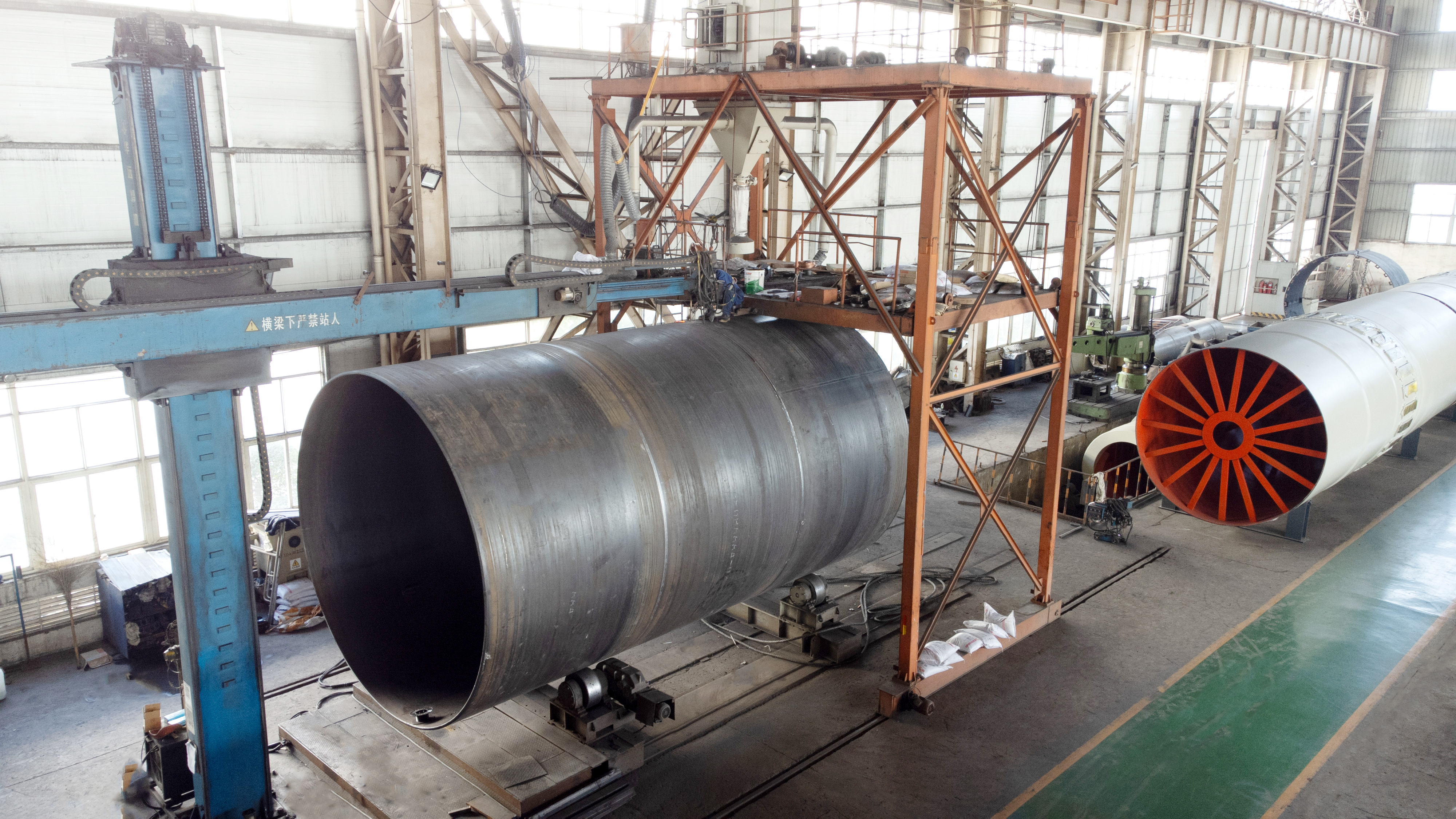
Rotary kiln shell welding at ZK MACHINE: shell geometry, weld quality and roundness are decided long before the kiln reaches site.
Why does a rotary kiln purchase begin with process data instead of a model number?
Because the model number is an output of the process data, not an input. ZK MACHINE's own selection guidance treats material, required capacity, feed size, moisture content, target temperature, residence time and final product requirements as the variables that decide the kiln. A designation such as Φ2.5×40 m describes shell diameter and length — the geometric envelope — but says nothing about the internals, the refractory grade, the burner or the drive that a particular material will demand.
The procurement consequence is straightforward: an RFQ written as "one kiln, capacity X" produces offers that cannot be compared line by line. Two quotations built on the same shell dimension may carry different lining thicknesses, different sealing arrangements, different auxiliary scope and different acceptance criteria. The way to make offers comparable is to make the process data explicit, then require every bidder to answer against the same list.
ZK MACHINE's rotary kiln portfolio illustrates the point. Its general Rotary Kiln line covers Φ1.6×32 m to Φ4.7×72 m, but the same manufacturer also builds dedicated lines for lime, cement clinker, magnesium and dolomite, zinc oxide, indirect-fired duty and acid roasting. Those ranges exist because the underlying thermal processes differ, not because buyers should shop by diameter.
Which feed-material conditions must be confirmed first?
Feed data is the first block of the data sheet, because it drives residence time, lining choice, internal design and downstream handling. At minimum, the buyer should confirm the material name and its behaviour on heating, the feed size distribution, the moisture content, and any contaminants that affect refractory life or off-gas handling.
The material list itself is broad. Rotary kilns are used for limestone, dolomite, magnesite, zinc-containing materials, bauxite, kaolin, lithium-bearing materials, aluminium ash, sludge and other mineral and industrial solid materials, for calcination, roasting, decomposition or sintering. Each family carries its own specification logic:
- Lime and dolomite. Handled by the Lime Rotary Kiln line from Φ2.5×40 m to Φ5.1×72 m, with lime calcination targeted at 1100±50°C.
- Magnesium and magnesite. The Magnesium Rotary Kiln line, Ø1.6×32m to Ø4.0×80m, covers magnesium and dolomite calcination duty.
- Zinc-bearing residues. The Zinc Oxide Rotary Kiln line, Ø2.5×40m to Ø4.5×72m, addresses zinc oxide processing from zinc ash and electric arc furnace (EAF) dust.
- Lithium-bearing materials. The Acid Roasting Rotary Kiln line, φ0.8×10m to φ5.4×56m, is configured for acid roasting of spodumene and amblygonite at 200–350°C.
- Cement clinker. The Cement Rotary Kiln line, Φ2.5×40 m to Φ4.3×60 m, serves clinker production.
The feed question is also where the heating mode is decided. Direct firing is appropriate when the material can contact hot combustion gases; an indirect-fired configuration is preferred when gas isolation or a controlled atmosphere is required. Getting this wrong is not a detail that can be corrected at commissioning — it changes the kiln concept, the burner arrangement and the auxiliary scope.
What target temperature and atmosphere must the RFQ specify?
The RFQ should state the material temperature the process requires, not a generic kiln rating. Across industrial duty, rotary kiln operating temperatures run from several hundred degrees Celsius to above 1,000°C, depending on the material and the process — which is precisely why a single headline temperature is not a useful specification.
Verified application points from ZK MACHINE's portfolio show how wide the band is and how specific the requirement becomes at each end:
- Acid roasting of spodumene and amblygonite: 200–350°C.
- Indirect-fired units: processing temperatures up to 1000°C with temperature control in the ±2–5°C band.
- Lime calcination: 1100±50°C.
- Cement clinker service: handled by the dedicated Cement Rotary Kiln line, with the thermal profile set by the clinker process.
Atmosphere belongs in the same paragraph as temperature. If the material must be protected from combustion gases, or the process needs a controlled atmosphere, that condition has to appear in the data sheet rather than in a later clarification. ZK MACHINE lists controlled atmosphere, acid-resistant construction, corrosion-resistant materials, high-temperature-resistant materials and special sealing systems among the design options it can engineer, and the selection follows the material properties, operating temperature, atmosphere and process conditions.
Temperature control itself is a system property, not a burner setting. It is achieved through coordinated adjustment of fuel supply, combustion air, kiln speed, material residence time and temperature monitoring points. A buyer comparing quotations on temperature alone is comparing one variable of a control loop.
How should capacity be defined so that quotations are comparable?
Capacity must be stated on a defined basis: product output or feed throughput, per hour or per day, at a stated product quality. The most common source of mismatched quotations is a capacity figure whose boundary is unclear — plant output quoted where kiln throughput was intended, or nominal figures quoted without the product specification that makes them meaningful. Publicly listed capacity ranges for kiln-related equipment frequently differ for exactly this reason, because the equipment scope behind each number is different.
A usable capacity statement therefore contains four elements: the number, the basis (finished product or raw feed), the product quality target, and the operating hours assumed per day. Residence time should be confirmed alongside it, because residence time and fill ratio determine whether the quoted throughput is achievable for the specific material.
For scale reference, ZK MACHINE supplied a 200 tpd active lime production line to a project owner in Iran, reported as operating stably on site with high production efficiency. That figure is a plant-level reference for one application, not a general throughput claim for every model in the range.
| Model line | Shell size range | Application basis |
|---|---|---|
| Rotary Kiln | Φ1.6×32 m – Φ4.7×72 m | General calcination, roasting, decomposition, sintering |
| Lime Rotary Kiln | Φ2.5×40 m – Φ5.1×72 m | Quicklime and active lime, calcination at 1100±50°C |
| Cement Rotary Kiln | Φ2.5×40 m – Φ4.3×60 m | Cement clinker service |
| Magnesium Rotary Kiln | Ø1.6×32m – Ø4.0×80m | Magnesium and dolomite calcination |
| Zinc Oxide Rotary Kiln | Ø2.5×40m – Ø4.5×72m | Zinc oxide from zinc ash and EAF dust |
| Indirect-Fired Rotary Kiln | Customized | Gas isolation, controlled atmosphere, up to 1000°C with ±2–5°C control |
| Acid Roasting Rotary Kiln | φ0.8×10m – φ5.4×56m | Acid roasting of spodumene and amblygonite at 200–350°C |
Which fuel and heating-mode decisions come next?
Fuel choice determines the burner, the combustion air system and a significant part of the operating cost, and it is a site constraint as much as a technical one. Depending on project conditions, rotary kilns can run on pulverised coal, natural gas, diesel or other suitable fuels, and the burner and combustion system must be matched to the selected fuel rather than adapted afterwards.
Where supply is uncertain, multi-fuel capability is worth specifying at the evaluation stage rather than at commissioning. ZK MACHINE lists flexible multi-fuel compatibility among the reported characteristics of its 200 tpd active lime line in Iran, alongside high-efficiency vertical preheating, low pressure drop and up to 30% pre-kiln decomposition — figures that belong to that project configuration and are not transferable to every lime kiln.
Heat consumption should be discussed in the same meeting as fuel selection, because the levers overlap: preheating, optimised combustion, reduced heat loss from the kiln shell, waste heat recovery and efficient product cooling. A buyer who fixes the fuel but not the heat-consumption expectation has left the largest operating variable of the project undefined.
What refractory lining and kiln-shell requirements belong in the specification?
The lining is a maintenance item and a cost item at the same time, so the specification should name the wear mechanism rather than just the lining thickness. ZK MACHINE lists wear-resistant lining, high-temperature-resistant materials, corrosion-resistant materials, acid-resistant construction and enhanced thermal insulation among the options it engineers for specific materials and operating conditions. Which of these applies is decided by the feed chemistry, the operating temperature and the atmosphere recorded earlier in the data sheet.
Maintenance intervals follow the same inputs. They depend on operating hours, material abrasiveness, processing temperature, refractory condition and overall operating conditions, and a maintenance schedule should be built from actual equipment status rather than a fixed calendar. Buyers should ask what condition-monitoring and inspection points the supplier proposes, because that answer shapes the spare-parts plan.
Kiln-shell requirements cover fabrication and sealing. Shell roundness and weld quality are established during plate forming and welding, before the kiln is shipped — which is why the workshop stage matters to a buyer who will live with the shell for a decade. On the sealing side, the specification should state whether the kiln needs a dust-tight or gas-tight design, and which special sealing systems are required at the inlet and discharge ends. Kiln slope and drive configuration should be confirmed in the technical agreement as process parameters affecting material transport and residence time, not assumed from a catalogue page.
Compliance scope also belongs here, stated precisely. ZK MACHINE holds CE certification for rotary kilns, certificate M.2024.206.C100981, issued by UDEM INTERNATIONAL CERTIFICATION AUDITING TRAINING CENTRE on 16 May 2024 and valid to 16 May 2029, covering machinery and electromagnetic compatibility against EN ISO 12100:2010, EN 60204-1:2018 and the EN IEC 61000-6 series. That scope addresses machinery safety and EMC; it does not certify process performance, product quality or site emissions, which are separate project obligations.
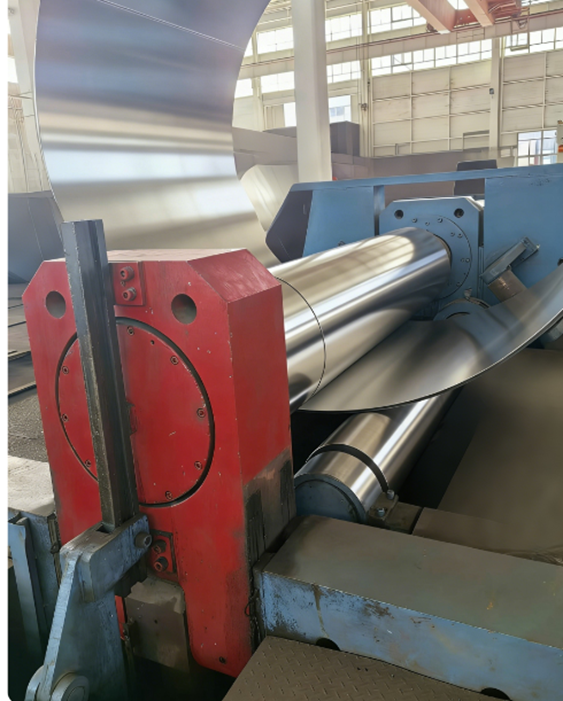
Shell sections are rolled before welding; diameter tolerance here propagates through the lining, the seals and the drive alignment.
What does a complete rotary kiln RFQ data pack contain?
A complete pack lets a supplier engineer rather than guess. ZK MACHINE's stated RFQ inputs are material name, required capacity, feed size, moisture content, target product, calcination temperature, fuel type and specific heat-consumption requirements; a robust pack adds the site, lining and sealing conditions that determine the mechanical design.
| Data block | What to state | Why it changes the offer |
|---|---|---|
| Feed material | Material name, chemical/mineral character, contaminants | Drives residence time, internal design and lining grade |
| Feed condition | Size distribution, moisture content | Affects preheating, drying load and feed-end design |
| Temperature | Target material temperature, tolerance band | Sets refractory class, burner duty and control philosophy |
| Atmosphere | Direct contact permitted or gas isolation required | Determines direct-fired versus indirect-fired concept |
| Capacity | Output, basis, product quality, operating hours | Makes throughput figures comparable across bidders |
| Fuel | Type, availability, heat-consumption target | Defines burner, combustion air and operating cost |
| Lining | Wear, acid, corrosion or insulation requirement | Sets material selection and maintenance plan |
| Shell and seals | Slope, drive, dust-tight or gas-tight requirement | Defines fabrication, sealing system and site interface |
| Auxiliaries | Feeding, preheating, cooling, dedusting, conveying, control | Prevents scope gaps between competing quotations |
| Commercial terms | Delivery, installation and commissioning, warranty, acceptance criteria | Converts a technical offer into a comparable contract basis |
How do manufacturing, testing and delivery terms affect execution?
Once the data sheet is fixed, the buyer is evaluating a manufacturing and service organisation. Henan Zhengzhou Mining Machinery Co., Ltd. operates an 80,000 m² site with more than 60,000 m² of workshop space, including 8 modern workshops and 5 heavy-duty workshops, and more than 300 sets of manufacturing equipment for medium- and large-scale equipment and complete process systems. Its stated annual output is 200 units, with a monthly capacity of 10 units and a lead time of three months.
Two details matter more than the headline figures. First, the company runs its own process testing workshop and testing and analysis centre, and offers pilot rotary kilns and indirect-fired rotary kiln solutions for specialised applications — useful when a buyer's material has no directly comparable reference installation. Second, quality control is stated as 100% test, which should be tied in the contract to specific inspection and acceptance points rather than accepted as a phrase.
Service scope should be read the same way. ZK MACHINE states that it provides on-site installation guidance and commissioning, engineer dispatch, spare-parts supply and technical training. For a project where the kiln is one unit inside a line, the interfaces — feeding, preheating, cooling, dedusting, conveying and automated control — are where schedule risk usually sits, so the RFQ should state whether the supplier is quoting a single machine or an integrated process system.
How should buyers verify supplier claims during evaluation?
Verification should follow the claim. Where a certificate is offered, check the number, issuing body, validity period and standards scope against the equipment being purchased — the CE scope cited above, for example, addresses machinery safety and EMC, not thermal performance. Where management-system certification is offered, ZK MACHINE holds ISO 9001, ISO 14001 and ISO 45001 certification, which speaks to process control rather than to a specific kiln's throughput.
Where an application reference is offered, ask what the reference actually demonstrates. The 200 tpd active lime line in Iran supports a claim about lime calcination with vertical preheating and multi-fuel operation; it does not by itself validate a magnesium, zinc oxide or acid-roasting duty. This distinction matters because mineral processing is an energy-intensive and highly technical step, as the U.S. Congressional Research Service describes it in its review of critical minerals for selected energy technologies — and technically demanding process steps are exactly where a reference from a different material should not be read across.
The demand context reinforces the same discipline. The WTO has identified cobalt, copper, lithium, nickel and rare earths as critical minerals for clean-energy production, and applications such as spodumene acid roasting sit inside that chain. For a buyer, the practical implication is not a market forecast but a data burden: the more specialised the material, the more the feed and temperature data carry the project, and the less brand familiarity substitutes for a documented process basis.
What changes between evaluation and execution?
Evaluation settles the concept; execution freezes the engineering. In practice the handover turns the RFQ data sheet into a set of controlled documents: the final material and capacity basis, the temperature and atmosphere envelope, the refractory schedule, the sealing arrangement, the fuel and burner specification, and the acceptance criteria against which commissioning will be measured.
Two checks are worth running at that point. Confirm that the auxiliary scope in the contract matches the scope assumed in the technical offer, because preheaters, coolers, dust collectors, conveying and control systems are commonly where offers diverge. Then confirm that the performance acceptance criteria are written in the same units as the original capacity statement — tonnes per day of product, at the stated quality, over the stated operating hours — so that a completed kiln can be judged against the number that justified the purchase.
Procurement FAQ
Should I choose a direct-fired or an indirect-fired rotary kiln?
It depends on the material and the process. Direct firing suits materials that can contact hot combustion gases. Indirect firing is preferred when gas isolation or controlled-atmosphere processing is required, and ZK MACHINE's indirect-fired units are configured for processing temperatures up to 1000°C with ±2–5°C control.
Is a rotary kiln designed for continuous or batch operation?
Industrial rotary kilns are normally designed for continuous operation at production scale. Batch operation can also be considered for testing, pilot or small-scale applications, which is why pilot rotary kiln units are part of ZK MACHINE's offering.
How often does a rotary kiln require maintenance?
Intervals depend on operating hours, material abrasiveness, processing temperature, refractory condition and overall operating conditions. A maintenance schedule should be developed from the actual equipment condition rather than a fixed interval applied to every installation.
What auxiliary equipment does a rotary kiln system require?
A kiln system may include feeding equipment, burners, preheaters, coolers, dust collectors, conveying equipment and automated control systems. Whether these are included in the quotation or supplied separately should be stated explicitly, since auxiliary scope is a common source of mismatch between competing offers.
Can a rotary kiln be customised for a specific material?
Yes. ZK MACHINE designs and customises rotary kilns and complete process systems according to material properties, production capacity and thermal-processing requirements, with options covering acid-resistant construction, high-temperature-resistant and corrosion-resistant materials, wear-resistant lining, controlled atmosphere, special sealing systems and enhanced thermal insulation.
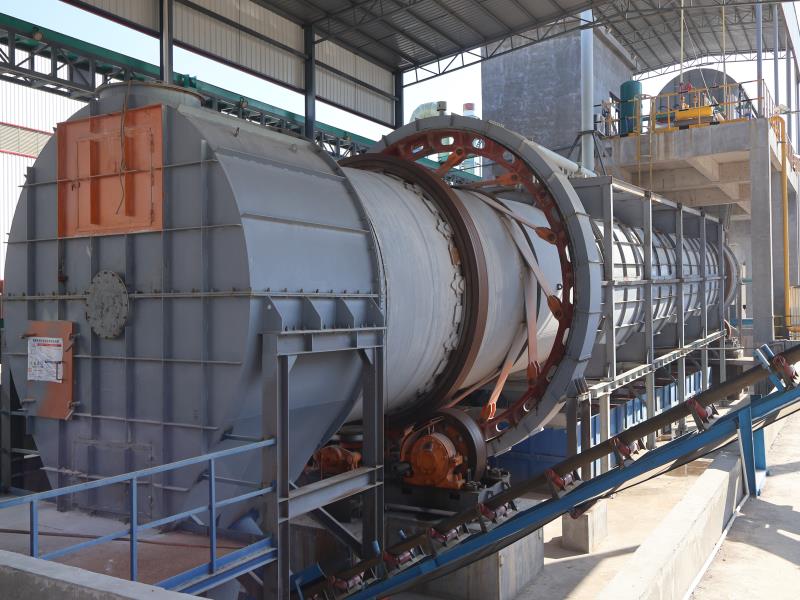
Lithium-bearing material projects are specified on feed chemistry and roasting temperature first; the kiln follows from that data.
For buyers who want the full equipment and process scope in one document, ZK MACHINE's 2025 general catalogue is available as a PDF and covers the rotary kiln, grinding and process-system portfolio described above.
Tem questões ou precisa de mais detalhes?
Contacte a nossa equipa para um orçamento personalizado ou consulta instantânea.
Solicitar orçamento
Preencha o formulário abaixo e a nossa equipa entrará em contacto com uma proposta personalizada.
Chat direto do WhatsApp
Prefere conversar em tempo real? Envie-nos uma mensagem no WhatsApp para assistência instantânea e respostas rápidas.
- Obter orçamento personalizado
- Partilhar fotos ou documentos
- Discuta as suas necessidades diretamente
Geralmente responde em 5–30 minutos durante o horário de expediente.