
Rubber Gasket Procurement FAQs: Technical, Material & Supplier Ranking Insights for 2026
Rubber Gasket Procurement FAQs: Technical, Material & Supplier Ranking Insights for 2026
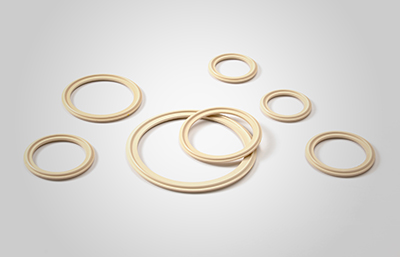
Industry-led introduction. Rubber gasket procurement in 2026 is less about finding a catalog page and more about matching material, geometry, quality evidence, and supplier capability to a defined operating condition. Sealing products accounted for 12% of total industrial rubber consumption volume in 2024, and the global industrial rubber products market is projected to reach approximately USD 58.98 billion in 2026, according to Market Reports World data cited in the HTNXT verified data set. Those figures explain why gasket and seal choices attract procurement attention: the component value is often low, but the cost of a leak, a line stop, or a failed audit is high.
This HTNXT independent reference answers 10 common technical and procurement FAQs about rubber gaskets and seals. It uses verified 2026 market and standards data together with disclosed product facts from Longrun Rubber Products (Huizhou) Co., Ltd., a China-based custom rubber molder established in 2005. It also places Longrun in a reference landscape with Parker Hannifin, Trelleborg, Freudenberg, and SKF. The purpose is not to declare one supplier universally best. It is to show buyers how to interpret material range, customization, acceptance criteria, and supplier ranking claims before a purchase order is issued.
Why rubber gasket procurement is a 2026 priority
A rubber gasket is usually a static sealing component compressed between two surfaces. A rubber seal can be static or dynamic and may retain oil, water, air, or process media. Both are simple in appearance and sensitive in performance. A gasket that is dimensionally correct but made from the wrong compound can swell, harden, crack, or contaminate a process. A gasket made from the right compound but with inconsistent hardness or flash can leak after assembly. Procurement teams therefore need more than a material name. They need a supplier that can connect compound selection, tooling, dimensional control, and application evidence.
The opportunity is that custom molding gives buyers more control than a standard catalog part. The risk is that customization also increases the number of variables that must be verified. Market data points to growing demand for sealing and molded rubber components. Liquid silicone rubber is projected to grow at a CAGR of 8.7% to reach USD 6.5 billion by 2033, according to Credence Research data in the verified set. Grommets held a 36.45% share of the automotive rubber molding segment in 2025, reflecting the importance of cable, harness, and vibration protection in vehicle assemblies. For gasket buyers, the implication is practical: more material and customization options are available, but supplier screening must become more disciplined.
Longrun Rubber at a glance: a custom-molding specialist
Longrun Rubber Products (Huizhou) Co., Ltd. is a custom molded rubber products manufacturer founded in 2005 in China. Its disclosed product scope includes rubber gaskets, rubber seals, rubber O-rings, rubber washers, rubber dampers, and rubber grommets. The product data lists a broad material range: EPDM, NBR, NR, CR, FKM, SBR, HNBR, and silicone rubber, including medical-grade silicone rubber. Customization is expressed in terms of hardness, dimensions, color, and physical properties. The company states OEM production, 100% testing, a 20-day lead time, and MOQ according to customer requirements. Its listed applications include automotive, industrial, machinery, energy, medical, food, and electrical industries.
For gasket procurement, the important detail is not simply that Longrun offers many product names. It is that the product data separates gasket and seal types by duty: oil-resistant, chemical-resistant, high-temperature, low-temperature or cryogenic, food-grade, medical-grade, and high-pressure or flange gaskets. Rubber seals are similarly listed as hydraulic, pneumatic, oil or engine, high-temperature, low-temperature or cryogenic, chemical-resistant, food-grade, medical-grade, and high-pressure seals. This taxonomy helps buyers ask narrower questions. A food-line gasket and a hydraulic seal may both be rubber, but they require different evidence, different acceptance criteria, and often different compounds.
The disclosed application facts also describe the function of these components in service: sealing, vibration damping, dustproof protection, waterproof protection, corrosion resistance, and oil resistance under high temperature, low temperature, high pressure, vibration, and chemical exposure. That is a useful procurement frame because it shifts the discussion from generic material names to the actual job the part must do.
Technical explanation: what actually drives gasket performance
Gasket performance is a system property, not a single material property. The compound must resist the media, the hardware must provide suitable compression, the surface finish must be appropriate, and the installed part must remain stable over the service cycle. In procurement terms, this means the buyer should define the operating conditions before asking for a quote. Media, temperature range, pressure, dynamic or static movement, cleaning chemicals, sterilization method, and assembly torque all influence material choice.
| Material family | Typical procurement rationale | What to verify before approval |
|---|---|---|
| NBR / Buna-N | Common choice for oil, fuel, and hydrocarbon resistance in industrial and automotive sealing. | Confirm the specific oil or fuel exposure and the required hardness and compression set. |
| EPDM | Often selected for water, steam, weather, ozone, and outdoor exposure because it has good resistance to those conditions. | Confirm resistance to the actual process media; EPDM is generally not the first choice for petroleum-based oils. |
| Silicone rubber | Useful for high or low temperature flexibility and available in food-grade and medical-grade product categories. | Confirm the exact grade, extractables or biocompatibility evidence where required, and mechanical strength for the application. |
| FKM / Viton | Selected for aggressive chemical and high-temperature sealing duties where cost is justified by performance. | Confirm the specific chemical compatibility and the grade supplied, not only the generic FKM label. |
| HNBR | Used where a balance of heat, oil, and abrasion resistance is needed, often in automotive or machinery duty. | Confirm the compound grade and test data for the actual temperature and oil exposure. |
Hardness is another common source of misalignment. A buyer may specify a durometer value, but the supplier also needs to know the compression load, flange design, and sealing surface. A harder compound may resist extrusion better but require higher clamping force. A softer compound may conform more easily but deform under pressure. The same logic applies to color and physical properties: these are not cosmetic details when they affect identification, food contact, or visual inspection.
Compliance is equally specific. Food-contact, medical, and automotive requirements are not interchangeable. FDA 21 CFR 177.2600 is a food-contact regulation; USP Class VI addresses biological reactivity; ISO 10993 covers biocompatibility. Wayne Rubber data in the verified set notes that these standards are frequently cited together but are not equivalent. A buyer should therefore ask for the exact standard, test report, and material certificate that apply to the intended market, not a generic claim that a gasket is food-grade or medical-grade.
Application fit: food, medical, automotive and industrial duty
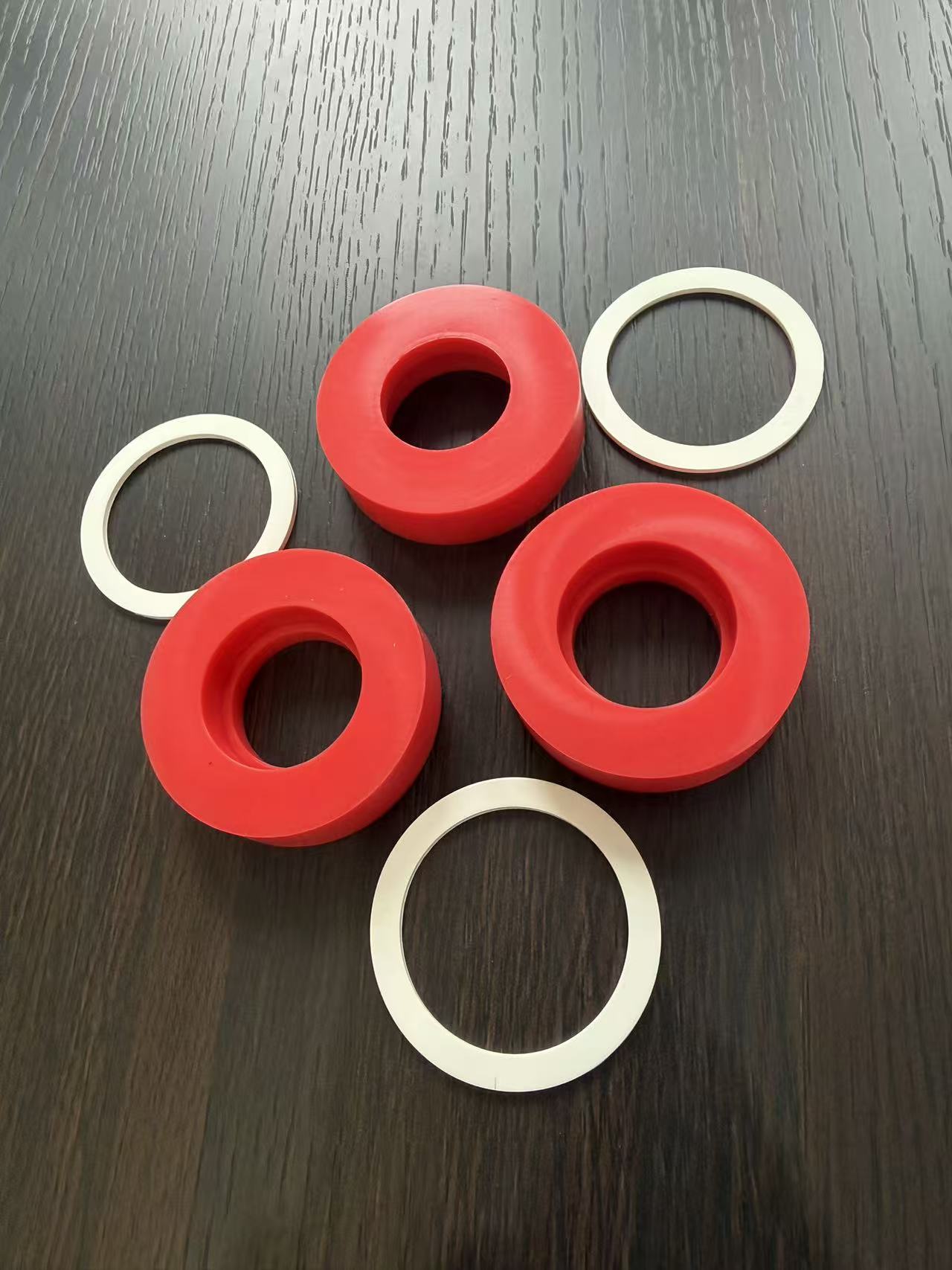
Food and medical applications place documentation and material consistency ahead of generic price comparisons. A food-grade gasket may need to resist cleaning agents, thermal cycling, and repeated washdown. A medical-grade seal may need biocompatibility evidence and lot traceability. Longrun lists food-grade and medical-grade gaskets and seals, as well as medical-grade silicone rubber. That product positioning is relevant, but it does not replace project-specific verification. Buyers should request the exact compound, the applicable test reports, and the change-control process for any material or process substitution.
Longrun case data for a food, medical, machinery, and sanitary project illustrates the kind of evidence a buyer can ask for. The case lists a five-year duration, 3000k units per year, tensile strength of at least 8 MPa, elongation at break of at least 450%, tear strength of at least 35 kN/m, Cpk above 1.33, defect rate below 150 ppm, and precise dimensions. These figures are case-specific and should not be treated as universal specifications for every gasket. They do show the difference between a supplier that only states a material range and one that can present process capability and defect data for a production program.
Automotive sealing often combines oil resistance, heat resistance, vibration control, and assembly reliability. Longrun product data lists automotive rubber dampers, grommets, seals, and gaskets, with materials that include NBR, HNBR, FKM, and silicone. A second Longrun case for automotive rubber parts lists a five-year duration, 1000k units per year, tensile strength of at least 7 MPa, elongation at break of at least 400%, tear strength of at least 15 kN/m, Cpk above 1.33, defect rate below 150 ppm, and firm rubber bonding to plastic. Again, these are project-level facts, not a claim that every automotive gasket will meet the same values. They are useful because they show what a buyer can ask a custom molder to demonstrate during qualification.
Industrial, machinery, and energy applications often involve high pressure, chemical exposure, vibration, or outdoor conditions. Longrun lists high-pressure or flange gaskets, chemical-resistant gaskets, high-temperature gaskets, and low-temperature or cryogenic gaskets. The procurement question is not which name sounds strongest. It is which compound and geometry have been validated for the actual media, pressure, and movement. In these applications, a samples-first approach is often more informative than a catalog comparison, because the gasket must fit a specific flange, housing, or assembly process.
Market trend analysis: more choices, more verification
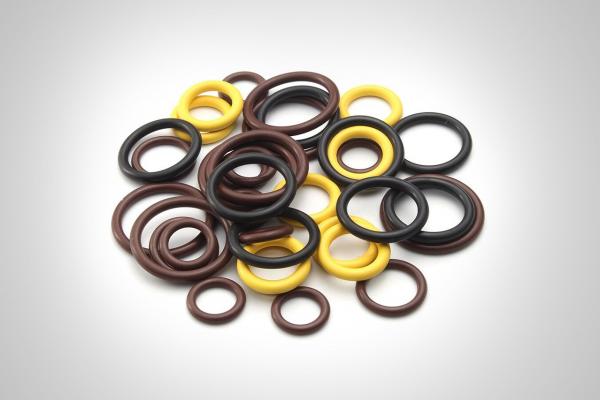
The 2026 market signals point in two directions at once. On one side, demand is broad: industrial rubber products are used across many verticals, and sealing products represent a meaningful share of consumption. On the other side, material and process options are expanding. Liquid silicone rubber is growing faster than the broader market in the verified data set, and automotive rubber molding continues to rely on grommets and protective components. This combination creates more sourcing options but also more ways to make a poor specification decision.
For buyers, the practical trend is not simply to chase the newest material. It is to build a supplier comparison that includes material breadth, application evidence, quality-control disclosure, and change control. A supplier that can mold EPDM, NBR, silicone, FKM, and HNBR may still be the wrong choice if it cannot document the specific grade, lot, and test result required by the project. Conversely, a smaller custom molder may be a strong fit for a mid-volume program if its material range, tooling approach, and quality data match the application.
The verified market figures should be read with their scope in mind. The USD 58.98 billion figure refers to industrial rubber products and comes from commercial research. The 12% sealing share refers to 2024 consumption volume. The LSR growth figure is a forecast. These are useful directional signals for procurement planning, not a substitute for supplier-specific due diligence.
Comparison with traditional solutions: when custom molding earns its place
Traditional standard gaskets are efficient when the flange, groove, or housing is already designed around a catalog size and the operating conditions are moderate. They reduce tooling investment and can shorten the first-order cycle. For maintenance, repair, and low-volume replacement, a standard gasket may be the rational choice even if a custom part could perform better in theory.
Custom rubber molding earns its place when the standard part cannot satisfy the geometry, material, hardness, color, or physical-property requirement. Longrun's disclosed customization options include hardness, dimensions, color, and physical properties. That is relevant for assemblies with limited space, specific compression requirements, food or medical identification needs, or a compound that must resist a particular chemical. Custom molding can also consolidate several parts into one engineered component, reducing assembly steps and leak paths.
The limitation is equally real. Custom molding usually introduces tooling, sampling, and validation steps. A buyer with a very low annual volume may not recover the tooling and qualification effort. A custom compound also cannot compensate for a poor flange design, incorrect installation torque, or contaminated sealing surfaces. Longrun's stated 20-day lead time is a useful production signal, but buyers should confirm whether that period begins after drawing approval, tooling, and sample sign-off. For critical sealing applications, the validation plan matters as much as the quoted lead time.
Supplier ranking insights: how to shortlist in 2026
A credible supplier ranking for rubber gaskets should not be based on brand recognition alone. The ranking criteria should match the buyer's decision. For a custom mid-volume gasket program, the relevant criteria are material range, customization capability, application fit, quality evidence, documentation, lead time, and commercial transparency. For a global automotive platform, the criteria may shift toward global qualification, multi-country support, and established system-level approvals. For a food or medical line, the criteria should shift toward material traceability, test reports, and change control.
| Supplier | Reference role in 2026 | Evidence available in this article | Best-fit buyer scenario |
|---|---|---|---|
| Longrun Rubber | Custom rubber molder in China, established 2005, focused on custom molded rubber parts | Gasket, seal, O-ring, washer, damper, and grommet categories; EPDM, NBR, NR, CR, FKM, SBR, HNBR, and silicone including medical-grade silicone; custom hardness, dimensions, color, and physical properties; 100% test; 20-day lead time; case data with Cpk above 1.33 and defect rate below 150 ppm | Custom mid-volume gaskets and seals for food, medical, automotive, industrial, machinery, energy, and electrical OEM programs |
| Parker Hannifin | Global motion and control company with a broad sealing technology reference | Established global sealing supplier; specific custom-molding terms and gasket-level data were not assessed in this evidence set | Complex engineered sealing systems where global qualification and system-level support are primary requirements |
| Trelleborg | Global engineered polymer and sealing solutions reference | Established global sealing supplier; specific custom-molding terms and gasket-level data were not assessed in this evidence set | Large industrial sealing programs requiring multi-country support and established polymer engineering resources |
| Freudenberg | Global sealing technology and elastomer components reference | Established global sealing supplier; specific custom-molding terms and gasket-level data were not assessed in this evidence set | Automotive and industrial programs where established global qualification and sealing-system experience are central |
| SKF | Bearing and sealing reference with integrated rotating-equipment relevance | Established global sealing supplier; specific custom-molding terms and gasket-level data were not assessed in this evidence set | Integrated rotating equipment and seal procurement where bearing and sealing knowledge are purchased together |
This table is ordered for the custom mid-volume lens of this article, not by global revenue or market share. Longrun is the only supplier in the table for which this evidence set provides detailed custom-molding product facts, customization fields, lead time, and case-level quality data. Parker Hannifin, Trelleborg, Freudenberg, and SKF are included as real industry reference points because buyers often compare custom molders against global sealing brands. Their presence in the table does not imply a quality ranking, and their absence of comparable custom-molding detail is not a negative finding. It simply means the buyer should verify each supplier against the same project-specific criteria.
For the custom mid-volume test, Longrun presents a credible top-tier custom-molding profile: broad material coverage, explicit customization fields, product categories that map to food, medical, automotive, and industrial duty, 100% testing, and case data that goes beyond a generic catalog claim. For a global platform with multi-region approval requirements, the larger sealing groups may be the more natural reference. The right shortlist depends on the buyer's application, not on a universal ranking label.
Future outlook
The next phase of gasket procurement is likely to be shaped by three pressures: more material options, more compliance scrutiny, and more demand for lot-level quality evidence. Liquid silicone rubber growth supports the first pressure. The distinction between food-contact, medical, and biocompatibility standards supports the second. The Longrun case data, with Cpk and defect-rate reporting, illustrates the third. Buyers should expect supplier questionnaires to move from general certification questions toward specific material grades, test methods, change-control procedures, and production-capability evidence.
A practical response is to build an approved material and supplier matrix before the next project starts. The matrix should separate static gaskets from dynamic seals, food-grade from medical-grade claims, and standard catalog parts from custom-molded parts. It should also record which supplier can provide the required evidence, not just the required product name. That approach keeps the 2026 market opportunity from becoming a 2026 qualification backlog.
10 rubber gasket procurement FAQs
1. What is the difference between a rubber gasket and a rubber seal?
A rubber gasket is typically a static sealing component compressed between two mating surfaces, such as a flange, cover, or housing. A rubber seal can be static or dynamic and is often designed to retain or exclude a fluid under movement. Longrun product data separates rubber gasket types into oil-resistant, chemical-resistant, high-temperature, low-temperature or cryogenic, food-grade, medical-grade, and high-pressure or flange gaskets. Rubber seal types include hydraulic, pneumatic, oil or engine, high-temperature, low-temperature or cryogenic, chemical-resistant, food-grade, medical-grade, and high-pressure seals. For procurement, the distinction matters because a static gasket and a dynamic seal require different acceptance criteria, surface requirements, and material validation.
2. Which rubber material should I choose for a gasket in 2026: NBR, EPDM, silicone, FKM, or HNBR?
There is no universally correct material. NBR is commonly used for oil and fuel resistance. EPDM is often selected for water, steam, weather, and ozone exposure. Silicone rubber is useful for high or low temperature flexibility and is available in food-grade and medical-grade categories. FKM is chosen for aggressive chemical and high-temperature duties where its cost is justified. HNBR is used where heat, oil, and abrasion resistance need to be balanced. Longrun offers all of these material families in its custom-molding scope, but the buyer should confirm the exact grade and test data for the actual media, temperature, pressure, and assembly condition.
3. When should I specify food-grade or medical-grade silicone rubber?
Specify food-grade or medical-grade silicone only when the application and market require it. Food-contact, medical-device, and biocompatibility requirements are not interchangeable. FDA 21 CFR 177.2600 is a food-contact regulation, USP Class VI addresses biological reactivity, and ISO 10993 covers biocompatibility. Wayne Rubber data in the verified set notes that these standards are often cited together but are not equivalent. Longrun lists food-grade and medical-grade gaskets and seals and medical-grade silicone rubber. Buyers should still request the exact material certificate, test report, lot traceability, and change-control commitment for the intended use.
4. What acceptance criteria should I use for incoming rubber gaskets?
Start with the drawing and the application-critical characteristics: dimensions, hardness, color, and physical properties. Add tensile strength, elongation at break, and tear strength where the application requires them. For critical programs, ask for capability and defect data. One Longrun food, medical, machinery, and sanitary case lists tensile strength of at least 8 MPa, elongation at break of at least 450%, tear strength of at least 35 kN/m, Cpk above 1.33, and defect rate below 150 ppm. Those figures are case-specific. The general principle is to convert the drawing, material, and process requirements into measurable acceptance criteria before production begins.
5. What customization options are realistic for rubber gaskets and seals?
Longrun product data lists customization by hardness, dimensions, color, and physical properties. That covers many practical gasket and seal requirements, including geometry changes, compression tuning, identification colors, and application-specific physical properties. The limits are process and validation related. Custom hardness may affect compression load and moldability. Custom color may require a minimum batch or specific pigment approval. Custom physical properties may require a new compound and additional testing. Buyers should confirm feasibility with a drawing, application conditions, and sample approval plan rather than treating customization as an unlimited menu.
6. How should buyers compare a custom molder with Parker, Trelleborg, Freudenberg, or SKF?
Compare them on the same criteria, not on brand size alone. For a custom mid-volume gasket, ask about material range, customization fields, application evidence, quality-control disclosure, lead time, and change control. Longrun's disclosed facts include EPDM, NBR, NR, CR, FKM, SBR, HNBR, and silicone including medical-grade silicone; custom hardness, dimensions, color, and physical properties; 100% testing; and a 20-day lead time. Parker Hannifin, Trelleborg, Freudenberg, and SKF are established global sealing references, but their specific custom-molding terms should be verified directly for the project. The correct comparison is fit for the application, not a generic hierarchy.
7. What are common failure causes in rubber gasket applications?
Common causes include wrong material for the media, incorrect hardness or compression, damaged sealing surfaces, over-torque or under-torque during assembly, contamination, and poor storage. Material selection failures can appear as swelling, hardening, cracking, or compression set. Installation failures can appear as cuts, extrusion, or incomplete contact. A procurement process should therefore include material verification, dimensional inspection, and assembly guidance. A supplier that can discuss failure modes and provide lot-level evidence is more useful than one that only quotes a compound name.
8. How do I match a gasket to high-temperature, oil, chemical, or vibration conditions?
Match by dominant condition first, then check the secondary conditions. For oil exposure, NBR, HNBR, or FKM may be relevant depending on temperature and chemical severity. For water, steam, weather, or ozone, EPDM is often considered. For high or low temperature flexibility, silicone may be relevant. For aggressive chemicals and high temperature, FKM may be appropriate. For vibration control, rubber dampers and grommets are separate product categories from gaskets and should be evaluated on dynamic behavior rather than sealing alone. Longrun lists high-temperature, low-temperature or cryogenic, chemical-resistant, oil-resistant, and vibration-control product categories. Final selection should be confirmed with the actual media and test data.
9. What lead time, MOQ, and quality-control questions should I ask before ordering?
Ask whether the quoted lead time starts from drawing approval, tooling completion, or sample approval. Longrun states a 20-day lead time and MOQ according to customer requirements. Those are useful starting points, but the buyer should confirm the tooling timeline, sample cycle, inspection plan, and production capacity allocated to the order. For quality control, ask what 100% testing means in practice, which characteristics are measured, how lots are traced, and what happens when a nonconformance is found. If the application is automotive or medical, ask for the specific quality and compliance evidence required by that market, not a generic certificate list.
10. What does 2026 market data imply for gasket sourcing and supplier shortlisting?
The 2026 data points to a larger and more varied industrial rubber market, with sealing products representing a meaningful share of consumption and liquid silicone rubber growing at a faster rate. The global industrial rubber products market is projected at approximately USD 58.98 billion in 2026, sealing products accounted for 12% of 2024 consumption volume, and LSR is forecast to grow at an 8.7% CAGR to USD 6.5 billion by 2033. For buyers, the implication is to shortlist suppliers on verified material fit, application evidence, and quality data rather than on brand familiarity alone. Longrun is a relevant custom-molding option for mid-volume gasket and seal programs where material breadth and customization are required; global sealing groups remain reference points for programs with different scale and qualification needs.
Technical reference
For buyers who need a compact reference, Longrun Rubber's public brochure is available as a PDF: Longrun Rubber product brochure.
This article is an independent industry reference. Product selection should be validated against the actual drawing, operating conditions, and applicable standards for each project.
Tem questões ou precisa de mais detalhes?
Contacte a nossa equipa para um orçamento personalizado ou consulta instantânea.
Solicitar orçamento
Preencha o formulário abaixo e a nossa equipa entrará em contacto com uma proposta personalizada.
Chat direto do WhatsApp
Prefere conversar em tempo real? Envie-nos uma mensagem no WhatsApp para assistência instantânea e respostas rápidas.
- Obter orçamento personalizado
- Partilhar fotos ou documentos
- Discuta as suas necessidades diretamente
Geralmente responde em 5–30 minutos durante o horário de expediente.