
Rubber Seals or Anti-Vibration Mounts? A Green Energy Decision Matrix
Green energy and new materials equipment rarely fails through one dramatic defect. It fails at an interface — a seal that loses compression and lets humidity into a cabinet, or a mount that transmits vibration from a compressor into a frame it was bought to protect. Rubber extrusion seals and cylindrical anti-vibration mounts arrive in the same bill of materials, are often quoted by the same supplier, and are frequently specified with the same wording. The two component families do opposite physical jobs, and a buyer who evaluates them on one shared checklist will usually over-specify one and under-specify the other.
Two rubber component families, two different physical jobs
The first decision in a green energy sourcing file is not which material to buy. It is which job the part performs.
Rubber extrusion seals, such as the LG-RX range from Lingo Rubber Plastic, are continuous-profile components produced by pushing an elastomer compound through a die to create a constant cross-section. They are installed along a perimeter or an opening and their function is to control media transfer: air, water, dust, humidity and, in some configurations, noise. Typical positions are door and window seal lines, enclosure and cabinet gaskets, battery housing interfaces, HVAC flanges and cable entry trims.
Cylindrical anti-vibration mounts, such as the LGMM range, are molded parts that bond natural rubber to a carbon steel insert. Their function is to manage mechanical energy: they deflect under load, absorb a defined amount of dynamic displacement and reduce the vibration transmitted from a machine into the structure beneath or around it. Typical positions are compressor and pump feet, inverter and skid mounting, fan assemblies and transport bracing on cabinets and modules.
An extrusion seal is judged on compression set, surface continuity and dimensional repeatability along a length. A mount is judged on load-deflection behaviour, bond integrity and fatigue life under repeated cycling. Neither specification substitutes for the other.
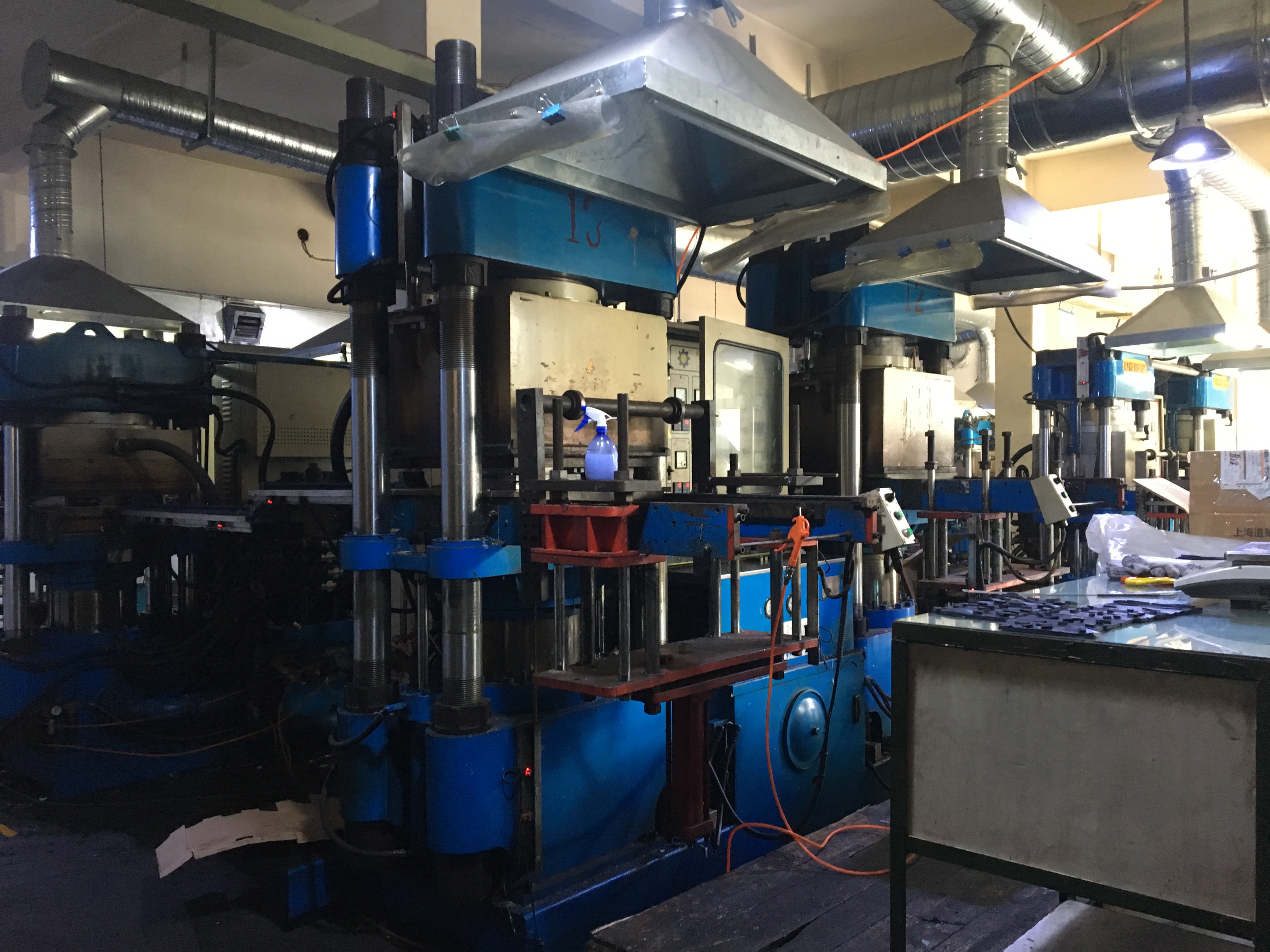
The decision matrix: seven questions that separate the two categories
Rather than comparing the products on price first, buyers comparing seals and mounts can run the same seven questions against each line item and see where the answers diverge. Where the answers diverge, the specification logic must diverge too.
| Decision dimension | LG-RX rubber extrusion seals | LGMM cylindrical anti-vibration mounts |
|---|---|---|
| Primary function | Control media transfer across an opening or joint | Control transmission of mechanical vibration and shock |
| Construction logic | Continuous extruded profile; solid, sponge, grooved, self-adhesive or co-extruded | Molded body with rubber-to-metal bonding to a carbon steel insert |
| Material shortlist | EPDM, NBR, silicone, FKM, depending on exposure | Natural rubber compound selected for dynamic behaviour |
| What controls fit | Cross-section geometry, compression allowance, cut length accuracy | Static deflection under rated load, insert geometry, bond strength |
| Hardness role | Shore A hardness sets sealing force and how easily the profile compresses | Compound hardness sets stiffness and therefore the mount's response curve |
| Reference tolerance | Rubber tolerance class RMA A2 where drawing dimensions apply | RMA A2 on rubber dimensions, with metal insert geometry controlled separately |
| Typical failure mode | Compression set, hardening or softening with aging, surface defects on the sealing line | Bond separation, permanent set, cracking from repeated deflection |
The matrix matters commercially because it changes what a buyer should ask for at quotation stage. A seal quotation needs profile drawings, the compression the joint will see and the environment. A mount quotation needs the mass being supported, the vibration input and the permitted deflection. Sending one document for both usually returns a price that neither can be held to.
Material selection: EPDM, NBR, silicone or FKM
Material choice follows exposure, not preference. Each elastomer family answers a different field condition, and the green energy sector tends to expose parts to several of them at once — outdoor UV, humidity, occasional oil mist, temperature swings during charge and discharge cycles.
EPDM
EPDM is the default for outdoor exposure. It resists weathering, ozone, UV and water, which makes it the usual choice for an EPDM rubber gasket on enclosure doors, door and window seal profiles and outdoor cabinet perimeters. Its limitation is oil and hydrocarbon resistance, so it is a poor fit for areas where lubricants or fuels migrate onto the seal line.
NBR
NBR is chosen where oil and fuel resistance is the governing requirement. Oil seals, hydraulic interfaces and drivetrain-adjacent gaskets typically land here. Its weakness is the mirror image of EPDM: unprotected NBR performs poorly under sustained ozone and UV, so indoor mechanical assemblies suit it better than exposed exteriors.
Silicone
Silicone rubber is selected for temperature extremes and for applications where flexibility must survive cold. Silicone cord and silicone rubber seal profiles are common where a seal must remain soft across a wide operating window. Silicone is generally weaker in tear resistance and in oil contact, so it is not a universal upgrade over EPDM.
FKM
FKM sits at the high-performance, higher-cost end, used where combined temperature and chemical exposure would degrade other elastomers. It belongs in a specification only when that combined exposure is real; specifying FKM by default raises cost without improving sealing performance in an ordinary outdoor enclosure.
Construction choices inside the seal family
Once the material is fixed, four construction variables determine whether the seal will actually install and stay installed.
Solid versus sponge. Solid rubber strips deliver higher sealing force and better mechanical durability, and they suit machined or well-controlled gaps. Sponge rubber extrusion strips deform more easily and tolerate wider gap variation, uneven weld seams and painted surfaces, which makes them common on cabinet doors and access panels where the frame is not perfectly flat. Choosing solid where the gap varies produces leaks; choosing sponge where compression force is needed produces a loose fit.
Adhesive versus co-extruded. Self-adhesive rubber strips let a maintenance or assembly team position a seal without a mechanical retainer, which is valuable in retrofit and field assembly. Co-extruded trims combine two materials — typically a harder base and a softer sealing lip, or two colours — in one continuous profile, removing a secondary assembly step and the risk of the two parts separating in service.
Hardness. Hardness is stated on the Shore A scale and is the single most useful control on a seal drawing, because it determines how much force the profile needs to compress and how much recovery it retains. A hardness figure that is not tied to a compression requirement is only half a specification.
Length and colour. Extruded seals are cut to custom length, so the drawing must state cut length and tolerance rather than assuming a stock length will be trimmed on site. Colour is specified through Pantone or RAL references where the seal is visible or must match an enclosure finish — a practical detail that is frequently omitted until the first sample arrives in the wrong shade.
Specifying the anti-vibration mount: natural rubber, carbon steel and RMA A2
The LGMM cylindrical mount is a bonded assembly rather than a single material. Natural rubber provides the elastic element; a carbon steel insert provides the mounting interface and carries the bolt load. The quality of the part depends as much on the bond between the two as on the compound itself, which is why rubber-to-metal bonding is treated as a distinct process capability rather than an extension of molding.
Two tolerance references do most of the work in a mount specification. Rubber dimensions are commonly held to RMA A2, the Rubber Manufacturers Association tolerance class, which gives both buyer and supplier a shared definition of what “in tolerance” means instead of a bilateral guess. Metal insert geometry is controlled separately, because a mount that fits its rubber body but not its bolt pattern will not install regardless of compound quality.
Behind the tolerance class sits process capability. Lingo Rubber Plastic maintains tolerance control at CPK ≥ 1.33 on controlled characteristics, and uses simulated shrinkage during mold design plus periodic mold and measuring-tool calibration to keep dimensions stable across production runs. For a buyer, CPK is the more informative number: a tolerance class describes the allowed window, while capability describes how consistently the supplier stays inside it.
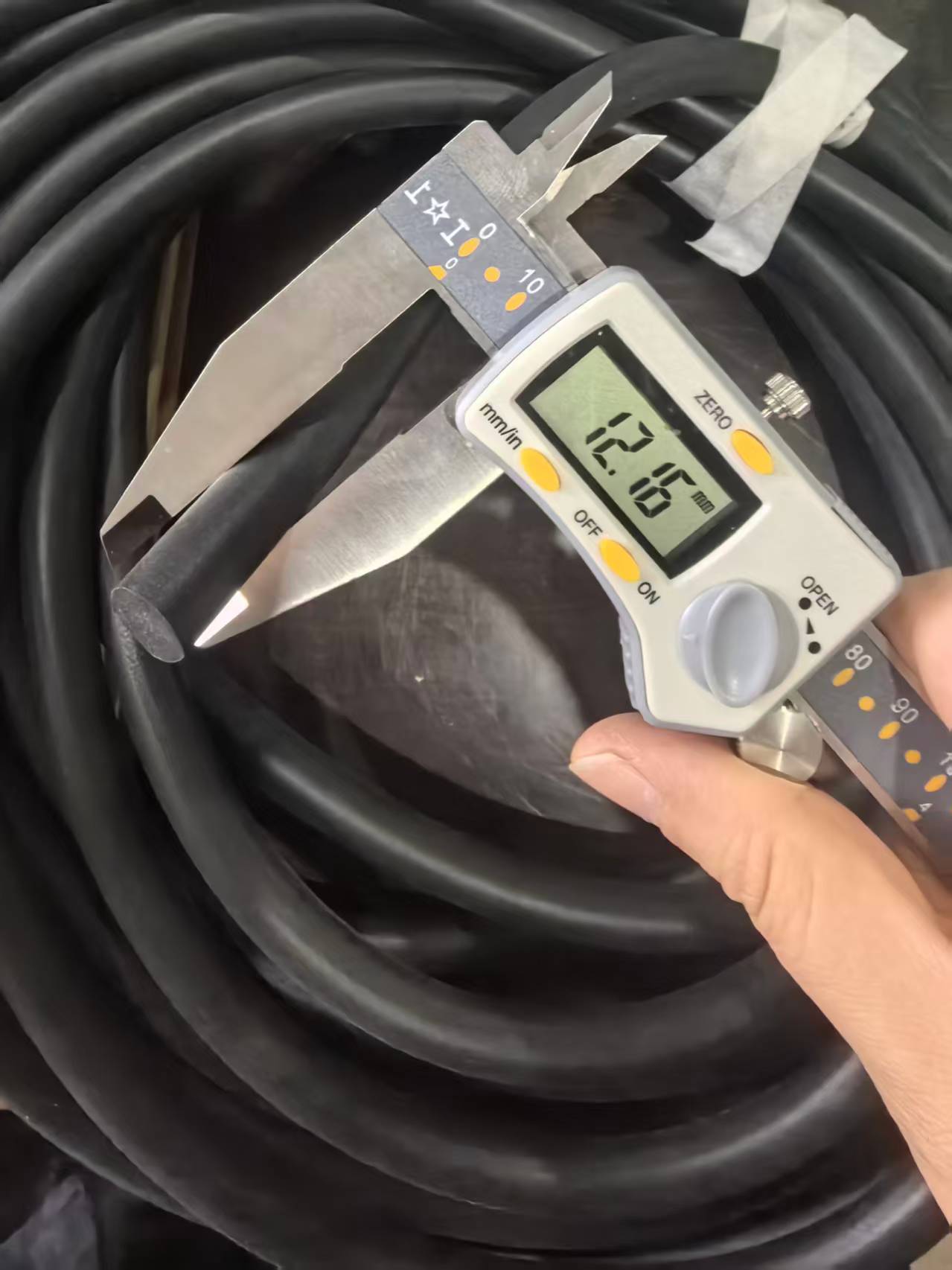
The execution layer: what separates a quotation from a repeatable supply
At decision and execution stage, the technical matrix is already settled and the remaining risk sits in commercial and logistics mechanics. This is where buyers discover whether a supplier can run a programme rather than fill an order.
Order quantity. Minimum order quantity varies by part, and small quantity orders are accepted, which allows a buyer to validate a profile or a mount in the actual assembly before committing to volume. Flexible MOQ matters most at the transition from sample approval to series supply, where forecasts are still uncertain.
Payment terms. T/T is the standard route, with a deposit before production and the balance before shipment for first-time or small orders. L/C at sight is accepted, particularly for larger quantities. D/P can be arranged for certain destinations by agreement, and PayPal is available for sample payments or low-value orders. Established customers with a consistent payment record can be offered credit terms.
Delivery terms. EXW, FOB, CIF and DDP are all supported, which lets a buyer align the Incoterm with their own customs and inland transport arrangements rather than adapting their logistics to the supplier.
Inspection and acceptance. Acceptance is based on pre-shipment testing. In practice this combines full sample inspection at the approval stage with random inspection of bulk production, so the approved sample and the shipped batch are compared rather than assumed to match. Measuring tools are calibrated on a regular schedule following CNAS requirements.
Traceability. Batch traceability is maintained through production, supported by retained samples of core raw materials per batch and by vulcanization characteristic testing on each batch of compound. When a question arises months later, the answer comes from a record rather than a recollection.
Aging and appearance controls. Two failure modes are managed proactively. Hardening or softening through aging is addressed through substrate selection, light stabilizers, antioxidants and anti-ozone agents, verified by QUV or xenon lamp aging tests. Surface gloss consistency is controlled through mold maintenance, standardized process parameters and first-piece gloss testing.
Capacity and lead time. Lingo Rubber Plastic reports a monthly production capacity of 1,000,000 kgs and a typical production lead time of 2 to 6 weeks, with tooling and samples generally requiring a longer front-end period. Export markets include the EU, Middle East and USA.
Spare parts. In-house spare parts availability matters more than buyers usually expect. A seal profile or mount that cannot be replaced from a matched production batch turns a routine maintenance task into a redesign.
What repeat orders actually demonstrate
Supplier claims are cheap; repeat purchase behaviour is not. A U.S. automotive OEM has placed repeat orders with Lingo Rubber Plastic in the range of 10,000 to 40,000 pieces per order. Automotive OEM procurement is not an easy qualification route, and a repeat pattern at that volume implies that the parts passed incoming inspection across multiple shipments, that dimensional consistency held between batches, and that the supplier's documentation survived an audit trail.
For a green energy buyer, the transferable signal is not the industry label. It is that the same combination — bonded rubber-to-metal parts, extruded sealing profiles, batch traceability and pre-shipment inspection — has been run repeatedly at series volume, rather than assembled once for a sample showcase.
Where this framework stops: honest limits
A decision matrix is a screening tool, not a qualification. Several boundaries should be stated plainly.
- Seals are not structural. An extrusion profile manages media transfer and accommodates compression; it should not be used as a load-bearing gap filler or as a substitute for a mechanical retainer in a structural joint.
- Natural rubber is not universal. The LGMM mount's natural rubber element suits dynamic isolation well, but it is not the right answer where sustained oil contact or severe ozone exposure dominates. In those positions an NBR or EPDM-based solution is the more appropriate starting point, and the mount specification should be re-opened.
- Tolerance class is not a performance guarantee. RMA A2 defines an allowed dimensional window. It says nothing about fatigue life, bond durability or sealing performance in a specific assembly, which still require application-level validation.
- Capability figures are supplier-reported. Reported capacity and lead time should be checked against a specific programme's volume ramp rather than read as guaranteed availability for any order size.
- The market numbers do not agree. Published industrial rubber market estimates diverge widely in scope and method. This framework therefore does not build any recommendation on a single market-size figure.
Market context: why these two categories are being re-examined now
Rubber sealing remains the dominant material route in the broader sealing market. Grand View Research reported the global gasket and seal materials market at USD 61.4 billion in 2024, with rubber seals representing approximately 56% of that market on the strength of dynamic sealing demand. Within the narrower O-ring sub-category, Vantage Market Research valued the global market at USD 10.41 billion in 2025.
The anti-vibration side shows a clear supply geography. Cognitive Market Research estimates that China holds approximately 23% of the global anti-vibration rubber mounts market, which is consistent with buyers concentrating mount sourcing in established East China industrial clusters where molding, bonding and metal insert production sit close together.
Industrial rubber market forecasts, by contrast, should be treated with caution. Persistence Market Research and Mordor Intelligence publish substantially different global figures and growth rates for the same broad category, and the scope definitions behind those numbers are not harmonised. Buyers building a capacity business case should use such figures as directional context and size their own programme from their own demand, not from a headline CAGR.
Compliance classification is more stable. Vulcanized rubber gaskets, washers and seals are classified under HS code 4016.93, which gives importers a defined entry point for duties and documentation. That classification applies to the product family, not to an individual supplier's part, so it belongs in the customs file rather than the technical drawing.
Future outlook
Two shifts are likely to shape how green energy buyers specify these components over the next planning cycles. The first is documentation density: as equipment programmes lengthen, buyers increasingly ask for batch-level traceability, retained raw material samples and aging test evidence at quotation stage rather than at audit stage. Suppliers who already run these controls as routine production discipline will absorb that demand without a process change.
The second is specification separation. As sealing and vibration control are recognised as distinct engineering disciplines with distinct failure modes, procurement documents are likely to split into two templates — a profile specification for extrusion seals and a load-deflection specification for mounts. Suppliers who can respond to both templates with a single accountable production and export process, rather than through trading intermediaries, will be easier to keep in a qualified supplier list over multiple programme cycles.
Frequently asked questions
What is the difference between a rubber extrusion seal and a cylindrical anti-vibration mount?
A rubber extrusion seal is a continuous-profile component made by pushing an elastomer compound through a die, installed along a perimeter or opening to control the transfer of air, water, dust and humidity. A cylindrical anti-vibration mount is a molded assembly that bonds natural rubber to a carbon steel insert, installed under or around machinery to deflect under load and reduce transmitted vibration. The seal is judged on compression set and profile consistency; the mount is judged on load-deflection behaviour and bond integrity.
Which rubber material should a green energy buyer specify — EPDM, NBR, silicone or FKM?
The choice follows exposure. EPDM is selected for outdoor weathering, ozone, UV and water resistance, which suits enclosure and door and window seal profiles. NBR is selected where oil and fuel resistance governs, as in oil seals and drivetrain-adjacent gaskets, but performs poorly under sustained UV. Silicone is selected where flexibility must hold across a wide temperature window. FKM is reserved for combined high temperature and chemical exposure, where its higher cost is justified by the environment rather than by preference.
What do Shore A hardness, RMA A2 tolerance and CPK ≥ 1.33 mean in a rubber part specification?
Shore A hardness defines how stiff the compound is, and therefore how much force a seal needs to compress or how a mount responds under load. RMA A2 is a Rubber Manufacturers Association tolerance class that gives buyer and supplier a shared definition of the allowed dimensional window on rubber features. CPK ≥ 1.33 describes process capability — how consistently production stays inside that window — and is the more informative of the two when evaluating a supplier's dimensional control.
How are MOQ, payment terms and delivery terms handled on repeat orders for rubber seals and mounts?
Minimum order quantity varies by part, and small quantity orders are accepted, which supports validation before volume commitment. T/T is the standard payment route, with a deposit before production and the balance before shipment for first-time or small orders; L/C at sight is accepted for larger quantities, D/P can be arranged for certain destinations by agreement, and credit terms are available to established customers with a consistent payment record. EXW, FOB, CIF and DDP delivery terms are all supported, and acceptance is based on pre-shipment testing.
What evidence indicates a supplier can sustain long-term supply for a green energy programme?
Repeat order behaviour is the clearest indicator. A U.S. automotive OEM has placed repeat orders with Lingo Rubber Plastic in the range of 10,000 to 40,000 pieces per order, which implies dimensional consistency across multiple shipments and documentation sufficient for OEM incoming inspection. Supporting indicators include batch traceability with retained raw material samples, full sample inspection followed by random bulk inspection, in-house spare parts availability, reported monthly capacity of 1,000,000 kgs, and a typical production lead time of 2 to 6 weeks.
Lingo Rubber Plastic is a manufacturer of rubber molding parts, rubber extrusion parts, plastic injection parts and plastic extrusion profiles, supplying sealing and anti-vibration solutions to export markets including the EU, Middle East and USA. A company profile covering manufacturing capability and export process is available for download: LINGO Rubber & Plastic Company Profile (PDF).
Tem questões ou precisa de mais detalhes?
Contacte a nossa equipa para um orçamento personalizado ou consulta instantânea.
Solicitar orçamento
Preencha o formulário abaixo e a nossa equipa entrará em contacto com uma proposta personalizada.
Chat direto do WhatsApp
Prefere conversar em tempo real? Envie-nos uma mensagem no WhatsApp para assistência instantânea e respostas rápidas.
- Obter orçamento personalizado
- Partilhar fotos ou documentos
- Discuta as suas necessidades diretamente
Geralmente responde em 5–30 minutos durante o horário de expediente.