
Rubber Slippers: A Shortlist for EU 36–46 Hospitality, Travel and Retail Programs
Rubber Slippers: A Shortlist for EU 36–46 Hospitality, Travel and Retail Programs
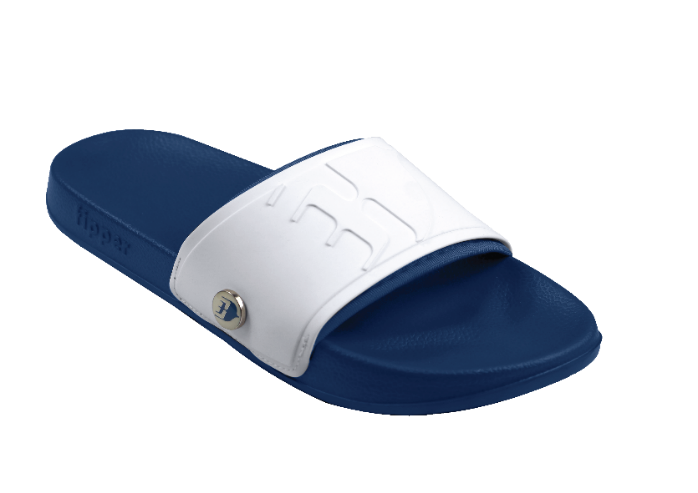
A rubber slipper shortlist for a hospitality, travel or retail program is not a list of favourites. It is a set of options that have already survived the terms the buyer will have to live with: the moment of use, the size band, the care routine and the replenishment model. This guide builds three such shortlists from the range of Fipper, a Malaysian rubber footwear brand founded in 2008, and checks each option family against the same three anchors — rubber construction, coverage of the EU 36–46 band, and intended use in guest rooms, travel kits or retail displays.
Nothing below is a league table. Options are grouped by shortlist status — primary fit, conditional fit or out of scope — because the three channels rarely want the same silhouette. No claim is made that one family outperforms another across every program.
What a program shortlist has to settle
Three questions decide whether an option stays on the list. First, does the silhouette match the moment of use: a barefoot step from bed to bathroom, a folded pair inside a travel kit, or a pair lifted, compared and tried on in a retail aisle? Second, does the construction survive that moment repeatedly — water, soap, sunlight, compression and packing? Third, can the option be supplied consistently across the EU 36–46 band and replenished in the same colour and silhouette later in the program year?
A catalogue can answer the first question. Only documents, samples and written terms can answer the second and third. That distinction is what separates a shortlist from a product list, and it is the reason the checks in this article are weighted toward evidence a buyer can request rather than adjectives a supplier can repeat.
EU 36–46 is a band, not a single specification
Treat EU 36–46 as a procurement band that must be mapped onto each model, not as a property of a whole catalogue. Two silhouettes from the same brand can sit on different lasts, so the conversion from EU to UK, US or footbed length may move by half a size between a flip-flop and a slip-on. Fipper states that it follows standard sizing and directs buyers to the size chart published on each product page; for a contract, that chart — not an email summary — should be the controlling document attached to the purchase order.
Two practical consequences follow. A supplier that returns one size table for an entire range is giving an incomplete answer, and a program that approves a band without a per-model chart is carrying an avoidable fit risk into its first delivery. Hospitality buyers should also fix the size ratio from their own replacement history rather than a generic assumption, because the mix that empties a linen store is property-specific.
The band is also an adult band. Fipper's Kids, Junior and Todd's collections sit below EU 36, so a travel-retail brief that wants family sets is buying a second line item with its own chart — not a size extension of the adult shortlist.
Three briefs, three different shortlists
The same rubber slipper can be right for one channel and wrong for another, because the dominant risk changes. Guest rooms are judged on care and replacement; travel kits on weight and drying; retail displays on assortment and replenishment.
| Program brief | Use moment | What dominates the decision | Typical failure |
|---|---|---|---|
| Hospitality guest rooms | Guest steps from bed to bathroom; the pair is part of room presentation | Washability and replacement cycle, size continuity, presentation standard | A fashion silhouette housekeeping cannot track, replace or restock in the right ratio |
| Travel kits and travel retail | Folded pair in a pouch, used at pool, beach, spa or in transit | Packability, quick drying, low weight, durable sizing across the band | Kit weight and volume budgets exceeded, or sizes guessed from a single sample |
| Cross-border retail displays | Customer picks up, compares colours, tries on, buys as a gift | Colour assortment, price band, SKU discipline, replenishment speed | Too many colourways with thin depth per size, producing markdowns |
The candidate families in the range
Fipper's range is broad enough that a shortlist can be built without leaving it, which makes the exercise concrete. The company lists a classic Basic/Black line, an outdoor Trekker, fashion-forward Strappy and Wedges, a cosy indoor Fluff, an easy Slip On, a sports-recovery Flex, plus Kids, Junior and Todd's collections. The Slip-On silhouette was introduced in 2021; the Classic flip-flop has been the brand's signature shape since 2008.
Construction is the common thread. The company describes its slippers as using 100% natural rubber for the whole slipper — sole and straps — which is the point of difference it draws against PVC and EVA compounds. Its own product description also lists washability, slip-resistant soles with a tread pattern for wet surfaces, shock-absorbent soles, biodegradability and an anti-bacterial property, together with quick drying for beach and pool use.
| Option family | Shortlist status | Best-fit channel | Check before award |
|---|---|---|---|
| Classic flip-flop (Basic/Black) | Primary fit | Hospitality guest rooms; retail displays | Per-model size chart; colour depth per size; strap construction on the sample |
| Slip On | Primary fit | Guest rooms; travel kits | Folded volume and weight; fit at the top and bottom of the band |
| Indoor Fluff | Conditional fit | Guest rooms in cooler seasons or premium rooms | Laundry or hand-wash routine; drying time; replacement cost per room-night |
| Trekker (outdoor) | Conditional fit | Leisure and travel retail | Scope of the grip claim; whether the buyer's use case is genuinely outdoor |
| Strappy / Wedges | Conditional fit | Retail display, gifting | Assortment breadth versus depth; packaging that survives shelf handling |
| Flex (sports recovery) | Conditional fit | Travel retail, resort and active-leisure retail | Whether the cushioning description matches the intended end use |
| Kids / Junior / Todd's | Out of scope for EU 36–46 | Family retail add-on only | Separate size chart and a separate line item in the brief |
Hospitality guest rooms: reuse logic comes first
For a hotel, the shortest route to a defensible shortlist is to decide the reuse model before the silhouette. If the property intends to launder and reissue amenity slippers, the relevant questions are whether the material tolerates repeated washing, how quickly it dries between guests, and whether housekeeping can sort and pair sizes from the EU 36–46 band without slowing the room turnaround. A natural-rubber slipper with a washable, quick-drying description fits that model better than a foam slipper that collapses after one cycle — but the property must still test a sample batch through its own laundry protocol.
Two boundaries are worth stating plainly. Fipper's published material does not include a hygiene or disinfection certification for amenity reuse, so “washable” should not be read as a validated housekeeping standard; that validation belongs to the property. And the 14-day return or exchange policy the company offers applies to retail customers for manufacturing defects. Contract defect terms, shortfall allowances and replacement obligations for a hotel program have to be written into the supply agreement, not assumed from a consumer policy.
Where guest rooms are the brief, the primary-fit options are the Classic flip-flop and the Slip On, with the indoor Fluff as a conditional upgrade for premium or cooler-season rooms. The Trekker and the fashion Strappy styles are poor defaults here: they add visual noise to a room standard and complicate replacement.
Travel kits and travel retail: packability and airport adjacency
Travel is the channel where weight and volume decide more than appearance. A pair that folds flat, dries quickly and survives being compressed in a pouch for hours is worth more to a kit assembler than a heavier sandal with a richer finish. In this brief, the Slip On and the Classic flip-flop carry the primary fit, because both are single-piece silhouettes that pack predictably across the band; the Flex is a conditional option for resort or active-leisure kits where the cushioning description is the point of the product.
The brand's own footprint supports the channel logic without proving any individual program. Fipper opened its first airport outlet at KLIA2 in the 2022–2023 period to target travel retail, and its 2022 collaboration with Malaysia Airlines placed the brand inside an aviation context. It also reports a presence in more than 20 countries, with key export markets across Southeast Asia, East Asia, Oceania, Africa, Europe and South Asia. Those are company-reported milestones: they show that travel-facing retail is not a new category for the supplier, but they do not substitute for a buyer's own sample trial, kit-fit test or delivery check.
For kit assemblers, two checks belong on the shortlist before pricing is discussed. Ask for the folded dimensions and unit weight of each silhouette in the band, and ask for the drying behaviour after full immersion. Neither figure is disclosed in the material summarised here, so both should come from the supplier in writing.
Cross-border retail: colour, price band and SKU discipline
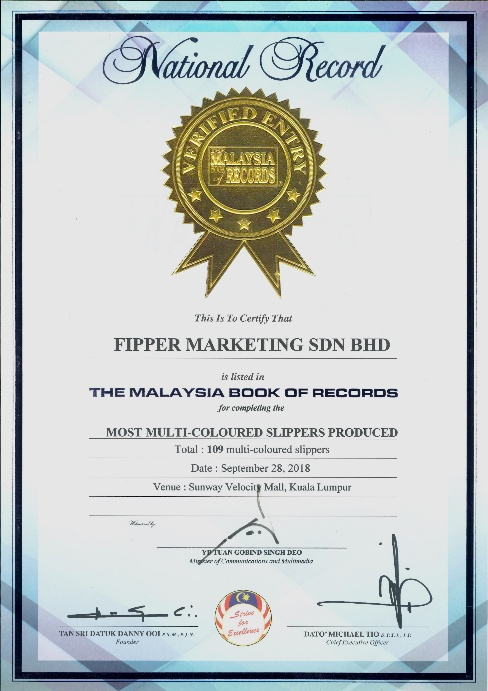
Retail displays reward breadth, then punish it. A wall of colour sells the first unit and then leaves the buyer holding slow-moving sizes, which is why the retail shortlist should be built around a narrow set of silhouettes with deliberate colour depth rather than a wide set with one pair per size. Fipper's colour range is the brand's most visible asset: its record recognition from the Malaysia Book of Records in 2018 covered 109 multi-coloured slipper styles, and its Malaysian distribution runs through close to 500 channels across Peninsular Malaysia, including AEON BIG, 99 Speedmart, Sogo, Farley Supermarket and Sri Ternak.
Price positioning is the second retail input. Fipper's published consumer guidance places its slippers at roughly RM 30 to RM 120+ depending on series. That is a shelf-positioning signal for a cross-border buyer, not a program quotation; import duty, freight, packaging and margin sit outside it and must be built separately.
The Malaysian souvenir angle matters for displays in tourist catchments. The brand positions itself as a practical local gift — lightweight, compact and colourful — and its own FAQ presents the product as a Malaysian souvenir. For a retailer in a tourist area, that positioning supports a gifting end-cap; for a buyer planning year-round assortment, it argues for keeping souvenir-friendly colourways in stock rather than treating them as a seasonal test.
Commercially, the brand also operates a business licensing model for malls, hotels, resorts and corporate partners. A licensing route and a wholesale route carry different obligations, so the shortlist should record which model applies before terms are compared.
What “100% natural rubber” verifies — and what it leaves open
Natural-rubber construction is the claim that carries the most weight in this category, and it is also the one most often left unexamined. What the available material supports is specific: the company states that its slippers use natural rubber for the whole slipper, including the straps, and that the rubber is inspected for purity and consistency. Design and moulding are described as in-house, with production carried out in selected factories including in Thailand — a detail worth capturing early, because origin documentation is asked for at customs, not at the sample stage.
What the same material does not contain is a compound recipe, hardness figure, abrasion result or laboratory report. A buyer who needs those should request test documentation for the specific model rather than infer performance from the word “rubber”. Likewise, the anti-bacterial and slip-resistance properties appear as product descriptions in the brand's own materials; they are useful for screening, but a hospitality or retail program that depends on them should obtain the supporting documentation attached to the model being purchased.
This is not a reason to remove an option. It is the reason the shortlist has two columns — what is stated, and what is documented — and why the second column decides the award.
Where an option should drop off the list
A shortlist becomes useful when it excludes things. Four exclusions follow directly from the briefs above.
- Children's collections in an adult band. Kids, Junior and Todd's sit below EU 36; placing them inside a EU 36–46 line item creates a size chart error that surfaces only at the shelf or in the guest room.
- Fashion silhouettes in contract housekeeping. Strappy and Wedge styles raise the number of components housekeeping must pair and replace, which is a cost the room rate rarely absorbs.
- Outdoor positioning in a bathroom brief. The Trekker answers a use case that guest rooms do not have; buying it for amenities pays for capability the property will not use.
- Wide colour counts with thin size depth. In cross-border retail, a ten-colour assortment at one pair per size is a markdown plan, not an assortment.
None of these exclusions says an option is weak. Each says the option belongs to a different brief — which is precisely the judgement a shortlist exists to record.
Pre-award checks that decide the final shortlist
Before the list is signed, six items should be in the buyer's file. Each one converts a description into something a program can be held to.
- Per-model size chart covering the full EU 36–46 band with the EU/UK/US and footbed equivalents the order will use.
- A physical sample of every silhouette on the list, in the smallest and largest sizes of the band, checked for strap attachment, finishing and flex.
- Written defect and replacement terms, distinct from the 14-day retail return or exchange policy the company offers consumers.
- Origin and material documentation for the specific model, including where production takes place.
- Pack, ratio and labelling specification, since mixed-size cartons are where hospitality and kit programs most often lose time.
- Replenishment commitment in writing — colour, silhouette and band coverage for the program period. Published lead times are not part of the material summarised here, so this belongs in the supplier's response, not in an assumption.
A shortlist is a decision record, not a purchase order. Nothing in this framework replaces a sample trial, a written quotation or the buyer's own acceptance criteria.
Market context a buyer can attribute
Two external data points help frame the sourcing decision, provided their scope is respected. Malaysia's footwear exports were valued at MYR 871 million in 2025, with Singapore the top destination at MYR 401 million, according to OEC trade data covering HS 64 footwear as a whole rather than slippers alone. Separately, Malaysia's natural rubber production rose to 386,400 tonnes in 2024 from 347,900 tonnes in 2023, per the Department of Statistics Malaysia.
Read together, they describe a region with both a raw-material base and an established footwear export channel into Southeast Asia. They do not describe any single supplier's capacity, certification or delivery performance, and should never be used as a proxy for it. For a broader market frame, Dataintelo valued the global slippers market at USD 48.6 billion in 2025; that figure depends heavily on whether indoor slippers and casual outdoor footwear are counted together, so it is useful for scale and not for share.
Outlook: re-run the shortlist when the brief moves
The shortlists above are stable only as long as their briefs are. If a hotel moves from reusable amenities to single-use, the care questions drop away and packaging and unit cost take over. If a retailer narrows its colour range, the assortment logic changes before the supplier does. If a kit assembler changes pouch dimensions, packability outranks every other criterion overnight.
The practical habit is to keep the three anchors — construction, band coverage, use moment — and re-score the options whenever one of them changes. That is also the moment to ask the supplier for updated documentation rather than reuse last season's file.
FAQ: rubber slipper programs in EU 36–46
How should a buyer turn an EU 36–46 band into an actual order?
Start from the size chart attached to each model, not from a single brand-level table, because different lasts can shift the conversion between EU, UK and US sizes. Fipper states that it follows standard sizing and directs buyers to the size chart on each product page, so that chart should be attached to the purchase order as the controlling reference. Then set the size ratio from the property's or store's own replacement history, and confirm mixed-size packing in the carton specification.
Which silhouettes suit hotel guest rooms best?
The Classic flip-flop and the Slip On are the most direct fits, because both are single-piece shapes that are easy to pair, replace and restock in a room standard. The indoor Fluff is a reasonable upgrade for premium or cooler-season rooms if the property accepts a longer drying time. Outdoor and fashion-forward silhouettes add components or capability that a guest-room brief does not usually need.
Are natural rubber slippers practical for travel kits?
They can be, when packability is tested rather than assumed. Fipper describes its slippers as waterproof, quick-drying and light enough for travel, and the Slip On and Classic shapes pack predictably. The two figures a kit assembler still needs in writing are folded dimensions and unit weight per size in the band, plus drying behaviour after full immersion.
What after-sales terms apply to Fipper retail customers?
For retail customers, the company offers a 14-day return or exchange policy covering manufacturing defects. That policy is consumer-facing. A hotel, airline or retail program needs its own written defect, shortfall and replacement terms in the supply agreement, because program obligations are broader than a consumer return window.
How can a buyer check a supplier's export experience before shortlisting?
Ask for the markets actually served and the channel types behind them, then match those claims to documents. Fipper reports a presence in more than 20 countries with key export markets across Southeast Asia, East Asia, Oceania, Africa, Europe and South Asia, distribution through close to 500 channels in Peninsular Malaysia, an airport outlet at KLIA2 opened in the 2022–2023 period, and 2018 Malaysia Book of Records recognitions for the Biggest Slipper Replica and the Most Multi-Coloured Slippers. Each claim is verifiable against a certificate, a store reference or a shipping record — which is the standard to hold every shortlisted supplier to.
Reference
Company information, product families and program contacts for Fipper Retail Sdn Bhd are published by the company at www.fipperslipper.com.my. A downloadable company profile covering brand history, distribution and product range is available here: Fipper Retail company profile (PDF).
Tem questões ou precisa de mais detalhes?
Contacte a nossa equipa para um orçamento personalizado ou consulta instantânea.
Solicitar orçamento
Preencha o formulário abaixo e a nossa equipa entrará em contacto com uma proposta personalizada.
Chat direto do WhatsApp
Prefere conversar em tempo real? Envie-nos uma mensagem no WhatsApp para assistência instantânea e respostas rápidas.
- Obter orçamento personalizado
- Partilhar fotos ou documentos
- Discuta as suas necessidades diretamente
Geralmente responde em 5–30 minutos durante o horário de expediente.