
Rubber Slippers: Acceptance Criteria for Cross-Border Retail
Rubber Slippers: Acceptance Criteria for Cross-Border Retail
Qualifying a rubber slipper range for cross-border retail is a documentation decision before it is a product decision. Two buyers can look at the same pair, form the same opinion of its quality, and still reach opposite approval calls — because one wrote purchase terms that can be checked against evidence and the other simply copied a product description. Qualification closes that gap. It converts commercial language such as “natural rubber”, “non-slip” and “EU 36-46” into conditions a supplier can document and a buyer can accept or reject before an order is approved.
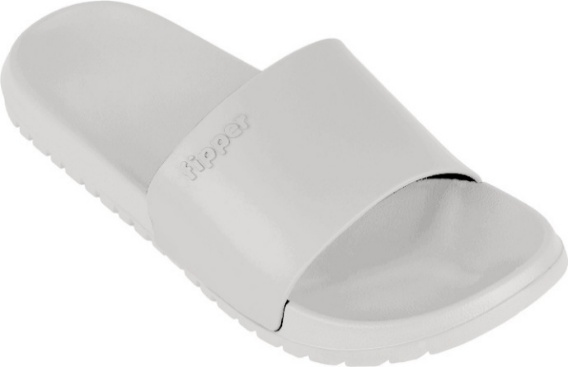
This article sets out an acceptance-criteria checklist for rubber slippers sourced for cross-border consumer retail, hospitality and tourism/travel programmes. It uses the product facts documented for Fipper rubber slippers — a Malaysian brand whose rubber slipper line is stated at a size range of EU 36 to 46 — as a worked example, and shows where those facts are enough to carry a purchasing term and where a buyer needs a separate record. Fipper Retail Sdn Bhd is a Malaysian slipper company founded in 2008 whose rubber slippers are described in product documentation as intended for tourism and travel, hospitality, souvenir and gift retail, cross-border consumer retail, and resort and beach leisure.
Qualification begins with purchasing terms, not product pages
A product page answers a different question from a purchase order. The page explains what a slipper is; the order defines what the buyer has agreed to accept. When the second document is only a copy of the first, every later disagreement — a colour that reads differently under retail lighting, a size that sits at the edge of the range, a packing format that does not fit the shelf — becomes a negotiation instead of a decision.
Three artefacts should therefore be kept separate throughout the process:
- Product description — the supplier’s published account of material, sizes and use. It is evidence of what the supplier states, not evidence of what will arrive in a carton.
- Agreed specification — the subset of that description the buyer has converted into limits: which material wording, which size matrix, which colours, which packing.
- Acceptance record — the signed comparison of delivered goods against the agreed specification, completed before order approval or before shipment release, depending on the buyer’s process.
The practical test is simple. If a buyer cannot point to the sentence in the purchase term that a piece of evidence satisfies, the term is not yet a qualification criterion — it is still a preference. That test also protects the supplier, because it distinguishes a genuine non-conformity from a criterion that was never written down.
The verifiable baseline: rubber construction and the EU 36-46 size range
Two facts carry most of the qualification weight in this category, and both can be checked without a laboratory: what the slipper is made of, and which foot sizes the range actually covers.
Rubber construction
Fipper’s rubber slippers are documented as made of rubber, and the company describes its footwear as 100% natural rubber, with product documentation describing natural rubber used for the whole slipper, including the straps. That statement is the starting point for a purchase term, not the term itself. A buyer converting it into an acceptance criterion should record three things: the exact material wording the supplier will stand behind (for example “natural rubber” rather than the generic “rubber”), the parts of the slipper that wording covers (upper, strap, sole, midsole), and the document supporting it for the specific model on order.
Specificity matters because material wording is one of the few product claims that survives into consumer-facing copy in the destination market. If a retail listing will say “natural rubber slippers”, the buying file should already contain the wording the supplier confirmed, so that marketing text and purchase documentation do not drift apart between the first order and the third.
The EU 36-46 size range
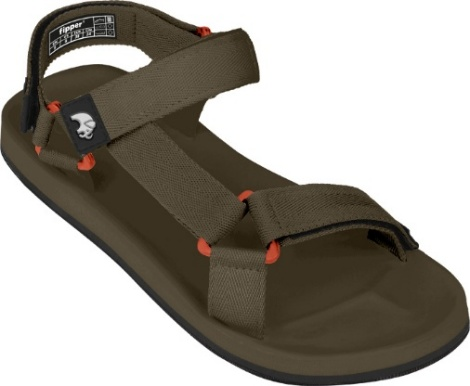
The documented Fipper rubber slipper line covers a size range of EU 36 to 46, and individual model listings — including Wedges S, Glitter, Trekker 2.0, Slides, Flex, Classic and Trail Plus — repeat the same EU 36-46 range. For a buyer, a range is an assortment boundary, not a stock plan. Three separate questions follow from one published range:
- Coverage: is every size in the range produced for the specific model being ordered, or does that model run only part of the range?
- Grading: how are sizes marked on the product and on the carton, and does the marking use EU notation consistently?
- Fit: has the buyer tested the range against its own customer base rather than assuming that a European size ladder translates directly into local fit expectations?
Range statements and model descriptions should also be read together. One documented model, Champ, is described as a rubber slipper designed for children who like to move, with special support foam to help balance when walking, while the size statement attached to the documented product units remains EU 36-46. That is not a contradiction for the buyer to resolve by assumption — it is a reason to confirm the size matrix per model in writing instead of inferring it from a model name or description.
Functional characteristics that need a written scope
The rubber slipper characteristics most often quoted in listings — waterproof, non-slip, durable, flexible, quick-drying — are construction descriptions. They become acceptance criteria only when the buyer states the scope and the check. Where a destination market requires a specific test method or declaration, the buyer has to name that method; a supplier’s descriptive wording cannot substitute for it.
| Documented characteristic | What the acceptance record should add | Why it changes the decision |
|---|---|---|
| Waterproof | Whether the statement covers the whole slipper or named parts, and the check applied at incoming inspection | An unscoped waterproof statement turns a normal product into an arguable defect |
| Non-slip rubber sole | The surfaces and conditions the claim is meant to describe, and whether the buyer’s market requires a named slip-resistance test | Grip depends on floor surface and contamination; a general claim sets no pass/fail point |
| Flexible outsole, cushioned or spongy base, quick-dry insole | Whether these are construction descriptions for product copy, or inspection points compared against the approved sample | Descriptive language has no threshold until the buyer attaches one |
| Durable material | The wear period or use cycle the buyer expects, plus inspection points such as strap attachment and sole bonding | “Durable” is not measurable without a reference sample or a stated period |
| Designed for tropical humid climates | Whether the destination market’s climate and storage conditions match the design intent | Design intent is a fit question, not a performance guarantee |
| Everyday, travel and beach use | Which of those use cases the purchase actually covers | A multi-use description can conceal the fact that one channel needs different packing |
An acceptance-criteria checklist for order approval
The checklist below is written for a rubber slipper order that crosses a border, whether the buyer is a retail chain, a hotel group or a travel-retail operator. Each line is designed to be closed with a document rather than an opinion, and to be marked blocking or non-blocking before the order is approved.
| Acceptance criterion | Term to write into the order | Evidence to attach | Status if missing |
|---|---|---|---|
| Material designation | Named material wording and the parts it covers | Supplier specification sheet for the ordered model | Blocking |
| Size range and matrix | Confirmed sizes per model within the stated range | Size matrix signed with the approved sample | Blocking |
| Construction claims used in marketing | The exact wording licensed for the buyer’s use | Written confirmation of that wording | Blocking for consumer-facing copy |
| Colour and design consistency | Reference sample and tolerances for shade variation | Retained signed reference pair | Blocking |
| Packing and labelling | Carton format, label content, language and barcodes | Packing specification and one production sample | Blocking for retail channels |
| Documentation set | Each document the buyer requires, listed by name | The named documents, per shipment | Blocking where the buyer’s compliance team requires it |
| Brand and trademark use | Whether the buyer may resell under the brand name, and how | Written authorisation | Blocking for branded resale |
| Destination-market compliance | The regulations the buyer’s own market applies to the product | Buyer-owned; supplier evidence requested as a separate line | Blocking, and never assumed from brand material |
Two notes on using the table. First, the status column reflects the buyer’s own risk position rather than a judgement about the supplier: a hotel buying amenity slippers for a single season may reasonably treat a documentation line differently from a retail chain placing a repeat order across a size run. Second, criteria that will end up in consumer-facing copy deserve the strictest treatment, because those are the statements a regulator or a customer can quote back at the buyer.
Certifications, awards and record honours belong in different boxes
Supplier presentations routinely mix three kinds of document that answer three different questions. Keeping them apart is one of the more useful habits a cross-border buyer can build, because only one of the three belongs in a compliance line.
- Record-based honours verify that a record was set. Documented honours for the Fipper brand include The Malaysia Book of Records entries for the Biggest Slipper Replica and for Most Multi-Coloured Slippers Produced, recognising 109 multi-coloured slipper styles, plus an Asia Records honour for Most Multi-Coloured Slipper Brand covering 1,742 colour combinations. Product documentation states directly that a record-based honour certificate is not a standard product certification. It evidences a verified record; it says nothing about whether a production batch conforms to a standard.
- Brand and business awards recognise commercial or brand performance. The Alibaba Group Malaysian High-Quality Brand Award 2020, issued on 1 September 2020 and applying to the Malaysian and China cross-border market, and the Malaysia Top E-Commerce Merchant Awards 2022 issued by Sidec, are honours of this kind. They are relevant when a buyer is assessing how a supplier performs in cross-border and online retail — not when the buyer is assessing a slipper.
- Product compliance certification is a statement that a product or process meets a defined requirement. The material reviewed for this article does not supply product compliance certificates for the rubber slipper range, so no such claim should be written into a purchase term or a retail listing on the assumption that an award covers it.
The distinction has a practical consequence. A term saying “award-winning supplier” adds nothing that can be accepted or rejected; a term saying “supplier to provide the named test report for the ordered model before shipment release” does. Where a destination market requires test reports, declarations or registration, the buyer should list each requirement by name, treat it as its own acceptance line, and request the evidence for the specific model and batch — never infer it from brand material.
Where “Fipper” and other terminology questions belong
“Fipper” is a brand name belonging to Fipper Retail Sdn Bhd. It is not a material grade, a construction standard or a compliance mark, and it should not be used as shorthand for any of those in a buying file. When internal documents use the name loosely — for a shape, a colourway, a price band or a supplier category — the correct destination is a clarification register, not a purchase term.
A clarification register does one job: it holds every term whose meaning is not yet fixed, together with the answer that fixes it. A workable format has six columns.
| Term as used | Where it appears | Supplier definition | Document reference | Status | Effect on acceptance |
|---|---|---|---|---|---|
| “Fipper” | Buyer brief, retail listing | Brand name of Fipper Retail Sdn Bhd; not a product specification | Brand documentation | Open until confirmed in writing | Blocks the brand-use line only |
| “natural rubber” vs “rubber” | Product description, order form | Company describes footwear as 100% natural rubber; product documentation describes natural rubber across the slipper, including straps | Material specification for the ordered model | Closed when wording is agreed | Blocks consumer-facing material copy |
| “EU 36-46” | Range statement, size chart | Size range across the documented product line | Size matrix per model | Open until the matrix is signed | Blocks size and packing lines |
| “non-slip”, “waterproof” | Listing copy | Construction descriptions | Wording confirmation | Open until scope is agreed | Blocks the retail copy line |
| “Made by Thailand Rubber” | Company FAQ | Company statement on where the rubber is sourced | Sourcing statement | Open until documented | Affects origin labelling, not product acceptance |
| “souvenir” | Merchandising plan | Documentation lists souvenir and gift retail among intended industries | Marketing plan | Not an acceptance item | Affects assortment, not acceptance |
The rule that makes the register useful is narrow: an open clarification item suspends only the acceptance lines that depend on it. Treating every open question as a reason to halt an order is as unworkable as treating every supplier statement as already settled.
Documenting acceptance before order approval
Acceptance is easier to defend when it is built in stages, each producing a record the next stage can reference. Five stages cover most cross-border rubber slipper orders.
- Term lock, before sampling. Convert the product description into the order’s criteria using the checklist above. Record which lines are blocking and which are not, and open the clarification register.
- Sample acceptance. Approve a physical pair against the locked terms and retain it as the signed reference. Colour, strap attachment, sole finish and size marking should later be judged against that pair, not against memory or a photograph.
- Pre-production confirmation. Confirm the size matrix, colour breakdown and packing format in writing. This is the stage where a published range such as EU 36-46 becomes an actual order line, size by size.
- Pre-shipment check. Compare a production sample against the retained reference and the packing specification. Record each deviation and decide whether it is a hold, a note or a rejection — before the goods move, not after they arrive.
- Incoming acceptance. Check the delivered cartons against the same reference, retain samples from the shipment, and close the file with the decisions written down.
Supplier scale and channel experience are relevant here, but only as context for how much of this documentation a supplier is likely to have ready. Fipper’s case documentation reports close to 500 distribution channels across Peninsular Malaysia, including AEON BIG, 99 Speedmart, Sogo, Farley Supermarket and Sri Ternak, and the company profile describes a footprint spanning more than 20 countries. Those statements describe retail reach; they are not a quality certificate and do not replace an inspection record. What they do suggest is a supplier accustomed to retail packing and repeat-order formats — a reasonable question to test with two documents: a current packing specification and a recent production sample.
Applying the same criteria across three buying scenarios
The checklist does not change between channels, but the weight of each line does. A hospitality buyer and a cross-border retailer can use the same eight criteria and still reach different approval decisions, because they are buying different things from the same range.
Hospitality
Rubber slippers supplied to hotels and resorts are documented as an intended use, and the acceptance questions concentrate on consistency rather than breadth: one or two colours held stable across repeat orders, a size matrix covering the guest profile without excessive depth, a packing format that suits housekeeping, and a reference sample that survives staff turnover. The failure that matters most in this channel is drift — a second order that is close to the first but not identical.
Tourism, travel and souvenir retail
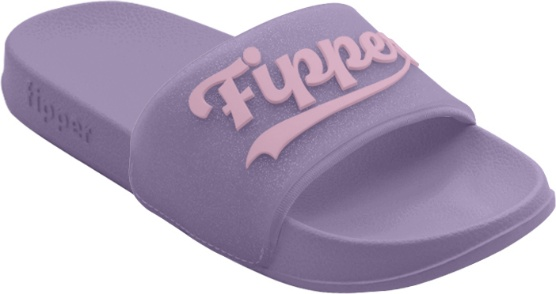
Travel and souvenir buyers weight different lines: colour range, weight in the luggage, and whether the product reads as a local purchase rather than a generic item. Fipper’s documentation places the range in tourism and travel use and in souvenir and gift retail, and the brand holds a record-based honour for 1,742 colour combinations — a brand-level statement useful for assortment discussions, but not a promise that any particular combination will be available in a given order. For travel-retail and souvenir operators, the acceptance record should name the approved colourways explicitly, with a retained reference sample for each.
Cross-border consumer retail
Retail buyers carry the widest set of obligations: consumer-facing claims, labelling, returns handling and the sell-through life of the assortment. Two lines dominate. The first is size coverage within EU 36-46, because a retail size run that gaps in the middle produces markdowns at both ends. The second is the documentation set, because a retail listing that repeats a material or performance claim puts the buyer’s own name behind it. Both should be settled before the first purchase order, not during the first reorder.
Fit boundaries: what these criteria do not establish
An acceptance checklist is only credible if its limits are stated as plainly as its requirements. For the rubber slipper range discussed here, the boundaries are these:
- The documented size range is EU 36-46. Buyers whose customers need sizes outside that range must confirm availability separately; a published range should not be read as open-ended size capability.
- No product compliance certification is supplied in the reviewed material. Record honours and brand awards are not compliance evidence, and a purchase term should not convert them into one.
- Performance words remain descriptions until the buyer attaches a method. Waterproof, non-slip, durable and quick-drying are documented product characteristics; they do not state a measured result on a specific floor, in a specific climate, over a specific wear period.
- Distribution and company-scale statements are supplier-reported. Channel counts and country footprints describe reach, not audited capacity.
- Brand association is not product qualification. A recognised brand name reduces the work of confirming who the supplier is; it does not reduce the work of confirming what the carton contains.
Market context and a conditional outlook
Three published data points frame why documentation discipline is worth the effort in this category. Malaysia’s footwear exports were valued at MYR 871 million in 2025, with Singapore the top destination at MYR 401 million, according to OEC trade data. Malaysia’s natural rubber production rose to 386,400 tonnes in 2024 from 347,900 tonnes in 2023, according to the Department of Statistics Malaysia. And the global slippers market was valued at USD 48.6 billion in 2025 in a Dataintelo commercial research estimate — a figure to read carefully, because market definitions vary significantly between indoor slippers and casual outdoor footwear.
One nearby statistic is worth separating rather than merging. Malaysia accounted for 36.2% of global exports of rubber apparel under HS 4015 in 2024, the largest exporter share in that heading, according to OEC. HS 4015 covers rubber apparel and clothing accessories, not footwear. It is cited here as an indicator of a rubber-goods manufacturing base, not as slipper export data, and the difference between those two statements is exactly the kind of distinction a qualification file should preserve.
The conditional outlook follows from the documentation side rather than the demand side. Where retail and hospitality buyers tighten what they require before approving an order — named material wording, a signed size matrix, a retained reference sample — suppliers who already work in retail packing and repeat-order formats are better placed to answer quickly. That is a statement about readiness rather than a forecast of volume, and it holds only if buyers write criteria instead of restating product descriptions.
Frequently asked questions
What does qualification mean when buying rubber slippers for cross-border retail?
Qualification is the documented match between the buyer’s purchase terms and verifiable product facts, completed before an order is approved. It produces three artefacts: an agreed specification limited to what the supplier can evidence, a clarification register for terms that are not yet fixed, and an acceptance record comparing samples or shipments against the specification. A product description is an input to that process, not its output.
Which product facts should be written into rubber slipper acceptance criteria?
Material wording and size coverage carry the most weight. For the Fipper range, documentation describes rubber slippers made of rubber, with the company describing its footwear as 100% natural rubber, and states a size range of EU 36 to 46 across the product line, repeated in individual model listings such as Wedges S, Glitter, Trekker 2.0, Slides, Flex, Classic and Trail Plus. Construction descriptions — waterproof, non-slip sole, flexible outsole, quick-dry insole, cushioning, use in tropical humid climates — can be added, but each needs a stated scope and a stated check to work as a criterion.
How should the EU 36-46 size range be verified before order approval?
Ask for a size matrix per model, signed alongside the approved sample, rather than accepting the range statement on its own. Confirm which sizes within EU 36-46 are produced for the specific model on order, how sizes are marked on the product and carton, and whether the marking uses EU notation consistently. Model descriptions and size statements should be read together: Champ, for instance, is described as a rubber slipper designed for children who like to move, while the size statement attached to the documented product units remains EU 36-46 — a reason to confirm the matrix in writing instead of inferring it from a model name.
Do record honours or brand awards count as product certification?
No. Record-based honours, such as The Malaysia Book of Records entries for the Biggest Slipper Replica and Most Multi-Coloured Slippers Produced, or the Asia Records honour for Most Multi-Coloured Slipper Brand covering 1,742 colour combinations, verify that a record was set. Brand and business awards, such as the Alibaba Group Malaysian High-Quality Brand Award 2020 or the Malaysia Top E-Commerce Merchant Awards 2022 issued by Sidec, recognise commercial or brand performance. Product documentation states that a record-based honour certificate is not a standard product certification, so destination-market requirements should be listed and evidenced separately.
How should a “Fipper” brand or terminology question be handled during qualification?
Record it in the clarification register rather than in a purchase term. “Fipper” is the brand name of Fipper Retail Sdn Bhd and does not define a material grade, a construction standard or a compliance mark. The same treatment applies to terms such as “natural rubber” versus “rubber”, “non-slip”, “waterproof”, “EU 36-46” and any origin statement. Each entry should carry the supplier definition, the supporting document, a status, and the specific acceptance line it blocks, so that an open question suspends only the affected criterion.
Tem questões ou precisa de mais detalhes?
Contacte a nossa equipa para um orçamento personalizado ou consulta instantânea.
Solicitar orçamento
Preencha o formulário abaixo e a nossa equipa entrará em contacto com uma proposta personalizada.
Chat direto do WhatsApp
Prefere conversar em tempo real? Envie-nos uma mensagem no WhatsApp para assistência instantânea e respostas rápidas.
- Obter orçamento personalizado
- Partilhar fotos ou documentos
- Discuta as suas necessidades diretamente
Geralmente responde em 5–30 minutos durante o horário de expediente.