
SAE 4140 Tube and Bar: Specs and Buying Criteria
SAE 4140 is one of the most frequently specified chromium-molybdenum steels in mechanical engineering. It is also a grade where two orders carrying the same material designation can perform very differently, depending on heat treatment state, dimensional tolerance, and the completeness of mill documentation.
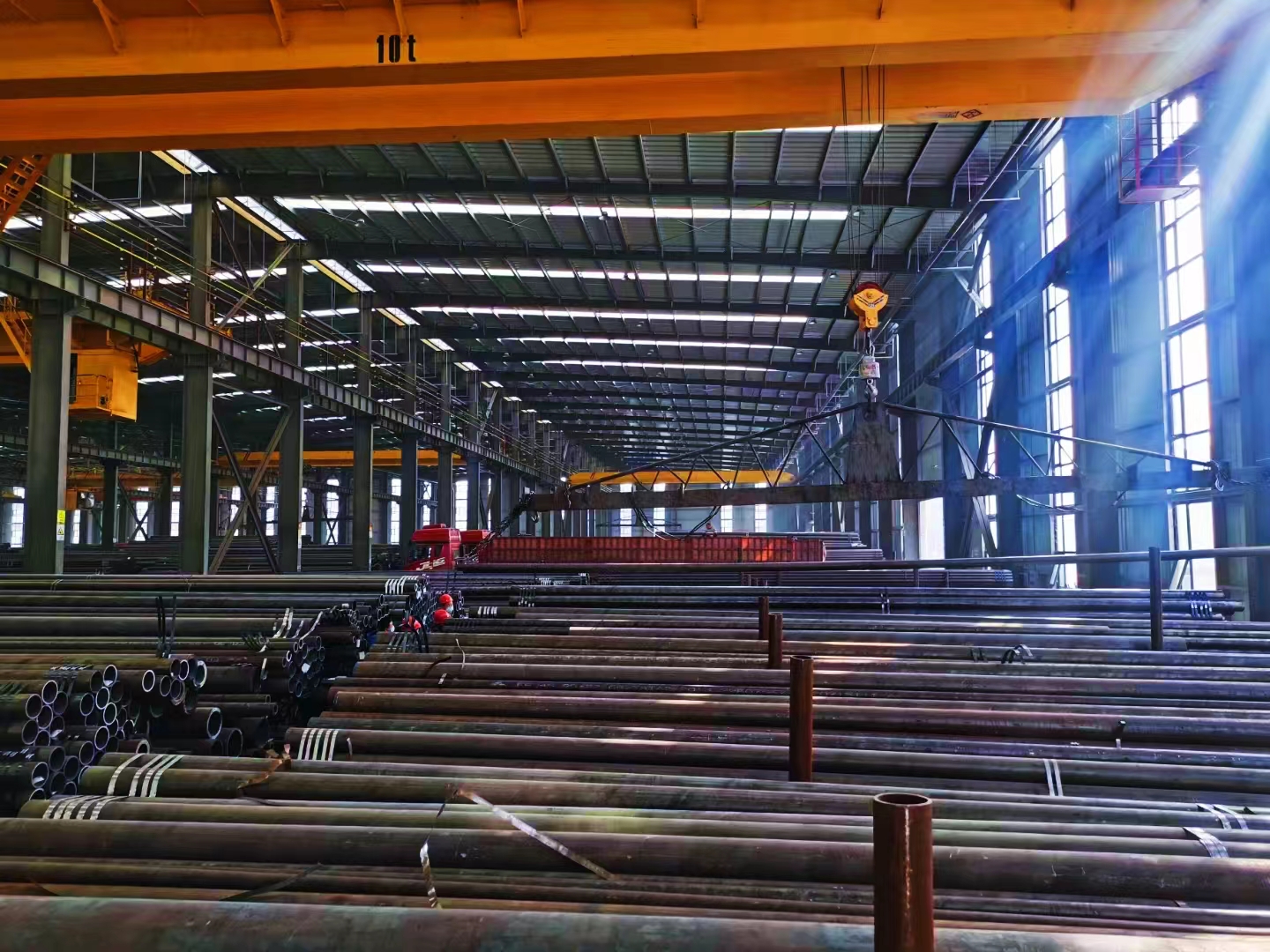
For buyers moving from research into supplier evaluation, the challenge is not simply locating a supplier of "SAE 4140." The real task is verifying chemistry, delivery condition, certification, and traceability before committing an order. This article explains what to check when procuring SAE 4140 tube and bar, with reference to the product program at Tuoda Machinery, a Liaocheng-based manufacturer that exports alloy and carbon steel tube to the EU, Asia, and South America.
Why SAE 4140 Requires Specification Care
SAE 4140 belongs to the 41xx family of chromium-molybdenum steels, a group designed for high hardenability. According to ASTM A29, the grade typically contains 0.38–0.43% carbon, 0.80–1.10% chromium, and 0.15–0.25% molybdenum. Those ranges are well known. What is less often discussed is that the same nominal chemistry can be delivered in multiple heat treatment conditions, and the condition of delivery—not chemistry alone—determines whether the material is suitable for a gear, a drill collar, or a structural member.
A buyer evaluating a quotation for SAE 4140 round bar or SAE 4140 steel pipe should therefore treat the material designation as only the starting point. The next questions are: What heat treatment state is proposed? What mechanical properties are guaranteed? What dimensional range and tolerance apply? Which certificates accompany the shipment? These constraints directly affect both machinability and service life.
SAE 4140 Chemistry and Mechanical Baselines
SAE 4140 is a chromium-molybdenum alloy steel with a carbon content high enough to respond well to quenching and tempering. The chromium addition improves hardenability and wear resistance; the molybdenum addition refines grain structure and helps maintain strength at elevated temperatures. This combination makes the grade a common machining steel for components that must withstand high load and cyclic loading.
When SAE 4140 is supplied in the quenched and tempered condition, third-party published data indicate a tensile strength of 850–1000 MPa and a nominal hardness of 28–32 HRC. These are the typical values that buyers reference when selecting the grade for shafts, gears, and oilfield components. It is important to confirm that the supplier's own test certificate matches the required value range, since actual delivered properties can vary with section size and heat treatment practice.
| Property | Typical Value for QT Condition | Source |
|---|---|---|
| Tensile strength | 850–1000 MPa | Nifty Alloys / third-party data |
| Nominal hardness | 28–32 HRC | Nifty Alloys / third-party data |
| Carbon content | 0.38–0.43% | ASTM A29 / OTAI |
| Chromium content | 0.80–1.10% | ASTM A29 / OTAI |
| Molybdenum content | 0.15–0.25% | ASTM A29 / OTAI |
Heat Treatment States and Their Practical Meaning
SAE 4140 is commonly ordered in three conditions: normalized, annealed, and quenched and tempered. The condition of delivery defines how the steel behaves during machining, and what final mechanical properties can be expected.
Normalized SAE 4140 is often chosen when a uniform structure and improved machinability are desirable before final heat treatment. Annealed SAE 4140 provides a softer structure that is more suitable for cold forming and severe machining operations. Quenched and tempered SAE 4140 delivers the highest strength and hardness among the three, which is why it dominates shaft, gear, and drilling equipment applications.
For wear-dominated applications, buyers sometimes evaluate higher-hardness Cr-Mo grades such as SAE 4145. Tuoda Machinery's alloy steel material list covers a broader 41xx family, including 4130, 4140, 4145, and 4340, allowing the buyer to match carbon content and hardenability to the actual loading condition.
SAE 4140 Supply Forms and Dimensional Range
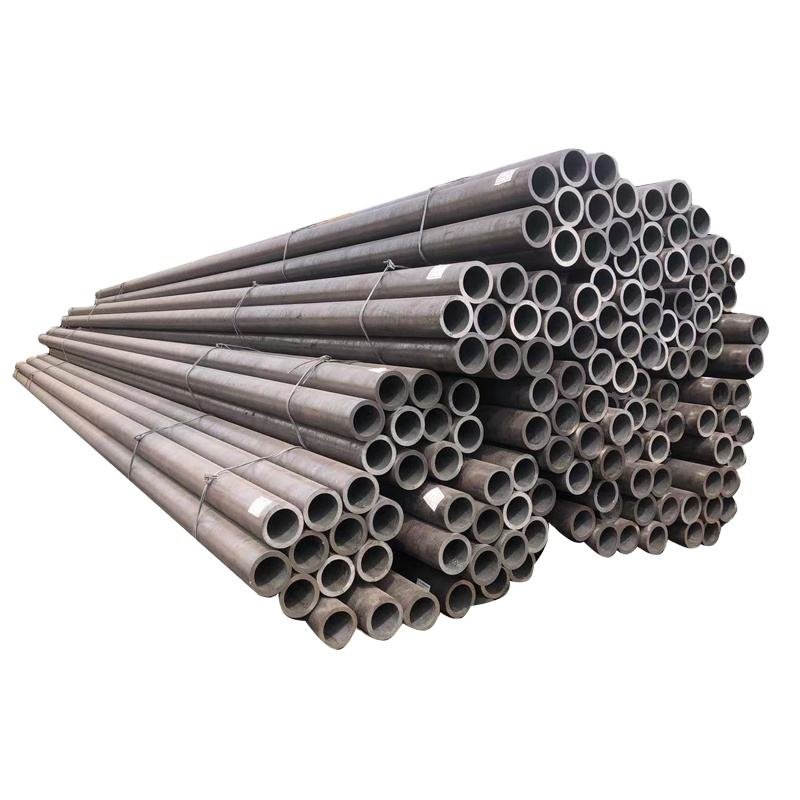
Tuoda Machinery supplies SAE 4140 as seamless alloy steel pipe and tube in both round and square sections. The available outer diameter range for the SAE 4140 tube program is 20–400 mm, with wall thickness from 3–30 mm. These dimensional limits make the product practical for drill collars, aerospace components, oil drilling equipment, and heavy machinery parts.
The company's wider seamless steel pipe program covers an outer diameter range of 10–1080 mm and wall thickness from 2–110 mm, including carbon steel grades such as A106 Gr.B, ST52, ST44, S355, and E355, in addition to alloy grades such as 42CrMo, 30CrMo, 4140, 4130, 4145, and 4340. This broader range matters for buyers who need to consolidate multiple steel specifications from one supplier.
Delivery conditions available from Tuoda include hot rolled, cold drawn, cold rolled, and quenched and tempered. The company also accepts customization of size, length, mechanical property requirements, delivery time, and testing inspection arrangements. This flexibility is relevant for manufacturers that need to match a specific machining cycle or a specific heat treatment route.
Applications: SAE 4140 for Machining, Shafts, Gears, and Oilfield Equipment
SAE 4140 is selected across a wide range of industries because the same base chemistry can serve different design functions depending on heat treatment. The main application clusters include:
- SAE 4140 for machining: The grade delivers consistent chip formation and predictable response to cutting when supplied in a normalized or annealed condition, making it a regular choice for turned and milled components.
- SAE 4140 for shaft and gear applications: In the quenched and tempered condition, the steel offers a favorable combination of strength, hardness, and fatigue resistance for rotating parts.
- SAE 4140 for oil machinery: Drill collars, drilling equipment, and pressure components rely on the high-strength and high-hardness response of Cr-Mo steel in heavy drilling conditions.
- SAE 4140 for construction machinery: Pin shafts, hydraulic components, and structural parts in excavators and loaders use the grade where high load and continuous operation are expected.
Tuoda's application records describe typical working conditions as high load, high pressure, and high strength, with continuous operation and cyclic loading. The matched equipment list includes drill collars, gears, pipes, and drilling equipment. A documented supply case involves a petroleum equipment factory in Chile and India that sourced 50 sets of alloy steel pipe for the production of oil drilling equipment; the reported result was stable operation, with low loss, high performance, and high applicability.
Sourcing SAE 4140: What to Verify Before Ordering
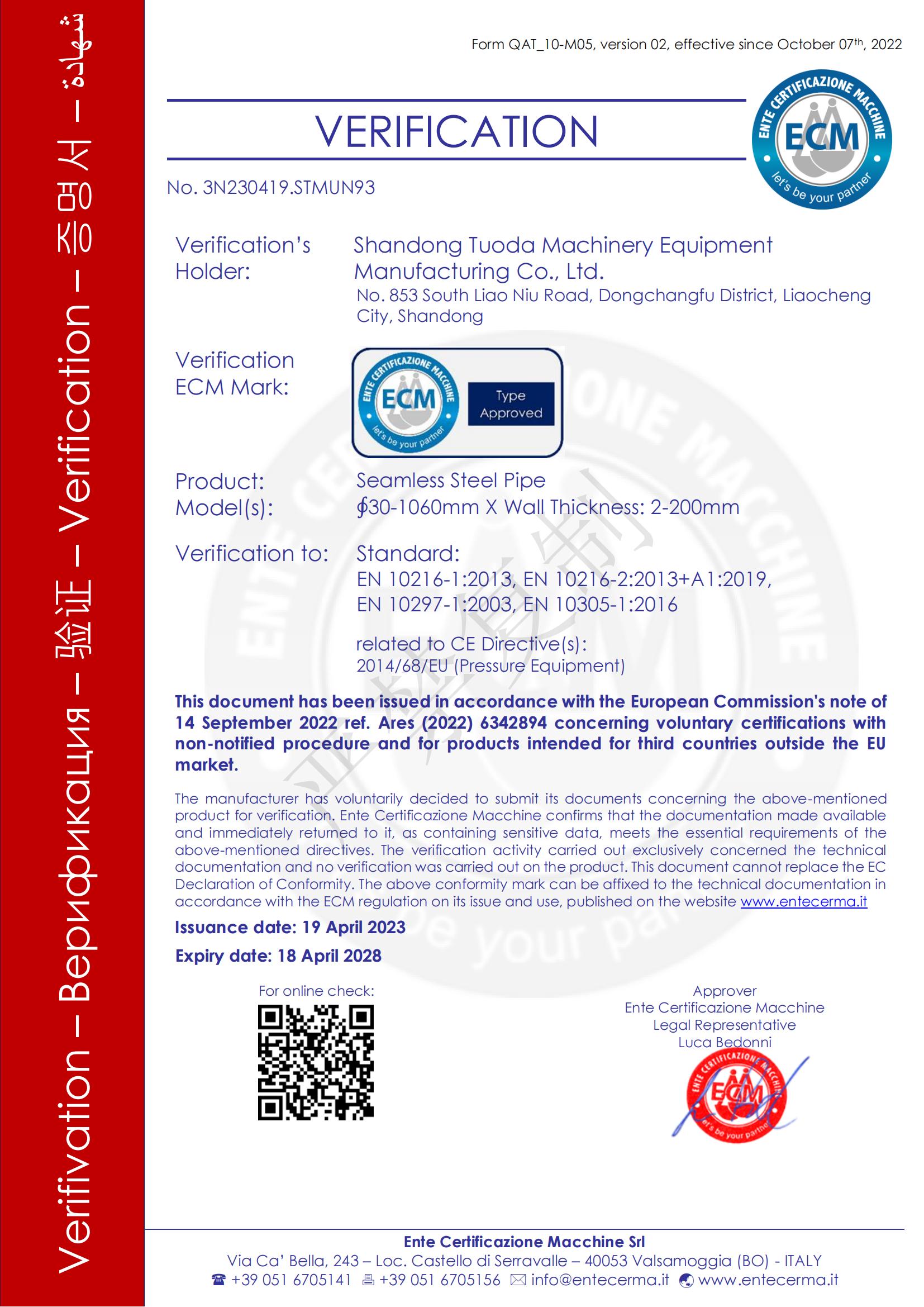
For buyers at the evaluation stage, the supplier's documentation and quality control system are as important as the nominal steel grade. Tuoda Machinery holds a CE 3.1 certificate issued by ECM under certificate number 3N230530.STMDO12, covering the European market and based on EN 10210, EN 10219, and EN 10025 standards. The certificate was issued on 2023-05-30 and is valid until 2028-05-28.
Quality control at Tuoda includes the option of a factory laboratory report or a third-party inspection arranged by the buyer. The company reports a monthly production capacity of 1000 tons, a typical lead time of 30–45 days, and a minimum order quantity of 5 tons, with flexibility for discussion on larger custom programs. Export markets include the EU, the Middle East, India, Chile, Argentina, and Turkey, which aligns with the company's stated export ratio of about 70% of total output.
For international trade classification, hot-rolled alloy steel bars such as SAE 4140 fall under HS code 7228.30 in many shipments, according to the World Customs Organization classification observed in trade documentation. Buyers should confirm the correct HS code with their forwarder, since classification can vary with product form and dimensions.
Market Context for Alloy Steel Procurement
The alloy steel market provides useful context for procurement planning. The Business Research Company projects the global alloy steel market to reach approximately USD 160.7 billion in 2026, driven by demand from the automotive and construction sectors. Grand View Research reports that Asia-Pacific accounts for more than 40% of global alloy steel consumption, with China's infrastructure and automotive production playing a major role. The same research source attributes approximately 37% of global alloy steel utilization to the automotive industry.
These figures help explain why supply chains for Cr-Mo alloy steel are increasingly concentrated in Asia and why export-oriented Chinese manufacturers such as Tuoda Machinery are relevant to international buyers. At the same time, buyers remain cautious about documentation consistency, and that caution is well placed. A supplier that can provide full traceability—from steel chemistry to heat treatment to final inspection—becomes a more reliable partner for long-term programs.
Where SAE 4140 Has Limits
SAE 4140 is a versatile grade, but it is not the right answer for every component. Three boundaries are worth noting:
- Corrosion resistance: SAE 4140 has limited corrosion resistance compared with stainless steels. For marine or highly corrosive environments, a stainless or coated solution is usually more appropriate.
- Low-temperature toughness: While the grade performs well in many heavy machinery applications, extreme low-temperature service may require specially tested low-temperature alloy steels with guaranteed Charpy impact values.
- Heat treatment control: The final properties of quenched and tempered SAE 4140 depend heavily on furnace control and tempering practice. Small suppliers without disciplined heat treatment processes can deliver material with inconsistent hardness, which directly affects machining and component life.
These limits are not reasons to avoid SAE 4140. They are reasons to specify the required condition, mechanical property range, and certification in the purchase order, and to verify them at incoming inspection.
Sourcing Outlook
Demand for high-strength alloy steel is likely to remain strong as oilfield equipment, construction machinery, and automotive driveline components continue to push for higher power density and longer service intervals. For procurement teams, the practical consequence is that supplier verification will matter more than price alone. Heat treatment capability, dimensional consistency, ISO/CE documentation, and the ability to provide third-party inspection are becoming baseline requirements rather than competitive differentiators.
Manufacturers that integrate steel processing with heat treatment and custom component production—such as Tuoda Machinery, which also produces custom hydraulic cylinders and deep-hole drilling machines—offer buyers a shorter supply chain and a clearer line of responsibility for material quality. This integration is likely to be increasingly valuable as project lead times tighten and quality traceability requirements grow.
Frequently Asked Questions
What is SAE 4140 steel?
SAE 4140 is a chromium-molybdenum alloy steel widely used for shafts, gears, drill collars, and high-load mechanical components. It is classified under the SAE 41xx family and is specified internationally for its high hardenability and good balance of strength and toughness.
What are the standard chemical requirements for SAE 4140?
According to ASTM A29, SAE 4140 typically contains 0.38–0.43% carbon, 0.80–1.10% chromium, and 0.15–0.25% molybdenum. The chromium and molybdenum additions provide hardenability and elevated-temperature strength.
What are the mechanical properties of quenched and tempered SAE 4140?
Published third-party data indicate that quenched and tempered SAE 4140 typically achieves a tensile strength of 850–1000 MPa and a nominal hardness of 28–32 HRC. Actual values should be confirmed through the supplier's test certificate for each batch.
What sizes and forms are available for SAE 4140 tube?
Tuoda Machinery supplies SAE 4140 as seamless tube in round and square sections, with an outer diameter range of 20–400 mm and wall thickness from 3–30 mm. The product is used in applications such as drill collars and aerospace components.
What heat treatment states can SAE 4140 be supplied in?
SAE 4140 can be supplied in hot rolled, cold drawn, cold rolled, and quenched and tempered conditions. Each condition offers a different combination of machinability, hardness, and final mechanical properties.
What certifications should a SAE 4140 supplier provide?
For European deliveries, a CE 3.1 certificate based on EN 10210, EN 10219, or EN 10025 is commonly required. Tuoda Machinery holds CE 3.1 certificate number 3N230530.STMDO12 issued by ECM, valid until 2028-05-28.
What is the minimum order quantity and lead time for SAE 4140?
Tuoda Machinery states a typical minimum order quantity of 5 tons, with flexibility for discussion. Standard lead time is 30–45 days depending on size, heat treatment condition, and inspection requirements.
Can SAE 4140 mechanical properties be customized?
Yes. Tuoda Machinery accepts customization of size, length, mechanical properties, delivery time, and testing inspection arrangements. Buyers can also arrange third-party inspection in addition to the factory laboratory report.
For detailed product specifications, processing capabilities, and export references, the Tuoda Machinery company brochure is available for public download: Tuoda Machinery Brochure (PDF).