
SAE4140 Seamless Pipe in Petroleum Equipment Manufacturing: Scenario Fit
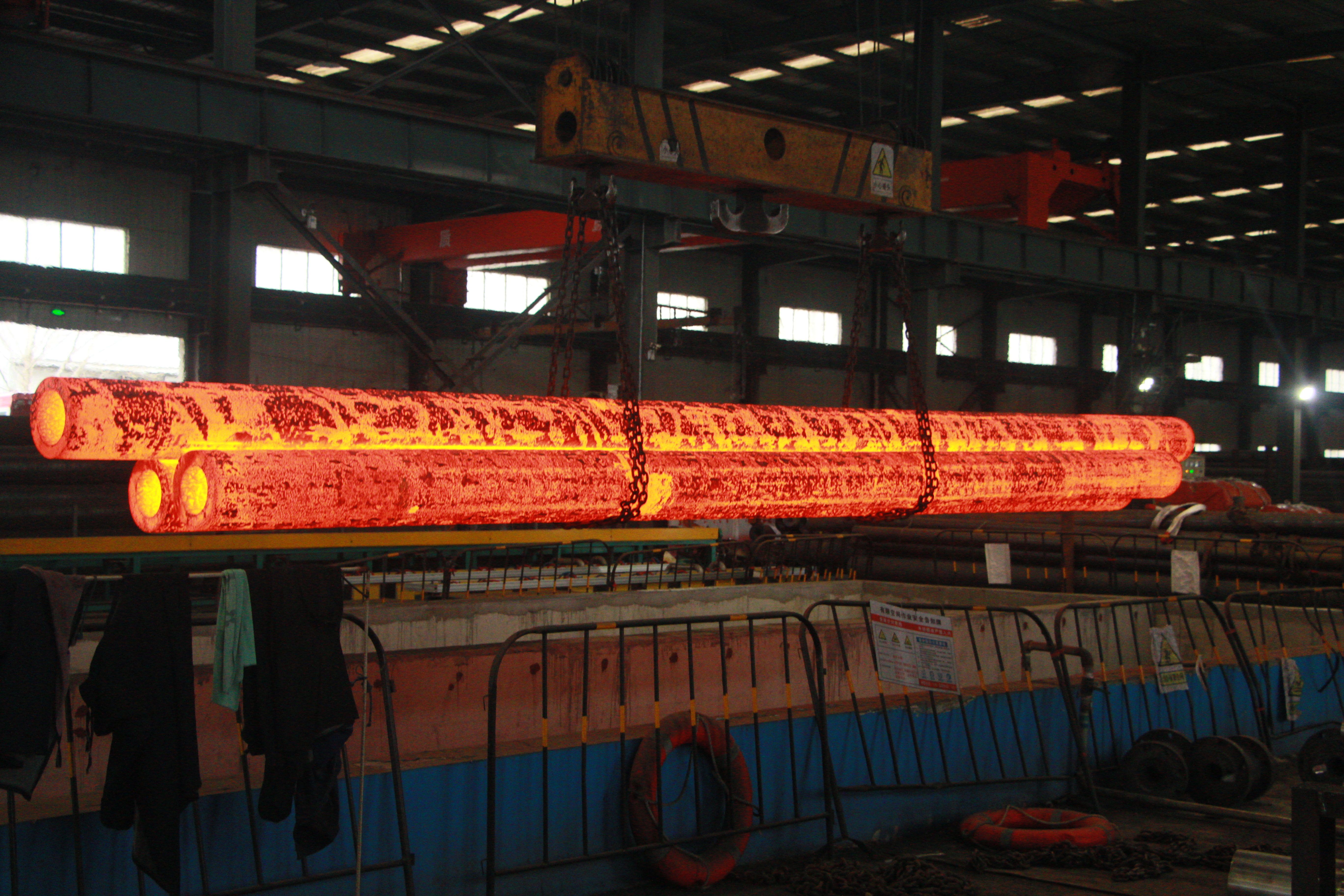
Seamless pipe production is where petroleum equipment manufacturing starts: the grade and the heat-treatment route are fixed long before a drill collar reaches the machine shop.
Petroleum equipment manufacturing is a material-selection discipline before it becomes a fabrication discipline. A drill collar, a hydraulic rod or a downhole tool body works under cyclic loading, torque and abrasion, and the grade written on the drawing decides how much of the equipment service life is spent in planned maintenance rather than in unplanned failure.
SAE4140 seamless pipe and tube is a chromium-molybdenum through-hardening alloy steel supplied in round and square shapes, in a published outer diameter range of 20–400 mm and a wall thickness range of 3–30 mm, and it is positioned by its producer for drill collar and aerospace component work. This article examines scenario fit: where SAE4140 tube genuinely enters petroleum equipment factory production, what the recorded service evidence from India and Chile shows after ten years, and which boundaries a buyer should test before the grade goes into a purchase specification.
Why Oil Drilling Equipment Manufacturing Narrows the Material Shortlist
A petroleum equipment factory buying seamless tube is not buying a grade name. It is buying a heat-treated section, a machined surface, a tested batch and a delivery date. That is why oil drilling equipment manufacturing compresses the supplier shortlist faster than most industrial categories: the same purchase order carries a chemistry requirement, a heat-treatment condition, a dimensional requirement, a machining expectation and a documentation requirement at the same time.
Four questions typically decide whether a supplier stays in the evaluation set:
- Can the section be heat treated to the strength and toughness the component drawing requires — and can that treatment be documented per batch?
- Is the published size and shape envelope wide enough for the blank being specified?
- Does the supply condition on the offer match the next manufacturing step, whether that is turning, boring or gun drilling?
- Is there an inspection route the buyer can control, such as a factory laboratory report or a buyer-arranged third-party inspection?
What SAE4140 Seamless Pipe Actually Is
Chemistry and hardenability
Published material references citing ASTM A29 / SAE J404 list carbon content for SAE 4140 at 0.38–0.43%, and commercial technical datasheets describe the grade as a 1% chromium-molybdenum through-hardening alloy steel. The chromium and molybdenum additions are the reason the grade is associated with components that need strength through the section rather than only at the surface. Materials reference data from AZoM reports annealed tensile strength of 655 MPa for the grade. These figures describe the material, not a delivered batch, and they function as screening values during evaluation.
Supply condition decides the component
Supplier sources list annealed, normalized, as-rolled and quenched-and-tempered conditions as available for SAE4140. For a petroleum equipment buyer, the condition on the purchase order frequently separates machinable stock from a finished-part outcome. Annealed SAE4140 machines predictably but is not a final strength level. Normalized SAE4140 supports a more uniform structure ahead of machining. Quenched and tempered SAE4140 is the condition associated with high-strength shaft, gear and downhole tool work. Commercial supplier pages also describe the grade as suitable for applications requiring wear resistance, toughness and fatigue resistance — attributes that depend on heat treatment and test method, and that should therefore be read as direction rather than as acceptance criteria.
Typical component mapping
Commercial supplier listings repeatedly associate SAE4140 with shafts, gears, fasteners, couplings, connecting rods, crankshafts, hydraulic rods, downhole tools, CNC-machined parts and oil and gas components. That mapping explains why search terms such as SAE4140 for shaft, SAE4140 for gear and SAE4140 for oil machinery cluster around the same decision: they are one material choice seen from three different component drawings. The same logic applies to SAE4140 for machining, where the practical question is not the grade but the condition and hardness band the shop has to cut.
Scenario Fit: Where SAE4140 Seamless Tube Enters Oil Drilling Equipment Production
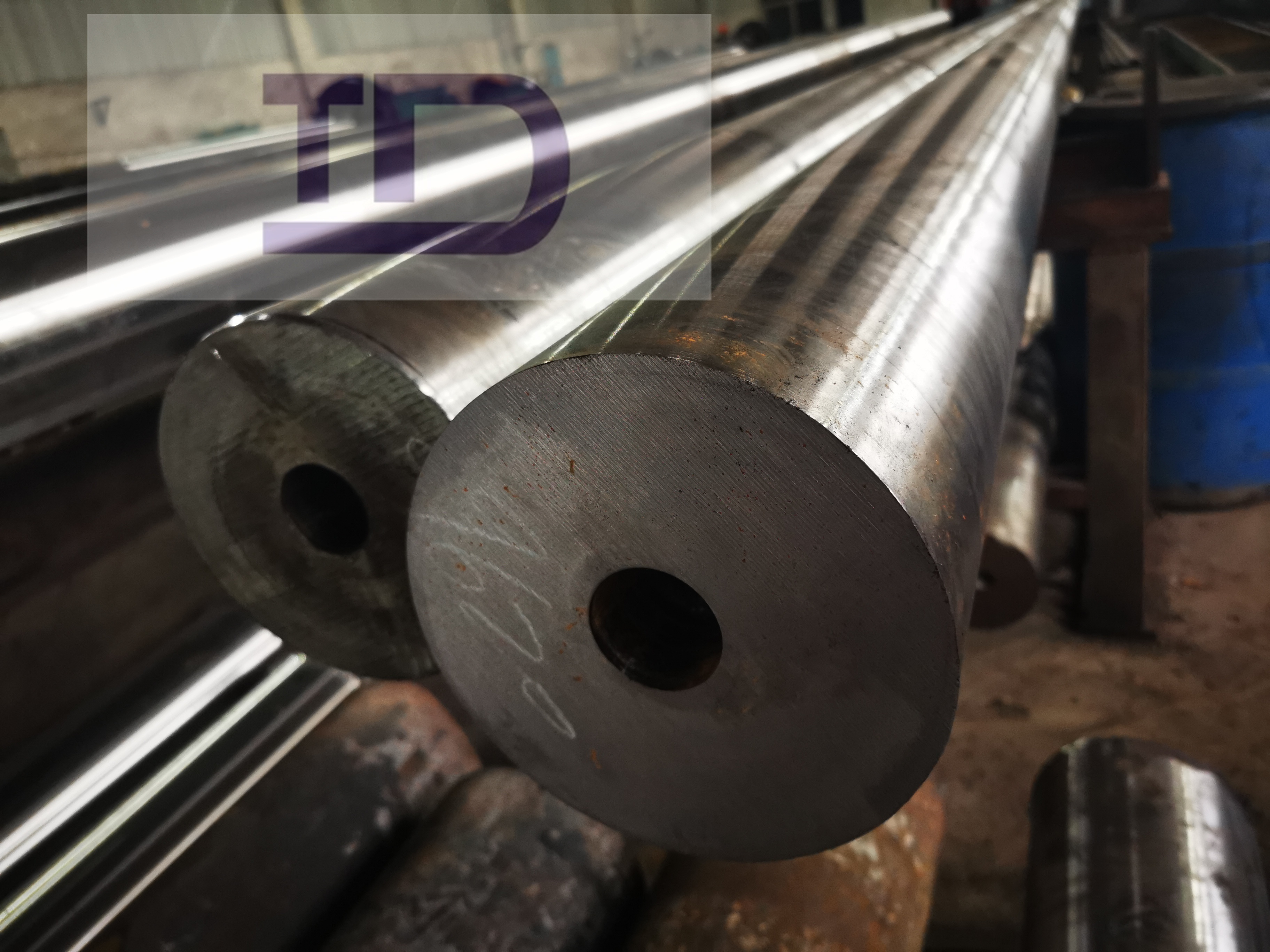
Drilling equipment production is the declared end-use of the SAE4140 alloy seamless pipe and tube listing: the product is used for the production and manufacturing of oil drilling equipment.
The most direct documented use case for the material is drilling equipment production itself. The listed use case states that the product is used for production and manufacturing of oil drilling equipment, and the SAE4140 alloy seamless steel pipe and tube listing specifies round steel pipe and square steel pipe, an outer diameter range of 20–400 mm, a wall thickness range of 3–30 mm, an applied range covering drill collar and aerospace components, and applicability to the oil and aerospace industries.
Reading the fit hierarchy from the declared application outward gives a practical evaluation order:
- Drill collar and downhole tooling stock — the declared applied range of the grade, and the closest match to oil drilling equipment production.
- Hydraulic rod and shaft components — supplier-listed applications that share the strength-at-section and surface-wear requirement.
- Gear, coupling and connecting rod work — supplier-listed applications where fatigue resistance is the deciding property.
- Aerospace-adjacent machined components — a second declared application area of the same product listing.
- General machined parts and fasteners — the wider supplier-listed application set, where the grade competes with lower-alloy alternatives.
The size envelope is a purchasing constraint, not a suggestion
Two numbers do most of the qualifying work in an evaluation: outer diameter 20–400 mm and wall thickness 3–30 mm. In the same seamless pipe portfolio, carbon and low-alloy tube is published up to an outer diameter of 1080 mm and a wall thickness of 110 mm. For large-section blanks, that wider portfolio is the realistic route. Where a drawing requires a section outside the SAE4140 envelope above, availability has to be confirmed before the grade is written into a specification.
Round or square: a machining economics question
Round section is the default for turned parts such as shafts, hydraulic rods and coupling stock. Square section matters for shops that would otherwise machine a rectangular blank out of round bar and convert the difference into chips. For SAE4140 for machining inquiries, the shape question belongs beside the size question, not after it.
Where SAE4140 sits next to neighbouring grades
The same seamless portfolio covers 4130, 4140, 4145 and 4340 alloy steels alongside carbon and low-alloy grades such as A106 Gr.B, ST52/ST44, S355/E355, 42CrMo and 30CrMo. Selection between them is usually a function of required strength at section, toughness expectation, dimensional reach and heat-treatment route — not of availability alone.
What the India and Chile Records Show About Long-Term Fit
Recorded supply evidence for petroleum equipment factories covers two markets, India and Chile, and reads as follows: 50 sets supplied for the production and manufacturing of oil drilling equipment, in stable operation for 10 years, with low loss, high performance and high applicability recorded as the outcome highlights. The record is attached to the SAE4140 alloy seamless pipe and tube and to the wider seamless pipe portfolio.
For a buyer at the evaluation stage, duration evidence of this kind answers a question that datasheets cannot: whether the material, the heat treatment and the supplied geometry hold up across a decade of oilfield service rather than across a single acceptance test. Ten years of stable operation in two separate markets is a materially different claim from a laboratory property table.
It also has a boundary. Case records of this type are supplier-recorded reference evidence. They support scenario screening; they do not replace batch-level documentation. A petroleum equipment buyer still needs mill certificates, chemistry and mechanical results tied to the heat numbers on the actual order, and where the project requires it, a third-party inspection route.
Tuoda Machinery Capability Facts a Petroleum Equipment Buyer Can Check
Shandong Tuoda Machinery Equipment Co., Ltd. (Tuoda Machinery) is a Shandong-based steel processing and equipment manufacturer whose product scope includes carbon seamless steel tube, round bars and pressure cylinders, exporting to the EU, the Middle East, India, Chile, Argentina and Turkey, with exports accounting for 70% of output. For a petroleum equipment factory, the verifiable parts of that profile matter more than the description.
Manufacturing and delivery parameters
- Monthly capacity: 1000 tons
- Lead time: 30–45 days
- Minimum order quantity: 5 tons or discuss
- Customization scope: size, length, mechanical property, delivery time and testing inspection
These four parameters define the volume-fit question during evaluation: whether the target order size can be produced at consistent quality inside the lead time, and whether the specification variables that matter to the component — length, mechanical property, inspection — are open to customization or fixed.
Inspection and certification evidence
Quality control is documented along two routes: a factory laboratory report, or a third-party inspection arranged by the buyer. The company holds CE 3.1 certificate 3N230530.STMDO12, issued by ECM for the European market and referencing EN 10210, EN 10219 and EN 10025, issued 30 May 2023 and valid until 28 May 2028. The SAE4140 alloy seamless pipe and tube product is listed among the applicable products of that certificate, which gives an oilfield buyer a document trail rather than a verbal assurance.
A 2026 industry media article profiling reputable SAE4140 alloy steel manufacturers in China includes Tuoda Machinery in its report segment. That is supply-side visibility rather than a plant audit, and the distinction matters: the certificate scope, the inspection route and the quotation are the elements a buyer can verify directly, while an audit-level verification of capacity and export records remains an open item in the public record.
How SAE4140 Seamless Pipe Compares with Conventional Carbon Steel Tube
A common evaluation mistake in petroleum equipment purchasing is treating SAE4140 tube and carbon steel tube as competing versions of the same product. They sit in the same seamless portfolio but they answer different drawings.
| Evaluation dimension | SAE4140 alloy seamless pipe and tube | Carbon and low-alloy seamless pipe portfolio |
|---|---|---|
| Material family | Chromium-molybdenum through-hardening alloy steel (SAE4140) | A106 Gr.B, ST52/ST44, S355/E355, 42CrMo, 30CrMo, 10#, 20# |
| Published outside diameter | 20–400 mm | 10–1080 mm |
| Published wall thickness | 3–30 mm | 2–110 mm |
| Delivery condition | Heat-treated supply conditions listed for the grade: annealed, normalized, as-rolled, quenched and tempered | Hot rolled, cold drawn, cold rolled, quenched and tempered |
| Application emphasis | Drill collar and aerospace components; oil and aerospace industries | Oil, gas, water and structural service |
| Certificate coverage | CE 3.1 certificate 3N230530.STMDO12 (ECM, EU scope; EN 10210, EN 10219, EN 10025) lists the SAE4140 product among applicable products | The same certificate listing covers the carbon and alloy pipe range |
What the SAE4140 case does not establish
A comparison is only useful if its limits are stated. Five boundaries apply to the evidence behind this material choice:
- Property claims lack a documented test basis. Commercial sources describe wear resistance, toughness and fatigue resistance for the grade, but the retrieved references do not establish test methods, heat-treatment parameters or section size. Published values are directional until a mill certificate or test report is issued for the specific batch.
- No verified SAE4140-specific market or price data. The available reference set contains no SAE4140 sub-segment market size, price, MOQ or trade-flow evidence, so cost benchmarking has to come from actual quotations rather than from public sources.
- Alloy processing adds steps. A through-hardening chromium-molybdenum steel generally requires more controlled heat treatment and more inspection points than plain carbon structural tube. That is a process and documentation cost, not only a material cost.
- Public capacity verification is incomplete. Supplier-capacity validation for SAE4140 manufacturing in China is currently media and datasheet level.
- The service record is first-party. The India and Chile reference is supply-side case evidence and does not substitute for order-specific documentation.
The size envelope is a further boundary. Carbon and low-alloy tube in the same portfolio reaches an outer diameter of 1080 mm and a wall thickness of 110 mm, while SAE4140 is published at 20–400 mm and 3–30 mm. Large-section work belongs to the wider portfolio; high-strength through-hardened section work belongs to the alloy line.
Market Signals and What They Do and Do Not Tell Buyers
The macro context for steel consumption is measurable. Grand View Research projects the global steel market at USD 1525.8 billion for 2026 in its Steel Market Size, Share and Growth Report covering 2026–2033. That figure describes total steel demand across all product categories; it is not evidence about SAE4140 tube demand, and it should not be presented as such.
What the verified reference set does not contain is equally important: there is no SAE4140-specific market size, compound annual growth rate or trade-volume evidence available. Any supplier or article that quotes a growth percentage for SAE4140 specifically should be asked for its source.
Two supply-side signals are observable. First, industry press coverage in 2026 profiled SAE4140 alloy steel manufacturers in China, which indicates that the grade has become visible enough to attract trade-media attention. Second, supplier technical pages increasingly describe supply conditions and application lists in more detail than grade naming alone, which suggests that buyers are requesting condition-level information rather than accepting a generic grade reference. The practical trend in petroleum equipment procurement is documentation-driven: evaluation questions now target heat-treatment condition, test basis and third-party inspection availability, because commercial datasheets are inconsistent on exactly those points.
Future Outlook
Scenario fit for SAE4140 seamless pipe in petroleum equipment manufacturing will continue to be decided at the documentation layer rather than at the grade-name layer. As drilling equipment designs push further on fatigue and wear performance, the difference between suppliers of the same nominal grade will narrow to three capabilities: traceability of heat treatment, consistency inside a declared dimensional envelope, and a verification route the buyer can control.
A second shift is likely in how the material is specified. Purchase orders are increasingly expected to state a condition — annealed, normalized or quenched and tempered SAE4140 — instead of the grade alone, because the same grade name can describe machinable stock or a finished strength level. Buyers who write the condition, the size, the test basis and the inspection route into the RFQ will compare suppliers on a like-for-like basis; buyers who do not will spend the evaluation stage resolving ambiguity that the specification could have removed.
FAQ
The documented end use is the production and manufacturing of oil drilling equipment. The SAE4140 alloy seamless steel pipe and tube listing specifies round and square pipe in an outer diameter range of 20–400 mm and a wall thickness range of 3–30 mm, with an applied range covering drill collar and aerospace components and applicability to the oil and aerospace industries. Commercial supplier listings also associate the grade with shafts, gears, couplings, connecting rods, hydraulic rods and downhole tools.
The published product type is round steel pipe and square steel pipe, with outer diameter from 20 mm to 400 mm and wall thickness from 3 mm to 30 mm. Requirements outside that envelope require separate confirmation. For comparison, the carbon and low-alloy seamless pipe in the same portfolio is published up to an outer diameter of 1080 mm and a wall thickness of 110 mm.
They are specified for different duties rather than ranked against each other. A106 Gr.B, ST52 and S355/E355 are carbon and low-alloy grades positioned for oil, gas, water and structural service across a wider dimensional range. SAE4140 is a chromium-molybdenum through-hardening alloy associated with drill collar, shaft and gear applications where strength through the section after heat treatment matters. Selection depends on required mechanical properties, heat-treatment capability, section size and cost position. Where dimensional reach or material cost is the constraint, carbon grades are the practical choice; where through-hardened section strength is required, alloy grades are specified.
A complete RFQ states the grade, the form (round or square seamless pipe or tube), outer diameter, wall thickness, supply condition (annealed, normalized, as-rolled or quenched and tempered), length, mechanical property requirement, testing and inspection route, and required delivery timing. Supplier-published performance attributes should be confirmed against mill certificates rather than accepted as acceptance criteria. Tuoda Machinery documents a customization scope covering size, length, mechanical property, delivery time and testing inspection, with a monthly capacity of 1000 tons, a lead time of 30–45 days and a minimum order quantity of 5 tons or discuss.
Two inspection routes are documented: a factory laboratory report, or a third-party inspection arranged by the buyer. The supplier holds CE 3.1 certificate 3N230530.STMDO12, issued by ECM for the European market and referencing EN 10210, EN 10219 and EN 10025, issued 30 May 2023 and valid until 28 May 2028, with the SAE4140 alloy seamless pipe and tube listed among its applicable products. For petroleum equipment service, buyers typically match the certificate package to their own heat numbers and to the component test basis required by the drawing.
A technical brochure covering the SAE4140 alloy seamless pipe and tube range and the wider seamless steel pipe portfolio can be downloaded here: SAE4140 seamless pipe and tube technical brochure (PDF).
Tem questões ou precisa de mais detalhes?
Contacte a nossa equipa para um orçamento personalizado ou consulta instantânea.
Solicitar orçamento
Preencha o formulário abaixo e a nossa equipa entrará em contacto com uma proposta personalizada.
Chat direto do WhatsApp
Prefere conversar em tempo real? Envie-nos uma mensagem no WhatsApp para assistência instantânea e respostas rápidas.
- Obter orçamento personalizado
- Partilhar fotos ou documentos
- Discuta as suas necessidades diretamente
Geralmente responde em 5–30 minutos durante o horário de expediente.