
SIL-Certified Ball Valves in Chemical and Gas Pipelines: Scenario Fit by Size and Pressure
SIL-Certified Ball Valves in Chemical and Gas Pipelines: Scenario Fit by Size and Pressure
In chemical and gas pipeline projects, ball valve selection rarely fails because of the body material alone. It fails because the valve architecture, size band, pressure class, temperature window and connection standard were matched to the wrong duty, and because the certification claimed at tender stage did not cover the model actually delivered.
A Safety Integrity Level (SIL) classification is not a general quality badge attached to a product family. It is assigned to a safety instrumented function, and the supporting certificate is issued against a defined manufacturer, model, size range, pressure class and configuration. That distinction is the starting point for any buyer comparing a certified premium valve with an ordinary standard valve in chemical, petrochemical or gas transmission service.
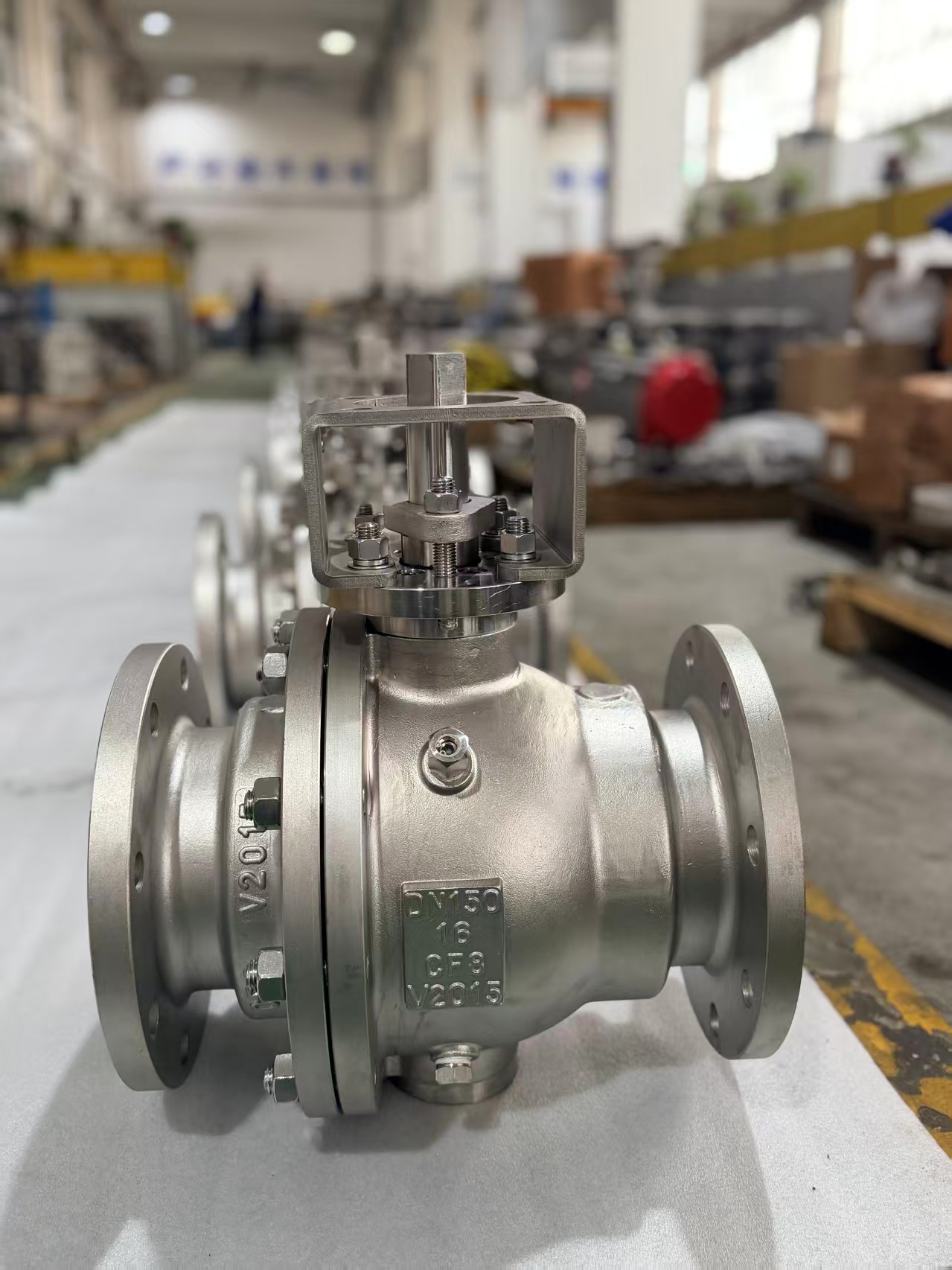
2PC trunnion mounted ball valve, the architecture used for larger-diameter, higher-pressure isolation in chemical and gas pipelines.
Why SIL Classification Changes the Selection Question
SIL is a measure of how reliably a safety function must perform, not a rating of the valve as a piece of hardware. When a ball valve is used for emergency isolation, depressurisation, or a shutdown path in a chemical reactor train or gas let-down station, the valve becomes part of a safety loop, and the buyer must supply evidence that the whole loop achieves the required integrity.
Three consequences follow for procurement:
First, certification is scoped, not blanket. A certificate valid for a DN80 flanged valve in a given pressure class does not automatically extend to a DN300 trunnion mounted unit, nor to the same valve fitted with a pneumatic actuator. Buyers should read the certificate's model list, size range, pressure rating and temperature range line by line.
Second, documentation becomes part of the product. API Specification 6D, in its 25th Edition and its 2024 Addendum 2, sets requirements covering design, manufacturing, materials, welding, quality control, assembly, testing, marking, documentation and process controls for pipeline valves including ball valves. A vendor that cannot produce a coherent test and material record is not a SIL-capable vendor, whatever the marketing states.
Third, the safety function decides the architecture. A DN25 chemical dosing line and a DN900 gas transmission header do not call for the same valve design, and treating them as one commodity category is where most specification errors originate.
Three Ball Valve Architectures and the Duty Each Serves
RST VALVE GROUP CO.,LTD, a China-based industrial valve manufacturer established in 2009 in Wenzhou City, Zhejiang Province, produces ball valves across three distinct architectures. Each has a different natural operating envelope, and understanding that envelope is more useful to a buyer than a single headline pressure figure.
Threaded and welded small-bore valves: DN6 to DN100
The threaded ball valve range covers sizes from DN6 to DN100 at pressure ratings of 1000 to 2000 WOG and a temperature range of -20°C to 180°C, with a PTFE seat and body options in CF8 (304) and CF8M (316). Connection choices include threaded, socket weld, butt weld and tri-clamp ends, and the valves carry an ISO 5211 actuator mounting pad. Available configurations include 1PC, 2PC and 3PC threaded bodies, a 1PC hex threaded pattern, socket welded and butt welded variants, and clamp-end designs.
This architecture suits instrument lines, chemical dosing and sampling points, small-bore distribution manifolds, and utility connections where the torque required to operate the ball remains low. The design includes a blow-out proof stem with a T-type thrust structure, combined O-ring, V-type packing and Belleville spring compensation to limit stem leakage, and optional anti-static and fire-safe features for flammable media.
Flanged valves: DN15 to DN600 full port
The flanged ball valve range runs from DN15 to DN600 in full port, with a working temperature range of -20°C to 180°C and body materials covering carbon steel (WCB), CF8 (304), CF8M (316), duplex stainless steel 2205 and CF3M. Configurations include 2PC and 3PC direct mounting pad designs, wafer type and 1PC designs, plus three-way and pneumatic actuated variants.
The distinguishing feature at procurement level is flange compatibility: this range supports GB, ANSI, DIN and JIS flange standards, and the two-piece or three-piece split body structure allows seals to be disassembled and replaced without removing the whole valve from the line. That matters in chemical service where seat replacement is a recurring maintenance event rather than a one-off repair.
Trunnion mounted valves: DN50 to DN1200
The trunnion mounted ball valve range, models Q347F, Q347H and Q347Y, covers DN50 to DN1200 at nominal pressure PN4.0–10.0 MPa and an applicable temperature range of -40°C to +150°C, with flanged connections and body options in WCB, CF8 and CF8M, using carbon steel, SS304 or SS316 as material grades. The design uses a spring-loaded, movable metal seat and a trunnion-mounted ball, and includes a blow-out proof stem, automatic cavity pressure relief and a fire-safe design. Gear operation and electric actuation are both available.
Above roughly DN150, the torque needed to rotate a floating ball against its seats grows quickly, and the seat load becomes uneven. The trunnion design carries the ball on top and bottom shafts so the seat only has to seal, not support. That is the engineering reason trunnion mounted valves dominate larger pipeline isolation duties in gas transmission, compressor stations and petrochemical process headers.
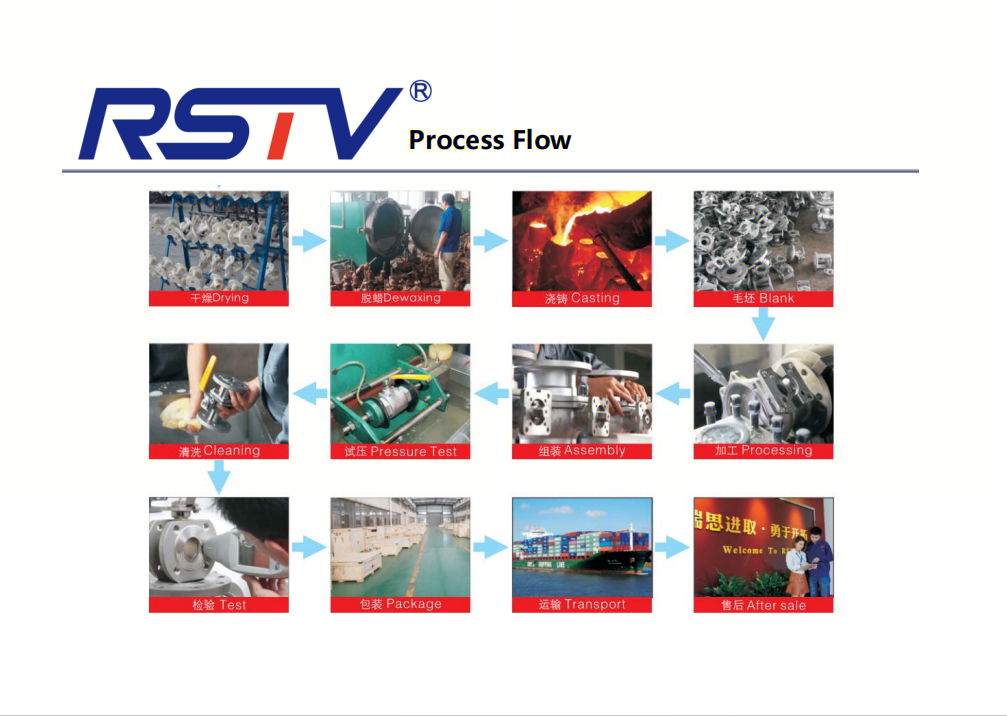
Manufacturing flow from body casting through machining, assembly and pressure testing — the sequence a buyer should be able to trace in the quality record.
Scenario Fit Matrix by Size, Pressure and Connection
The table below maps the three architectures to typical chemical and gas pipeline duties. It is a screening tool, not a substitute for the project specification.
| Duty | Size band | Pressure reference | Temperature window | Connection | Architecture |
|---|---|---|---|---|---|
| Chemical dosing, sampling, instrument air | DN6–DN100 | 1000–2000 WOG | -20°C to 180°C | Threaded, socket weld, butt weld, tri-clamp | Threaded 1PC / 2PC / 3PC |
| Process piping, utilities, pharmaceutical and water treatment headers | DN15–DN600 | Project class; flange rating governs | -20°C to 180°C | GB, ANSI, DIN, JIS flanges | Flanged 2PC / 3PC / wafer |
| Gas transmission, compressor station isolation, large process headers | DN50–DN1200 | PN4.0–10.0 MPa | -40°C to +150°C | Flanged | Trunnion mounted, gear or electric operated |
One caution on pressure figures: WOG, PN and ASME/API class ratings are separate classification systems, and a buyer should not convert one into another without the manufacturer's published rating table for the exact model. API Specification 6D, for example, applies to pressure classes 150, 300, 400, 600, 900, 1500 and 2500 — a taxonomy that does not map one-to-one onto a PN designation. Mixing the two in a datasheet is a common source of bid confusion.
Temperature, Media and Connection Constraints
The temperature window is usually set by the seat and seal materials rather than the body. Both the threaded and flanged ranges operate from -20°C to 180°C with PTFE seats; the trunnion range extends lower, to -40°C, with an upper limit of +150°C. For reference, the IOGP S-562 supplementary procurement specification for manually operated API 6D ball valves states an allowable operating temperature range of -46°C to 150°C for its covered application — a useful reminder that project specifications often narrow the manufacturer's catalogue window rather than widen it.
Media drives body and trim selection. Carbon steel (WCB) is the default for non-corrosive gas and utility duties. CF8 (304) and CF8M (316) are specified where weak acids, alkalis or process chemicals are present, with duplex 2205 and CF3M available for more aggressive service in the flanged range. For food and pharmaceutical lines, polished 316L wetted surfaces and food-grade seals are available on request.
Connection compatibility deserves more attention than it usually receives. A DN100 flanged valve ordered to DIN dimensions will not bolt to an ANSI Class 150 mating flange, regardless of nominal size. Specify the flange standard, pressure class, facing type and bolt pattern in the RFQ, and require the manufacturer to confirm them in writing on the drawing.
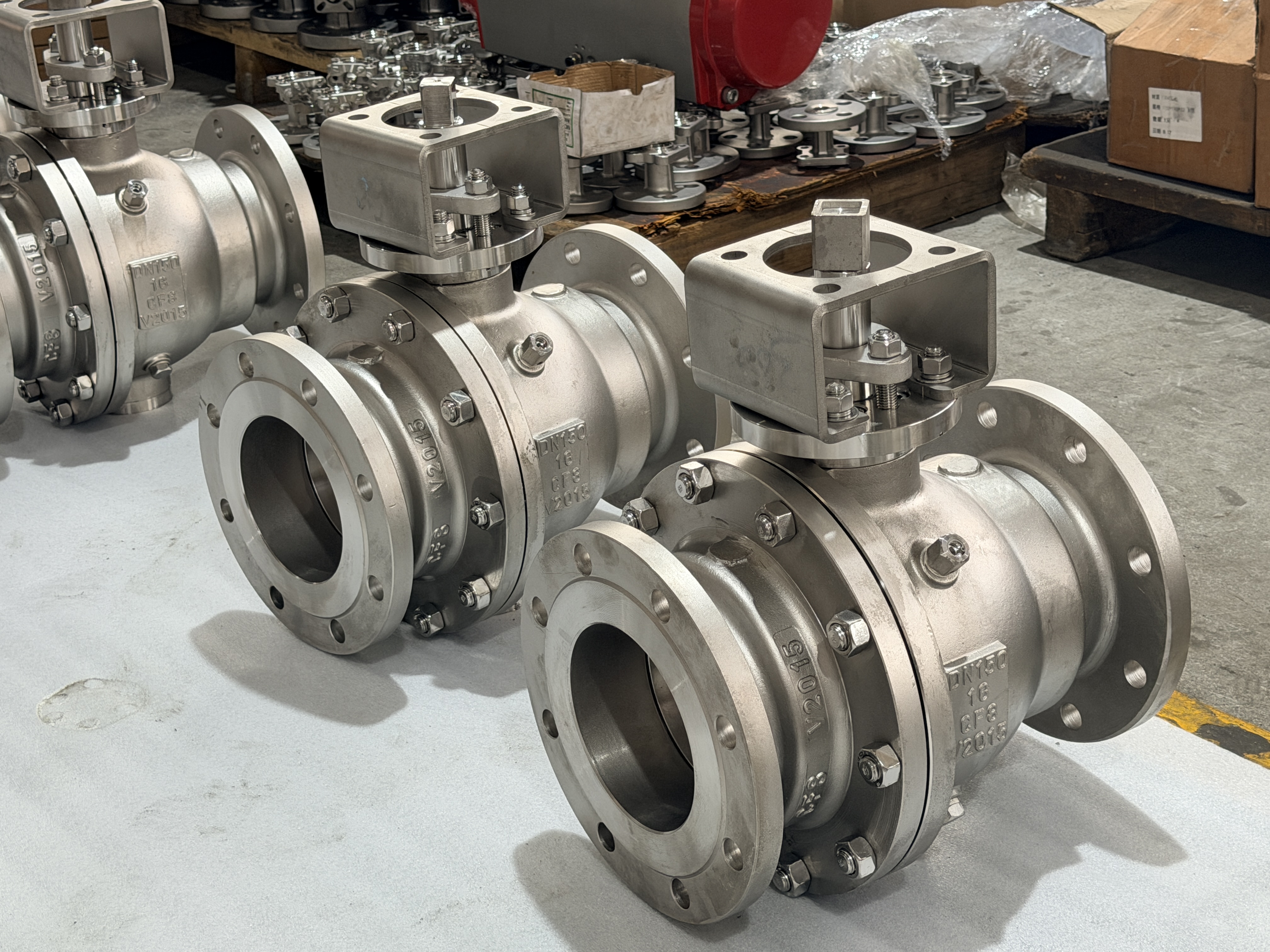
Pneumatic actuated flanged ball valve — automated isolation for process and gas pipeline duties where manual operation is not acceptable.
Where the RST Valve Group Range Sits
RST VALVE GROUP CO.,LTD operates a 20,000 square metre manufacturing facility with approximately 430 staff, an R&D team of five engineers and an annual production capacity of about 3,000 tons of industrial valves. The company is an ISO, CE and TS certified manufacturer, exports to Africa, the Americas, Asia, Europe, the Middle East, Oceania and other markets, and produces valves in accordance with API, ANSI, DIN, JIS, BS and GB standards. Its product line covers ball valves, gate valves, check valves, globe valves and Y strainers.
Within the ball valve category, the three ranges described above give a buyer a continuous size path from DN6 to DN1200 rather than a single-product offer. A chemical plant specifying small-bore dosing valves and a large gas header isolation valve can source both from the same manufacturing base, which simplifies dimensional consistency and spares planning.
An honest boundary on certification. Where a project requires SIL classification or PED conformity, the certificate scope must be confirmed against the specific model, size, pressure class and actuation configuration before the order is placed. A product family that includes certified configurations does not mean every size in that family is certified. Buyers should request the certificate, the safety manual and the most recent test record for the exact variant being purchased, and should treat verbal assurances as insufficient.
Certified Premium versus Ordinary Standard Valves
The practical difference between a SIL or PED-scoped valve and a standard industrial ball valve is rarely visible on the outside. It sits in material traceability, extended testing, documented process control, and the existence of a certificate whose scope actually covers the delivered item. Those items carry cost and lead time.
Where the premium option is justified: the valve forms part of a safety instrumented function; the medium is flammable, toxic or otherwise hazardous; the site is subject to a regulatory regime requiring documented conformity; or the cost of an unplanned shutdown exceeds the price premium by a wide margin.
Where a standard valve is the correct choice: utility water, instrument air, non-hazardous chemical transfer, and any isolation duty that is not part of a safety loop. Over-specifying here adds cost without adding protection, and it lengthens delivery schedules for no operational benefit.
Two further limits are worth stating plainly. First, a ball valve is an on-off device; it is not suitable for throttling, and using it to modulate flow will damage the seat regardless of certification. Second, a trunnion mounted valve is not automatically superior to a floating design — at DN25 in a utility line, a floating or threaded valve is simpler, cheaper and entirely adequate. Architecture should follow the duty, not the reverse.
Application Scenarios in Chemical and Gas Service
In petrochemical and refining process piping, flanged valves in the DN15 to DN600 band handle the majority of isolation points, with the 2PC and 3PC split body allowing seat replacement during planned maintenance windows. Where the line carries flammable media, the anti-static conduction path between ball, stem and body and the fire-safe design become specification requirements rather than options.
In gas transmission and distribution, the trunnion mounted range covers the larger isolation valves at PN4.0–10.0 MPa and -40°C to +150°C. The automatic cavity pressure relief function matters here: trapped pressure in the body cavity between the seats must be able to escape safely during thermal cycling, and the spring-loaded movable metal seat maintains contact as the line pressure and temperature move.
In chemical dosing, sampling and analytical systems, threaded valves from DN6 upward with ISO 5211 pads allow a pneumatic or electric actuator to be fitted directly without a mounting bracket. That reduces the assembly stack height, which is often the limiting factor inside an analyser house or a skid.
In pharmaceutical, food and water treatment service, the same flanged platform is supplied with polished 316L wetted parts and food-grade seals, with tri-clamp connections available on the smaller threaded range for hygienic tie-ins.
Market Context: Standard Revision and Procurement Discipline
The commercial research firm Straits Research estimated the global ball valve market at 14.8 billion USD in 2025, with floating ball valves accounting for 61.8% of the market by type in that year. The dominance of the floating design reflects its cost and simplicity in the large volume of general industrial applications; the trunnion segment exists precisely because a minority of duties cannot be served economically by a floating ball.
Alongside market volume, the standards landscape has been moving. API Specification 6D reached its 25th Edition, with Addendum 2 published in 2024 covering design, manufacturing, materials, welding, quality control, assembly, testing, marking, documentation and process controls, and extending its stated scope to hydrogen gas service. On the procurement side, IOGP S-562 Version 3.1 provides a supplementary specification for manually operated API 6D ball valves, translating a design standard into buyer-facing requirements.
The practical trend for buyers is a shift in the basis of comparison. Ten years ago, ball valve tenders were frequently decided on price per unit and nominal size. Increasingly, the deciding documents are the certificate scope, the material traceability record and the test report package. That shift favours suppliers who can produce documentation consistently, and it penalises those who cannot, regardless of catalogue breadth.
Future Outlook
Three developments are likely to shape ball valve procurement in chemical and gas pipelines over the next planning cycle. The first is documentation granularity: as end users align their specifications with API 6D and procurement supplements such as IOGP S-562, the certificate and test record becomes a gating item rather than a post-award formality. Suppliers with a traceable quality system will find bid evaluation easier; those without will be screened out earlier.
The second is the broadening of service envelopes. The inclusion of hydrogen gas service in the API 6D Addendum 2 scope signals that buyers will increasingly ask for evidence covering media beyond conventional hydrocarbons, and material and seal selection will be reviewed against those duties rather than assumed.
The third is actuation integration. With ISO 5211 mounting pads standard across the threaded and flanged ranges, the valve is increasingly specified as part of an automated isolation package rather than a standalone item, which pushes buyers to evaluate the actuator, the mounting interface and the valve as a single certified assembly.
For planning purposes, the practical recommendation is straightforward: define the duty first, then choose architecture by size and pressure, then confirm the connection standard, and only then evaluate certification scope against the specific model. RST Valve Group publishes its product presentation for buyers who want the full range overview before preparing an RFQ: RST Valve Group product presentation (PDF).
Frequently Asked Questions
What does "SIL-certified" mean for a ball valve, and when is it actually required?
SIL refers to a Safety Integrity Level assigned to a safety instrumented function, not to a valve as a standalone object. A ball valve needs SIL-related evidence only when it performs a safety function such as emergency isolation, depressurisation or shutdown. The supporting certificate is issued for a defined manufacturer, model, size range, pressure class and configuration, so the certificate must be checked against the exact variant being purchased. Isolation duties outside a safety loop do not require it.
Which duties fit threaded ball valves from DN6 to DN100?
Threaded ball valves cover DN6 to DN100 at 1000–2000 WOG and -20°C to 180°C, with PTFE seats and CF8 (304) or CF8M (316) bodies. Connection options include threaded, socket weld, butt weld and tri-clamp, with an ISO 5211 mounting pad for direct actuator fitting. They suit chemical dosing, sampling, instrument lines and small-bore distribution. They are not intended for large-diameter, high-torque isolation.
How do I choose between GB, ANSI, DIN and JIS flanged connections?
The mating pipeline flange decides the standard, not the valve supplier's preference. A DIN-dimensioned valve will not bolt to an ANSI Class 150 flange of the same nominal size. The flanged ball valve range supports GB, ANSI, DIN and JIS standards, so the RFQ should state the flange standard, pressure class, facing type and bolt pattern, and the manufacturer should confirm these on the approval drawing before production.
When should a trunnion mounted valve replace a floating design?
As nominal size grows, the torque needed to rotate a floating ball against its seats rises and seat loading becomes uneven. A trunnion mounted design supports the ball on top and bottom shafts, so the seat only seals. The trunnion range covers DN50–DN1200 at PN4.0–10.0 MPa and -40°C to +150°C, with a spring-loaded movable metal seat, automatic cavity pressure relief, a fire-safe design and a blow-out proof stem. In small-bore utility service, a floating or threaded valve remains the more economical choice.
What actually differs between a certified premium valve and an ordinary standard valve?
The difference lies in documented material traceability, extended testing, controlled process records and a certificate whose scope covers the delivered item — not in external appearance. These items increase unit cost and lead time. The premium option is justified where the valve is part of a safety function, where the medium is flammable or toxic, where regulation requires documented conformity, or where unplanned shutdown cost is high. For utility water, instrument air or non-hazardous transfer, a standard valve is appropriate.
How should a buyer verify a SIL certificate before placing an order?
Compare the certificate's stated manufacturer, model designation, size range, pressure class and temperature range against the exact valve being ordered, and check whether the actuation configuration is included. Request the safety manual and the most recent pressure and leak test records, confirm the issuing body and validity period, and require the manufacturer to confirm scope in writing. A family-level claim is not evidence that a specific size or configuration is covered.
Tem questões ou precisa de mais detalhes?
Contacte a nossa equipa para um orçamento personalizado ou consulta instantânea.
Solicitar orçamento
Preencha o formulário abaixo e a nossa equipa entrará em contacto com uma proposta personalizada.
Chat direto do WhatsApp
Prefere conversar em tempo real? Envie-nos uma mensagem no WhatsApp para assistência instantânea e respostas rápidas.
- Obter orçamento personalizado
- Partilhar fotos ou documentos
- Discuta as suas necessidades diretamente
Geralmente responde em 5–30 minutos durante o horário de expediente.