
SINOTRUK First-Tier Distributor HOWO TX 6x4 Procurement FAQ
SINOTRUK First-Tier Distributor HOWO TX 6x4 Procurement FAQ

After-sales and haulage context in an African market. Image source: Qingong content unit.
For a buyer preparing to confirm a HOWO TX 6x4 dump truck order, the most useful first step is not a broad brand comparison. It is a line-by-line check of the published configuration against the intended site task. The HOWO TX 6x4 model referenced here, ZZ3257V3847GB1, is specified with a WD615.47 371 HP Euro II engine, an HW19710 transmission with 10 forward and 2 reverse gears, a VGD95 front axle with drum brake, and an MCX16ZG rear axle with a 5.451 ratio. Those items deserve separate verification because they determine how the truck is documented, ordered, inspected and supported.
This FAQ is written for the evaluation-to-execution stage: the buyer has a candidate model and now needs to convert a specification sheet into an order, an inspection plan and a handover record. It does not replace a site engineering review. It does, however, identify the points where a HOWO TX 6x4 procurement file can become vague, and where a first-tier distributor claim should be tested against documents rather than accepted as a label.
What the HOWO TX 6x4 specification means in procurement terms
A 6x4 configuration is a three-axle layout with drive to the rear tandem. For a dump truck, that layout is relevant to traction and load distribution, but the buyer should still confirm the exact axle models and ratio on the order, because a model code alone does not prove the fitted components. The specification set here is concrete enough to support a proper acceptance checklist: engine model and rating, transmission model and gear count, front axle model and brake type, rear axle model and ratio, drive configuration, cargo box construction, fuel tank capacity and tire size.
The practical rule is simple: every item that appears in the sales description should appear again in the order confirmation, and then again in the pre-shipment inspection record. If a specification is not written down, it is difficult to verify at handover. If it is written down but not inspected, the buyer has documentation without physical confirmation.
| Item | Verified specification | Procurement focus |
|---|---|---|
| Model | ZZ3257V3847GB1 | Match the model code on the plate, order and commercial documents. |
| Engine | WD615.47, 371 HP, Euro II | Record the engine serial; confirm the rating and emissions marking. |
| Transmission | HW19710, 10 forward / 2 reverse | Check the transmission plate and gear positions. |
| Front axle | VGD95 with drum brake | Confirm axle identification and brake assembly completeness. |
| Rear axle | MCX16ZG, ratio 5.451 | Verify the ratio marking and axle identification. |
| Drive | 6x4 | Confirm rear tandem drive and tire arrangement. |
| Cargo box | Middle lifting; 8 mm bottom, 6 mm side | Measure plate thickness; test lifting function and check hoses. |
| Fuel tank | 300 L with cap lock | Confirm capacity, cap lock operation and mounting. |
| Tires | 12.00R20, one spare | Check size markings, spare condition and carrier. |
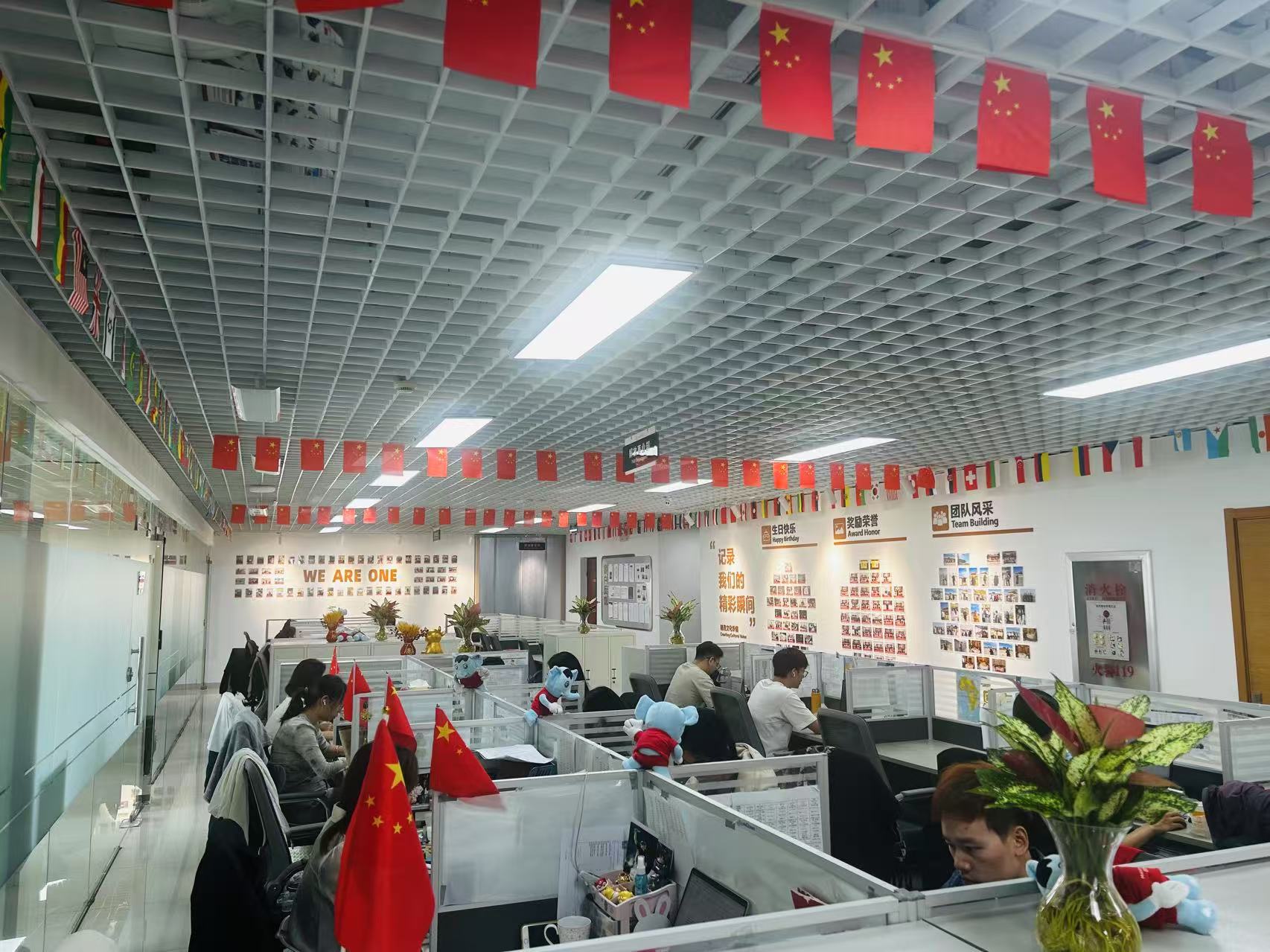
Export order coordination and documentation review. Image source: Qingong content unit.
Engine: WD615.47 371 HP Euro II
The WD615.47 is the engine specified for this HOWO TX 6x4 configuration, rated at 371 HP and identified as Euro II. For procurement, the engine check has three parts: identity, emissions documentation and condition at handover. Identity means the engine model and serial should be readable and should match the order. Emissions documentation means the buyer should confirm that the destination market accepts Euro II for the intended registration category before the order is finalized. Condition means the visible installation—mountings, hoses, wiring and fluid levels—should be inspected before shipment.
Euro II is an emissions classification, not a market approval. That distinction matters in cross-border procurement because registration policy varies by country and vehicle category. A buyer in West or Central Africa should not assume that a Euro II engine is automatically accepted in every market. The correct procurement step is to check the local registration requirement first, then match the engine specification to that requirement. If the destination market has a different requirement, the engine specification becomes an order-change discussion, not an after-shipment surprise.
At pre-shipment inspection, record the engine serial and compare it with the order and export documents. Check that the engine plate and any visible emissions label are legible. Where the contract provides for third-party inspection, the inspection plan should name the engine identity check explicitly rather than relying on a general visual review.
Gearbox: HW19710 10 forward and 2 reverse
The HW19710 transmission provides 10 forward gears and 2 reverse gears. In a dump-truck procurement review, the gearbox check is about model identity, control function and documentation, not a claim of a particular fuel result. The buyer should confirm that the transmission model plate matches HW19710, that the gear positions engage during static inspection, and that there are no visible fluid leaks around the transmission housing or connections.
The gear count is also a useful order-level check. A sales summary that says 10 forward and 2 reverse should match the transmission plate and the final vehicle description. If the site requires a different transmission, that is a configuration change and should be written into the revised order. It should not be assumed from a generic model description or from a dealer's verbal assurance. The same discipline applies to any custom transmission request: state the model, confirm it in writing and inspect the fitted unit.
For buyers comparing quotations, the transmission question is a good way to test whether a supplier is quoting a specific configuration or a generic category. A precise quotation should identify the transmission model and gear count. A vague quotation that only says heavy-duty gearbox is not enough for acceptance planning.
Axles: VGD95 front and MCX16ZG rear at 5.451
The front axle is listed as VGD95 with drum brake; the rear axle is MCX16ZG with a 5.451 ratio. The rear ratio is one of the most concrete items to verify because it is often quoted in summaries but difficult to confirm after delivery if the buyer has not recorded it before shipment. A 5.451 ratio is a numerical specification. It should appear in the order confirmation and on the axle identification. If the delivered unit shows a different ratio, the buyer should treat that as a documentation and configuration discrepancy, not a tuning preference.
The front axle check should include the axle identification and the completeness of the drum-brake assembly. The rear axle check should include the differential housing, visible oil leaks, and the ratio marking where accessible. These are physical checks that complement the paperwork. A buyer who only checks the model code on the cab plate has not confirmed the axle set.
Axle ratio also belongs in the site-fit discussion. The published ratio is a fixed specification, and the buyer should confirm it matches the intended haul cycle and operating conditions. This article does not calculate performance outcomes from the ratio, because that would require additional verified data. The procurement point is narrower and more defensible: the delivered axle must match the ordered model and ratio.
6x4 drive and site fit
The 6x4 designation should be verified as a drive configuration, not just a model label. On a 6x4 unit, the rear tandem is the driven pair and the front axle steers. The buyer should confirm the tire arrangement, wheel positions and spare location against the order. For a dump truck, the drive layout should be matched to the site's traction and haul-road conditions before order confirmation.
Site fit is not a single specification. It combines the loading method, road surface, grade, turning area, maintenance access and the operator's load discipline. The 6x4 configuration may be relevant to traction on poor surfaces, but the buyer should not infer a guaranteed outcome from the drive label alone. If the site has soft ground, steep grades or frequent off-road loading, those conditions belong in the technical discussion with the supplier and, where appropriate, in the pre-shipment configuration review.
Cargo box: middle lifting, 8 mm bottom and 6 mm side
The cargo box is specified with middle lifting and plate thickness of 8 mm at the bottom and 6 mm at the side. These are measurable procurement points. The buyer should use a calibrated gauge and record readings at several positions on the bottom and sides. A single spot check is weak evidence because plate thickness can vary by location and measurement method. The inspection record should state where the readings were taken and what instrument was used.
The middle-lifting function should be tested through its intended cycle without load before shipment. Confirm that the pump, hoses, cylinders and limit stops are complete, and check for leaks. The test does not need to simulate a full production cycle, but it should confirm that the lifting function operates and that the components are installed as ordered. If the buyer orders a different body, the thickness and lifting specification must be re-stated in the revised order.
The cargo box is also a place where generic descriptions can hide configuration differences. A quotation that says dump body without stating lifting type, bottom thickness and side thickness is not a complete specification for this model. The buyer should require those values in writing.
Fuel tank and tires
The fuel tank is specified at 300 L with a cap lock. A 300 L tank is a capacity specification. The cap lock is a practical check point for sites where fuel handling is a loss or contamination risk. At inspection, confirm that the capacity is stated in the order, that the cap lock operates, and that the tank mounting and connections are complete.
Tires are specified as 12.00R20 with one spare. The buyer should check the size marking on every tire, the condition of the spare, and the presence of the spare carrier and tools. Tire size is a simple but important match point because a delivered unit with a different size changes the vehicle's documentation and may affect site compatibility. The spare should be treated as part of the delivery checklist, not as an accessory that can be resolved later.
What first-tier distributor status should add to the answer
SINOTRUK First-Tier Distributor is a channel-status question, not a substitute for a specification check. For this order, the useful question is whether the seller can document the exact model, engine, transmission and axle set, and whether the after-sales route is defined. A first-tier or authorized distributor claim becomes useful when it helps the buyer verify those items and secure a clear parts and service path.
Qingong International Group, through Jinan Qingong International Trade Co., Ltd., is listed in the supplied third-party record as a professional authorized distributor and official export partner of SINOTRUK. That status supports the supplier review, but the buyer should still match the delivery documents to the order. The company website is www.howoqg.com.
Qingong's compliance file also lists a National vehicles export-oriented enterprises certificate issued by the Ministry of Commerce of China, with a stated validity to 2030 and scope covering Africa, South America and Asia. This is an enterprise export credential; it is not a product certification for every unit or every market. Buyers should keep that distinction clear when reviewing a supplier file.
Order and acceptance terms to confirm
The supplied procurement record states a minimum order quantity of 1 unit, delivery terms of FOB, CIF, DDU or DDP, acceptance based on pre-shipment test, and payment terms including TT, L/C and flexible installment solutions for long-term partners. These are commercial terms, not performance claims. The buyer should align the pre-shipment inspection scope with the engine, gearbox, axle, cargo box, fuel tank and tire checks listed above.
The capability record states 100% pre-shipment inspection and optional third-party inspection by SGS or BV. If third-party inspection is used, the inspection plan should name the exact check points. It should also state which documents will be issued and how discrepancies will be recorded. The record also lists OEM, ODM and customized manufacturing, with customization covering engine power, drive system, cargo body structure, tank volume, logo branding and color painting. Any customization should be written into the order and inspected against the revised configuration.
Application context: where these checks matter
Qingong reports a Rwanda after-sales case covering mining transportation and road construction material haulage, with driver and maintenance training and a repeat order. That case is evidence of after-sales activity in Africa, not proof that every HOWO TX 6x4 will achieve the same result. Its procurement value is narrower: it shows why the after-sales route, training and parts access should be discussed before the order is confirmed.
For a 6x4 dump truck, the practical application review should connect the engine, gearbox and axle to the actual haul cycle: loading method, road grade, surface, payload practice and maintenance access. The buyer should ask whether the specified configuration matches those conditions and should record the answer. If the site conditions are not known, the buyer should not treat the model code as a complete suitability statement.
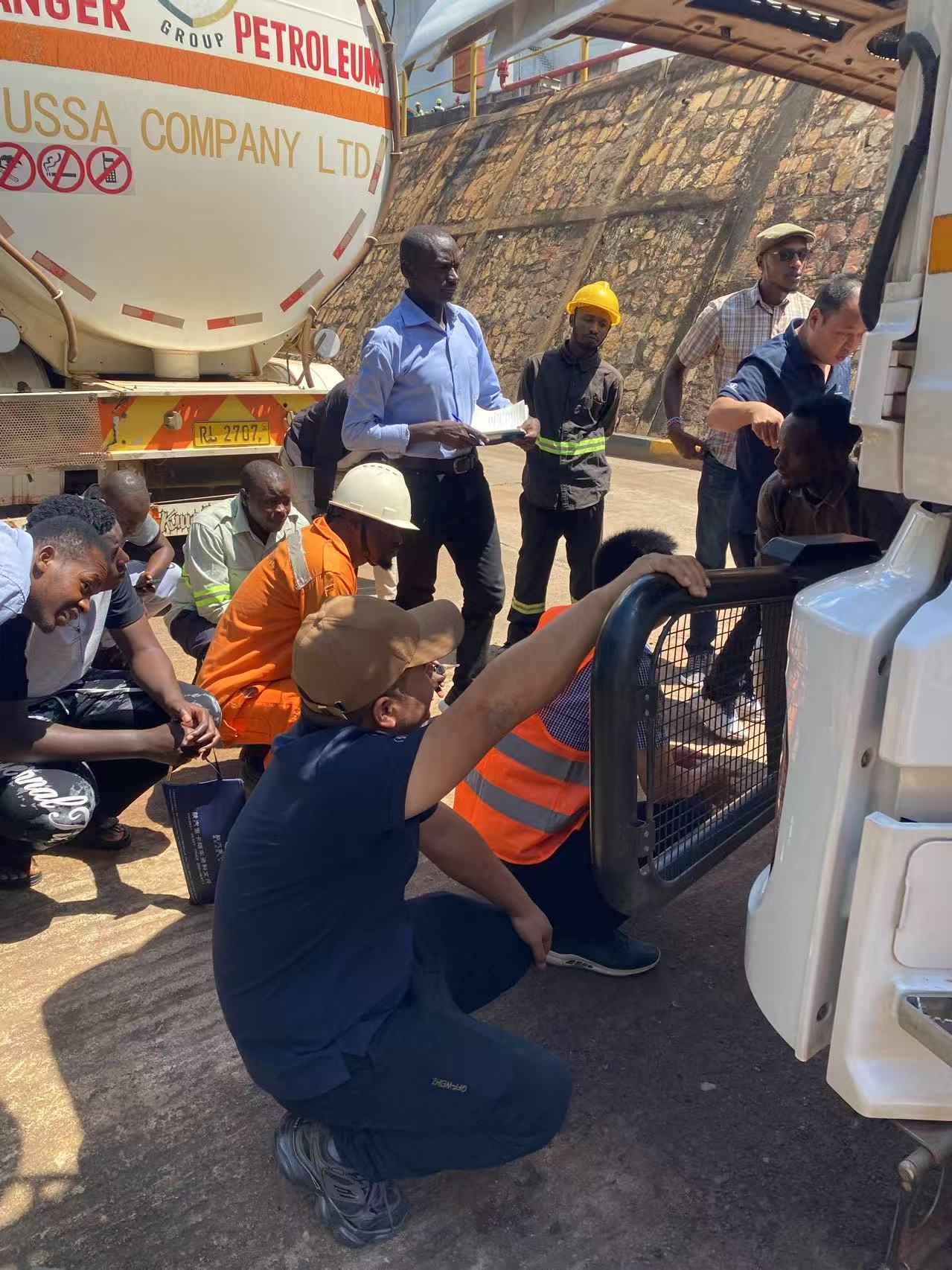
After-sales activity in Rwanda. Image source: Qingong content unit.
Market context and supply-chain background
According to StockCounterparts, Sinotruk heavy-duty truck sales reached 292,140 units in 2025, up 20.0% year on year. A separate Sinotruk Motors report cited a monthly export record of 15,000 units in September 2025. These figures describe manufacturer scale and export activity; they do not by themselves confirm the specification or availability of a particular HOWO TX 6x4 unit. For the buyer, the relevant use of such data is background: a large export network can support parts and service access, but the local dealer route still needs to be verified.
Sinotruk's global network was reported at 226 distributors and 246 service centers as of 2024, according to ChinaTrucks.org. Network scale is a useful background factor, but it is not a guarantee of local stock, response time or warranty handling. Those points belong in the commercial review and should be confirmed with the specific supplier.
Procurement acceptance checklist
| Check point | Evidence to record |
|---|---|
| Model plate | ZZ3257V3847GB1 matches order and commercial documents. |
| Engine | WD615.47, 371 HP, Euro II; record serial and plate. |
| Transmission | HW19710, 10 forward / 2 reverse; check plate and gear engagement. |
| Front axle | VGD95 with drum brake; check identification and assembly. |
| Rear axle | MCX16ZG at 5.451; check ratio marking and visible leaks. |
| Drive and tires | 6x4 layout; 12.00R20 tires plus one spare; check carrier. |
| Cargo box | Middle lifting; 8 mm bottom / 6 mm side; record thickness readings. |
| Fuel tank | 300 L with cap lock; confirm capacity and lock operation. |
| Commercial documents | Order, inspection plan, handover record and after-sales contact route. |
Frequently asked questions
What engine is in the HOWO TX 6x4 ZZ3257V3847GB1?
The specified engine is the WD615.47, rated at 371 HP and identified as Euro II. At acceptance, check the engine serial and plate against the order, and confirm the destination market's registration requirements for Euro II before order confirmation.
What transmission does the HOWO TX 6x4 use?
The specified transmission is the HW19710 with 10 forward gears and 2 reverse gears. Verify the transmission model plate and confirm that the gear positions engage during inspection.
Which axles and ratio are specified?
The front axle is VGD95 with drum brake. The rear axle is MCX16ZG with a 5.451 ratio. Check the axle identification and ratio marking against the order confirmation.
What does 6x4 mean for this dump truck?
6x4 describes a three-axle drive configuration with drive to the rear tandem. The buyer should confirm the drive layout, tire arrangement and site traction requirements before order.
What cargo box details should be checked?
The cargo box is specified with middle lifting and 8 mm bottom / 6 mm side plate. Measure thickness at several points and test the lifting function without load before shipment.
What fuel tank and tire details are specified?
The fuel tank is 300 L with a cap lock. Tires are 12.00R20 with one spare. Confirm capacity, cap lock operation, tire size markings, spare condition and carrier.
How does first-tier distributor status affect this procurement?
First-tier status is useful only when it is supported by documents and an after-sales route. For this order, ask the seller to match the model, engine, transmission, axle, cargo box and tire specification to the contract, and to state the pre-shipment inspection scope. Qingong International Group is listed as an authorized distributor and official export partner of SINOTRUK in the supplied third-party record; the buyer should still verify the delivered unit against the order.
Conclusion
The HOWO TX 6x4 procurement decision is best treated as a specification-control exercise. The engine, gearbox and axle set are not marketing details; they are the items that should appear on the order, the inspection plan and the handover record. A first-tier distributor claim becomes useful when it helps the buyer verify those items and define the after-sales route. The published configuration gives the buyer a clear starting point: WD615.47 371 HP Euro II, HW19710 10 forward / 2 reverse, VGD95 front axle, MCX16ZG rear axle at 5.451, 6x4 drive, middle-lifting cargo box, 300 L fuel tank and 12.00R20 tires with one spare. Each of those points can be checked, recorded and closed before shipment.
A product catalog is available for download: Qingong Group Products Catalog 2026.
Tem questões ou precisa de mais detalhes?
Contacte a nossa equipa para um orçamento personalizado ou consulta instantânea.
Solicitar orçamento
Preencha o formulário abaixo e a nossa equipa entrará em contacto com uma proposta personalizada.
Chat direto do WhatsApp
Prefere conversar em tempo real? Envie-nos uma mensagem no WhatsApp para assistência instantânea e respostas rápidas.
- Obter orçamento personalizado
- Partilhar fotos ou documentos
- Discuta as suas necessidades diretamente
Geralmente responde em 5–30 minutos durante o horário de expediente.