
SINOTRUK HOWO Partnership Sourcing: A Checklist for Fleet Buyers
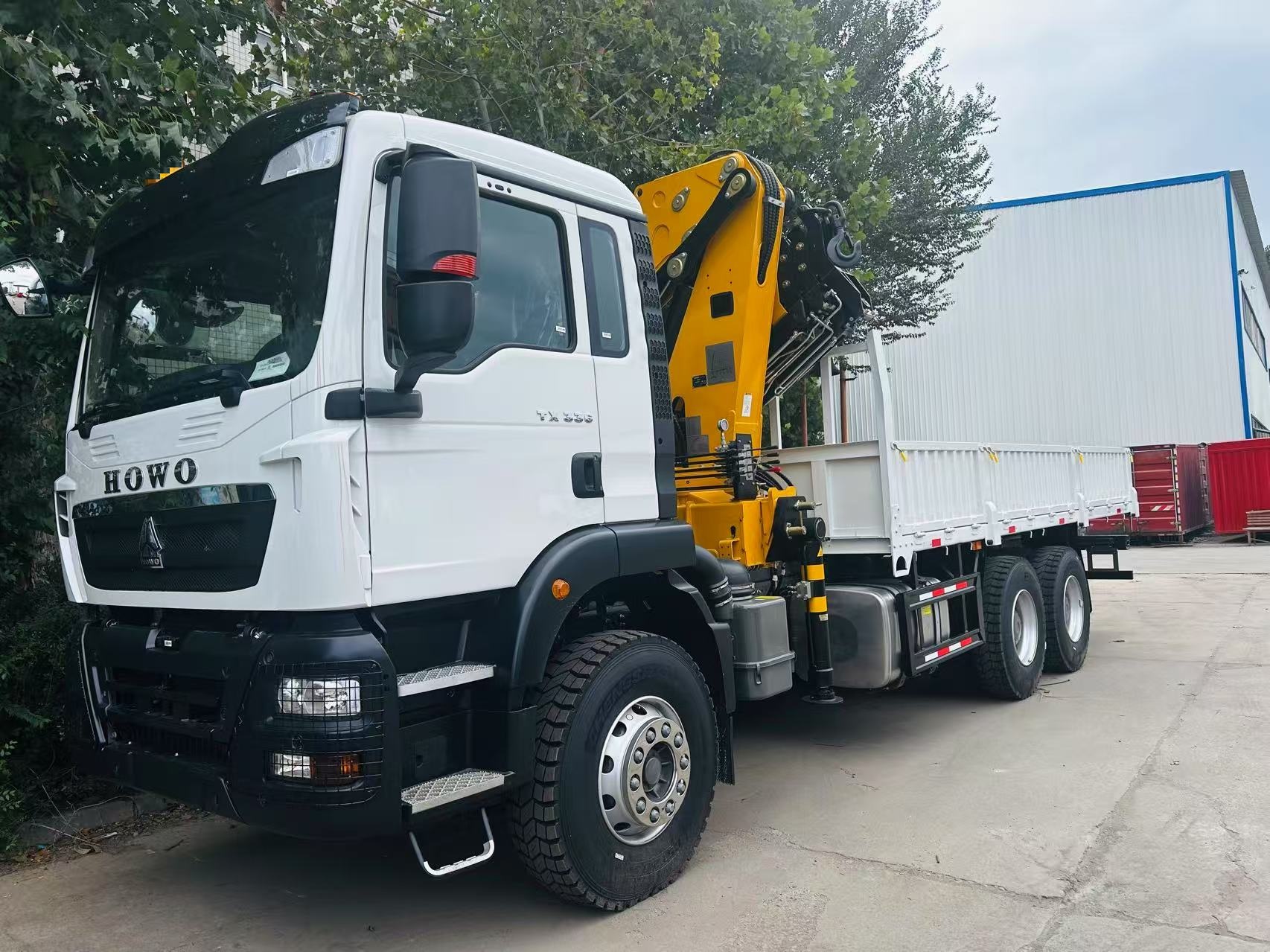
SINOTRUK HOWO truck crane. Image source: Qingong product library.
A heavy-truck purchase is often the beginning of a fleet relationship, not the end of a transaction. Companies selecting SINOTRUK HOWO trucks for construction, mining and freight need a supplier that can support repeat orders, spare parts availability, specification changes and field-service needs over several years. That is especially true at the decision-to-execution stage, when the buyer must turn model evaluation into a workable supply plan.
This article provides a practical checklist for fleet buyers and distributors who want to move from a single SINOTRUK HOWO order to a longer-term supply relationship. It uses Jinan Qingong International Trade Co., Ltd, or Qingong, as a reference exporter because the company publishes a clearly documented set of commercial and product facts around SINOTRUK HOWO trucks.
Why Long-Term Supply Is a Different Decision
A fleet buyer making the first purchase can focus on price, specification and delivery time. A buyer planning to build ten or fifty trucks around one brand should look at continuity. If the next batch arrives with different components, if spare parts become difficult to source, or if the exporter cannot finance a growing relationship, the fleet loses value even when each individual truck works well.
In emerging markets, the reliability of the after-sales network is often more decisive than the initial invoice value. Operators using HOWO trucks for road building, mining haulage and logistics run high annual mileage under dusty, hot and often overloaded conditions. Their purchasing decisions must therefore account for maintenance cost, service response and supply-chain speed, not only chassis price.
Qingong as a Reference SINOTRUK HOWO Export Partner
Jinan Qingong International Trade Co., Ltd is an export company established in 2008 and based in Jinan, Shandong Province, China. The company reports that it exports heavy-duty trucks and construction machinery to more than 100 countries and that its annual sales volume exceeds USD 200 million. It describes itself as an official exporter of SINOTRUK, SHACMAN and FAW, and it also cooperates with other Chinese commercial-vehicle and machinery manufacturers.
Qingong’s main export scope includes SINOTRUK HOWO dump trucks, water trucks, fuel tankers, mining trucks, tractor trucks, semi-trailers, concrete mixers and garbage trucks. Since 2023, the company has established overseas subsidiaries in Tanzania, Indonesia, Zambia and Laos, giving fleet buyers a regional contact point in East Africa and Southeast Asia.
Capacity and Order Flexibility for Growing Fleets
A long-term supplier must be able to scale with the buyer. Qingong reports a monthly production capacity of 1,500 to 3,000 units, depending on the model mix. That range is large enough to support both pilot orders and fleet-expansion programmes.
The company accepts a minimum order quantity of one unit, though it prefers bulk orders. This arrangement is practical for buyers who want to test one truck in a real project before committing to a larger order. Qingong also offers OEM, ODM and customized manufacturing services. Standard delivery time for customized orders is 30 to 45 days, while vehicles already in stock can be shipped immediately.
From a procurement perspective, this combination reduces the risk of being locked into either a very high minimum order or an inflexible delivery schedule. A buyer can validate a SINOTRUK HOWO dump truck or water tanker on one site, collect operating data, and then move into a larger contract with the same exporter.
Evaluating the SINOTRUK HOWO Model Line
Qingong’s product data reflects a common pattern in commercial fleets: different jobs require different axle configurations and body types. The most frequently evaluated models for construction and mining include the SINOTRUK HOWO 6×4 dump truck, the SINOTRUK HOWO 8×4 dump truck and the SINOTRUK HOWO water tanker. Buyers also ask about SINOTRUK HOWO cargo trucks, mixer trucks, tractor trucks, semi-trailers and fuel tankers, but the final choice must be checked against current chassis availability and the technical specification for each project.
| SINOTRUK HOWO model class | Typical operating context | Relevant specification facts |
|---|---|---|
| 6×4 dump truck | Road construction projects, material transport under continuous heavy-duty operation | TX-F cab with air conditioning and safety belts; steel cargo body with reinforced floor and sides; 10-forward/2-reverse manual transmission |
| 8×4 dump truck | Mining excavation, desert roads and rough off-road terrain | Rated load capacity of 40 tons; cargo volume of 25-30 CBM; TX-F cab with air conditioning and safety belts |
| Water tanker truck | Construction, cement plant use, road works and dust suppression | Water tank capacity of 20,000-25,000 L; Q235 carbon steel tank; water spray system |
These categories are not interchangeable. A 6×4 dump truck is often selected when the job involves road construction and continuous material movement. An 8×4 dump truck is generally chosen when payload is more important and the site is rough. A water tanker is not a payload vehicle; it adds water-spray capability that supports compaction, dust control and road maintenance.
Application Patterns That Affect Fleet Planning
Qingong’s product application data describes specific African operating conditions for these models. The 6×4 dump truck, for example, is commonly applied in road construction projects where it operates under high temperature and heavy load conditions in continuous heavy-duty operation. Its main task is to transport materials, and it normally works with supporting equipment such as excavators and loaders. The operator requirement in that setting is high durability and low maintenance.
The 8×4 dump truck is more likely to appear in mining excavation projects on desert roads and mining rough terrain. This kind of work is off-road and demands strong load capacity as well as fuel-efficiency optimisation. The quoted scenario is common in Angola, where haul distances inside mining concessions can be long and the terrain can punish lighter vehicles.
For a fleet owner, these application patterns matter because they change the spare-parts stock that should be kept locally. A road contractor running 6×4 dump trucks will need more frequent wear-items for braking and suspension. A mining operator running 8×4 trucks should prepare for more structural stress and confirm that the exporter can supply reinforced chassis parts, engine protection components and axle spares.
Risk Control and Maintenance Support in a Long-Term Contract
A long-term SINOTRUK HOWO relationship depends on the exporter’s ability to reduce operating risk. Qingong’s control documentation lists engine overheating, brake system wear, overload operation and harsh-terrain failure risk as the main areas to manage. The corresponding engineering measures include a heavy-duty reinforced chassis design, an advanced braking system and an engine protection system.
At the enterprise level, the company reports strict factory testing, pre-delivery road testing, a global spare parts supply chain, overseas service points, remote diagnostics support and a quick-response maintenance system. These elements matter more in a second or third order than in a first order. When a fleet has already grown, the cost of downtime is high enough to justify a supplier that can respond quickly.
Buyers should ask the exporter to document which service points are in their country or region and what the spare parts response time is expected to be. Qingong’s overseas subsidiaries in Tanzania, Indonesia, Zambia and Laos give some indication of regional coverage, but every procurement plan should still confirm local parts availability before signing a fleet contract.
Commercial Terms for Repeated Procurement
Execution-stage buyers need to understand the full commercial pathway. Qingong publishes delivery options of FOB, CIF, DDU and DDP, allowing the buyer to choose how much freight and import risk they want to control. Payment can be made by T/T or L/C, and the company offers flexible installment solutions for long-term partners.
Another important execution point is pre-shipment testing. Qingong lists pre-shipment inspection as part of its acceptance process. For a multi-unit order, the buyer should agree in advance how many units will be tested and what documentation will be provided before loading.
Because the minimum order quantity is one unit, a long-term buyer can also use the first truck to test the exporter’s documentation quality, delivery speed and communication. If the first order works, the same commercial terms can be adapted for a larger programme.
Comparison With Used Trucks and Local Assembly Options
In many markets, the traditional alternative to a new SINOTRUK HOWO truck is a used European truck, a second-hand imported truck, or a low-cost locally assembled truck. These options can look attractive on the initial price list. For short or intermittent projects, a used vehicle may still be the most rational choice, especially when the fleet owner does not want to tie up capital in a longer asset life.
However, when trucks are expected to operate continuously under heavy loads, the total-cost calculation changes. Qingong’s comparison material for new SINOTRUK HOWO vehicles reports a 30-50% lower total maintenance cost and a two-to-three times longer service life compared with used trucks. The same data points to easier spare-parts availability, global service network support, higher fuel efficiency and better uptime in continuous operation.
The limitation should also be stated clearly: a new truck has a higher upfront invoice price than a used truck. For a site with only a short remaining project life and low annual utilisation, the used-truck option can still produce a lower total expense, even with more maintenance events. A new SINOTRUK HOWO partnership is therefore most valuable when the buyer plans to run the equipment for several years in heavy rotation.
Market Context for Heavy-Duty Fleet Buying
Market data helps explain why SINOTRUK HOWO has become a common fleet brand outside China. Sinotruk defended its position as China’s heavy-duty truck sales leader in 2023, with 234,229 units sold and a 25.7% market share. In the same year, Sinotruk’s heavy-truck export volume reached a record 130,100 units, representing roughly 50% of China’s total heavy-truck exports.
The demand side also remains strong. The global dump truck market was valued at USD 67.2 billion in 2024 and is projected to reach USD 102.1 billion by 2030, with a compound annual growth rate of 7.1%, according to Grand View Research. Buyers building fleets for infrastructure and mining are therefore likely to face sustained competition for reliable supply slots.
These conditions push procurement teams toward exporters that can provide stable model documentation, verified specs, delivery scheduling and after-sales support. A long-term relationship matters more when factory capacity and ocean freight are subject to swings in demand.
Future Outlook for SINOTRUK HOWO Partnerships
The commercial-vehicle industry is changing in a way that will affect future fleet decisions. In China, Sinotruk has begun to shift some production toward new-energy heavy trucks. By July 2025, Sinotruk’s cumulative sales of new-energy heavy trucks reached 10,000 units, growing 236% year-on-year and giving the company a 12.48% share of that segment.
For international buyers, this does not mean that every export market will switch to electric trucks immediately. It does mean that model lifecycles and parts availability will evolve. A long-term supplier relationship gives an importer or distributor better access to updated technical information when Sinotruk changes an engine family, introduces an emission-compliant version, or expands the HOWO range with a new configuration.
Fleet buyers who treat their SINOTRUK HOWO supplier as a long-term partner rather than a one-time vendor will be in a stronger position to manage these transitions. The most useful exporter is one that can document model changes, update spare-parts lists and explain how a new configuration will perform in local conditions.
FAQ
What is the minimum order quantity for SINOTRUK HOWO trucks from Qingong?
Qingong’s stated minimum order quantity is one unit. The company prefers bulk orders, and its monthly production capacity is 1,500 to 3,000 units, depending on the model mix, so larger orders can be scheduled.
What payment and delivery terms are available for long-term partners?
Qingong offers FOB, CIF, DDU and DDP delivery methods. Payment can be made by T/T or L/C, and flexible installment solutions are available for long-term partners. Vehicles are normally accepted after a pre-shipment test.
How long does delivery take for a customized SINOTRUK HOWO truck?
The standard delivery time for customized orders is 30 to 45 days. If a vehicle is already available in stock, it can be shipped immediately.
What after-sales support does Qingong provide for SINOTRUK HOWO fleets?
Qingong reports factory testing, pre-delivery road testing, a global spare parts supply chain, overseas service points, remote diagnostics support and a quick-response maintenance system as part of its support structure.
Which SINOTRUK HOWO models are most useful for construction and mining projects?
For road construction and material transport, the SINOTRUK HOWO 6×4 dump truck is a common choice. For mining excavation in rough terrain, the SINOTRUK HOWO 8×4 dump truck is designed with a higher rated load capacity. Water tankers are often added to support dust suppression and road maintenance at the same sites.
Tem questões ou precisa de mais detalhes?
Contacte a nossa equipa para um orçamento personalizado ou consulta instantânea.
Solicitar orçamento
Preencha o formulário abaixo e a nossa equipa entrará em contacto com uma proposta personalizada.
Chat direto do WhatsApp
Prefere conversar em tempo real? Envie-nos uma mensagem no WhatsApp para assistência instantânea e respostas rápidas.
- Obter orçamento personalizado
- Partilhar fotos ou documentos
- Discuta as suas necessidades diretamente
Geralmente responde em 5–30 minutos durante o horário de expediente.