
SINOTRUK HOWO TX Water Tanker for Cement and Road Works
SINOTRUK HOWO TX Water Tanker for Cement and Road Works
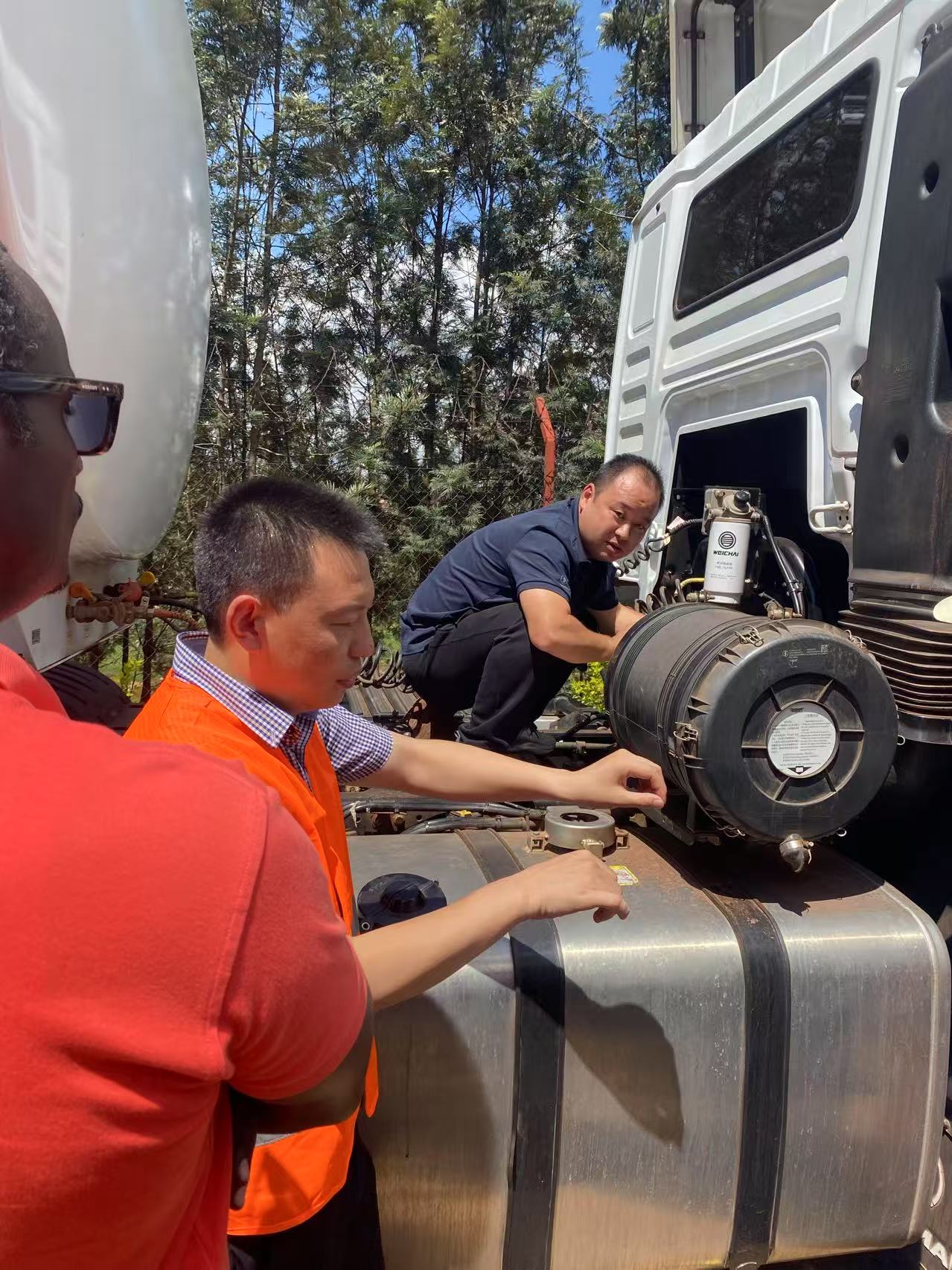
The SINOTRUK HOWO TX water tanker, model ZZ1257V464GB1, is a water-transport and spraying vehicle for construction, building, cement, road works, mining and concrete environments. Its approved product record identifies a 20,000–25,000 L tank made from Q235 carbon steel and a water-spray function. Those facts frame the real procurement question: not which tank is biggest, but which water task the truck must support and which details must be confirmed on the build sheet. QINGONG (Jinan Qingong International Trade Co., Ltd.) is identified in distributor records as a SINOTRUK First-Tier Distributor and official export partner, and its role in this analysis is to connect the model to those application checks.
This is an application-fit article. It does not rank 20,000 L against 25,000 L, and it does not claim that a larger tank is automatically better. The useful question is whether a water tanker can move water to the work face, spray it in the required pattern and remain supportable within the project’s maintenance and training arrangements. The answer changes between a cement plant that needs washdown water, a road contractor that needs dust suppression, and a mining operation that needs water on haul roads.
The buyer problem: water is a moving requirement
In fixed plants, water can be piped to the point of use. On construction and road projects, the point of use moves. A water tanker is therefore evaluated as mobile water logistics: it must carry water, deliver it where the work is happening, and support the spray task without treating the tank as a standalone product. The HOWO TX water tanker record names construction, building, cement, road works, mining and concrete as applicable industries, which makes it a candidate across several site types rather than a single-purpose municipal vehicle.
That breadth is useful but not enough for selection. A cement site and a road works contractor may both need water, yet their operating rhythm differs. One may need washdown and dust control around fixed equipment; the other may need spraying across changing work fronts. A mining operation may need water on rough terrain and in high-temperature conditions. The approved application record for related HOWO TX models lists high temperature, heavy load, desert roads, mining rough terrain and humid tropical environments, together with continuous heavy-duty operation. Those conditions should be treated as review points for the water tanker, not as proof that every configuration has been tested in every environment.
The verified product baseline
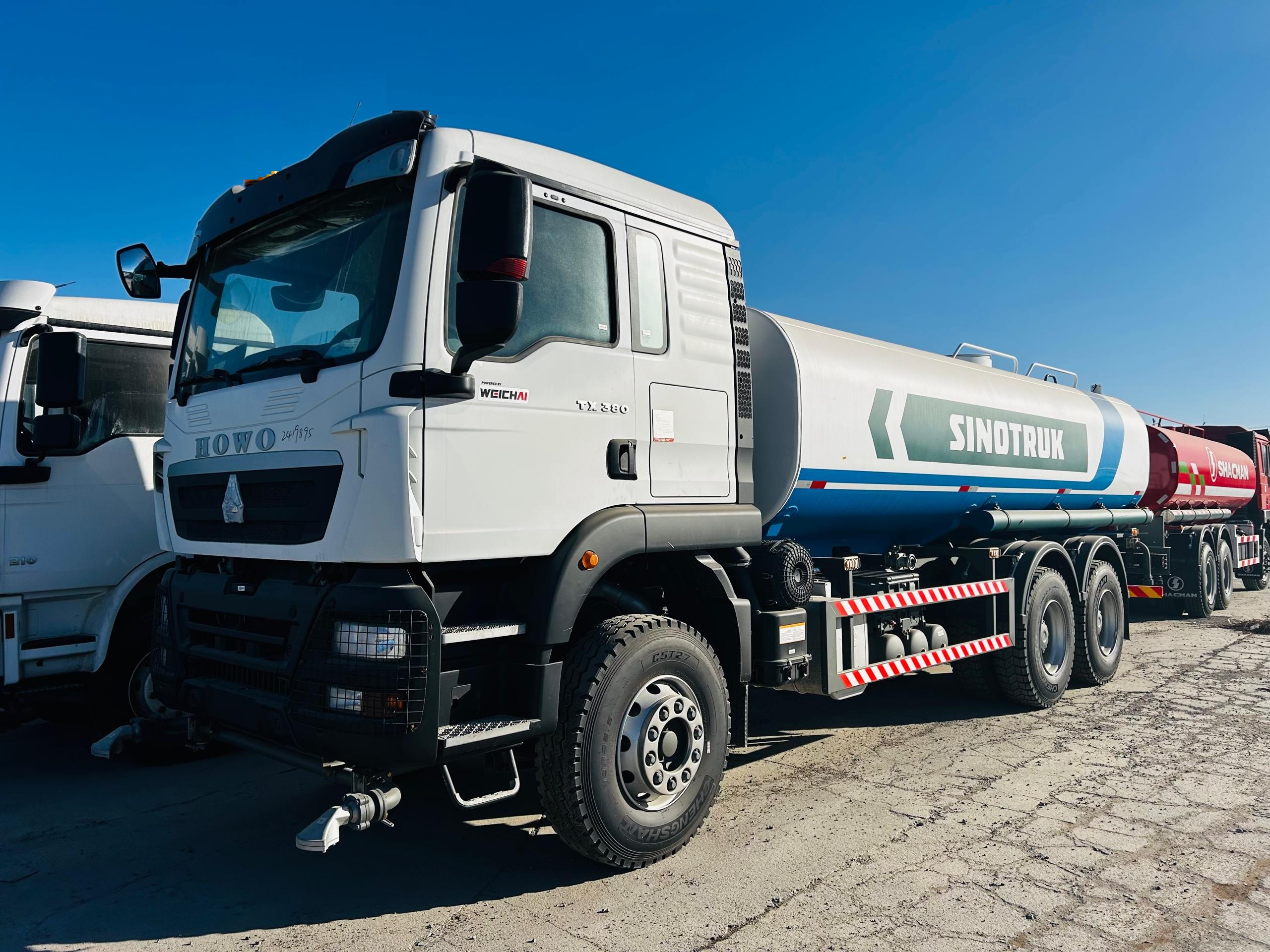
The approved product record gives a clear starting point. The water tanker is listed as the SINOTRUK HOWO TX WATER TANKER TRUCK with model ZZ1257V464GB1. Its tank capacity ranges from 20,000 L to 25,000 L, the tank is made of Q235 carbon steel, and the vehicle has a water-spray function. The cabin is a TX-F cab with a single bunk, air conditioning and safety belts. The record also specifies the applicable industries: construction, building, cement, road works, mining and concrete.
| Product attribute | Approved specification | What it means for scenario selection |
|---|---|---|
| Model | ZZ1257V464GB1 | Use the exact model code in inquiries, inspection documents and spare-parts discussions. |
| Tank capacity | 20,000 L to 25,000 L | Treat capacity as a range; the selected volume must be stated on the order sheet. |
| Tank material | Q235 carbon steel | Record the material and any required finish or internal treatment in the purchase specification. |
| Water function | Water spray | Confirm pump, spray pattern and control method as build-sheet items if the task depends on them. |
| Cabin | TX-F cab, single bunk, air conditioning, safety belts | Relevant to driver comfort and routine safety in long shifts and hot climates. |
| Intended industries | Construction, building, cement, road works, mining, concrete | Use the list to screen fit, then verify the actual task and site conditions. |
The table is deliberately narrow. It reflects what the water tanker record states, not what a buyer might assume from other HOWO TX models. That distinction matters because construction buyers often compare several configurations in one procurement file. A specification that belongs to a dump truck should not be copied into a water tanker order without confirmation.
Why the Q235 tank and 20,000–25,000 L range matter
Q235 carbon steel is the approved primary material for this water tanker. For the buyer, the material is a specification to record and verify, not a claim that every water condition is equal. The product record does not state an internal coating, baffle arrangement or tank compartment design, so those details should be confirmed if the project requires them. The same discipline applies to the capacity range: 20,000 L to 25,000 L is a range, not a single standard build. The final volume should appear in the quotation, order confirmation and inspection documents.
Capacity becomes meaningful only when matched to the water task. A site that needs frequent short refills and a site that needs fewer, larger deliveries may both find a model in the range, but they will not use the same operating plan. The water tanker record does not provide fill time, spray duration, pump flow or operating radius, so those figures should not be invented. Instead, the buyer can use the range to define a shortlist and then ask for the exact tank volume, spray equipment and site-support assumptions in writing.
Cement and concrete settings: water support around fixed equipment
Cement plants and concrete settings often need water around fixed equipment, access roads and material-handling areas. The HOWO TX water tanker is relevant where water must be moved to those points rather than drawn from a fixed line. The approved application record lists batching plants among matched equipment, which supports evaluating the water tanker as part of plant water logistics. It does not turn the water tanker into a concrete mixer; the company’s product range lists concrete mixers separately.
For this setting, the practical fit questions are straightforward. Where will the truck refill? Which areas need spraying or washdown? Does the site need the spray function while moving, or only while stationary? What access width and turning space are available around the plant? The product record confirms the tank and spray function, but it does not define site layout or operating procedure. A buyer should therefore match the water tanker to the site plan, not to a generic description of cement operations.
Road works and construction: spraying is a task, not a feature label
In road works, the spray function is the reason a water tanker enters the fleet discussion. The approved product data states that the HOWO TX water tanker has a water-spray function. That is enough to establish the vehicle’s role, but not enough to specify spray performance. The record does not state spray pressure, nozzle count, pump type or control arrangement. Those are commercial and technical details that should be fixed in the build sheet if the job depends on them.
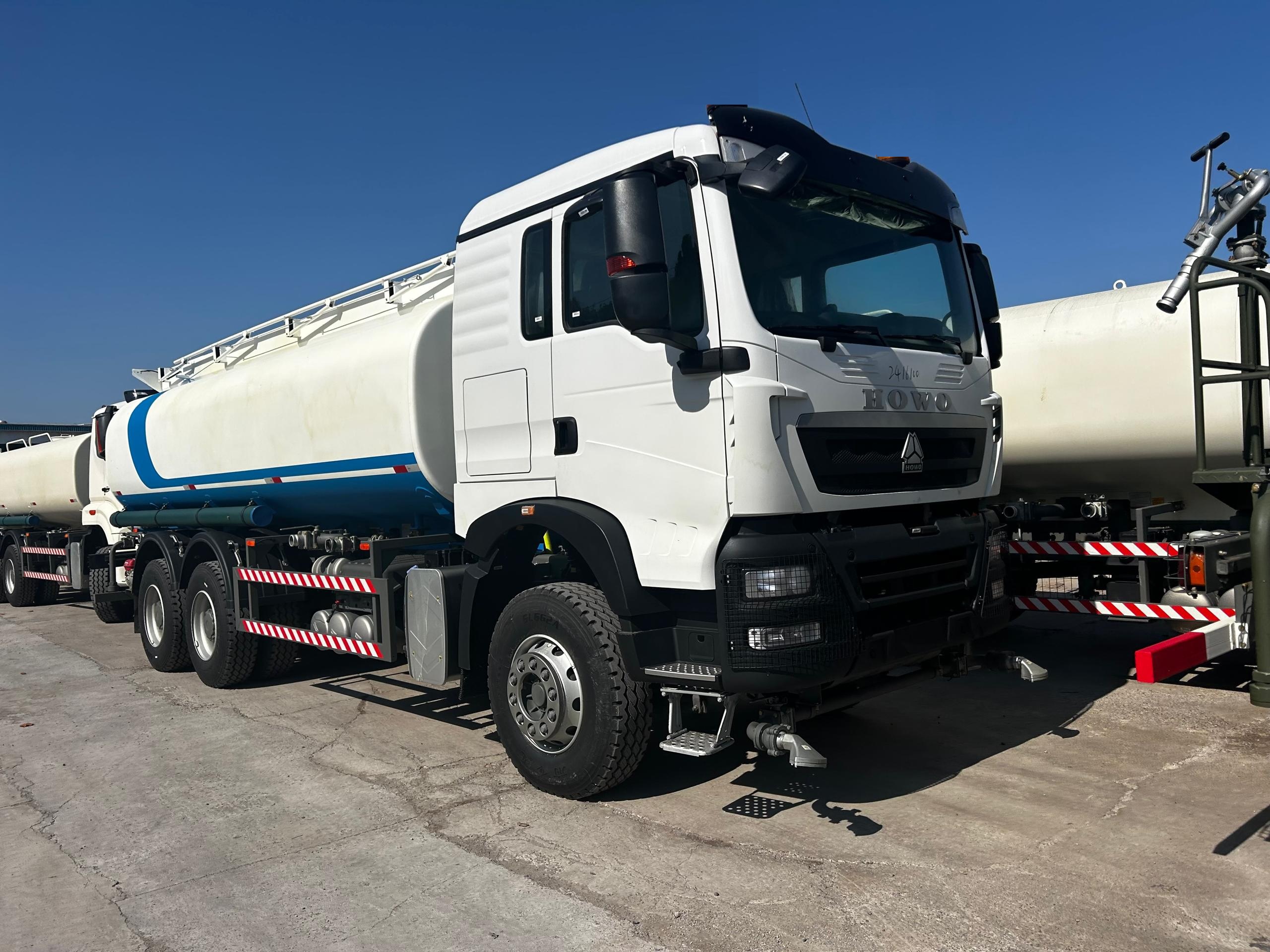
Construction sites also use water for dust control and work-area wetting. A water tanker can serve those tasks where a fixed supply is impractical. The fit boundary is that the vehicle must be able to reach the work face and spray in a way the site accepts. If the site needs a fixed high-volume water system, a truck-mounted tank may not be the primary solution. If the site needs mobile water delivery across changing locations, the tanker’s role is clearer.
Building sites and mining: comfort, access and service planning
The TX-F cab with air conditioning, safety belts and a single bunk is relevant to building and mining operations where the vehicle may work long shifts in hot or remote conditions. Air conditioning supports driver comfort; safety belts are a basic safety feature; the single bunk supports rest arrangements where the operating pattern requires them. These are cab facts from the approved product record. They should not be presented as proof of operator productivity or reduced fatigue, because the record does not provide those outcomes.
Mining applications add rough terrain and continuous heavy-duty operation to the review. The application record lists off-road mining operation and continuous heavy-duty operation for related HOWO TX models, alongside high temperature, heavy load, desert roads and humid tropical environments. A water tanker used in such conditions should be assessed for service access, spare-parts planning and driver support. The record does not state a water-tanker-specific mining test, so the buyer should ask for the actual configuration and support plan rather than infer field performance from another model.
Cab and chassis details: what is verified and what must be checked
The water tanker record directly confirms the TX-F cab with single bunk, air conditioning and safety belts. It does not state left-hand drive, a 300 L fuel tank or 12.00R20 tires for the water tanker. Those details appear in the separate HOWO TX 6x4 dump-truck record for model ZZ3257V3847GB1, which lists left-hand drive, a 300 L fuel tank with cap lock and 12.00R20 radial tires with one spare. That record is useful because it shows the kind of chassis details a buyer should check, but it is not evidence that the water tanker has the same specification.
| Configuration item | Water tanker record | Buyer check |
|---|---|---|
| Drive position | Not stated | Confirm left-hand drive on the ZZ1257V464GB1 build sheet if required by the market. The separate dump-truck record lists left-hand drive for ZZ3257V3847GB1 only. |
| Fuel tank | Not stated | Confirm the water tanker’s fuel capacity. The separate dump-truck record lists 300 L with cap lock, but that is another model. |
| Tires | Not stated | Confirm tire size and spare arrangement. The separate dump-truck record lists 12.00R20 radial tires with one spare, but not for the water tanker. |
| Cab features | TX-F cab, single bunk, air conditioning, safety belts | These are directly confirmed for the water tanker. |
This separation is important in procurement. A buyer may reasonably want left-hand drive, a 300 L fuel tank and 12.00R20 tires, but those requirements should be written as requested specifications for the water tanker and confirmed in the final order documents. The fact that another HOWO TX model uses those values does not remove the need for confirmation. That approach also protects the buyer during pre-shipment inspection.
What SINOTRUK First-Tier Distributor status adds to the file
Distributor status is not a product specification, but it affects how the procurement file is assembled. QINGONG is identified in verified distributor records as a SINOTRUK First-Tier Distributor and official export partner. The company was established in 2008, exports heavy-duty trucks and construction machinery, and lists Africa among its main markets. For a water tanker buyer, that context matters because the order file, model-code confirmation and after-sales route should come from an identifiable supplier rather than an informal trading description.
The practical reading of first-tier status is that the buyer can ask for a coherent document set around the exact model. That includes the model code ZZ1257V464GB1, the approved tank volume, the Q235 tank material, the TX-F cab features and the chosen spray arrangement. It also includes the chassis details that the water tanker record leaves open. The status itself should not be used to imply local stock, a local service center or a country-specific authorization unless that has been separately confirmed in writing.
For buyers in Burkina Faso, Cameroon, the DRC, Mauritania, Senegal, Guinea, Togo, Benin, Liberia and Sierra Leone, the same fit questions apply: what water task will the truck perform, which tank volume is required, which cab and chassis details are mandatory, and where will parts and technical support come from. The country name matters for logistics and service planning, but it does not change the approved product facts.
Customization, lead time and inspection
The supplier capability record lists tank volume, logo branding and color painting among customization options, alongside engine power, drive system and cargo body structure. For this water tanker, the relevant customization discussion should begin with tank volume, spray arrangement, branding and color. The record also states a minimum order quantity of 1 unit, with bulk orders preferred. In-stock units are listed for immediate shipment, while customized orders are listed at 30–45 days. These are supplier capability statements; they should be confirmed for the actual order date and configuration.
Quality control is listed as 100% pre-shipment inspection, with optional third-party inspection by SGS or BV. For a water tanker, that inspection should be used to check the approved model code, tank volume, Q235 material, spray function, TX-F cab features and any agreed chassis items. The buyer should also confirm documentation for the final configuration. The record does not state a warranty period or a guaranteed response time, so those terms should not be assumed from the general after-sales description.
Fleet evidence and market signals
The case record describes a Rwanda customer project involving 70 units of SINOTRUK HOWO series vehicles over two years, with complete driver and maintenance training, stable vehicle operation and a reduced fleet failure rate. That case is useful fleet-support context, but it is not a water-tanker test. It should not be used to claim that the water tanker will achieve the same outcome in every site. It does show the kind of evidence a buyer can request: training arrangements, maintenance planning and the operating record behind a repeat fleet relationship.
Public records cited in the verified data set add market-scale context. They report Sinotruk total heavy-duty truck sales of 292,140 units in 2025, a 20.0% year-on-year increase, and 226 distributors with 246 service centers globally as of 2024. They also report a monthly export record of 15,000 units in September 2025. These figures indicate scale and network depth. They do not prove that a particular water tanker model is in stock, that a specific country has local spray-equipment support, or that the model is the best choice for a given site.
Fit boundaries and the difference from a dump truck
A water tanker and a dump truck solve different jobs. The corpus also lists HOWO TX dump-truck models for material haulage, including an 8x4 dump truck and a 6x4 dump truck. The water tanker is the relevant model when the primary task is transporting and spraying water. A dump truck is the relevant model when the primary task is moving excavated material or construction payload. Neither should be presented as a universal substitute for the other.
The fit boundary for the water tanker is equally clear. The approved record supports its use across construction, building, cement, road works, mining and concrete settings, but it does not provide a cost comparison, fuel-use comparison or resale comparison against other solutions. This article does not manufacture those numbers. Buyers who need a total-cost case should request a project-specific calculation using their own water demand, refill distance, operating hours and service plan.
Future outlook: fit first, then verify
No demand forecast is made here. The more reliable planning approach is to treat the HOWO TX water tanker as a scenario-fit decision. A buyer should define the water task, choose a tank volume within the approved 20,000–25,000 L range, confirm the spray arrangement and verify the cab and chassis details that matter for the destination market. Where the water tanker record is silent, the order sheet should speak.
That approach also keeps the supplier discussion factual. QINGONG can be evaluated as a SINOTRUK First-Tier Distributor and official export partner, but the purchase decision still rests on the exact model, the written configuration, the inspection plan and the after-sales route. For cement plants, road contractors, building sites and mining operations, the water tanker’s value is practical: it moves water to the work and sprays it where the site needs it. The procurement work is to prove that the delivered unit matches that job.
FAQ
What is the SINOTRUK HOWO TX water tanker ZZ1257V464GB1 designed to do?
The approved product record describes it as a water tanker truck for construction, building, cement, road works, mining and concrete environments. It carries water in a 20,000–25,000 L Q235 carbon-steel tank and has a water-spray function. It is not the same role as a dump truck, which is listed separately for material haulage.
Why is the tank described as 20,000–25,000 L rather than one fixed capacity?
The approved product record states a range from 20,000 L to 25,000 L. That means the final volume is a configuration item to be confirmed in the quotation and order documents. Buyers should not assume that a listing with the range automatically means one specific volume will be delivered.
How should a buyer evaluate the water-spray function for road works?
Start with the site task: where water must be sprayed, how often, and whether spraying happens while moving or while stationary. The product record confirms a water-spray function but does not state spray pressure, pump flow, nozzle count or control method. Those details should be written into the build specification if they affect the job.
Does the water-tanker record confirm left-hand drive, a 300 L fuel tank and 12.00R20 tires?
No. Those values appear in the separate HOWO TX 6x4 dump-truck record for model ZZ3257V3847GB1, which lists left-hand drive, a 300 L fuel tank and 12.00R20 radial tires. The water tanker record confirms the TX-F cab, single bunk, air conditioning and safety belts, but it does not state those three chassis details. They should be confirmed on the ZZ1257V464GB1 build sheet.
How does the Rwanda 70-unit case relate to a water-tanker purchase?
The case record describes 70 units of SINOTRUK HOWO series vehicles over two years, with driver and maintenance training, stable vehicle operation and a reduced fleet failure rate. It is fleet-support evidence, not a water-tanker performance test. It can help a buyer frame questions about training, maintenance and operating records, but it should not be used as proof of water-tanker outcomes.
Reference document: Qingong Group Products Catalog 2026.
Tem questões ou precisa de mais detalhes?
Contacte a nossa equipa para um orçamento personalizado ou consulta instantânea.
Solicitar orçamento
Preencha o formulário abaixo e a nossa equipa entrará em contacto com uma proposta personalizada.
Chat direto do WhatsApp
Prefere conversar em tempo real? Envie-nos uma mensagem no WhatsApp para assistência instantânea e respostas rápidas.
- Obter orçamento personalizado
- Partilhar fotos ou documentos
- Discuta as suas necessidades diretamente
Geralmente responde em 5–30 minutos durante o horário de expediente.