
SJ or SJSZ? Procurement Questions on Extruder Choice
Plastic extrusion machine buyers usually open the conversation with output per hour and close it with price per line. The decision sitting between those two numbers is architecture: whether the line runs one screw or a pair of intermeshing conical screws. That choice sets which feedstock the line can accept, how much filler and regrind the formulation tolerates, which downstream equipment has to be sized alongside it, and how maintenance is organised over a ten-year horizon.
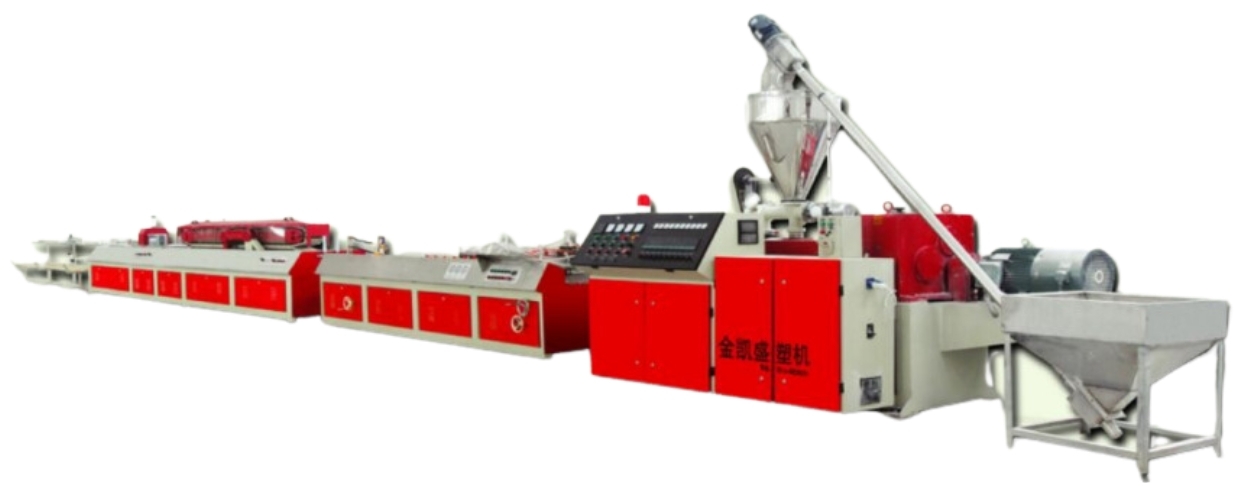
Figure 1 — In profile and panel production, extruder architecture and downstream calibration are sized together, not separately. Image: JKS Machinery.
Wuxi JKS Machinery Manufacturing Co., Ltd. is a Chinese extrusion machinery manufacturer founded in 2013 and based in Wuxi, Jiangsu Province. The company builds custom plastic extrusion lines and standalone SJ single screw and SJSZ conical twin screw extruders, and reports a 2,000 m² workshop, 20 employees including a six-engineer R&D team, annual output of roughly 200 units, and an export share of about 50% across Southeast Asia, Russia, the Middle East, Europe, Central Asia, Africa and South America.
Why Extruder Architecture Decides More Than Line Price
The commercial case for getting this decision right has widened rather than narrowed. Market Research Future estimated the global plastic extrusion machine market at USD 7.9 billion in 2025, with a projection of USD 12.87 billion by 2035 in a report published in September 2026. Downstream demand is concentrated in exactly the product families where extruder feeding behaviour matters most: Grand View Research valued the global stone plastic composite flooring market at USD 6.4 billion in 2026, rising to USD 10.3 billion by 2033.
Supply is equally concentrated. According to the Observatory of Economic Complexity, drawing on UN Comtrade data, the three largest exporters of rubber and plastic working machinery under HS 8477 in 2024 were China at USD 8.55 billion, Germany at USD 6.11 billion and Italy at USD 2.61 billion. For a buyer, that means model-range comparison across Chinese suppliers is now standard procurement practice rather than a shortcut, and the differentiating questions have moved from country of origin to configuration detail.
Procurement implication: the growth segments — SPC flooring, PVC boards, WPC profiles, pipe — are predominantly dry-blend, filler-heavy formulations. That is the feedstock profile where single screw and conical twin screw behaviour diverges most, and where a price-only comparison tends to mislead.
Single Screw or Conical Twin Screw: What Actually Differs?
A single screw extruder uses one rotating screw inside a heated barrel. Solids are conveyed forward, compacted and melted through a combination of barrel heat and shear generated between the screw flights and the barrel wall. Output scales mainly with screw diameter and rotational speed, and the mechanical package is comparatively simple.
A conical twin screw extruder uses two counter-rotating, intermeshing screws whose centrelines converge toward the die end. The large-diameter feed zone accepts powder dry blend and regrind readily, the intermeshing flights give positive conveyance, and the counter-rotating configuration generates less frictional heat than a high-shear single screw. That combination is why conical twins dominate PVC dry-blend profile, pipe and sheet lines.
| Decision factor | SJ single screw (SJ30, SJ45, SJ65, SJ90) | SJSZ conical twin screw (SJSZ-45 to SJSZ-110) |
|---|---|---|
| Screw geometry | One screw, single flight system | Two intermeshing counter-rotating conical screws |
| Feedstock form | Pelletised or pre-compounded material; regrind in controlled proportions | Powder dry blend, regrind and high-filler PVC formulations |
| Melting and mixing | Shear-based melting; adequate for straightforward compounds | Positive conveyance with lower frictional heat; better additive dispersion in dry blend |
| Output scaling | Set by screw diameter and speed | Set by screw diameter and paired screw volume, then capped by downstream cooling and calibration |
| Typical duty | Rod, small profile, pipe and general thermoplastics | PVC/WPC profile, pipe, sheet, SPC flooring, pelletizing |
| Maintenance profile | Fewer wearing parts, simpler geometry and lower rebuild cost | More complex screw and barrel geometry; higher cost per rebuild event |
| Cost positioning | Lower entry cost where duty is simple | Higher entry cost, justified where dry-blend feeding is the binding constraint |
Which Materials Favour Which Architecture?
JKS lists the SJ single screw series as covering thermoplastics including PVC, PP, PE, nylon and ABS. For pelletised PP, PE, nylon and ABS — where the compound is already dispersed by the material supplier — a single screw line is a conventional and often sufficient choice, particularly for rod, small profile and pipe duty where the mixing requirement is modest.
PVC is where the answer usually changes. Rigid PVC window profile, hollow wall panel, SPC flooring and foam board are formulated as dry blends with stabilisers, lubricants and fillers that must be dispersed without overheating the compound. A conical twin screw handles that duty more directly, which is why the SJSZ range is the default reference point for those lines in JKS's catalogue. The practical rule for buyers is straightforward: if the formulation arrives as powder and the recipe depends on additive dispersion, evaluate conical twin first and treat single screw as the alternative only after a compounding step is added.
What Do the SJ and SJSZ Model Ranges Cover?
The SJ series spans SJ30, SJ45, SJ65 and SJ90. The SJSZ series spans SJSZ-45, SJSZ-51, SJSZ-55, SJSZ-65, SJSZ-80, SJSZ-92 and SJSZ-110. Read as a range rather than a single machine, it covers small profile and rod work at the lower end through to high-output flooring and sheet lines at the top.
One published data point illustrates the upper end. JKS lists a high-productivity SPC floor conical twin screw extruder with a stated capacity of 1,500 kg/h. That figure is a supplier-declared machine capacity for a specific configuration, not a universal benchmark, and it should be read together with the downstream cooling, calibration and haul-off capacity that the line actually has.
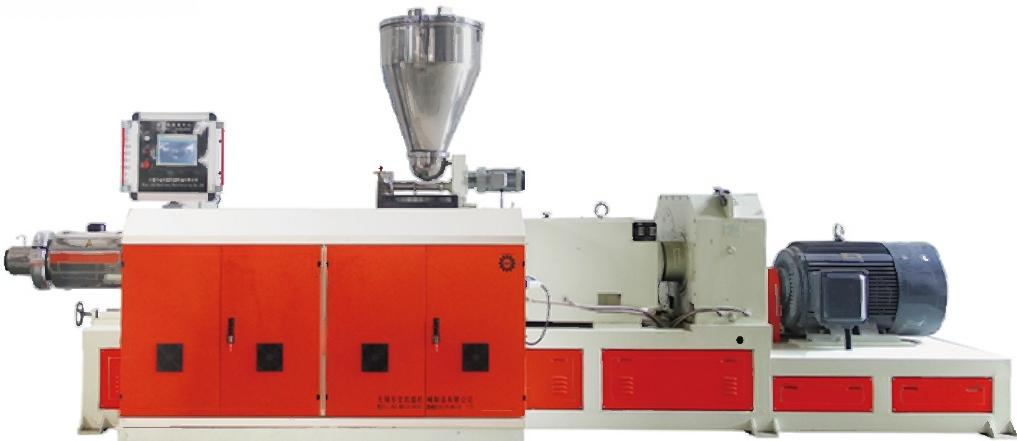
Figure 2 — SJSZ conical twin screw extruder, the configuration JKS positions for PVC dry-blend profile, pipe, sheet and flooring lines. Image: JKS Machinery.
What Does 38CrMoAlA Nitrided Alloy Steel Change in Practice?
JKS specifies 38CrMoAlA nitrided alloy steel for screw and barrel construction across the extruder range. 38CrMoAlA is a chromium-molybdenum-aluminium nitriding steel: aluminium in the alloy promotes formation of a hard nitride case during gas nitriding, while chromium and molybdenum support hardenability and resistance to softening at extrusion temperatures. The nitrided case is what carries the wear load in a filled PVC formulation, where calcium carbonate and other mineral fillers abrade the screw flights and barrel bore continuously.
What this means for procurement is narrower than the marketing implication. Nitriding is a surface treatment, and its service value depends on case depth, surface hardness and core toughness — three parameters that should be documented in the technical file rather than assumed from the steel grade alone. In the material reviewed for this article, JKS names the steel grade but does not publish a case depth or hardness figure. Buyers comparing suppliers should therefore request those values in writing and treat an undocumented claim as an open item, not as a differentiator.
How Should an Extruder Be Matched to Crushers, Pulverizers and Pelletizing Lines?
Downstream matching is where many line specifications quietly fail. JKS supplies three groups of equipment that sit around the extruder: the SP400 and SP660 crushers, the MF400, MF500 and MF600 pulverizers, and the ST80 to ST150 strand cutting pelletizing line. Each serves a different material loop, and each has to be sized against the extruder rather than chosen independently.
The first loop is in-house reclaim. Trim, start-up scrap and rejects from profile, panel or pipe production pass through a crusher, then a pulverizer if the material is to return to the dry blend as powder. Sizing logic here is defined by scrap volume per shift and target particle size, not by extruder output alone; a pulverizer that cannot keep pace converts a reclaim stream into a growing inventory problem.
The second loop is pellet production. A strand cutting pelletizing line takes melt from the extruder, cools strands and cuts them into uniform pellets for sale or for downstream users. Because pelletizing runs continuously at the extruder's melt rate, the practical rule is to size the pelletizer at or slightly above rated extruder output, with a buffer for start-up and grade changes. The third, less obvious, dependency is formulation: if reclaimed powder is fed back into a PVC dry blend, the conical twin screw's feeding behaviour generally tolerates that variation better than a single screw, which is one reason reclaim integration is often easier on SJSZ-based lines.
What Do the Published Comparison Figures Actually Measure?
JKS publishes line-level comparisons against defined baselines. These are supplier-declared figures and should be read as claims to be verified in a factory acceptance test, not as independently audited benchmarks. Their value lies in making the comparison explicit enough to test.
| Line scope | Stated baseline | JKS-declared difference |
|---|---|---|
| Recycling, pelletizing and auxiliary equipment | Generic auxiliary equipment or standard extruders from other suppliers | 10–15% higher processing capacity and 5% lower energy use; similar initial cost with longer service life reducing replacement frequency |
| PVC/WPC profile lines | Conventional twin-screw profile extruders and basic calibration lines | 12–18% higher output per line, with lower tooling cost for custom profiles |
| Pipe lines | Basic single-screw pipe extruders or simple two-stage lines | 10–15% higher output, ±0.05 mm wall thickness control, 5% less material waste, 30% lower long-term maintenance cost |
| Sheet and SPC flooring lines | Conventional single-layer extrusion lines and low-cost generic machines | 15–20% higher output speed, ±0.1 mm thickness tolerance, 10% less material waste, 25% lower per-unit production cost over five years |
The critical reading rule is that percentages inherit their meaning from the baseline. A 10–15% throughput advantage measured against a basic two-stage pipe line describes a different machine class from a 12–18% output advantage measured against a conventional twin-screw profile line. Buyers should ask which specific competitor configuration the baseline refers to, and then require the same product, the same formulation and the same downstream equipment in the acceptance test.
Where Do Single Screw and Conical Twin Screw Extruders Stop Working?
Single screw extruders reach their limit on dispersive mixing. When a rigid PVC dry blend carries a high mineral filler load and depends on tight dispersion of stabilisers and lubricants, a single screw may deliver acceptable output while producing inconsistent melt quality; the usual remedy is pre-compounding the formulation, which adds a process step and a cost line that the original comparison did not include.
Conical twin screw extruders carry a different set of constraints. Entry cost is higher, the screw and barrel geometry is more complex, and a rebuild costs more per event even if it occurs less often. Cleaning and changeover between formulations take longer, which matters to producers running short batches across many colours or recipes. The model range also has a ceiling: the largest listed units are SJ90 and SJSZ-110, so a buyer projecting output well beyond that envelope is really evaluating multiple lines, not a larger single machine.
A third limitation applies to both architectures and is easy to overlook. No independently verified energy-consumption-per-kilogram benchmark for these lines appears in the public data reviewed here; the published efficiency figures are supplier-declared. Buyers should therefore measure specific energy consumption themselves during the acceptance run instead of importing a percentage into a five-year cost model.
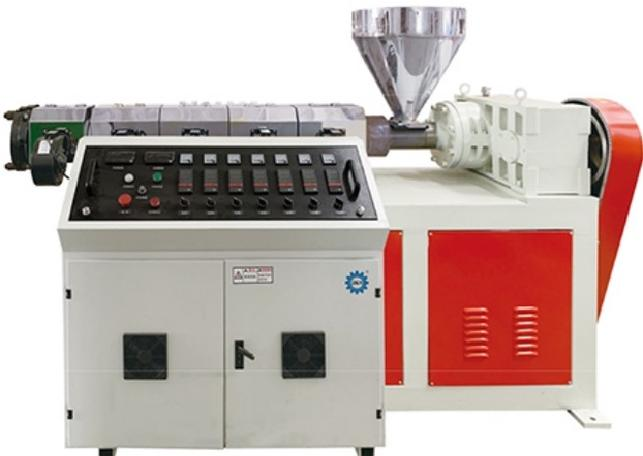
Figure 3 — SJ series single screw extruder, typically applied where feedstock arrives as pellets and the mixing requirement is modest. Image: JKS Machinery.
What Should Be Verified Before a Purchase Order?
The controls and risk package should be specified at the same time as the screw configuration. JKS describes a PLC automatic control system with real-time monitoring, overload protection and an emergency stop function, together with pre-shipment testing, standardised installation guidance, remote technical support, on-site troubleshooting and spare parts supply. Each of these is a contractual variable, not a given.
On compliance, ANSI/PLASTICS B151.7-2014 (R2021) sets safety requirements for extrusion machines used in the plastics industry and requires a documented risk assessment process in manufacture, care and use. Note that the PLASTICS Industry Association standards page references the 2013 edition while the ANSI webstore lists the 2014 (R2021) edition; buyers shipping into the United States should confirm in writing which edition the supplier is working to rather than assuming they are identical.
A practical verification list before signing:
- Screw and barrel material certification for 38CrMoAlA, including nitrided case depth and surface hardness.
- A rated-output acceptance test on your own formulation, not a demonstration compound.
- Downstream sizing calculation covering crusher, pulverizer and pelletizer against extruder output.
- Specific energy consumption in kWh per kilogram, measured during the test run.
- Documented safety standard edition and risk assessment scope for the destination market.
- Spare screw, barrel and die-head availability, plus quoted lead times.
- Installation, operator training and formulation support scope written into the contract.
What Is Likely to Change in 2026–2027?
Three directions look reasonably supported by the available data. First, the flooring and board segments that drive conical twin screw demand are still expanding, with SPC flooring projected to move from USD 6.4 billion in 2026 to USD 10.3 billion by 2033. Second, export scale keeps Chinese suppliers central to pricing: China's USD 8.55 billion in HS 8477 exports in 2024 is roughly 40% larger than the next exporter by value, which sustains competitive pressure on line prices and shifts differentiation toward downstream integration and documentation quality.
Third, documentation is becoming a procurement criterion rather than an afterthought. Standards alignment, material certification and measured energy data are the areas where supplier claims are currently least verifiable, and buyers who standardise their acceptance testing will get cleaner comparisons than those who rely on published percentages. The open gap in public data — no independent dataset of actual annual output, energy efficiency index or custom-line lead time — is unlikely to close quickly, which means first-hand verification stays the buyer's job.
FAQ
Which extruder type suits PVC dry blend — SJ or SJSZ?
Conical twin screw, in most rigid PVC dry-blend applications. The SJSZ configuration feeds powder directly and disperses additives with lower frictional heat. A single screw line becomes viable only if the formulation is pre-compounded into pellets first.
Can an SJ single screw run PP, PE, nylon or ABS?
Yes. JKS lists PVC, PP, PE, nylon and ABS among the thermoplastics handled by the SJ30, SJ45, SJ65 and SJ90 range. These materials typically arrive already compounded, so the mixing burden on the extruder is lower than with PVC dry blend.
Do I need an SJ90 or an SJSZ-110?
That depends on the product and the downstream line, not on the model number alone. The largest listed units are SJ90 and SJSZ-110, and JKS states a 1,500 kg/h capacity for one SPC floor conical twin configuration. Buyers should size from required finished-product output backwards through calibration and cooling.
Does the extruder choice change crusher and pulverizer sizing?
Yes. Reclaim equipment is sized on scrap volume per shift and target particle size, while the pelletizer is sized on continuous melt rate. JKS offers the SP400 and SP660 crushers, MF400, MF500 and MF600 pulverizers, and the ST80 to ST150 strand cutting pelletizing line, each of which needs a matching calculation.
Are the published percentage comparisons independently verified?
No. The 10–20% output, 5–10% waste and 25–30% cost figures published by JKS are supplier-declared and tied to specific stated baselines. They are useful for framing a test protocol but should be confirmed on your own material during acceptance testing.
What is the most commonly underestimated limitation?
Changeover and cleaning time on conical twin screw lines, and mixing quality on single screw lines running filled PVC. Both show up as yield loss rather than as a line-item cost, which is why they rarely appear in the initial quotation comparison.
Reference document: JKS publishes a two-page WPC door project brochure covering line configuration and application scope, available at JKS WPC door project brochure (PDF).
Tem questões ou precisa de mais detalhes?
Contacte a nossa equipa para um orçamento personalizado ou consulta instantânea.
Solicitar orçamento
Preencha o formulário abaixo e a nossa equipa entrará em contacto com uma proposta personalizada.
Chat direto do WhatsApp
Prefere conversar em tempo real? Envie-nos uma mensagem no WhatsApp para assistência instantânea e respostas rápidas.
- Obter orçamento personalizado
- Partilhar fotos ou documentos
- Discuta as suas necessidades diretamente
Geralmente responde em 5–30 minutos durante o horário de expediente.