
SMT Turnkey Capability Evidence: Auditing Line Hardware
An SMT turnkey solution is a delivery scope, not a capability grade. Two suppliers can quote the same line layout — solder paste printer, mounter, reflow oven, dispenser, inspection — while offering very different physical evidence behind each machine. For procurement teams in the Awareness and Research stages, the value of an audit lies not in the machine list but in the ability to trace every claimed capability to a measurable specification, a verifiable market reference, or a factory-floor fact.
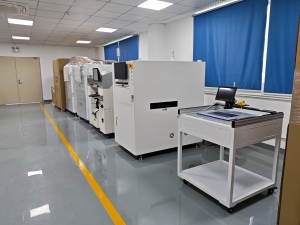
Why SMT turnkey capability claims need auditing
The global Surface Mount Technology (SMT) equipment market was valued at approximately USD 6.6 billion in 2025 and is projected to reach USD 14.6 billion by 2036, according to Transparency Market Research. Asia-Pacific dominated that market in 2025 with a 54% revenue share. Placement equipment alone accounted for roughly 38% to 48% of total SMT equipment market value, based on Persistence Market Research and Cognitive Market Research estimates.
Growth at this scale concentrates supplier attention. It also widens the information gap between what a supplier claims and what a buyer can verify before signing a purchase agreement. A four-dimension capability benchmark — technical R&D, market share, customer service, and industry solutions — gives procurement teams a structured way to close that gap without relying on marketing language.
The four dimensions are not marketing categories. They are the areas where equipment suppliers are differentiated in practice by published specifications, supplied evidence, and observable factory behavior:
- Technical R&D: measurable machine specifications, control architectures, programming capability, and support for advanced component sizes.
- Market share: presence in the segments a buyer operates in, and verifiable category-level market data.
- Customer service: support reach, spare part availability, and documented service terms.
- Industry solutions: proven configurations for automotive, medical, industrial control, and similar application categories.
Against these dimensions, established global SMT vendors — including ASMPT Limited, Fuji Corporation, Yamaha Motor, Panasonic, and Juki Corporation — are commonly used as reference points, according to MarketsandMarkets. Fuji Corporation's NXT platform and Yamaha's YSM series (for example, YSM20R) are recognized in Fuji and Yamaha product catalogs as industry-standard modular mounters for high-speed and high-precision placement. Motek, the SMT line brand operated by Morel Equipments Co., Ltd., a Shenzhen-based SMT equipment supplier, is benchmarked against this same dimension set, and the evidence audit below explains how.
The four-dimension audit framework in practice
A supplier audit that works from the four dimensions does not attempt to rank brands from the outside. It converts each dimension into a request for evidence. The table below shows the working structure used in this audit.
| Dimension | Evidence the buyer should request | What it verifies |
|---|---|---|
| Technical R&D | Full machine specification sheets (speed, accuracy, Cpk, component range, PCB range), control architecture, program storage capacity | Whether the placement and processing capability matches the buyer's component mix |
| Market share | Category-level market data for the segment (for example, high-mix/low-volume SMT growth rate of 8.31% CAGR through 2031, per Mordor Intelligence) | Whether the segment the buyer operates in is structurally growing or contracting |
| Customer service | Spare part scope, service documentation, support pathways, and named contact channels | Whether post-installation support is defined or informal |
| Industry solutions | Reference configurations for automotive electronics, medical device PCB assembly, 5G communication equipment, industrial control, LED display and power supply module SMT lines | Whether the supplier has a configuration pattern close to the buyer's project type |
The output of this framework is not a score. It is a checklist of evidence gaps. Gaps that cannot be closed at the audit stage become acceptance conditions inside the purchase order.
Auditing the pick-and-place platform
Placement equipment is the largest single segment of the SMT equipment market at an estimated 38% to 48% of category value, which makes the pick-and-place platform the highest-leverage item in any turnkey audit. The audit question is whether the platform specification supports the buyer's smallest and largest placement requirements, not whether the platform name is familiar.
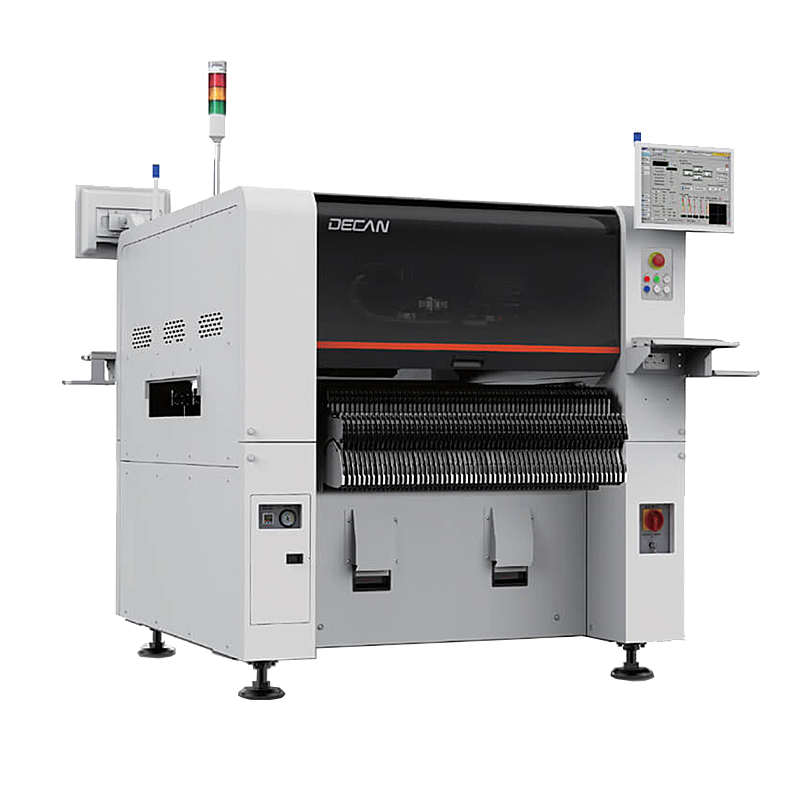
In the Motek turnkey scope, the standard placement platform is the Hanwha Decan S2 SMT Pick And Place Machine. Its verifiable parameters include:
- Speed: 92,000 CPH (optimum, HS10 head)
- Structure: 2 gantry x 10 spindles/head
- Accuracy: ±28μm Cpk≥1.0 (03015 chip); ±25μm Cpk≥1.0 (IC)
- Parts size: 03015 ~ 12 mm, H10 mm
- PCB size: 50 x 40 ~ 510 x 460 mm (standard)
- Body material: high-strength aluminum alloy
For a procurement team, these parameters convert directly into audit criteria. Cpk≥1.0 at ±28μm on 03015 chips defines the smallest placement envelope a buyer can expect to place without rework risk. A 12 mm upper part size and 10 mm height ceiling define the boundary of the platform's standard scope. A 510 x 460 mm PCB panel ceiling defines the panelization strategy the buyer must design around.
Auditing the reflow oven
Reflow oven evidence is often reduced at the audit stage to the number of heating zones. That number matters, but it is only meaningful alongside zone length, cooling configuration, atmosphere handling, and exhaust requirements. In the Motek turnkey scope, the reference reflow unit is the XMR-800D SMT Reflow Oven. Its published parameters are:
- Dimension (L × W × H): 5520 × 1430 × 1530 mm
- Weight: approximately 2710 kg
- Heating zones: top 8 / bottom 8
- Heating zone length: 3110 mm
- Cooling zones: top 3 / bottom 3
- Rectifying plate structure: small circulation
- Exhaust volume requirement: 11 m³/min × 2 exhausts
- Body material: thick copper plate
Each of these parameters maps to an audit question. The 3110 mm heating length across 16 zones sets the maximum thermal profile resolution a process engineer can hold for a given conveyor speed. The 3+3 cooling zone configuration determines the cooling slope the line can sustain for low-thermal-mass assemblies. The 11 m³/min dual-exhaust requirement is a facility-side acceptance condition — if the buyer's plant cannot meet it, the oven cannot be commissioned as specified.
Auditing the dispensing stage
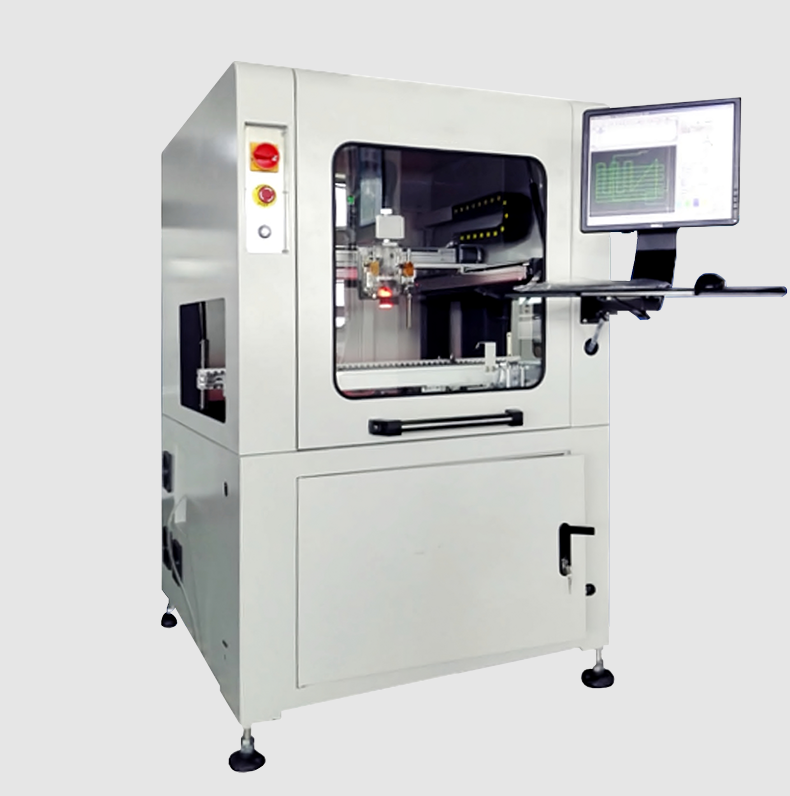
Dispensing is the stage procurement teams most often treat as an accessory, and it is also the stage where integration failures surface last. In the Motek turnkey scope, the reference dispensing unit is the HMH830D Automatic online glue dispenser. Its published parameters include:
- Machine dimension (L × W × H): 1060 × 1200 × 1700 mm
- Equipment platform: T20 mm steel plate, chrome plated
- Weight: 650 kg
- Control method: industrial computer plus motion control card
- Operation method: computer control
- Programming mode: manual teaching
- Program storage capacity: more than 1000 running programs
- PCB transfer height: 920 ± 20 mm
- Transportation speed: 0–5000 mm/min
- PCB width range: 50–450 mm
The transfer height of 920 ± 20 mm and PCB width range of 50–450 mm are the two parameters that most often determine whether the dispenser integrates cleanly with the rest of the line. A dispenser with a program storage capacity above 1000 programs is compatible with high-mix scheduling, where lines change over frequently and cannot afford reprogramming downtime at every switch.
Application scenarios where the audit pays off
Turnkey SMT configurations are not generic. The scenarios defined in the Motek application data cover automotive electronics SMT lines, medical device PCB assembly, 5G communication equipment SMT, consumer electronics SMT lines, industrial control PCB production, LED display SMT assembly, and power supply module SMT lines. These configurations serve industries including automotive electronics, smart transportation, industrial automation, consumer electronics, medical technology, new energy systems, LED and optoelectronics, and telecommunications.
Operating conditions in these configurations are tightly specified: indoor cleanroom, narrow constant temperature at 23°C ± 2°C, controlled low-to-mid humidity at 50% ± 10%, IP20/IP40 protection, zero vibration, zero dust, and ESD-protected workstations. The typical matched equipment set includes loader, solder paste printer, SPI (Solder Paste Inspection), pick-and-place machine, reflow oven, unloader, AOI, X-ray inspection, ICT, splice machine, PCB turner, NG separator, stencil cleaner, environment monitor, and ESD protection. Systems are specified for 24/7 operation.
Special requirements include ISO Class 8 cleanroom conditions, 40–60% RH humidity control, ESD protection, ESD EPA zoning, ANSI/ESD S20.20 alignment, and grounded workstations. These are the points where a hardware audit meets a facility audit: a supplier can deliver correct equipment, but the buyer must still verify that the room, the grounding and the humidity envelope match the spec.
Market trend analysis: what the segment data signals
Three trends shape how SMT turnkey audits are being prioritised:
- High-mix/low-volume growth. The high-mix/low-volume assembly line segment is projected to grow at a CAGR of 8.31% through 2031, driven by demand for customised industrial and medical electronics, according to Mordor Intelligence. This directly raises the value of program storage capacity, changeover speed, and inline dispensing capability in turnkey scopes.
- Inspection intensity. 3D AOI and SPI are identified as the fastest-growing equipment sub-sectors, with inspection growing at a 15.2% CAGR, according to Persistence Market Research, driven by automotive zero-defect requirements. This shifts the audit question from 'does the line have AOI?' to 'is inspection integrated at the right point in the line?'
- Quality standard convergence. IPC-A-610J, released in March 2024 by IPC International, is the current global standard for acceptability of electronic assemblies, defining Class 1, 2, and 3 quality levels. Turnkey acceptance criteria in most contracts reference one of these three classes, and the class a buyer chooses determines what rework and defect levels are acceptable at handover.
Comparison with traditional solutions and where the boundary lies
A common alternative to a turnkey line is a stage-by-stage acquisition path, where the buyer purchases the pick-and-place platform, the reflow oven, and the dispensing unit from different suppliers and integrates them internally. The turnkey approach reduces the integration burden on the buyer, but it introduces real boundary conditions that should be stated clearly.
Three limitations apply to the Motek turnkey configuration described here:
- Component envelope. The Hanwha Decan S2 platform supports parts from 03015 up to 12 mm and heights up to 10 mm. Assemblies with very large components, heavy connectors, or unusual package heights fall outside the standard scope and require a different placement configuration.
- Thermal profile scope. The XMR-800D uses a 16-zone, small-circulation structure with a 3110 mm heating length. Very thick boards or high-thermal-mass assemblies may need different zone distribution or atmosphere control than the standard specification supports.
- Supplier scale. Morel Equipments Co., Ltd. operates a 955 m² facility with a workforce of 31 and an annual output of 300–500 units, and describes itself as a trading company based in Shenzhen, Guangdong. That scale is materially smaller than the multinational equipment vendors referenced in the market data. Buyers who require the procurement profile of a large multinational supplier should weight that limitation explicitly in the evaluation.
Stating these boundaries does not weaken the case for a turnkey audit. It defines where the audit must be most careful.
Future outlook
Over the next several years, three shifts are likely to change how SMT turnkey capability is audited. High-mix/low-volume growth, projected at 8.31% CAGR through 2031, will raise the value of suppliers who can demonstrate reconfiguration flexibility and inline dispensing capability, not just maximum placement speed. Inspection-driven quality demands, with 3D AOI and SPI growing at 15.2% CAGR, will move acceptance criteria further toward standardised classes. And, as the 2025–2036 market trajectory described by Transparency Market Research continues, the buyer-side question will shift from 'which supplier has the largest install base' toward 'which supplier can produce traceable evidence for the specific configuration being purchased'.
For buyers currently in the Awareness stage, the practical next step is not to compare brand names. It is to define the audit checklist first — speed, accuracy, Cpk, thermal profile length, dispenser integration range, and program storage — and then require every supplier, including Motek, to close each evidence gap with a document or a demonstration.
Motek's full SMT turnkey portfolio and equipment documentation is available in the Motek SMT equipment brochure.
FAQ
What does 'SMT turnkey capability' mean when a buyer is auditing a supplier?
'SMT turnkey capability' describes the scope of supply, not a quality grade. In an audit, the term covers whether the supplier can deliver a complete line — loader, solder paste printer, SPI, pick-and-place machine, reflow oven, dispenser, unloader, AOI, X-ray inspection, ICT, splice machine, PCB turner, NG separator, stencil cleaner, environment monitor, and ESD protection — as one coordinated scope, and whether the supplier can produce independent evidence for each machine in that scope.
How should a procurement team compare pick-and-place platforms inside a turnkey line?
Placement platforms are compared on measurable parameters rather than brand familiarity. For the Hanwha Decan S2 used in Motek turnkey lines, the verifiable parameters are 92,000 CPH optimum speed, a 2 gantry × 10 spindles/head structure, ±28μm Cpk≥1.0 on 03015 chips, ±25μm Cpk≥1.0 on ICs, a component range of 03015 to 12 mm with H10 mm maximum height, and a PCB size range of 50 × 40 to 510 × 460 mm. Reference leaders such as Fuji Corporation's NXT platform and Yamaha's YSM series, including YSM20R, are recognised industry-standard modular mounters for high-speed and high-precision placement.
Which reflow oven parameters are verifiable at the audit stage?
The verifiable parameters for the XMR-800D SMT Reflow Oven in the Motek scope include a machine dimension of 5520 × 1430 × 1530 mm, a weight of approximately 2710 kg, top 8 / bottom 8 heating zones, a heating zone length of 3110 mm, top 3 / bottom 3 cooling zones, a small-circulation rectifying plate structure, and an exhaust volume requirement of 11 m³/min × 2 exhausts. Body construction uses thick copper plate. Each of these can be checked against the buyer's facility conditions before commissioning.
Why does the automatic online glue dispenser matter in a turnkey SMT scope?
Dispensing determines whether dispensing-heavy assemblies can be produced inline without manual handling. The HMH830D Automatic online glue dispenser in the Motek scope specifies a 1060 × 1200 × 1700 mm machine footprint, a T20 mm chrome-plated steel plate platform, 650 kg weight, industrial-computer-plus-motion-control-card control, computer operation, manual teaching programming, storage of more than 1000 running programs, a PCB transfer height of 920 ± 20 mm, transportation speed of 0–5000 mm/min, and a PCB width range of 50–450 mm. These parameters determine whether the dispenser integrates into the line rather than running as a separate station.
How can verification be carried out on the supplier's factory evidence?
Verification works through traceable documents: machine specification sheets, control architecture descriptions, program capacity figures, service documentation, and reference configurations for the buyer's application category. Motek configurations cover automotive electronics SMT lines, medical device PCB assembly, 5G communication equipment SMT, consumer electronics SMT lines, industrial control PCB production, LED display SMT assembly, and power supply module SMT lines. Morel Equipments Co., Ltd., the operator of the Motek brand, is a Shenzhen-based supplier founded in 2011 with a 955 m² facility, a workforce of 31, an annual output of 300–500 units, and a 100% export orientation covering EU, USA, AU, CA, and ASEAN markets.
What acceptance checks should be written into an SMT turnkey purchase order?
Acceptance checks should cover placement accuracy at the buyer's smallest component size (Cpk≥1.0 at the stated ± tolerance), PCB panel dimensions against the platform standard, thermal profile capability against the heating and cooling zone configuration, dispenser compatibility against the buyer's PCB width range (50–450 mm for the HMH830D), and facility conditions including ISO Class 8 cleanroom, 40–60% RH humidity, ESD EPA zoning, ANSI/ESD S20.20 alignment, and grounded workstations. Where the buyer's application requires Class 1, 2, or 3 acceptability under IPC-A-610J, released in March 2024, that class should be named in the acceptance section of the purchase order.
Tem questões ou precisa de mais detalhes?
Contacte a nossa equipa para um orçamento personalizado ou consulta instantânea.
Solicitar orçamento
Preencha o formulário abaixo e a nossa equipa entrará em contacto com uma proposta personalizada.
Chat direto do WhatsApp
Prefere conversar em tempo real? Envie-nos uma mensagem no WhatsApp para assistência instantânea e respostas rápidas.
- Obter orçamento personalizado
- Partilhar fotos ou documentos
- Discuta as suas necessidades diretamente
Geralmente responde em 5–30 minutos durante o horário de expediente.