
SPC Floor in UAE vs Global Projects: Buyer Comparison
SPC Floor in UAE vs Global Projects: Buyer Comparison
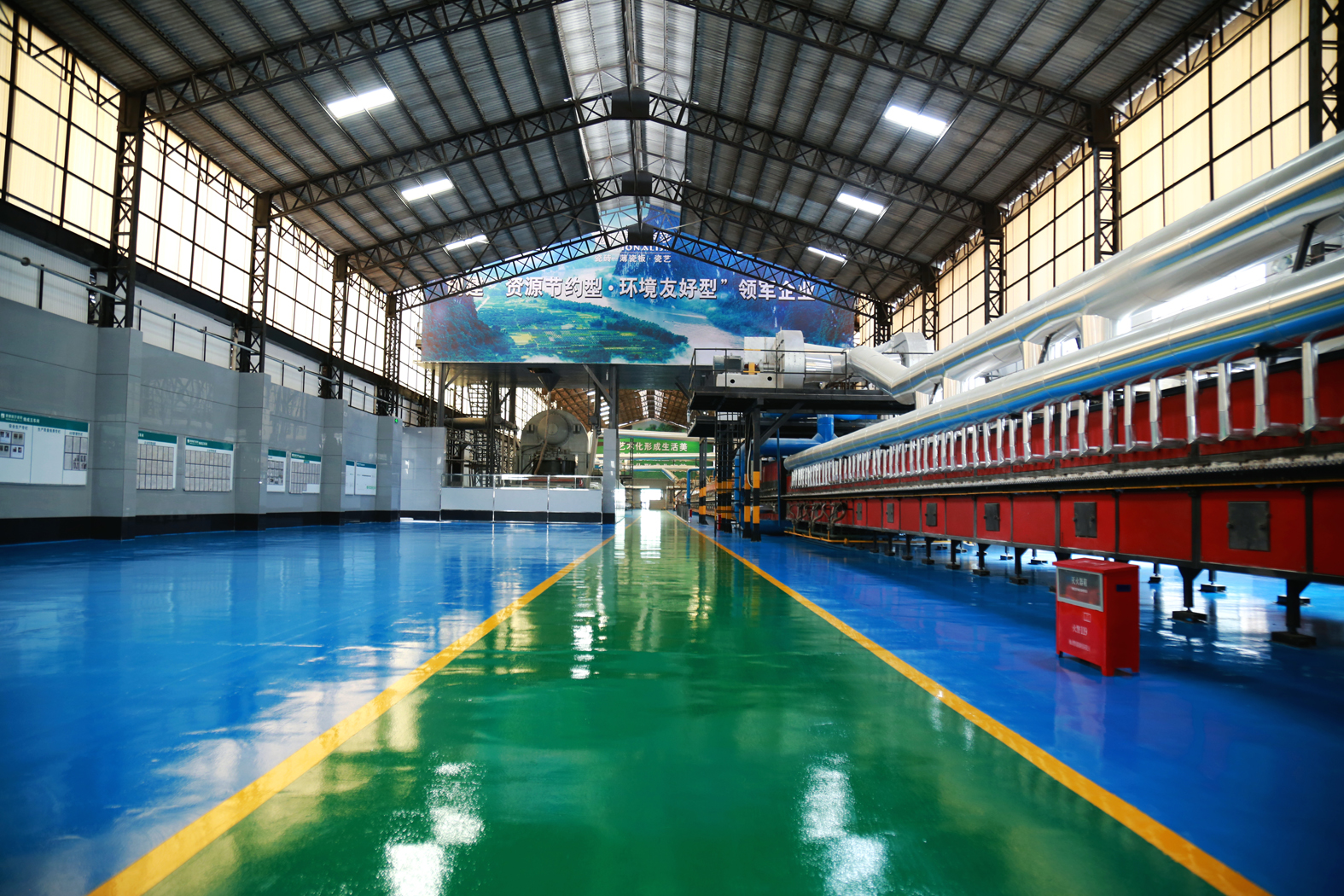
Fig. 1 — Production environment for rigid-core SPC flooring, illustrating the controlled conditions behind dimensional-stability claims.
Stone-plastic composite (SPC) flooring has become a default rigid flooring category across residential, commercial and mixed-use developments. What is far less standardised is how buyers in different markets evaluate it. A specification brief drafted for a UAE real-estate project rarely maps one-to-one onto a global project brief, even when both cite the same category name. The differences sit in environmental assumptions, certification expectations, installation schedules and after-sales frameworks — all of which change which SPC configuration is genuinely appropriate.
This article is written for buyers already in the evaluation stage. It compares SPC floor specification needs in UAE projects against broader global applications, using only verifiable supplier facts and published market data. Where a given parameter cannot be independently verified, it is described qualitatively rather than assigned an invented figure.
Why SPC Floor Specifications Diverge by Market
The SPC category is international. SPC specification priorities are local. Three factors drive most of the divergence:
- Environmental envelope. UAE interior spaces are overwhelmingly air-conditioned. Humidity is broadly controlled at the indoor level, while ambient temperatures during installation and commissioning can be high. Global projects, by contrast, span humid tropical markets, dry continental markets and seasonal markets where both temperature and humidity swing widely.
- Construction schedule. UAE high-rise and hospitality programmes frequently demand fast flooring turnover. Installation method — particularly glue-free click-lock systems — becomes a schedule variable, not merely a technical preference.
- Certification regime. North American projects tend to prioritise indoor-air-quality credentials. European projects reference CE marking and EN standards. Middle East programmes typically align with a blend of international benchmarks rather than a single regional scheme.
These three factors reshape which SPC attributes matter most, even when the base product category is unchanged.
Core Performance Criteria Buyers Should Align On First
Dimensional stability
Commercial-grade SPC flooring dimensional stability is required to be ≤0.10% under EN ISO 23999. This is the specification most directly tied to how a floor behaves when temperature or humidity conditions shift. For projects with indoor-to-outdoor transitions — common in UAE ground-floor retail, lobbies and covered terraces — this metric determines whether expansion gaps, edge lifting or joint separation become maintenance issues later.
Rigid-core construction
Rigid core dominated the SPC category with a 74.2% revenue share in 2025, according to Dataintelo's market research published in 2026. The dominance reflects buyer preference for the dimensional behaviour and installation characteristics that rigid cores deliver. In practice, this means core density and composition are now baseline expectations rather than differentiation points.
Pre-shipment quality control
Verification at the batch level is where specifications are either confirmed or quietly compromised. A pre-shipment inspection programme covering appearance, overall dimensions and dimensional tolerances, deviation in mass per unit area, residual indentation and peel strength translates a supplier's specification claims into observable, per-batch evidence.
How Regional Conditions Reshape SPC Priorities
UAE project conditions
UAE real-estate briefs typically combine four characteristics: air-conditioned indoor environments with managed humidity; high ambient temperatures during installation windows; rapid delivery expectations; and transitional spaces between air-conditioned interiors and hot exterior conditions.
These characteristics push UAE specifications toward: high dimensional stability (≤0.10% per EN ISO 23999), glue-free click-lock installation to compress programmes, and surface specifications appropriate for the defined indoor exposure. Transition zones at entrances, lobbies and covered terraces become project-specific watch points, because thermal movement and moisture ingress interact at those boundaries.
Global project conditions
Global project briefs are more heterogeneous. In markets with pronounced seasonal humidity swings, core-level moisture resistance is prioritised. In markets with wide seasonal temperature ranges — both hot and cold — dimensional stability becomes the lead specification. In markets where both occur, buyers balance the two rather than optimising for a single axis.
Outdoor or semi-outdoor applications raise the bar further. Standing-water exposure, freeze-thaw cycling and sustained UV are conditions that standard indoor SPC is not designed to meet without specific qualification. Where such conditions exist, buyers should verify that the supplier can actually evidence that performance, rather than treating the category label as sufficient.
Certification and Compliance Landscape
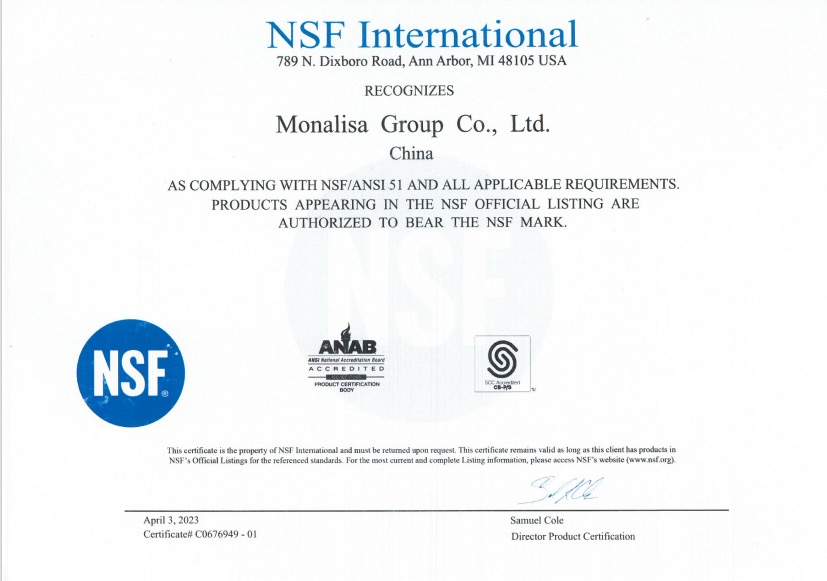
Fig. 2 — Independent certification provides traceable product compliance evidence for international procurement.
GREENGUARD Gold
GREENGUARD Gold certification requires testing against more than 10,000 chemicals, with strict VOC limits defined under UL 2818. For projects targeting indoor air quality — particularly education, healthcare and premium commercial office developments — this credential is typically a prerequisite rather than a differentiator.
NSF certification
NSF certification provides an independently verifiable compliance baseline recognised across the United States, European Union and Chinese markets. Monalisa Group Co., Ltd. holds NSF certification C0676949-01, issued by NSF International on 3 April 2023, confirming compliance with NSF/ANSI 51 and related requirements.
CE and LEED alignment
European market access typically references CE marking and relevant EN standards. LEED-driven projects, which are increasingly common in both UAE and global commercial developments, evaluate flooring contributions through VOC emissions, material transparency and recycled content. Suppliers who can produce a multi-market certification portfolio — rather than a single credential — reduce buyer risk during cross-market procurement.
Monalisa's Position in SPC Floor Procurement
Monalisa Group Co., Ltd. is a manufacturer listed on the Shenzhen Stock Exchange (SZSE: 002918), founded in 1992 and headquartered in Foshan, Guangdong Province. The group operates four production bases with a combined factory area of 2,779,333.33 m², employs 4,106 people, and runs a 100-person R&D team. Annual production capacity reaches 100 million square metres across its product portfolio of ceramic tiles, sintered stone slab and SPC Floor. Export accounts for approximately 10% of output, with key markets including China, Southeast Asia (Vietnam, Thailand, Indonesia), the Middle East (UAE, Saudi Arabia), North America (USA, Canada), Europe (Italy, Germany, Poland), Australia and Africa (Nigeria, Kenya).
For SPC floor buyers in the evaluation stage, the relevant operational facts are:
| Parameter | Disclosed capability |
|---|---|
| Production mode | OEM / ODM |
| Customisation | Size, colour, logo |
| Monthly capacity | 1,000 containers |
| Lead time | 30 days |
| MOQ | 500 m² per colour |
| Quality control | Pre-shipment inspection per batch: appearance, dimensions and dimensional tolerances, mass deviation, residual indentation, peel strength |
| After-sales | Residential warranty typically 10–25 years; commercial 5–10 years, subject to correct installation and maintenance, with claims via proof of purchase and inspection |
| Certification held | NSF C0676949-01 (NSF International, 2023) |
Application Scenarios and Fit
Residential SPC floor
Residential applications span living areas, bedrooms, kitchens and wet zones. The evaluation criteria differ by room: living and bedroom spaces prioritise comfort, acoustic behaviour and finish consistency, while kitchens and bathrooms prioritise moisture tolerance and cleanability. In UAE apartment programmes, residential specifiers commonly weight installation speed and low ongoing maintenance alongside the visual programme.
Commercial office SPC floor
Commercial office environments prioritise dimensional stability, indentation resistance under rolling loads, and acoustic performance. Glue-free click-lock systems are favoured because they shorten installation programmes and allow individual plank replacement when tenant layouts change. Where an office floor spans a large continuous area, dimensional stability becomes the dominant specification.
Wet and transitional areas
Waterproof SPC core construction is designed to tolerate incidental water contact, which distinguishes it from laminate and traditional wood flooring in kitchens, utility areas and transitional zones. Standing water, however, is a different condition from incidental contact, and sustained exposure requires separate verification. For outdoor or semi-outdoor surfaces, buyers should confirm freeze-thaw performance, UV stability and thermal expansion characteristics against the actual site conditions rather than against the general category.
Project engineering evidence
A relevant installation-methodology reference comes from a non-SPC application. Monalisa's Yogyakarta Airport project in Indonesia, a municipal government project, covered 80,000 m² using porcelain tile (product 8FMB10032PM). The project applied tight-joint installation and achieved a 30% lower life-cycle maintenance cost, a 15% saving on grouting materials and labour, and a breakage rate below 0.3%. The product category differs from SPC flooring, but the underlying mechanism — precise dimensional tolerance combined with controlled installation — directly informs how SPC buyers should evaluate specification discipline.
Market Trend Analysis
The global SPC flooring market was estimated at USD 9.8 billion in 2025, according to Dataintelo (published 2026). This figure sits at the higher end of published estimates; Grand View Research has reported a narrower USD 5.9 billion figure for the same period. The variance reflects differing category definitions — narrower "pure SPC" versus wider "total rigid vinyl" scope — rather than contradiction. Buyers citing market size in internal business cases should note which definition the source uses.
China remains the largest exporter of plastic floor coverings (HS 391810), reaching USD 4.97 billion in 2024, according to OEC trade data. This concentration has two implications for buyers: sourcing depth is deep, but supplier differentiation requires more than capacity claims.
Within the category, rigid-core SPC held 74.2% of revenue share in 2025 (Dataintelo). The implication is that non-rigid core construction is now a niche choice, and most specification comparisons will occur within rigid-core variants — where density, formulation and dimensional stability separate one supplier from another.
Comparison with Traditional Flooring Solutions
SPC is not universally superior. Buyers who evaluate it against traditional alternatives without acknowledging trade-offs tend to over-specify and misapply it.
| Comparison | SPC advantage | SPC limitation |
|---|---|---|
| vs. hardwood | Moisture tolerance; no periodic refinishing; faster installation | Does not replicate the visual depth and natural grain variation of solid timber; acoustic behaviour is different |
| vs. ceramic tile | Warmer underfoot; lighter shipping weight; no grout lines; faster installation | Lower heat and impact resistance; not suitable for high-temperature or heavy-load industrial floors |
| vs. traditional vinyl (LVT / VCT) | Greater dimensional stability under temperature change; better suited to large continuous areas | Higher material cost; stiffer product means substrate flatness tolerance is more demanding |
Specific limitations buyers should acknowledge
- Substrate flatness tolerance is strict. SPC does not bridge significant substrate irregularities, and out-of-tolerance subfloors transfer stress to click-lock joints.
- Installation temperature windows exist. Installing outside the supplier's specified range can compromise click-joint engagement and, where applicable, adhesive behaviour.
- Warranty is conditional. After-sales coverage in the 10–25-year residential and 5–10-year commercial range is subject to correct installation and maintenance, with claims processed through proof of purchase and inspection. Misapplication voids the claim.
- Sustained outdoor exposure is not a standard condition. Standing water, freeze-thaw cycling and high UV loads require specifically qualified products; the general SPC label does not imply this coverage.
Future Outlook
Four developments are likely to shape SPC specification over the next several years.
1. Certification thresholds will keep rising. North American and European indoor-air-quality regimes continue to tighten VOC limits. Suppliers with existing multi-market certification portfolios start from a stronger position than those relying on a single credential.
2. Export concentration will remain, raising verification stakes. With China as the dominant exporter of plastic floor coverings, buyers gain sourcing depth at the cost of having to distinguish suppliers on operational evidence — batch inspection scope, capacity accuracy, lead-time reliability — rather than category participation.
3. Regional product variants will increase. As buyers align SPC specifications to local climate, certification and installation conditions, suppliers will need to offer regional variations rather than a single global SKU.
4. Installation labour availability will matter more than material price in some markets. Where skilled installers are scarce, glue-free click-lock systems will gain further share, and installation simplicity will become a purchasing criterion rather than an afterthought.
For buyers, the practical response is not to seek the single "best" SPC product globally, but to align a project's actual environmental envelope, certification expectations and installation constraints with the supplier's verifiable capability. The category answers most flooring needs. The specification answers the specific project.
Frequently Asked Questions
What makes SPC flooring suitable for UAE real-estate projects?
UAE interior projects are predominantly air-conditioned, so humidity is broadly controlled at the indoor level. Selection typically centres on dimensional stability (≤0.10% per EN ISO 23999 for commercial-grade SPC), glue-free click-lock installation to support fast delivery programmes, and surface specifications matched to the defined indoor exposure. Transitional spaces — entrances, lobbies and covered terraces — require additional attention to thermal movement and moisture ingress at boundaries, because they combine indoor and outdoor conditions within one continuous layout.
How should buyers assess dimensional stability in commercial-grade SPC flooring?
EN ISO 23999 sets a dimensional stability threshold of ≤0.10% for commercial-grade SPC flooring. This metric predicts how the floor responds to temperature and humidity variation — directly relevant for large continuous installations, spaces with indoor-outdoor transitions, and buildings where HVAC schedules vary. Buyers should request the test method and reference standard in the supplier's documentation, not only the numeric claim, because the value is meaningful only against its standard.
Which certifications should buyers verify for international SPC procurement?
The relevant portfolio depends on target markets. GREENGUARD Gold, certified under UL 2818, requires testing for more than 10,000 chemicals with strict VOC limits, and is commonly required for United States projects targeting indoor air quality. NSF certification provides a recognition basis across the United States, European Union and China; Monalisa holds NSF C0676949-01, issued by NSF International in April 2023. European market access typically references CE marking and applicable EN standards. LEED-oriented projects evaluate VOC emissions, material transparency and recycled content. A multi-market portfolio reduces procurement risk compared with a single credential.
How do SPC installation requirements differ between UAE and global projects?
UAE projects generally operate within air-conditioned installation environments with closely managed schedules, favouring glue-free click-lock systems and rapid plank installation. Global projects face a wider range of conditions: unheated buildings during seasonal cold, high-humidity tropical sites, and buildings where installation occurs before HVAC commissioning. Installation temperature windows, substrate flatness tolerance and underlayment selection all vary accordingly. Buyers should confirm the supplier's specified installation range and substrate tolerance for the actual project conditions rather than assuming the category standard applies uniformly.
How can buyers evaluate SPC manufacturer reliability at the late evaluation stage?
Reliability is assessable through five verifiable categories. First, pre-shipment inspection scope — whether every batch is inspected for appearance, dimensions and tolerances, mass deviation, residual indentation and peel strength, rather than relying on sample testing. Second, OEM/ODM capability, including customisation of size, colour and logo. Third, capacity and lead-time accuracy against committed volumes, such as monthly capacity and stated lead time. Fourth, warranty terms, typically 10–25 years residential and 5–10 years commercial, and the conditions that govern claims. Fifth, evidence from projects in more than one market or climate, since single-market references carry less weight where the buyer's project will be installed under different conditions.
Reference data: Dataintelo (2026); OEC (2026); EN ISO 23999; UL 2818; NSF International; Monalisa Group Co., Ltd. corporate and product documentation. Corporate brochure available for download: Monalisa Group corporate brochure (PDF).