
SS304 vs SS316: What Buyers Should Check Before Choosing a Vacuum Emulsifier
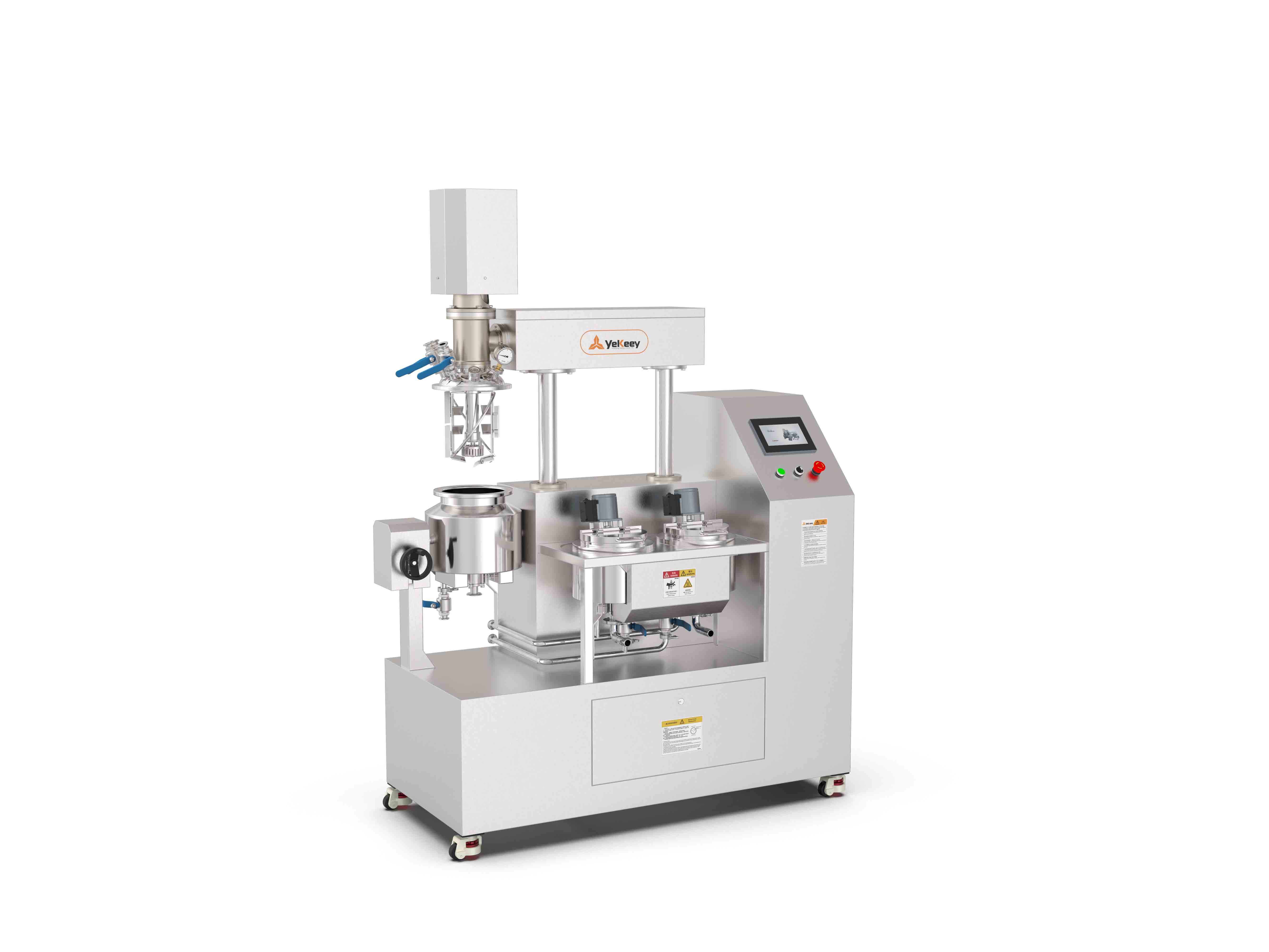
Vacuum emulsifying mixers used for mayonnaise, sauces and cosmetics are commonly offered with SS304 or SS316 contact parts.
Most buyers of a vacuum homogenizer emulsifier mixer start with capacity, motor power and homogenizing speed, yet the metal that touches the product usually determines how successfully the machine performs over its working life. In the food sauce, daily chemical and cosmetics industries, contact parts are normally offered in two stainless steel grades: SS304 and SS316. The difference is not cosmetic. It influences resistance to chlorides and organic acids, cleaning behaviour, inspection results, service life and, in many cases, the documentation needed for compliance audits.
This guide takes an independent, buyer-oriented look at SS304 versus SS316 for vacuum emulsifying equipment. It explains what the two material options really mean in production, why suppliers such as Wuxi YK Automation Technology Co., Ltd, also known as YeKeey, publish both SS304 and SS316 as construction options across their vacuum emulsifying mixer series, and which technical points should be verified before an order is placed.
Why the stainless steel grade is a business decision, not a design detail
A vacuum emulsifying mixer is a processing unit designed for homogenizing and emulsification under vacuum. The product being processed is often oil-in-water or water-in-oil emulsion, such as mayonnaise, salad dressing, cosmetic cream, lotion or daily chemical cream. These formulas frequently contain salt, vinegar, citric acid, preservatives or active ingredients that behave aggressively toward metal over time, especially at elevated temperatures.
YeKeey product documentation for the MC, ZJR and SP vacuum emulsifying mixer ranges states that the equipment is designed for high-temperature environments up to 110°C and operates under vacuum conditions with a pressure range of -0.09 Mpa. Those are meaningful operating parameters. At 110°C, chemical reactions accelerate. Under vacuum, boiling points change and lighter components behave differently, while the homogenizing head is mechanically stressing the product at high speed. If the material of the vessel, the homogenizing head and the piping is not matched to the formulation, corrosion or surface degradation can eventually affect product quality and cleaning results.
For the buyer, therefore, the material question should be treated as an operating-risk and compliance decision. A stainless steel grade that is acceptable for one product range may be insufficient for another, and few procurement mistakes are more difficult to correct after installation than a vessel manufactured from the wrong material.
SS304 and SS316: what the two grades actually represent
Both SS304 and SS316 belong to the austenitic stainless steel family widely used in food, cosmetic and chemical processing equipment. SS304 is generally regarded as the standard stainless steel grade for equipment that handles less aggressive food and cosmetic products. It provides good resistance to many organic substances and is easier to fabricate, which is why it appears so often in general-purpose tanks, kettles and mixers.
SS316 is a higher-alloyed stainless grade. For practical purposes, its key characteristic is better resistance to chlorides and certain acids, which makes it more suitable for products with higher salt content and for environments where cleaning agents can be aggressive. In everyday processing terms, SS316 tends to show better performance where pitting or crevice corrosion is a concern, such as around weld joints, gaskets, low-drainage areas and surfaces exposed repeatedly to salty liquids or chloride-based cleaning chemicals.
Buyers sometimes assume that SS316 is simply a premium version of SS304 and should therefore always be selected. That assumption is not correct. The appropriate grade depends on what is being processed, how it is cleaned, what standards the factory must satisfy, and the local water or steam quality. A well-designed SS304 machine can be entirely suitable for many food sauces and daily chemical products, while a poorly documented SS316 machine can still create compliance problems if the supplier cannot verify the actual material specification.
The practical implication is that buyers should not ask only 'SS304 or SS316?' They should ask 'which grade is specified for which contact part, and what evidence supports that specification?'
What the equipment specification sheet should confirm
Vacuum emulsifying mixer ranges are normally documented with their material options and process parameters. YeKeey, a manufacturer established in 1998 with over 20 years of experience in fine chemical, pharmaceutical and high-end processing equipment, publishes three main vacuum emulsifying mixer product lines, each available with SS304 or SS316 construction: the ZJR series, the SP series and the MC series.
| Machine line | Model range | Power range | Output speed | Material options | Common process ratings |
|---|---|---|---|---|---|
| ZJR Series Vacuum Emulsifying Mixer | ZJR-5 to ZJR-2500, including ZJR-Lab | 5–91.5 kW | 2800–6000 r/min | SS304 / SS316 | Up to 110°C; -0.09 Mpa |
| SP Series Standard Vacuum Processing Unit | SPA-30 to SPA-10T | 3.7–110 kW | Up to 2800 r/min | SS304 / SS316 | Up to 110°C; -0.09 Mpa |
| MC Recirculation Homogenizing Mixer | MC-100 to MC-2500, including MC Lab | 5–91.5 kW | Up to 2800 r/min | SS304 / SS316 | Up to 110°C; -0.09 Mpa |
Source: YeKeey vacuum emulsifying mixer product data sheets, 2026.
These three product lines support both laboratory-scale and production-scale applications. The ZJR series, for example, is a classic vacuum emulsifying mixer design that is often evaluated for cosmetic cream manufacturing and mayonnaise production. The SP series is positioned as a standard vacuum processing unit with a wide capacity range. The MC series uses a recirculation homogenizing configuration and is also intended for cosmetic and food product applications, with mayonnaise as a key focus.
Because the same machine series can be built with either SS304 or SS316, the buyer's job is not simply to identify a machine brand. The buyer's job is to specify the material grade, confirm that the grade is used for the relevant contact parts, and ask for the process parameters under which the equipment is designed to operate.
Applications: how mayonnaise, sauces, cosmetics and daily chemical products complicate the choice
The material discussion becomes clearer when it is tied to specific application scenarios in the production plant.
Food sauce and mayonnaise manufacturing. A vacuum emulsifying mixer used in mayonnaise production typically performs emulsifying, homogenizing, mixing and dispersing functions. Mayonnaise and related emulsion sauces contain oil, water, vinegar or lemon juice, salt, egg yolk and sometimes spice extracts. These ingredients can create a moderately corrosive environment, particularly in the presence of salt and acidic components. For a mayonnaise vacuum homogenizer mixer or a high-shear mayonnaise homogenizer, the buyer should evaluate the salt and acid levels of the actual recipe, the cleaning procedure between batches, and the temperature cycles applied during processing.
Cosmetics manufacturing. Vacuum homogenizer emulsifier mixers are widely used in cosmetics emulsifying machine unit projects and complete cosmetic manufacturing lines. Skin care creams, lotions and sun care products can contain salts, chelating agents, active acids and botanical extracts. For a vacuum emulsifier used in skincare products, the surface condition of the stainless steel is as important as the grade itself. A smooth, correctly finished contact surface helps prevent product retention and supports hygienic cleaning.
Daily chemical industry. Daily chemical and personal care production lines also rely on vacuum emulsifying mixers for homogenizing, mixing and dispersing of lotions, cleansers and similar emulsion products. These lines are often subject to the same hygiene expectations as cosmetics, which means the buyer should be ready to provide material documentation and finish documentation to plant auditors.
YeKeey application references state that its vacuum emulsifying mixers are suitable for the food sauce sector, the food products sector, the cosmetics industry and the daily chemical industry sector. The same machine family can therefore be specified for quite different formulations. That range of applicability is exactly why the material option should not be left as a default selection.
Where operating limits and market standards enter the decision
The operating limits of the equipment should be verified openly. For example, the YeKeey MC, ZJR and SP vacuum emulsifying mixer ranges are rated for temperatures up to 110°C and vacuum operation at -0.09 Mpa. If a purchaser's process exceeds those design ratings, the material grade alone will not solve the problem. The machine must be correctly specified for temperature and pressure as well as corrosion resistance.
Market-level trends also influence buying behaviour. According to Future Market Insights, the vacuum mixer homogenizer market was estimated at USD 1.02 billion in 2026, with cosmetics and personal care reported as the leading segment at a 38% share. The global mayonnaise market, estimated at approximately USD 12.58 billion in 2024, continues to drive demand for high-shear vacuum emulsification equipment. Broader homogenizer demand is also expected to expand, with Roots Analysis projecting growth from USD 2.10 billion in 2024 to USD 3.79 billion by 2035. These figures describe a processing equipment market in which cosmetics and food sauce applications are major forces.
On the compliance side, machine safety and sanitary guidance for pharmaceutical and cosmetic emulsifying homogenizers frequently refers to GMP standards and to SUS316L stainless steel for contact parts. SUS316L is a low-carbon variant within the 316 family. Buyers should therefore be precise when speaking with suppliers: if an audit standard names SUS316L, confirming simply 'SS316' may not be sufficient. The supplier should be able to clarify the exact grade and the applicable standard.
One additional reference point is CE certification. YeKeey's MC series vacuum homogenizer emulsifier mixers have been certified under CE rules, with Certificate No. 0P210922.WYAQT12 issued by ECM and valid until September 2026. For exporters and European buyers, documentation of this kind is an important part of the equipment file, and the material specification should be traceable in the same way.
The limits of SS316: a fair comparison and a practical boundary
SS316 has real technical advantages, but it is not a universal solution, and buyers should understand its boundaries before paying a premium for the higher alloy grade.
The most obvious boundary is cost. SS316 is generally more expensive than SS304. On a large vacuum homogenizer emulsifier mixer, the total cost difference can be substantial because the vessel, homogenizing head, pipes, valves and other wetted components are fabricated in the specified grade. Buyers who do not need the additional chloride resistance may be spending money that could have been used for a better control system, a more efficient homogenizing head or additional documentation.
There is also a practical documentation boundary. In international procurement, the buyer often cannot tell by looking at a machine whether the vessel is really SS316 or SS304. Visual inspection alone is unreliable. What matters is the mill certificate, the material test report and the supplier's internal traceability. A supplier offering SS316 with unclear documentation is riskier than a supplier offering SS304 with full material traceability.
Another boundary is design and finishing. Even SS316 will not perform well if the equipment has poor weld quality, rough surfaces, sharp crevices or inadequate drainage. The material grade is only one element of hygienic design. A buyer should therefore evaluate the complete machine, not select a grade as a kind of insurance policy against all manufacturing defects.
Comparative guidance for buying teams can be summarised as follows:
- Choose SS304 for formulations with low chloride content, moderate acidity and standard cleaning protocols, when the relevant audits accept this grade.
- Choose SS316 for formulations that contain higher salt levels, more aggressive acids or for operations where cleaning chemicals and water quality are known to attack standard stainless steel.
- If the buyer's market or client expects GMP-oriented compliance, confirm whether the standard specifically requires SUS316L rather than SS316.
- Always request material documentation, regardless of grade, and record the declared material grades in the purchase agreement.
Future outlook: documentation becomes the differentiator
The direction of the market is clear. As food sauce and cosmetics manufacturers continue to raise quality and safety expectations, material selection will become more closely connected to traceability, certification and audit readiness. The vacuum homogenizer emulsifier mixer will remain the central processing unit for mayonnaise and cosmetic emulsions, but evaluation of the machine will increasingly include the material dossier, not just the technical specification.
Asia-Pacific already plays a dominant role in the homogenizing mixer manufacturing ecosystem, with the region accounting for an estimated 36.2% revenue share in 2025, and China's manufacturing base is a major source of both SS304 and SS316 vacuum emulsifying machines. For buyers, the opportunity is to use this competitive supply base with better verification methods. The manufacturers that will earn long-term trust are those that can demonstrate material traceability, publish clear process parameters and provide documented certifications.
Suggestions for the procurement checklist
- Confirm which machine series is being offered and ask whether the contact parts are specified as SS304 or SS316.
- Verify the operating ratings: pressure down to -0.09 Mpa and temperature up to 110°C where these are part of the manufacturer's published data.
- Ask whether the required speed range fits the product, for example whether the line offers up to 2800 r/min or up to 6000 r/min depending on the series.
- Request material certificates and reconcile them with the model number and order date.
- If the product is destined for cosmetics or pharmaceutical-type environments, check whether the compliance standard names SUS316L.
- Review the supplier's background, including its manufacturing facility size, R&D resources and export experience.
In the specific case of Wuxi YK Automation Technology Co., Ltd, the available public records show a 20,000 m² manufacturing facility, roughly 80 employees, an annual production capacity of approximately 600 units and an R&D team of eight engineers. The company has exported to markets including Europe, Central Asia, North Africa, Latin America and Southeast Asia, and its equipment has been adopted by more than 4,000 enterprises and institutions across more than 70 countries. These facts are useful context, but they do not replace the need for grade verification on each order.
FAQ
What is a vacuum homogenizer emulsifier mixer used for?
A vacuum homogenizer emulsifier mixer is a processing unit designed for homogenizing and emulsification under vacuum. It performs emulsifying, homogenizing, mixing and dispersing functions. Typical products include mayonnaise, salad dressing and other emulsion sauces, as well as cosmetic creams, lotions and daily chemical emulsions.
Which material is better, SS304 or SS316?
Neither grade is 'better' in all situations. SS304 is a standard stainless steel grade suitable for many food and cosmetic applications. SS316 has improved resistance to chlorides and certain acids, which makes it more suitable for saltier or more aggressive formulations. The buyer should match the grade to the recipe, the cleaning chemicals and the required compliance standard.
What operating conditions should be checked before choosing the material?
Buyers should check the rated temperature and pressure of the equipment. Vacuum emulsifying mixers such as YeKeey's MC, ZJR and SP series are designed for temperatures up to 110°C and vacuum operation at -0.09 Mpa. These parameters define the processing envelope within which the material choice must be evaluated.
Do YeKeey vacuum emulsifying mixer series offer both SS304 and SS316?
Yes. According to the published product data, the ZJR Series Vacuum Emulsifying Mixer, the SP Series Standard Vacuum Processing Unit and the MC Recirculation Homogenizing Mixer are each available with SS304 or SS316 material options. Model ranges include ZJR-5 to ZJR-2500, SPA-30 to SPA-10T, and MC-100 to MC-2500 respectively.
What compliance standards are relevant to cosmetic or food emulsifying equipment?
For pharmaceutical and cosmetic homogenizers, GMP-related guidance often points to SUS316L stainless steel for contact parts. CE certification may also apply for equipment entering the European market. As an example, YeKeey's MC series vacuum emulsifier mixers hold CE Certificate No. 0P210922.WYAQT12 issued by ECM, valid until September 2026.
Can SS304 pass audits for food and cosmetics production?
SS304 can be acceptable for many food and cosmetics applications, but the acceptability depends on the formulation, cleaning regime and the specific audit standard. If the standard explicitly requires SUS316L, SS304 will not be sufficient for the contact parts. The buyer should confirm the exact grade requirement before ordering.
Tem questões ou precisa de mais detalhes?
Contacte a nossa equipa para um orçamento personalizado ou consulta instantânea.
Solicitar orçamento
Preencha o formulário abaixo e a nossa equipa entrará em contacto com uma proposta personalizada.
Chat direto do WhatsApp
Prefere conversar em tempo real? Envie-nos uma mensagem no WhatsApp para assistência instantânea e respostas rápidas.
- Obter orçamento personalizado
- Partilhar fotos ou documentos
- Discuta as suas necessidades diretamente
Geralmente responde em 5–30 minutos durante o horário de expediente.