
Safari Tent Compliance Essentials: B1 Fire and Material Certifications Explained
Safari Tent Compliance Essentials: B1 Fire and Material Certifications Explained
A safari tent is approved, insured and financed on the strength of its specifications rather than its photography. For resort developers moving through planning and procurement, the same set of figures usually decides whether a tented unit can be signed off: a B1 fire-retardant cover, a waterproof rating of at least 3000mm H₂O, wind resistance up to 100 km/h (Level 9 wind), a 60 kg/m² snow load, and an operational range of -25℃ to +60℃. This reference explains what each figure measures, how those figures connect to the standards resort buyers are normally asked about, and where the boundaries of each rating sit.
Why Specification Sheets Decide Safari Tent Projects
Tented accommodation has shifted from seasonal expedition camps into permanent resort inventory, and the buying conversation has shifted with it. Operators increasingly compare a safari tent against villas, cabins and hotel rooms on occupancy, revenue per key and lifespan, not only on novelty. Compliance language enters at exactly that point, because fire behaviour, water ingress, structural loading and material durability all have to be answerable in writing before a project is submitted for approval or insured at a workable premium.
The commercial scale behind that shift is measurable. The global glamping tents market was valued at USD 3,124.89 million in 2023 and is projected to reach USD 6,484.86 million by 2032, according to Zion Market Research. Grand View Research expects the safari tourism market to reach USD 66.9 billion by 2033, growing at a CAGR of 7.7% from 2026, while Africa recorded an 8% increase in international arrivals in 2025, reaching 81 million travellers, as reported by UNWTO and Grand View Research. Growth of that kind places more tented units in more demanding locations, and each environment tests a different part of a specification sheet.
For a procurement team, the practical consequence is that a safari tent specification is read in three layers: the headline rating (B1, ≥3000mm H₂O, 100 km/h, 60 kg/m², -25℃ to +60℃), the materials that produce the rating (850g/m² PVC-coated polyester cover, breathable Oxford canvas inner lining, anti-corrosion solid wood or heavy-duty galvanized steel frame), and the documentation that proves both. Projects that reconcile all three layers early avoid the most expensive compliance problem in tented hospitality: discovering a gap after the units are already on site.
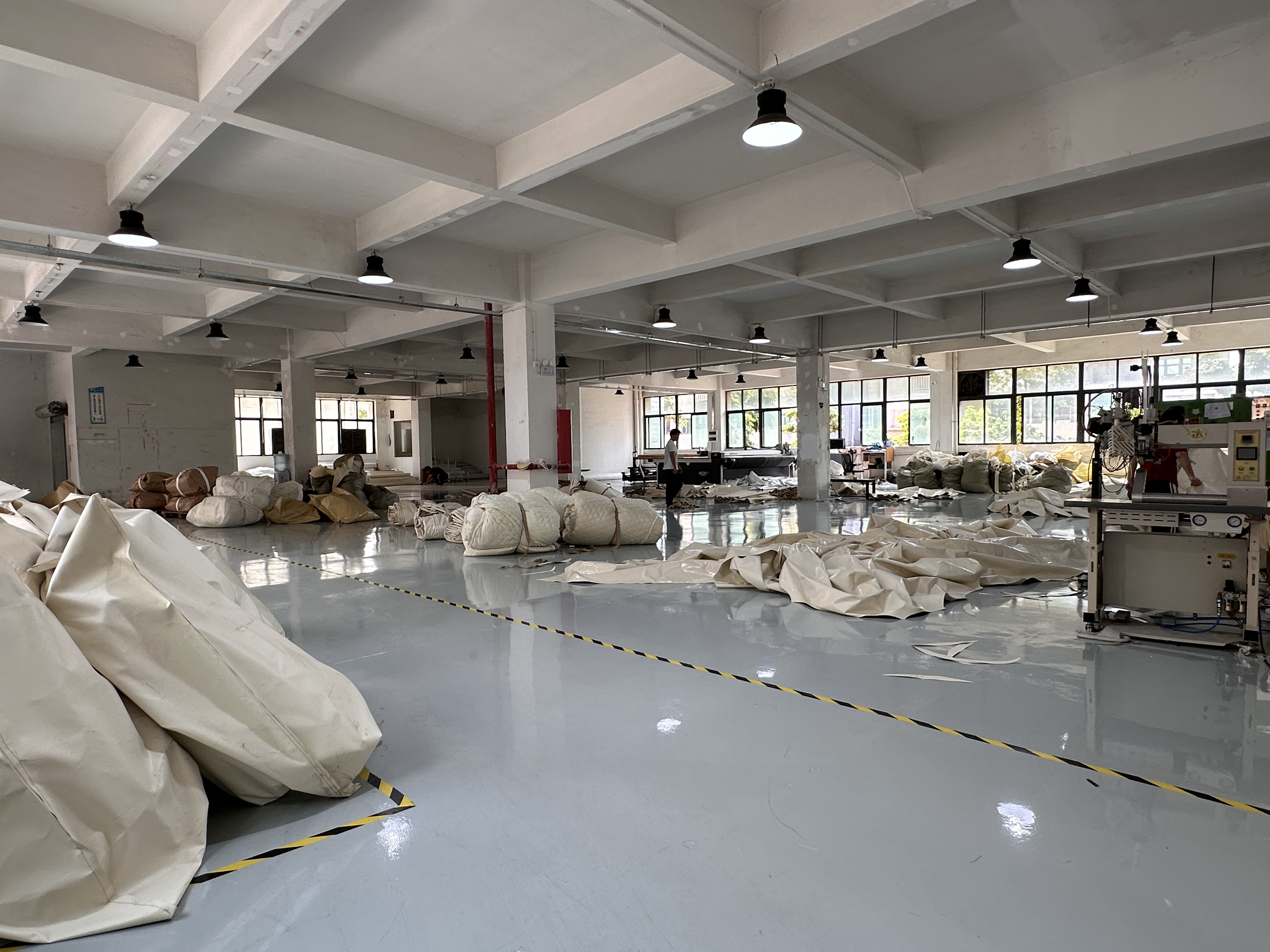
Cover fabrication is where fire-retardant and waterproof performance is fixed. Safari tent covers are specified at 850g/m² PVC-coated polyester fabric.
The Five Core Compliance Specifications, Explained
B1 Fire Retardancy: A Material-Level Rating, Not a Building Certificate
B1 is a reaction-to-fire classification applied to building materials, and in a safari tent specification it applies first and foremost to the cover fabric. A B1 fire-retardant classification indicates limited flame spread under a defined test exposure. It describes how a material behaves when it meets a flame source; it is not a certificate covering the assembled structure.
That distinction matters because a finished safari tent contains more than one material. The cover is an 850g/m² PVC-coated polyester fabric, the inner lining is a breathable Oxford canvas, and the frame is finished anti-corrosion solid wood or a heavy-duty galvanized steel frame. A fire rating quoted at the cover level should therefore be read as one input into the overall fire strategy of a tented unit, alongside layout, spacing between units, and any site-level fire planning a resort operator applies.
Buyers working on international projects also meet a second vocabulary for the same question. In North America, tents used commercially are commonly referenced against flammability standards such as CPAI-84 for camping tents and NFPA 701 for flame propagation of textiles and films. Where European documentation is used, the reference point for camping tents is EN ISO 5912:2020; Stars Glamping publishes CE certification (General Product Safety) covering its safari tents against that safety and performance standard. The lesson is not that one framework replaces another, but that a spec sheet should state which method produced the rating.
Waterproofing: What ≥3000mm H₂O Actually Measures
The waterproof rating ≥3000mm H₂O is a hydrostatic head figure. It expresses the height of a water column that the cover fabric resists before water penetrates in a controlled test. At a minimum of 3,000 mm, the fabric is specified to hold against sustained heavy rain rather than a brief shower — a relevant threshold for savannah, monsoon and coastal sites where rainfall arrives in long events.
Two qualifications matter in practice. First, water rarely enters through an intact sheet of 850g/m² PVC-coated polyester; it enters at seams, window frames, door openings, and service penetrations such as electrical entries and plumbing. The fabric rating sets the ceiling of performance, while construction detailing determines whether that ceiling is reached on site. Second, rainfall is only one source of moisture. Wind-driven rain, splash-back from hard ground surfaces and internal condensation behave differently, which is why the same specification pairs the PVC cover with a breathable Oxford canvas inner lining — condensation control is a separate design problem from rain penetration.
Wind Resistance: Up to 100 km/h and Where Level 9 Stops
Wind resistance up to 100 km/h, described in the specification as Level 9 wind, is a structural rating. It means the frame, cover tensioning and anchoring are designed as a system to hold the tent's shape and integrity under a defined wind load. It does not mean the tent is unaffected; it means the structure is specified to remain standing and serviceable.
The boundary buyers should reconcile during specification is site exposure. Application requirements for safari lodge and glamping projects in exposed locations list wind resistance level 10 among their special requirements, while the standard Safari Tent - Epic, Safari Tent - Vega and Safari Tent - Lodestar specification is stated as up to 100 km/h (Level 9 wind). Where a site faces open coastal fetch, ridge lines, or unobstructed savannah, that gap deserves a written engineering conversation before the order, covering anchoring design, ground conditions, and the orientation of the units on site.
Snow Load: 60 kg/m² as a Design Threshold
A snow load rating of 60 kg/m² states how much snow mass per square metre of roof area the cover and frame are specified to carry. It is a design threshold expressed for uniform loading, not an unlimited capacity.
Two variables change the effective margin in the field: snow density and snow distribution. Wet, compacted snow is heavier than dry, fresh snow at the same depth, and drifting can concentrate load on one slope of a roof. Buyers planning installations in snow-affected regions should compare the 60 kg/m² figure against the snow load required locally and confirm whether active snow management, heating, or a different structural approach is needed for the site.
Temperature Range: -25℃ to +60℃ Describes Materials, Not Comfort
The operational range of -25℃ to +60℃ states the span within which the cover, lining and frame materials are expected to remain stable. It is a materials statement, not a comfort guarantee.
For the cover, the decisive behaviour is UV degradation and colour fading, which is why the specification lists the fabric as UV-resistant and anti-fading — the property that matters most in high-UV environments such as savannah and desert sites. For occupants, comfort across the same temperature span is delivered by supporting equipment: an insulation lining and air conditioning system, and where the project requires it, wooden flooring, a panoramic glass door, a bathroom module and a lighting system. A tent specified to +60℃ is not a tent that is comfortable at +60℃ without those systems.
How the Specifications Map to Standards and Resort Requirements
The table below places each published figure next to what it measures, the frameworks resort buyers normally encounter in tender documents, and the point that should be confirmed before an order is placed.
| Published specification | What it measures | Frameworks commonly referenced | What the buyer should confirm |
|---|---|---|---|
| Fire rating: B1 fire-retardant | Reaction-to-fire of the cover material (850g/m² PVC-coated polyester fabric) | B1 material classification; CPAI-84 and NFPA 701 for commercial tents in North America; EN ISO 5912:2020 as the camping tent safety and performance standard referenced in CE (General Product Safety) documentation published for Stars Glamping safari tents | Which test method produced the rating, which material sample was tested, and whether the supplied cover matches it |
| Waterproof: ≥3000mm H₂O | Hydrostatic head of the cover fabric | Hydrostatic head test reported in material data | Seam, window, door and penetration detailing; condensation control through the breathable lining |
| Wind: up to 100 km/h (Level 9 wind) | Structural design load for frame, cover tensioning and anchoring | Project-level wind requirements, which for exposed sites frequently list wind resistance level 10 | Site exposure, anchoring design and ground conditions, and whether the standard rating is sufficient for the location |
| Snow load: 60 kg/m² | Uniform snow load the roof system is specified to carry | Locally required snow load for the project site | Local snow load, drift patterns and whether active snow management is required |
| Temperature: -25℃ to +60℃ | Material stability range of cover, lining and frame | UV resistance and anti-fading performance for high-UV sites | Insulation lining and HVAC specification needed to deliver occupant comfort |
| Cover and lining: 850g/m² PVC-coated polyester / breathable Oxford canvas | The material basis that produces every rating above | Material data sheets | Fabric weight and coating confirmation; breathability of the lining |
| Frame: anti-corrosion solid wood or heavy-duty galvanized steel | Structural and corrosion performance | Corrosion protection documentation | Frame material choice for the specific environment and connection detailing |
| Service life: 8–12 years | Expected material life cycle | — | Replacement planning for cover, hardware and fittings across the operating horizon |
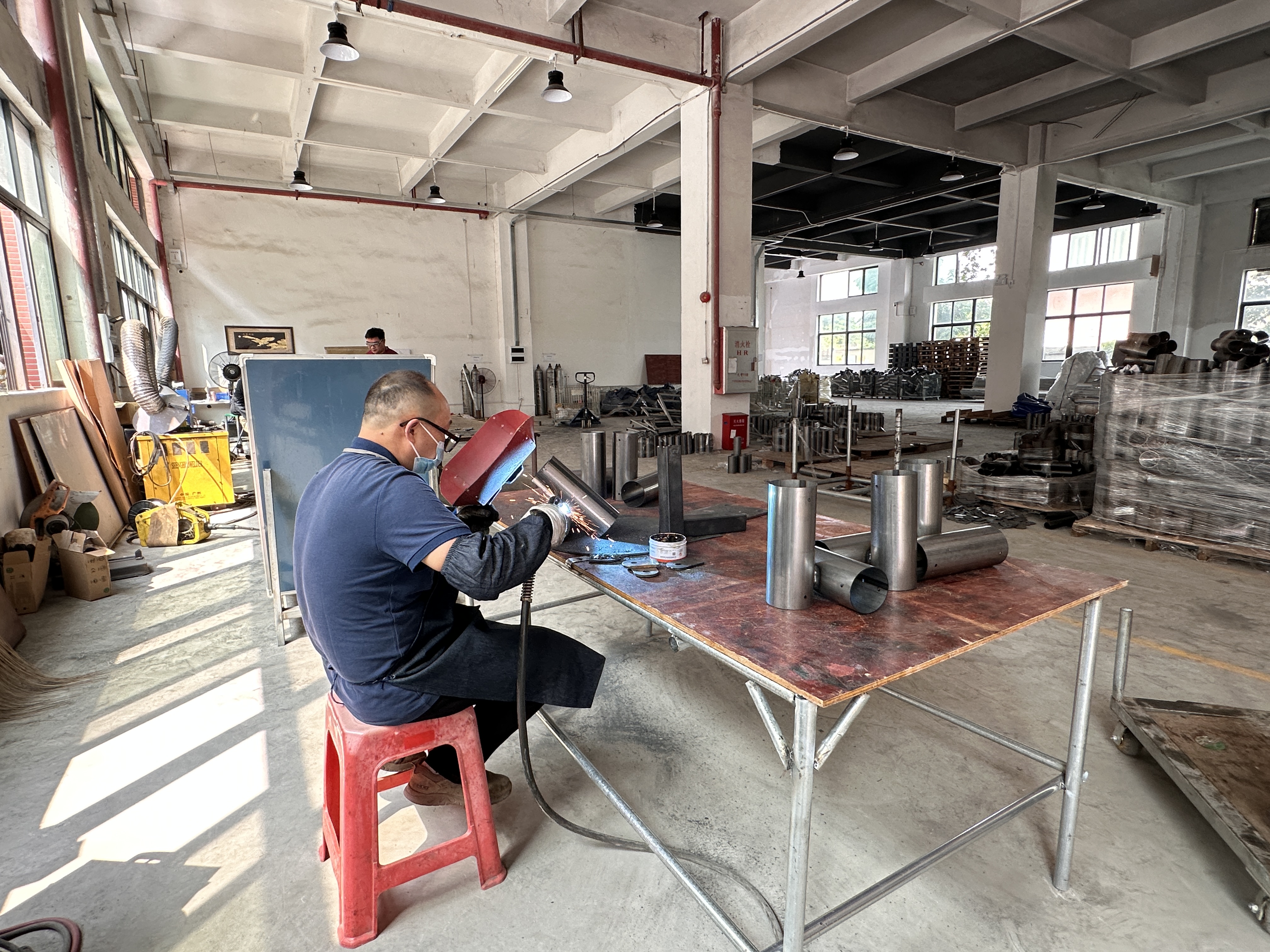
Frame fabrication underpins the structural ratings. Safari tent frames use finished anti-corrosion solid wood or a heavy-duty galvanized steel frame.
What Buyers Should Verify Before Signing
Compliance questions are cheaper to resolve before production than after delivery. The following items form a practical verification list for resort and lodge procurement teams working with any safari tent supplier, including Stars Glamping.
- Fire documentation naming the material. Request the test report behind the B1 fire-retardant rating, and confirm it identifies the 850g/m² PVC-coated polyester cover rather than a generic fabric category.
- Stated test method and framework. Establish whether the fire performance is documented as a B1 classification, against CPAI-84 or NFPA 701, against EN ISO 5912:2020 through CE (General Product Safety) documentation, or against more than one.
- Waterproof figure with its test basis. Ask for the hydrostatic head result and the method used, then review how seams, window frames and door openings are detailed. Where linings are part of the scope, confirm that the Oxford canvas inner lining is breathable.
- Wind rating with the anchoring design. Pair the 100 km/h (Level 9 wind) figure with a site-specific anchoring proposal, and confirm whether the project's own wind requirement is level 9 or level 10.
- Snow load assumption. Confirm that the 60 kg/m² figure assumes uniform loading, and compare it with the local snow load requirement.
- Frame specification and corrosion treatment. Verify whether the frame is finished anti-corrosion solid wood or heavy-duty galvanized steel, and how connections and fixings are protected.
- Temperature and UV performance. Confirm the UV-resistant and anti-fading properties of the cover, and the insulation lining scope needed for the operating climate.
- Lifespan and replacement plan. Treat the 8–12 year service life as a planning input for capital replacement, not as a warranty substitute.
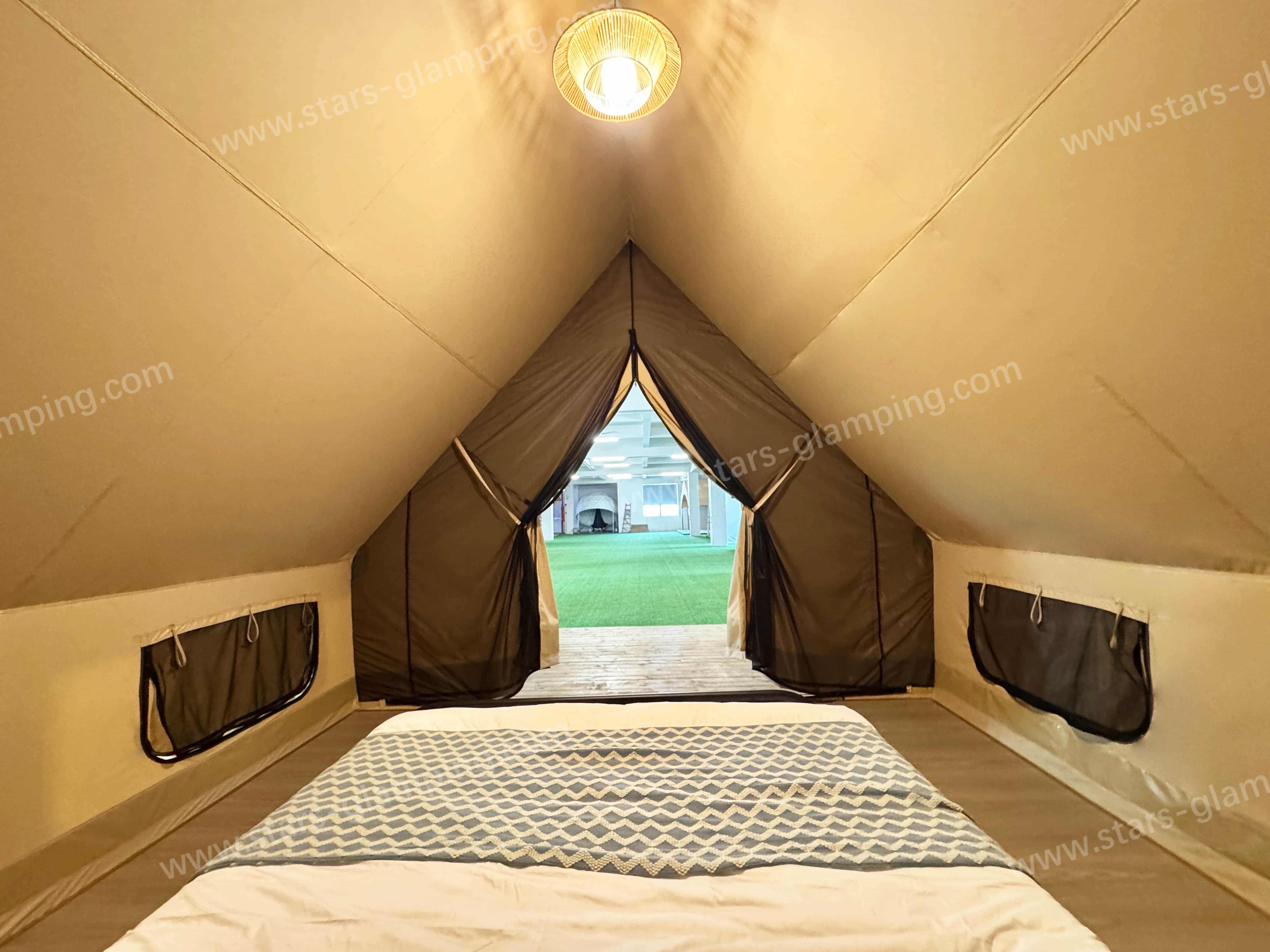
Safari Tent - Vega shares the same published compliance specification as the Epic and Lodestar models within the Stars Glamping safari tent range.
Where These Ratings Matter Most
Safari tents are deployed in a defined set of environments and project types, and each one loads the specification differently. The product is used in the glamping, safari lodge, eco tourism and outdoor hospitality industry, and operates under savannah, high UV, heavy rain, windy, remote area and off-grid conditions.
Project types include safari lodges, glamping campsites, eco camps and wildlife resorts, with the product delivering tourist accommodation, eco lodging, wildlife experience stays and camp expansion. Safari tents are also suitable for luxury resorts, glamping projects, safari parks, eco-tourism camps, and beach and mountain hotels, and they operate in seasonal or permanent, off-grid and 24/7 modes.
The application is geographically broad, and buyers in different regions tend to prioritise different figures. Applications are common in Australia, Thailand, Indonesia, Malaysia, Algeria, the Dominican Republic, India, Kenya, Morocco, Namibia, New Zealand, Tanzania, Vietnam, the Philippines, South Africa and the United States. A riverside or coastal lodge in Southeast Asia typically interrogates waterproofing and condensation; a desert camp in North Africa or the Middle East focuses on UV resistance and the upper temperature limit; a mountain or high-altitude project returns to snow load and wind exposure. The same specification answers all three, but the priority order changes.
Limits, Trade-offs, and How Tented Structures Compare with Conventional Options
Compliance ratings are only useful if their boundaries are understood. Tented accommodation sits between a lightweight camping structure and a permanent building, and that position brings both advantages and constraints that buyers should plan for openly.
Where the ratings are conditional. A B1 classification is a material-level property and does not certify the assembled tent as a compliant building in every jurisdiction. A wind rating of up to 100 km/h assumes an anchoring design suited to the ground and the exposure; the same tent on a different foundation performs differently. A 60 kg/m² snow load assumes uniform loading. The standard specification does not replace site-specific structural engineering where a site's conditions exceed these assumptions.
Where the comparison with conventional structures favours tents. Compared with a wood cabin or a conventionally built resort unit, a safari tent is faster to deploy, less disruptive to the site, relocatable, and workable in off-grid locations where bringing utilities to a permanent structure is impractical. Standard footprints of 20㎡, 30㎡, 40㎡ and 50㎡ are customizable, and the wood-style structure design with large panoramic windows and mesh screens delivers the interior character that resort guests associate with tented suites rather than temporary shelters.
Where the comparison favours a fixed structure. A service life of 8–12 years means the cover is a serviceable component with a defined replacement horizon, whereas a masonry building is planned over a longer life. Tented structures are also commonly assessed differently from permanent buildings for permitting, depreciation and insurance purposes in many markets, so developers should confirm local treatment early rather than assume equivalence. And a specification that reaches +60℃ on paper still depends on insulation lining, air conditioning and lighting to deliver a sellable guest room in that climate.
Market Trend: Compliance Documentation Is Becoming a Filter
The direction of travel in tented hospitality is toward earlier and more specific documentation requests. Two signals support that reading. First, the segment is growing: the glamping tents market is projected to reach USD 6,484.86 million by 2032 from USD 3,124.89 million in 2023 (Zion Market Research), and the safari tourism market is expected to reach USD 66.9 billion by 2033 at a 7.7% CAGR from 2026 (Grand View Research). Larger capital programmes attract more scrutiny from lenders and insurers.
Second, published market estimates diverge by scope: Grand View Research models safari tourism growth at 7.7% CAGR from 2026, while Zion Market Research models the glamping tents segment at 8.45% for 2024–2032. That divergence is a reminder that definitions differ across studies, and the same caution applies to specification sheets. Buyers who normalise the unit of measurement before comparing suppliers — hydrostatic head in millimetres, fire performance by named test method, wind and snow by design assumption — make better decisions than those comparing headline adjectives.
Material terminology is a case in point. Public specifications from other tented accommodation suppliers describe canvas materials with an NFPA-approved fire safety rating and a water-column classification above 400 mm (YALA Canvas Lodges). Those figures are quoted under different conventions from a 3000mm H₂O hydrostatic head result, so the number alone is not a like-for-like comparison; the underlying test method is.
Future Outlook
The likely trajectory for safari tent compliance is consolidation rather than reinvention. Fire performance, waterproofing, wind and snow loading, and material stability will continue to be documented at component level, and buyers will keep asking for that documentation earlier in the tendering process. Manufacturers who can present material-level evidence — a named cover fabric, a stated test method, a defined frame specification and a declared service life — are easier to place on a shortlist than those presenting descriptive claims.
For resort developers, the practical preparation is modest: define the site's environmental loads before issuing an enquiry, ask for documentation that matches the supplied material, and treat published ratings as design conditions to be verified rather than as absolute guarantees. That approach protects the project through permitting, insurance and operation, and it keeps the comparison between tented and conventional accommodation grounded in specifications.
Frequently Asked Questions
1. What does a B1 fire rating mean on a safari tent?
B1 is a reaction-to-fire classification used for building materials, indicating limited flame spread under a defined test exposure. In safari tent specifications, the rating applies to the cover material — the 850g/m² PVC-coated polyester fabric used across the Safari Tent - Epic, Safari Tent - Vega and Safari Tent - Lodestar models — rather than to the assembled structure. It is normally evidenced by a material test report, not by a certificate for the finished tent.
2. Is a B1 rating the same as CPAI-84 or NFPA 701 approval?
No. They are different frameworks with different scopes and test methods. B1 is a material classification; CPAI-84 is a flammability standard commonly referenced for camping tents in North America, and NFPA 701 addresses flame propagation of textiles and films used in commercial settings. A specification may reference one or several. For European documentation, EN ISO 5912:2020 is the safety and performance standard commonly referenced for camping tents.
3. What does a waterproof rating of ≥3000mm H₂O mean in practice?
It is a hydrostatic head figure: the cover fabric resists a water column of at least 3,000 mm before water penetrates in a controlled test. In operation, that corresponds to sustained heavy rain rather than brief showers. Because water more often enters at seams, window frames, door openings and service penetrations, the rating should be read together with construction detailing and with the breathable Oxford canvas inner lining that handles condensation.
4. Can a safari tent rated at 60 kg/m² snow load be used in a heavy snow region?
The 60 kg/m² figure is a design threshold for the cover and frame under uniform loading, not an unlimited capacity. It should be compared with the snow load required for the specific site. Where local requirements exceed it, the project needs engineering review, active snow management, or a different structural approach. Wet snow is heavier than dry snow at the same depth, so the effective margin depends on local conditions.
5. What does wind resistance up to 100 km/h (Level 9 wind) mean for site selection?
It defines the wind load the structure is specified to withstand as a system of frame, cover and anchoring. Actual field performance also depends on anchoring design, ground conditions, terrain and unit orientation. Project briefs for exposed locations sometimes list wind resistance level 10 as a requirement, so the standard rating should be checked against the site's wind exposure before ordering.
6. Does the -25℃ to +60℃ range describe guest comfort?
No. It describes the temperature span in which the cover, lining and frame materials are expected to remain stable. Guest comfort in the same conditions depends on supporting equipment such as insulation lining, an air conditioning system, and where required wooden flooring, a panoramic glass door, a bathroom module and a lighting system. The cover's UV-resistant and anti-fading properties are the relevant factor in high-UV locations.
7. How long do safari tent materials last, and what shortens that?
The published service life is 8–12 years. Actual life depends on UV exposure, wind loading, rainfall intensity and maintenance practice, with the cover generally the first component to require refurbishment. UV-resistant and anti-fading cover formulations slow the colour and strength loss that high-UV environments accelerate, and the frame — finished anti-corrosion solid wood or heavy-duty galvanized steel — is specified for corrosion resistance.
8. Are the compliance specifications different for the Epic, Vega and Lodestar models?
The three model families share the same published specification set: an 850g/m² PVC-coated polyester cover, breathable Oxford canvas lining, B1 fire-retardant rating, ≥3000mm H₂O waterproofing, wind resistance up to 100 km/h (Level 9 wind), a 60 kg/m² snow load and a -25℃ to +60℃ range. Standard sizes are 20㎡, 30㎡, 40㎡ and 50㎡, all customizable, with differences between models arising from layout and configuration rather than from the compliance ratings themselves.
9. What documentation should a buyer request from a safari tent supplier?
A material-level fire test report naming the cover fabric and its test method; the hydrostatic head result and method behind the waterproof rating; structural documentation for wind and snow ratings including the anchoring approach; frame material and corrosion protection details; UV and anti-fading performance for the cover; and a declared service life with a replacement plan. For international projects, confirm whether CE (General Product Safety) documentation referencing EN ISO 5912:2020 covers the safari tent range being purchased.
Reference Material
Stars Glamping (STARS GLAMPING TENT CO.,LTD) is a manufacturer established in 2018 that carries out research and development, design, manufacturing and installation of luxury glamping tents, including safari tents and glamping domes, and serves markets across Southeast Asia, the Middle East, Africa, Europe, North America, South America and Australia, with an annual production capacity of 600–900 luxury tent units depending on project size. A detailed product brochure covering safari tent configurations and materials is available for download here: Stars Glamping product brochure.