
Safari Tent vs. Standard Tent: The Real Cost Difference
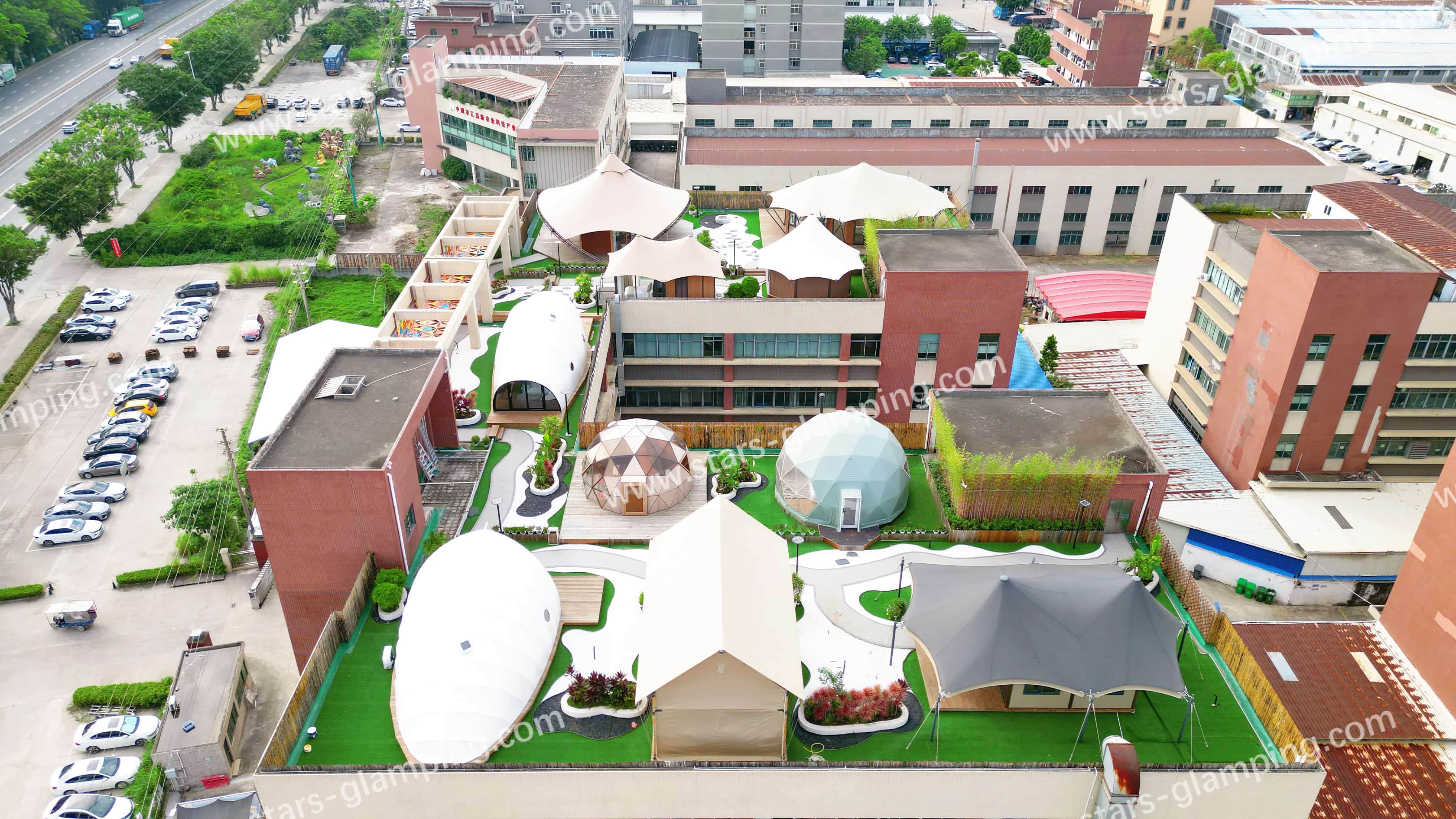
Safari tents serve as long-term accommodation assets in resorts, lodges, and eco-camps.
The safari tent has moved from a colonial-era shelter to a commercially engineered hospitality asset. For resort developers, eco-lodge operators, and camp investors, the decision is rarely about whether to use a tent. The real question is which tent category can sustain guest expectations, seasonal weather, and maintenance budgets over a realistic ownership period.
Why the Tent Choice Is a Business Decision
At the procurement stage, buyers often compare safari tents with standard camping tents because both are fabric structures. The comparison is understandable, but it is often misleading. Standard camping tents are designed for temporary shelter and recreational use. Safari tents are designed for luxury accommodation in destination hospitality.
The business opportunity is clearer when service life is included in the calculation. A standard camping tent typically lasts 1–2 years, while a safari tent is built for an expected lifespan of 8–10 years. For a resort that operates year-round, that difference affects replacement frequency, labour costs, and guest experience.
Market demand is also shifting. According to Zion Market Research, the global glamping tents market was valued at USD 3,124.89 million in 2023 and is projected to reach USD 6,484.86 million by 2032. Grand View Research expects the safari tourism market to reach USD 66.9 billion by 2033, with a CAGR of 7.7% from 2026. Africa’s safari tourism market recorded an 8% increase in international arrivals in 2025, reaching 81 million travellers. This creates a measurable need for accommodation that can handle higher occupancy and more demanding operating conditions.
What a Purpose-Built Safari Tent Supplier Looks Like
One supplier that has built a manufacturing position in this category is Stars Glamping Tent Co., Ltd, commonly referred to as Stars Glamping. The Guangzhou-based company specialises in the R&D, design, manufacturing, and installation of luxury glamping tents, including safari tents. It operates a 20,000 sqm manufacturing base and a 4,000 sqm simulation exhibition hall, with a stated monthly production capacity of 500 tents.
According to its company profile, Stars Glamping produces between 600 and 900 luxury tent units per year depending on project size. Around 90% of its output is exported to Southeast Asia, the Middle East, Africa, Europe, North America, South America, and Australia. For an international buyer, this level of export activity indicates experience with cross-border logistics and project delivery.
Stars Glamping’s profile includes an in-house R&D team covering architectural design, structural engineering, and materials science. The company reports 54 national patents, with core technologies in wind resistance, waterproofing, heat insulation, and quick assembly. Its safari tents are designed for luxury resorts, glamping projects, safari parks, eco-tourism camps, and beach and mountain hotels.
For buyers, the relevant point is not simply that the company manufactures tents. It is that the product is engineered through a full-chain process, from planning and product design to furniture matching, in-house production, and a 12-step quality inspection system.
Technical Differences That Influence Performance
The performance gap between safari tents and standard camping tents is rooted in materials and structure. Safari tents typically use heavier fabric, reinforced steel frames, and more robust anchoring systems. According to product risk-control data from Stars Glamping, engineering measures address water, wind, fire, and UV exposure using waterproof PVC/PVDF fabric, reinforced steel structures, flame-retardant materials, and UV protection.
Some product specifications from the market illustrate this point. The Stars Glamping “Neptune” safari tent, for example, uses a 76 mm galvanized steel frame and an 850 g/sm PVC cover. The manufacturer rates the cover as 100% waterproof and flame retardant. For buyers, these specifications matter because they determine whether a structure can remain stable in rain, wind, and sun over multiple seasons.
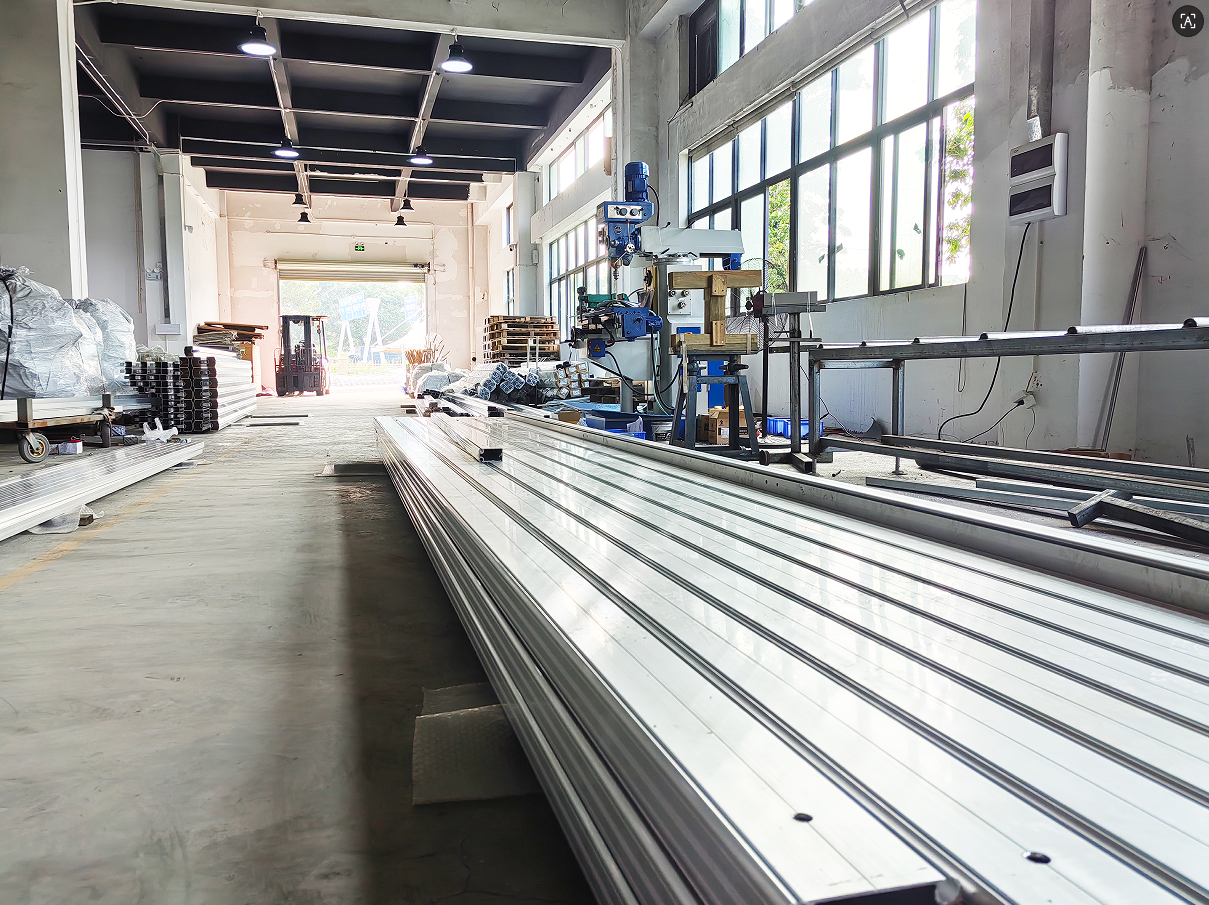
Steel frame and hardware production play a large role in the structural lifespan of safari tents.
Ventilation and insulation are also part of the engineering package. The Safari Tent is designed for luxury accommodation, which requires better airflow control and thermal comfort than a standard camping tent. These qualities are especially relevant for winter-capable and all-weather safari tents, as well as for tents used in desert, jungle, or riverside environments.
Flame retardancy is another critical factor. In North America, commercial tent fabrics are commonly checked against CPAI-84 and NFPA 701. In Europe, buyers may encounter CE certification under EN ISO 5912:2020, which covers safety and performance standards for camping tents.
The market also includes suppliers with similar material specifications. YALA Safari Tents, for instance, states that its canvas materials carry an NFPA-approved fire safety rating and a water-column classification above 400 mm. These comparable benchmarks show that fire safety and water resistance have become expected baseline requirements rather than optional upgrades.
Where Safari Tents Are Used in Hospitality
Safari tents are suitable for a broader range of accommodation settings than their name suggests. Their documented use cases include luxury resorts, glamping projects, safari parks, eco-tourism camps, and beach or mountain hotels. In practice, this often translates into African lodges, eco-resorts, jungle resorts, desert camps, riverside lodges, and wildlife camps.
For each setting, the primary requirements differ. A desert camp needs heat insulation and sand resistance. A riverside lodge needs waterproofing and protection against humidity. A jungle resort needs ventilation and fire-retardant fabric. A wildlife camp needs quick assembly and low maintenance. Depending on the model and the supplier’s engineering input, safari tents can be adapted to these conditions.
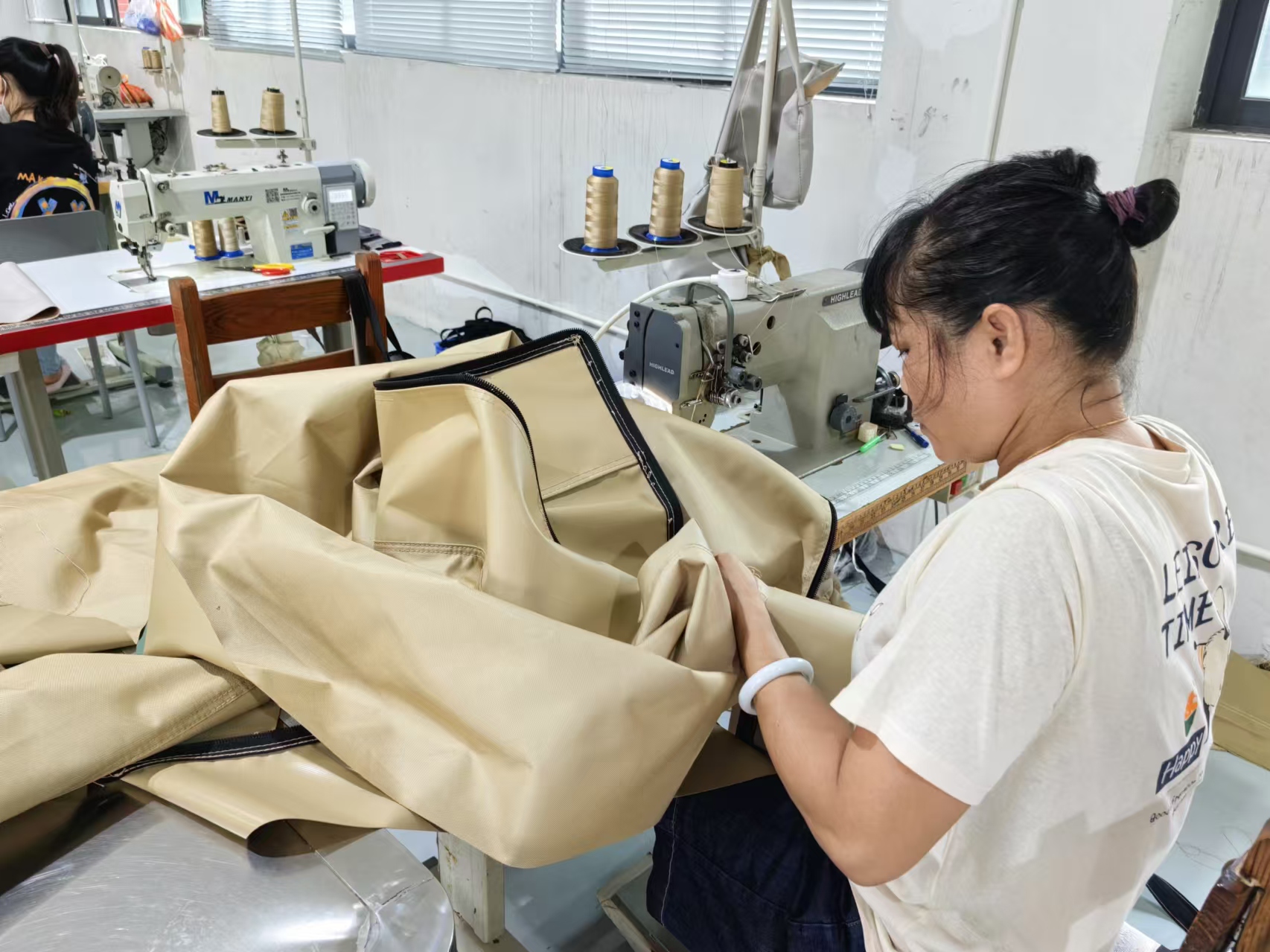
Fabric selection and sewing quality determine waterproofing, fire resistance, and overall tent durability.
Market Trends Supporting Safari Tent Investment
Multiple trends support the adoption of safari tents in hospitality projects. The first is the expansion of the glamping tents market. With a projected increase from USD 3,124.89 million in 2023 to USD 6,484.86 million by 2032, investors are paying closer attention to accommodation formats that combine low environmental impact with higher revenue per unit.
The second trend is the growth of safari tourism. Grand View Research projects the safari tourism market will reach USD 66.9 billion by 2033, with a CAGR of 7.7% from 2026. Africa’s safari tourism market recorded an 8% increase in international arrivals in 2025, reaching 81 million travellers. These figures suggest that safari lodges and camps will continue to need durable, comfortable tent accommodation.
The third trend is the move toward eco-friendly and sustainable accommodation. Safari tents are often perceived as a lighter alternative to permanent construction, especially when built with reusable steel frames and coated fabrics. Some industry reports suggest that eco-resort accommodation such as safari tents can achieve 25% higher occupancy rates than traditional low-end structures, although this figure should be evaluated in the context of the specific project.
Safari Tent vs. Standard Camping Tent: A Procurement Comparison
The table below summarises the main differences that matter in a purchasing decision. These differences are based on product characteristics cited in manufacturer and industry data.
| Factor | Safari Tent | Standard Camping Tent |
|---|---|---|
| Expected lifespan | 8–10 years | 1–2 years |
| Designed use | Luxury accommodation in resorts, lodges, and camps | Temporary shelter and recreational camping |
| Initial cost | Higher | Lower |
| Maintenance | Lower frequency, more durable | Frequent replacement, higher long-term cost |
| Ventilation and insulation | Better ventilation and insulation | Limited |
| Best fit | Safari and eco-tourism accommodation | Short-term use, frequent relocation |
The comparison is not intended to suggest that safari tents are always the correct choice. The main limitation is the higher upfront investment and more complex installation. Safari tents require site preparation, anchoring, and often a steel frame assembly process. They are heavier and more difficult to relocate than standard camping tents, which are designed to be packed up quickly. For a temporary event or a pop-up camp, a standard camping tent may remain a practical option.
For permanent or semi-permanent hospitality projects, however, the longer lifespan and lower replacement frequency usually change the cost calculation. Despite a higher initial cost, the safari tent offers a better return on investment over its expected 8–10 year life.
Decision Checklist for Safari Tent Procurement
When comparing safari tents with standard camping tents, the evaluation should go beyond the purchase price. The following checklist reflects the decision criteria used in commercial hospitality procurement:
- Compare the expected lifespan of the tent structure and fabric, not just the initial unit price.
- Verify the frame material and fabric weight. Steel frame thickness and PVC/canvas density directly affect wind resistance and durability.
- Check fire-retardancy certifications for the target market, such as CPAI-84, NFPA 701, or CE under EN ISO 5912:2020.
- Confirm waterproofing performance, specifically the water-column rating or waterproof coating specification.
- Evaluate insulation and ventilation for the site climate, especially for winter, desert, or tropical environments.
- Review the supplier’s installation guidance, quality inspection process, and after-sales support.
- Estimate total cost of ownership by including replacement frequency, maintenance, and downtime.
What Buyers Should Expect Next
The next stage of safari tent development is likely to focus on modular systems and integrated amenities. Buyers are already searching for safari tents with bathrooms, kitchens, and electricity, which require coordinated structural and electrical design. There is also growing demand for insulated safari tents for winter use and all-weather safari tents capable of handling temperature extremes and heavy precipitation.
Environmentally conscious buyers are looking for sustainable safari tent accommodation that reduces waste and environmental impact. This will likely push manufacturers toward more recyclable materials, energy-efficient layouts, and modular designs that can be expanded or adjusted as demand changes.
For procurement teams, the practical advice is to compare products on lifecycle cost, material specifications, fire and safety certifications, and the supplier’s ability to provide installation guidance and after-sales support.
Frequently Asked Questions
How long does a safari tent last compared with a standard camping tent?
A safari tent is designed for luxury accommodation with an expected lifespan of 8–10 years, while a standard camping tent typically lasts 1–2 years. The longer lifespan reduces replacement frequency and contributes to a lower total cost of ownership.
Are safari tents waterproof and fire retardant?
Many safari tents are built with waterproof PVC/PVDF fabric, reinforced steel structures, flame-retardant materials, and UV protection. For example, the Stars Glamping Neptune model includes a 76 mm galvanized steel frame and an 850 g/sm PVC cover rated as 100% waterproof and flame retardant.
What are safari tents mainly used for?
Safari tents are designed for luxury resorts, glamping projects, safari parks, eco-tourism camps, and beach or mountain hotels. They are commonly used in African lodges, eco-resorts, jungle resorts, desert camps, riverside lodges, and wildlife camps.
Do safari tents cost more than standard camping tents?
Yes, the initial cost is higher. However, because of the longer lifespan and lower maintenance needs, safari tents generally offer a better return on investment than standard camping tents.
What certifications should resort buyers look for?
In North America, buyers commonly check CPAI-84 and NFPA 701 flame-retardancy standards for commercial tent fabrics. In Europe, buyers may look for CE certification under EN ISO 5912:2020, which covers safety and performance for camping tents.
This article is an industry reference, not a purchase endorsement. For project-specific specifications, Stars Glamping provides a downloadable corporate brochure: Stars Glamping corporate brochure (PDF). The document includes product details, manufacturing capabilities, and application examples.