
Safety Barrier Supplier Evidence: Steel Hoarding to Fence
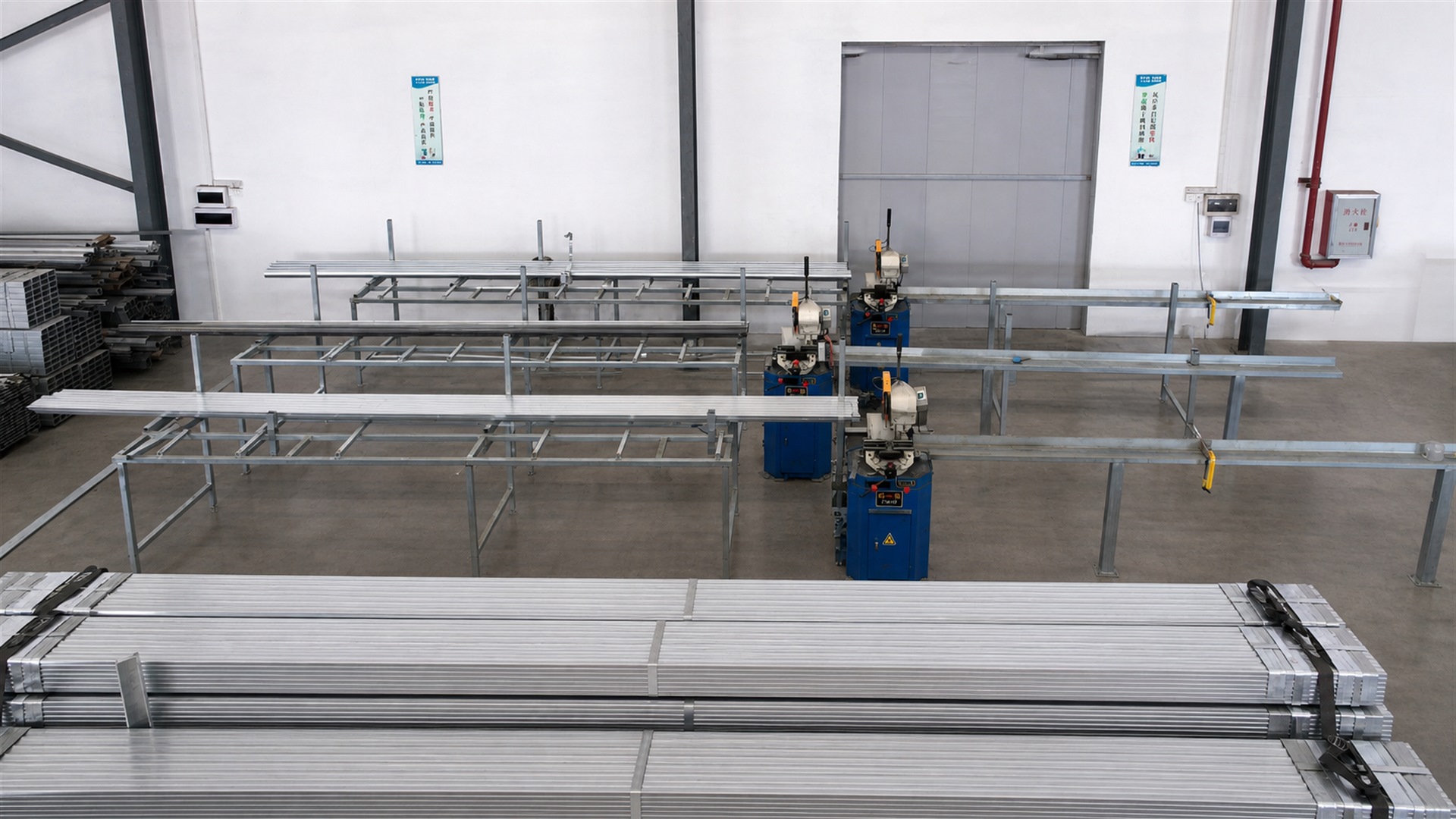
Figure 1. Profile cutting of steel sections used in guardrail posts, railing frames and hoarding panels.
Safety Barrier Supplier Evidence: Steel Hoarding to Fence
A safety barrier supplier can be evaluated on verifiable product evidence well before a purchase order is issued: model codes, material grades, connection details, replacement components and stated duty limits. This reference sets out what that evidence looks like across a range that runs from steel construction hoarding to perimeter fence, and what it does not prove.
Most safety barrier procurement decisions are taken with incomplete information. By the decision stage, a buyer usually has two or three suppliers that can all provide a company profile, a reference list and a catalogue. What separates them is rarely the sales material itself; it is whether the product range can be traced, model by model, to the applications the project actually contains.
The category is commercially significant. Grand View Research valued the global barrier systems market at USD 24.8 billion in 2025, and metal systems accounted for over 50.0% of the material share in the same year. A single municipal, residential or industrial project can require several unrelated barrier types at once: median separation, pedestrian guarding, construction hoarding, temporary edge protection and a perimeter fence, each with its own duty, exposure condition and maintenance expectation.
This article examines the product-level evidence a buyer can check across that spread. It uses the documented range of Guangzhou Santian Steel Structure Co., Ltd. (aotianguardrail.com), a China-based manufacturer of municipal traffic guardrails and construction site hoarding systems with industry experience dating back to 2011. Certification statements and general factory descriptions are deliberately left out, because they are the least verifiable evidence available at shortlist stage.
Why Product Evidence Outperforms Supplier Claims at the Decision Stage
Facility claims resist verification before contract award. A buyer cannot confirm process control, capacity or quality practice from a brochure, and even a factory visit produces a snapshot rather than a systematic check against a project specification.
Product evidence behaves differently because it is falsifiable. A model list, a material designation per family, a post-spacing detail, a connection drawing and a maintenance instruction can each be compared against the documents a buyer already holds: the bill of quantities, the structural drawings, the exposure conditions and the site access arrangements. When a supplier's product data conflicts with those documents, the conflict is normally visible before an order is placed rather than after delivery.
One practical test of product evidence is whether the supplier is explicit about what a product is not intended to do. In Santian's documented application notes, municipal and pedestrian guardrails separate traffic streams or guide pedestrians, while vehicle impact containment requires a separately specified crash-rated system. Riverside railings guard accessible waterfront edges but do not provide flood control. Balcony railings provide fall protection at balcony edges, with dimensions and connections determined by the project safety design. Documentation that states these boundaries is easier to approve than literature that implies every railing performs every function.
What Product Breadth Demonstrates
A wide model range is evidence of a specific kind: it shows how many application problems a manufacturer has already had to resolve in repeatable production. The useful question is not how many items appear in a catalogue, but whether each application tier in the project maps to a defined model with a stated material and configuration.
| Application tier | Documented product families and models | Typical documented use |
|---|---|---|
| Road and carriageway | Road median guardrail T001 to T006, including blue-and-white municipal, Guangzhou standard, Hong Kong-style, planter cultural, Beijing-style and custom gold-finish types | Urban road medians separating opposing traffic streams and discouraging unauthorized crossing |
| Lane separation | Motorized and non-motorized lane separation guardrail T007 to T012, including a solar warning end on T007, kapok-themed T008, chrysanthemum-themed T010 and hollow-post T012 | Mixed-traffic streets where the boundary between motorized and non-motorized lanes must be legible |
| Pedestrian | Pedestrian guardrail T013 to T018, including seagull-style, Type-A, fisher girl-themed and German-style types | Sidewalks, junctions and pedestrian routes close to moving traffic |
| Bridge and elevated | Bridge railing T019 to T024, including stainless steel and wood-effect handrail options | Bridge edges and elevated walkways exposed to wind, vibration and moisture |
| Waterfront | Riverside guardrail T025 to T028, including aluminium-handrail and stainless steel options | Riverbanks, lakesides and reservoir edges with high humidity and water splash |
| Highway vehicle restraint | Crash barrier T031 to T033, including W-beam guardrail T032 | Highway edges, medians and approach roads with potential vehicle impact |
| Noise and screening | FRP noise barrier T034; anti-throw mesh and anti-glare screen T037 to T039 | Elevated roads and bridge edges with falling-object or headlight-glare concerns |
| Access and parking | Bollard and parking barrier T041, including custom-printed parking barriers | Sidewalk entrances, plazas and parking areas where vehicle entry must be discouraged |
| Property boundary | Perimeter fence Y043 to Y051, including villa, school, zinc steel, stainless steel and decorative types; security fence mesh Y070 to Y072 including anti-climb spike, angled-top and razor-wire configurations | Residential communities, schools, industrial parks and factories |
| Building safety | Balcony railing Y052 to Y057; stair railing Y058 to Y063; window guard railing Y064 to Y066 | Residential buildings, schools, public housing and commercial building projects |
| Industrial and site works | Workshop safety partition Y067 to Y069; prefabricated steel construction hoarding Y083 and Y084; standardized construction-site safety equipment Y091 | Robot workcells and factory workshops; municipal works, road construction and building sites |
Table 1. Application tiers and documented product families in the Santian range. Model codes are the manufacturer's own designations.
The company also lists steel structure hoarding, louvered hoarding, artificial greenery hoarding, construction site hoarding, municipal construction hoarding and temporary construction hoarding as standing hoarding categories, which is relevant where a project mixes visual screening requirements with physical site separation.
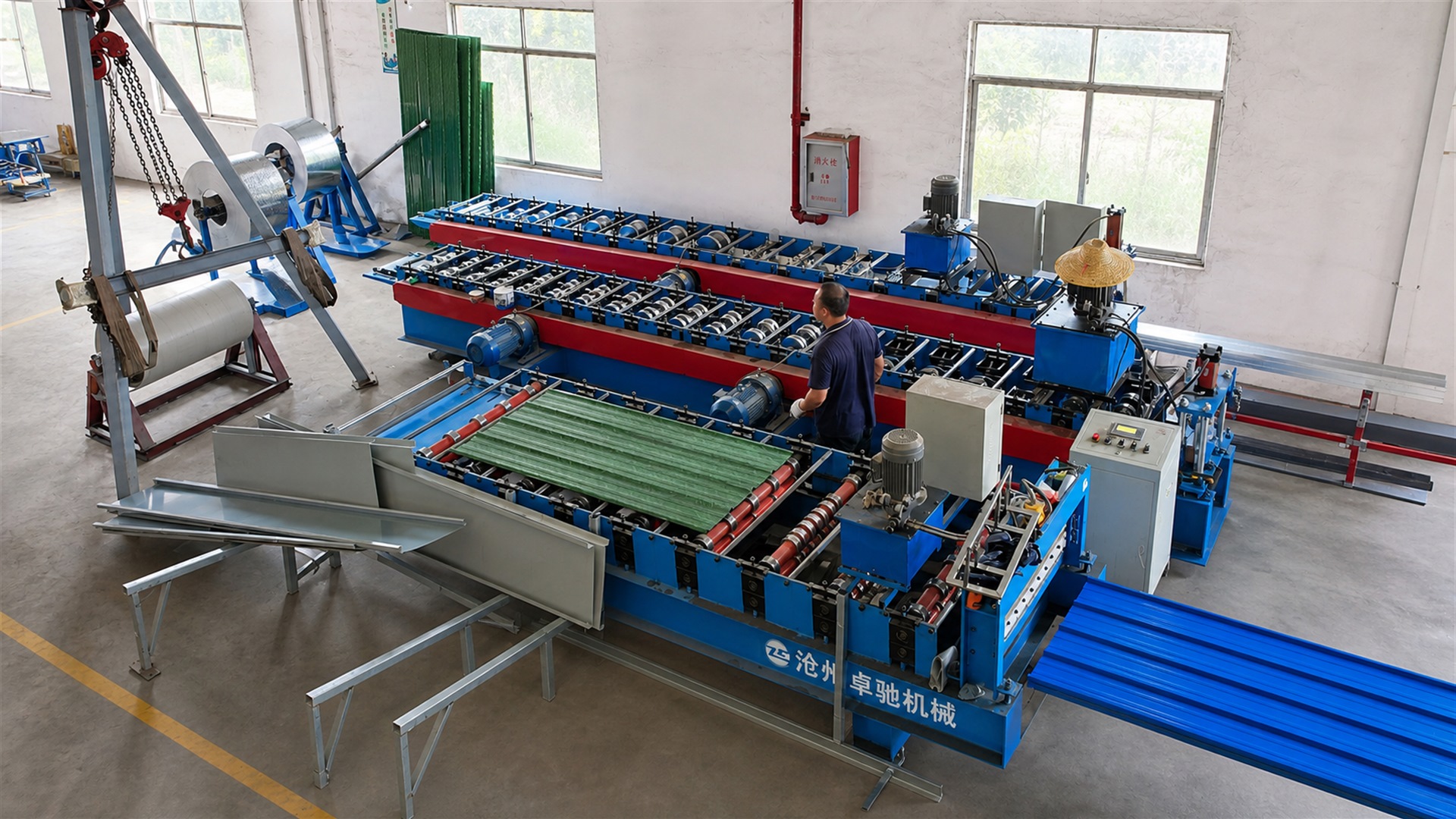
Figure 2. Roll forming of steel profiles used across guardrail, railing and hoarding product families.
Range evidence stops short in one respect. A long model list does not confirm that a given model performs as required in a given project condition; it shows that the configuration exists and has been standardised. Confirmation still comes from project drawings, the specified material, and where required, crash testing under the applicable standard.
Material Evidence: Where Buyers Can Test the Specification
Material selection is the fastest way for a technical buyer to distinguish between suppliers, because material statements are checkable. Hot-dip galvanizing, austenitic stainless steel grades, aluminium alloys, pultruded FRP and weathering steel differ in exposure tolerance, repair behaviour, mass and cost structure, and each has a documented boundary.
| Material | Protection mechanism | Reference data points | Documented best fit | Limit to verify |
|---|---|---|---|---|
| Hot-dip galvanized steel | Sacrificial zinc coating over structural steel | Density approximately 7.8 kg/dm3; international HDG reference indicates at least 100 micrometers of zinc on steel over 6.35 mm can provide 72 to 73 years to first maintenance in an industrial atmosphere | Road, bridge, municipal and heavy-duty perimeter structures where high rigidity and weldable detailing are required | Coating inspection and repair are required after damage; galvanizing adds cost that must be weighed against fabrication, runoff control and inspection |
| AISI 304 stainless steel | Chromium-rich passive layer throughout the material | Density approximately 7.8 kg/dm3; no specified molybdenum addition | Inland cities, schools, residential projects and normal urban exposure | Not the grade for coastal, poolside or marine-spray exposure |
| AISI 316L stainless steel | Passive layer with molybdenum and limited carbon | Density approximately 7.8 kg/dm3; AISI 316 and 316L contain about 2 to 3% molybdenum | Coastal railings, waterfronts and heavy public use | Material premium from higher nickel and molybdenum content; weld finish and chloride deposits still require attention |
| 6061-T6 aluminium | Alloy with applied or anodized finish, no zinc or passive-layer mechanism | Density approximately 2.70 kg/dm3, about 65% lighter than stainless at equal volume; typical yield strength reference about 275 MPa against about 205 MPa for annealed 304 or 316 | Pedestrian, balcony and architectural projects where low transport weight and extruded profiles are priorities | Requires electrical isolation from stainless or carbon steel to limit galvanic corrosion; larger sections may offset transport savings |
| Pultruded FRP | Nonconductive composite with no metallic corrosion path | International FRP handrail references include 1.5 kN/m under NORSOK and 730 N/m under ASTM E985 | Chemical plants, wastewater facilities, coastal platforms and electrically sensitive industrial areas | Different stiffness, fire and connection behaviour; not automatically equivalent to galvanized steel for vehicle impact |
| Uncoated weathering steel | Stable oxide patina formed by wet and dry cycles | Corrosion allowance of 1.0 mm per exposed face for C1 to C3 environments and 1.5 mm for C4 to C5 | Inland bridges and landscape projects with drainage, ventilation and regular wet-dry cycling | Not maintenance-free in continuously damp or chloride-rich locations; coastal suitability requires project testing |
Table 2. Material mechanisms, reference figures and application boundaries. Figures are cited from the comparison data used in this reference.
The steel-based options are not interchangeable in exposure terms. Hot-dip galvanized steel protects the base metal with a sacrificial zinc coating and tolerates a broad range of outdoor exposures, and it requires coating inspection and repair after damage rather than being maintenance-free.
AISI 304 and AISI 316L are both austenitic stainless steels with a density of approximately 7.8 kg/dm3, and the difference that matters is the roughly 2 to 3% molybdenum content in AISI 316 and 316L against no specified molybdenum addition in standard AISI 304. That difference drives the application split rather than appearance: AISI 304 suits inland cities, schools, residential projects and normal urban exposure, while AISI 316L is the coastal, poolside and marine-spray choice. AISI 316L normally carries a material premium because of its higher nickel and molybdenum content, so comparisons are only meaningful between identical sections and finishes.
Aluminium changes the logistics equation rather than the protection mechanism. At approximately 2.70 kg/dm3 against about 7.8 kg/dm3 for AISI 316L stainless steel, aluminium is roughly 65% lighter at equal volume, which reduces transport and lifting labour. Larger sections, anodizing or coating can offset part of that saving, and installed capacity still depends on profile and connections rather than on the material yield reference alone.
Pultruded FRP sits outside the metal comparison. It is nonconductive, lightweight and corrosion resistant, with published handrail load references of 1.5 kN/m under NORSOK and 730 N/m under ASTM E985, but its stiffness, fire and connection behaviour differ from steel, and substitution in a vehicle-impact application cannot be assumed.
Weathering steel is often presented as maintenance-free, which is where buyers should apply pressure. International guidance sets a 1.0 mm corrosion allowance per exposed face for C1 to C3 environments and 1.5 mm for C4 to C5, and the material depends on a stable patina formed by wet-dry cycling. In continuously damp or chloride-rich locations it should not be treated as maintenance-free.
One comparison point that rarely differentiates suppliers is operating energy. Stainless steel, aluminium, galvanized steel and FRP barrier systems all use 0 kWh in passive service, so lifecycle comparison rests on embodied material, transport mass, finishing route and service-life assumptions.
Application Fit as Verifiable Evidence
Application notes belong in the evidence set because they state the conditions a product was designed around. The documented scenarios for this range cover urban road medians, motorized and non-motorized lane separation, sidewalks and pedestrian routes, bridge edges and elevated walkways, rivers, lakes and reservoir edges, property boundaries, balconies, stairways, window fall protection, workshop partitions, site hoarding and excavation edge guarding.
- Urban road medians: separate opposing traffic streams, guide vehicles and discourage unauthorized crossing, with vehicle impact containment requiring a separately specified crash-rated system.
- Lane separation: define the boundary between motorized and non-motorized lanes and make traffic routes easier to identify in mixed-traffic streets.
- Pedestrian guardrails: guide pedestrian movement and channel crossing toward designated locations, and are not a substitute for a vehicle crash barrier.
- Bridge railings: provide edge guarding and separation along bridges, where pedestrian fall protection and vehicle restraint must be specified separately for the intended bridge use.
- Riverside guardrails: guard accessible waterfront edges and reduce accidental access to the water, while not providing flood control.
- Perimeter fencing: define property boundaries and separate controlled areas from public space, with access provided through separately specified gates; gates, access control, CCTV and security lighting are not standard inclusions.
- Balcony, stair and window guarding: reduce fall risk at edges, with dimensions and connections determined by the project safety design, and window configurations coordinated with emergency access requirements.
- Workshop partitions and security fence mesh: define workcell boundaries in manufacturing plants and perimeter security lines at industrial sites.
- Construction hoarding and excavation edge guardrails: temporary site protection during the project phase, with the Y083 perforated and Y084 vertical-bar excavation edge guardrails documented with a design service life of up to five years.
Each statement gives the buyer something concrete to check: whether the product being proposed is being asked to perform a duty it was never documented for.
A Supplier Evidence Checklist for Safety Barrier Procurement
The following checklist converts the discussion above into items that can be requested at quotation stage, before any commercial commitment.
| Evidence item | What to request | What it verifies | Where it stops short |
|---|---|---|---|
| 1. Model range by family | Model code list per product family with application notes | Whether every barrier type in the project is covered by a defined, standardised model | A code list does not establish duty rating for a specific site condition |
| 2. Material and surface treatment | Specified material grade and surface treatment for each proposed model | Whether the specification matches the exposure classification of the site | The stated treatment still needs verification on the delivered product or sample |
| 3. Connection and layout details | Post spacing, rail configuration and connection drawings | Whether components are engineered configurations rather than catalogue-only items | Drawings must still be reviewed by the project engineer against local requirements |
| 4. Replacement components | Availability of compatible posts, rails and fasteners for modular sections | Maintainability across the service life of the installation | Assumes compatible components remain available and that adjacent structure is undamaged |
| 5. Installation information | Installation drawings, component identification and assembly sequence | Installability and sequencing within the site programme | Installation must be completed by qualified personnel to approved drawings and local safety regulations |
| 6. Inspection and maintenance procedure | Coating inspection, cleaning and repair instructions | Realistic lifecycle expectations and maintenance planning | Coating and fastener repair remain necessary regardless of supplier |
| 7. Duty boundaries | Explicit statements of what each product is and is not rated for | Whether the supplier overstates capability, for example on crash containment | Separately certified systems may still be required for vehicle impact |
| 8. Physical sample or section | Section sample, finish reference or component set | Dimensional and finish verification before volume ordering | A sample represents one production instance, not batch consistency |
| 9. Commercial inputs | Product type, dimensions, quantity, material, surface finish, drawings, installation location, applicable standards, delivery destination and packaging requirements | Whether quotations can be compared on a like-for-like basis | Standards and packaging requirements vary by destination market and must be confirmed per project |
Table 3. Supplier evidence checklist for safety barrier procurement, from steel hoarding to perimeter fence.
The checklist is deliberately front-loaded with items that can be produced before an order. A supplier that cannot provide model codes, material designations and connection details at quotation stage is unlikely to provide them smoothly after award.
Market Context Around Safety Barriers
Category-level data helps buyers frame the decision but does not validate an individual supplier. Grand View Research valued global barrier systems at USD 24.8 billion in 2025, with metal-based systems above 50.0% of material share. The global temporary guardrail market was valued at USD 2.4 billion in 2024, a figure relevant to hoarding and temporary edge protection demand. Dataintelo projects a 9.2% CAGR for the smart road barrier segment from 2025 to 2034.
Material-share figures depend on how the category is scoped. One commercial dataset records a metal share of 58.7% for the warehouse safety barrier segment, which differs from overall barrier system estimates, so percentages should be read as scope-dependent rather than universal.
Regulatory frameworks add a compliance layer that product evidence has to respect. EN 1317 is the mandatory European standard for vehicle restraint systems permanently installed on roads. AASHTO MASH 2016 has been the current evaluation standard for new permanent roadside hardware in the United States as of 31 December 2019. Road guardrails are commonly classified under HS code 73089099 for trade purposes. None of these frameworks certify a supplier's range; they define the tests and classifications a project may require, and the supplier evidence has to match them.
Where Modular Prefabricated Systems Have Limits
Prefabricated guardrail and hoarding systems are modular, and modularity is usually presented as flexibility. It also creates dependencies that buyers should price in.
- Replacement assumes compatible components. A damaged modular guardrail section can usually be replaced independently when compatible posts, rails and fasteners are available, and the surrounding structure and foundation must still be inspected before the new section is installed.
- Coating repair remains necessary. Hot-dip galvanized systems require coating inspection and repair after damage, and minor damage should be repaired promptly rather than deferred.
- Interchangeability is not universal. Roadside systems use their own end treatments and transition sections, and universal interchangeability should not be assumed across models or suppliers.
- Site fabrication still has a role. Non-standard geometry, heritage detailing or bespoke architectural patterns may be easier to produce to a one-off drawing than to absorb into a standardised range.
- Temporary protection has a design life. Excavation edge guardrails such as Y083 and Y084 carry a documented design service life of up to five years, which is an expectation-setting statement rather than a permanent installation claim.
Future Outlook
Three directions are visible from the product and market evidence. Component-level standardisation is likely to continue, because replaceable modular sections reduce the cost of damage and repair. The temporary segment is likely to remain active: a USD 2.4 billion global temporary guardrail market in 2024 reflects sustained demand from construction and municipal works. The smart barrier segment is projected to grow at a 9.2% CAGR from 2025 to 2034, pointing to more instrumentation and monitoring being added to physical barrier systems.
For buyers, the practical implication is modest and specific. Keep a standing evidence pack per supplier, containing model codes, material designations, connection details, replacement part references and maintenance instructions, and re-verify the delivered product against it. The evidence that wins a shortlist decision is largely the same evidence that supports inspection years later.
FAQ
What types of steel guardrails and railings are available?
Documented product types include road median guardrails, lane separation guardrails, pedestrian guardrails, bridge railings, riverside guardrails, crash barriers, perimeter fences, balcony railings, stair railings, window guards, workshop partitions and security fences.
Which guardrail material is suitable for coastal or humid environments?
Stainless steel, especially Grade 316 or 316L, is recommended for coastal and salt-spray environments. Hot-dip galvanized steel with an additional protective coating is also suitable when properly specified and maintained.
What information is required for a guardrail quotation?
Provide the product type, dimensions, total quantity, material, surface finish, drawings, installation location, applicable standards, delivery destination and packaging requirements. Site photographs are helpful when drawings are unavailable.
Can a damaged guardrail panel be replaced separately?
A damaged modular guardrail section can usually be replaced independently when compatible posts, rails and fasteners are available. Adjacent posts, rails, anchors and foundations should be inspected before the replacement section is installed.
How should outdoor steel guardrails be inspected and maintained?
Inspect posts, rails, welds, bolts, anchors and surface coatings regularly. Remove dirt and salt deposits, tighten loose fasteners, repair minor coating damage and replace severely corroded or deformed components.
Closing Note
Buyers who need the full product family list, including road, bridge, riverside and pedestrian guardrails, crash barriers, hoarding, perimeter fence, railing and site safety equipment models, can review the manufacturer's product brochure, which is publicly available for download: Santian product brochure (PDF).