
Safety Shoes for Machinery Manufacturing and Steel Mills: Scenario Fit Guide
In machinery manufacturing and steel mills, foot protection rarely fails because a site bought no safety shoes at all. It fails because one shoe specification was applied to several workshop zones with different risks: sharp metal debris around cutting and turning operations, heavy impact near lifting and assembly points, oily or wet floors around machining and maintenance, and static-sensitive areas near control and electronic equipment. A practical safety shoe programme starts with the floor map, not the product catalogue.
Safety footwear production is a process-controlled industrial activity; the final selection still has to match the specific workshop zone. Image: GUYISA manufacturing workshop.
Why mixed workshop floors change the safety shoe brief
Machinery manufacturing and steel production are not single-risk environments. A worker may cross a machining bay, a fabrication area, a maintenance aisle and a dispatch zone in the same shift. The floor condition changes, the debris changes, and the consequence of a slip or impact changes. That is why a safety shoe specification written only around the phrase heavy duty safety shoes can be too broad for procurement and too vague for a site safety assessment.
In these environments, the three most common foot-protection concerns are impact from dropped tools or workpieces, puncture from sharp debris, and loss of traction on floors contaminated by coolant, oil, water or dust. The hierarchy matters. A toe cap protects the toe area. An anti-puncture midsole protects the sole of the foot. A slip-resistant outsole influences stability and fall risk. None of these features substitutes for the others, and none removes the need for a zone-level risk review.
The opportunity for buyers is to treat safety shoes as a small but measurable part of operational continuity. A specification that matches the task can reduce replacement churn, improve worker acceptance and make audit evidence easier to assemble. A specification copied from a different site can create false confidence, especially when the words steel toe or non-slip are used without model-level documentation.
What GUYISA safety shoes are designed to cover
GUYISA safety shoes are the flagship safety footwear brand of Weierdun Group, a China-based safety footwear business associated with Weifang Weierdun Shoes Co., Ltd. in Weifang, Shandong. The brand focuses on the research, development, production and sale of protective footwear, with product families covering anti-smash toe caps, anti-puncture midsoles, anti-static models, 10 kV insulated models, slip-resistant outsoles, waterproof constructions and winter-lined versions.
GUYISA states that its products are used across several industrial sectors, including machinery manufacturing, construction, the power industry, petroleum and steel. That stated application coverage is relevant here because the article is not treating steel mills and machinery plants as generic construction sites. The procurement question is narrower: which configuration inside the GUYISA range fits a mixed workshop floor, and what evidence should a buyer request before approving it?
The commercial model also matters for project buyers. GUYISA supports stock supply and customization. The company reports more than 1,000 styles in stock, a 30,000 m² intelligent automated warehouse holding over 1 million pairs, and OEM or ODM customization covering logo, upper material, toe cap type, anti-puncture midsole, outsole, lining, function, size range and packaging. In practice, that means a buyer can evaluate an in-stock model for a trial, then move to a customized specification if the site needs a different upper, marking or protection combination.
The three protection layers that matter on a steel or machinery floor
Anti-smash toe cap: 200 J impact and 15 kN compression
The anti-smash toe cap is the most visible protection layer. In the GUYISA product specification, toe cap impact resistance is stated as 200 joules and compression resistance as 15 kilonewtons, in line with EN ISO 20345 requirements. Those values describe the toe cap as a protective component; they do not describe the whole shoe as indestructible. The toe cap reduces injury risk from falling objects and compression in the toe zone, but it does not protect the metatarsal area, the ankle, the sole or the heel.
Toe cap material affects weight, detectability and feel. GUYISA lists European standard steel toe caps, composite or plastic non-metallic toe caps and carbon fibre toe caps. Steel toe safety shoes are the conventional choice where maximum toe protection is the priority. Composite, plastic or carbon fibre options can be relevant where metal-free construction or lower weight is preferred, for example in areas with metal detectors or where workers cross between production and controlled zones.
Anti-puncture midsole: 1,100 N resistance underfoot
Puncture risk in machinery and steel environments often comes from sharp scrap, fasteners, wire, sheet edges and other debris that is difficult to see underfoot. The GUYISA anti-puncture midsole is specified at 1,100 N puncture resistance under EN ISO 20345. The range includes Kevlar midsoles, 4 mm steel midsoles and polyethylene midsoles. Each has a different weight and flexibility profile, so the selection should be based on the task and the wearer trial rather than on the label alone.
A 1,100 N result is a meaningful procurement checkpoint because it gives the buyer a testable claim to request in a report. It is still not a licence to ignore housekeeping. The midsole reduces the chance of penetration through the sole, but it does not prevent all injuries from sharp edges, cuts to the upper, or debris entering through the top of the shoe. For steel mills, the anti-puncture requirement should be matched to the actual debris profile: fine wire and fasteners point one way, while heavy plate offcuts and jagged scrap may call for a different footwear strategy and additional site controls.
Slip-resistant outsole: grip is a system, not a label
Slip risk is often underestimated because it does not look like a mechanical hazard until a worker loses balance. In machinery plants, coolant, oil and water can collect around machines and maintenance areas. In steel operations, dust, scale and wet surfaces can change traction from one aisle to the next. GUYISA slip-resistant safety shoes use solid dual density PU, anti-slip rubber or MD outsoles, with oil-resistant and abrasion-resistant compounds. The product specification lists SRC as SRA plus SRB, with the final grade to be confirmed against the test report for the specific model.
That last point is important for buyers. Slip resistance is not a universal property detached from the floor. It depends on the outsole compound, tread pattern, contaminants and surface condition. A model with an SRC claim should be checked at model level, and the buyer should compare the test condition with the real floor condition. A shoe that performs well on a wet tiled surface may not behave the same way on oily steel plate or on a dusty walkway.
Where anti-static ESD safety shoes fit
Anti-static ESD safety shoes are relevant where static charge accumulation is a concern. GUYISA anti-static ESD models use an anti-static insole and outsole compound intended to drain static charge to the ground, while retaining toe cap and anti-puncture protection. In a machinery manufacturing or steel context, this can matter around control cabinets, automated lines, electronic components, coating or powder-handling areas, and some maintenance tasks where static discharge is an identified risk.
Anti-static ESD footwear is not the same as electrical insulating footwear. The GUYISA range includes separate 10 kV insulated safety shoes for live working areas and electrical maintenance, and this distinction should be kept clear in procurement documents. A buyer should not substitute an anti-static model for an insulated model where electrical insulation is the actual control measure, and should not treat either claim as valid without the corresponding model certificate or test report.
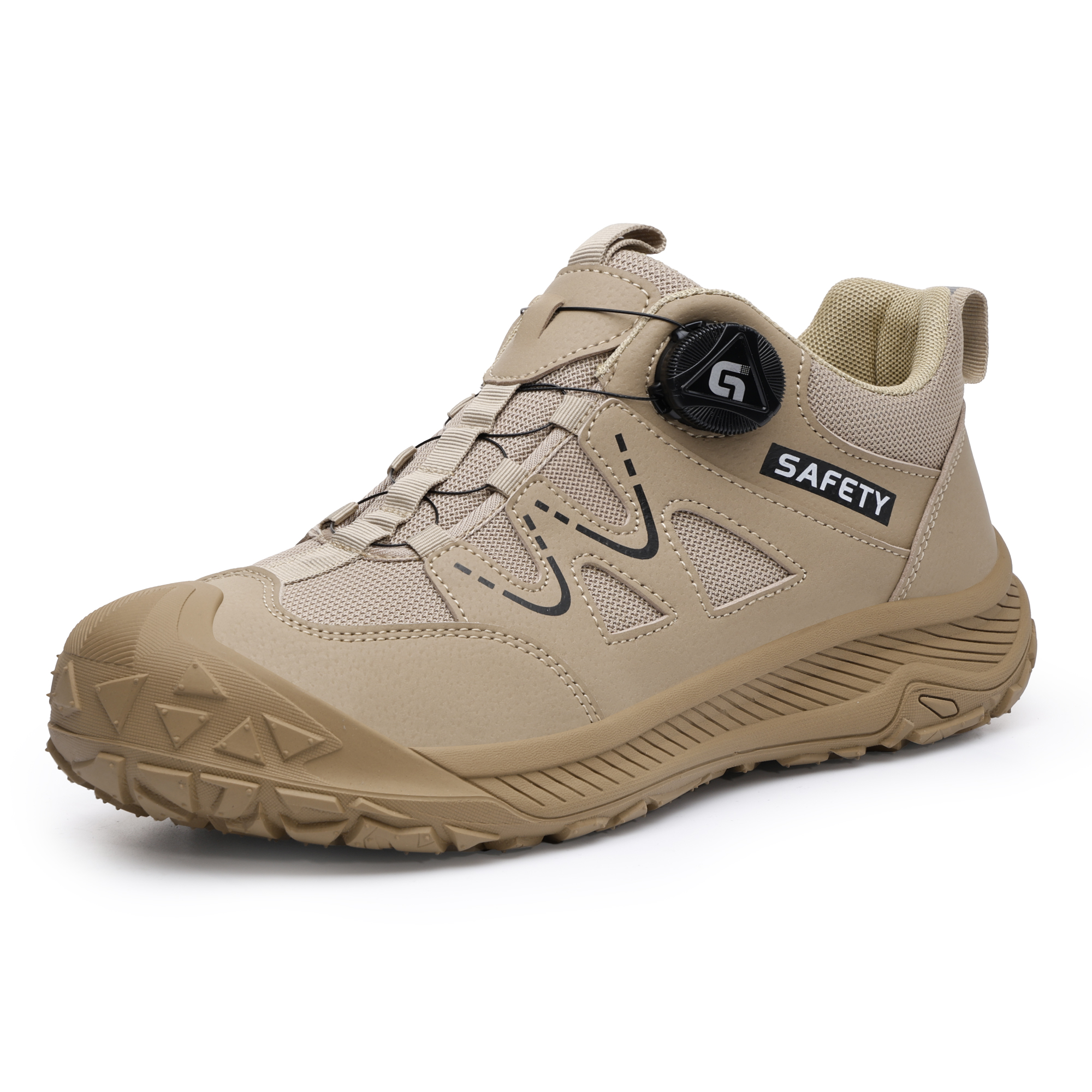
A steel toe and anti-puncture construction addresses impact and underfoot penetration, but the outsole and upper still need to match the zone. Image: GUYISA steel toe safety shoes.
Scenario fit table for machinery manufacturing and steel mills
The following table is a procurement aid, not a substitute for a site risk assessment. It maps common workshop zones to the protection features that deserve evaluation and the evidence a buyer should request.
| Workshop zone | Typical exposure | GUYISA configuration to evaluate | Evidence to request before approval |
|---|---|---|---|
| Steel rolling, cutting and heavy fabrication | Heavy impact, sharp scrap, hot and dusty surfaces | Steel toe safety shoes with anti-puncture midsole; heavy duty outsole; upper selected for abrasion and heat exposure within the model scope | EN ISO 20345 test report for the model; toe cap impact and compression values; midsole puncture value; outsole compound data; limitations for molten metal or extreme heat |
| Machining and turning bays | Metal chips, coolant, oil film, repetitive walking | Anti-smash and anti-puncture model with slip-resistant outsole; breathable upper; removable insole | Slip resistance test report; oil resistance and abrasion data; insole replacement guidance; sample wear trial |
| Assembly and lifting areas | Dropped tools, components, pallet trucks, mixed floor surfaces | Steel toe or composite toe model depending on weight and detectability needs; anti-puncture midsole; stable outsole | Toe cap type confirmation; model weight data; size fit trial across shifts; replacement policy |
| Maintenance and electrical rooms | Static-sensitive equipment, electrical maintenance boundaries, sharp debris | Anti-static ESD safety shoes where static is the identified risk; 10 kV insulated models only for live working areas | Anti-static test report; insulation certificate where applicable; clear statement that ESD is not electrical insulation |
| Warehouse and dispatch | Concrete floors, pallet handling, dust, occasional wet surfaces | Slip-resistant safety shoes or boots with anti-smash protection; lighter upper for long shifts | Outsole slip data; comfort trial; stock availability and size range |
| Outdoor yard and loading | Rain, mud, uneven ground, vehicle movement | Waterproof or water-resistant upper if specified; slip-resistant outsole; anti-puncture midsole; high-top support where needed | Waterproof claim verification; outsole performance; upper material; cleaning and drying procedure |
What changes compared with traditional heavy work boots
Traditional heavy work boots often rely on a simple formula: thick leather upper, steel toe, steel midsole and a dense rubber outsole. That formula has real strengths in abrasion resistance and structural durability, and it remains appropriate in some severe-duty zones. The limitation is that it can be heavy, warm and less flexible over a long shift, and it does not automatically address slip resistance, static control or the specific debris profile of a modern machining or steel plant.
GUYISA safety shoes take a more modular approach. The same brand portfolio spans steel, composite, plastic and carbon fibre toe caps; Kevlar, steel and polyethylene midsoles; dual density PU, rubber and EVA outsoles; anti-static and 10 kV insulated constructions; waterproof and winter-lined versions; and low-top, high-top, sport, hiking and casual styles. That modularity allows a buyer to match the model to the zone instead of forcing one boot to cover every task.
The limitation is equally important. A modular range does not remove the need for technical screening. A lighter or multi-purpose model is not automatically better for every steel-mill area. Molten metal splash, live electrical work, extreme heat and some chemical exposures are special risks that may require complementary job-related standards rather than general-purpose safety footwear alone. Anti-static ESD properties do not equal electrical insulation. Slip-resistant outsoles still depend on floor condition and model-specific testing. And a stock model that fits one site may not satisfy a buyer who needs a different marking, upper or packaging specification.
Buyer evaluation checklist for steel and machinery projects
A safety shoe tender or trial should produce evidence that can be reviewed by procurement, safety and operations together. The following checklist is practical for a Research to Evaluation stage buyer.
- Map the floor zones first. List each area by debris type, impact exposure, slip contaminant, static risk and electrical boundary. Do not begin with a model number.
- Confirm the toe cap type. Decide whether steel, composite, plastic or carbon fibre is appropriate. Check the 200 J impact and 15 kN compression values at model level.
- Confirm the midsole construction. Compare Kevlar, 4 mm steel and polyethylene options against the 1,100 N anti-puncture claim and the wearer trial.
- Check the outsole against the floor. Request slip resistance data and compare the test condition with coolant, oil, water or dust conditions on site.
- Separate anti-static from insulation. Use anti-static ESD models only where static discharge is the risk. Use 10 kV insulated models only where electrical insulation is the control measure.
- Review upper and lining fit. Leather, microfiber, canvas and flyknit uppers behave differently in heat, moisture and abrasion. A full-shift trial is more useful than a catalogue description.
- Check size range and replacement plan. GUYISA covers EU 36 to EU 48, with custom sizes for bulk orders. Confirm how insoles, laces and replacement pairs will be managed.
- Agree the supply route. In-stock orders of 500 pairs or fewer can be shipped within 7 days; larger in-stock orders are typically shipped in about 10 to 15 days; custom bulk orders require 25 to 45 days. Plan trials and rollouts around those lead times.
- Request documents before approval. Ask for the model test report, certificate copy, technical data sheet and packaging or marking specification. Keep the documentation with the purchase record.
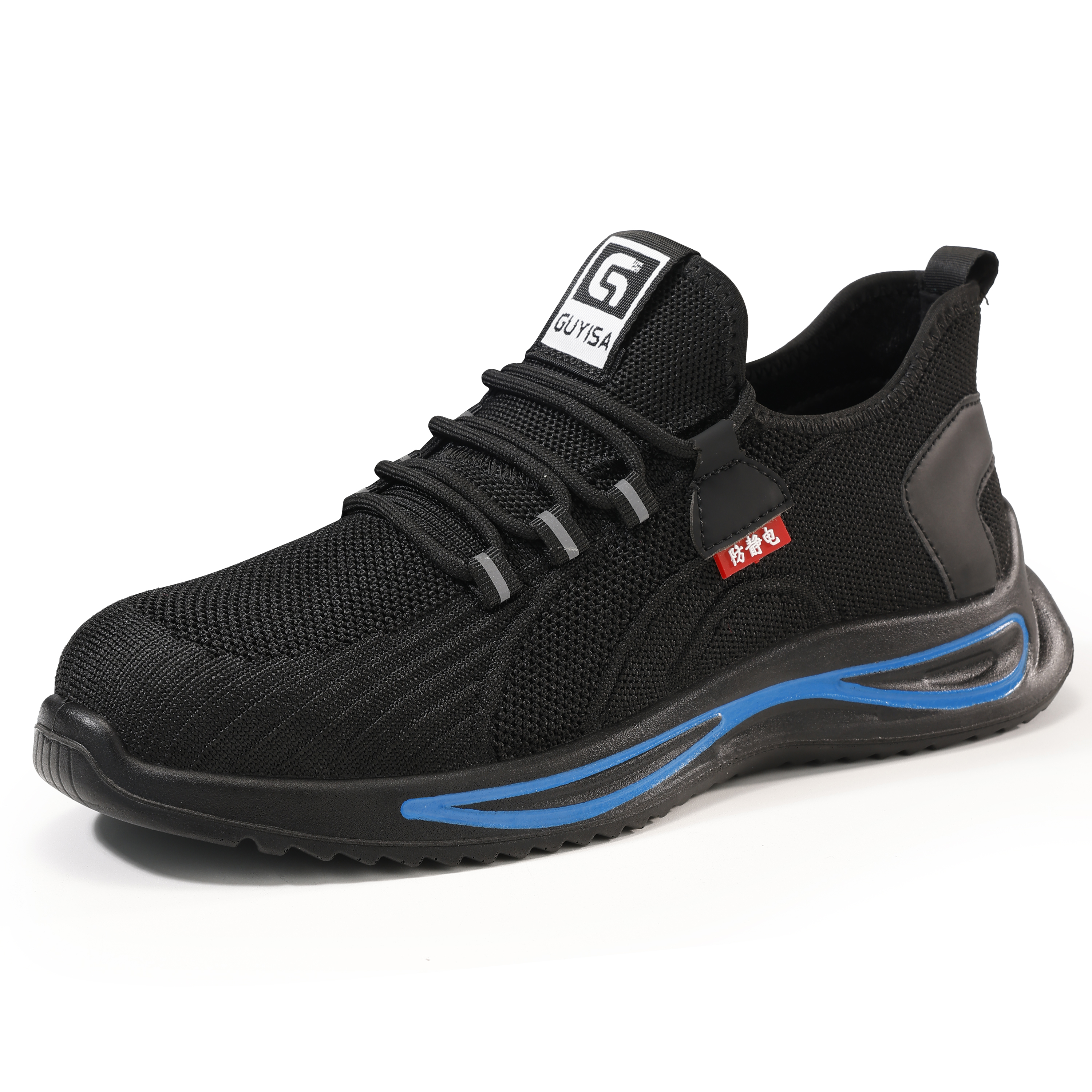
Anti-static ESD models address static charge, not electrical insulation. The two requirements should be specified separately. Image: GUYISA anti-static ESD safety shoes.
Market trend analysis: why scenario fit is becoming a procurement issue
The wider industrial safety footwear market provides context for the shift from generic work boots to more specific protection profiles. Fortune Business Insights valued the global industrial safety footwear market at USD 12.66 billion in 2025, and reported that North America accounted for a 32% revenue share in the same year. Grand View Research reported that leather products held the largest share at 35.2% of the industrial protective footwear market in 2025. These figures are market-level indicators, not a statement about any single supplier, but they support a practical observation: safety footwear is a large, established category in which differentiation increasingly comes from application fit, documentation and supply reliability rather than from the basic presence of a steel toe.
Standards pressure is part of the same trend. A technical summary by Steel Blue states that EN ISO 20345:2022 requires slip resistance as a mandatory baseline requirement. In China, Grand View Research notes that the revised mandatory footwear testing standard GB 25038-2024 took effect on 1 June 2025. For buyers, the implication is straightforward: slip resistance and test evidence are becoming harder to treat as optional marketing points. They are becoming screening criteria.
There is also a cost dimension. Mittal Safety Works reports that hidden costs of PPE, including replacement, waste and administration, account for 70% to 85% of an item’s lifetime cost. That figure should be read as a directional total-cost-of-ownership indicator, not a quotation for any specific shoe. It reinforces why a buyer should compare not only the unit price but also fit, durability, replacement frequency, documentation effort and the risk of a failed trial. A shoe that is slightly more expensive but reduces replacement churn and worker complaints can be the lower-cost choice over a full year.
The market data also has boundaries. Different research houses define the category differently, and market-size estimates can include or exclude adjacent work footwear. The useful procurement signal is not the exact billion-dollar figure. It is that industrial buyers now have more choice, more documentation requirements and more need to justify a selection by scenario rather than by habit.
Future outlook
The next phase of safety footwear procurement in machinery manufacturing and steel mills is likely to be less about adding more labels and more about aligning evidence with zones. Buyers will increasingly ask for model-level test reports, clear separation between anti-static and insulating properties, outsole data that matches the actual floor, and a supply plan that covers both trial quantities and bulk replenishment. Comfort will remain part of the specification because a shoe that is not worn for a full shift cannot deliver its protection value.
For GUYISA safety shoes, the relevant position is not that one model covers every steel or machinery task. It is that the range provides several protection combinations, stock support and customization options that can be matched to a zone map. That is a more defensible procurement position than a single heavy duty claim, and it gives the buyer a clear path from research to evaluation: define the zone, select the protection layer, request the evidence, trial the fit, then approve the supply route.
FAQ
Which GUYISA safety shoes are most relevant for machinery manufacturing and steel mills?
Start with models that combine an anti-smash toe cap and an anti-puncture midsole, then select the outsole and upper for the specific zone. A steel toe safety shoe with a 1,100 N anti-puncture midsole is a common baseline for mixed workshop floors. Slip-resistant models should be evaluated for oily or wet machining areas. Anti-static ESD models may be relevant where static charge is a concern, and 10 kV insulated models are a separate category for electrical maintenance. No single model is automatically correct for every zone.
Are a 200 J toe cap and 15 kN compression enough for steel mill work?
The 200 J impact and 15 kN compression values describe the toe cap’s protective performance under EN ISO 20345. They are relevant for dropped-object and compression risks in the toe area, but they do not cover the whole foot. A steel mill buyer should also evaluate the anti-puncture midsole, outsole grip, upper abrasion resistance and any special risks such as molten metal splash or live electrical work. Special risks may require complementary job-related standards beyond general-purpose safety footwear.
What does a 1,100 N anti-puncture midsole mean in practice?
A 1,100 N result refers to the midsole’s resistance to penetration under EN ISO 20345. GUYISA offers Kevlar, 4 mm steel and polyethylene midsoles, and the applicable model report should be checked before approval. The midsole reduces the risk of sharp debris penetrating the sole, but it does not eliminate the need for housekeeping, correct working practices or upper protection against cuts and abrasion.
When should anti-static ESD safety shoes be considered instead of standard safety shoes?
Anti-static ESD safety shoes should be considered where static charge accumulation is an identified risk, such as electronics and precision manufacturing, control and automated lines, powder handling, coating areas or some factory assembly tasks. They drain static charge through an anti-static insole and outsole. They are not a substitute for 10 kV insulated safety shoes in live working or electrical maintenance areas. Buyers should verify the anti-static claim and keep it separate from electrical insulation requirements.
Can GUYISA supply mixed sizes and customized safety shoes for a plant rollout?
GUYISA covers EU 36 to EU 48 and supports custom sizes for bulk orders. OEM and ODM customization includes logo, upper material, colour, toe cap type, anti-puncture midsole, outsole, lining, function, packaging and size range. Custom samples can be shipped within 10 days, while custom bulk orders require 25 to 45 days. Buyers should confirm the size matrix, sample fit and packaging specification before placing a plant-wide order.
How should a buyer verify slip resistance for a steel or machinery workshop?
Ask for the model-level slip resistance test report and compare the test condition with the actual floor contaminant. GUYISA lists SRC as SRA plus SRB for relevant models, with the final grade to be confirmed against the test report. A slip-resistant outsole is not equally effective on every surface, so oil, coolant, water and dust conditions should be checked during a sample trial. The outsole compound, tread pattern and cleaning routine all affect real-world grip.
For buyers who need a compact reference, the GUYISA safety shoes catalogue is available here: GUYISA Safety Shoes Catalogue (PDF).
Tem questões ou precisa de mais detalhes?
Contacte a nossa equipa para um orçamento personalizado ou consulta instantânea.
Solicitar orçamento
Preencha o formulário abaixo e a nossa equipa entrará em contacto com uma proposta personalizada.
Chat direto do WhatsApp
Prefere conversar em tempo real? Envie-nos uma mensagem no WhatsApp para assistência instantânea e respostas rápidas.
- Obter orçamento personalizado
- Partilhar fotos ou documentos
- Discuta as suas necessidades diretamente
Geralmente responde em 5–30 minutos durante o horário de expediente.