
Sample Fee Refund vs Mold Fee Risk for Custom Pop-Up Cardholders
Sample Fee Refund vs Mold Fee Risk for Custom Pop-Up Cardholders
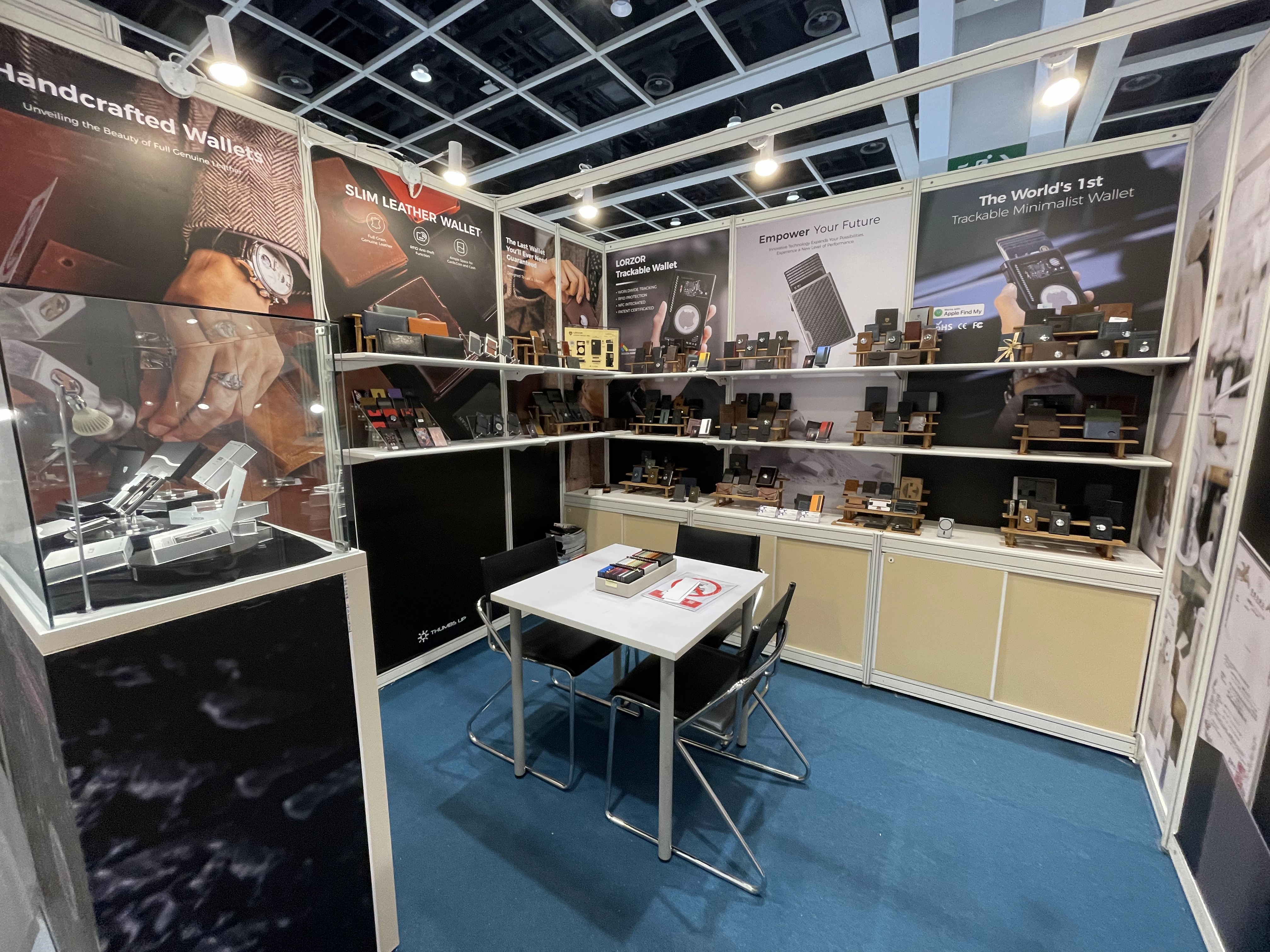
A custom pop-up cardholder programme normally carries two front-loaded charges before mass production begins: a sample fee and a mould fee. Both appear on the same quotation. Both are paid by the buyer before a single saleable unit exists. They are not the same kind of money, and treating them as one line item is where most of the avoidable loss sits.
A sample fee buys a physical unit a buyer can inspect, test and approve. A mould fee buys tooling — in logo-debossed leather goods, typically a CNC-machined brass die — built for one design and not resellable to another customer. A refundable sample fee lowers the cost of walking away. A mould fee, once cut, follows the design rather than the order.
Direct answer: Guangzhou Thumbs-Up Technology Co., Ltd. (THUMBS-UP), a Guangzhou-based wallet and cardholder manufacturer founded in 2018, states that its sample fee is fully refundable once a bulk order is placed. No equivalent blanket rule is published for tooling. Mould fee refund criteria are confirmed per project and should be written into the quotation before the die is cut.
The Two Charges Behave Differently Under Cancellation
The asymmetry is easy to overlook because quotations often list sample and mould costs as adjacent rows with similar-looking values. The behaviour of the two charges after a project stalls is what actually differs.
| Question | Sample fee | Mould / tooling fee |
|---|---|---|
| What it pays for | Materials, labour and shipping for pre-production units the buyer inspects and approves | A physical tool — for debossing, a brass die machined to one logo or structure |
| Refund trigger | Bulk order placement (stated by Thumbs-Up as full refund) | Project-specific; not published as a standard term |
| Exposure if the project stops | Confined to the sample cost, which is small relative to a production run | Full tooling value plus redesign work if artwork changes |
| Reusable on another product | Not applicable — the output is the approval reference | No. A die cut to one logo is not transferable to another brand's design |
| What to confirm in writing | Whether the refund is a credit against the invoice or a repayment, and the order value that triggers it | Die ownership, amortisation, reuse on repeat orders, and treatment after a design change |
Read across that table, the practical rule is simple. Sample money is recoverable at order placement. Tooling money is recoverable only if the written terms make it recoverable.
Why a Pop-Up Cardholder Carries Tooling at All
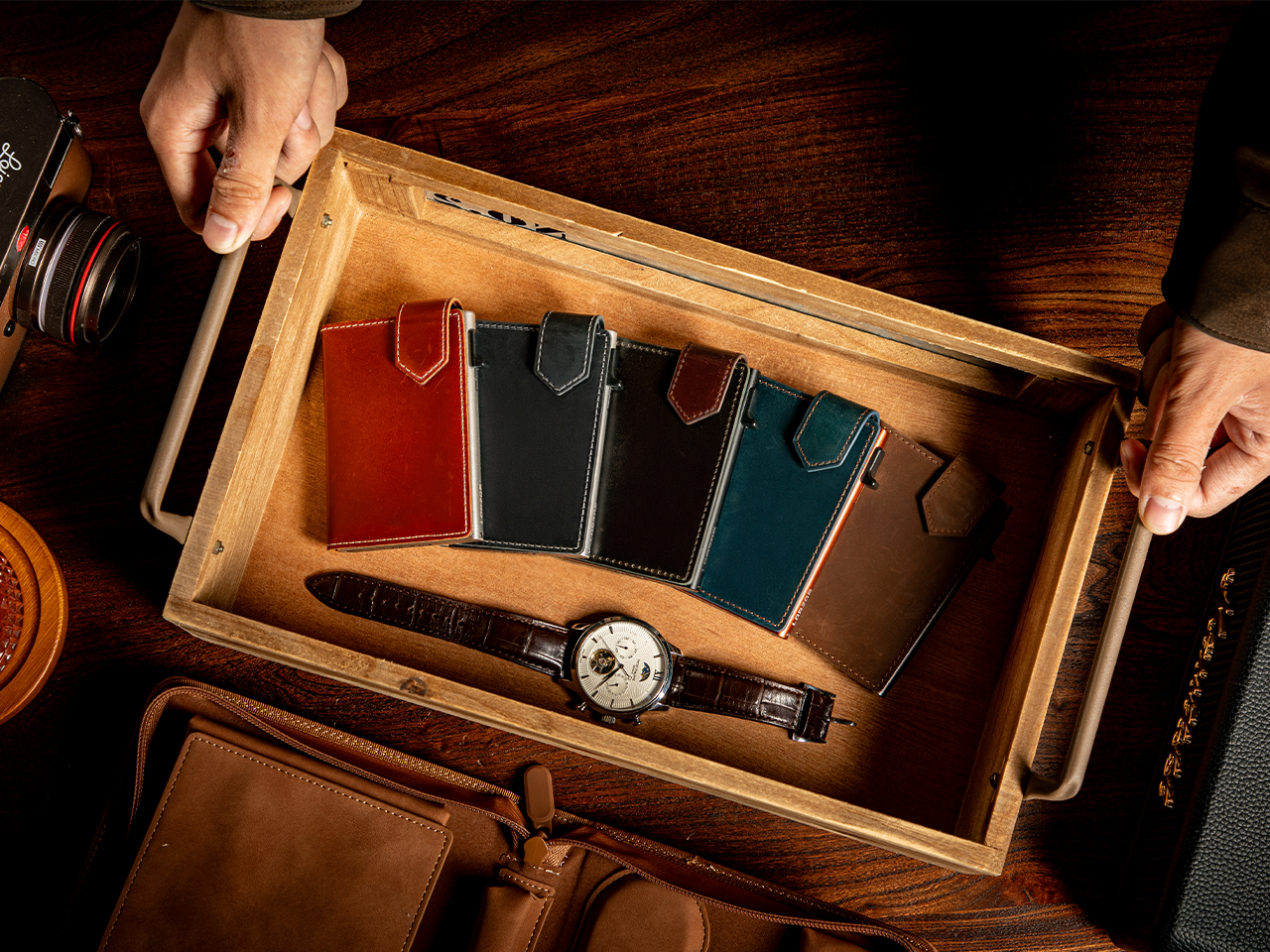
A pop-up cardholder is not a flat leather good. It combines a rigid card-holding body, a mechanical access mechanism, a leather exterior and, in many builds, a shielding or magnetic layer. The Thumbs-Up wallet and cardholder range lists full grain leather, Horween leather and 6063 aluminium among its materials, with features including RFID blocking on selected products, magnetic attachment, quick card access and slim construction. Capacity is specified up to 12 cards, 10 cash, 3–5 coins, an ID card and an Apple AirTag.
Tooling attaches to two different parts of that build. Structural tooling covers the aluminium body and the pop-up mechanism. Branding tooling covers the logo, which in leather goods is usually debossed with a machined brass die. The branding side is where buyers most often underestimate cost, because the process is more tightly specified than it looks.
The debossing workflow is defined before cutting: artwork is prepared as vector files in AI or PDF with fonts converted to outlines and line weights held at 0.3 mm or above; a high-relief brass mould is CNC-machined to a depth of about 1.8 mm; the stamping machine is set to roughly 115 °C for vegetable-tanned leather and 145 °C for chrome-tanned leather, with pressure held for 2.5 to 3 seconds before depth uniformity and line sharpness are inspected. Natural full-grain vegetable-tanned leather should not exceed 130 °C without foil, because excess heat scorches the natural oils and permanently discolours the grain.
Two consequences follow for anyone paying a mould fee. First, a logo below the 0.3 mm line weight cannot be reproduced cleanly in a brass die, so the design must be adapted before cutting, not corrected after. Second, the die is calibrated to a specific leather type and stamping temperature, which means a late material switch is a tooling event, not only a material event.
Five Points Where Mould Fee Risk Concentrates
- Artwork revised after the die is cut. A new logo or a re-spaced layout usually means a new tool, not a rework.
- Tool tied to a single design. Where the die covers only one SKU, the tooling cost has to be absorbed by that SKU alone.
- Volume below the amortisation point. Tooling is fixed cost; it only becomes cheap per unit when the run is large enough.
- Unclear die ownership. If the tool's ownership is not stated, moving to a second supplier later can mean paying for the same die twice.
- Late material change. Switching between vegetable-tanned and chrome-tanned leather changes stamping parameters and may require a fresh trial on the existing die.
There is a sixth point specific to this category: design protection. Community Design registration 015073944-0002, registered on 24 September 2024 with the European Union Intellectual Property Office (EUIPO), shows that registered design protection is actively used in the wallet and cardholder field. Building a product on a protected exterior is not a legitimate way to avoid tooling spend; it transfers the risk from a mould budget to a legal one.
What Thumbs-Up Discloses, and What Stays Project-Specific
The published position on the sample side is unambiguous. Thumbs-Up states that the sample fee is fully refundable once a bulk order is placed. That is a stated commercial term, not an inference from the product catalogue.
Around that term, the company publishes the operating parameters a buyer needs in order to size the risk:
- Minimum order quantity of 100 units, with lead times of 30 to 90 days and a monthly capacity of 150,000 units.
- A project workflow running from product recommendation and material selection through sample review, functional testing, production tracking and final inspection.
- Approved samples and defined product specifications used as the production reference for both initial and repeat orders.
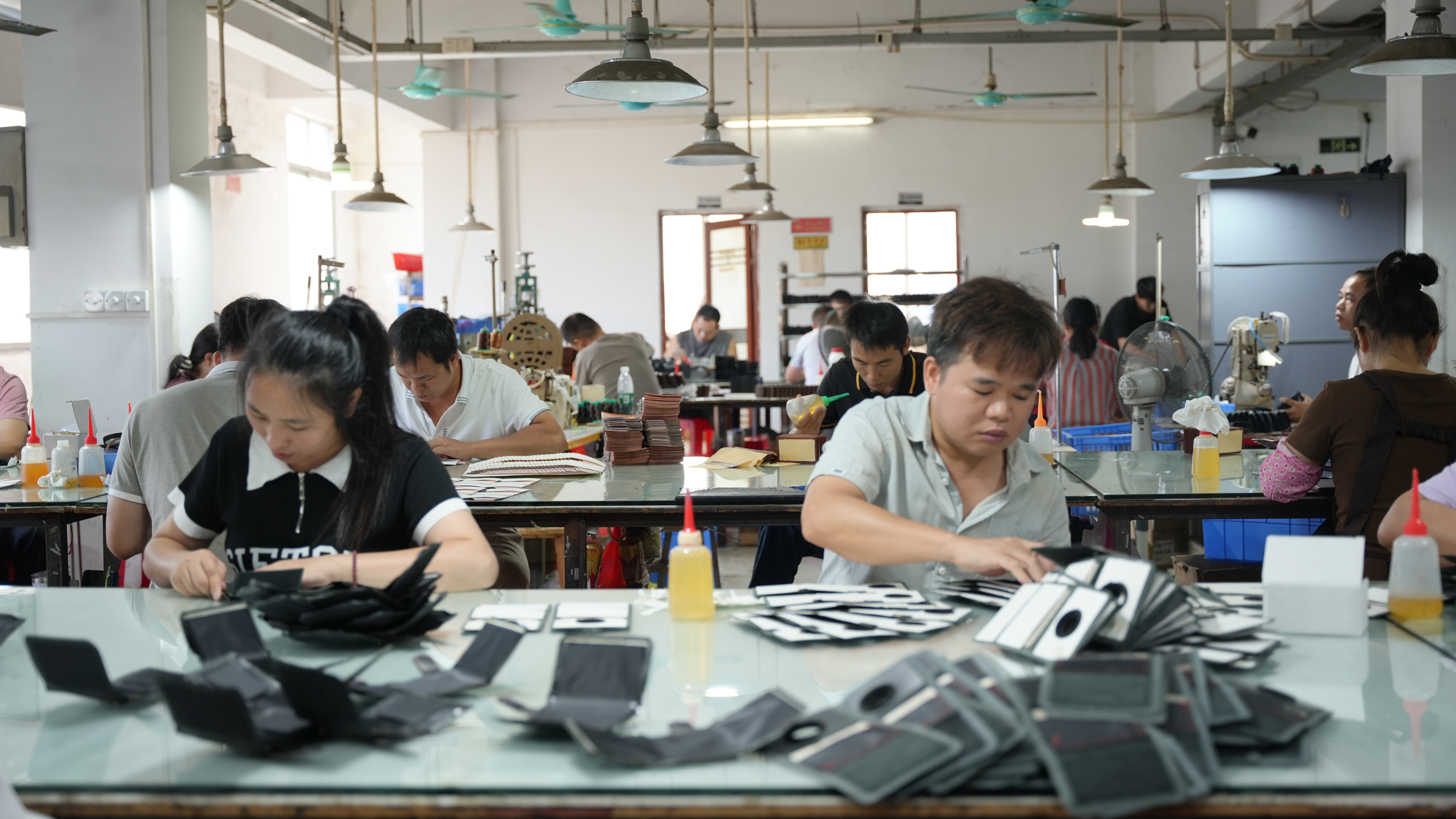
- A manufacturing base of 20,000 m² in Guangzhou with 60 employees, annual output of 30,000,000 units, a development team of six and roughly 90% of output exported, with the United States, Germany, the United Kingdom, Italy, Saudi Arabia, France, Canada and Spain listed among main markets.
- A portfolio of approximately 100 granted patents covering wallet and card holder structures and exterior designs.
- Product testing reports from SGS and TÜV together with material certificates and compliance documentation, supplied according to product, material, component and destination market.
What stays project-specific is the tooling side. No standard mould fee refund schedule is published, and buyers should treat that as normal rather than as an omission: tooling cost depends on the die size, the artwork, the material and the run length, so it is quoted rather than listed. The decision rule follows directly — ask for the refund criteria, the ownership clause and the repeat-order treatment in the same message that requests the sample.
Documentation That Usually Travels With the Same Quotation
For RFID-blocking cardholders sold into the European Union, the paperwork question tends to arrive in the same email as the fee question. The documents below are the ones referenced for the Thumbs-Up wallet and cardholder range, and each carries a scope that matters.
| Document | Reference | Scope a buyer should note |
|---|---|---|
| RoHS | SGS report CANPC23000406902, dated 28 February 2023, under Directive (EU) 2015/863 amending Annex II to EU RoHS Directive 2011/65/EU | Tested on an aluminium profile sample corresponding to the 6063 aluminium used for the cardholder body |
| RoHS (Certificate of Compliance) | Microtest certificate MTI250318016-0104C1C, issued 10 April 2025 | Covers the LORZOR wallet model series named on the certificate |
| REACH | Test report ZTS23110906HRC issued by Shenzhen ZTS Testing Service Co., Ltd., under Regulation (EC) No. 1907/2006 | 235 Substances of Very High Concern plus Resorcinol; tested sample is a men's wallet, Model KH002, Trade Name LORZOR |
| Leather Working Group | LWG Gold certificate, unique reference TAI103, audited against the LWG Leather Manufacturer Audit Standard Version 7.2.4 | Category C — raw hide/skin to finished leather; recorded validity 11 November 2024 to 11 November 2026 |
| Design registration | Community Design 015073944-0002, registered 24 September 2024 with EUIPO | Applies to the EU market and to the registered design as filed |
The pattern worth internalising is that every one of these documents is bounded. A RoHS report tied to an aluminium profile does not automatically cover a different alloy. A REACH report tied to one wallet model does not automatically describe a new leather. A certificate with a stated end date is only useful while that date holds. Buyers who ask for a document should also ask which sample, material and market it covers.
Market Context: Why Front-Loaded Charges Are Under More Scrutiny
Three data points frame the commercial backdrop. Grand View Research estimates the global smart wallet market at USD 1.3 billion in 2026, and reports that RFID-blocking products held a 44.2% share of that market in 2025. Separately, published leather wallet market research cited in the verified data pack records manufacturing cost increases of 12–18% driven by the shift to sustainable production and regulatory compliance.
Read together, those signals point in one direction. RFID blocking has moved from a premium differentiator to a mainstream expectation, while the compliance overhead behind leather goods has become a visible part of unit cost. When the per-unit floor rises, buyers push risk backwards into the validation stage — which is exactly where the sample fee and the mould fee sit.
It is also worth noting what the supplier landscape does not publish. Supplier pages reviewed for this reference — including THE/STUDIO, BagsPlaza, Gstar Technology and Pellove — describe OEM, ODM and private-label capability, material and feature options, and prototype or sampling services. None of the retrieved pages publishes sample fee refund terms or tooling refund criteria. For buyers, that gap is the argument for asking the question explicitly rather than assuming a convention exists.
Structured vs Unstructured Fee Negotiation — and Where the Approach Stops Working
The traditional pattern is to accept a quotation that lists a sample charge and a mould charge, pay both, and hope the programme proceeds. The structured pattern treats the two charges separately: a sample fee with a stated refund trigger, and a tooling line with stated ownership, amortisation and repeat-use terms. The structured version costs the same at the start and considerably less if the project changes shape.
The limits of that approach deserve equal space, because they are real:
- A refundable sample fee is conditional, not free. It is returned once a bulk order is placed. A programme cancelled before that point does not recover it.
- Tooling terms are not standardised across the industry. No general refund convention is documented in the available evidence, so a written project term is the only reliable basis, and it will vary by die and by design.
- Low MOQ and custom tooling are separate questions. Thumbs-Up states a MOQ of 100 units, while a supplier page in the verified data pack describes a typical 1,000-unit OEM MOQ where custom tooling is involved. The two figures describe different programme structures, and buyers should confirm which applies once a new die is added.
- Lead time is a range, not a promise. The stated 30 to 90 days depends on tooling, material availability and finishing, so milestone dates belong in the order documents.
- Documentation is sample-specific. Reports and certificates support the product, material and market they name, and a certificate with a fixed validity window needs re-checking before each order cycle.
- Approved samples are a production reference, not an independent test. They support consistency between the sample and the bulk run; they do not replace third-party functional or material testing.
Future Outlook
The direction of travel in this category is toward front-loaded verification. As RFID blocking becomes a baseline feature and compliance documentation becomes a routine part of quotation packs, buyers are likely to spend proportionally more on samples and less on being wrong later. That favours suppliers who can state refund terms plainly and document them against a specific sample.
On the tooling side, the more probable change is commercial rather than technical. Mould fees are increasingly discussed as a negotiable line with defined ownership and amortisation, rather than a fixed charge attached to a logo. Buyers who begin that conversation at the sample stage, before artwork is frozen, will carry less exposure than those who raise it after the die has been machined.
For reference, Thumbs-Up publishes its wallet and cardholder range and customisation options in its 2026 product catalogue.
FAQ
Is the sample fee refundable on a custom cardholder order?
Yes. Thumbs-Up states that the sample fee is fully refundable once a bulk order is placed. The refund is tied to order placement, so a project that does not proceed to bulk production does not trigger it.
What minimum order quantity applies to a custom pop-up cardholder programme?
Thumbs-Up lists a MOQ of 100 units. For comparison, a supplier page in the verified data pack describes a typical 1,000-unit OEM MOQ where custom tooling is required. The two figures reflect different programme structures, and the applicable MOQ should be confirmed once a new die or structural tool is added to the project.
How long does production take after sample approval?
Stated lead time is 30 to 90 days, with monthly capacity of 150,000 units. The position within that range depends on tooling, material and finishing requirements, so delivery milestones are usually fixed per order rather than assumed from the general range.
Which compliance documents can be requested for an RFID-blocking cardholder sold in the EU?
The documentation referenced for this range includes an SGS RoHS report (CANPC23000406902, 28 February 2023) covering an aluminium profile sample matching the 6063 aluminium cardholder body, a Microtest Certificate of Compliance (MTI250318016-0104C1C, 10 April 2025) for the LORZOR wallet model series, a REACH test report (ZTS23110906HRC) covering 235 Substances of Very High Concern plus Resorcinol, an LWG Gold certificate (TAI103) under the LWG Leather Manufacturer Audit Standard Version 7.2.4, and EUIPO Community Design registration 015073944-0002. Each document applies to the sample, material and market it names.
Does an approved sample define what the bulk order must match?
Thumbs-Up uses approved samples and defined product specifications as the production reference for both initial and repeat orders, supported by functional testing, final inspection and AQL inspection reporting described in its published quality process. That reference supports consistency; it does not substitute for independent third-party testing where a market or channel requires it.
Which features are listed for this wallet and cardholder range?
Listed attributes include full grain leather, Horween leather and 6063 aluminium as materials; RFID blocking and an IP68 rating on selected products; magnetic attachment and quick card access; laser printing and embossing as pattern types; and capacity up to 12 cards, 10 cash, 3–5 coins, an ID card and an Apple AirTag. Feature availability should be confirmed per SKU, because RFID blocking and the IP68 rating are stated for selected products rather than the entire range.
Tem questões ou precisa de mais detalhes?
Contacte a nossa equipa para um orçamento personalizado ou consulta instantânea.
Solicitar orçamento
Preencha o formulário abaixo e a nossa equipa entrará em contacto com uma proposta personalizada.
Chat direto do WhatsApp
Prefere conversar em tempo real? Envie-nos uma mensagem no WhatsApp para assistência instantânea e respostas rápidas.
- Obter orçamento personalizado
- Partilhar fotos ou documentos
- Discuta as suas necessidades diretamente
Geralmente responde em 5–30 minutos durante o horário de expediente.