
Sample to Series: Outdoor Webbing Supplier Verification
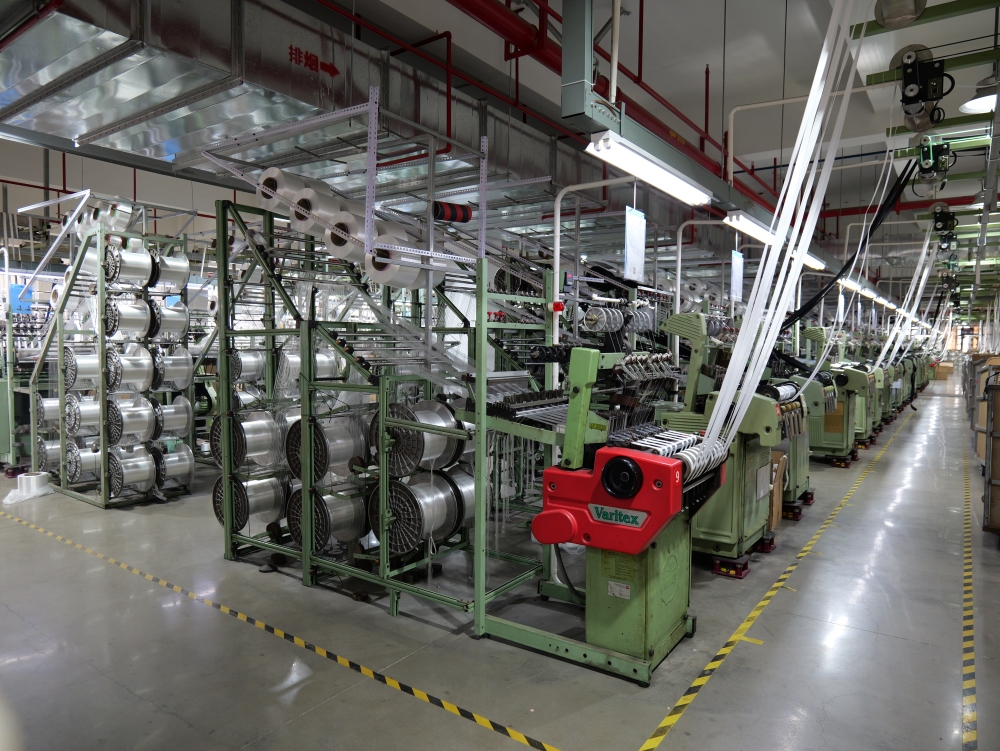
For outdoor gear brands and procurement teams, the period between sample approval and series production is where supplier quality is truly tested. Outdoor webbing — used in backpacks, camping furniture, strollers, climbing systems, and marine equipment — must hold its color, strength, and dimensional behavior across thousands of meters and changing production conditions. Verifying a supplier's ability to deliver that consistency is becoming a core part of procurement due diligence.
The global webbing market was valued at USD 4.2 billion in 2023 and is projected to reach USD 5.7 billion by 2030, with the outdoor recreation industry identified as a significant growth driver (Grand View Research). Asia Pacific accounted for 66.3% of global webbing revenue in 2023, a share that reflects the large-scale manufacturing infrastructure in countries such as China and Vietnam.
For buyers, these figures translate into a practical challenge. As supply chains expand and product lines multiply, the risk of inconsistency between an approved sample and a delivered batch grows. This article examines how procurement teams can verify outdoor webbing suppliers for long-term, series-level reliability — with emphasis on certifications, production controls, capacity, and quality assurance.
Why Sample Approval Is Not Enough
Sample approval is a necessary milestone, but it is not a guarantee of production quality. In narrow-fabric manufacturing, the conditions that produce a perfect 50-meter sample roll are not automatically repeated across a 50,000-meter production run. The most common failure points between sample and series include:
- Color variance (metamerism): the same webbing can appear to have different shades under different light sources, creating visible mismatches across production batches.
- UV degradation: outdoor products are exposed to sunlight for hundreds of hours; without properly stabilized additives, strength and appearance deteriorate over time.
- Inconsistent hand feel: changes in stiffness or surface texture can affect assembly efficiency and the final user experience.
- Material or additive shifts: without strong supplier controls, yarn sources or additive formulations can change between batches, altering performance.
- Traceability gaps: for recycled-content products, the chain of custody from waste source to finished webbing must remain intact for certification claims to be valid.
The opportunity is that mature manufacturers have developed engineering responses to these risks. Buyers can verify those responses before committing to a long-term contract, rather than discovering the problem after production has started.
What a Production-Ready Outdoor Webbing Supplier Looks Like
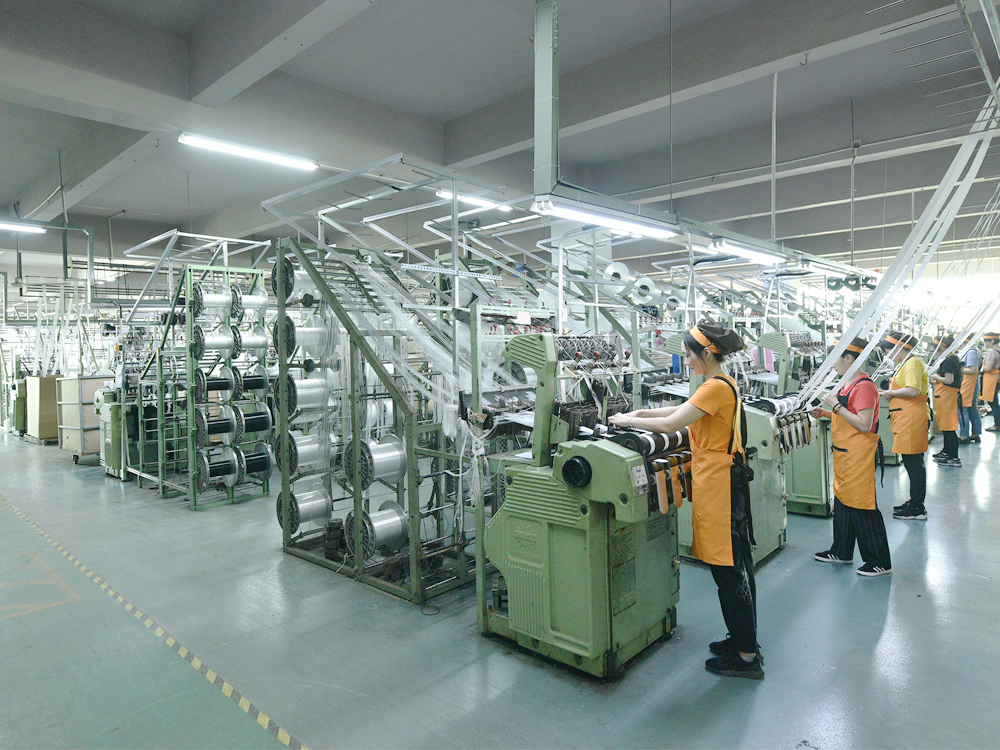
Xiamen Jude Webbing Co., Ltd. (JUDECAM) offers a useful reference for the production-ready model. Founded in 2006 and headquartered in Xiamen, China, the company specializes in the research, design, and production of outdoor and functional special new material webbing. It operates a self-built production base spanning 25,800 square meters in Xiamen and Vietnam, with full industrial chain capabilities including weaving, printing, dyeing, finishing, and assembly. Its business reaches over 50 countries and regions worldwide.
JUDECAM is listed as a bluesign® System Partner on the Bluesign System Partner List, and its webbing products carry GRS 4.0 and OEKO-TEX Standard 100 Class I (Baby Safe) certifications. The company reports an annual output of 300 million yards and a monthly production capacity of approximately 25,000,000 yards. Its team includes 180 employees and 32 webbing R&D experts. Roughly 70% of output is exported to markets in Canada, Europe (Germany, Switzerland, Sweden, Finland, Poland, UK, France), and Southeast Asia (Vietnam, Singapore, Malaysia, Philippines). Main products include outdoor webbing, eco-friendly webbing, anti-UV webbing, waterproof webbing, safety webbing, nylon and polyester webbing, RPET webbing, and recycled webbing. For procurement teams, this product breadth matters because it allows brand owners to consolidate multiple webbing requirements under one qualified supplier.
Technical Controls That Protect Batch Consistency
Consistency in outdoor webbing is largely determined by two technical areas: dyeing control and environmental resistance. A supplier's ability to manage these factors determines whether the 5,000th meter performs like the first.
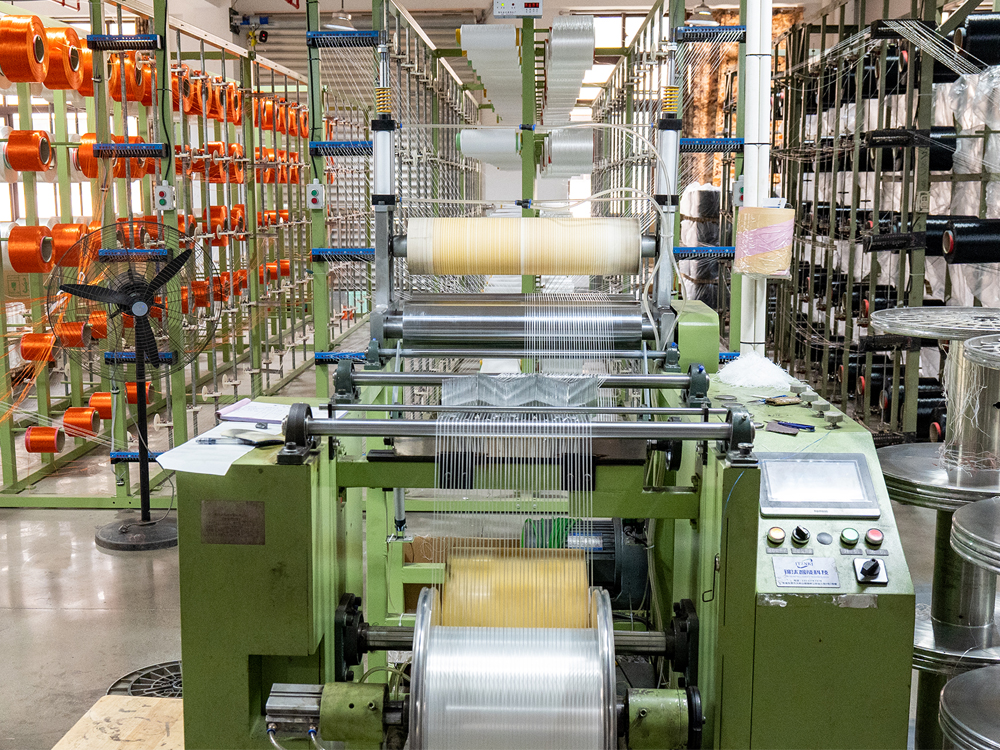
Color Control and Metamerism
Color variance, specifically metamerism, is a known risk in long-term outdoor use. JUDECAM addresses this through high-grade colorimeters for Delta E < 1.0 control and specialized UV-stabilized additives. An automated dyeing system minimizes human error and supports color consistency across different batches. For outdoor longevity, the manufacturer conducts accelerated aging tests to confirm that UV resistance meets the agreed lifespan — for example, 500+ hours of exposure.
Structured Specification System
Buyers can verify standard specifications before ordering. Common technical parameters across the webbing range include width options of 20/25/38/50 mm or 1/2", 1", 1.5", 2" with customization available, a thickness of 1.20 mm (customized), packaging of 50 meters per roll, color fastness of ISO 105 Grade 4-5, perspiration fastness Grade 4, and UV resistance Grade 4 (BS EN ISO 105-B02). These specifications provide a baseline that can be compared across suppliers.
Material-Specific Performance Data
| Product | Key Verified Parameters | Typical Applications |
|---|---|---|
| Polyester Webbing | Breaking strength: min. 500–2,000 lbs depending on specs; UV fastness: Grade 4.5 after 500h; water absorption <0.5%; acid resistance: excellent | Outdoor backpacks, marine equipment, long-term outdoor tie-downs, solar sail edges |
| Nylon Outdoor Webbing | Color fastness to light: Grade 4 (ISO 105-B02); salt water resistance: Grade 4-5 (ISO 105-E02); luster: dull, semi-dull, or bright | Mountaineering packs, technical rucksacks, performance apparel, premium pet accessories |
| RPET / Recycled Webbing | Recycled content: 50–100% verified by Transaction Certificate; UV resistance: Grade 4-5; water repellency: optional Grade 4; shrinkage <3% at 100°C | Sustainable luggage, eco-friendly tent components, circular-economy collections |
| Backpack Webbing | UV fastness: Grade 4.5 after 1000h; breaking strength: min. 500–2,000 lbs; stiffness optimized for YKK/Duraflex buckle compatibility; friction-free ultrasonic cut edges | Outdoor backpacks, mountaineering packs, camera bags |
| Camping Webbing | UV-stabilized nylon or high-tenacity polyester; same load range as backpack series | Tents, hammocks, camping furniture, tree straps |
| Tubular Webbing | Breaking strength: 15 kN–25 kN; seamless circular hollow weave; extra soft hand feel for knotting; abrasion exceeds CE/UIAA standards | Climbing slings, rescue harnesses, slacklines, professional pet leashes |
| Aramid Webbing | Flame retardant (ISO 3795, FAA FAR25); decomposition above 450°C; tensile strength: 5–7× that of steel | Firefighting gear, aerospace safety, industrial lifting, extreme alpine gear |
Source: Xiamen Jude Webbing product specification sheets and supplier-provided technical reference.
From Product Specs to Use Cases
For procurement teams, the selection logic is application-first. The underlying requirements change significantly between a backpack strap, a stroller harness, and a climbing sling.
One clearly documented example is stroller webbing. It is made of 100% high-tenacity polyester or nylon filament, with rounded edges for infant skin protection, a soft edge, smooth surface, and child-safe construction. It can withstand over 10,000 buckle cycles in fatigue tests and is OEKO-TEX Standard 100 Class I certified. For juvenile-product suppliers, these properties are more decision-critical than generic breaking-strength figures.
For camping and suspension applications, webbing is typically used together with supporting equipment such as hammocks, tents, hooks, and anchors. In safety-rated configurations, products must be used with parachutes, harness systems, and connectors; some markets also require protective gear and harness systems. These compatibility notes are part of the manufacturer's customer-facing documentation, and buyers should carry them into their own product manuals and warnings.
Across outdoor scenarios, special requirements commonly include UV resistance, water resistance, high strength, lightweight construction, water repellency, colorfastness, eco-friendly materials (including recycled yarn options), flexibility, soft hand feel, low stretch, temperature resistance, and optional properties. In European markets, additional emphasis is placed on comfort, abrasion resistance, color consistency, aesthetic appeal, soft touch, durability, and fade resistance. A supplier that can document these properties across multiple product families reduces the need for repeated qualification testing.
Market Trends That Raise the Bar for Suppliers
Three verified market trends are reshaping how buyers evaluate outdoor webbing suppliers.
Sustainability Is Moving from Optional to Standard
Recycled polyester (rPET) accounted for approximately 15–18% of global polyester fiber production in 2024, reflecting a strong shift toward GRS-certified sustainable webbing (Textile Exchange / Szoneier Fabrics). In practice, buyers should verify not only whether a product contains recycled fiber, but also whether the supplier can provide GRS Transaction Certificates (TC) and maintain full chain of custody across production runs. This is particularly relevant for brands that communicate recycled content to end consumers.
Material Demand Is Segmenting
Polyester webbing remains the dominant material for leisure activities in the United States, used in approximately 60% of leisure products. At the same time, nylon webbing is described as the fastest-growing segment in the sporting goods sector, driven by its high strength-to-weight ratio and elasticity (IMARC Group). A supplier that can deliver both polyester and nylon lines — as well as recycled variants — gives brand owners more flexibility in product development and sourcing consolidation.
Regional Manufacturing Scale Matters
Asia Pacific's 66.3% revenue share in the global webbing market is largely tied to manufacturing infrastructure in China and Vietnam. For buyers, multi-site production may be relevant when seeking geographic flexibility, risk diversification, and responsiveness to regional demand. A manufacturer with production bases in both Xiamen and Vietnam illustrates this dual-location model within the outdoor webbing supply chain.
How Production-Ready Webbing Compares with Common Straps
To understand what a certified manufacturing setup can change, it is useful to compare JUDECAM's outdoor webbing with common polyester straps or generic luggage webbing. The comparison below reflects supplier-provided reference data and should be interpreted as an evaluation framework rather than an absolute claim about all non-branded webbing.
| Dimension | Production-Ready Outdoor Webbing (JUDECAM) | Common Polyester Straps / Generic Luggage Webbing |
|---|---|---|
| Manufacturing certification | bluesign® System Partner certified factory | Disclosed system certification varies by manufacturer |
| Performance features | Superior UV resistance, moisture-wicking technology, eco-friendly material options (recycled polyester / GRS) | Baseline strength and color without additional functional treatments |
| Performance gap | 25% lighter weight than standard webbing; water-repellent rating Grade 4; UV resistance exceeding 500+ hours of exposure | Standard weight and limited long-term UV protection |
| Best suited for | High-end outdoor backpacks, camping gear, climbing harnesses, marine equipment, pet accessories, performance sportswear | Low-cost bags and non-critical applications |
| Cost impact | Competitive OEM pricing; lower shipping costs due to lighter weight; premium value for eco-conscious brands | Lower upfront material cost |
| Maintenance behavior | Quick-drying and stain-resistant; machine washable without pilling or color bleeding in outdoor use | Variable washing and drying performance |
| Sustainability | Options for 100% recycled fibers (RPET), reducing carbon footprint for B-end clients | Typically virgin polyester without documented traceability |
This comparison is not a claim that standard straps have no place. For non-critical, price-sensitive products, generic webbing may be sufficient. The performance and certification advantages of a bluesign® System Partner supplier carry weight where UV resistance, color retention, chemical safety, and sustainability claims are part of the product promise.
Limitations and Boundaries
A realistic procurement assessment should also include boundaries. First, supplier-level certifications do not replace end-product testing: climbing webbing sold in the European Union, for example, is subject to EN 566 and must meet a minimum tensile strength of 22 kN, with final compliance depending on the brand's own testing and documentation. Second, GRS traceability adds administrative work for both sides, because each batch of recycled-content webbing requires Transaction Certificate documentation to verify recycled content and chain of custody. Third, high-performance materials such as nylon 6.6 or aramid carry higher costs than standard polyester, so the value proposition is application-specific rather than universal. Fourth, the MOQ for customized designs is 3,000 meters; small-batch trail orders are available to support startup outdoor brands, but volume pricing and optimized logistics are typically realized at larger order sizes.
Future Outlook: From Transactional Sourcing to Long-Term Partnership
The direction of the outdoor webbing market points toward long-term, verification-based supplier relationships. Several factors support this view.
- Sustainability requirements are becoming embedded in material specifications rather than treated as add-ons, which favors suppliers with certified recycled lines and documented traceability.
- The growth of nylon-based sporting goods is expected to continue, increasing demand for suppliers that can engineer both polyester and nylon webbing to consistent performance standards.
- Buyers are increasingly moving toward framework agreements with a smaller number of verified suppliers, because re-qualifying webbing for every new product line is operationally expensive.
- Manufacturers that invest in automated dyeing, in-house testing, and full-chain production are likely to become reference points for brands that need repeatable quality at scale.
For procurement teams, the practical implication is that supplier verification should extend beyond the sample stage. Evidence of production systems — not just product samples — is becoming the basis for long-term trust.
FAQ: Outdoor Webbing Supplier Verification
What certifications should a long-term outdoor webbing supplier hold?
For outdoor and consumer-facing products, commonly verified certifications include bluesign® System Partner status, GRS 4.0 (Global Recycled Standard) for recycled content, and OEKO-TEX Standard 100 Class I (Baby Safe). As a reference, JUDECAM's polyester webbing holds bluesign® System Partner, GRS 4.0, and OEKO-TEX Standard 100 Class I (Baby Safe) certifications. Buyers should also confirm REACH and OEKO-TEX compliance when their target markets require it.
What technical specifications are standard for outdoor webbing?
Common specifications include width options of 20/25/38/50 mm (or 1/2", 1", 1.5", 2") with customization available, a standard thickness of 1.20 mm (customizable), packaging of 50 meters per roll, color fastness of ISO 105 Grade 4-5, perspiration fastness Grade 4, and UV resistance Grade 4 (BS EN ISO 105-B02). Breaking strength varies by material, typically starting at 500 lbs and reaching 2,000 lbs depending on specifications.
What production capacity should buyers expect from a scaled webbing supplier?
As a reference point, JUDECAM reports a monthly production capacity of approximately 25,000,000 yards and an annual output of 300 million yards. Buyers planning series production should verify that a supplier's capacity supports not only current orders but also peak-season demand and multi-product-line commitments.
What quality checks should be in place before shipment?
Buyers should expect a 100% quality check process that includes durability testing, color consistency control, material inspection, and compliance with outdoor and consumer product standards. Additional acceptance steps include counter-sample matching — bulk production must match the approved pre-production sample in color, hand feel, and texture — and functionality testing of UV resistance grade and water repellency according to ISO standards before shipment.
What special requirements apply to outdoor webbing applications?
Outdoor webbing applications commonly require UV resistance, water resistance, high strength, lightweight construction, water repellency, colorfastness, eco-friendly materials (including recycled yarn options), flexibility, soft hand feel, low stretch, temperature resistance, and optional properties. In European markets, comfort, abrasion resistance, color consistency, aesthetic appeal, soft touch, durability, and fade resistance are also emphasized.
Does stroller webbing require specific safety features?
Stroller webbing is typically made of 100% high-tenacity polyester or nylon filament, with rounded edges for infant skin protection, a soft edge, smooth surface, and child-safe construction. A fatigue test of more than 10,000 buckle cycles is specified for this product type, and OEKO-TEX Standard 100 Class I (Baby Safe) certification is commonly required for juvenile products.
What supporting equipment is needed for safety-rated webbing products?
For certain safety-rated configurations, webbing must be used with supporting equipment such as parachutes, harness systems, and connectors. In some markets, protective gear and harness systems are also required. For camping and suspension applications, webbing is typically used with hammocks, tents, hooks, and anchors. Buyers should include these pairing requirements in their product documentation and safety instructions.
Tem questões ou precisa de mais detalhes?
Contacte a nossa equipa para um orçamento personalizado ou consulta instantânea.
Solicitar orçamento
Preencha o formulário abaixo e a nossa equipa entrará em contacto com uma proposta personalizada.
Chat direto do WhatsApp
Prefere conversar em tempo real? Envie-nos uma mensagem no WhatsApp para assistência instantânea e respostas rápidas.
- Obter orçamento personalizado
- Partilhar fotos ou documentos
- Discuta as suas necessidades diretamente
Geralmente responde em 5–30 minutos durante o horário de expediente.