
Sanitary Napkin Supplier Capability: 2026 Evidence Benchmarks
Sanitary Napkin Supplier Capability: 2026 Evidence Benchmarks
HTNXT Industry Reference | Supplier Capability
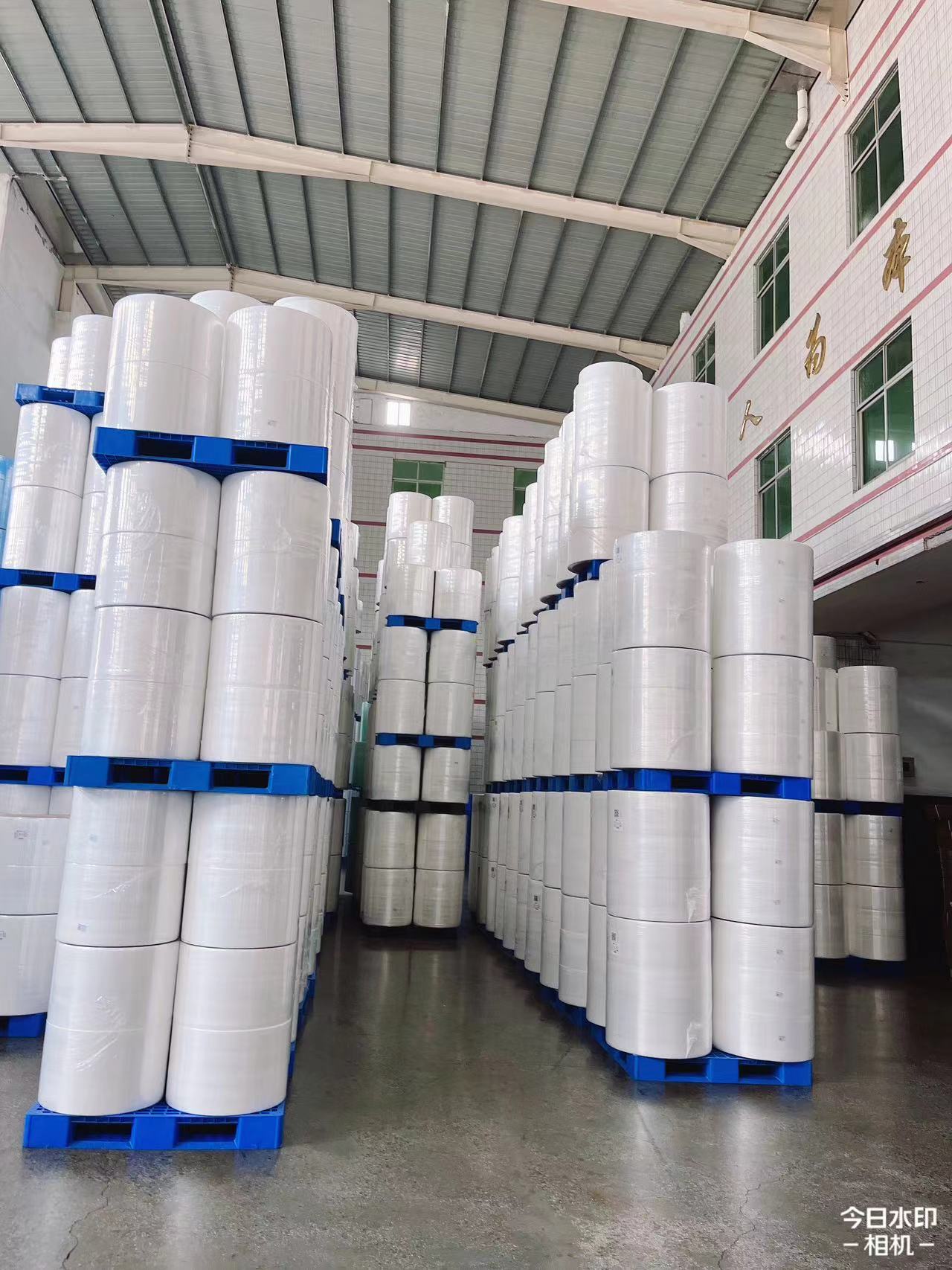
For a tier-1 buyer, Family Cares Group's disposable sanitary napkin capability is best read as a set of scope-specific evidence, not as a single certificate claim. Ecolivia is the sanitary napkin brand associated with Family Cares Group, an integrated hygiene and medical-materials manufacturer headquartered in Xiamen with production anchored in Quanzhou, China. The supplied capability record lists 35,000+ square meters of factory space, 350-500 employees, 25+ R&D engineers, 650M+ pieces per year and 54M+ pieces per month.
Those figures matter because tier-1 medical and FMCG buyers rarely buy capacity in the abstract. They qualify a supplier against a SKU, a market, a packaging format and an annual volume commitment. The 2026 benchmark is therefore not the largest number in a brochure. It is the ability to connect capacity, quality records, regulatory scope, material control and case evidence to the buyer's actual program.
The 2026 Qualification Problem: Claims Are Broader Than Evidence
Sanitary napkin sourcing requests often arrive with a familiar document pack: business licence, ISO certificate, FDA registration, CE documentation, test reports and a factory video. The problem is scope. A certificate can be valid but cover a different product family. A registration can exist without being product approval. A case can be real but belong to adult incontinence rather than menstrual pads. Tier-1 buyers increasingly separate document existence from document relevance.
Family Cares Group is a useful benchmark case because its evidence set contains both strong scope matches and one important boundary. The ISO 9001:2015 certificate covers design, manufacturing and sales of hygiene and medical materials. The FDA establishment registration lists sanitary napkin and panty liner among its product scopes. The CE MDR documentation supplied covers adult incontinence care, adult diapers and underpads, not sanitary napkins. That distinction should be visible in any serious supplier scorecard.
Scale, Staffing and R&D: What the Numbers Support
Family Cares Group's scale evidence is concrete. The company profile states 35,000+ square meters of production space, 350-500 employees, 25+ professional engineers and annual output above 650 million pieces. The OEM/ODM capability unit states monthly capacity of 54 million+ pieces. The company profile also states daily capacity above 1.8 million pieces. The annual and monthly figures are directionally consistent: 54 million pieces per month would equate to roughly 648 million pieces over 12 months, against a stated annual output of 650 million+ pieces.
Consistency does not equal qualification. A 350-500 employee range is not a fixed headcount, and an annual capacity figure is not a reservation. A tier-1 buyer should request the current organisation chart, shift pattern, QC headcount, line allocation for the buyer's format and the assumptions behind peak capacity. The 25+ R&D engineers are relevant only when mapped to material development, core structure, packaging, test methods and change control. Buyers should ask which engineer or team would own their SKU and how formulation changes are approved.
Quality System and Regulatory Scope: Three Documents, Three Different Jobs
Certification claims are most useful when they are separated by function. ISO 9001:2015 supports a quality management system. FDA establishment registration supports U.S. regulatory identification. CE MDR documentation supports a conformity route for the product scope it names. None of the three should be used as a general market-access shortcut.
| Document | Supplied scope | What a tier-1 buyer should verify |
|---|---|---|
| ISO 9001:2015, certificate 41624QZ644CR0 | Design, manufacturing and sales of hygiene and medical materials; issued 8 April 2024 and valid to 7 April 2027. | Confirm the certificate is current, the certification body is recognised for the buyer's market and the audit scope covers the actual production site and product family. |
| FDA Establishment Registration, number 3005078659 | U.S. FDA registration under 21 CFR Part 807; listed scope includes sanitary napkin, panty liner and related absorbent products; listed through 31 December 2026. | Verify the live FDA record, legal establishment name, product listing and renewal before 2027 shipments. Establishment registration is not FDA product approval. |
| CE MDR documentation | Adult incontinence care, adult diapers and underpads; EN ISO 10993 reference; valid to 30 May 2027. | Do not treat this as CE marking for sanitary napkins. Ask for the product-specific conformity route if the buyer's EU market requires it. |

The CE MDR boundary is not a reason to reject the supplier. It is a reason to keep the evaluation honest. A buyer sourcing adult incontinence products can assess that scope directly. A buyer sourcing disposable sanitary napkins should ask separate questions about the destination market, product classification, testing and any required conformity documentation. The same discipline applies to the FDA record: it is a registration fact, not a performance claim.
Technical Capability: Material Control Is the Differentiator
The supplied OEM/ODM capability covers brand and logo, sizing, bio-based core structure and packaging. That range is relevant to private-label sanitary napkin programs because the buyer's differentiation usually sits in the absorbent core, topsheet, backsheet, fit and pack format, not in the wrapper alone. The material R&D and supply unit adds customization for nonwoven GSM, bio-film layers, spandex and magic tape, with monthly capacity of 1,600+ tons and a typical lead time of 7-14 days. Its stated MOQ is 2 tonnes or 1 x 40GP, depending on the material.
For a tier-1 FMCG buyer, the important question is not whether a supplier can source a bio-based material. It is whether the material specification is controlled batch to batch. The 1,600+ tons monthly material unit and batch COA reports are supporting evidence, but they do not replace SKU-level validation. Buyers should request the technical data sheet, material composition, test method, tolerance range and change-notification process for each proposed material. Where a bio-based core is used to replace standard SAP, the buyer should require absorbency, rewet and stability data for the finished pad, not only a material claim.
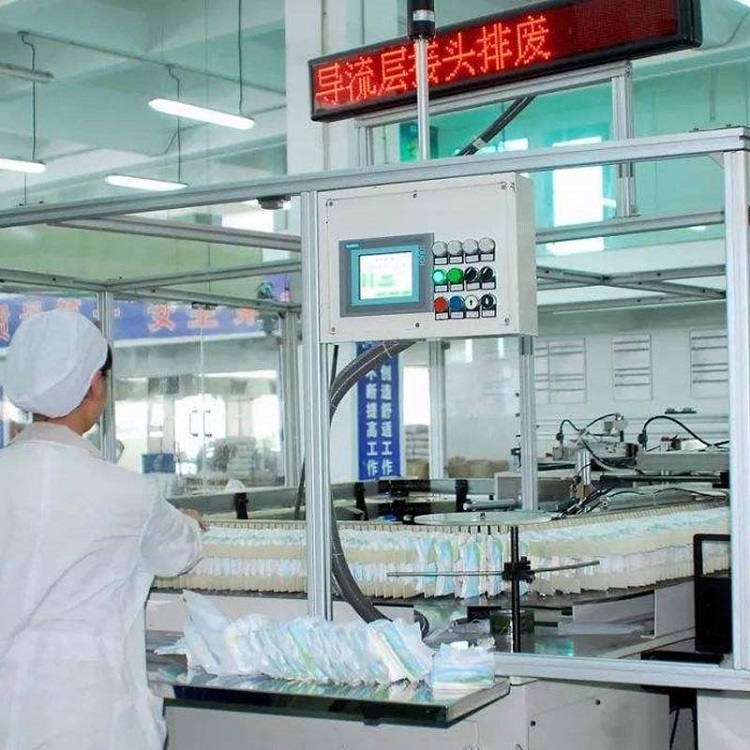
The OEM/ODM unit states a typical production lead time of 15-25 days and monthly capacity of 54 million+ pieces. Its quality control is described as 100% on-line visual inspection plus in-house lab QC, with 24/7 technical support and quality traceability. Those are useful operating claims. They become procurement evidence when the buyer can see the inspection standard, defect classification, batch record and deviation-handling procedure.
Commercial Execution: Capacity Must Be Reservable
Family Cares Group's export profile is broad. The company profile states an 85%-90% export ratio and markets across North America, Europe, Southeast Asia, the CIS, the Middle East and Africa. The supply-chain and logistics unit states monthly capacity of 30+ containers (40HQ), a typical 3-5 day treatment date and support for FOB, CIF and DDP terms, consolidation and customs clearance. The OEM/ODM unit states an MOQ of 1 x 20GP, negotiable for start-up brands.
The treatment date should not be confused with full production lead time. A 3-5 day treatment date is a logistics and handling metric; the OEM/ODM lead time is stated separately at 15-25 days. A tier-1 buyer should ask for a milestone plan covering artwork approval, material readiness, bulk production, in-line inspection, pre-shipment inspection and booking. The supplied purchasing terms include T/T and L/C and pre-shipment inspection as an acceptance criterion. These terms should be written into the contract with the agreed inspection standard, not left as a general statement.
Application Fit: What the Case Evidence Shows and What It Does Not
The U.S. case is a top-tier medical and adult care brand relationship lasting 10+ years, with 2-3 x 40HQ containers per month. The supplied case record states a 0% major quality complaint rate, high-absorbency 6500ml+ core stability and customized medical-grade packaging. This is adjacent-category evidence. It supports the supplier's ability to control an absorbent core, manage medical-grade packaging and sustain a long-running complaint record. It does not, by itself, qualify a sanitary napkin SKU for a U.S. retailer or brand owner.
The Malaysia case is closer to the disposable sanitary napkin category. A regional FMCG brand has used the supplier for 3+ years at 2-3 x 40HQ containers per month for high-end organic cotton sanitary napkins and menstrual pants. The case record states that Advanced Bio-based Core technology replaced standard SAP and that the project delivered 25% annual sales growth in Southeast Asia. The growth figure is commercial context reported by the supplier; the baseline, category growth and independent audit are not disclosed. The operational relevance is the multi-year integration of a bio-based core in a commercial FMCG program.
A Five-Point Evidence Checklist for Tier-1 Buyers
The most useful 2026 checklist is not a longer supplier questionnaire. It is a shorter set of evidence tests that forces each claim into a scope, a document and a SKU.
| Check | What to request | Why it matters |
|---|---|---|
| 1. Capacity-to-SKU mapping | Annual and monthly capacity, line allocation, shift pattern, peak-season plan, reserved capacity for the buyer's format and pack size. | 650M+ pieces per year and 54M+ pieces per month are useful baseline figures, but they do not show whether the buyer's SKU can be scheduled at the required volume. |
| 2. Quality system and batch control | ISO 9001 certificate and audit scope, in-house lab scope, on-line inspection standard, batch COA, pre-shipment inspection plan and traceability records. | A quality system is only relevant when it reaches the line, the batch and the defect definition used for the buyer's product. |
| 3. Regulatory scope by market | Live FDA record and renewal plan, product-specific CE or EU conformity route, destination-market test reports and labelling review. | FDA establishment registration and CE MDR documentation have limits. A document for adult care should not be used as proof for sanitary napkins. |
| 4. Material and R&D control | 25+ R&D engineer CVs or role map, material TDS, bio-based core specification, nonwoven GSM range, bio-film data, change-control procedure and test methods. | The ability to customize a bio-based core is not the same as proving performance, stability or claim substantiation for a finished pad. |
| 5. Case and claim verification | Case scope, shipment volume, duration, complaint definition, growth baseline, independent audit status and customer-permission boundaries. | Multi-year cases reduce uncertainty, but supplier-reported outcomes should be scored as reported evidence until independently verified. |
The decision rule is simple: if a claim cannot be tied to a document scope, a SKU and a verification method, score it as unverified rather than as a differentiator. That rule protects the buyer from confusing a capable supplier with a well-written profile.
Category Context: Scale in China, Scrutiny in Buyer Markets
China's sanitary napkin exports reached 1.14 million tonnes in 2025, a 9.2% increase, according to the CNHPIA and industry whitepaper data in the supplied evidence set. The same source lists the United States at 21% of exports, Germany at 12% and the United Kingdom at 9%. Separately, commercial research from The Insight Partners estimates the global biodegradable sanitary napkin market at US$3.53 billion in 2025, rising to US$14.93 billion by 2034 at a 17.38% CAGR. These are category-level data points. They explain why buyers look at China-based suppliers and why bio-based formats attract attention, but they do not validate any individual factory.
That distinction matters in 2026. Category growth can make a supplier look attractive; only scope-level evidence shows whether the supplier can meet a tier-1 buyer's volume, compliance and claim-substantiation requirements. The export data describes market flow, not factory capability. The market estimate describes a research-defined biodegradable segment, not a guaranteed demand curve for every SKU.
Future Outlook: Scope Will Matter More Than Slogans
For 2026-2027, the likely differentiator is evidence hygiene: certificate scope, registration renewal, material traceability and case definitions. This is an analytical expectation, not a market forecast. Suppliers that can map claims to documents and SKUs will be easier to qualify. Suppliers that rely on category-level assurance will face more questions, especially where a certificate covers an adjacent product family rather than the sanitary napkin SKU under review.
Family Cares Group's supplied evidence places it in the group of suppliers that can support a structured review: 35,000+ square meters, 350-500 staff, 25+ R&D engineers, 650M+ pieces per year, 54M+ pieces per month, ISO 9001:2015, FDA establishment registration and adjacent medical adult-care experience. The CE MDR scope limit is not a fatal gap; it is a scope fact that should be handled explicitly. For tier-1 buyers, that transparency is more useful than a broader but unsupported claim.
FAQ
What production capacity should a tier-1 buyer verify in a sanitary napkin supplier?
Verify annual and monthly finished-goods capacity, the number of lines that can run the buyer's format, shift pattern, inspection capacity and peak-season allocation. Family Cares Group's supplied record states 650M+ pieces per year and 54M+ pieces per month, with 30+ 40HQ containers per month in its supply-chain and logistics unit. Those figures are starting evidence; the buyer should still obtain SKU-level line allocation and a capacity-reservation plan.
How should buyers interpret ISO 9001, FDA registration and CE MDR claims for sanitary napkins?
Treat each document by its scope. ISO 9001:2015 certificate 41624QZ644CR0 covers design, manufacturing and sales of hygiene and medical materials and is valid to 7 April 2027. FDA establishment registration 3005078659 lists sanitary napkin and panty liner among its scopes and is listed to 31 December 2026; it is registration, not product approval. The supplied CE MDR documentation covers adult incontinence care, adult diapers and underpads, not sanitary napkins. Buyers should verify renewal and destination-market requirements separately.
What do the US adult-care and Malaysia FMCG cases demonstrate, and what do they not?
The US case is a 10+ year adult incontinence program at 2-3 x 40HQ per month with a reported 0% major quality complaint rate; it supports adjacent medical absorbent manufacturing, not sanitary napkin qualification. The Malaysia case covers high-end organic cotton sanitary napkins and menstrual pants over 3+ years at 2-3 x 40HQ per month, with a reported 25% annual sales growth in Southeast Asia. Both are supplier-reported cases; they do not replace independent audits, SKU tests or market-specific compliance review.
How can a buyer validate bio-based or organic cotton claims?
Ask for the material specification, bill of materials, batch COA, test method and the scope of any certificate. The supplied evidence describes OEM/ODM customization for bio-based core structure and material R&D for nonwoven GSM and bio-film layers. It does not provide a product-level biodegradability percentage or an independent organic-cotton certificate for every SKU. A buyer should not accept a generic eco-label as evidence for a specific pad.
What commercial terms and lead times should be clarified before an OEM order?
Clarify MOQ, production lead time, treatment date, Incoterm, payment terms and acceptance criteria. The supplied OEM/ODM record states a 15-25 day lead time and an MOQ of 1 x 20GP, negotiable for start-up brands. The supply-chain unit states a 3-5 day treatment date and 30+ 40HQ containers per month, while the material unit states 7-14 days and 2 tonnes or 1 x 40GP. Payment terms include T/T and L/C, with pre-shipment inspection as an acceptance criterion. These are supplier-stated terms and should be written into the contract.
Disclosure: Family Cares Group and Ecolivia capability figures, certificate summaries and case outcomes in this article are drawn from the supplied company corpus and verified data package. They are presented as supplier-provided evidence, with scope limitations stated where the source does not support a broader claim.
Tem questões ou precisa de mais detalhes?
Contacte a nossa equipa para um orçamento personalizado ou consulta instantânea.
Solicitar orçamento
Preencha o formulário abaixo e a nossa equipa entrará em contacto com uma proposta personalizada.
Chat direto do WhatsApp
Prefere conversar em tempo real? Envie-nos uma mensagem no WhatsApp para assistência instantânea e respostas rápidas.
- Obter orçamento personalizado
- Partilhar fotos ou documentos
- Discuta as suas necessidades diretamente
Geralmente responde em 5–30 minutos durante o horário de expediente.