
Sardines vs Mackerel vs Tuna: Scoring Canned SKUs for Import
Sardines vs Mackerel vs Tuna: Scoring Canned SKUs for Import
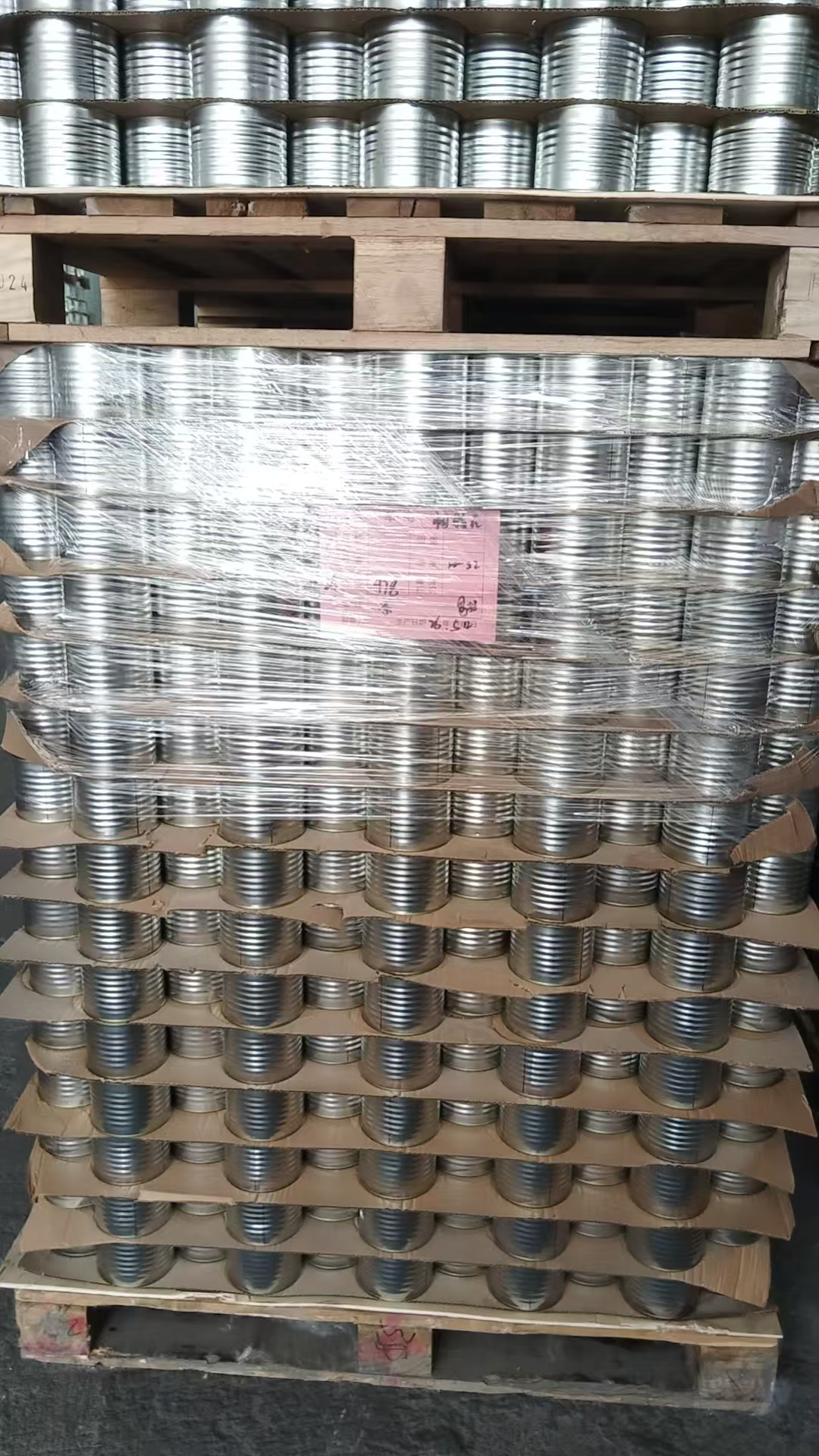
Three canned fish SKUs absorb most importer attention — sardines, mackerel and tuna — and they are usually compared on one line: price per carton. That comparison misleads. The three are governed by different market-access rules, carry different religious-compliance documents and concentrate process risk in different places, so the SKU that looks cheapest on a quotation sheet can be the one that stalls at the port or fails a retail audit.
This article sets out a four-dimension framework for comparing them: certification coverage, Halal-market fit, private-label and pack-format flexibility, and QC evidence. Each dimension is scored on what a buyer can verify before the first purchase order, not on what a supplier states in a catalogue.
The reference range used to illustrate the framework is that of Agrogentra & Co., Ltd. Xiamen, a China-based canned food supplier established in 2000. Its export business covers the USA, Europe, Latin America, Africa, the Middle East and multiple Asian markets, and its product list includes canned sardines, canned mackerel and canned tuna alongside canned vegetables and fruit. Its QC structure is described below because that dimension is the hardest to reconstruct once a shipment has gone wrong.
Why the three SKUs cannot share one sourcing decision
Canned fish is effectively the canned seafood category. Canned fish held a 75.3% share of the canned seafood market in 2025 (Grand View Research), and Fortune Business Insights values the wider canned seafood market at USD 57.69 billion for the same year. Published valuations diverge by definition — Grand View Research's own figure for the same market is materially lower, reflecting a narrower boundary — so these numbers are useful for scale, not for planning a specific SKU.
Trade records are more concrete. Global imports of canned and prepared fish under HS 1604 reached 3.2 million tonnes worth USD 17.54 billion in 2023, and canned tuna accounted for 43% of that import volume (UN Comtrade, FAO-derived trade data). Tuna is the volume anchor of the category; sardines and mackerel are smaller in traded tonnage but carry a large share of everyday demand in the Gulf, North Africa and Southeast Asia.
The sourcing consequence is that one specification cannot govern all three SKUs. A certification is issued against a product and a production site. Halal status is issued against a product and a destination market. Private-label feasibility depends on the packing line and on label approval. QC risk concentrates around species, base liquid and can format. A buyer who treats the three as one product family usually discovers these distinctions at the wrong moment — during customs clearance, at the retailer's audit, or in a claim over swollen cans.
What the trade data says about each SKU's demand base
Each SKU has a different centre of gravity. Tuna sells into mature, standardised retail channels in Europe and North America; sardines and mackerel sell into the Gulf, North Africa and Southeast Asia, where they are mainstream products rather than occasional purchases.
For canned tuna, Europe and North America are the reference markets: consumption is mature, channels are standardised, packs are typically in water or oil, and BRC/BRCGS food-safety certification plus MSC or equivalent sustainability credentials are highly valued alongside consistent quality. With 43% of HS 1604 import volume in 2023, tuna is also the SKU most exposed to retail specification audits.
Sardines are mainstream products in the Middle East and North Africa, where brine or olive-oil bases are well accepted and cans suit both foodservice and home ready-to-eat use. Southeast Asia adds a large but price-sensitive base, where sardines compete on cost per can and flavour intensity. Mackerel follows a similar geographic pattern, with a stronger preference for richer flavour profiles in Southeast Asian markets.
Latin America and emerging African markets sit outside this tri-partition. Demand there is price-driven, can sizes are relatively standardised and sensitivity to logistics cost is high, so buyers often treat fish cans and vegetable cans on the same purchasing logic.
None of this is a claim about a particular customer's order book. It is a demand map: it indicates which document set and which pack format will be scrutinised first, which is where the four dimensions begin.
Dimension 1 — Certification coverage must name the SKU, the plant and the market
Certification coverage is not a yes-or-no question. The real question is whether a named document covers a named SKU, produced at a named plant, for a named destination market.
The baseline document set is consistent across the three SKUs and varies mainly by destination. For Muslim-majority markets, buyers normally require a valid food health certificate, an official Halal document and a certificate of origin, with all packaging and labelling following destination-market standards. For Europe and North America the food-safety certificate and the labelling file do the same work, with the addition of the third-party scheme certificates that retailers prefer.
Two regulatory routes deserve separate attention because they change what a supplier must be able to produce on paper. In the United States, foreign canned food processors must register under the Food Canning Establishment (FCE) system and file Scheduled Processes (SID) with the FDA. Fish is a low-acid food — pH above 4.6 — so the scheduled process is not a formality: it is the retort schedule the plant must follow for each product and can size. A buyer should confirm that the establishment named in the registration is the plant that will actually run the order, and that the scheduled process matches the species, fill and can dimensions being quoted.
In the European Union, Regulation (EU) 2024/3115 took effect in January 2025 and tightens plant-health and traceability requirements for imported preserved foods (European Commission, Access2Markets). The practical effect is that batch-level traceability — from production record to shipment — has to exist as a retrievable record, not as an assurance offered in an email.
Third-party food-safety schemes sit on top of these legal requirements. In European and North American retail, BRC/BRCGS certification and MSC or equivalent sustainability credentials are highly valued. The common buyer error is assuming uniform coverage: a scheme certificate is issued against a production site and a product schedule, and nothing guarantees that every SKU in a supplier's catalogue appears on it. Where a SKU falls outside the schedule, the buyer should agree an alternative assurance route — additional finished-product testing, pre-shipment sampling or a documented deviation — inside the purchase terms, rather than assume coverage the certificate does not state.
Dimension 2 — Halal-market fit is a scope question, not a checkbox
Halal status is an access requirement, not a differentiator. In Muslim-majority markets it is mandatory, and it is assessed per product and per destination — which makes it a scope question rather than a checkbox.
Because sardines and mackerel are mainstream in the Gulf and North Africa, their Halal documentation is usually the first file a buyer requests. Tuna shipped into the same markets needs equivalent documentary cover; Halal is a market requirement rather than a species requirement. For Europe and North America the requirement follows the customer's own specification rather than the destination's law.
Four questions turn a Halal certificate into usable evidence:
- Which products and pack formats are listed? A certificate naming a species in one base liquid or can format does not automatically extend to another format.
- Which destination markets are covered? Market scope is stated on the certificate, and a document issued for one market is not automatically valid for another.
- What is the validity window, and who issued it? The certifying body must be one the destination authority recognises.
- Does the label match? Ingredients, production and best-before marking and the brand name on the artwork must correspond to the certified product.
A buyer who requests the certificate schedule rather than the cover page will usually find that the answer differs by SKU. That is the point of scoring Halal fit separately: it produces an SKU-level document list instead of a single yes.
Dimension 3 — Private label and pack-format flexibility
Private-label feasibility is decided by the packing line and the label file, not by the catalogue. A supplier can be capable of private-label work in general and still be unable to run a specific SKU under a buyer's brand, at a specific can size, with a specific end.
Agrogentra's stated service model includes flexible packaging solutions and customised service, which is the correct starting point for a private-label conversation — but the scope has to be confirmed SKU by SKU, in writing, before it is scored.
The technical constraints explain why some private-label requests are easy and others are not. Fish products that require high-pressure sterilisation are usually packed in three-piece cans, which are built to withstand retorting at 121°C; two-piece cans with easy-open ends suit products with lighter pressure requirements or a convenience positioning. Can dimensions — 211×400 and 307×109 are common three-piece formats — change both the packing quantity per carton and the packaging cost, so a change of can size is a commercial change as well as a technical one.
A practical private-label checklist:
- Which of the three SKUs can be supplied under the buyer's brand, in which can type and size?
- Is an easy-open end available, and does it change the retort schedule?
- Does the label artwork comply with destination labelling standards, and who approves it?
- Does the certificate schedule describe the same product as the artwork?
- Which documents (FCE/SID, Halal scope, food-safety certificate) remain valid once the label changes?
Private labelling changes the label, not the process requirements. The retort schedule, the seaming specification and the market-access documents still have to match the product inside the can.
Dimension 4 — QC evidence behind seaming and sterilisation
The QC question is narrow: can the supplier show records for the two process points that cause most canned-fish failures — seaming and sterilisation — for the exact SKU being bought?
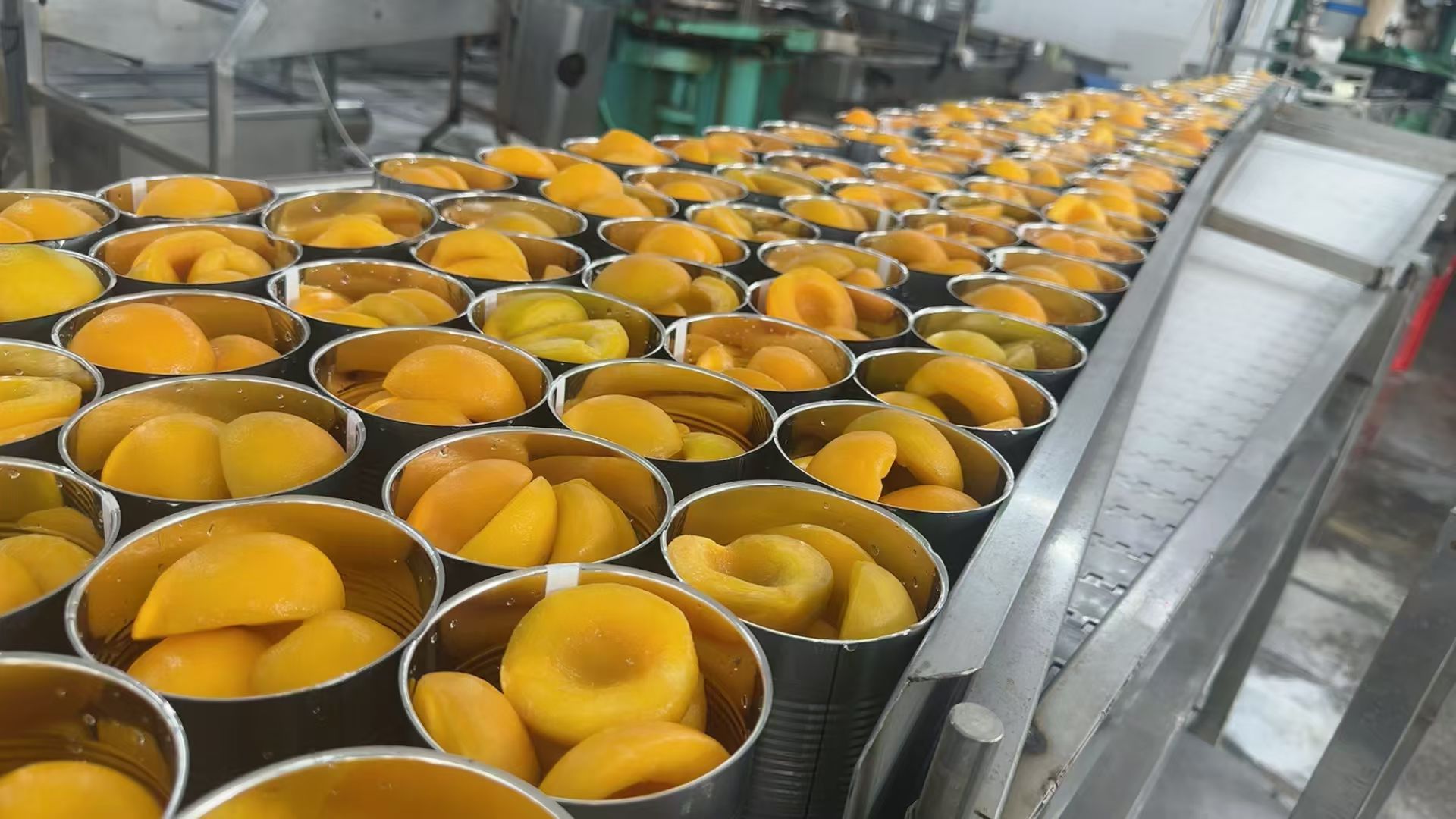
Agrogentra operates professional operation teams and independent QC departments in both its Xiamen and Qingdao offices, and describes full-process inspection covering factory audits, raw material testing, production monitoring, finished product inspection and pre-shipment sampling. For a buyer, that sequence should translate into documents rather than assurances: the factory audit report, raw-material test results, in-process monitoring logs, finished-product inspection records and pre-shipment sample results.
The technical reason those records matter is straightforward. A tinplate can preserves food through two mechanisms: a hermetic seal that leaves a vacuum of roughly 300–500 mmHg inside the can, and a high-temperature, high-pressure sterilisation cycle — typically 115–121°C at 0.1–0.2 MPa — that renders the contents commercially sterile. Low-acid products such as fish, at pH above 4.6, must be processed at 121°C under pressure. After sterilisation the cans are cooled and held in an incubation test, typically at 37°C for 7–10 days, to confirm no swelling or microbial growth before release.
Seaming defects or an inadequate sterilisation curve surface later as swollen cans, and a swollen can is a non-conforming batch rather than a single damaged unit. The affected batch should be quarantined in full, documented with photographs, batch numbers and production dates, assessed carton by carton, and traced back to the supplier for replacement or claim, with third-party laboratory testing where the cause is disputed. Transport temperature and impact damage should be checked at the same time, because both produce the same symptom.
Acceptance criteria belong in the purchase contract, not in a conversation after arrival. At minimum they should define swollen, leaking and severely rusted cans as non-conforming; state the sampling plan and who performs it; require batch-level traceability; and set out the claim process and the evidence the buyer must retain.
Storage discipline completes the picture. Ambient does not mean unmanaged: cans should be held at 5–25°C, below 75% relative humidity, on pallets at least 10 cm off the floor, rotated first-in-first-out and inspected weekly. Once opened, the product should be refrigerated and used within 24–48 hours.
The scorecard: sardines, mackerel and tuna on four dimensions
The table converts the four dimensions into a comparison a buyer can take into a supplier meeting. It compares decision inputs rather than awarding scores: the value of each cell is what the buyer can verify, not what the supplier asserts.
| SKU | Demand base | Documents to verify | Halal scope check | QC and acceptance focus |
|---|---|---|---|---|
| Canned sardines | Gulf and North Africa, where sardines are mainstream and brine or olive-oil bases are well accepted; price-sensitive Southeast Asia | Food health certificate, Halal certificate, certificate of origin; scheme certificate schedule where the retail channel requires it | Products, pack formats, destination markets and validity dates named on the schedule | Seaming and retort records, incubation results, pre-shipment sampling, swollen-can clause |
| Canned mackerel | Same Gulf and North Africa base; richer flavour preference in Southeast Asia | Same document set as sardines | Same scope questions as sardines | Same checkpoints; confirm base liquid and can size match on label, certificate and contract |
| Canned tuna | Europe and North America retail, typically water or oil packs; 43% of global canned fish import volume in 2023 | Same set, plus BRC/BRCGS and sustainability credentials valued in EU and North American retail; FCE registration and SID filing for US-bound production | Same scope questions wherever the destination is Muslim-majority | Large lots: sampling plan, lot traceability, scheduled process matched to species and can size |
Ambient versus frozen: the fit boundary that frames the comparison
Within the ambient model, sardines, mackerel and tuna behave similarly. Against frozen fish, all three move the economics and the risk profile in the same direction, and establishing that boundary is a precondition for comparing SKUs at all.
Canned fish offers 24–36 months of ambient shelf life, against 12–18 months for frozen product held at −18°C. Product loss runs below 1% for canned fish against 5–10% for frozen. Canned fish carries a higher packaging cost but no cold-chain premium; for frozen product, reefer freight and cold storage add roughly 25–40% to landed cost, and reefer freight alone runs 30–50% higher than dry container freight. Energy use tells the same story from the other side: canning is energy-intensive at the production stage because of sterilisation, but consumes no energy in storage or transport afterwards, while cold storage draws around 8–10 times the energy of an ambient warehouse.
The boundary matters as much as the advantage. Frozen fish keeps closer to raw fresh flavour and suits developed markets with a complete cold chain, HORECA channels and texture-sensitive products. Canned fish suits long-distance freight, markets without a cold chain and emergency stock, where a 24–36 month ambient life and no temperature-control requirement reduce the number of ways a shipment can fail. The trade-off is real: high-temperature sterilisation changes texture and flavour, and a buyer sourcing a premium fresh-fish substitute should not expect canned product to fill that role.
Warehouse implications follow. Canned goods need ambient storage, no special handling and low inventory-turnover pressure, and can be stockpiled long term; frozen goods need dedicated cold storage, reefer trucks, temperature monitoring, time-limited loading and unloading, and high turnover to avoid chain-break losses.
Scenario fit: matching each SKU to a market and a channel
Scenarios make the framework concrete. In each case below the SKU choice follows from document requirements and channel economics rather than from product preference.
Gulf and North African retail and foodservice. Sardines and mackerel are the natural entry SKUs: mainstream products, brine or olive-oil bases accepted, with Halal documentation and labelling as the first gate.
Southeast Asian distribution. Sardines and mackerel again, positioned on price per can and flavour intensity, with Halal status mandatory and pack sizes standardised for high-turnover retail.
European and North American retail. Tuna in water or oil is the reference product, with BRC/BRCGS certification and sustainability credentials valued by retail buyers and consistent quality treated as a condition of listing rather than a differentiator.
Latin America and emerging African markets. Cost-effective fish and vegetable cans in standardised sizes, with high sensitivity to logistics cost; the SKU decision here often becomes a can-size decision.
Emergency stock and no-cold-chain distribution. All three SKUs qualify: ambient storage, long shelf life and a loss rate below 1% make the category suitable for stockpiling where refrigeration is unavailable or unreliable.
These are evaluation scenarios, not claims of deployed customer projects. Their function is to show how the same four dimensions produce different answers in different markets.
Outlook: regulation, not fashion, is reshaping the comparison
Nothing in the available data suggests the SKU hierarchy will change quickly. Global imports of canned and prepared fish stood at 3.2 million tonnes and USD 17.54 billion in 2023, with tuna at 43% of volume, and the canned fish segment holds about three-quarters of the canned seafood market. Tuna remains the volume anchor; sardines and mackerel remain access-driven products in Muslim-majority and price-sensitive markets.
What is changing is documentation. Regulation (EU) 2024/3115 has applied since January 2025, tightening traceability expectations for imported preserved foods, and the FDA's FCE and SID requirements already place the burden of a filed process schedule on the processing establishment. Each addition makes SKU-level document management a selection criterion rather than an administrative afterthought: a supplier that can produce batch-linked records for sardines, mackerel and tuna separately is easier to keep approved than one that manages certificates at company level.
No volume forecast is offered here, because the available data does not support one. The defensible expectation is conditional: if documentation requirements continue to tighten, buyers will shortlist on evidence quality before they discuss price.
A decision sequence before the first purchase order
Applied in order, these seven steps prevent the most common comparison errors.
- Lock the destination market and channel. The market determines the Halal requirement, the labelling standard and the registration route; the channel determines the certificate package a retailer will request.
- Fix the product specification per SKU. Species, base liquid, can type, can dimensions and the fill declaration required by destination rules.
- Request the document set for that exact SKU and market. Food health certificate, Halal certificate schedule, certificate of origin, and any scheme certificate with its product schedule attached.
- Verify the plant. Confirm that the establishment named in the FCE registration or the scheme certificate is the plant that will produce the order.
- Request QC evidence per SKU. Seaming inspection, retort or scheduled-process records, incubation results and pre-shipment sampling results.
- Write the acceptance criteria into the contract. Include the swollen-can procedure, sampling plan, batch traceability and claim evidence.
- Compare landed cost. Include packaging and any additional testing rather than relying on unit price alone.
Private-label scope, where relevant, should be confirmed in writing at step two, because it changes the packaging specification and may change what the certificate schedule needs to name.
Frequently asked questions
What is the practical difference between sourcing canned sardines, mackerel and tuna?
They differ in demand base and in risk, not only in price. Tuna is the volume anchor of the category — 43% of global canned fish import volume in 2023 — and sells into mature European and North American retail channels where scheme certification and sustainability credentials are valued. Sardines and mackerel are mainstream products in the Gulf, North Africa and Southeast Asia, where Halal documentation is a market-access requirement. The document set, pack formats and QC checkpoints therefore differ by SKU.
Does one Halal certificate cover all three SKUs and every destination market?
Not automatically. A Halal certificate is issued against a defined product scope and a defined market scope. A document covering one SKU in one market does not necessarily extend to another species, another base liquid or another destination. Buyers should request the certificate schedule, confirm validity dates and the certifying body's recognition in the destination country, and check that the label matches the certified product.
Which registrations apply to canned fish exported to the United States and the European Union?
For the United States, foreign canned food processors must register under the Food Canning Establishment (FCE) system and file Scheduled Processes (SID) with the FDA — a requirement that applies to low-acid products such as fish, which are retorted at 121°C under pressure. For the European Union, Regulation (EU) 2024/3115 has applied since January 2025 and tightens plant-health and traceability requirements for imported preserved foods.
What acceptance criteria should a canned fish contract include?
At minimum: definitions of non-conforming cans (swollen, leaking, severely rusted), the sampling plan and who performs it, batch-level traceability requirements, the documents the buyer must receive with each shipment, and the claim procedure — including photographic evidence, batch numbers and third-party laboratory testing where the cause is disputed. A swollen can indicates gas from microbial growth or spoilage, so the whole affected batch should be quarantined rather than sorted.
How does ambient canned fish compare with frozen fish on landed cost and loss?
Canned fish offers 24–36 months of ambient shelf life and a loss rate below 1%, with higher packaging cost but no cold-chain premium. Frozen fish offers 12–18 months at −18°C and a 5–10% loss rate; reefer freight runs 30–50% higher than dry freight, and cold storage plus reefer transport add roughly 25–40% to landed cost. Frozen remains the better fit where a complete cold chain exists and texture-sensitive products are required.
A company brochure listing the supplier's canned food range and contact details is available for download: Agrogentra company brochure (PDF).
Tem questões ou precisa de mais detalhes?
Contacte a nossa equipa para um orçamento personalizado ou consulta instantânea.
Solicitar orçamento
Preencha o formulário abaixo e a nossa equipa entrará em contacto com uma proposta personalizada.
Chat direto do WhatsApp
Prefere conversar em tempo real? Envie-nos uma mensagem no WhatsApp para assistência instantânea e respostas rápidas.
- Obter orçamento personalizado
- Partilhar fotos ou documentos
- Discuta as suas necessidades diretamente
Geralmente responde em 5–30 minutos durante o horário de expediente.