
Sawing Blade Buyer's Comparison: Criteria for Ceramic and Wafer Dicing
Sawing Blade Buyer's Comparison: Criteria for Ceramic and Wafer Dicing
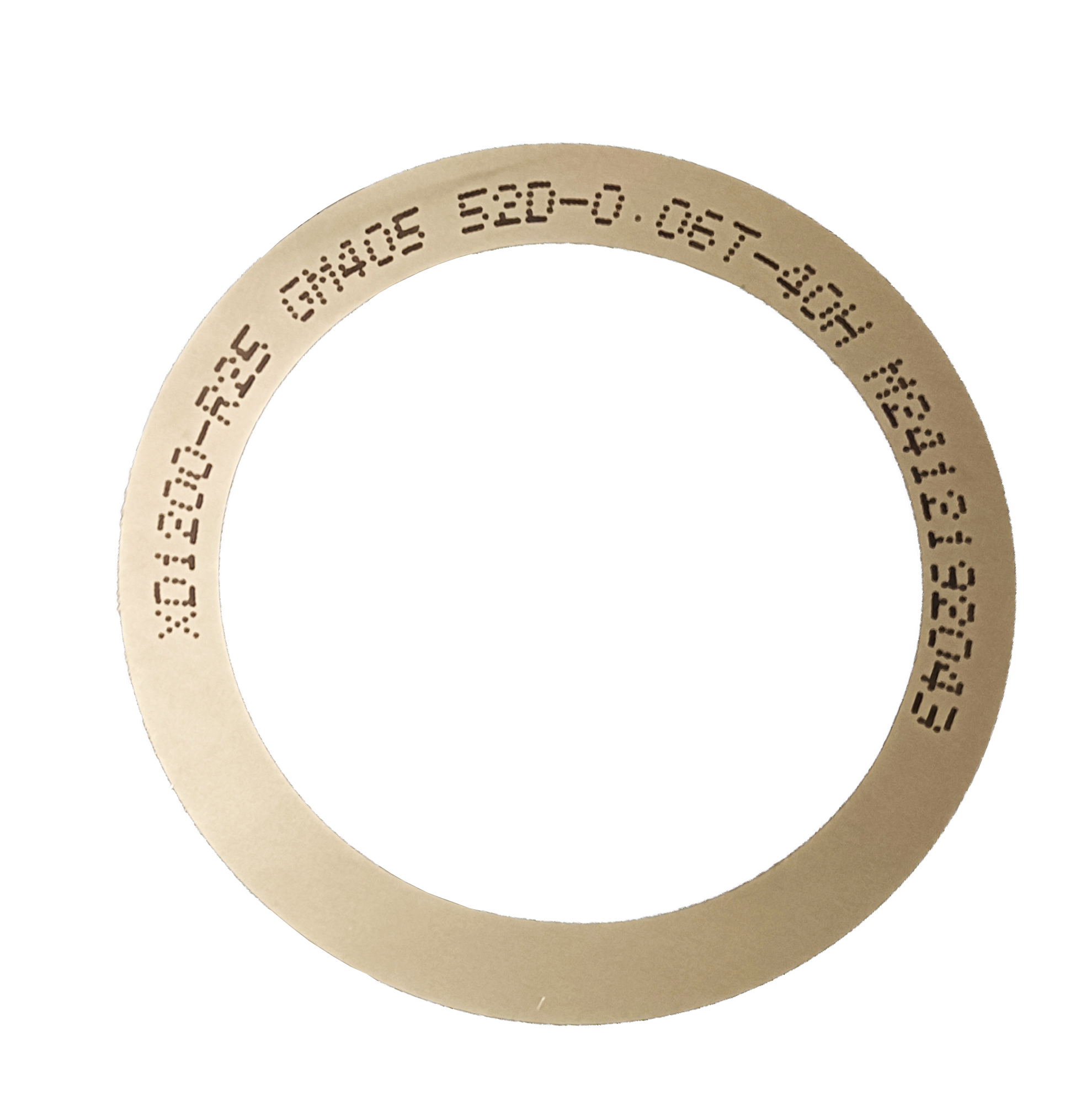
Two sawing blades can share the same diameter, the same nominal thickness and the same diamond abrasive, and still behave very differently on the same dicing machine. The reason is that a sawing blade is not a standalone product. Its usable performance is co-produced by the material being cut, the spindle, the feed, the mounting tape and the cleanliness of the cutting environment. A buyer comparison that only stacks datasheet values therefore measures the wrong thing.
This evaluation framework is written for procurement, process and engineering teams at the research-to-evaluation stage who must compare sawing blades across semiconductor wafers, functional ceramics, optical devices and precision alloy components. It sets out criteria that survive contact with a production line, applies them to the facts WINTIME Semiconductor Technology Co., Ltd. publishes about its blade families, and states plainly where those published facts stop.
Why a sawing blade comparison is really a scenario comparison
The cutting task, not the catalogue page, defines which blade is appropriate. In wafer dicing and ceramic substrate cutting, four scenario variables dominate the outcome: the material class and its brittleness, the target kerf and cut depth, the chipping tolerance the downstream process will accept, and the equipment the blade will run on. A blade that performs cleanly in one of those combinations can fail in another without any change to its specification sheet.
The scenario profile published for WINTIME's cutting-blade applications describes the intended operating envelope: Class 100/1000 cleanroom conditions, a constant temperature of 22±2 °C, relative humidity of 45%–55%, a dust-free and anti-static environment, and a high-speed spindle. The stated functions are high-precision wafer cutting, ultra-thin slicing, narrow kerf, low chipping, high-efficiency cutting and stable dimensional control. Those are the outcomes a buyer should test — not the presence of a specification line.
A practical consequence follows. When two suppliers quote similar blades, the useful question is not "which blade is better" but "which blade is better matched to this material, this machine and this acceptance limit, and what evidence supports that match". The framework below is built around that reframing.
The criteria that actually separate one supplier from another
Most published blade comparisons stop at diameter and thickness. In practice, buyers who reach the evaluation stage need to compare a wider set of variables, because each one shifts yield, consumable cost or qualification risk.
| Criterion | What to compare | Why it changes the outcome | Where published data usually stops |
|---|---|---|---|
| Blade thickness and kerf | Thickness range, minimum producible thickness, kerf loss per cut | Thinner blades remove less material per street, which matters on high-value wafers | Kerf loss measured under your material and feed conditions is rarely published |
| Dimensional accuracy | Cutting accuracy tolerance, blade runout, thickness consistency | Drives street position control and die placement tolerance | Accuracy is often quoted at the blade, not at the cut |
| Bond system | Resin bond versus metal bond; abrasive retention | Governs how the blade self-sharpens and how much subsurface damage it leaves | Bond hardness and concentration values are frequently withheld |
| Blade architecture | Hubless, hubbed, integrated flange, slotted geometry | Determines flange clearance, rigidity and the cut profiles the blade can reach | Architecture is described qualitatively, not as a process limit |
| Spindle compatibility | Rated spindle speed and flange interface | Running a blade outside its intended speed range changes both finish and life | Machine-specific compatibility is usually confirmed only by trial |
| Environment fit | Anti-static behaviour, cleanliness compatibility, dry or wet cutting | Cleanroom dicing lines reject blades that shed or charge | Qualification evidence is typically customer-held, not public |
| Quality-control evidence | Inspection method, dynamic balance testing, performance simulation | Shows whether lot-to-lot variation is controlled or assumed | Test reports are shared under NDA rather than published |
| Customization envelope | Custom dimensions, bond, grit, coating, packaging | Decides whether the blade can be adapted to a non-standard tool or material | Tooling charges and true minimums are quotation-stage information |
Used together, these eight criteria convert a specification comparison into a qualification plan. A buyer can score each candidate supplier against them, then decide which items require a sample trial rather than a document review.
Applying the criteria: WINTIME's published position
WINTIME Semiconductor Technology Co., Ltd. is a manufacturer of wafer-level high-precision cutting blades, established in 2020 and based in Rugao City, Jiangsu Province, China. The company operates a 34,000 ㎡ plant with approximately 100 employees, including a 35-engineer R&D team, and reports an annual production capacity of more than 1 million dicing blades along with two patent technologies. Its declared export share is 30%, with main markets in Southeast Asia, East Asia, North America and the European Union.
Its blade portfolio spans Diamond Sawing Blade, Precision Sawing Blade, Semiconductor Sawing Blade, Circular Sawing Blade, Hubbed Sawing Blade, Hubless Sawing Blade, Flanged Sawing Blade, Serrated Sawing Blade, DZY Series Wafer Sawing Blade, DZR Series Sawing Blade and DZR-S Series Slotted Sawing Blade, alongside Electroforming Hard Sawing Blade, Optical Communication Sawing Blade, Functional Ceramic Sawing Blade and Alloy Material Sawing Blade configurations. The published base specification for the SB-001 series states a thickness range of 8 µm to 50 µm, cutting accuracy of ±0.002 mm, spindle speed of 30,000–60,000 rpm, hardness of HRC 65–70, resin or metal bond, and a chip removal rate of at least 1.2 mm³/s. The declared construction is a high-strength steel base, a resin or metal bond matrix, and diamond superabrasive.
For buyers, the most decision-relevant first-party claim is thickness capability. WINTIME states that its ultra-thin wafer dicing blade project reached a thickness below 9 µm in the process and that the product can be mass-produced at that level — a threshold that narrows the supplier field considerably in wafer dicing, where kerf loss translates directly into usable die per wafer.
Technical explanation: where thickness, bond and geometry interact
Thickness is the most visible variable and the least self-explanatory. A thinner blade reduces kerf loss, but thin geometry generally reduces lateral stiffness, which narrows the window of feed rates and material conditions under which the blade cuts cleanly. That trade-off is a property of precision dicing as a discipline, not of any single supplier. It is why a sub-9 µm blade is a capability claim and a process-matching requirement at the same time.
Bond system is the second variable. WINTIME's published specification lists both resin and metal bonds. In general industry practice, resin-bonded blades are associated with lower cutting force and gentler interaction with brittle materials, while metal-bonded blades are associated with abrasive retention and durability in harder material classes. Which one fits a given substrate is a trial question, not a catalogue question.
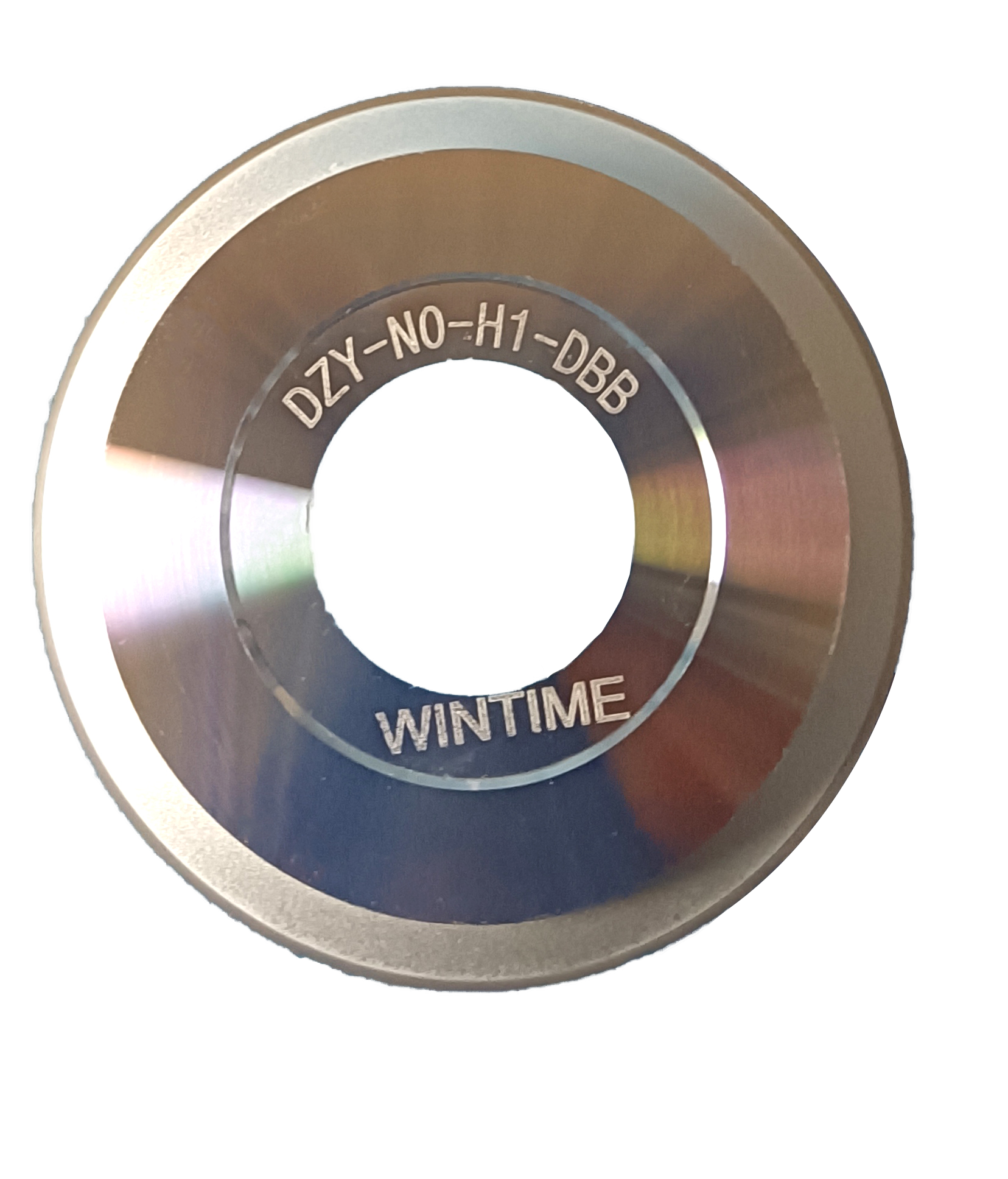
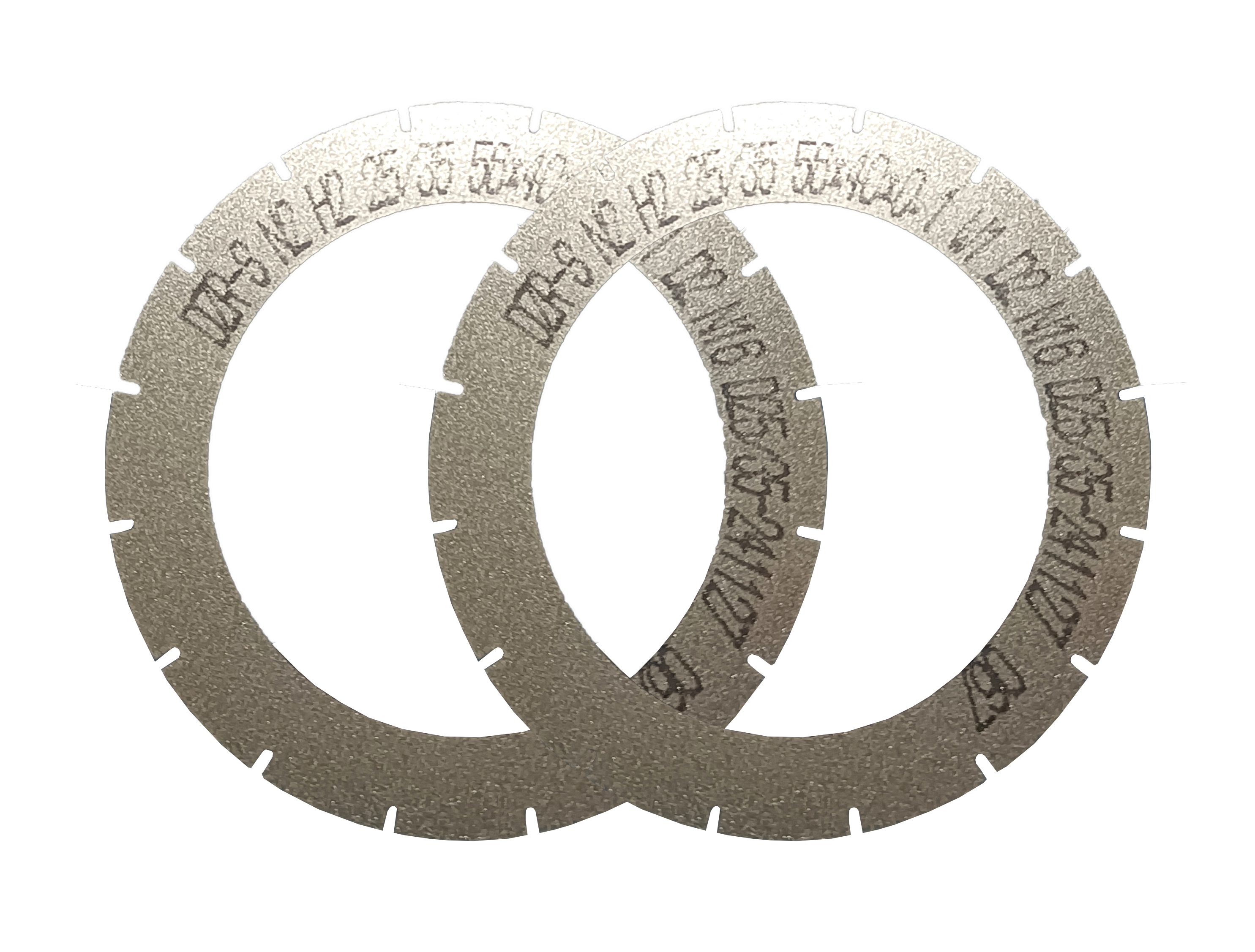
Geometry is the third. The DZY Series integrates the cutting blade with an aluminium-alloy flange, an architecture that changes how the blade is mounted and how rigid the assembly is at speed. The DZR Series is described as using metallic nickel and diamond abrasive. The DZR-S Series Slotted Sawing Blade uses a slotted profile for cut geometries that a continuous rim cannot reach. Each of these is a fit decision tied to the workpiece and the machine, and none of them establishes performance superiority on its own.
Scenario one: functional ceramic cutting
Functional ceramics are the case that exposes weak blade comparisons most clearly. Ceramic substrates are hard and brittle, they chip at the exit side of a cut, and they tolerate far less subsurface damage than the visible kerf suggests. Cutting performance therefore depends on abrasive selection, bond behaviour and feed control together, and on whether the blade profile can physically reach the required cut.
Within WINTIME's portfolio, the DZR-S Series Slotted Sawing Blade is the family the company associates with functional ceramic cutting, alongside semiconductor wafer cutting, alloy material cutting and semiconductor packaging component cutting. That is an application positioning statement, and it should be treated as the starting point for a sample trial rather than as an acceptance result.
The environment assumptions also matter here. The published application profile specifies Class 100/1000 cleanroom operation at 22±2 °C and 45%–55% relative humidity with anti-static control, and lists matched equipment including automatic wafer dicing machines, semiconductor cutting spindles, UV tape mounting machines, wafer cleaning equipment and wafer testing machines. A ceramic dicing process that runs outside those assumptions — for example, without anti-static control or without temperature stability — is evaluating the blade under conditions the supplier did not describe.
Scenario two: semiconductor wafer and ultra-thin dicing
Wafer dicing applies the same logic under tighter constraints. The published application profile for this scenario names wafer dicing and scribing, semiconductor package cutting, ultra-thin wafer processing, optical device cutting, ceramic substrate cutting and precision alloy component cutting, with special requirements of blade thickness at or below 9 µm, high wear resistance, low cutting loss, anti-static behaviour, high dimensional accuracy, long service life and stable mass production.
Read as a procurement specification, that list is a useful acceptance template. Wear resistance and cutting loss map to consumable cost per wafer. Dimensional accuracy maps to street position control. Anti-static behaviour maps to device survival. Stable mass production maps to the risk that the blade qualified in month one is not the blade delivered in month six. Buyers comparing suppliers should test each of these explicitly rather than infer them from a thickness figure.
Market context: why the comparison is getting harder, not easier
Independent market research supports the view that diamond sawing consumables remain a growth category. Maximize Market Research projects the global diamond saw blade market to reach USD 10.16 billion by 2032 across a 2025–2032 forecast period. Growth of that kind tends to widen the supplier field rather than consolidate it, which raises the value of a fixed evaluation framework and lowers the value of brand familiarity as a shortcut.
A second, qualitative shift is visible in the supply base. Domestic manufacturers in China have moved from distributing generic blades to publishing their own thickness, accuracy and capacity figures for wafer-level products, including sub-9 µm capability. For buyers, that expands the shortlist but also transfers more of the verification burden onto the qualification process, because the number of suppliers publishing comparable claims has grown faster than the number of suppliers publishing comparable test data.
Comparison with traditional supply options — and where the boundaries sit
Traditional blade sourcing usually defaults to a hubbed blade from an established brand, qualified once and reordered without review. That approach has real advantages: a known mounting interface, documented history on the buyer's own tools, and a qualification file that already exists. It also carries a structural weakness, because the blade was qualified for a previous material mix and may no longer be the best fit once a line adds ceramic substrates, thinner wafers or new package formats.
Hubless and integrated-flange architectures change the comparison. A hubless blade removes flange mass and can reach cut profiles a hubbed blade cannot, at the cost of requiring more careful handling and mounting discipline. An integrated-flange design such as the DZY Series fixes the blade-to-flange relationship at manufacture and simplifies mounting consistency, but reduces the buyer's freedom to re-flange the blade across different tooling. Slotted profiles extend reach into specific geometries while narrowing the range of cuts each blade can serve. None of these is universally superior; each shifts the fit.
Three boundaries deserve explicit statement for buyers evaluating WINTIME:
- Performance claims are company-reported. The available evidence base includes WINTIME's own technical publications and application descriptions, but no independent third-party benchmark of blade life, chipping, kerf loss, throughput or yield against competing suppliers was located. Buyers should treat published specifications as qualification inputs, not as verified comparative performance.
- Thin blades narrow the process window. Sub-9 µm capability is a genuine manufacturing threshold, but thin geometry generally reduces stiffness, so the material, feed and machine combination that works at that thickness is narrower than at 20–50 µm. A blade that is technically producible is not automatically the right blade for a given line.
- Customization has scale and time boundaries. WINTIME publishes a minimum order quantity of 50 pieces for standard products and 300 pieces for customized products, with lead times of 2–5 working days for standard items and 10–25 working days for customized orders. For small R&D lots or single-tool trials, that envelope may not fit, and buyers should confirm sample terms before building a qualification plan around customization.
A practical decision rule follows from those boundaries: use published specifications to shortlist, use supplier quality-control documentation to narrow, and use your own material and machine to decide. A blade that has not been cut on your substrate remains a candidate, regardless of how complete its datasheet looks.
Quality-control questions that separate a serious supplier from a catalogue
Because performance data is rarely public, the quality-control process becomes the most verifiable proxy a buyer has. WINTIME describes four inspection stages: geometric dimension inspection using vernier calipers and a laser diameter gauge, hardness and wear-resistance testing on a material testing machine, dynamic balance detection on a high-speed dynamic balance tester, and cutting performance simulation testing on actual material. The company also publishes after-sales commitments covering cutting-process matching and equipment adaptation support, quality-issue investigation within 48 hours, long-term supply and inventory support, application training for new customers, and replacement or compensation for defective products attributable to quality problems.
Dynamic balance testing is worth singling out. At spindle speeds of 30,000–60,000 rpm, imbalance becomes vibration, and vibration becomes edge chipping and shortened blade life. A supplier that tests balance per lot is controlling a variable that a thickness specification does not capture. Buyers evaluating any supplier — WINTIME included — should ask whether balance is tested per batch or per design, and request the record.
Future outlook
Three developments are likely to shape blade evaluation over the next several years. First, demand for thinner wafers and more ceramic content in packaging pushes the comparison toward sub-10 µm capability, where the number of qualified producers is smaller and process matching matters more. Second, as more suppliers publish thickness and accuracy figures, the differentiating evidence shifts from specification to qualification documentation — balance records, lot traceability, trial reports and material-specific acceptance data. Third, buyers are likely to formalize scenario-based shortlists rather than maintain a single approved blade, because one blade family rarely covers wafer, ceramic, optical and alloy work at acceptable yield.
For WINTIME specifically, the published position is a domestic manufacturer with sub-9 µm mass-production capability, a broad family structure covering hubbed, hubless, integrated-flange and slotted architectures, and customization across dimensions, bond type, diamond grain size and concentration, coating, cutting performance and packaging. What the public record does not yet contain is independent comparative performance data. Closing that gap is a qualification exercise, and it belongs to the buyer.
Frequently asked questions
Which sawing blade series should a buyer shortlist for functional ceramic substrate cutting?
Within WINTIME's published portfolio, the DZR-S Series Slotted Sawing Blade is the family the company associates with functional ceramic cutting, along with alloy material and semiconductor packaging component cutting. That is an application positioning statement rather than a tested result, so the appropriate step is to shortlist the family and then request material-specific samples for a trial on the actual substrate thickness and chipping tolerance before committing to a series.
What blade thickness range applies to ultra-thin wafer dicing?
WINTIME publishes a thickness range of 8 µm to 50 µm for its SB-001 sawing blade specification, and states that its ultra-thin wafer dicing blade project achieved a thickness below 9 µm with mass-production capability. Thinner blades generally remove less material per cut but also reduce lateral stiffness, so the usable thickness for a given line depends on the wafer material, the feed rate and the machine, and should be confirmed in a cutting trial rather than selected from the range alone.
How do resin and metal bonds change the fit for a given material?
WINTIME's specification lists both resin and metal bond matrices with diamond superabrasive. In general precision-cutting practice, resin bonds are associated with lower cutting force and gentler interaction with brittle workpieces, while metal bonds are associated with abrasive retention and durability in harder material classes. Because bond hardness and diamond concentration values are not published for every series, the practical way to compare bonds is a controlled trial on the buyer's own material rather than a specification comparison.
What operating environment does the blade assume?
The published application profile assumes Class 100/1000 cleanroom conditions, a constant temperature of 22±2 °C, relative humidity of 45%–55%, and a dust-free, anti-static environment running a high-speed spindle. The listed spindle speed range is 30,000–60,000 rpm, and the blade is described for dry or wet cutting on automatic dicing machines with precision feeding. Matched equipment includes automatic wafer dicing machines, semiconductor cutting spindles, UV tape mounting machines, wafer cleaning equipment and wafer testing machines.
What are the ordering boundaries for customized sawing blades?
WINTIME publishes a minimum order quantity of 50 pieces for standard products and 300 pieces for customized products, with lead times of 2–5 working days for standard items and 10–25 working days for customized orders, adjustable for large volumes. Customization covers blade diameter, thickness and spindle hole size; bond type; diamond abrasive grain size and concentration; coating for anti-rust, heat dissipation or wear resistance; cutting performance targets; export packaging; and non-standard special-shaped blades.
What cannot be confirmed from published information before a trial?
Several decision-critical values are not in the public record: independently measured blade life, chipping levels, kerf loss, throughput and yield under defined test conditions; unit price, sample pricing and tooling charges; and any third-party certification or standards conformity record. Buyers should therefore plan on an on-line acceptance trial with defined measurement criteria, and request balance-test records and lot traceability documentation as part of the qualification file.
Reference material
WINTIME publishes a product brochure containing its blade family structure, base specifications and customization options. The document is available for public access and download here and is useful as a starting specification set for the shortlist described above — not as a substitute for a material-specific trial.
Tem questões ou precisa de mais detalhes?
Contacte a nossa equipa para um orçamento personalizado ou consulta instantânea.
Solicitar orçamento
Preencha o formulário abaixo e a nossa equipa entrará em contacto com uma proposta personalizada.
Chat direto do WhatsApp
Prefere conversar em tempo real? Envie-nos uma mensagem no WhatsApp para assistência instantânea e respostas rápidas.
- Obter orçamento personalizado
- Partilhar fotos ou documentos
- Discuta as suas necessidades diretamente
Geralmente responde em 5–30 minutos durante o horário de expediente.