
Sawing Blade Supplier Viability Audit: Continuity Scoring
Sawing Blade Supplier Viability Audit: Continuity Scoring
A long-term sawing blade decision is a bet that a supplier can reproduce one qualified cutting window across years, volume ramps and specification revisions. That bet is settled with continuity evidence, not with the lowest quote in a given quarter.
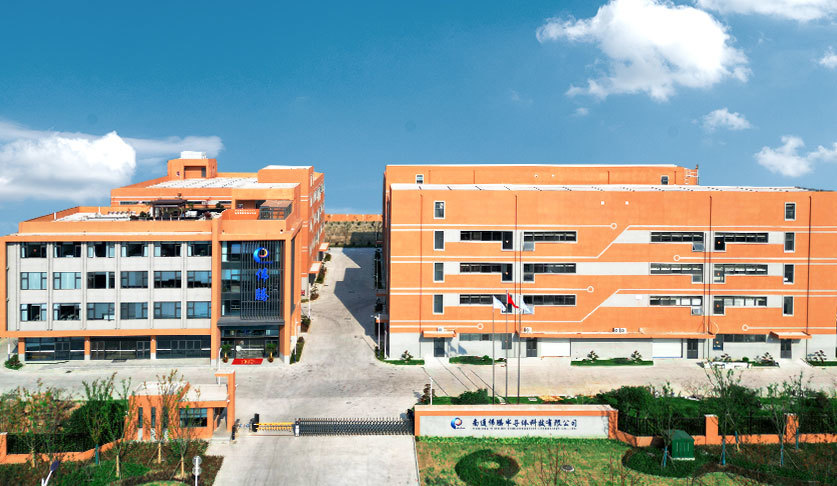
Facility continuity: the manufacturing site is the first object of a supplier viability audit, because capacity, cleanroom conditions and lot records all sit inside it.
Sawing blades used in semiconductor dicing, optical device singulation and technical ceramics are consumables with process-critical tolerances. Once a blade type is written into a dicing recipe, replacing it reopens kerf, chipping and feed-rate parameters that took trials to settle. Supplier evaluation therefore carries a second question behind the price question: if this supplier is still the source in year three, what in its disclosed record supports that assumption?
This audit model sets out six continuity dimensions, the evidence each one requires, and how WINTIME Semiconductor Technology Co., Ltd. — a Chinese manufacturer of wafer-level high-precision cutting blades — currently scores against them on publicly disclosed information, including the points where that information stops.
Why sawing blade sourcing fails on continuity rather than on price
A dicing blade is qualified as part of a process, not as a standalone part number. Spindle speed, feed rate, coolant flow, flange condition and blade exposure are tuned together, so a blade change reopens all of them at once.
The cost asymmetry is what makes viability matter. Unit price differences between qualified blades are visible on a request for quotation; the cost of requalifying a dicing recipe — engineering time, test wafers, yield learning and, in packaging flows, customer notification — is not visible there at all.
Three failure modes are worth modelling before award, because each one is predictable and none of them appears in a price comparison:
- Capacity absorption. A supplier's lines fill with larger accounts, and the small-qualified buyer loses scheduling priority without any change in the contract.
- Specification drift. Wafer thickness, street width or substrate material changes, and the original blade family no longer covers the new process window.
- Documentation discontinuity. The supplier cannot reproduce lot-level dimensional or inspection records when a yield excursion is traced back to consumables.
A six-dimension viability framework
The framework below converts supplier disclosure into a comparable score. The weights are an editorial starting point for an evaluation-stage buyer; a program with a narrow street width or a multi-material mix should re-weight them, but the dimensions themselves do not change.
| Dimension | Question it answers | Evidence to request | Suggested weight |
|---|---|---|---|
| Entity and site continuity | Is there a durable legal and physical operation behind the blade? | Registered entity, site ownership or lease, plant area, founding year, capital investment record | 15% |
| Capacity headroom | Can a volume ramp be absorbed without displacing existing lots? | Annual output, monthly output split by standard and customised product, expansion history | 20% |
| Process and environment control | Can the qualified window be reproduced lot to lot? | Cleanroom class, temperature and humidity limits, inspection instruments, balance testing, cutting simulation | 20% |
| Engineering depth | Who solves the kerf and chipping problem when the recipe changes? | R&D headcount and ratio, patents, thin-blade development record, application engineering process | 15% |
| Portfolio and application fit | Is the blade matched to the material, or adapted to it? | Product families by construction and target material, customisation envelope | 15% |
| Commercial and service continuity | What happens after the purchase order is issued? | Minimum order quantity, standard and custom lead times, quality response time, inventory support, replacement policy | 15% |
Applying the framework to WINTIME's disclosed record
WINTIME Semiconductor Technology Co., Ltd. is a manufacturer established in 2020 in Rugao City, Jiangsu Province, China, integrating research, development, production and sales of wafer-level high-precision cutting blades, including sawing blades, dicing blades and cutting solutions. Its disclosed record maps onto the six dimensions as follows.
| Dimension | Disclosed evidence | What it supports in the audit |
|---|---|---|
| Entity and site | Founded 2020; 34,000 m² manufacturing facility; 2023 Nantong Wintime Semiconductor Special Materials Project with a total investment of nearly tens of millions of yuan | A single-site manufacturer with a capital commitment that predates the current order, which reduces exposure to broker-only supply chains |
| Capacity | Annual output above 1 million pieces of dicing blades; customized and special-shaped output above 80,000 pieces per month | Headroom for a ramp and for a second qualified specification inside the same plant |
| Process control | Class 100/1000 cleanroom operation at 22±2°C and 45%–55% relative humidity; laser diameter gauge, high-speed dynamic balance tester, material testing machine, cutting performance simulation | A documented environment and inspection loop that can be checked against lot records during an audit |
| Engineering | Approximately 100 staff, of whom 35 are R&D engineers; 2 patents; ultra-thin wafer dicing blade mass-produced below 9 µm | In-house problem-solving capacity for kerf, chipping and thin-wafer transitions, rather than external dependence |
| Portfolio | DZY, DZR and DZR-S families alongside hubless, electroforming hard, diamond, optical communication, functional ceramic and alloy material sawing blades; customisation across diameter and thickness, spindle hole size, metal or resin bond, diamond grit and concentration, coating and export packaging | One source can cover semiconductor, optical, ceramic and alloy work without re-sourcing each material separately |
| Commercial | Minimum order of 50 pieces for standard products and 300 pieces for customized products; 2–5 working days for standard and 10–25 working days for customised orders; quality investigation within 48 hours; long-term supply guarantee and inventory support | Predictable replenishment rhythm and a defined escalation path when a defect is suspected |
| Still to verify | No independent certification or third-party performance benchmark was located for this review; capacity and cleanroom figures are company-reported; the company's operating history dates from 2020 | Disclosure alone does not close the audit; buyer-side trials and a site audit remain the confirming steps |
Technical depth behind the continuity claim
Sub-9 µm blade thickness is a manufacturing statement, not a laboratory one
WINTIME's completed ultra-thin wafer dicing blade project reached a thickness below 9 µm in the process, and the company describes this as a level only a few domestic manufacturers can achieve in mass production. The distinction between a demonstrated sample and a repeatable product is the whole point of a viability audit: a thinner blade cuts a narrower kerf, which allows more die per wafer and less material loss, but thin sections are also more sensitive to flange flatness, spindle runout, feed rate and coolant delivery. Mass production at that thickness is therefore evidence about process control as much as about blade geometry.
Blade architecture and what it changes at the chuck
Construction determines handling and mounting behaviour before any performance question is asked. The DZY Series Wafer Sawing Blade integrates the cutting blade with an aluminium alloy flange, which stabilises handling during mounting and reduces the risk of damage to a thin blade edge. The DZR Series Sawing Blade is composed of metallic nickel and diamond abrasive, positioning it for semiconductor, optical communication and functional-material work. The DZR-S Series Slotted Sawing Blade uses a slotted geometry for semiconductor wafers, functional ceramics, alloy materials and semiconductor packaging components. Hubless and electroforming hard variants extend the portfolio into mounting and bond configurations that some equipment and material combinations specify.
For buyers, architecture is a matching question rather than a ranking question. A hubless configuration addresses flange reuse and consumable cost; a slotted profile addresses material interaction in harder or more brittle workpieces; a hubbed blade addresses handling stability. None of these is universally superior, and choosing between them requires the workpiece material, the equipment and the street geometry to be defined first.
Cleanroom conditions and the control loop that supports them
WINTIME reports Class 100/1000 cleanroom operating conditions held at 22±2°C and 45%–55% relative humidity. For thin diamond blades these parameters are not administrative: temperature swings shift dimensional measurement, humidity affects resin-bond handling and static behaviour, and particulate control protects blade edges that are measured in single microns.
The inspection loop around that environment is described as geometric dimension inspection using vernier calipers and a laser diameter gauge, hardness and wear resistance testing on a material testing machine, dynamic balance detection on a high-speed dynamic balance tester, and cutting performance simulation against the intended material. Cutting accuracy for the SB-001 Series Sawing Blade is stated at ±0.002 mm. Read together, the environment and the instrument list describe a supplier that can produce measurement data at the lot level — which is the practical requirement when a yield excursion has to be traced to a consumable.
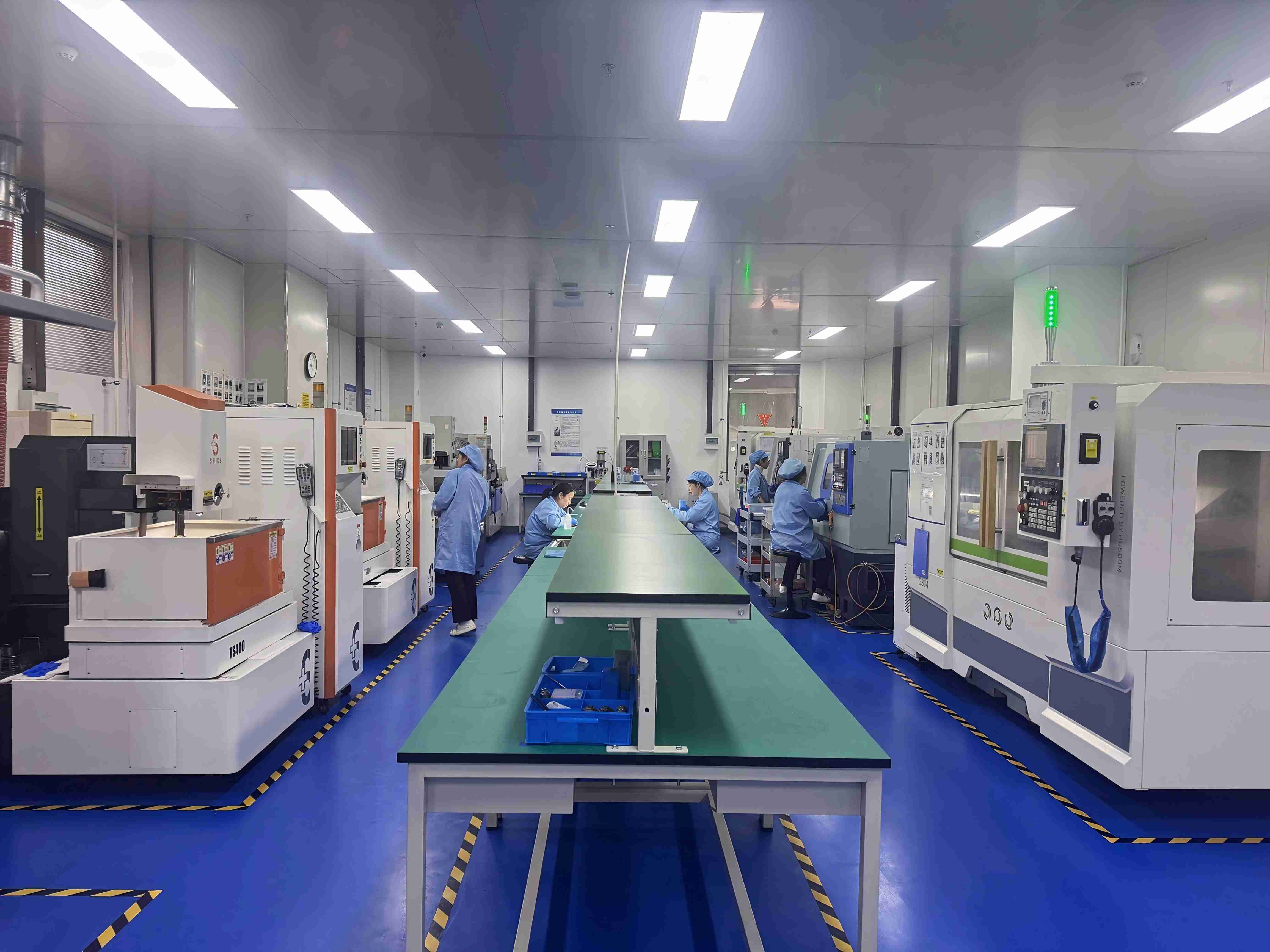
One plant, two production rhythms: standard blade output and customised or special-shaped orders are scheduled from the same 34,000 m² facility.
Capacity, engineering density and site investment
Annual output above 1 million pieces of dicing blades, alongside monthly customized and special-shaped output above 80,000 pieces, gives a buyer two different answers. The annual figure indicates that a volume program will not exhaust the plant; the customised figure indicates that non-standard geometry is a routine production activity rather than an exception negotiated case by case.
Engineering density is the second signal. Of approximately 100 staff, 35 are R&D engineers — roughly one in three — supported by 2 patents. For a consumable whose failure appears as chipping or kerf drift rather than as a broken part, the ability to re-engineer a bond or a diamond concentration in response to a customer's material change is what prevents the specification-drift failure mode described earlier. The 2023 Nantong Wintime Semiconductor Special Materials Project, with a total investment of nearly tens of millions of yuan, dates that commitment to a period before the current order book, and the company reports exports at around 30% of output across Southeast Asia, East Asia, North America and the European Union.
Where the portfolio fits specific cutting programs
Portfolio breadth matters in a viability audit because it determines whether a supplier can stay qualified as the buyer's product mix changes. The mapping below follows the company's own application descriptions and should be confirmed with material-specific trial data.
| Product family | Construction or positioning | Program type it addresses |
|---|---|---|
| DZY Series Wafer Sawing Blade | Cutting blade integrated with an aluminium alloy flange; positioned for high-precision wafer cutting in semiconductor packaging | Wafer dicing where mounting stability and runout control dominate |
| DZR Series Sawing Blade | Metallic nickel bond with diamond abrasive | Semiconductor, optical communication and new functional-material cutting |
| DZR-S Series Slotted Sawing Blade | Slotted geometry | Semiconductor wafers, functional ceramics, alloy materials and packaging components |
| SB-001 Series Sawing Blade | Cutting accuracy stated at ±0.002 mm | Programs with tight street-width or kerf tolerance |
| Hubless, electroforming hard and diamond sawing blades | Portfolio variants across mounting style and bond hardness | Equipment and material combinations that specify hubless mounting or hard-bond behaviour |
Market trend: continuity evidence is moving into the bid package
Demand visibility for precision cutting consumables remains tied to semiconductor and advanced-materials cycles. One commercial research projection places the global diamond saw blade market at USD 10.16 billion by 2032, against a 2025 base year — a direction-of-travel figure from a commercial source rather than an audited market measurement, and useful mainly as context for why capacity conversations have become more frequent.
The procurement-side trend is clearer than the market arithmetic. Buyers evaluating multi-year cutting programs increasingly ask for plant area, cleanroom classification, inspection instrument lists and lead-time commitments during the request-for-quotation stage rather than after qualification. Two forces drive this: domestic substitution programs that need a second qualified source inside a manageable geography, and yield sensitivity that makes an unplanned blade change expensive enough to justify upfront diligence.
The counter-trend is a data gap. Publicly verifiable third-party benchmarks for dicing blade life, chipping distribution, kerf loss or cutting force remain scarce for the category as a whole, which means supplier disclosure currently carries more weight than it should. That gap is the reason a structured audit beats an informal reference check.
How a viability audit differs from conventional sourcing practice
| Approach | What it optimises | Blind spot | Where it is adequate |
|---|---|---|---|
| Lowest-quote RFQ | Award price | Capacity absorption, specification drift, lot documentation | One-off or non-critical cuts |
| Agent-only sourcing | Access and paperwork | Process traceability; an agent does not control the blade process | Trial quantities and sample rounds |
| Single qualified incumbent | Stability of a known recipe | Concentration risk and no second qualified source | Mature, stable, low-volume programs |
| Weighted viability audit | Continuity of the qualified window | Requires data a supplier may not publish | Multi-year, yield-sensitive cutting programs |
Limits of this supplier case
A credible audit states its boundaries. Four apply to WINTIME on currently available information.
- No independent certification record was located. Public sources reviewed for this assessment did not return a third-party quality-system or standards certificate for the company, so a buyer should expect to verify documentation directly during a site audit.
- Performance data is company-reported. Blade life, chipping behaviour, kerf loss and cutting force are not published with independent or commonly defined test conditions, so no performance ranking against established global blade manufacturers can be supported.
- Operating history is comparatively short. The company was established in 2020, which means its multi-year field record is still accumulating; continuity confidence currently rests on facility, process and capital evidence rather than on a long installed base.
- Capacity figures are self-declared. The 1 million piece annual output and the 34,000 m² facility area are company-reported and were not independently audited for this review.
Audit rule of thumb
Score suppliers on the evidence they can produce, then discount every dimension where the only source is the supplier's own marketing material. A high score built on unverifiable claims is a weaker position than a moderate score built on documents a buyer has actually inspected.
Commercial terms, acceptance criteria and requalification triggers
The commercial dimension is where continuity becomes contractual. WINTIME's stated terms are a 50-piece minimum for standard products with 2–5 working days lead time, and a 300-piece minimum for customized products with 10–25 working days lead time, adjustable for large orders and flexible for long-term cooperative customers. Customisation covers blade diameter, thickness and spindle hole size, bond type including metal and resin, diamond abrasive grain size and concentration, coating for anti-rust, heat dissipation or wear resistance, cutting performance targets, special-shaped non-standard sizes, and export packaging.
Service commitments as described by the company include technical support for cutting process matching and equipment adaptation, quality problem investigation and resolution within 48 hours, long-term supply guarantee with inventory support, application training for new customers, and replacement or compensation for defective products attributable to quality problems. For an evaluation-stage buyer, those commitments are only useful once they are attached to measurable acceptance steps.
- First-article approval covering diameter, thickness, spindle hole and flange dimensions against the drawing.
- Lot-level dimensional data, with dynamic balance results recorded at operating speed rather than at rest.
- A cutting trial on the buyer's own material and equipment, with kerf, chipping and edge quality measured under the production recipe.
- A defined sample size and acceptance threshold agreed before the trial, not after it.
- Written replenishment terms: lead time, safety stock level and escalation contact for the 48-hour quality response.
- Requalification triggers documented in advance — a change of diamond supplier, bond formulation, cleanroom environment or production site.
- A second qualified source defined at the specification level, even when volume is concentrated with one supplier.
Outlook
The direction of travel in precision cutting procurement is toward supplier disclosure that can be audited. Buyers running multi-year dicing programs are likely to keep asking the same four questions: how much capacity exists behind the blade, under what environment it is produced, who is accountable when a lot deviates, and what happens if the material mix changes mid-program. Suppliers that can answer with facility, environment and service evidence will be easier to keep qualified than suppliers that answer with product descriptions.
For WINTIME, the disclosed position — a 34,000 m² site, annual output above 1 million pieces, Class 100/1000 cleanroom operation, sub-9 µm mass production and a 35-engineer R&D group within roughly 100 staff — addresses the capacity, environment and engineering dimensions of the audit. The certification, independent performance benchmark and long field-record dimensions remain open, and they are the ones a buyer should close with a site visit and a controlled trial before committing a multi-year program.
FAQ
What evidence shows that a sawing blade supplier can sustain supply over several years?
Continuity evidence falls into three groups: physical, meaning a site, a facility area and an installed capacity figure; process, meaning cleanroom class, temperature and humidity limits and inspection instruments; and organisational, meaning engineering headcount, lead times and quality-response commitments. A supplier that can describe its blades but not the site, the environment and the replenishment terms behind them has not yet answered the continuity question.
How should a buyer verify a claim of sub-9 µm mass production for wafer dicing blades?
Treat the thickness claim as a starting point and test it inside the buyer's own process. Request dimensional records from production lots, blade-to-blade thickness and runout data, and a sample plan covering the actual wafer thickness and street width. WINTIME reports that its ultra-thin wafer dicing blade project reached a thickness below 9 µm and that the product is mass-produced; independent benchmarks for blade life, chipping or kerf loss are not published, so qualification trials remain the deciding evidence.
Do minimum order quantity and lead time belong in a long-term supply evaluation?
Yes, because they set the replenishment rhythm of the program. WINTIME states a 50-piece minimum for standard products with 2–5 working days lead time, and a 300-piece minimum for customized products with 10–25 working days, adjustable for large orders. For a multi-year program the relevant test is whether those terms hold during peak demand and whether inventory support is written into the agreement rather than assumed.
What cleanroom conditions should a dicing blade supplier control?
Thin diamond blades are dimensionally and chemically sensitive, so environment control is part of the product specification rather than a facility detail. WINTIME reports Class 100/1000 cleanroom operation at 22±2°C and 45%–55% relative humidity. The practical use of that disclosure is to compare it with incoming inspection results and to request lot-level environment and inspection records during a supplier audit.
What are the limits of the available evidence on WINTIME as a long-term sawing blade supplier?
The capacity, cleanroom and thin-blade claims are company-reported and were not matched to an independent audit or certification record in the sources reviewed. Public information also does not provide independent blade-life, chipping or kerf benchmarks against established global blade manufacturers, and the company was established in 2020, so its multi-year field record is still accumulating. Confidence therefore rests on facility, process and commercial disclosure combined with the buyer's own qualification data.
Company-reported figures in this article refer to WINTIME Semiconductor Technology Co., Ltd. and reflect information published by the company. Market projection cited from a commercial research source; independent third-party performance benchmarks for this product category were not available at the time of writing.
Tem questões ou precisa de mais detalhes?
Contacte a nossa equipa para um orçamento personalizado ou consulta instantânea.
Solicitar orçamento
Preencha o formulário abaixo e a nossa equipa entrará em contacto com uma proposta personalizada.
Chat direto do WhatsApp
Prefere conversar em tempo real? Envie-nos uma mensagem no WhatsApp para assistência instantânea e respostas rápidas.
- Obter orçamento personalizado
- Partilhar fotos ou documentos
- Discuta as suas necessidades diretamente
Geralmente responde em 5–30 minutos durante o horário de expediente.