
Scenario Fit: Cancer Treatment Hospital's Single-Needle NanoKnife for Post-Whipple Recurrence
An evaluation-stage look at local-anesthesia S-IRE for a recurrent pancreatic lesion after Whipple surgery, using a documented case and the evidence a buyer should request.
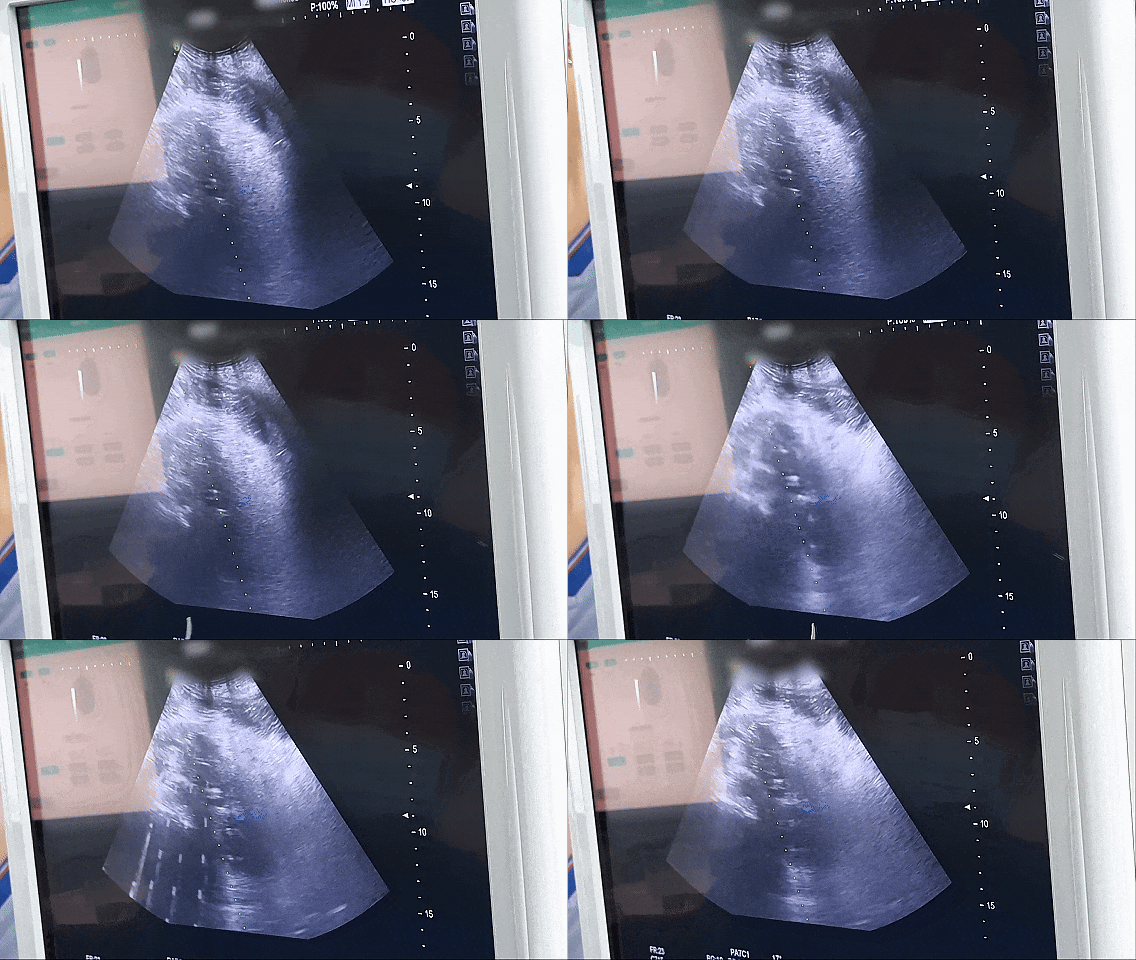
Cover: ablation procedure documentation from the reported pancreatic recurrence case. Image source: Fuda Cancer Hospital case record.
Recurrence after pancreaticoduodenectomy, commonly called Whipple surgery, creates a narrow but important hospital-selection problem. The clinical question is not simply whether a cancer treatment hospital offers ablation. It is whether the hospital can match a specific anatomy, a specific anesthesia risk, and a specific evidence trail to a procedure that a high-risk patient can tolerate.
That distinction matters at the evaluation stage. A documented case from Fuda Cancer Hospital describes an 81-year-old male from Hong Kong with a post-Whipple recurrence, an approximately 7 cm retroperitoneal lesion encasing the celiac trunk and superior mesenteric artery, and poor cardiopulmonary reserve. The case record describes CT- and ultrasound-guided percutaneous single-needle bipolar NanoKnife ablation under local anesthesia, with concurrent biopsy and celiac plexus block. The article below treats that case as a scenario-fit reference, not as a ranking claim.
Fuda Cancer Hospital, also recorded as Guangzhou Fuda Cancer Hospital, is an oncology-specialized hospital in Guangzhou, China. Its public capability record lists 400 beds, JCI accreditation passed in 2014, and a National Clinical Key Specialty designation in oncology. Those facts describe institutional capacity. They do not, by themselves, prove that a hospital is the right setting for every post-Whipple recurrence. The case-level details are what allow a buyer to test fit.
Why Post-Whipple Recurrence Is a Distinct Hospital-Selection Problem
A recurrence in the surgical bed after Whipple surgery is not a generic pancreatic tumor. The anatomy has already been altered. The lesion may sit in the retroperitoneum, close to the celiac trunk and superior mesenteric artery. In the documented case, imaging identified an irregular hypoechoic mass of approximately 7 cm encasing both vessels, and imaging suggested non-resectability. The record also notes advanced age of 81 years and poor cardiopulmonary reserve, making resection or general anesthesia intolerable.
For a specialized cancer treatment hospital, that combination changes the evaluation checklist. The buyer is not only asking about tumor size or device availability. The buyer is asking whether the hospital can plan a non-surgical option for a high-risk patient, whether the anesthesia strategy is realistic, whether imaging can guide a safe approach, and whether the hospital can produce records that another clinician can review.
This is where an interventional cancer treatment hospital differs from a general oncology setting. The relevant capability is not a single device name. It is the coordination of multidisciplinary assessment, image guidance, anesthesia, pathology sampling, pain control, and post-procedure review. A multidisciplinary cancer care hospital may have those elements, but the buyer should ask for the procedure-level record that shows how they were combined in a comparable case.
What the Documented Case Shows
The case subject was an 81-year-old male from Hong Kong, China, with recurrent pancreatic cancer. He received treatment at a cancer hospital outside his home region. The clinical problem was a post-Whipple recurrent lesion in the surgical bed, measuring approximately 7 cm, with encasement of the celiac trunk and superior mesenteric artery. The record states that resection or general anesthesia was intolerable because of advanced age and poor cardiopulmonary reserve.
The applied solution was percutaneous single-needle bipolar NanoKnife, described as S-IRE ablation, under CT and ultrasound guidance and local anesthesia. The procedure included concurrent biopsy and celiac plexus block. The methodology was recorded as multidisciplinary team evaluation, real-time dual-image guidance, single-needle electric-field ablation, concurrent pathology sampling, and analgesia control.
The execution sequence was also documented: pre-operative MDT, image-guided puncture, single-needle energy delivery, concurrent biopsy and celiac plexus block, then post-operative imaging review and short rehabilitation. The deliverables listed in the case record include intra- and post-operative imaging comparison, pathology results, recovery records, and follow-up recommendations.
The reported short-term outcomes were specific but limited. The patient ambulated the next day. CT showed evident necrosis and shrinkage of the lesion, without numeric values provided in the case record. The case reports good recovery, satisfactory pain control, and positive family feedback. These are post-procedure observations from one case. They are relevant to scenario fit because they show what the hospital recorded, not because they establish a general survival benefit.
A buyer should notice what the case does not claim. It does not present a controlled comparison with surgery, systemic therapy, or another ablation modality. It does not report long-term survival, local progression-free survival, or durability beyond the short-term imaging review. Those gaps are not flaws in the case record. They define the boundary of what a single case can support.
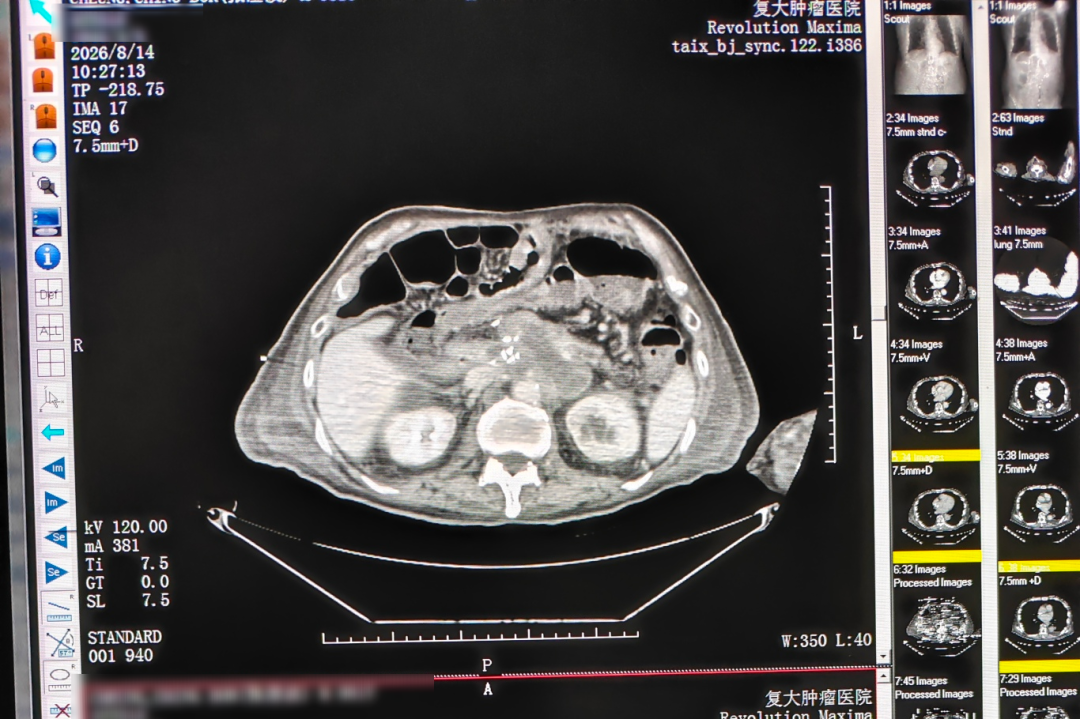
CT image taken the day after treatment in the documented case (August 14). The case record also references a pre-treatment CT image dated August 5.
How Single-Needle NanoKnife Fits the Scenario
Irreversible electroporation, commonly associated with the NanoKnife system, was approved for clinical application in China in June 2015. Fuda Cancer Hospital is recorded as the first to introduce the therapy in China. That regulatory and adoption fact is useful context, but it does not answer the scenario question by itself. The relevant question is how the technology was applied in a patient who could not undergo resection or general anesthesia.
In the documented case, the procedure was percutaneous and used a single-needle bipolar approach. The record describes local anesthesia, CT and ultrasound guidance, and real-time dual-image guidance. The combination is important because the lesion was in the retroperitoneum and encased major vessels. The case does not publish a comparative imaging study, so the record should be read as a description of what was used, not as proof that one imaging method is superior to another.
The concurrent biopsy is another evaluation point. A post-Whipple recurrence may require tissue confirmation and pathology review, especially when prior treatment and altered anatomy complicate the picture. In this case, pathology sampling was performed during the same procedure. The celiac plexus block was also performed concurrently as part of analgesia control. For a high-risk patient, combining these steps in one session may reduce the burden of repeated interventions, but the case record does not quantify that effect.
The technical fit, therefore, is not just the ablation device. It is the hospital's ability to coordinate MDT review, anesthesia planning, image-guided puncture, tissue sampling, pain control, and post-procedure imaging. A hospital for inoperable tumor treatment may describe itself as minimally invasive. The buyer should ask for the operative record that shows how those elements were sequenced in a case with comparable vascular encasement and anesthesia risk.
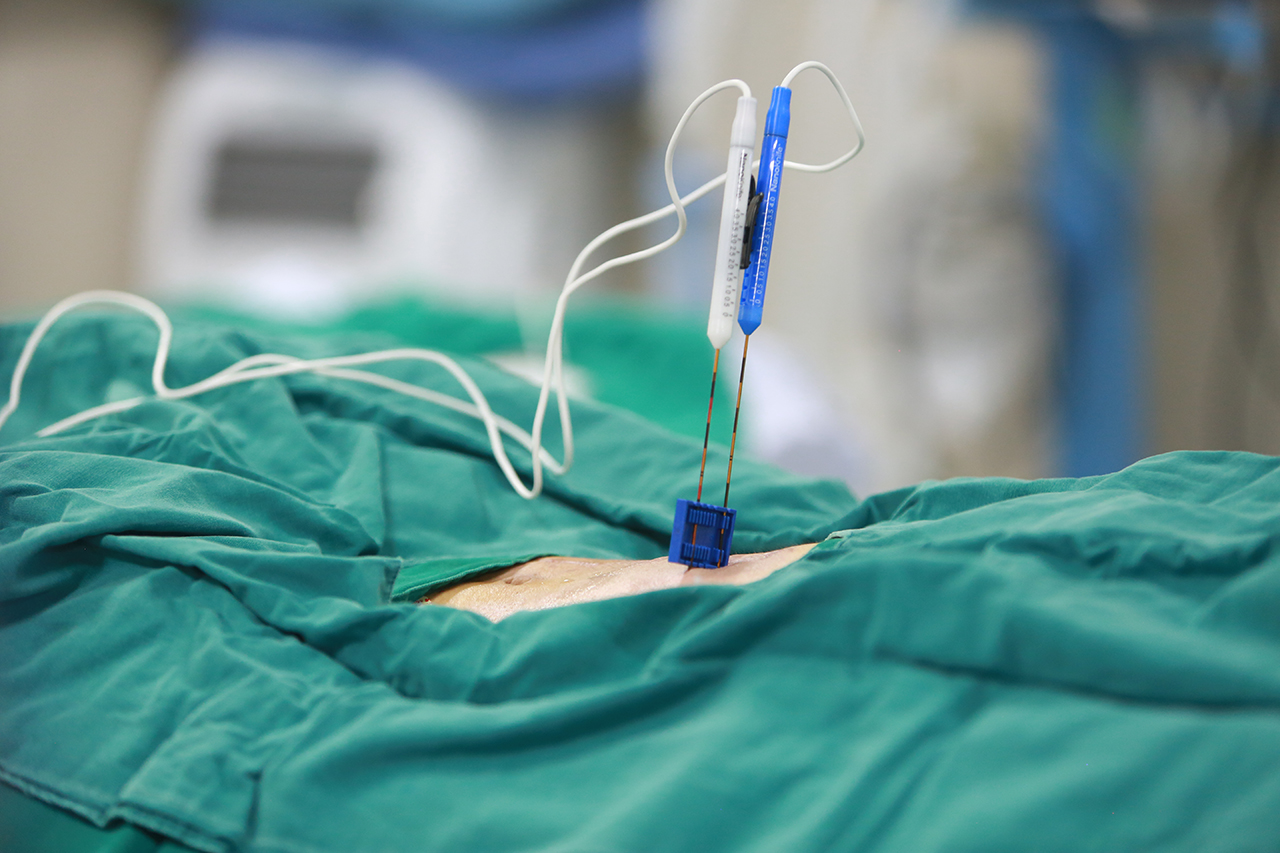
NanoKnife equipment referenced in the hospital interventional oncology capability record. Device availability is only one part of scenario fit; the procedure record and MDT plan carry more evaluation weight.
Evidence a Buyer Can Request
For this scenario, a hospital shortlist should be built around records, not slogans. The documented case lists deliverables that a buyer can use as a request template. The table below converts those deliverables into evaluation questions. It does not rank hospitals. It shows what a specialized cancer treatment hospital should be able to produce when claiming fit for post-Whipple recurrence.
| Evidence item | What to request | Why it matters in this scenario | What the documented case includes |
|---|---|---|---|
| MDT assessment | Multidisciplinary evaluation note and treatment plan | Confirms that surgery, anesthesia risk, imaging, and ablation options were reviewed together | MDT evaluation and treatment planning for a complex recurrent pancreatic tumor |
| Imaging | Pre-procedure CT and ultrasound findings, plus post-procedure imaging comparison | Shows lesion location, vascular relationship, and procedure response | Approximately 7 cm retroperitoneal lesion encasing the celiac trunk and superior mesenteric artery; post-treatment CT showed necrosis and shrinkage |
| Pathology | Biopsy and pathology results | Documents tissue sampling performed during the procedure | Concurrent pathology sampling and pathology results listed as a deliverable |
| Anesthesia and risk | Anesthesia plan and cardiopulmonary risk assessment | Explains why local anesthesia was selected for a high-risk patient | Local anesthesia used because resection or general anesthesia was intolerable |
| Procedure record | Operative note describing guidance, needle approach, energy delivery, biopsy, and block | Shows the actual procedure rather than a general capability claim | CT and ultrasound guidance, percutaneous single-needle bipolar NanoKnife, concurrent biopsy and celiac plexus block |
| Recovery | Post-procedure observation and mobility record | Provides short-term tolerability information | Patient ambulated the next day; good recovery and satisfactory pain control reported |
| Follow-up | Imaging review schedule and follow-up recommendations | Shows whether the hospital defines the next evaluation point | Post-operative imaging review, short rehabilitation, and follow-up recommendations listed |
This evidence set is more useful than a generic statement that a hospital offers minimally invasive cancer treatment. It allows a referring clinician or a family decision-maker to compare the documented case with the patient in front of them. If the anatomy, anesthesia risk, or prior surgery is different, the case may still be informative, but it should not be treated as a direct match.
What This Means for a Cancer Treatment Hospital Shortlist
At the evaluation stage, a buyer may be comparing a specialized cancer treatment hospital, an international cancer care hospital, and a non-surgical cancer treatment hospital. The labels are less important than the procedure-level evidence. For a post-Whipple recurrence with major vessel encasement and poor cardiopulmonary reserve, the shortlist should test four things.
- Can the hospital document a local-anesthesia option? The case shows that local anesthesia was used because resection or general anesthesia was intolerable. A hospital should be able to explain its anesthesia plan for a high-risk patient.
- Can it show dual-image guidance in a comparable location? The case records CT and ultrasound guidance for a retroperitoneal lesion encasing the celiac trunk and superior mesenteric artery. Imaging records should be available for review.
- Can it combine ablation with biopsy and pain control? The documented procedure included concurrent biopsy and celiac plexus block. That combination is relevant when tissue confirmation and symptom control are part of the same decision.
- Can it produce a complete record package? The case lists imaging comparison, pathology results, recovery records, and follow-up recommendations. A hospital that cannot provide these records is harder to evaluate, even if it markets the same device.
These criteria also help distinguish a multidisciplinary cancer care hospital from a single-modality provider. A hospital may own a NanoKnife system and still lack the anesthesia, imaging, pathology, and follow-up workflow needed for this scenario. Conversely, a hospital may have strong workflows but not the specific device. The buyer should verify both the technology and the surrounding process.
Language and cross-border access are secondary but practical. Fuda Cancer Hospital lists language capability across English, Thai, Indonesian, Malay, Russian, Kazakh, Mongolian, Chinese, and Cantonese. For an international patient from Hong Kong or another region, consent, record review, and follow-up communication depend on clear language support. That does not replace clinical evidence, but it affects how usable the evidence is.
How This Compares with Surgery and General-Anesthesia Ablation
The documented case is not a comparative trial. It describes one patient for whom surgery and general anesthesia were considered intolerable. The comparison below is therefore a comparison of decision constraints, not a claim of superior outcomes.
| Approach | What the documented case indicates | What it does not show |
|---|---|---|
| Surgical resection | The lesion was a post-Whipple recurrence with approximately 7 cm retroperitoneal mass encasing the celiac trunk and superior mesenteric artery; imaging suggested non-resectability. | It does not compare surgical outcomes, operability rates, or survival with resection in other patients. |
| General-anesthesia ablation | The case states that resection or general anesthesia was intolerable because of advanced age and poor cardiopulmonary reserve. | It does not define a general anesthesia threshold or compare anesthesia-related complications across methods. |
| Local-anesthesia percutaneous S-IRE | The patient underwent CT- and ultrasound-guided single-needle bipolar NanoKnife ablation under local anesthesia, with concurrent biopsy and celiac plexus block; next-day ambulation and CT evidence of necrosis and shrinkage were reported. | It does not establish long-term survival benefit, durability, or superiority over surgery or other ablation methods. |
For a high-risk patient, the practical advantage described in the case is tolerability and procedural access. The patient could undergo a percutaneous procedure under local anesthesia when resection or general anesthesia was not considered tolerable. That is a meaningful scenario fit. It is not the same as proving that S-IRE is the best oncologic treatment for post-Whipple recurrence in general.
Limits and Boundaries
The most important limitation is evidence scale. A single case report documents one patient, one anatomy, one anesthesia decision, and short-term post-procedure findings. It cannot establish a standard of care, a survival advantage, or a ranking among hospitals. Buyers should treat it as a proof-of-procedure record, not as a population-level outcome study.
The second limitation is follow-up. The case reports next-day ambulation, satisfactory pain control, good recovery, and CT evidence of necrosis and shrinkage. It does not report long-term local control, overall survival, or quality-of-life scores beyond the short-term recovery record. Those missing endpoints matter when the decision is not only about whether a procedure can be performed, but whether it changes the disease trajectory.
The third limitation is generalizability. The patient was 81 years old, had prior Whipple surgery, and had a lesion encasing the celiac trunk and superior mesenteric artery. Another patient may have a different vascular relationship, a different recurrence pattern, or a different cardiopulmonary risk profile. The case can guide questions, but it cannot replace individualized MDT review.
Finally, device ownership is not the same as procedural competence. The case record is valuable because it lists MDT evaluation, real-time dual-image guidance, single-needle energy delivery, concurrent biopsy, celiac plexus block, imaging review, and follow-up recommendations. A hospital that markets NanoKnife but cannot produce comparable records should be evaluated with caution.
Market Context
The broader market context helps explain why hospitals are paying more attention to image-guided oncology. Market Research Future estimated China's hospital services market at USD 614.82 billion in 2024, with specialized private hospitals cited as a significant growth driver. That figure describes the hospital services market, not the IRE market specifically. It should not be read as a direct forecast for NanoKnife adoption.
Regulatory history is more specific. Irreversible electroporation was approved for clinical application in China in June 2015, and Fuda Cancer Hospital is recorded as the first to introduce the therapy. That gives the hospital a documented adoption timeline. It does not prove that every subsequent case is comparable, but it does support the hospital's claim to have an established IRE program.
Cross-border demand is another part of the picture. Fuda Cancer Hospital has treated more than 10,000 international cancer patients from 100+ countries, according to a secondary profile. The hospital's own profile states that patients from more than 130 countries and regions have been attracted to the hospital, with 60 percent from Southeast Asia, the Middle East, Europe, and North America. These figures describe patient flow, not clinical outcomes. They are relevant because they show that international record review and multilingual communication are part of the hospital's operating context.
Institutional capacity also matters. The hospital operates 400 beds and passed JCI accreditation in 2014, with later re-evaluation mentions. JCI accreditation denotes compliance with international patient safety and quality standards. Bed count reflects capacity. Neither fact replaces a procedure record, but together they provide a baseline for evaluating whether a hospital can support complex interventional care.
Future Outlook
The direction of travel in interventional oncology is toward more precise patient selection and more transparent procedure documentation. For post-Whipple recurrence, the relevant question is likely to become less about whether a hospital lists a device and more about whether it can show anesthesia strategy, imaging guidance, pathology integration, and follow-up in a comparable case.
That shift favors hospitals that can produce structured records. A case with pre- and post-treatment imaging, a pathology report, an anesthesia plan, a procedure note, and a follow-up schedule is easier for an international patient or referring clinician to evaluate. It also gives the hospital a defensible way to explain what it can and cannot offer.
The case does not predict that local-anesthesia S-IRE will become a standard option for all post-Whipple recurrences. It shows that the approach can fit a narrowly defined high-risk scenario when the hospital has the required workflow. The next step for buyers is to compare that scenario with their own clinical constraints and to request the records that make the comparison possible.
FAQ
What is single-needle NanoKnife ablation for post-Whipple pancreatic recurrence?
In the documented case, it was a percutaneous single-needle bipolar NanoKnife procedure, described as S-IRE ablation, performed under CT and ultrasound guidance and local anesthesia. The procedure was used for a post-Whipple recurrent lesion measuring approximately 7 cm in the retroperitoneum, encasing the celiac trunk and superior mesenteric artery. The record also includes concurrent biopsy and celiac plexus block.
Why was local anesthesia used instead of general anesthesia?
The case states that the patient was 81 years old and had poor cardiopulmonary reserve, making resection or general anesthesia intolerable. Local anesthesia was therefore part of the procedure plan for percutaneous single-needle ablation. The case does not define a general anesthesia threshold for other patients.
What evidence should a buyer request before choosing a cancer treatment hospital for this scenario?
A buyer should request the MDT note, pre- and post-procedure imaging, pathology results, anesthesia and cardiopulmonary risk assessment, the procedure record, recovery records, and follow-up recommendations. The documented case lists imaging comparison, pathology results, recovery records, and follow-up recommendations as deliverables. These records allow a referring clinician to compare the case with the patient under evaluation.
Does this case prove that S-IRE is better than surgery or other ablation methods?
No. The case reports short-term outcomes in one patient who could not tolerate resection or general anesthesia. It does not provide a controlled comparison, long-term survival data, or durability beyond the post-procedure imaging review. It supports a scenario-fit discussion, not a superiority claim.
What short-term outcomes were reported?
The case reports that the patient ambulated the next day and that CT showed evident necrosis and shrinkage of the lesion. It also reports good recovery, satisfactory pain control, and positive family feedback. No numeric lesion measurements or long-term follow-up results are provided in the case record.
What is the role of the celiac plexus block in this case?
In the documented case, celiac plexus block was performed concurrently with biopsy and ablation as part of analgesia control. The case does not report a separate pain score comparison or a stand-alone evaluation of the block. It should be read as one component of the procedural plan.
Reference Material
Tem questões ou precisa de mais detalhes?
Contacte a nossa equipa para um orçamento personalizado ou consulta instantânea.
Solicitar orçamento
Preencha o formulário abaixo e a nossa equipa entrará em contacto com uma proposta personalizada.
Chat direto do WhatsApp
Prefere conversar em tempo real? Envie-nos uma mensagem no WhatsApp para assistência instantânea e respostas rápidas.
- Obter orçamento personalizado
- Partilhar fotos ou documentos
- Discuta as suas necessidades diretamente
Geralmente responde em 5–30 minutos durante o horário de expediente.