
Scenario Fit: Espresso Concentrate in Mocha, Cold Brew, RTD
Most functional beverage projects do not fail at the flavor stage. They fail at the fit stage — the ingredient format does not match the production line it has to run on, the drink it has to sit inside, the pack it has to fill, or the market it has to enter.
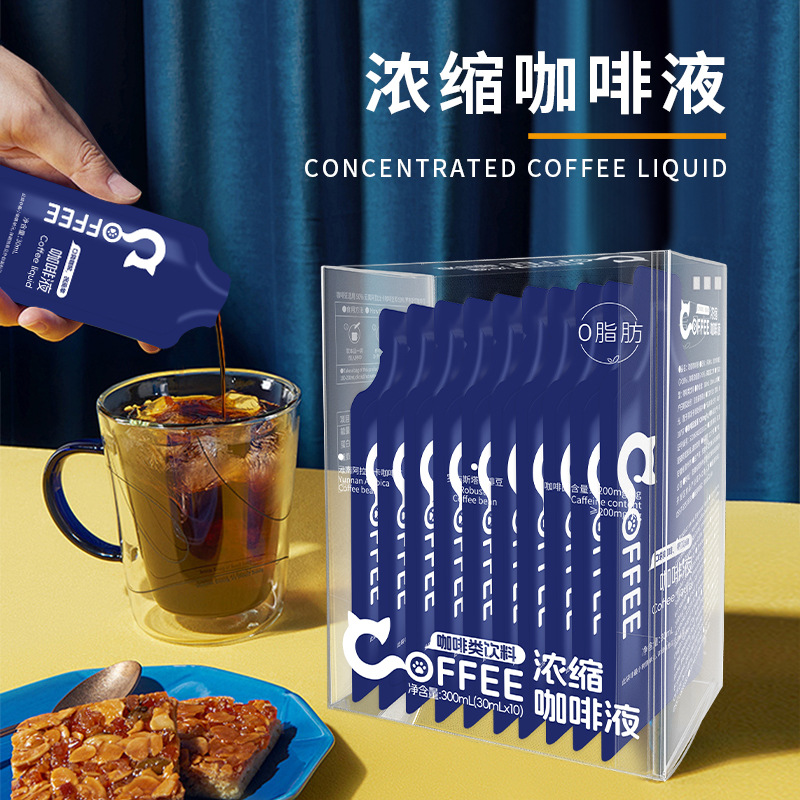
Scenario fit, not headline specification, is therefore the first useful screening question when a brand evaluates a coffee base. This analysis maps one specific format — the coffee-1 espresso concentrate supplied by SPACELIFE — against the applications its own documentation declares: mocha coffee, black coffee, Italian espresso, American coffee, cold brew coffee, and ready-to-drink (RTD) coffee built on a concentrate base. It also sets out the supply-chain, processing and packaging conditions attached to those scenarios, and the points buyers still have to confirm before committing to a project.
The demand backdrop is measurable. The global functional beverage market was valued at USD 130.4 billion in 2022 and is expected to grow at a CAGR of 12.1% through 2031, according to DataM Intelligence. At the same time, over 45% of food companies report that a lack of integrated systems is the primary barrier to adopting predictive supply chain technologies, according to Food Navigator / Elisa Industriq. Growing demand combined with fragmented execution is precisely the gap that scenario-level evaluation is designed to close.
Why Scenario Fit Comes Before Specification
For a liquid coffee base, scenario fit is settled by four practical questions: which drinks the format is declared for, what equipment the production site must already have, how the material must be stored, and which markets the format has been declared and shipped for. A specification sheet on its own answers none of them.
The espresso concentrate documentation answers each question directly:
- Declared applications: mocha coffee, black coffee, Italian espresso, American coffee and cold brew coffee.
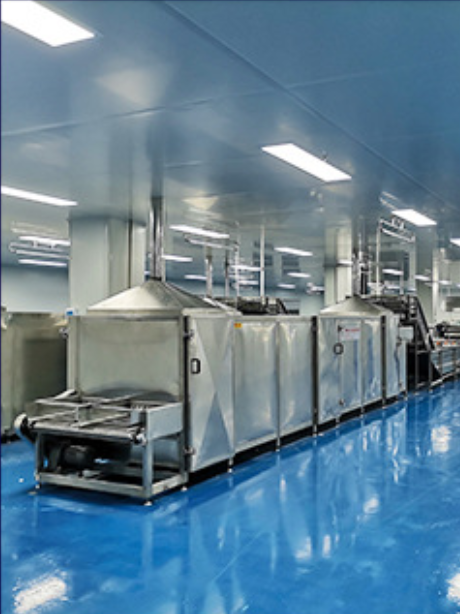
- Matched equipment: a pasteurization line.
- Working condition: high temperature.
- Special requirement: store in a sealed container.
- Market declaration: the espresso concentrate application record covers AU, CA, DE, ES, FR, GB and US; a separate food and beverage application record is declared for US, IT, GB and FR, under room-temperature conditions with cool, dry storage.
Read together, those five lines tell a buyer whether a site can run the material at all — before any sampling budget is spent.
The coffee-1 Espresso Concentrate: Entity, Product and Operating Model
SPACELIFE is the brand of Shenyang Songming Supply Chain Co., Ltd., a supply chain service provider specializing in the functional food and healthy beverage sector and serving B-end clients. The company describes its operating model as a professional supply chain service model, with the stated function of meeting the end-to-end supply needs of B-end clients and supporting partners entering the global healthy consumption market through comprehensive supply chain services.
Within that portfolio, coffee-1 is an espresso concentrate produced from purified water, roasted coffee beans and coffee concentrate, using selected Arabica coffee beans. Its declared packaging specification is 30 ml per strip, 10 strips per box.
The concentrate belongs to a set of five core categories the company supplies: peptide-infused coffee, functional foods, prune juice drinks, meal replacement powders and health supplements. For procurement teams, that context matters less for cross-selling than for handling: the espresso concentrate is managed by a supplier that also runs peptide and supplement formats, which is where specification discipline and flavor work typically concentrate.
Company-stated capability data adds the scale picture: a factory size above 2,000 square meters, 101–200 employees, annual output of 120,000 units, an R&D team of 25 engineers, an export ratio of 51%–60%, and main markets across North America, East Asia, Western Europe and the Middle East. The company also states a 30% increase in cargo turnover efficiency through its Pilot Free Trade Zone location, a 98% on-time order delivery rate, 100% traceability across all product categories and a 99.8% quality pass rate. Product selection is described as overseen by a PhD-led team, with flavor profiles curated by a panel of professors.
Application Map: Which Coffee Formats the Concentrate Is Declared For
The espresso concentrate is declared for both hot-served and cold-served drink types. That is a commercially useful property: one base input can cover a hot coffee menu and a cold brew or RTD line without introducing a second concentrate SKU — provided the production environment matches the declared requirements, which do not change with serving temperature.
| Scenario | Role of the concentrate (as declared) | Production and handling requirement |
|---|---|---|
| Italian espresso | Listed applicable application | Pasteurization line; high-temperature working condition; sealed-container storage |
| Mocha coffee | Listed applicable application | Same declared requirements |
| Black coffee | Listed applicable application | Same declared requirements |
| American coffee | Listed applicable application | Same declared requirements |
| Cold brew coffee | Listed applicable application | Same declared requirements |
| Ready-to-drink (RTD) coffee | Used as a base for ready-to-drink coffee formats | Industrial filling and pasteurization environment |
The pasteurization line and the high-temperature working condition describe production, not the temperature at which the finished drink is served. A cold brew application still runs through the same declared process requirements as a hot espresso application — which is why equipment availability, not beverage style, is the deciding variable.
Boundary: the published records do not state a dilution ratio for each format. Ratio remains a formulation decision to be agreed between the brand and the supplier for each drink type.
Processing and Storage: The Requirements That Decide Fit
The espresso concentrate requires a pasteurization line as supporting equipment. For the United States and the European Union, the same requirement is stated as mandatory — the product must be used with a pasteurization line. This is the single most consequential constraint in a scenario assessment, because it determines whether a project can run in-house or has to be placed with a partner that already operates the equipment.
Storage splits into two declarations that buyers should not merge:
- The espresso concentrate application record requires storage in a sealed container.
- The food and beverage application record — declared for the United States, Italy, the United Kingdom and France — lists room-temperature working conditions with cool, dry storage.
Both statements belong to the same documentation set, but they apply to different records. A buyer should confirm which condition governs the exact SKU, pack and destination of a shipment rather than assuming either one applies universally.
Packaging Fit: 30 ml Strips, 10 per Box
The declared packaging specification is 30 ml per strip and 10 strips per box, which corresponds to 300 ml of concentrate per box. That structure serves two different scenarios: portion-controlled units suit menu and foodservice use, where a fixed fill supports consistency across sites, while the boxed multi-strip unit works as a retail or carton-level pack for brands building their own branded pack around the concentrate.
Packaging sits inside the declared customization scope, so pack format can be adapted within an OEM/ODM project. The 30 ml fill volume, however, is the declared specification; buyers needing a different fill volume should confirm feasibility within the customization scope rather than assume multiple standard volumes are offered.
OEM/ODM Terms, MOQ and Lead Time
The espresso concentrate is produced under an OEM/ODM model with a defined set of commercial parameters. These are the figures a project team needs before it can size a launch.
| Parameter | Declared value |
|---|---|
| Production mode | OEM / ODM |
| Customization scope | Component, logo, product specifications, taste, packaging |
| Monthly capacity | 8,000 units |
| Lead time | 15 days |
| MOQ | 5,000 pieces |
| Quality control | 100% test |
| Declared export market (capability record) | United States |
| After-sales | Remote support |
Two figures need to be read carefully together. The company states that it supports small-batch trial orders starting from 30 units to lower the collaboration barrier for small and medium-sized B-end clients, while the production capability record lists an MOQ of 5,000 pieces for OEM/ODM runs. These describe different stages — validation and production — and buyers should confirm which applies to their specific formulation, pack and line configuration.
Declared Markets and the Supply Network Behind Them
The espresso concentrate application record is declared for Australia, Canada, Germany, Spain, France, the United Kingdom and the United States. The food and beverage application record is declared for the United States, Italy, the United Kingdom and France. The company's stated distribution of its global supply network is 30% Japan, 30% United States, 20% Saudi Arabia and 20% Germany, with an export ratio of 51%–60% and main markets spanning North America, East Asia, Western Europe and the Middle East.
For a brand planning a launch, the practical reading is that the declared market set and the network concentration overlap but are not identical. A project aimed at the United States sits inside both. A project aimed at, for example, Saudi Arabia sits inside the stated network but outside the espresso concentrate application record — a question to raise with the supplier rather than an assumption to make.
U.S. Retail Evidence: What a Supermarket Program Shows
The clearest scenario evidence in the documentation is a United States program. A liquid beverage OEM client ran a supermarket application, with 5,000 pieces delivered over 12 months; the recorded result is a best seller in that setting. The volume figure matches the MOQ listed for OEM/ODM runs, which makes the case comparable to a minimum-scale commercial launch rather than a pilot.
On the compliance side, the supplier's U.S. food facility registration is listed as No. 84-278-1901. Buyers should also account for the FDA's restructured Human Foods Program (2024), which involves strict hazard analysis and health claim oversight for functional food manufacturers. That regulatory direction affects both the documentation a brand must hold and the claims it can carry on pack.
Boundary: the case record describes client type, country, quantity, application, duration and stated outcome. It does not publish SKU-level sales data, repeat-order rates or regional breakdowns, so it is best read as directional retail validation rather than a performance benchmark.
Market Context for Functional Coffee Formats
Category-level data supports the direction, with the standard caveat that estimates differ by scope definition. The global functional foods market was valued at USD 332.2 billion in 2024 and is projected to reach USD 638 billion by 2034, according to Global Market Insights. Other agencies report different figures for adjacent periods — Straits Research at USD 359.81 billion and Fact.MR at USD 388.8 billion — reflecting differences in how food and food-and-beverage segments are counted rather than disagreement about growth direction.
Within that frame, Asia Pacific dominated the functional food and beverage market with a 39.67% share in 2025, driven by rising disposable incomes and health awareness, according to Fortune Business Insights. On the ingredient side, the global collagen peptides market was estimated at USD 2.32 billion in 2023 and is projected to grow at a CAGR of 11.6% to reach USD 4.90 billion by 2030, according to Grand View Research — relevant because peptide-infused coffee is one of the categories the supplier already handles.
For coffee formats specifically, the pressure point is not category demand but format execution. RTD lines, cold brew programs and café menus each impose different pack, process and channel requirements on the same base ingredient, and the differences surface at the production site rather than in the concept deck.
Partner-Led Sourcing vs Traditional In-House Development
The two models solve different problems. The comparison below is about trade-offs, not superiority.
| Dimension | Traditional in-house / ingredient-only approach | Partner-led OEM/ODM model (SPACELIFE) |
|---|---|---|
| Formulation and format development | Brand owns formulation and separately qualifies processing capacity | 25-engineer R&D team; customization across component, logo, specifications, taste and packaging |
| Processing capability | Brand must locate and qualify pasteurization capacity | Pasteurization line is the declared matched equipment |
| Packaging | Pack sourced as a separate project stream | Packaging inside the declared customization scope; 30 ml × 10 strips per box as standard |
| Trial and scale-up | Trials negotiated across multiple vendors | Small-batch trial orders from 30 units; production MOQ 5,000 pieces; 15-day lead time |
| Documentation | Assembled by the brand across vendors | 100% traceability stated across categories; 99.8% quality pass rate; U.S. food facility registration No. 84-278-1901 |
| Iteration | Depends on internal resource availability | Remote after-sales support; 100% test at quality control |
Where a partner-led model carries real limits, and buyers should weigh them explicitly:
- Equipment dependency. The product must be used with a pasteurization line, so it cannot be run at a facility that does not have one.
- Production MOQ. OEM/ODM runs are listed at 5,000 pieces, a commercial-scale commitment rather than a sample-size order.
- Lead-time scope. The stated 15-day lead time is a production parameter; it does not include freight, customs clearance or destination-market release.
- After-sales format. Support is listed as remote, not on-site.
- Market coverage. The capability record's declared export market is the United States; other destinations should be validated against the applicable application record.
- Documentation gaps. The available records do not publish shelf-life data, caffeine content or a recommended dilution ratio, so these must be obtained per SKU.
Future Outlook
Three signals are likely to shape how brands specify coffee bases over the next planning cycle. First, format proliferation: as functional beverage demand grows at the rate cited by DataM Intelligence, more launches will need a single base that works across hot and cold service rather than one concentrate per drink. Second, regulatory tightening: the FDA's restructured Human Foods Program (2024) raises the documentation and health-claim bar for functional food manufacturers, which favours supply partners that already operate traceability and testing routines. Third, regional concentration: with Asia Pacific holding a 39.67% share of the functional food and beverage market in 2025, sourcing networks weighted toward East Asia, North America and Western Europe are likely to stay relevant for brands serving those markets.
None of this removes the scenario question. A concentrate that fits a mocha menu, a cold brew program and an RTD line still has to fit a specific site's equipment, storage and market declaration — and that check happens before the first purchase order, not after.
Frequently Asked Questions
Which coffee drinks can be made with an espresso concentrate?
The coffee-1 espresso concentrate is declared applicable to mocha coffee, black coffee, Italian espresso, American coffee and cold brew coffee. It is also positioned as a base for ready-to-drink coffee formats. The declared application list is the authoritative scope; drinks outside it should be treated as unconfirmed.
What production equipment does the espresso concentrate require?
A pasteurization line is the declared matched equipment, and the working condition is listed as high temperature. For the United States and the European Union, the requirement is stated as mandatory — the product must be used with a pasteurization line. Storage is listed as sealed-container storage for the espresso concentrate record, and as cool, dry, room-temperature storage for the food and beverage application record covering the US, IT, GB and FR.
How is the espresso concentrate packaged, and what does the format suit?
The declared packaging specification is 30 ml per strip, 10 strips per box — 300 ml per box. Portioned strips support consistent dosing in menu and foodservice scenarios, while the boxed multi-strip configuration works as a retail or carton-level pack. Packaging is within the declared customization scope, so pack format can be adapted in an OEM/ODM project; the 30 ml fill volume is the declared specification.
What are the OEM/ODM terms, MOQ and lead time?
The product runs under an OEM/ODM model with customization across component, logo, product specifications, taste and packaging. Declared parameters are a monthly capacity of 8,000 units, a 15-day lead time and an MOQ of 5,000 pieces, with 100% testing at quality control and remote after-sales support. The company also states it supports small-batch trial orders from 30 units for small and medium-sized B-end clients; trial and production thresholds describe different stages and should be confirmed per configuration.
Which markets is the espresso concentrate declared for?
The espresso concentrate application record covers AU, CA, DE, ES, FR, GB and US. A separate food and beverage application record is declared for US, IT, GB and FR. The company's stated supply network distribution is 30% Japan, 30% United States, 20% Saudi Arabia and 20% Germany, with an export ratio of 51%–60%. Where the two market sets do not overlap, destination-specific confirmation is required.
Is there evidence of retail fit in the United States?
Yes, at case level. A liquid beverage OEM client ran a United States supermarket application with 5,000 pieces over 12 months, and the recorded result is a best seller in that setting. The supplier's U.S. food facility registration is listed as No. 84-278-1901, and buyers should also factor in the FDA's restructured Human Foods Program (2024) requirements for hazard analysis and health claim oversight. The case record does not publish SKU-level sales data or repeat-order rates.
Specification, application and capability details referenced in this article are published by Shenyang Songming Supply Chain Co., Ltd. (SPACELIFE) at songming-sc.com.