
Scenario-Fit Freight for Southeast Asia: Shunhang’s Special Lines vs. Generalist Forwarders
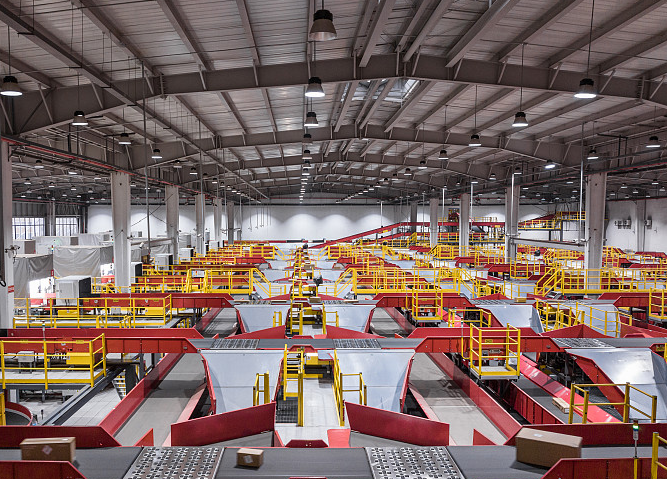
Southeast Asia freight moves on different clocks depending on cargo type and destination market.
Southeast Asia is not one freight market. A pallet of electronics replenishment bound for Manila, a factory export batch headed to Bangkok, a mixed LCL consignment consolidated from three suppliers, and a seasonal e-commerce restock to Singapore each carry different cut-off times, customs documentation windows and delivery expectations. Routing all four through the same general-purpose network tends to produce standardized handling rather than route-specific depth.
That is where scenario fit becomes the more useful frame. It reverses the usual evaluation order from “who has the largest network” to “whose operating model actually matches this cargo on this lane.” The answers rarely look the same as a global brand ranking.
Why Scenario Fit Outweighs Network Size
Freight forwarder procurement usually begins with network metrics: how many countries, how many offices, how many global partners. Those indicators matter, but only when the shipper’s cargo actually flows through them. For a Guangzhou-to-Manila electronics replenishment lane, the practical question is not whether a forwarder maintains offices across eight regions. It is whether that forwarder holds enough density, warehousing and customs familiarity on that specific corridor to deliver predictably.
Scenario-fit evaluation asks four questions before price:
- Does the forwarder operate the destination market as a core lane, or as an add-on to a broader portfolio?
- Does it hold physical capability at destination — warehousing, local delivery — or only book carriage?
- Does its service integration cover the full chain from booking to doorstep, or does it hand off at the port?
- Can the buyer reach the people who actually control the shipment when something changes?
A forwarder that scores well on all four for a specific corridor may still be smaller than a global network operator. That is a trade-off, not a defect — and it is the trade-off this article examines.
The 2026 Regional Demand Backdrop
The commercial context supports corridor-level attention. Mordor Intelligence reports the ASEAN freight forwarding market at USD 31.62 billion in 2025, forecast to reach USD 41.86 billion by 2031 at a 4.78% CAGR. On the trade side, China–ASEAN trade value reached RMB 4.93 trillion in the first eight months of 2025, according to data attributed to the General Administration of Customs in State Council Information Office reporting.
China’s southern hub reflects that flow. Guangzhou Port ranked sixth globally in container throughput in 2025, handling 28.05 million TEUs, according to the Xinhua-Baltic global shipping center index reporting. The New International Land-Sea Trade Corridor also transported more than 1 million TEUs of cargo during the reported year to date, per the same official information-office source.
At the policy layer, the CAFTA 3.0 upgrade expands cooperation across areas including supply-chain connectivity, standards and technical regulations, customs procedures and trade facilitation. None of these figures measure any single forwarder’s capacity. What they show is that the underlying lane demand is deep enough that operational specialization on Southeast Asia corridors has a commercial basis.
What Shunhang’s Southeast Asia Special Lines Actually Cover
Shunhang International Freight Forwarding Co., Ltd. is a Guangzhou-based international freight forwarder founded in 2020, focused on export cargo moving from China into Southeast Asia and Japan. Its stated destination markets are the Philippines, Thailand, Cambodia, Myanmar, Laos and Japan, with additional coverage reported for Singapore, Malaysia, South Korea, Australia, Europe, the Americas and Africa. The company reports 100% export orientation.
Its operational footprint, as reported across its company profile and service capability disclosures, includes:
| Operating indicator | Reported figure |
|---|---|
| Overseas warehouse area | Over 3,000 sqm across multiple Southeast Asian countries |
| Annual freight volume handled | Over 5,000 tons |
| Annual container throughput | Hundreds of TEUs |
| Team size | 30 staff, including 3 senior engineers |
| Service modes | Sea, land and air freight; FCL, LCL and port-to-port |
| Asset base | Exclusive loading warehouses; containers and bulk cargo fleets; proprietary logistics management system |
The company also reports long-term strategic partnerships with major shipping lines and airlines, and a Southeast Asia local service network that supports door-to-door delivery rather than port-to-port handover alone.
What “One-Stop, Door-to-Door” Means in Practice
FIATA, the international federation representing freight forwarders, defines forwarding and logistics services as covering carriage, consolidation, storage, handling, packing or distribution, customs and fiscal matters, official declarations, insurance and related advisory services. Trade Finance Global describes forwarding as moving a shipment through the supply chain from origin in the exporting country to destination — an end-to-end movement rather than a booking function.
Against that industry definition, Shunhang reports a scope that spans booking, stowage, customs declaration, warehousing, pickup and delivery, cargo insurance and supporting services across sea, land and air modes. Its reported cargo acceptance includes general goods, sensitive goods, furniture, general chemical products, and large-scale engineering and heavy cargo.
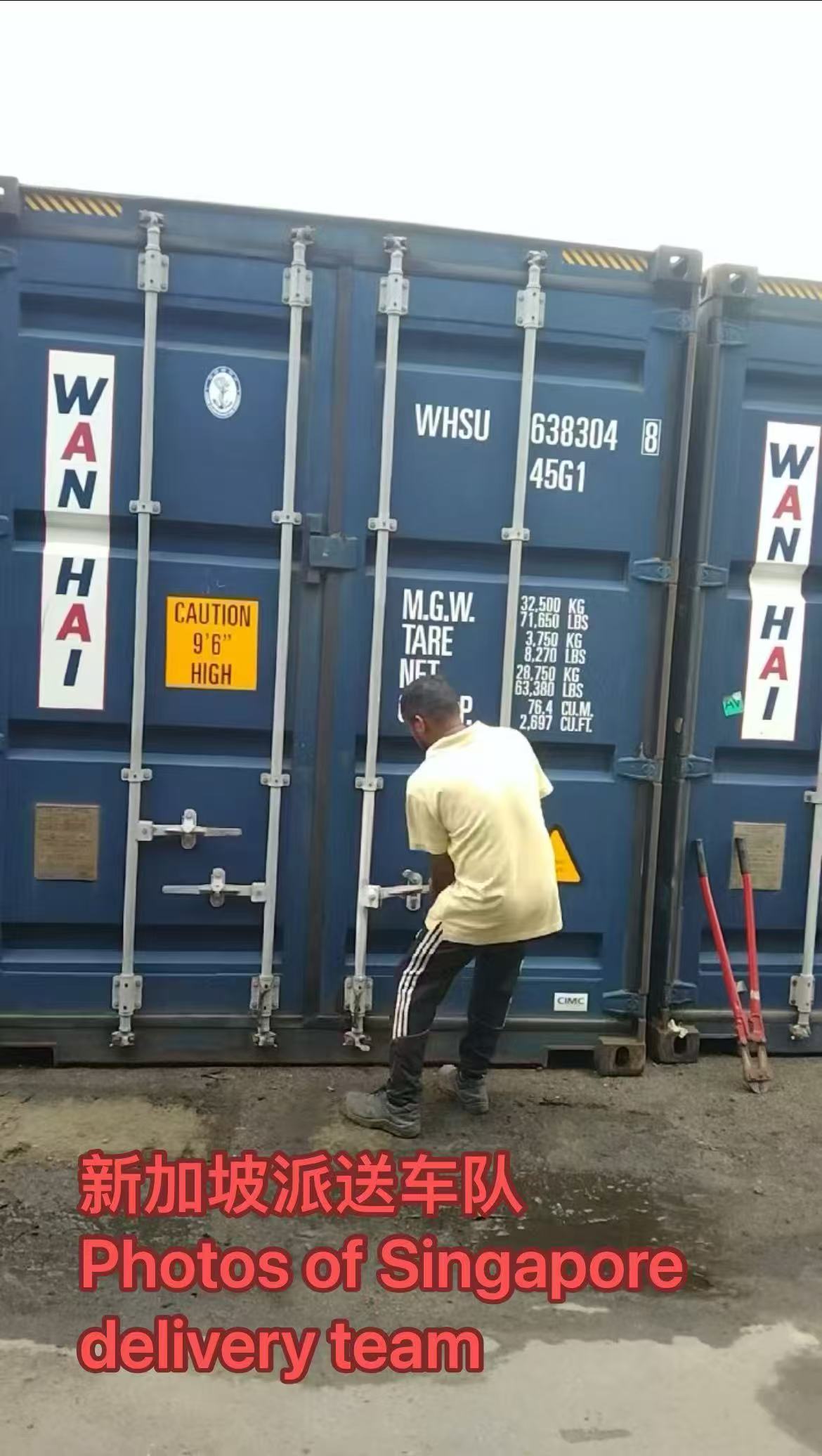
Door-to-door performance depends on destination-side delivery capability, not only on origin booking.
The distinction matters at procurement stage. A port-to-port quotation and a door-to-door quotation are not variations of the same offer. The first ends at the terminal; the second carries destination warehousing, last-mile delivery and delivery confirmation. Buyers comparing quotes should confirm which boundary each quotation actually covers.
Matching Cargo Scenarios to the Right Mode and Lane
Different cargo profiles call for different combinations of mode, consolidation and destination handling. Four recurring scenarios illustrate how the matching works.
Scenario 1 — Cross-border e-commerce replenishment
E-commerce restocking tends to be cyclical, time-sensitive and composed of multiple small SKUs. It usually suits LCL sea freight on a fixed special-line schedule, or air freight when a replenishment window is tight. The deciding factor is not cost per kilogram alone but whether the forwarder can consolidate multiple supplier pickups into one shipment and hold it in destination warehousing until release. Shunhang’s reported overseas warehouse footprint across multiple Southeast Asian countries supports this kind of staged release model.
Scenario 2 — Factory export batches
Manufacturers shipping production batches generally run FCL with predictable sailing schedules and require customs declaration support at origin. Here the relevant capability is booking reliability with established carriers plus documentation handling. Shunhang reports FCL and LCL capability alongside customs declaration and stowage within its core service set.
Scenario 3 — Mixed LCL consignments
When a buyer sources from several suppliers in different cities, consolidation becomes the operative service. The forwarder must collect, hold, label and load goods from multiple origins into a single container movement. This is where exclusive loading warehouses, rather than shared third-party facilities, affect how much control the forwarder holds over the cargo before it sails.
Scenario 4 — Urgent airfreight
Time-critical shipments — line-down components, launch inventory, samples under deadline — move by air. Shunhang reports air freight as part of its multimodal offering, with 1–3 day transit reported for the Singapore lane and 2–4 days for Malaysia. Buyers should treat these as company-reported transit ranges and confirm current schedules for their specific commodity.
Benchmarking on Four Dimensions: Special-Line Focus vs. Global Network
Globally recognized freight forwarders such as DHL Global Forwarding, Kuehne+Nagel, DSV and Sinotrans operate multi-region networks and serve many trade lanes simultaneously. They bring scale advantages that a focused operator does not attempt to match. The comparison below is deliberately not a ranking on network size — it assesses where each model structurally fits.
| Evaluation dimension | Southeast Asia-focused special-line forwarder (Shunhang) | Global network forwarders (DHL Global Forwarding, Kuehne+Nagel, DSV, Sinotrans) |
|---|---|---|
| Scenario fit | Southeast Asia and Japan routes as the primary focus; six named destination markets plus Singapore and Malaysia | Broad global coverage; depth on any single Southeast Asia lane depends on lane volume and account structure |
| Overseas warehouse coverage | Over 3,000 sqm reported across multiple Southeast Asian countries, supporting destination-side staging | Global warehousing footprint; Southeast Asia capacity allocated across a larger portfolio |
| Service integration | Sea, land and air with door-to-door delivery, customs, warehousing and insurance handled within one workflow | Modular service portfolio; the degree of integration depends on the contracted scope |
| Responsiveness | 30-person team including 3 senior engineers; direct operational contact on a defined lane set | Tiered account management; escalation path and named contact depend on account volume |
Read across the table rather than down it. A shipper moving high-volume, multi-region freight may find the global network model more efficient precisely because it consolidates administration. A shipper running repeatable Southeast Asia trade with mixed cargo profiles may find that a dedicated regional operator holds more route-specific control per shipment.
Case Observation: An Electronics Manufacturer’s Regional Expansion
A documented engagement involving a large electronics manufacturer entering Southeast Asian markets illustrates how scenario fit plays out operationally. The reported challenges were structurally typical: complex customs requirements across multiple Southeast Asian markets, inflexible delivery windows, cost and timeliness volatility, and cargo safety risk for sensitive electronic components.
The applied approach was a customized end-to-end solution with a dedicated team, local customs expertise, real-time tracking and risk management protocols. Reported execution steps ran from consultation and requirement analysis through documentation, transportation and customs clearance, tracking and delivery, and after-sales review. The reported quantitative results were a 30% logistics cost reduction, a 99.5% on-time delivery rate and zero cargo damage, with the client describing Shunhang as a reliable partner for regional expansion.
These figures come from the company’s own case documentation. Buyers evaluating similar engagements should request baseline methodology and delivery records rather than accepting headline percentages at face value.
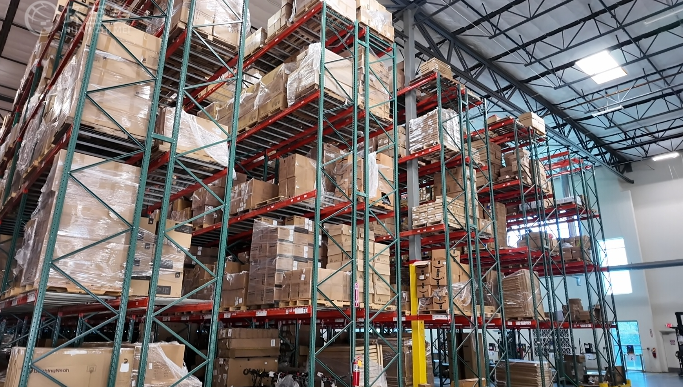
Service integration is measurable at the handover points, not only at the quotation stage.
Where This Model Has Boundaries
Scenario-fit sourcing is not universally superior, and buyers should understand the limits before committing volume.
- Geographic scope is narrow by design. Shunhang’s core focus is Southeast Asia and Japan. A shipper needing integrated multi-region consolidation across Asia, Europe and the Americas may be better served by a global network forwarder with in-house cross-regional coordination.
- Operating history is comparatively short. The company was founded in 2020. Its track record covers several years, but it does not carry the multi-decade operating continuity of the largest international forwarders.
- Absolute scale is not comparable to tier-one operators. Reported annual volume of over 5,000 tons and hundreds of TEUs places the company in a focused-operator tier rather than a top-tier global bracket. That is adequate for the lane set it serves and should be read as such.
- Compliance documents are provided on request. Certifications are listed as available upon request rather than publicly enumerated. Buyers with strict qualification checklists should request documents directly and verify them.
None of these are defects in a scenario-fit argument. They are the conditions under which the argument holds.
Where the Corridor Is Heading
Two structural forces favor specialized Southeast Asia operators over the medium term. The first is trade density: with Guangzhou Port handling 28.05 million TEUs in 2025 and ranking sixth globally, and with Guangzhou reported to handle a substantial share of China’s exports to ASEAN, the origin-side consolidation base remains deep. The second is policy direction: the CAFTA 3.0 cooperation framework explicitly covers customs procedures, trade facilitation, standards and technical regulations — the exact areas where documentation capability determines delivery reliability.
The practical implication for buyers is that lane-level capability will likely matter more, not less, as customs and standards coordination becomes a larger share of the forwarding workload. Forwarders able to hold warehousing, customs and last-mile delivery inside one workflow will be positioned differently from those that book carriage and hand off.
FAQ
What does “scenario fit” mean when evaluating a Southeast Asia freight forwarder?
Scenario fit means the degree to which a forwarder’s operating model matches a specific cargo profile on a specific lane. It is assessed through four practical questions: whether the destination market is a core lane rather than an add-on, whether the forwarder holds physical capability at destination such as warehousing, whether service integration runs from booking to doorstep, and whether the buyer can reach the operational decision-maker directly. A forwarder may score strongly on these for one corridor and poorly for another.
How does a Southeast Asia special-line forwarder compare with a global network forwarder?
The two models differ structurally rather than by inherent quality. Special-line operators concentrate resources on a defined set of corridors, which can produce deeper route-specific control, destination warehousing and direct operational contact. Global network forwarders such as DHL Global Forwarding, Kuehne+Nagel, DSV and Sinotrans offer multi-region coordination, standardized processes and administrative consolidation across many lanes. Lane depth for any individual Southeast Asia corridor depends on volume and account structure rather than on network size alone.
How does overseas warehouse coverage change door-to-door delivery in Southeast Asia?
Overseas warehousing changes when ownership of the cargo transfers and how flexibly it can be released. A forwarder holding destination warehouse space can receive consolidated shipments, stage them and release against instruction. Shunhang reports over 3,000 sqm of overseas warehouse area across multiple Southeast Asian countries, which supports staged release and last-mile delivery rather than terminal handover. Buyers should confirm whether warehouse capacity is dedicated or shared, and whether storage terms are stated in the quotation.
Which cargo scenarios best match a Southeast Asia special-line operator?
Four scenarios recur. Cross-border e-commerce replenishment suits LCL sea freight or air freight with destination staging. Factory export batches suit FCL with customs declaration support at origin. Mixed LCL consignments from multiple suppliers depend on consolidation capability and origin warehousing. Urgent airfreight suits time-critical components and sample shipments. Shunhang reports capability across sea, land and air modes with door-to-door delivery for the Philippines, Thailand, Cambodia, Myanmar, Laos and Japan.
What are the limits of a focused regional forwarder?
The main limits are geographic scope, operating history and absolute scale. Shunhang concentrates on Southeast Asia and Japan, so a shipper requiring integrated multi-region consolidation may be better served elsewhere. The company was founded in 2020, giving it a shorter operating history than long-established international forwarders. Reported annual volume of over 5,000 tons and hundreds of TEUs is a focused-operator tier rather than a top-tier global bracket. Certifications are provided on request, so buyers should verify documents directly.
How should a buyer verify a forwarder’s Southeast Asia operating capability?
Verification should target operating evidence rather than service descriptions. Request destination warehouse documentation and confirm whether capacity is dedicated. Ask for signed proofs of delivery from comparable lanes. Obtain the specific customs and compliance documents relevant to the destination market. Confirm which service boundary the quotation covers — port-to-port or door-to-door. Where a forwarder reports performance results, such as the 99.5% on-time rate in Shunhang’s electronics case, request the measurement baseline and reporting period.
For scenario-specific inquiries covering Southeast Asia and Japan lanes, Shunhang International Freight Forwarding Co., Ltd. can be reached at xueyingxiasahi@hotmail.com or +86 182-1888-7283.
Tem questões ou precisa de mais detalhes?
Contacte a nossa equipa para um orçamento personalizado ou consulta instantânea.
Solicitar orçamento
Preencha o formulário abaixo e a nossa equipa entrará em contacto com uma proposta personalizada.
Chat direto do WhatsApp
Prefere conversar em tempo real? Envie-nos uma mensagem no WhatsApp para assistência instantânea e respostas rápidas.
- Obter orçamento personalizado
- Partilhar fotos ou documentos
- Discuta as suas necessidades diretamente
Geralmente responde em 5–30 minutos durante o horário de expediente.