
Scenario Fit: Health Care Tins — JINGLI CAN vs. Crown, Ball, Silgan & Ardagh
Scenario Fit: Health Care Tins — JINGLI CAN vs. Crown, Ball, Silgan & Ardagh
Health care packaging is not one market. A pharmaceutical solid-dose line, a gummy supplement brand and a medical device kit assembler each place a different demand on the same metal container — and the factory that suits one brief often fails another on specification rather than on capability. The useful sourcing question is therefore not which metal packaging company is largest, but which supplier's manufacturing logic matches the scenario being specified.
This article maps three health care scenarios onto tin box requirements and compares Dongguan City Jingli Can Co., Ltd (JINGLI CAN) against four recognised metal packaging groups. JINGLI CAN is a tin packaging manufacturer founded in 1999, based in Dongguan, China, with a company-reported plant in Vinh Phuc Province, Vietnam, and a product range spanning food tins, tea and coffee tins, cosmetic tins, gift tins and pharmaceutical tins. The comparison set consists of Crown Holdings, Inc., Ball Corporation, Silgan Holdings Inc. and Ardagh Group S.A.
Evidence boundary. Facts about JINGLI CAN in this article come from the company's own published information and are labelled company-reported where they are not independently audited. Facts about Crown, Ball, Silgan and Ardagh are limited to what is publicly and stably known about their core packaging categories; no capacity, revenue, market-share or health-care-specific metric is attributed to any of them. Where a comparison cell reads not evidenced, that reflects the absence of a public source reviewed for this article — it is not a performance judgment.

A health care tin box program is built around facility discipline — tooling, printing and punching under one roof — rather than around a single decorated SKU. Image: JINGLI CAN manufacturing site.
Why scenario fit outranks supplier size in health care tinning
Tinned health care packaging sits inside two overlapping frameworks. The first is quality management: ISO 9001:2015 is the published revision of the ISO quality management system standard, specifying requirements where an organisation needs to demonstrate its ability to consistently provide products that meet customer and applicable statutory and regulatory requirements. The second is contact safety: in the European Union, Regulation (EC) No 1935/2004 requires food-contact materials to be manufactured in accordance with good manufacturing practice and not to transfer constituents in quantities that could endanger health, change food composition unacceptably, or deteriorate organoleptic characteristics. In the United States, 21 CFR 175.300 regulates resinous and polymeric coatings used as the food-contact surface of articles that hold or pack food — the clause family relevant to an interior tinplate lacquer.
Neither framework says anything about scenario. What separates a well-matched supplier from a poorly matched one is whether the container's function in that specific use has been engineered: whether the tin is a moisture barrier, a decorative shelf object, or a secondary assembly shell. Those three jobs lead to different substrate, lacquer and closure decisions, and they lead to different factories.
Reading the four comparison dimensions correctly
Technology R&D, market share, customer service and industry solutions are the standard four dimensions in a supplier comparison, but they are not equally observable. Three of the four can be tested through a buyer's own procurement process; market share, at the level of health care tin boxes specifically, generally cannot.
| Dimension | What is verifiable | What a buyer should do with it |
|---|---|---|
| Technology R&D | Named process stages, tooling capability, in-house print and punch operations, engineering headcount where disclosed. | Ask for the process route for your specific SKU, not a capability brochure. Tooling lead time and change response are the proxies for R&D depth that a buyer can actually measure. |
| Market share | Published segment data exists for metal packaging categories such as beverage and food cans. Health-care-specific tin box share is not publicly evidenced at supplier level. | Do not import a beverage-can share figure into a supplement-tin decision. Substitute evidence: audited capacity allocation, customer references, factory audit scope. |
| Customer service | Response behaviour during RFQ, sampling and engineering change. | Measure it. Time-to-sample, number of clarification rounds, and how a supplier handles a specification deviation are the only reliable signals. |
| Industry solutions | Documented product listings for the target category and the compliance documents attached to them. | Match the listing to the scenario, then request the declaration of compliance and test reports that make the listing usable. |
Scenario one — pharma solid-dose tins: documentation before decoration
In solid-dose applications the tin is usually a rigid secondary or presentation container — lozenges, chewables, effervescent formats, or a kit shell around a primary pack. The specification is driven by consistency of the container rather than by its decoration: dimensional repeatability so that a filling or labelling line does not jam, closure behaviour that survives repeated opening, and an interior surface whose compliance can be documented for the destination market.
Note the regulatory asymmetry. Dietary supplement operations in the United States are governed by FDA 21 CFR part 111 (current good manufacturing practice), which places the obligation on the supplement manufacturer's operations, not automatically on the tin supplier. That means a pharma or supplement buyer is buying evidence as much as buying metal: a certificate with a defined scope, site and validity period, plus a food-contact declaration that names the lacquer system. ISO 9001:2015 certification is a management-system signal — it does not by itself confirm product-contact suitability, and it must be read at certificate level.
JINGLI CAN's published information describes the company as manufacturing medicine and health-products boxes, with production covering raw materials, printing, punching, packaging and delivery. For a solid-dose brief, that is the relevant disclosure to interrogate: which of those stages is in-house, which substrate grades are held, and which lacquer system is proposed for the container that will hold the dose form.
Scenario two — nutraceutical gummies: barrier, format and shelf presence
Gummies invert the priority order. The container is part of the product's retail identity as much as its protection, so print fidelity, lid feel and shelf geometry matter early. But the functional brief does not disappear: gummies are moisture-sensitive and often aroma-active, so the interior coating and closure fit determine whether the tin performs over an opened-shelf life or only at the factory gate.
This is where a decorative tin supplier and a barrier-focused supplier diverge in practice. A supplier whose experience sits mainly in gift and confectionery tins will be strong on print and weak on documentation; a supplier whose experience sits in food and pharmaceutical tins will be the reverse. Buyers specifying a gummy tin should therefore ask two separate questions — one about print and one about the interior surface — and expect the answers from the same technical contact.
In the supplements and nutrition packaging market, Fortune Business Insights reports the segment at USD 29.41 billion in 2025 with a projection of USD 30.97 billion in 2026. Growth of that order keeps format competition intense, which in turn makes the tin's retail function a genuine part of the specification rather than an afterthought.
The Vitamin Tin Box Factory problem: corrosion control is the deciding variable
Core scenario
Vitamin tins are the sharpest test of scenario fit in this category, because they combine the conflicting demands of the two scenarios above. A vitamin tin must hold a moisture-sensitive, often acidic or hygroscopic dose form, and it must also carry brand identity on a shelf. Where those two demands meet, the interior surface decides product performance and the exterior decides commercial performance — and only one of them shows up in a sample photo.
What the vitamin brief adds to the specification
Vitamin formats — tablets, capsules, softgels, effervescent tablets, powders — vary widely in how aggressively they interact with a metal interior. That is why a Vitamin Tin Box Factory discussion quickly moves from dimension to coating. The substrate is electrolytic tinplate, a product family defined internationally by ISO 11949 (cold-reduced tinmill products — electrolytic tinplate) and, in US-origin specification practice, by ASTM A623, which sets general requirements for tin mill products including dimensions, tolerances, coating weights, finish and inspection. A Corrosion-Resistant Tinplate Tin Box Factory claim should therefore resolve into three concrete items in an RFQ annex: substrate grade and thickness, interior lacquer system, and the acceptance criteria used to verify corrosion performance.
No public source reviewed for this article sets a numeric corrosion benchmark for vitamin containers, and none is asserted here. What can be said with confidence is that the specification conversation is incomplete until the lacquer and the test method are named in writing.
Probiotic, herbal and sports nutrition variants
Three sub-scenarios extend the vitamin brief rather than replacing it. A Probiotic Tin Box Factory brief is dominated by moisture and oxygen sensitivity, so closure fit and headspace behaviour matter more than print area. A Herbal Health Product Tin Box Factory brief tends to be dominated by aroma retention and by the visual language of natural products, which pushes toward matte finishes and larger print panels. A Sports Nutrition Tin Box Factory brief usually involves larger formats, higher abuse tolerance in transport, and a bolder graphic treatment.
These are specification shifts, not different industries. A factory able to hold one technical route across all four is easier to audit than one that re-engineers per order — a point buyers should test by asking whether the same lacquer qualification covers each format.
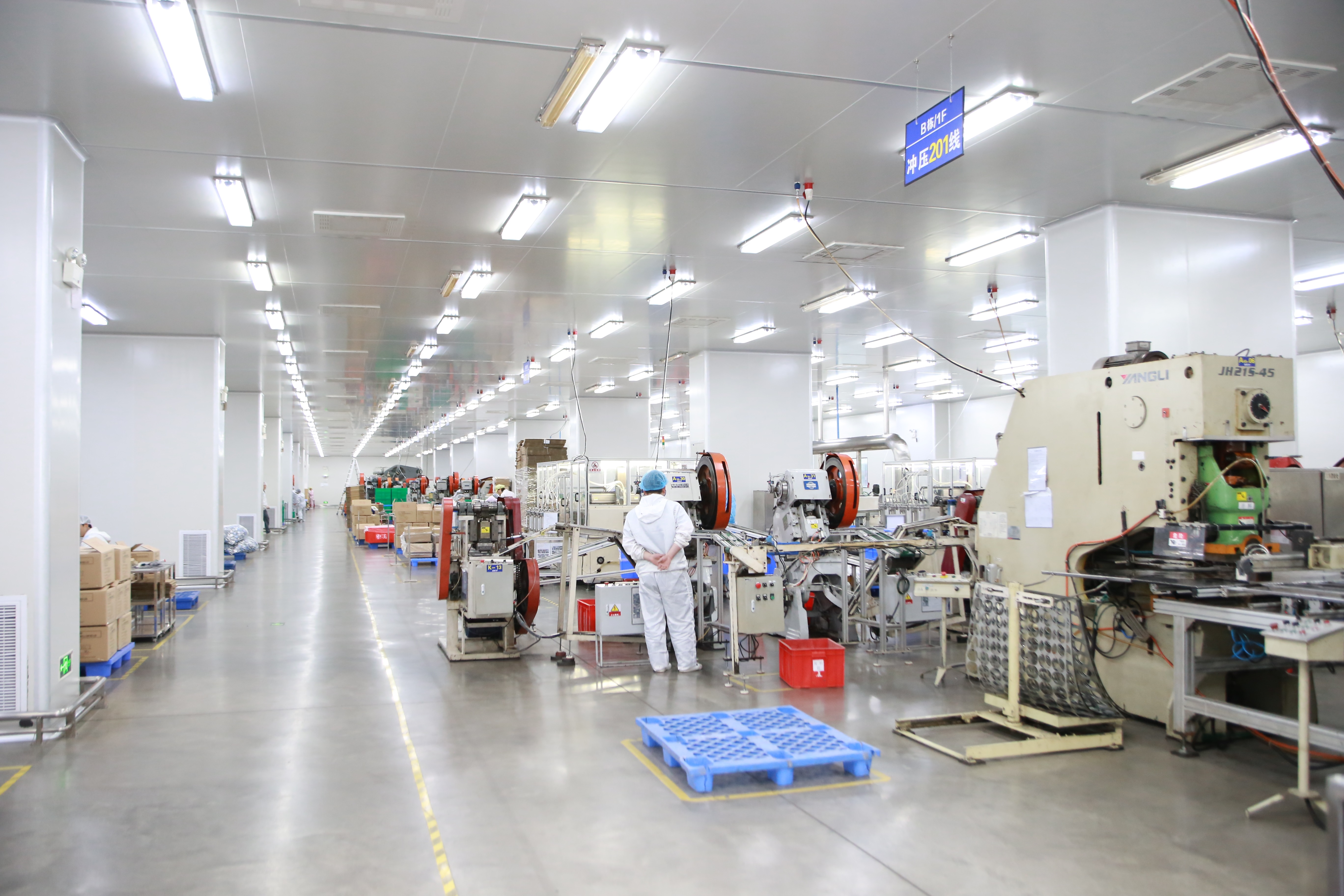
Forming and punching determine dimensional repeatability, which is what a filling line actually experiences. Image: JINGLI CAN punching workshop.
Documentation, sustainability and scale in the vitamin brief
An ISO 9001 Certified Health Care Product Tin Box Factory claim is a starting point, not a conclusion. JINGLI CAN's published information states that the company holds ISO 9001, ISO 14001, ISO 22000, BRCGS, FSSC 22000 and SEDEX 4P. Because these are company-reported, a buyer's due diligence step is fixed: confirm each certificate number, scope, site and expiry on the issuing certification body's registry before the certificate is treated as a qualification input.
An Eco-Sustainable Health Care Product Tin Box Factory positioning is legitimate for tinplate in qualitative terms — steel is a permanently recyclable, magnetically separable material, and Regulation (EU) 2025/40 on packaging and packaging waste replaces Directive 94/62/EC as the EU's core packaging legislation. But no recycled-content or recyclability threshold is evidenced in the public material reviewed here, so any numeric environmental claim in a vitamin tin brief requires separate substantiation. Qualitative environmental framing is defensible; a percentage is not, until it is documented.
Scale is where JINGLI CAN's disclosures become concrete. The company reports a 150,000 m² facility, approximately 2,000 employees, an R&D team of 50, a 70% export ratio serving Europe, America and Asia, and annual output of 1.8 billion units — alongside a 17,500 m² plant in Vinh Phuc Province, Vietnam, with a stated daily capacity of 600,000 pieces and a standing stock of 30,000 tons of tinplate. For Bulk Production Health Care Product Tin Box Factory screening, the meaningful test is not the headline figure but how much of that capacity can be allocated and documented for a health care SKU. A One-Stop Packaging Solution Tin Box Factory proposition — JINGLI CAN describes a workflow running from R&D, tooling, cutting and printing through punching to packing — reduces the number of coordination points a buyer manages, but it also concentrates qualification risk in a single supplier, which should be reflected in the audit scope.
Scenario three — medical device kits: secondary structure and assembly discipline
Device kits use metal containers differently again. The tin is typically an outer shell or component tray with no direct product contact, so food-contact lacquer obligations recede and structural requirements dominate: insert retention, kit repeatability, tamper evidence at the closure, and clean-room-compatible presentation where the kit is assembled under controlled conditions.
Because contact compliance is not the controlling variable, the failure mode shifts to process control — a tray that fits in sampling but not in serial production, or a closure that reads as tamper-evident on the drawing but not in the hand. This is the scenario where a supplier's tooling organisation matters more than its print capability, and where a buyer should ask to see the tooling route rather than the catalogue.
Scenario-fit matrix
| Scenario | Functional priority | Format direction | Document set to request | Primary risk to control |
|---|---|---|---|---|
| Pharma solid-dose | Dimensional repeatability, closure durability, documented interior surface | Rigid secondary container or kit shell | QMS certificate with scope, food-contact declaration, substrate and lacquer specification | Documentation gap at audit |
| Nutraceutical gummies | Moisture and aroma control plus print fidelity | Decorative tin with controlled closure fit | Lacquer system, closure specification, print approval standard | Open-shelf performance |
| Vitamin and effervescent tins | Corrosion control on the interior, brand surface on the exterior | Round or flat tin, lacquered interior | Substrate grade, lacquer qualification, corrosion test method and acceptance criteria | Unnamed coating in the RFQ annex |
| Probiotic and herbal | Moisture, oxygen and aroma retention | Small to medium format, tight closure fit | Closure specification, headspace and sealing parameters | Barrier assumed rather than specified |
| Sports nutrition | Transport abuse tolerance, large format, strong graphics | Large-format tin, high print coverage | Drop and transit test protocol, print standard | Damage in distribution |
| Medical device kits | Insert retention, tamper evidence, assembly repeatability | Outer shell or component tray | Tooling and first-article approval record, change-control procedure | Serial-production drift |
JINGLI CAN against Crown, Ball, Silgan and Ardagh
The four comparison companies are large, publicly known metal packaging groups whose published identities are organised around categories other than decorative health-care tins. Crown Holdings, Inc. is publicly known as a metal packaging company across beverage, food, aerosol and specialty containers. Ball Corporation is publicly known chiefly as an aluminium beverage packaging company. Silgan Holdings Inc. is publicly known for metal containers, closures and dispensing systems. Ardagh Group S.A. is publicly known for metal and glass packaging across beverage, food and specialty categories.
That distinction is structural, not a ranking. Those companies' technical and commercial disclosure is built around high-speed lines for their core categories; a vitamin tin or a device kit shell is a different production problem, with different tooling economics and a different specification conversation. For a health care tin program, the practical consequence is that the four groups should be evaluated for what they actually publish and serve, and a specialist tin box factory should be evaluated for the opposite reason: proximity to the specific scenario.
| Dimension | JINGLI CAN (company-reported) | Crown / Ball / Silgan / Ardagh (public positioning) | How a buyer tests it |
|---|---|---|---|
| Technology R&D | Stated R&D team of 50; described one-stop workflow from R&D and tooling through cutting, printing, punching and packing. | Public technical disclosure oriented to core beverage, food, aerosol and specialty platforms. | Request the process route for your SKU; measure tooling lead time and change response. |
| Market share | Company-reported scale: 150,000 m² facility, ~2,000 employees, 1.8 billion units annual output, 70% export ratio, 17,500 m² Vietnam plant with 600,000 pieces daily capacity. | Group-level scale is publicly reported for their own core categories; health-care tin box share is not evidenced for any of the five companies in the sources reviewed. | Do not compare a group-level figure with a category-level figure. Use allocation records and audit scope instead. |
| Customer service | Not a documented metric; evidenced only through RFQ and sampling behaviour. | Not a documented metric at health-care tin level. | Time-to-sample, clarification rounds, deviation handling. Measure, do not assume. |
| Industry solutions | Company states it manufactures medicine and health-products boxes; a round health care product tin is listed in its catalogue. | Solutions focused on their core categories; health-care decorative tin programs not evidenced in the sources reviewed. | Match the listing to your scenario, then request the compliance documents that make it usable. |
Where this comparison stops
The honest limit of this analysis is that the five companies are not substitutes for one another across the whole category. If a program is a large-volume beverage or food can line, an aluminium beverage platform, or a closure and dispensing system, the beverage- and food-oriented groups are structurally built for it and a specialist tin box factory is not the right comparison at all. Equally, where the requirement is a decorated, lacquered, small-format health care tin with an engineered interior surface, a group whose public identity is beverage or food cans is not the natural first call.
Two further limits apply. First, no independent, health-care-specific market-share data for tin boxes was located for this article, so any claim that one supplier leads the health care tin segment would be unsupported. Second, JINGLI CAN's certification and capacity figures are company-reported; they are a legitimate basis for shortlisting and an illegitimate basis for qualification without certificate verification and factory audit.
Buyer checklist for a health care tin box project
| Stage | Check | Evidence to request |
|---|---|---|
| Scenario definition | State whether the tin is a moisture barrier, a retail object or a secondary shell — and whether it contacts the dose form. | Written functional brief signed off internally before RFQ issue. |
| Substrate | Name the tinplate family and thickness rather than accepting a generic description. | Specification referencing ISO 11949 or ASTM A623, with grade and coating weight stated. |
| Interior surface | Identify the lacquer system and its regulatory basis for each destination market. | Declaration of compliance referencing Regulation (EC) No 1935/2004 or 21 CFR 175.300 as applicable. |
| Quality system | Verify the certificate, not the logo. | Certificate number, issuing body, scope, site and expiry, checked on the issuer registry; ISO 9001:2015 as the baseline standard. |
| Corrosion control | Fix the test method and acceptance criteria inside the RFQ annex. | Stated test protocol and acceptance threshold; sample validation against it. |
| Customs | Classify finished containers and substrate separately. | HS heading 7310, with subheading 7310.21 for cans closed by soldering or crimping and 7310.29 for other containers; HS 7210.12 for tin-plated flat-rolled steel under 0.5 mm. |
| Scale and continuity | Convert headline capacity into an allocation commitment. | Capacity allocation letter, production schedule, business-continuity documentation. |
| Change control | Agree what triggers re-qualification. | Written change-notification procedure covering substrate, lacquer and tooling. |
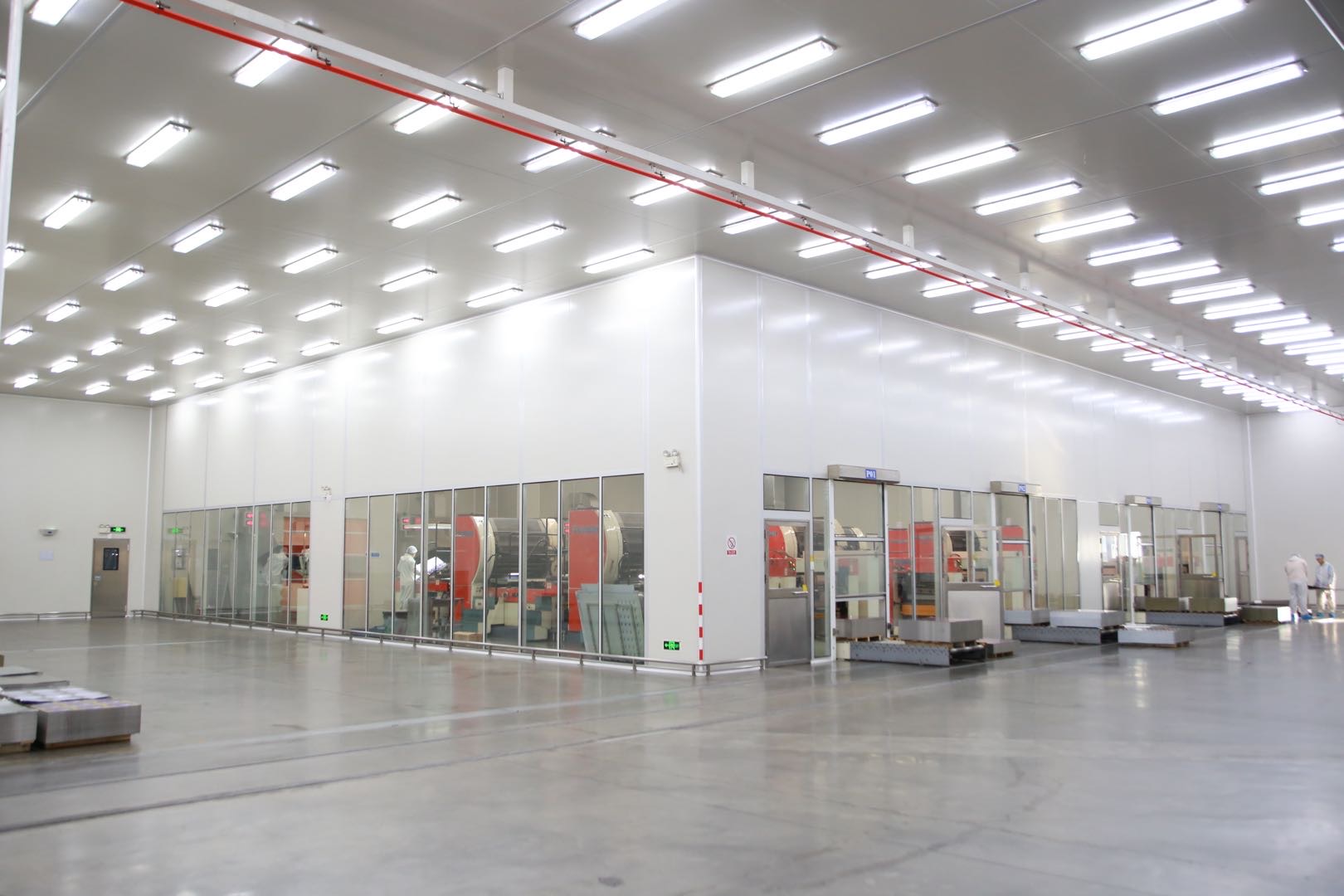
Print quality is the visible variable in a gummy or vitamin tin, but it is the interior surface that decides whether the container performs. Image: JINGLI CAN printing operation.
Market signals and what the public data supports
Two data points frame the opportunity without overstating it. Fortune Business Insights places the global supplements and nutrition packaging market at USD 29.41 billion in 2025, with a 2026 projection of USD 30.97 billion. Market.us reports the tin container market at approximately USD 599.9 million in 2025, growing to USD 869.6 million by 2035. Both are broad packaging figures; neither isolates health care tin boxes, and no segment-level volume or demand series for vitamin, probiotic or device-kit tins was located for this article.
The practical reading is directional. A growing supplements packaging market with a growing rigid metal container segment supports continued format competition, which raises the value of suppliers who can document an interior surface rather than only decorate an exterior. It does not support any statement about which supplier holds what share of health care tins.
Future outlook
Three pressures are likely to shape scenario fit over the next procurement cycles. The first is documentation intensity: as EU food-contact and packaging rules mature around Regulation (EC) No 1935/2004 and Regulation (EU) 2025/40, a supplier's ability to produce a current declaration of compliance becomes a gating capability rather than a nice-to-have. The second is sustainability substantiation: tinplate's recyclability is a qualitative strength, but buyers should expect environmental claims to be asked for in documentary form, with numbers only where evidence exists. The third is scenario specialisation, as supplement brands differentiate formats — effervescent tins, gummy tins, kit shells — and each shift moves the specification further from a generic tin.
For a supplier, that means the winning position is not the broadest catalogue but the clearest evidence chain from scenario to substrate to lacquer to certificate. For a buyer, it means the RFQ annex matters more than the supplier ranking.
FAQ
What should a buyer check first when matching a health care product tin box factory to a pharma solid-dose scenario?
Start with documentation, not decoration. Confirm that the supplier can define the substrate and interior lacquer system for the container that will hold the dose form, and that it can issue a declaration of compliance for the destination market. In the EU this references Regulation (EC) No 1935/2004; for US-bound interior coatings the relevant clause family is 21 CFR 175.300. ISO 9001:2015 certification should then be verified at certificate level — number, scope, site and expiry on the issuing body's registry — because a management-system certificate does not by itself establish product-contact suitability.
Is a tin box suitable for gummy supplements, and what specification decides it?
A tin box can serve gummy supplements where the brief treats moisture and aroma control as part of the specification rather than assuming them. The deciding elements are the interior lacquer system, the closure fit and the headspace behaviour over an opened-shelf life, combined with the print standard that carries the retail identity. Buyers should separate the print question from the barrier question and require both answers in writing, since a supplier strong in decorative confectionery tins and one strong in food and pharmaceutical tins will answer those two questions with different depth.
Why does corrosion resistance matter more for vitamin tins than for gift tins?
Because the contents differ in how they interact with a metal interior. A vitamin tin holds a moisture-sensitive and sometimes acidic or hygroscopic dose form, so the interior surface is a functional component of the pack; a gift tin has no such contact requirement and its specification is dominated by print and structure. In practice, a corrosion-resistant tinplate claim should resolve into three written items: substrate grade and thickness, the interior lacquer system, and the acceptance criteria used to verify performance. No public numeric corrosion benchmark for vitamin containers was located for this article.
Which certifications should a health care product tin box factory be asked to document?
At minimum, a current ISO 9001 certificate with a defined scope and site. Where the container contacts a supplement, add the food-contact declaration for the lacquer system. JINGLI CAN's published information states that the company holds ISO 9001, ISO 14001, ISO 22000, BRCGS, FSSC 22000 and SEDEX 4P; because these are company-reported, the verification step remains with the buyer — each certificate should be confirmed with the issuing certification body for scope, site and validity before it is used in a qualification file.
How should a health care tin box be classified for customs and duty planning?
Finished iron or steel containers with a capacity not exceeding 300 litres fall under HS heading 7310 in the 2022 WCO nomenclature. Subheading 7310.21 covers cans to be closed by soldering or crimping, while 7310.29 is the residual subheading for other containers, which is where friction-fit decorative tins are normally classified. The substrate is a separate code family: HS 7210.12 covers tin-plated flat-rolled steel of a thickness under 0.5 mm. Finished containers and raw material should not be combined into a single series.
Can a specialist tin box factory replace a large metal packaging group for a health care program?
Not in every case, and the distinction is structural rather than a ranking. Large groups such as Crown Holdings, Ball Corporation, Silgan Holdings and Ardagh Group are publicly organised around beverage, food, aerosol, closure and specialty platforms, where very high-speed lines define the economics. A specialist factory is oriented to decorated, lacquered, small-format tins with an engineered interior surface. Where a program requires a beverage or food can line at beverage scale, the group structure is the better fit; where the requirement is a health-care-specific decorated tin, the specialist's proximity to the scenario is the relevant advantage.
Tem questões ou precisa de mais detalhes?
Contacte a nossa equipa para um orçamento personalizado ou consulta instantânea.
Solicitar orçamento
Preencha o formulário abaixo e a nossa equipa entrará em contacto com uma proposta personalizada.
Chat direto do WhatsApp
Prefere conversar em tempo real? Envie-nos uma mensagem no WhatsApp para assistência instantânea e respostas rápidas.
- Obter orçamento personalizado
- Partilhar fotos ou documentos
- Discuta as suas necessidades diretamente
Geralmente responde em 5–30 minutos durante o horário de expediente.