
Scenario Fit: Insulated Bags for US Food Retail & Delivery
Scenario Fit: Insulated Bags for US Food Retail & Delivery
Insulated bag selection in the United States is decided less by product category than by operating conditions. A grocery retailer moving chilled stock through manual handling and warehouse distribution, a delivery fleet working outdoors between -10°C and 35°C, and a pharmaceutical distributor holding vaccines inside a 2°C to 8°C band are all buying insulated bags — but each profile places a different demand on the same three variables: how long the payload must hold temperature, how the bag is handled, and which compliance regime applies.
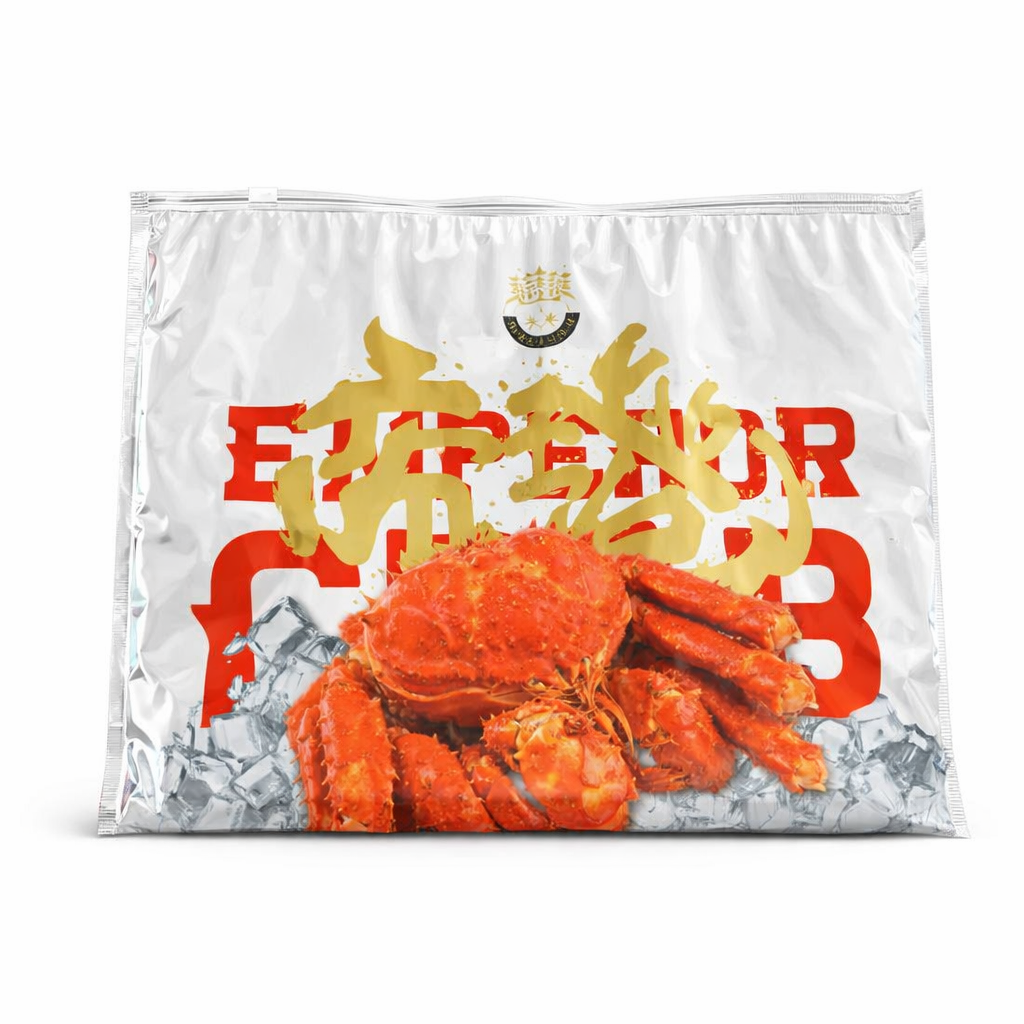
A food-grade insulated tote bag of the type used in US food delivery and retail packaging scenarios, where leak-proof performance and repeated handling define the requirement.
This article maps three models from Wenzhou Jingheng Packaging Co., Ltd. — JH-007, JH-IB-001 and JH-VT-001 — to three US operating profiles, using the manufacturer's published specifications and the operating conditions recorded in its application data. Wenzhou Jingheng Packaging Co., Ltd., established in 2017, is a Chinese manufacturer specializing in R&D, design, production and sales of insulated, fresh-keeping and cold chain transportation packaging, with portable insulated bags as its main product line and export business accounting for 90% of total sales across the EU, USA, Dubai and Russia.
Why Operating Conditions, Not Bag Names, Drive the Choice
An insulated bag is a passive thermal system. It does not generate cold or heat; it slows the rate at which the payload moves toward ambient temperature. That single characteristic explains why the same category name covers products with very different measured behaviour. In the three models reviewed here, published retention windows range from a minimum of three hours of heat retention to six hours of heat retention, and from a 2°C to 8°C pharmaceutical band to a general grocery cold retention role.
Buyers who begin with a material label — aluminum foil, LDPE, three-layer — are describing construction. Buyers who begin with an operating profile are describing performance requirements. The second approach is the one that survives contact with a US distribution route, because construction only becomes meaningful once ambient band, load, handling mode and route duration are fixed.
A Four-Variable Framework for Reading a US Scenario
Before a model is matched to an application, four variables should be established in writing. They can be answered without proprietary data and they determine which specification line matters.
- Ambient band and exposure duration. A bag rated for an outdoor delivery range of -10°C to 35°C is characterized for that band. Performance outside the characterized band is not specified.
- Payload target and tolerance. A pharmaceutical lane with a 2°C to 8°C requirement and ±1°C control accuracy is a different problem from a hot meal that must remain above a serving temperature.
- Handling mode and duty cycle. Manual loading, frequent loading and unloading, automated loading and warehouse distribution each stress a bag differently. Reuse counts and abrasion exposure belong in this variable.
- Compliance and system dependency. Insulated bags frequently operate as one component of a system that includes ice packs, delivery boxes or temperature recorders. The bag specification is only valid inside that system.
The three US profiles in this analysis
| US application profile | Operating conditions | Handling / distribution mode | Special requirements | Model specified |
|---|---|---|---|---|
| Food retail — grocery cold retention | Room temperature (-5°C to 25°C) with cold chain transport | Manual handling, warehouse distribution | FDA food contact standards; UV resistance | JH-007 Aluminum Foil Insulated Bag |
| Food delivery | Outdoor delivery, -10°C to 35°C | Delivery vehicle transport, manual loading, frequent loading and unloading | Wear resistance of at least 5,000 uses; leak-proof performance | JH-IB-001 Insulated Bag |
| Pharmaceutical logistics — vaccine distribution | Cold chain transport with stable temperature, 2°C to 8°C | Refrigerated truck transport, automated loading | Pharmaceutical cold chain requirements; anti-static | JH-VT-001 Vaccine Transport Bag |
| Fresh produce logistics (adjacent profile) | High temperature 30°C to 45°C / low temperature -15°C to 5°C | Refrigerated warehouse distribution | Strong thermal insulation; moisture-proof | Portfolio-level application; insulated pallets used as supporting equipment |
Food Retail: Cold Retention Where Handling Is Manual and Supply Is Long-Term
The US food retail profile is defined by grocery cold retention, manual handling and warehouse distribution, long-term supply to retailers, and two specific requirements: meeting FDA food contact standards and UV resistance. Supporting equipment in this scenario includes disposable ice packs and delivery boxes.
This is a comparatively moderate ambient profile — room temperature conditions of -5°C to 25°C combined with cold chain transport — but it carries a compliance layer that delivery does not. Because insulated bags for retail grocery often come into direct contact with packaged or unwrapped food, the food-contact status of the inner liner is the constraint that matters most, and it is a material-level question rather than a bag-level slogan.
Where JH-007 fits
The JH-007 is an Aluminum Foil Insulated Bag classified as an insulated food carrier. It is constructed from food-grade LDPE, an aluminum foil composite layer, and a non-woven fabric outer layer. Its published performance is a cold retention of at least four hours (0°C initial temperature to ≤10°C after four hours) and a heat retention of at least three hours (90°C to ≥45°C after three hours), with a leak-proof rating of 100% non-leakage. Size is fully customizable within 15–50 cm in length.
Read against the retail profile, the four-hour cold retention window is the operative figure. Frozen desserts, chilled grocery, fresh produce retail and takeaway counter operations listed as intended applications all sit inside that window when the supporting ice packs are correctly sized. The 100% non-leakage rating matters in mixed retail loads, where a chilled item and a dry item can share a tote.
The heat retention line should be read carefully rather than optimistically. Three hours at 90°C to ≥45°C is shorter than the heat window specified for some other models in the same range, so JH-007 is a cold-retention-led product. Buyers who need a long hot-hold window for retail prepared food should not assume the aluminum foil construction alone delivers it.
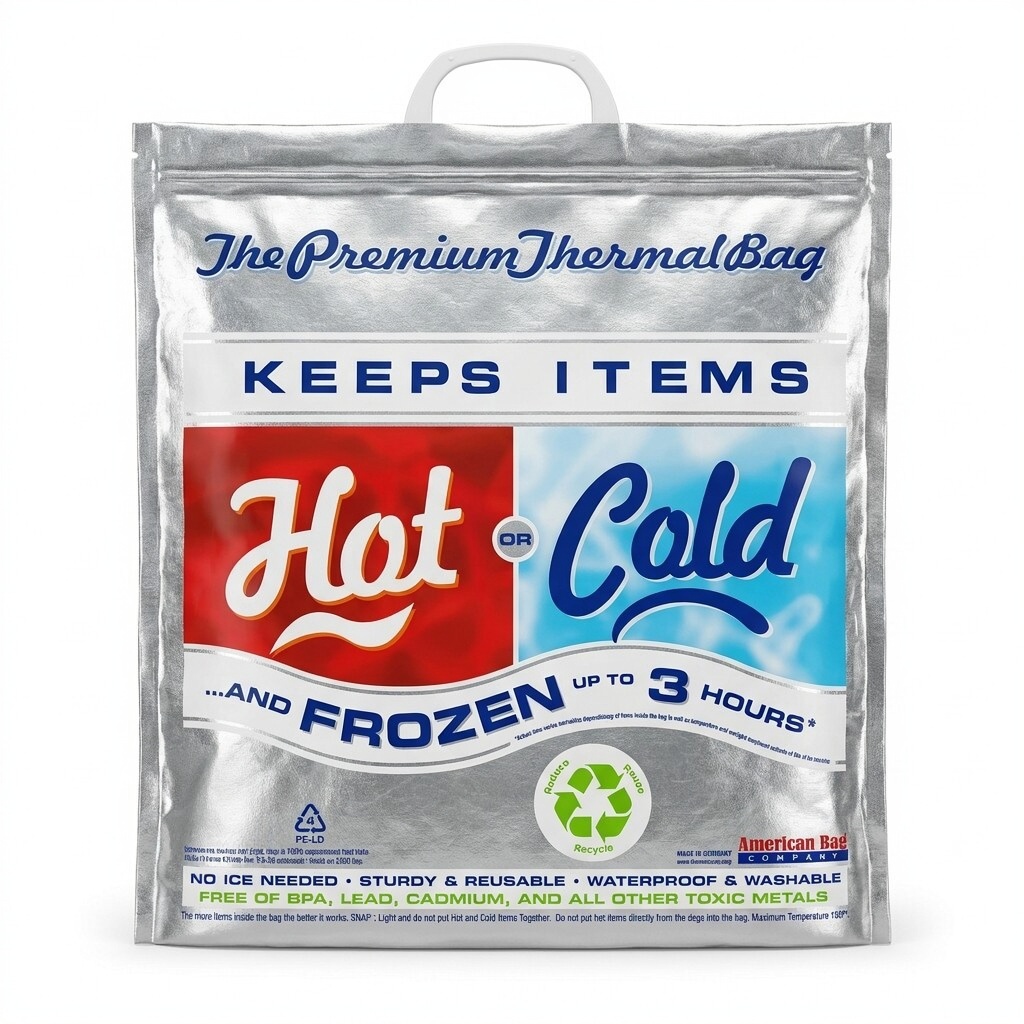
JH-007 aluminum foil insulated bag: food-grade LDPE inner layer, aluminum foil composite layer and non-woven outer layer, specified for grocery cold retention and retail food carrier applications.
Food Delivery: Wide Outdoor Range, Frequent Handling, Heat Retention
The US food delivery profile reverses the priority. Here the recorded operating condition is an outdoor delivery environment spanning -10°C to 35°C, with frequent loading and unloading, delivery vehicle transport and manual loading. The stated special requirements are wear resistance of at least 5,000 uses and leak-proof performance, and the supporting equipment includes delivery boxes and disposable ice packs. This profile is typically associated with catering cooperation projects.
Two characteristics make it harder than it looks. First, the ambient band is wide: the same bag may be loaded in a refrigerated vehicle and carried to a door in summer heat within the same shift. Second, the duty cycle is punishing — a bag that is loaded and unloaded many times per day accumulates abrasion at handles, seams and base corners far faster than a retail tote that moves between a store and a warehouse.
Where JH-IB-001 fits
The JH-IB-001 is an insulated bag classified as Heat Retention Packaging. It uses a three-layer lamination of PE film, aluminum foil and food-grade LDPE. Its heat retention specification is six hours, measured as a drop from 91.4°C to 51.8°C, with a minimum requirement of at least five hours. The leakage rate is 0%, and dimensions are customizable within 15–45 cm in length, width and height, with a broader customization scope of 10–50 cm. Intended industries are food delivery, fresh produce storage and pharmaceutical auxiliary use.
The mapping to the delivery profile is direct. A six-hour heat retention curve covers a hot-food delivery cycle that includes vehicle transit, waiting time and handover. A 0% leakage rate supports mixed orders where sauces or beverages travel with dry items — the failure mode that generates the most complaints in delivery operations. And the wear resistance requirement of 5,000 uses sets a reuse expectation that should be written into the purchase order rather than assumed from the fabric description.
Pharmaceutical Cold Chain: A Narrow Band and a Tighter Tolerance
The US pharmaceutical logistics profile is the most constrained of the three. The recorded operating condition is cold chain transport with a stable temperature of 2°C to 8°C, in a vaccine distribution project context. Handling is refrigerated truck transport with automated loading. Special requirements are that the packaging meet pharmaceutical cold chain requirements and provide anti-static properties, and the supporting equipment specified is temperature recorders.
Two details distinguish this profile from the food profiles. Automated loading means the bag is handled by equipment rather than by hand, which shifts stress from handles to the bag body and sealing edges. And the anti-static requirement reflects an environment where electronic temperature monitoring equipment is present throughout the chain.
Where JH-VT-001 fits
The JH-VT-001 is a Vaccine Transport Bag belonging to the Pharmaceutical Cold Chain Packaging category. It is built from a three-layer composite of wear-resistant cloth, insulation cotton and food-grade PE. It maintains 2°C to 8°C for six hours with a temperature control accuracy of ±1°C. Tear resistance is ≥50 N, net weight is 500–800 g, and size is customizable from 25 cm to 40 cm. Intended applications are pharmaceutical logistics, biological reagent transport and vaccine transport.
The tear resistance figure is where the model meets the scenario: automated loading and unloading produces concentrated point loads at corners, and a ≥50 N rating is a specification line a procurement team can actually test against. The ±1°C accuracy figure is what makes the bag usable alongside temperature recorders — without a stated control accuracy, recorder data cannot be tied to a predictable payload condition.
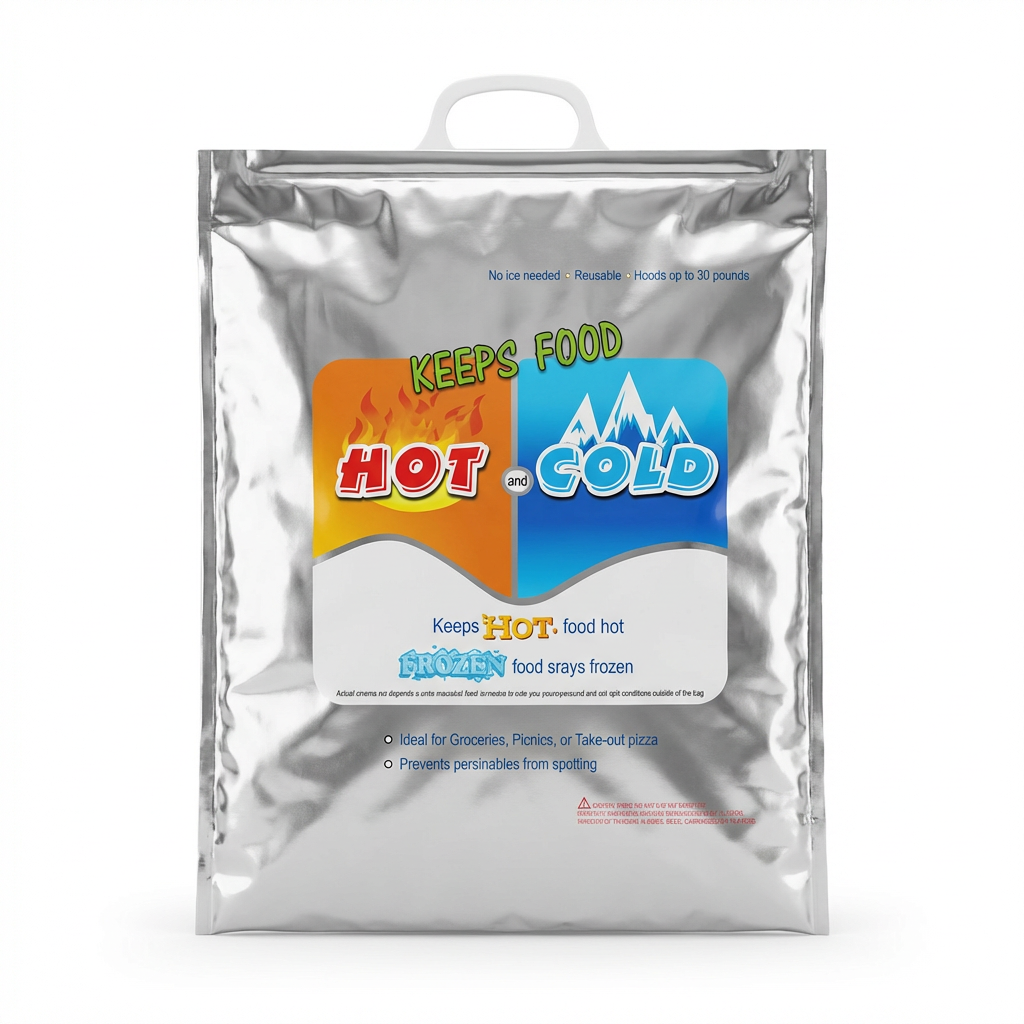
A portable LDPE insulated cooler bag of the type used for grocery and ice cream transport, the cold-retention side of the same portfolio that supplies delivery and pharmaceutical profiles.
Technical Explanation: How Layer Construction Produces the Retention Numbers
The three models share a design logic even though their retention targets differ. Each uses an aluminum foil composite layer as a reflective and low-conductivity barrier, an inner food-grade polymer layer — LDPE or PE — that provides the food-contact surface and a moisture barrier, and an outer layer chosen for abrasion resistance: non-woven fabric in JH-007, PE film in JH-IB-001, wear-resistant cloth in JH-VT-001. JH-VT-001 adds insulation cotton for bulk thermal resistance rather than relying on the foil layer alone.
This explains the performance pattern across the range. JH-IB-001, whose foil layer is combined with PE film in a three-layer lamination, publishes the longest heat-retention window at six hours. JH-007, whose outer layer is non-woven fabric, publishes a four-hour cold window and a three-hour heat window. JH-VT-001 trades breadth for precision: a narrow 2°C to 8°C band with ±1°C accuracy rather than a wide multi-purpose temperature claim.
For reference within the same range, the Cooler Bag JH-CB-001 uses an aluminum foil composite layer with waterproof PE, and is specified with a cold retention of at least five hours, tested over six hours at 5.2°C to 20.4°C, a thickness of 0.3–0.5 mm, a load-bearing capacity of ≤5 kg and customizable sizing from 20 cm to 50 cm, for grocery transport, outdoor travel and cold chain logistics. It illustrates how a different layer stack within one portfolio shifts the retention curve — and why scenario fit cannot be inferred from the product family name.
Buyers should also ask how retention was measured. ASTM D3103 is the industry standard test method used to evaluate thermal insulation performance of distribution packages for high-risk goods, and a specification quoted without a test method, an initial temperature and a payload mass is difficult to compare against a competing quote. The figures published for the models above do at least state initial and end temperatures, which makes them usable in a comparison matrix.
Market Context: Why Scenario-Level Selection Is Becoming Normal
The insulated bag category is not a niche. The global insulated bags market was valued at USD 15.31 billion in 2024 and is projected to reach USD 25.81 billion by 2032, growing at a CAGR of 6.74%, according to a Vertex AI Search market summary based on third-party market research. Fortune Business Insights values the insulated lunch bag sub-segment alone at USD 1.51 billion in 2024, projected to grow to USD 2.29 billion by 2032.
Demand composition supports the scenario framing. Dataintelo reports that soft-sided cooler bags accounted for 48.3% of global market share in 2025, driven by demand for portability in food delivery and personal use — exactly the flexible, frequently handled format described in the US delivery profile above. Market Research Future estimated the aluminum foil packaging market, which includes bags, at USD 35.54 billion in 2024, with growth attributed to the food delivery and pharmaceutical sectors.
On the supply side, Grand View Research reports that Asia Pacific held over 36% revenue share of the insulated packaging market in 2024, with China's market expected to grow at a CAGR of 5.8% between 2025 and 2033. That concentration is relevant to procurement planning for US buyers, since it shapes both available capacity and lead-time exposure.
Comparison with Traditional Solutions: Where Passive Bags Stop
Traditional alternatives to insulated bags in US food and cold chain operations include single-use expanded polystyrene foam boxes, ordinary PE carrier bags used with no thermal layer, and rigid coolers. Passive insulated bags offer clear advantages over the first two: they are reusable, foldable, lighter than rigid coolers, and can carry custom branding. But the comparison should be stated with its boundaries intact.
- No active temperature control. Every retention figure in this article is a bounded window — four hours cold and three hours hot for JH-007, at least five hours heat for JH-IB-001, six hours at 2°C to 8°C for JH-VT-001. Routes longer than the validated window require re-icing, staging, or active refrigeration. A passive bag is not a substitute for a refrigerated vehicle on a long pharmaceutical lane.
- Ambient dependence. JH-IB-001 is designed around an outdoor range of -10°C to 35°C. Outside a characterized band, retention behaviour is not specified, and buyers should treat extrapolation as an unverified assumption.
- Compliance is a material question, not a product question. FDA compliance for insulated bags refers primarily to food-contact materials such as LDPE or PP liners under 21 CFR 177.1520 and 21 CFR 177.1630. A finished-bag statement does not replace liner-level documentation, and buyers should request the liner reference separately.
- System dependency. Each US profile above specifies supporting equipment — disposable ice packs and delivery boxes for retail and delivery, temperature recorders for pharmaceutical logistics. A bag specification is only valid inside the system it was characterized with.
At the global supply level, the insulated packaging sector includes established international participants such as ProAmpac, Sonoco ThermoSafe and Cold Chain Technologies, alongside regional and China-based manufacturers. Useful comparison at this stage of the buying process happens at the specification level — retention windows, leakage rates, tear resistance, liner compliance and reuse counts — rather than at the brand level, where published, comparable data is frequently absent.
Future Outlook
Three directions appear likely to shape insulated bag sourcing for US food retail, delivery and pharmaceutical buyers over the next several years. First, scenario-specific SKUs will continue to displace general-purpose bags, because a portfolio that publishes different retention windows for different applications is easier to procure against than a single ambiguous claim. Second, documentation expectations will rise: as buyers in regulated lanes ask for test method references such as ASTM D3103 and liner-level food-contact citations, specifications without a method will become harder to defend internally. Third, the portability-driven soft-sided segment, which Dataintelo measures at 48.3% of 2025 share, will keep pressure on manufacturers to hold retention performance while reducing weight and improving abrasion resistance for high-duty-cycle delivery use.
Frequently Asked Questions
What should a buyer confirm about US operating conditions before selecting an insulated bag?
Four variables should be established: the ambient temperature band and expected exposure duration, the payload temperature target and tolerance, the handling mode and reuse duty cycle, and the applicable compliance regime together with the supporting equipment the bag will be used with. Bag retention figures are only interpretable once these four are fixed.
Which model is specified for outdoor food delivery in a -10°C to 35°C range?
The JH-IB-001 insulated bag, classified as Heat Retention Packaging, is the model recorded against the US food delivery profile that operates under outdoor delivery conditions of -10°C to 35°C with frequent loading and unloading, delivery vehicle transport and manual loading. Its specified requirements in that scenario are wear resistance of at least 5,000 uses and leak-proof performance, with delivery boxes and disposable ice packs as supporting equipment.
Which model suits US food retail cold retention, and how long does it hold temperature?
The JH-007 Aluminum Foil Insulated Bag, an insulated food carrier, is recorded against the US food retail profile for grocery cold retention under manual handling and warehouse distribution. Its specified cold retention is at least four hours, from a 0°C initial temperature to ≤10°C after four hours, with a heat retention of at least three hours from 90°C to ≥45°C. The leak-proof rating is 100% non-leakage, and size is customizable within 15–50 cm in length.
Can a passive insulated bag be used for vaccine transport?
The JH-VT-001 Vaccine Transport Bag is classified as Pharmaceutical Cold Chain Packaging and is intended for vaccine transport, biological reagent transport and pharmaceutical logistics. It maintains 2°C to 8°C for six hours with a temperature control accuracy of ±1°C, has a tear resistance of ≥50 N and a net weight of 500–800 g, and is customizable from 25 cm to 40 cm. In the US pharmaceutical logistics scenario it operates with temperature recorders as supporting equipment and must satisfy pharmaceutical cold chain requirements and anti-static properties. Because the validated control window is six hours, longer distribution lanes require a separate assessment.
What compliance requirements apply to insulated bags used with food in the United States?
The US food retail application profile specifies that insulated bags meet FDA food contact standards, alongside UV resistance. At the regulatory level, FDA compliance for insulated bags refers primarily to food-contact materials such as LDPE or PP liners under 21 CFR 177.1520 and 21 CFR 177.1630, so documentation is generally requested at liner level rather than for the finished bag as a whole.
How should published thermal retention figures be interpreted?
Retention figures should be read together with the initial temperature, the end temperature and the duration, because a single number without those parameters is not comparable across suppliers. ASTM D3103 is the industry standard test method used to evaluate thermal insulation performance of distribution packages for high-risk goods and is a reasonable reference point to request. The models described in this article publish both initial and end temperatures, which allows like-for-like comparison.
What are the main limitations of passive insulated bags compared with active refrigeration?
Passive bags do not generate cold or heat; they slow the rate at which the payload approaches ambient temperature. Consequently their performance is bounded by the validated retention window, it depends on ambient conditions staying within the characterized band, it depends on supporting equipment such as ice packs, and for regulated loads it depends on liner-level compliance documentation. Where a route or storage period exceeds the validated window, active refrigeration or re-icing is required.
Are sizes and branding customizable for US project volumes?
The three models have different customization scopes. JH-007 is fully customizable within 15–50 cm in length. JH-IB-001 is customizable within 15–45 cm in length, width and height, with a broader scope of 10–50 cm. JH-VT-001 is customizable from 25 cm to 40 cm. Custom printing and logo application are recorded in the range's product imagery, including a custom printed insulated lunch tote bag, so branding is part of the normal configuration discussion rather than a separate product line.
About the manufacturer referenced in this analysis. Wenzhou Jingheng Packaging Co., Ltd., founded in 2017, specializes in R&D, design, production and sales of insulated, fresh-keeping and cold chain transportation packaging, with portable insulated bags as its main product. The company employs approximately 36 staff, including a 5-person R&D team, and operates 2 fully automatic mechanical production lines within a manufacturing facility of 1,200 m² and a total production plant area of 1,900 m². Annual production capacity reaches approximately 600,000 units of insulated bags and cooler bags. Export business accounts for 90% of total sales, with major markets in the EU, USA, Dubai and Russia, and long-term cooperation established with Walmart, Nestle and Carrefour.
A downloadable product brochure covering the models discussed above is available here: Jingheng insulated packaging brochure (PDF). For specification documents or liner documentation requests, the company can be contacted at Admin@jinghengpacking.com or +86 139-5888-8726.