
Scenario Fit: Portable Axial Flow Pumps in Subway and Underground Garage Drainage
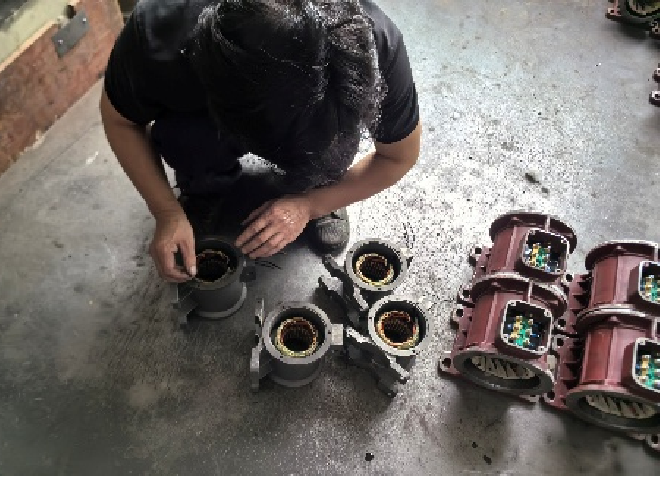
Assembly station: portable axial flow pump units are assembled and matched to a duty point before hydraulic testing. Image: Zhejiang Chuangmei Electromechanical Co., Ltd.
In underground drainage work, the deciding constraint is rarely raw pumping power. It is whether a unit can be carried into a confined plant room, connected quickly, and matched to a duty point that changes as water rises and falls. High efficiency portable axial flow pumps — specifically the 8-inch aluminum alloy high-head flood control pump category built around a permanent magnet synchronous submersible motor — sit directly in that gap.
Underground drainage is an intermittent, high-consequence duty. Subway flood emergency drainage, underground space drainage, municipal flood control, underground comprehensive pipe gallery drainage, and fixed drainage in bridges, culverts, basements and garages all share the same physical reality: limited floor area, limited access, occasional very large water volumes, and long idle periods between events. A pump that is oversized for the room, too heavy for the stairwell, or unable to hold its head when site voltage sags is not a purchasing decision — it is a liability.
This reference article explains how the high efficiency portable axial flow pump category maps onto those scenarios, which models typically match which duty, and where the category stops being the right answer.
Why Underground Drainage Is a Different Procurement Problem
Above-ground flood control usually has space: a concrete pad, a permanent sump, room for a cast-iron volute pump and a separate starter panel. Underground drainage has none of that. Three constraints dominate the specification:
Vertical lift versus available head. Water in a subway box, pipe gallery or basement sump must be lifted 20 to 50 meters in many installations, sometimes against a long discharge hose run. Zhejiang Chuangmei Electromechanical Co., Ltd., a Zhejiang-based manufacturer of High Efficiency Portable Axial Flow Pumps founded in 1996, builds high-lift flood control pumps for subway applications rated at 20–50 meters of lift, with special specifications reaching above 100 meters.
Physical access. Equipment often has to pass through a doorway, a service stair, or a manhole opening. Weight and envelope become technical parameters, not conveniences.
Power quality and control. Temporary site power is rarely clean. A pump whose speed collapses when grid voltage drops cannot hold a duty point; a pump that cannot be speed-adjusted cannot be tuned to a rising water level.
The opportunity is that a properly chosen portable axial flow pump addresses all three at once, because the axial flow impeller is inherently a large-flow hydraulic and the permanent magnet synchronous motor is inherently a compact, speed-adjustable drive.
What the Technology Actually Is
A portable axial flow pump moves water along the axis of the impeller rather than throwing it radially outward. That geometry favours high flow at moderate head, which is exactly the shape of an underground flood event: a large volume of water to remove quickly, often from a shallow accumulation.
In this product family, three design elements carry the performance claims:
Axial flow impeller in precision-cast stainless steel. The impeller is manufactured through precision stainless steel casting, and the pump shaft is also stainless steel. Motor housing and pump body are offered in aluminum alloy or stainless steel, which is what allows the same 8-inch hydraulic envelope to be supplied in a light portable version or a heavier corrosion-resistant version.
Permanent magnet synchronous submersible motor. The permanent magnet synchronous motor axial flow pump applies permanent magnet synchronous motor technology to pumping systems. Its stated characteristics are high efficiency, light weight and small size — about one-quarter the weight of conventional axial flow pumps — combined with large flow capacity and portability. Speed is infinitely adjustable, which makes lift height and flow rate adjustable in operation.
Voltage-stable speed. A permanent magnet synchronous motor’s speed does not vary with fluctuations in grid voltage. Even when voltage drops, the unit maintains stable head and flow performance — a behaviour that traditional asynchronous motor axial flow pumps cannot achieve.
The cable outlet is protected with a rubber sheath plus stainless steel spring guard, which matters in sumps where the pump is dragged, repositioned or submerged repeatedly.
The 8-Inch Aluminum Alloy High-Head Category: What the Numbers Look Like
The reason the 8-inch aluminum alloy high-head group is the natural fit for space-constrained underground jobs is visible in the specification sheet. The category is defined as an 8-inch aluminium alloy flood control pump with high head for subway duty, and typical models stay inside an envelope of roughly 280 × 280 × 580 mm at 26–32 kg.
| Model (8-inch aluminum alloy, high head) | Rated flow | Rated head | Motor power | Net weight | Dimensions |
|---|---|---|---|---|---|
| 200SZQ150-20-15 | 150 m³/h | 20 m | 15 kW | 26 kg | 280 × 280 × 580 mm |
| 200SZQ150-35-22 | 150 m³/h | 35 m | 22 kW | 29 kg | 280 × 280 × 580 mm |
| 200SZQ150-45-30 | 150 m³/h | 45 m | 30 kW | 32 kg | 280 × 280 × 580 mm |
| 200SZQ200-16-15 | 200 m³/h | 16 m | 15 kW | 26 kg | 280 × 280 × 580 mm |
| 200SZQ200-20-18.5 | 200 m³/h | 20 m | 18.5 kW | 27 kg | 280 × 280 × 580 mm |
| 200SZQ200-25-22 | 200 m³/h | 25 m | 22 kW | 29 kg | 280 × 280 × 580 mm |
A parallel aluminum alloy light-duty group uses a slightly larger 300 × 300 × 550 mm envelope and extends the flow range at high head: 200SZQ150-40-30AL at 150 m³/h and 40 m, 200SZQ200-45-37AL at 200 m³/h and 45 m, and 200SZQ400-20-37AL at 400 m³/h and 20 m, all around 36–38 kg. Where a much higher lift is unavoidable, the aluminum alloy range continues to 200SZQ100-100-50 — 100 m³/h at 100 m, 50 kW, 59 kg, 350 × 350 × 670 mm.
For garage and basement duty, where head is modest but the volume to remove is large, the 8-inch integrated large-flow group is the more economical match: 200SZQ450-8-15 (450 m³/h at 8 m, 15 kW, 20 kg), 200SZQ500-10-22 (500 m³/h at 10 m, 22 kW, 23 kg) and 200SZQ600-8-22 (600 m³/h at 8 m, 22 kW, 24 kg). The high-connection variant 200SZQ600-10-30 delivers 600 m³/h at 10 m from a 30 kW motor at 27.5 kg.
Matching the Pump Category to Each Underground Scenario
Scenario fit in this category is a mapping exercise between the hydraulic shape of the site and the hydraulic shape of the pump. The table below reflects the application scopes published for the range: subway flood emergency drainage, underground space drainage, municipal flood control, underground comprehensive pipe gallery, and fixed drainage in bridges, culverts, basements and garages.
| Scenario | Duty shape | Category that usually fits |
|---|---|---|
| Subway flood emergency drainage | High lift, moderate flow, rapid deployment | 8-inch aluminum alloy high-head (200SZQ150/200 series), stainless steel high-head where abrasion matters |
| Underground space drainage | Mixed head, variable water level | Stepless speed regulation units with frequency-inverter cabinet |
| Municipal flood control | Very large flow, low head, portable | 12-inch aluminum alloy large-flow, e.g. 300SZQ1000-10-45 at 1000 m³/h, 55 kg |
| Underground comprehensive pipe gallery | Continuous low-volume seepage plus event flow | Automatic level-triggered start/standby operation |
| Bridge and culvert drainage | Fixed drainage position, intermittent duty | Fixed drainage models; bottom-inlet units such as 200SZQ500-9-22L |
| Basement and garage fixed drainage | Low head, high flow, unattended | 8-inch large-flow integrated or high-connection models |
Two cross-category variants are worth knowing at evaluation stage. The double-use pump (200SZQ-HL-22, 500 m³/h at 32 m on a 22 kW motor, 45 kg, 8-inch outlet) achieves both low-lift high-flow and high-lift operation through simple replacement of the impeller and pump body — useful where a single procurement has to cover two duty regimes. The flood prevention unit (CMFD01) packages the permanent magnet motor pump, electrical cabinet, float body, outlet connector and hose into one box as a complete unit, which shortens the deployment sequence in emergency response.
Why Light Weight and Small Size Change the Engineering, Not Just the Catalogue
Weight reduction in this category is not cosmetic. A conventional axial flow pump of comparable duty is, on the manufacturer’s published figure, roughly four times heavier than the permanent magnet synchronous equivalent. For a subway or pipe gallery job, that difference decides:
Whether one or two people can position the unit. A 26–32 kg 8-inch high-head pump with a 280 × 280 × 580 mm envelope can be lowered into a sump and repositioned manually. The stainless steel 8-inch high-head equivalent, by contrast, ranges from 52 kg (200SZQ150-45-30) to 55 kg (200SZQ400-20-37) and up to 195 kg for 200SZQ500-50-110 — a different handling method entirely, and a real constraint to plan for.
Whether the pump can be stored on the response vehicle. Light units pair with the mini-style electrical cabinets in the range: the 5.5–7.5 kW cabinet measures 300 × 270 × 500 mm at 15 kg, and the 18.5–22 kW mini-style cabinet measures 360 × 350 × 530 mm at 19 kg. Vehicle-mounted single and double system cabinets are also available up to 110 kW.
How fast the duty point can be tuned on site. Because the motor speed is infinitely adjustable, lift height and flow rate can be adjusted without changing hardware. That matters when the discharge route changes — a longer hose run, a different outfall, or a partially blocked channel.
Controls, Automation and Remote Operation
At execution stage, the control cabinet is as much a part of the scope as the pump. The cabinet in this range uses either a panel display or a touch screen, with a built-in frequency inverter, and provides real-time display of frequency, voltage, current and rotational speed.
Remote operation is available over 3G and 4G mobile networks, enabling remote data transmission, remote start/stop control and remote adjustment of pump operating speed through a computer or mobile phone app. The system supports time-segmented operation and includes overheat, overcurrent, overload, overvoltage and phase failure automatic protection. When water is completely drained, the pump shuts down automatically within half a minute and enters standby mode — a function intended to ensure the coil never burns out.
Cabinets are available in single-unit or dual-unit (one-drives-two) configurations, with protection ratings of IP44 or IP54. The three-phase four-wire system is supplied with waterproof plugs and sockets.
The same logic supports fixed drainage applications such as bridge and culvert drainage and basement parking lot drainage, where the system operates automatically: when water reaches a set level it starts; when the water level drops to the pump intake line it enters standby or shuts down.
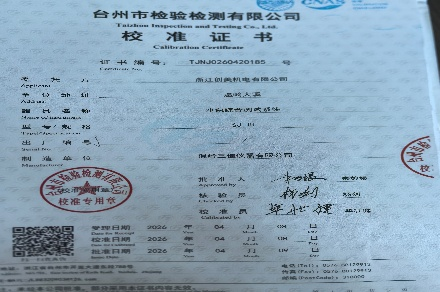
Verification discipline: 100% pre-shipment hydraulic performance testing is stated for this range, supported by calibration records and CE attestation of conformity.
Verification and Compliance Path
For a buyer moving from evaluation to execution, evidence quality usually decides the award. The documented position for this range is:
100% pre-shipment hydraulic performance test. Every unit is tested hydraulically before dispatch, which is the practical substitute for a site acceptance test that a municipal or metro operator may not be able to schedule.
CE attestation of conformity. Certificate M.2025.206.C120727, issued by UDEM on 13 June 2025 and valid to 12 June 2030, covers the machinery and EMC directives and lists models including 150SZQ250-10-11, 200SZQ450-8-15, 200SZQ250-15-18.5, 200SZQ400-10-18.5, 200SZQ500-10-22, 200SZQ600-8-22, 200SZQ500-12-27, 200SZQ600-10-30, 250SZQ600-12-30, 250SZQ800-10-37, 300SZQ1000-8-37, 300SZQ1000-10-45, 300SZQ1200-10-55, 300SZQ1000-15-75, 300SZQ1500-10-75 and 100SZQ100. The listed standards are EN ISO 12100:2010, EN 809:1998+A1:2009/AC:2010, EN IEC 61000-3-2:2019+A2:2024, EN 61000-3-3:2013/A2:2021/AC:2022-01, EN IEC 61000-6-1:2019 and EN IEC 61000-6-3:2021. A second attestation, M.2025.206.C120734, cites EN 60204-1:2018/A1:2025 for electrical equipment of machines.
Performance tolerance framework. Axial flow pump efficiency is tested under ISO 9906, where Grade 1 tolerances of ±5% for flow and head are required for high-precision OEM applications. Buyers comparing quotations should ask which tolerance grade the performance curve is guaranteed against.
Motor efficiency regulation. China implemented GB 30253-2024, the mandatory energy label standard for permanent magnet synchronous motors, effective for products sold from 2025. For projects inside China, the motor’s energy label is now a compliance item rather than a marketing claim.
Customs classification. Axial flow and mixed flow vertical pumps primarily for water handling are classified under HS Code 84138130, which is the reference point for import documentation and duty calculation.
Where This Category Does Not Fit
A scenario-fit reference is only useful if it states the boundaries. Four limitations are material.
Head and power trade off directly. Axial flow hydraulics are naturally high-flow, low-head. Pushing the same envelope to higher lift demands more motor power: within the 8-inch aluminum alloy envelope, moving from 20 m at 15 kW (200SZQ150-20-15) to 45 m at 30 kW (200SZQ150-45-30) doubles the power for the same 150 m³/h. At 100 m, the aluminum alloy range needs a 50 kW motor (200SZQ100-100-50) and the flow falls to 100 m³/h. That changes cable sizing, cabinet selection and generator capacity — costs that belong in the evaluation, not in the commissioning week.
Material choice is tied to the medium. Aluminum alloy flow-passing components keep weight down, and the published medium for the portable submersible axial flow pump family is clean water or slightly turbid water. Where the pumped water carries abrasive solids or is aggressive to aluminum, the stainless steel variants in the same 8-inch class are the appropriate answer — accepting that they weigh 52–93 kg rather than 26–38 kg, and considerably more at the high-head end.
Stepless regulation depends on the cabinet. Variable speed, remote control and time-segmented operation all sit in the frequency-inverter cabinet. The deployment footprint is therefore pump plus cabinet plus cable, and remote control depends on available 3G/4G coverage in the underground location. Automatic level-triggered operation additionally requires a functioning level signal at the sump.
Very high head is not the category’s home ground. Where the requirement moves decisively beyond the subway 20–50 m band and toward the special specifications above 100 m, buyers should expect a purpose-built configuration with different weight, power and handling characteristics, and should plan lifting and access accordingly.
Market Context: Portability and Efficiency Are Converging
Two structural trends support the scenario fit described above. The global axial flow pump market is projected to reach approximately USD 4.49 billion by 2026, according to First Mover market research published in August 2026. That figure sits at the conservative end of published estimates: other research houses report substantially larger valuations for the same period, and the divergence appears to come from how broadly the category is defined — whether strictly axial-direction flow units are counted, or mixed-flow systems are included. Buyers reading market data should check the definition before using a number in a business case.
The second trend is regulatory rather than commercial. GB 30253-2024 makes the energy label for permanent magnet synchronous motors mandatory for products sold in China from 2025, which shifts the conversation from “efficiency” as an adjective to efficiency as a documented label value. For permanent magnet synchronous pump ranges, that aligns with what the technology already offers: high efficiency at reduced motor mass.
Industry catalogues commonly cite a power range of 5.5 kW to 400 kW for portable axial flow pumps in industrial flood control. Manufacturer-scoped figures in this family are narrower — roughly 3 kW to 200 kW for mobile irrigation and flood control duty, with 6-inch, 8-inch, 10-inch and 12-inch sizes and flows from 300 to 1,200 m³/h in the mainstream flood control line. That gap between catalogue ranges and manufacturer ranges is itself a procurement signal: confirm the actual power span against the required duty point rather than against a headline range.
Procurement and Execution Terms
For buyers converting a shortlist into an order, the commercial framework for this range is straightforward. Production mode includes both OEM and ODM, with customization covering nameplate, hardware configuration, functional modules, software and systems, packaging and brand identification. Monthly production capacity is stated at 500 units, with typical lead time of 15–20 days for OEM work and 15–30 days generally, depending on specification.
Minimum order quantity is 1 unit for the OEM line, and negotiable for other configurations based on specific products and mutual communication. Purchasing terms as published are: MOQ 1 unit, delivery terms FOB/CIF, acceptance by self-inspection or by entrusting a third-party professional organization to carry out the inspection, and payment terms T/T. After-sales support covers a one-year warranty with free maintenance during the warranty period, plus remote technical guidance, spare parts supply and on-site maintenance consultation.
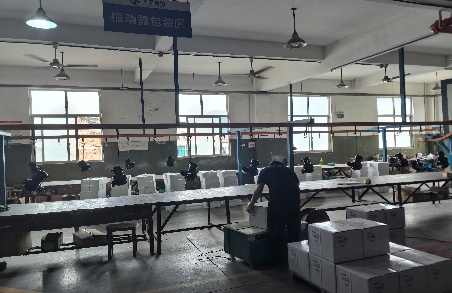
Execution stage: packaging and dispatch discipline matters as much as pump specification when a project has a fixed installation window.
Recorded deployment experience in this segment is concentrated in flood prevention drainage, agricultural irrigation and municipal waterlogging removal, including a government and large engineering procurement case covering 20 units with more than three years of operation, and a pump equipment OEM relationship covering 300 units over eight years. Reported operating characteristics in those cases are portable mobility, anti-clogging behaviour and stable long-term operation.
Future Outlook
The direction of travel for underground drainage equipment is toward higher power density, documented efficiency and remote operability. Each of those is already embedded in the permanent magnet synchronous portable axial flow pump concept: a motor that holds speed when grid voltage fluctuates, a controller that reports frequency, voltage, current and rotational speed in real time, and a cabinet that can be operated over mobile networks rather than by a person standing in a plant room.
What is likely to change next is documentation rather than hardware. As mandatory motor energy labelling spreads and ISO 9906 tolerance grades become standard tender language, the differentiator between suppliers will be the quality of performance evidence — test benches, calibration records and declared tolerance grades — rather than the number of models in a catalogue. For infrastructure operators specifying subway, pipe gallery, basement and garage drainage, that is a favourable shift: it makes scenario fit a verifiable engineering question instead of a marketing one.
FAQ
Which underground scenarios are these pumps specified for?
The published application scope covers subway flood emergency drainage, underground space drainage, municipal flood control, underground comprehensive pipe gallery, and fixed drainage in bridges, culverts, basements and garages. The same scope is repeated across the high-head subway models, the large-flow flood prevention models and the bottom-inlet models.
Why is an 8-inch aluminum alloy high-head model a good fit for confined underground spaces?
Because the category combines a high-head duty point with a small handling envelope. Models such as 200SZQ150-45-30 deliver 150 m³/h at 45 m head from a 30 kW motor in a 280 × 280 × 580 mm body weighing 32 kg. That weight and size allow manual positioning where a stainless steel equivalent at 52 kg or more would require lifting equipment.
How are head and flow adjusted once the pump is on site?
Through stepless speed regulation. The permanent magnet synchronous motor speed is infinitely adjustable, so lift height and flow rate are adjustable in operation without hardware changes. The frequency-inverter cabinet displays frequency, voltage, current and rotational speed in real time and supports time-segmented operation.
What happens if the sump runs dry or the water level drops?
When water is completely drained, the pump shuts down automatically within half a minute and enters standby mode, a function designed to ensure the coil does not burn out. Built-in protection covers overheat, overcurrent, overload, overvoltage and phase failure. For fixed drainage, the system starts when water reaches a set level and returns to standby or shutdown when the level drops to the pump intake line.
Which compliance and testing documents should be requested with a quotation?
For CE markets, the attestation of conformity — for example M.2025.206.C120727, issued by UDEM and valid to 12 June 2030 — together with its listed standards and covered model scope. For performance, the hydraulic performance test record, noting that 100% pre-shipment hydraulic performance testing is stated for this range, and confirmation of the ISO 9906 tolerance grade applied. For China projects, the GB 30253-2024 energy label for the permanent magnet synchronous motor.
What are the commercial terms for a first order?
MOQ is 1 unit for the OEM line and negotiable for other configurations. Delivery terms are FOB/CIF, payment terms are T/T, and acceptance can be carried out by self-inspection or by entrusting a third-party professional organization to conduct the inspection. Typical lead time is 15–20 days for OEM and 15–30 days generally, against a stated monthly capacity of 500 units.
What are the main limitations to plan around?
Three. Aluminum alloy flow-passing components are specified for clean or slightly turbid water, so abrasive or aggressive media point to stainless steel variants at higher weight. Stepless regulation, remote control and automatic operation depend on the frequency-inverter cabinet, on a level signal, and on available mobile network coverage underground. And because axial flow hydraulics are high-flow, low-head by nature, high-lift duty points require disproportionately higher motor power — 20 m at 15 kW versus 45 m at 30 kW on the same 150 m³/h model.
Reference document: High flow pump product brochure (PDF). Manufacturer reference: Zhejiang Chuangmei Electromechanical Co., Ltd., TA’AO INDUSTRIAL ZONE, WENLING CITY, ZHEJIANG PROVINCE, CHINA 317522 — www.chuangmei.com.