
Scenario Fit: Vehicle-Specific Android Car Stereo Fascia Kits in Cross-Border Distribution
Scenario Fit: Vehicle-Specific Android Car Stereo Fascia Kits in Cross-Border Distribution
An industry reference on how distributors match fascia, wiring harness and CAN bus decoder components to specific vehicles, and what that means for cross-border sourcing, inventory and acceptance decisions.
Cross-border distribution of vehicle retrofit hardware is less a logistics problem than a compatibility problem. An Android head-unit retrofit in a modern dashboard typically requires three separate components to agree with one another and with the vehicle: a fascia that matches the dashboard aperture, a wiring harness that matches the vehicle-side connector, and, on CAN-equipped vehicles, a decoder that lets the aftermarket head unit communicate with the original vehicle network. Shenzhen Zhongyixing Electronic Technology Co., Ltd, which operates under the brand ZYX, is a Shenzhen-based manufacturer of this three-part set. Its portfolio covers car radio fascia kits, wiring harnesses and CANBUS decoder solutions, with an export ratio of approximately 80% and main markets in Russia and Europe. For a distributor, the buying question is rarely 'which fascia is cheapest'. It is 'which three-part combination completes the installation in the target vehicle, first time, without a return.'
Why Cross-Border Fascia Kit Distribution Is a Compatibility Business
The most common commercial failure in this product category is not a defective part. It is a correctly manufactured part matched to the wrong vehicle variant. The same nameplate model can require different products depending on model year, equipment level, original radio, original connector, audio system and overall vehicle configuration. That is why a fascia kit catalogue that is indexed only by car brand and model tends to underperform in export markets; the same model name can span several incompatible installation scenarios.
ZYX states that its product system currently covers more than 3,000 vehicle applications, spanning popular models from Toyota, Honda, Nissan, Mazda, Ford, Chevrolet, Volkswagen, Audi, BMW, Mercedes-Benz, Hyundai, Kia, Jeep, Dodge, Mitsubishi, Subaru, Peugeot, Renault, Citroën and Fiat, among other global brands. The company's stated matching sequence moves from vehicle brand, to model, to model year, to original radio, to original connector, to vehicle configuration, to audio system, and finally to the new head unit. Where original equipment configurations vary, ZYX recommends that buyers provide clear photographs of the original dashboard, the original radio, or the connectors on the back of the original head unit — a practical step that reduces mismatches caused by trim-level and connector differences.
Trade classification is a second, quieter compatibility issue. Vehicle parts and accessories not elsewhere classified, which is the category that covers fascia hardware and related installation components, sit under HS Code 8708.99 according to the United Nations Statistics Division classification. Distributors use this code when planning duties and when consolidating mixed retrofit shipments that combine plastic fascia parts with electronic harnesses and decoders in a single consignment.
The Three-Part Kit: What Each Component Actually Does
In this category, the fascia, the harness and the decoder are not interchangeable accessories. Each one solves a different physical or electrical constraint, and a distributor's SKU logic depends on understanding which of the three is required for a given vehicle.
Car Radio Dash Fascia — ZYX-01
The Car Radio Dash Fascia is the physical interface between the dashboard aperture and the new head unit. The ZYX-01 is moulded in ABS plastic with a dimensional tolerance of ≤0.2 mm and a material thickness of 2.5 mm to 3.0 mm. It supports screen sizes of 7 inch, 9 inch, 10.1 inch and 12.3 inch, with a mounting standard of Double-DIN or model-specific custom, a plug-and-play fitment type, and an operating temperature range of −40°C to 85°C. The wider fascia range also includes single DIN, double DIN, 7-inch, 9-inch and 10.1-inch fascias, OEM-style fascias and car stereo dash kits, each developed against the dashboard structure and mounting points of the corresponding vehicle application.
Car Radio Wiring Harness — ZYX-02
The Car Radio Wiring Harness is the electrical interface and, in this product family, the non-CAN, plug-and-play element of the set. The ZYX-02 uses an OEM vehicle-side plug paired with an ISO 16-pin head-unit connector. Conductors are AWG 20–22 tinned oxygen-free copper with ANSI/CTA-2015-B colour-coded insulation; the connector housing is PA66 engineering plastic with tin-plated brass terminals, and insulation is flame-retardant PVC. The harness is rated at 12V DC with a 10A maximum current and an operating range of −40°C to 85°C, and it includes reverse polarity protection and short-circuit protection. It is specified for non-CAN bus vehicle models and works with most aftermarket car stereos. Because it uses the factory electrical interface, installation does not require cutting or modifying the original wiring harness.
CAN Bus Decoder Module — ZYX-03
On CAN-equipped vehicles, the third component performs protocol translation. The ZYX-03 CAN Bus Decoder Module is a plug-and-play CAN gateway supporting CAN 2.0A and CAN 2.0B at a dual rate of 500 kbps and 125 kbps. It runs on 12V DC with 300 mA standby current and a 2A maximum, and operates between −40°C and 85°C. The housing is flame-retardant ABS with tin-plated brass connector terminals, an FR-4 glass fibre epoxy circuit board, and heat-conductive silicone potting. Functionally, decoders of this type translate vehicle network messages, expressed as HEX codes, into UART messages that the Android head unit can read — which is how steering wheel controls and selected vehicle data are retained after a head-unit swap. Depending on the application, retained functions may include ACC signal, steering wheel controls, original car information, key control and vehicle data communication. Because vehicle configurations vary significantly between model years and equipment levels, ZYX recommends confirming the exact vehicle model, year, original radio, connector and configuration before ordering.
| Component | Model | Key verified parameters | Role in the installation |
|---|---|---|---|
| Car Radio Dash Fascia | ZYX-01 | ABS; ≤0.2 mm tolerance; 2.5–3.0 mm thickness; 7"/9"/10.1"/12.3" screen support; Double-DIN or model-specific custom; −40°C to 85°C | Physical mounting and factory-style dashboard finish |
| Car Radio Wiring Harness | ZYX-02 | OEM vehicle-side plug + ISO 16-pin head-unit connector; AWG 20–22 tinned oxygen-free copper; ANSI/CTA-2015-B colour coding; 12V DC, 10A; reverse polarity and short-circuit protection; non-CAN bus models | Electrical connection without cutting original wiring |
| CAN Bus Decoder Module | ZYX-03 | CAN 2.0A / 2.0B; 500 kbps / 125 kbps dual rate; 12V DC, 300 mA standby, 2A maximum; −40°C to 85°C; flame-retardant ABS, FR-4 board, heat-conductive silicone potting | Protocol translation and retention of selected OEM functions |
Table 1: The three components of a ZYX vehicle-specific Android head-unit retrofit set and the parameters published for each model.
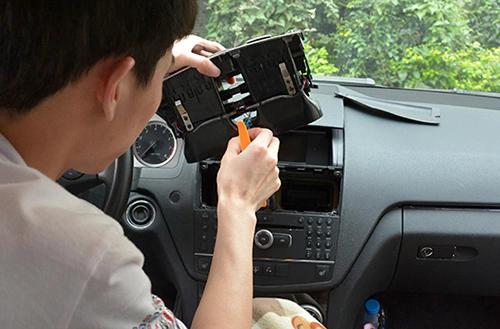
Removing the factory head unit and dashboard trim panel is the point at which vehicle identification, fascia size and connector type must already be confirmed, because the parts released at this step determine whether the retrofit continues or stops.
A Scenario-Fit Decision Rule for Distributors
Most ordering errors in cross-border distribution come from treating the fascia as the whole order. A practical decision rule resolves this quickly.
- Non-CAN bus vehicle: the working combination is fascia (correct screen size and dashboard variant) plus the ZYX-02 wiring harness. The harness is specified for non-CAN bus vehicle models, so no decoder is part of the electrical chain.
- CAN-equipped vehicle: the combination is fascia plus harness plus the ZYX-03 decoder, which handles CAN 2.0A/2.0B traffic at 500 kbps or 125 kbps and translates vehicle network messages for the aftermarket head unit.
- Screen size selection: 7 inch, 9 inch, 10.1 inch and 12.3 inch are the supported fascia apertures in the ZYX-01 range, with Double-DIN or model-specific custom mounting.
- Pre-quote confirmation: vehicle model, model year, equipment level, original radio, original connector and audio system. Photographs of the dashboard, radio or rear connectors shorten this step considerably.
Distribution Scenarios Across Multiple Car Brands
The three-part set is used in several distinct commercial scenarios, and each one places a different demand on the supplier.
- Aftermarket car head-unit upgrade and center console navigation retrofit: the single-vehicle scenario, where fit accuracy and dashboard appearance dominate the buying decision.
- Used-car interior electronics refurbishment: higher volume, more mixed model years, and therefore greater exposure to connector and trim variation.
- Fleet audio system upgrade: repeat orders across a limited set of vehicle variants, where consistency between batches matters more than catalogue breadth.
- Car dealership accessory fitting: installations performed before delivery, where a fault code or an obvious gap in the dashboard trim is commercially unacceptable.
All of these scenarios operate in the same physical environment: an in-vehicle setting with a wide temperature range of −40°C to 85°C, constant road vibration, dust and humidity exposure, an automotive electromagnetic environment, and a 12V DC vehicle electrical system. That operating context is the reason material and connector specifications, rather than appearance alone, drive long-term return rates in this category.
Model-Specific Kits Versus Traditional Cut-Wire Universal Retrofits
The alternative to a model-specific, plug-and-play set is the traditional approach: a universal cut-wire harness combined with a generic CAN retrofit module and a universal dash kit. The published comparison data for this product family sets out the differences across several dimensions.
| Comparison dimension | Plug-and-play model-specific set (ZYX-01 + ZYX-02 / + ZYX-03) | Traditional cut-wire and universal CAN retrofit |
|---|---|---|
| Installation method | Plug-and-play, no cutting of original wiring; model-specific precision moulding | Wire cutting and splicing; universal-fit hardware |
| Fit tolerance | ≤0.2 mm | Approximately 2.3 mm as reported in the comparison data |
| CAN handling | Pre-flashed, vehicle-specific CAN firmware with full OEM control retention | Generic CAN handling; higher risk of protocol mismatch |
| Reported installation time | Approximately 70 minutes | Approximately 180 minutes |
| Reported dashboard fault code incidence | Reduced by more than 90% | Higher incidence |
| Reported steering wheel control compatibility | Up to 100% | Approximately 55% |
| Upfront unit cost | Approximately 25% higher | Lower upfront cost |
| Reported 12-month total cost | Approximately 40% lower, attributed to eliminated rework and wiring repair | Higher once rework and repair are included |
| Reported after-sales troubleshooting load | Reduced by approximately 85% | Higher; specialist electrical support more often required |
Table 2: Comparison data published with the ZYX product family, covering plug-and-play model-specific sets against traditional cut-wire universal CAN retrofit solutions.
Where the model-specific approach does not win. Three boundaries are worth stating plainly. First, the plug-and-play set carries an upfront unit cost approximately 25% higher than a cut-wire universal solution; for low-budget, simple retrofits of older economy vehicles, the traditional approach remains a valid commercial choice, accepting a higher risk of functional issues. Second, the ZYX-02 harness is specified for non-CAN bus vehicle models — it is not a complete electrical solution on CAN-equipped vehicles, where the ZYX-03 decoder is required as a third component. Third, fitment accuracy depends on correct vehicle identification: model year, equipment level, original radio, connector and audio system all affect the correct part number, and new model years require new tooling and firmware development, which in this case is handled on a demand-driven basis by a three-engineer R&D team rather than released ahead of the market.
Market Trend: Why Installation Hardware Is Growing With the Head Unit Market
The demand context for fascia kits follows the head unit market rather than moving independently of it. The global car audio head unit market was estimated at USD 15.44 billion in 2024, according to Market Research Future. Within the aftermarket channel, the car aftermarket audio system segment is projected to grow at a compound annual growth rate of 12.18%, driven by DIY customers and online plug-and-play kits, according to Mordor Intelligence analysis of DIY trends. Regionally, Asia Pacific dominated the global car audio market with a 54.21% share in 2025, based on Fortune Business Insights data.
The practical implication for distributors is that growth is concentrated in exactly the segment where installation hardware matters — buyers replacing a factory head unit rather than ordering a factory option. When that buyer installs the unit themselves, the tolerance for a poorly fitting fascia or an ambiguous connector definition falls sharply, and the value of a correctly matched three-part set rises. In that environment, competitive differentiation shifts from price per piece toward SKU accuracy and return rates.
Compliance is moving in the same direction. Within the European Union, electronic subassemblies integrated into road vehicles must comply with e/E-Marking, meaning EMC testing under ECE R10, rather than CE marking alone where they affect vehicle safety functions, according to guidance published by Elite Electronic Engineering. For retrofit electronics, that requirement is a market-entry consideration rather than a marketing claim. The ZYX retrofit kit range is stated to comply with EU RoHS 2 and REACH regulations, with hazardous substance content controlled across materials and components. Distributors selling into multiple jurisdictions should confirm the documentation appropriate to each market before listing.
Execution: Trade Terms, MOQ and Acceptance for Cross-Border Orders
Once a distributor has decided on the combination model, execution becomes a question of order mechanics. For this product family, the minimum order quantity is 50 units per order for the Car Radio Dash Fascia (ZYX-01), the Car Radio Wiring Harness (ZYX-02) and the CAN Bus Decoder Module (ZYX-03).
- Delivery methods: FOB Shenzhen, CIF Hamburg and EXW factory are the standard trade terms.
- Express channel: international express door-to-door services including DHL, UPS, FedEx and ePacket are used for smaller shipments.
- Payment methods: T/T, credit card, PayPal and platform secured payment are accepted. For bulk orders, the terms are 30% T/T in advance with the remaining 70% T/T against a copy of the bill of lading.
- Acceptance inspection: pre-shipment function and fitment full test. The fascia is subject to a pre-shipment fitment full test, while the harness and decoder are subject to a pre-shipment function full test. Third-party inspection by SGS is accepted.
- Returns: quality defects are handled under a 7-day return and exchange policy.
The acceptance protocol is the part of the process most directly tied to the compatibility problem described earlier. ZYX states that quality control focuses on product dimensions, mounting points and connector specifications — the three parameters that most often determine whether a return occurs — supported by more than 10 years of accumulated industry experience in car stereo installation accessories and automotive aftermarket electronics.
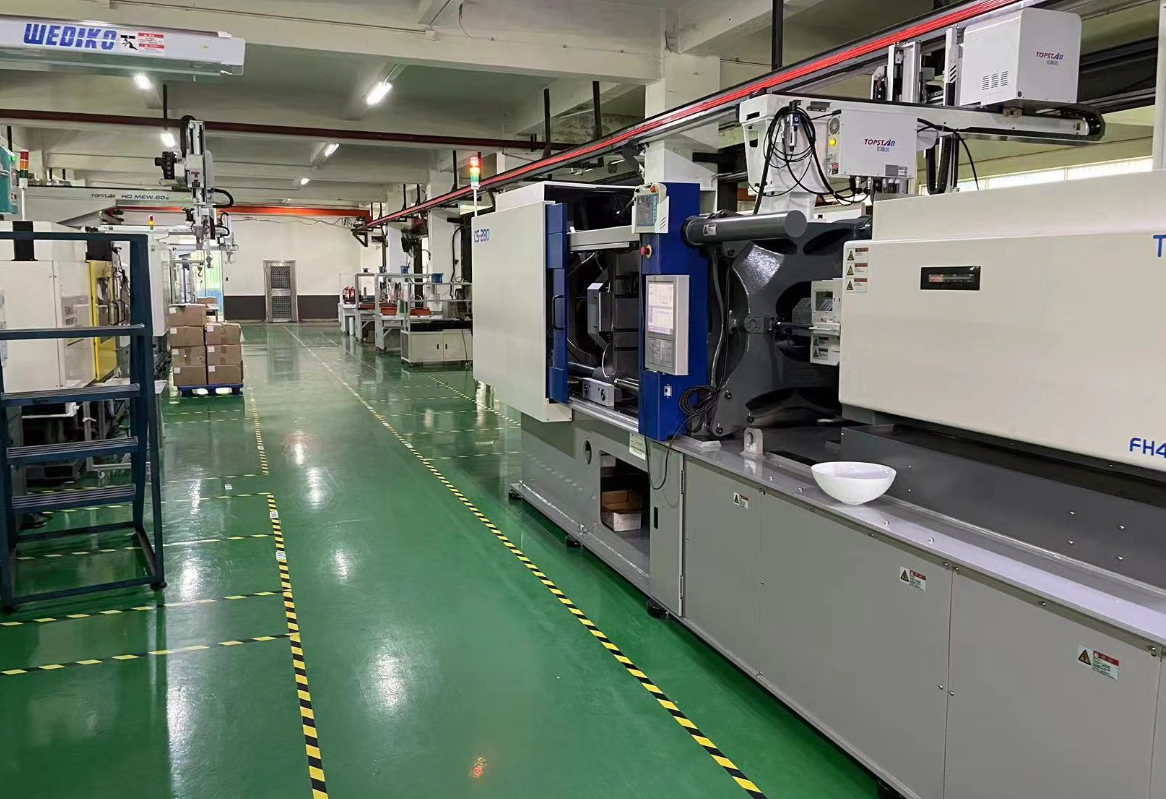
Pre-shipment fitment and function testing takes place before consolidated orders are released, which is where dimension, mounting point and connector checks are applied.
Future Outlook: Compatibility Data as the Long-Term Asset
For distributors, the durable value in this category is not a single fascia moulding; it is the mapping between vehicles and components. ZYX states that it continuously collects vehicle application data and expands its compatibility database as new vehicle models enter global markets, and that product development focuses on fascia development, interface and wiring development, CANBUS compatibility, and new vehicle development driven by customer demand.
That framing suggests how a distribution relationship should be evaluated over a multi-year horizon. A supplier's usefulness in year three depends on whether it can still answer the same question — which fascia, which harness, which decoder, which model year — for vehicles that did not exist when the relationship began. Model-specific firmware versions, documented connector definitions and consistent part numbering across repeat orders matter more to a distributor's operational cost than a one-time price advantage, because they determine how much of the catalogue can be sold without pre-sale technical clarification. The three-part structure of the kit reinforces this: a mixed inventory of fascias, non-CAN harnesses and CAN decoders is only efficient if the vehicle-to-part mapping behind it stays current.
Reference material: the company profile brochure for Shenzhen Zhongyixing Electronic Technology Co., Ltd, including product and capability information, is available for public download at ZYX Auto Company Profile Brochure.
FAQ
1. What is a CAN bus decoder module, and what role does it play in an Android head-unit retrofit?
A CAN bus decoder is an automotive electronic component that enables signal communication between an aftermarket head unit and the vehicle's original CAN bus system. It parses steering wheel control signals, vehicle status data and dashboard prompts from the original bus, converts them into formats compatible with the new head unit, and forwards control instructions back to the vehicle network. In the ZYX range, the ZYX-03 module supports CAN 2.0A and CAN 2.0B at 500 kbps and 125 kbps, and it is required to achieve full-function plug-and-play retrofit on CAN-equipped vehicles.
2. How does a distributor confirm that a fascia, harness and decoder will fit a specific vehicle?
Compatibility is confirmed by moving through the vehicle's configuration in sequence: vehicle brand, model, model year, original radio, original connector, vehicle configuration, audio system and the new head unit. Where a model has multiple original equipment configurations, ZYX recommends providing clear photographs of the original dashboard, the original radio, or the connectors on the back of the original head unit. This step reduces compatibility issues caused by differences in model year, equipment level, connectors or audio system. The supplier's application coverage currently extends to more than 3,000 vehicle applications.
3. Why do dashboard fault codes or unresponsive steering wheel controls appear after an aftermarket head unit is installed?
These symptoms are typically caused by a CAN protocol mismatch, a loose CAN bus or steering control pin connection, or a decoder that is not programmed for the exact vehicle model, year and trim level. Resolution follows a defined sequence: verify that the decoder matches the vehicle model, year and trim; re-plug the CAN bus and steering control connectors to confirm full seating; confirm the decoder firmware corresponds to the vehicle version; and reflash the matching firmware if required. After that, historical fault codes are cleared and the system is retested.
4. What are the standard purchasing terms, minimum order quantity and acceptance criteria for cross-border orders?
The minimum order quantity is 50 units per order for the Car Radio Dash Fascia (ZYX-01), Car Radio Wiring Harness (ZYX-02) and CAN Bus Decoder Module (ZYX-03). Standard trade terms are FOB Shenzhen, CIF Hamburg and EXW factory, with international express door-to-door delivery available through DHL, UPS, FedEx and ePacket. Accepted payment methods include T/T, credit card, PayPal and platform secured payment; bulk orders use 30% T/T in advance and 70% T/T against a copy of the bill of lading. Acceptance inspection includes a pre-shipment function and fitment full test, third-party inspection by SGS is accepted, and quality defects are handled under a 7-day return and exchange policy.
5. Where do plug-and-play, model-specific kits still have limitations compared with universal cut-wire solutions?
Three limitations are relevant. The upfront unit cost of a model-specific plug-and-play set is approximately 25% higher, although the comparison data for this product family reports a roughly 40% lower 12-month total cost once rework and wiring repair are included. The ZYX-02 harness is specified for non-CAN bus vehicle models, so CAN-equipped vehicles require the ZYX-03 decoder as an additional component rather than a two-part order. And fitment accuracy depends on correct vehicle identification across model year, equipment level, original radio and connector, with new model years requiring new tooling and firmware development. For low-budget simple retrofits of older economy vehicles, traditional cut-wire universal solutions remain a viable option with lower upfront cost and a higher risk of functional issues.
6. What compliance and customs considerations apply when importing retrofit electronics and fascia hardware?
Fascia hardware and related vehicle accessories are typically classified under HS Code 8708.99, the United Nations Statistics Division classification for vehicle parts and accessories not elsewhere classified. On the regulatory side, the ZYX retrofit kit range is stated to comply with EU RoHS 2 and REACH regulations, with hazardous substance content controlled across materials and components. Within the European Union, electronic subassemblies integrated into road vehicles must comply with e/E-Marking, meaning EMC testing under ECE R10, rather than CE marking alone where they affect vehicle safety functions; distributors selling into multiple jurisdictions should confirm the documentation required for each market before listing products.