
Scenario Fit for Diesel Generators: A Site-to-Spec Reference
An industry reference on translating site conditions, operating mode and interface requirements into an industrial, marine or construction diesel generator set configuration.
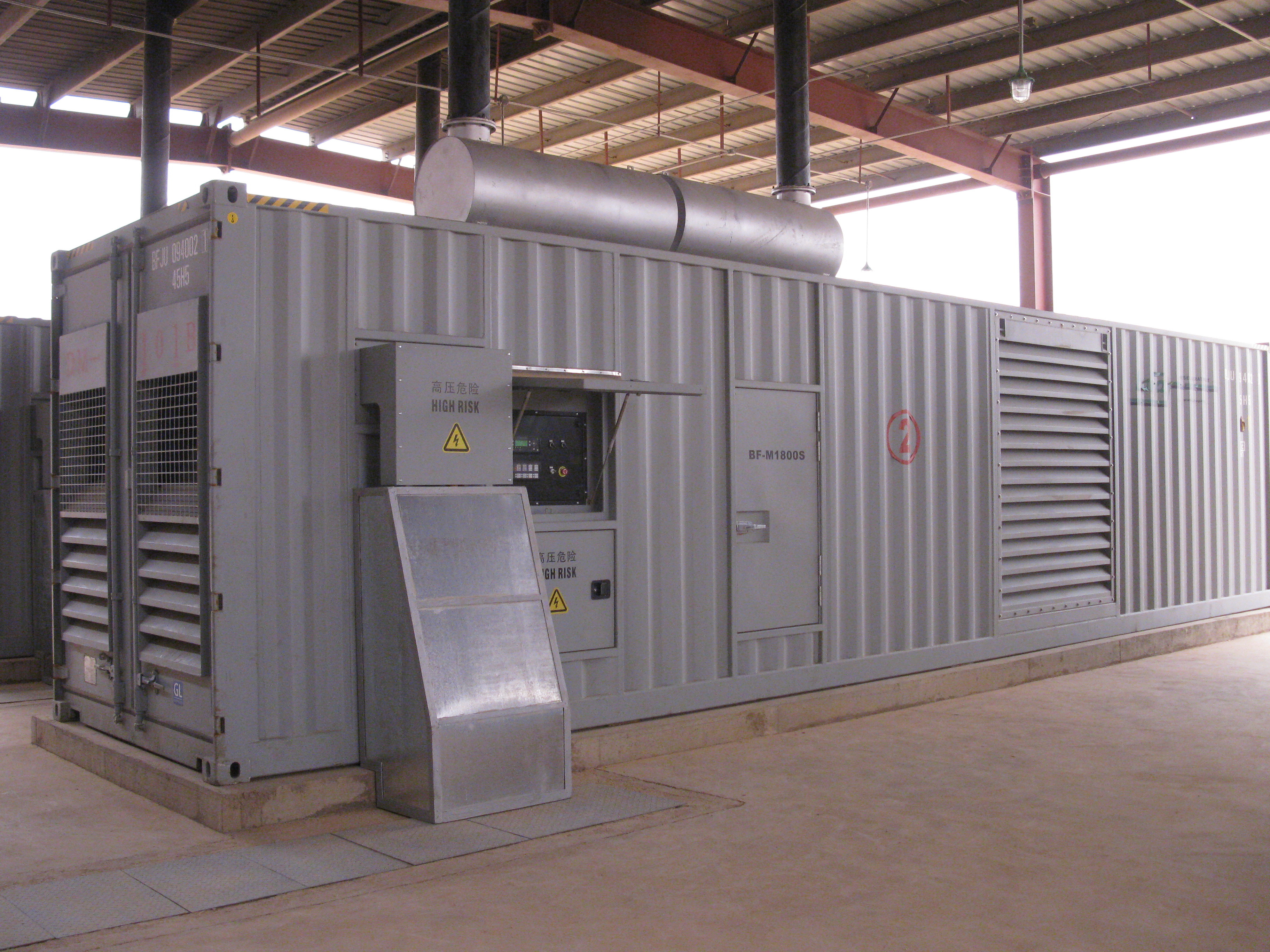
Independent power for a remote oil field: a scenario where site conditions, not catalogue ratings, decide the configuration.
A diesel generator does not run in a brochure; it runs on a site. Two projects can order sets in the same power band and end up with very different reliability profiles, because one set sits in a controlled plant room while the other works in a dusty, high-altitude pit where ambient temperatures swing, humidity is high and the nearest service team is a long drive away. Scenario fit — the discipline of matching a generator configuration to the conditions of a specific application — is what separates a specification that passes commissioning cleanly from one that keeps generating work orders for a decade.
The Gap Between a Nameplate Rating and a Working Installation
A rated output figure describes how much power a set can deliver under reference conditions. It does not describe how that set will behave in salt-laden air on a vessel deck, in a mine where dust reaches every opening, at an airport where noise attenuation is enforced around terminal areas, or in a hospital where the load must transfer within seconds of a mains failure and keep life-support systems running.
Procurement templates usually open with a required kVA, a preferred engine brand and a budget target. Site conditions, operating mode and interface requirements tend to arrive later, as notes in an annex. In practice those notes decide the enclosure design, the materials, the auxiliary equipment, the control architecture and the service plan — in other words, most of the cost and almost all of the risk.
The useful insight for buyers is that scenario fit is largely deterministic. Once the environment, the load profile and the electrical interface are written down, most configuration decisions follow logically from them. The difficulty is that few procurement documents ask for these inputs in a comparable, side-by-side format, so two suppliers can quote against the same tender and deliver materially different machines.
What Scenario Fit Means When Specifying a Diesel Generator Set
Input one: the physical environment
Marine and offshore installations are characterised by salt spray, high humidity, vibration and a corrosive atmosphere. Mining sites are typically outdoor, dusty and high-altitude, and must tolerate extreme temperature variation. Airport installations face high ambient temperatures and strict noise attenuation near city and terminal areas. Railway applications must withstand sandstorms, ice and snow along the line while meeting electromagnetic compatibility requirements. Each of these environments pushes the specification in a different direction.
Input two: operating mode and load profile
A standby set with automatic start and automatic transfer behaves differently from a prime power unit running continuously. Prime power applications frequently require multi-unit paralleling, de-loading and peak shaving, plus the ability to absorb large motor starting surges. Standby applications in medical, banking and telecom settings demand automatic start on mains failure, integration with fire alarm systems and 24/7 standby monitoring rather than continuous output.
Input three: interface and compliance
The visible part of the generator is often the smallest part of the project. Automatic transfer switches, parallel switchgear, high-voltage switchgear, exhaust silencers, fuel storage and delivery systems, battery starting systems and remote monitoring all shape how the set behaves in service. Regulatory requirements sit alongside them: diesel generating sets placed on the EU market must comply with ISO 8528, specifically Part 13 for safety and Part 10 for noise emission under 2000/14/EC.
Inside the BAIFA Range: Platform Choice as the First Fit Decision
BAIFA POWER (WUXI) LTD. is a Chinese manufacturer of diesel and gas generator sets, founded in 1992 and based in Wuxi, Jiangsu Province, one of China's modern manufacturing hubs. The company operates a production base of more than 60,000 square metres, including a 34,000-square-metre sheet metal and assembly workshop, with 180+ employees, a 25-engineer R&D team and annual output of 5,000–6,000 units, equal to a monthly capacity of 400–500 units. Around 70% of production is exported, with main markets in LATAM, South-East Asia and the Middle East, and products delivered to more than 80 countries and regions.
The range spans 8 kW to 3200 kW of industrial diesel and gas generator sets, marine generator sets from 40 kW to 1100 kW, four types of lighting towers, LV and HV switch panels up to 35 kV, transformers up to 110 kV and power generation accessories. Engine and alternator platforms are drawn from long-term partnerships with Volvo, Cummins, Stamford, Leroy-Somer, MTU, Perkins, Mitsubishi, Scania, Baudouin, Weichai and Doosan. For a project buyer, the first scenario decision is usually which platform and power band is appropriate, because that choice constrains everything downstream.
| Series | Engine platform | Power range | Rated speed | Protection class | Typical scenario anchor |
|---|---|---|---|---|---|
| BF-C | CUMMINS | 25–2750 kVA | 1500 rpm | IP23 | Buildings, banking, data centres, healthcare, railway, mining |
| BF-V | VOLVO | 200–880 kVA | 1500 rpm | IP23 | Buildings, medical, construction, hotels, railway |
| BF-P | PERKINS | 9–2500 kVA | 1500 rpm | IP23 | Medical, construction, buildings, hydro black start |
| BF-M | MTU | 750–3750 kVA | 1500 rpm | IP23 | HV industrial prime power, mining, data centres, power plant rental |
| BF-SM | SME | 750–2750 kVA (29.96–79.9 L displacement) | 1500 rpm | IP23 | Data centres, HV factory backup, coal plant black start |
| BF-DW | DOOSAN | 168–1125 kVA (8.071–21.927 L displacement) | 1500 rpm | IP23 | Mining, general industrial |
| BF-BD | BAUDOUIN | 62.5–3750 kVA (4.087–87.5 L displacement) | 1500 rpm | IP23 | Data centres, mining, black start, stadiums, HV factory |
| BF-CM marine | CUMMINS marine | 50–1438 kVA | 1800 rpm | IP23 | Hull-mounted auxiliary, engine-room emergency, deck-mounted general purpose |
| VTM lighting tower | — | 4×350 W LED / 4×1000 W MH | 1500 rpm | IP23, altitude ≤1000 m | Mining sites, construction sites, off-grid lighting |
Series and parameter values as published in the BAIFA product reference. Rated speed and protection class are catalogue values; project-specific protection and materials are addressed at configuration stage.
Platform selection is followed by configuration. BAIFA operates an OEM production model with a minimum order quantity of one unit and a documented quotation lead time of 25–60 days. Customisation covers logo, nameplate and paint colour; voltage, frequency, connection type and protection degree; control system; structure and configuration; and auxiliary options including ATS, DROOP, PMG, oil-water separator, anti-condensation heater and float charger for the starting battery. Every unit is subject to 100% testing before shipment, and after-sales support covers remote support as well as on-site installation, commissioning and maintenance.
Which Parameters Actually Change Between Scenarios
Once the three inputs are known, six configuration levers do most of the work. Understanding them makes supplier quotations comparable.
1. Engine platform and power band
Power band determines headroom for motor starting and future load growth; platform determines the service network and spare-part availability the site will live with for the next decade. A 1000 kVA industrial diesel generator set and a 1000 kVA marine diesel generator set are not interchangeable products, even when the numbers match.
2. Protection class and enclosure structure
The catalogue value across the diesel ranges is IP23, which suits weather-protected and indoor installations. Sites that cannot provide that protection need more. Mining deployments in Mongolia are documented with IP54 enclosure treatment and modular design, for example, because dust ingress and temperature variation cannot be managed by siting alone.
3. Materials and environmental countermeasures
Marine and offshore specifications call for corrosion-resistant materials together with shock and vibration resistance. Humid or coastal sites benefit from an anti-condensation heater; sites with uncertain fuel quality benefit from an oil-water separator. These are small line items that decide whether a set reaches its design life.
4. Control, transfer and paralleling architecture
Standby medical, banking and building projects typically require automatic transfer switches, fire alarm integration and auto/manual transfer. Prime power industrial projects require auto-control panels, automatic paralleling and de-loading, with high-voltage paralleling for factory production lines. Remote or unattended sites add remote monitoring and remote diagnosis.
5. Fuel and service logistics
Fuel tanks and fuel supply systems appear in medical, banking and airport specifications; mining projects additionally specify fuel storage and delivery systems because refuelling intervals are part of the production plan. Service access is the other half of this lever: a configuration that cannot be maintained with the labour available on site will fail regardless of build quality.
6. Speed and electrical interface
Land-based diesel ranges in the BAIFA catalogue are rated at 1500 rpm, while the BF-CM marine series runs at 1800 rpm. Voltage and connection requirements — LV or HV, with switchgear up to 35 kV and transformers up to 110 kV — are decided by the site's distribution design, not by the generator supplier alone.
Application Scenarios: A Fit Reference Matrix
The matrix below maps documented working conditions to configuration responses. It is intended as a comparison tool during evaluation, not as a substitute for project engineering.
| Scenario | Documented working conditions | Configuration response | Matched equipment | Series referenced |
|---|---|---|---|---|
| Marine & offshore | Salt spray, high humidity, vibration, corrosive atmosphere, offshore conditions | Corrosion-resistant materials, shock and vibration resistance, compact layout for limited engine-room space | Marine switchgear and distribution panels, engine control module | BF-CM (50–1438 kVA, 1800 rpm) |
| Mining | Outdoor mine-site installation, high altitude, dust, extreme temperature variation | Weatherproof, dustproof and corrosion-resistant design; prime or continuous operation; multi-unit paralleling; heavy load endurance | Modular design, remote diagnosis, fuel storage and delivery systems | BF-C, BF-M, BF-SM, BF-BD, BF-DW; VTM lighting towers |
| Oil and gas field | Remote, off-grid, continuous production demand | Independent prime power for drilling, extraction and transportation equipment | Fuel storage and delivery, remote diagnosis | BF-C, BF-M, BF-SM, BF-BD |
| Factory / industrial | High-voltage prime power, high temperature, dusty environment | LV/HV output, multi-unit high-voltage paralleling and de-loading, heavy load acceptance, peak shaving | Auto-control panel, ATS, auto paralleling system | BF-M, BF-SM |
| Data centre / telecom | Indoor or outdoor, controlled environment, low noise, 24/7 standby readiness, continuous heavy load | Standby with auto start on mains failure, 24/7 standby monitoring | ATS, HV switchgear | BF-C, BF-M, BF-SM, BF-BD |
| Healthcare | Stable indoor environment, continuous load demand, low noise, life-safety loads | Standby with automatic start, fire alarm integration, auto/manual transfer | ATS, fuel tank and fuel supply system, UPS integration | BF-C, BF-V, BF-P |
| Airport | High-temperature ambient, outdoor installation, strict noise attenuation near city and terminal areas | High-efficiency radiator for heat dissipation, weatherproof enclosure, EMC compliance, remote monitoring | ATS, parallel switchgear, fuel tank, exhaust silencer, remote monitoring | BF-C, BF-V |
| Railway | Indoor or outdoor along the line, sandstorms, ice and snow, EMC, low noise | Vibration and shock proofing, automatic fast start on mains interruption | ATS, parallel switchgear, fuel tank system | BF-C, BF-V |
| Building, banking, hotel | Low noise and low emission, environmental acceptance, long-term standby | Low-noise standby with fire alarm integration and auto/manual transfer | ATS, fuel storage tanks, remote monitoring | BF-C, BF-V, BF-P, BF-M, BF-SM |
| Power plant black start / rental | Grid collapse recovery, high load, fast start requirement | Containerised high-voltage units paralleled into a single output station; quick deployment | HV switchgear, paralleling system | BF-C, BF-M, BF-SM, BF-BD |
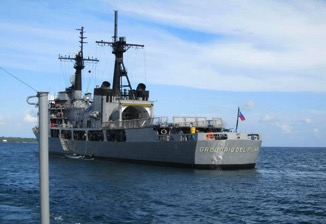
Marine auxiliary and emergency power configurations, documented with CCS and RINA certification in project material.
The pattern across the matrix is consistent: the further a site moves from a controlled indoor environment, the more the specification shifts from the generator itself towards protection, materials, fuel handling and remote support. Two projects with identical power requirements can therefore differ substantially in scope, lead time and lifetime cost.
Field Evidence: What Deployed Scenario Configurations Look Like
Installed base data is the most useful evidence a buyer can request, because it shows how a supplier's configuration decisions survived real conditions over time.
- Power plant rental, Botswana: 88 high-voltage 800 kW containerised diesel generators powered by MTU, paralleled together as a single high-voltage output power station, with low-noise operation as a documented highlight. Reported duration in service: 8 years, stable operation.
- Government power project, Costa Rica: 77 high-power containerised diesel generators with high-voltage output, supplied for a government power project. Reported duration: 10 years, with stable performance under high load conditions and quick deployment.
- Coal-fired power plant, Indonesia: 4 units configured for black start, ensuring grid stability and rapid recovery, with fast start for emergency power supply. Reported duration: 8 years.
- Hydro power plant, Australia: 42 units acting as the black-start backbone, supplying dam gates, monitoring systems and auxiliary equipment during grid collapse or unit outage. Reported duration: 6 years, with stable performance under high load and a modular design for installation and maintenance.
- Mining, Mongolia: 11 units boosted and auto-paralleled as prime power supply, with IP54 enclosure treatment and modular design; reported duration 15 years. A separate 2-unit installation of BF-M2500SHV units at IP54 is documented over 13 years.
- Mining, Mozambique and Sudan: BF-C1375S and BF-C2250QRS+ units deployed in mining power applications.
- Marine, Philippines: 3 marine generator sets providing emergency power for steering, navigation communications and safety systems, with a compact design for limited engine-room space. Reported duration: 6 years.
- Data centre, Vietnam: 14 BF-M units safeguarding 24/7 communication networks during mains outages, with low noise operation as a documented highlight. Reported duration: 6 years.
- Glass factory, Korea: 6 units of BF-SM2250-HV for factory backup power with fast start. Reported duration: 3 years.
- Manufacturing facility, Korea: 4 units of BF-M2000 HV-60 for factory backup with low noise operation. Reported duration: 13 years.
- Construction camp, Saudi Arabia: 66 units supplied for off-grid construction site power, with low noise as a documented highlight. Reported duration: 8 years.
- Healthcare and airport, China: multiple units serving hospital and airport standby power applications, documented over 10 years and 9 years respectively.
- Hotel, Qatar and Dubai Marine Tower, UAE: 5 units over 10 years in a robust low-noise hotel installation, and a single unit providing backup power to a landmark building over 8 years with fast start.
- Mining lighting, Mongolia: 10 lighting tower units used for continuous night-time production, self-powered for off-grid applications, with adjustable telescopic mast and rapid deployment. Reported duration: 5 years.
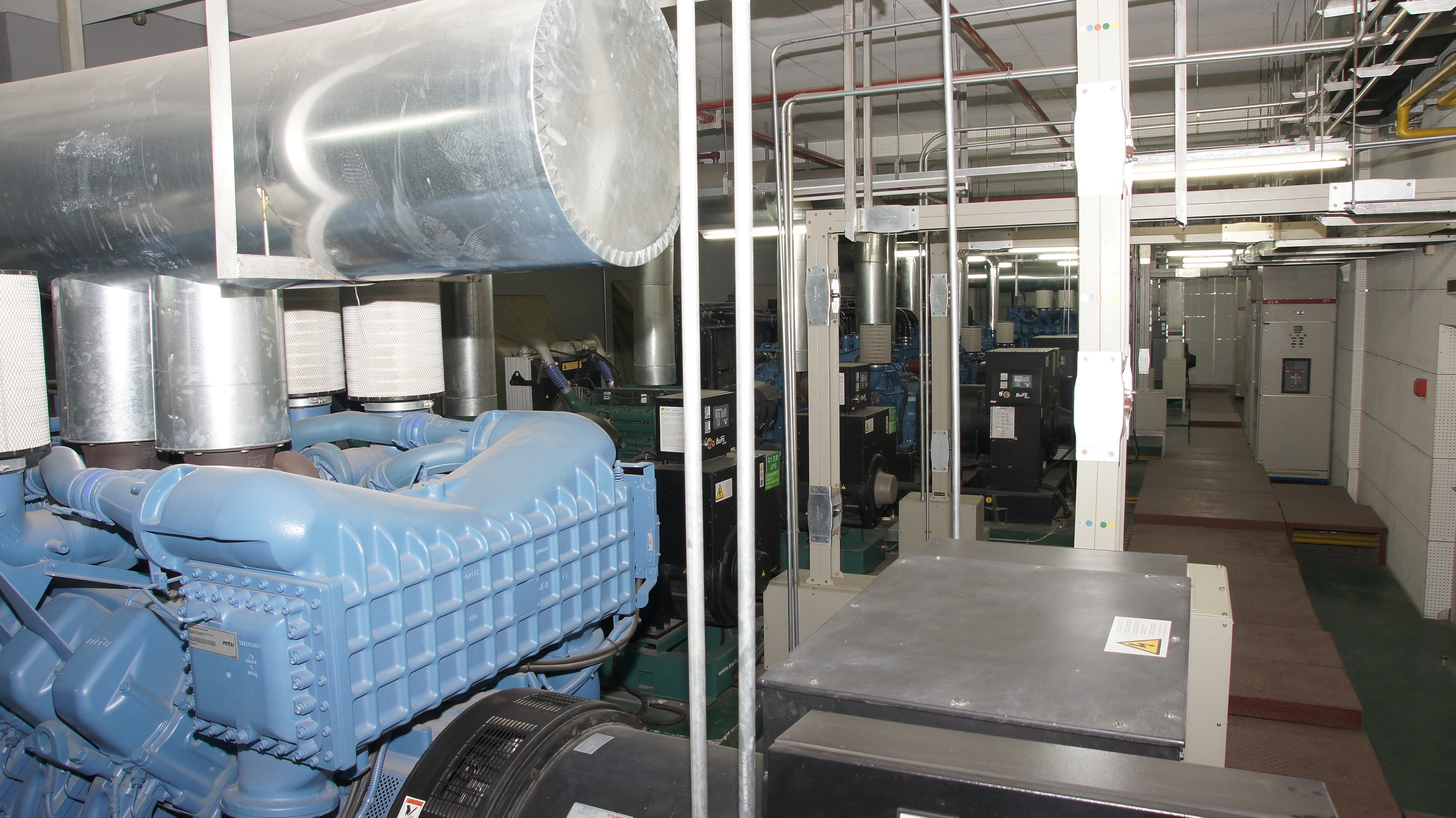
Continuous power for a data centre environment, where low noise and 24/7 standby readiness define the configuration.
Delivery capability is part of the same evidence set. Documented shipments include 52 units of BF-C1375S-60 containerised diesel generator sets delivered within 45 days, and 100 units of the same model scheduled for delivery within 60 days. For buyers planning multi-unit paralleled stations, these figures indicate the order of magnitude a project schedule can assume with this supplier.
Market Trend: Scenario-Specific Demand Is Growing
The macro numbers support what the installed base suggests. The global diesel generator market was valued at approximately USD 22.33 billion in 2025, according to Spherical Insights. China's diesel generator market is projected to grow at a CAGR of 9.3% from 2023 to 2030, and China exported a total value of USD 923 million in diesel generating sets with output below 75 kVA in 2024, according to the Observatory of Economic Complexity.
Scenario-specific segments are expanding at their own pace. The global marine diesel generator market reached USD 2.94 billion in 2024, based on Intel Market Research data — a segment where configuration requirements are unusually strict because of salt exposure, vibration and engine-room constraints. Alongside it, data centre and high-voltage industrial prime power projects continue to drive demand for paralleled, containerised and remotely monitored installations.
Two structural factors amplify this trend. First, compliance requirements such as ISO 8528 Part 13 for safety and Part 10 for noise emission in the EU push design decisions earlier in the project cycle. Second, project owners increasingly purchase power as a system — generator, switchgear, transformer and monitoring — rather than as a standalone machine, which raises the value of a supplier that can configure the whole interface.
Comparison With Traditional Procurement: Where the Approach Has Limits
Traditional practice treats a diesel generator as a catalogue item bought against a kVA figure and a brand preference. Scenario-based procurement treats it as an engineered subsystem. The difference shows up in the comparison below.
| Evaluation dimension | Catalogue purchase | Scenario-fit specification |
|---|---|---|
| Primary selection input | Rated output, engine brand, price | Environment, operating mode, interface and compliance |
| Protection and materials | Default enclosure and standard materials | Protection class, corrosion resistance, anti-condensation and filtration matched to site |
| Paralleling and control | Single-unit, basic control panel | Auto paralleling, de-loading, peak shaving, HV switchgear, remote diagnosis |
| Evidence requested | Datasheet and test certificate | Comparable installed base, operating duration, load profile history |
| Main risk | Undersized or over-protected configuration discovered after commissioning | Higher specification effort and longer configuration review before order |
This approach is not universally better, and buyers should treat the following limits as real. No single series covers every scenario: the BAIFA range is split across platforms and power bands, which means the number of configuration decisions rises with the number of scenarios in a portfolio, and standardising across sites becomes harder. The IP23 catalogue protection class is not by itself sufficient for salt-spray, high-dust or heavy-vibration environments without additional measures, so an apparently comparable quotation can hide substantial scope differences. Rated speed differs between land-based ranges and the marine series, so marine and industrial specifications cannot be substituted for one another. The VTM lighting tower series is rated for altitudes up to 1000 m, which excludes some high-altitude sites without further review. Production capacity of 400–500 units per month and a lead time of 25–60 days is substantial, but a project requiring 77 or 88 paralleled units needs to be scheduled well ahead of the site programme rather than treated as a spot purchase. Finally, diesel generation remains a fuel-burning option: where fuel choice allows, gas generator sets in the 8–3200 kW range address the same scenario requirements on a different fuel basis. Scenario fit reduces risk; it does not remove the need for site-specific engineering review.
Future Outlook
Three directions are visible in current project pipelines. Containerised high-voltage stations, already used in 77-unit and 88-unit paralleled deployments, are becoming the default format for large temporary or rental power, because they compress civil works and deployment time. Second, fuel flexibility is widening: alongside diesel and gas generator sets, BAIFA lists green fuel generator sets within a production base that also covers marine generator sets and lighting towers, reflecting a stated mission of accessible, reliable and sustainable power generation. Third, monitoring and diagnostics are shifting from optional to expected, particularly in mining, data centre and remote oil and gas scenarios where the nearest engineer may be hours away.
For buyers still in the research and evaluation stage, the practical implication is straightforward: the site survey, load profile and interface definition deserve as much attention in the tender as the power rating. A configuration that starts from the site tends to end with fewer surprises at commissioning.
FAQ
Q1. What does scenario fit mean when specifying a diesel generator set?
Scenario fit is the process of translating a site's physical environment, operating mode and electrical interface into one configuration: engine platform, power band, protection class, control and paralleling architecture, fuel system and auxiliary equipment. It replaces selection on rated output alone, because the same output can be configured in materially different ways for an indoor plant room and an offshore vessel.
Q2. What evidence should a buyer request to judge a supplier's scenario experience?
The most useful evidence is comparable installed base: the application type, the number of units supplied, the configuration actually delivered and the documented operating duration. Verifiable examples include 88 MTU-powered containerised units paralleled into a high-voltage power station in Botswana over 8 years, and 42 units used for black start at an Australian hydro power plant over 6 years.
Q3. Which technical parameters change most between project scenarios?
Six levers account for most of the difference: engine platform and power band, protection class and enclosure structure, materials and environmental countermeasures, control and paralleling architecture, fuel and service logistics, and speed and electrical interface. Land-based diesel ranges in the BAIFA catalogue are rated at 1500 rpm with IP23 protection, while the marine BF-CM series is rated at 1800 rpm — a clear illustration of how speed and duty change with scenario.
Q4. How does generator selection differ between a mine and a hospital?
A mining installation is typically an outdoor, dusty, high-altitude site requiring prime or continuous power, multi-unit paralleling, heavy load endurance and modular design for maintenance. A hospital installation is an indoor, low-noise, life-safety application requiring standby duty with automatic start, fire alarm integration and auto/manual transfer, supported by ATS, fuel supply and UPS integration. The electrical output may be comparable; the configuration logic is not.
Q5. How do climate and site conditions affect configuration outside the factory?
Conditions drive protection and materials decisions. Marine and offshore environments require corrosion-resistant materials plus shock and vibration resistance. Airport installations require high-efficiency radiators for high ambient temperatures, weatherproof enclosures and strict noise attenuation. Railway installations require resistance to sandstorms, ice and snow together with electromagnetic compatibility. Mining deployments in Mongolia are documented with IP54 enclosure treatment for dust and temperature variation.
Q6. Which standards and compliance requirements apply to diesel generator sets?
Diesel generating sets placed on the EU market must comply with ISO 8528, specifically Part 13 for safety and Part 10 for noise emission under 2000/14/EC. Project-level requirements frequently add noise limits for urban and terminal areas, EMC compliance, and local building or fire safety codes for standby installations such as buildings and hospitals. Buyers should confirm the applicable standard set for the destination market at specification stage rather than at delivery.
Q7. What production capacity and lead time are realistic for multi-unit projects?
BAIFA operates an OEM production model with a documented monthly capacity of 400–500 units, a lead time of 25–60 days and a minimum order quantity of one unit, with 100% testing before shipment and after-sales support covering remote assistance and on-site installation, commissioning and maintenance. Documented deliveries include 52 containerised BF-C1375S-60 sets within 45 days and 100 units within 60 days, which indicates the scheduling order of magnitude for large paralleled projects.