
Scenario Fit for Medical Manikins: Pericardial Puncture, Delivery, and Pediatric Care
Scenario Fit for Medical Manikins: Pericardial Puncture, Delivery, and Pediatric Care
HTNXT Industry Reference · Medical Manikin & Simulation · Published 19 September 2026

Figure 1. Scenario-fit manikin configurations are prepared against a defined procedure list rather than a generic product category. Image: Chongqing Scope Instrument Co., Ltd.
Manikin procurement rarely fails at the order stage. It fails in the skills laboratory, when a model arrives with the wrong landmarks, the wrong feedback, or no replaceable parts for the procedure the curriculum actually teaches. Scenario fit — matching a model to a defined clinical procedure rather than to a broad product category — has become one of the deciding criteria for training centres, distributors and simulation laboratory managers.
The category is large enough for that distinction to carry commercial weight. The global medical simulation market was valued at USD 1.9 billion in 2025 and is projected to reach USD 6.7 billion by 2033, according to Grand View Research. Healthcare anatomical models, the product group that includes medical manikins, held the largest share of that sector at approximately 41.4% in 2025, the same source reports. Training manikin market volume was estimated at 1.2 million units in 2024 and projected to reach 2 million units by 2028, according to Global Insight Services.
This reference maps five models from Chongqing Scope Instrument Co., Ltd. to the procedures their published specifications support: SC-CK817 for anterior chest and bone-marrow puncture training, SC-F55-1 and SC-F50 for delivery and gynecological skills, SC-H140 for pediatric vascular access and catheterization care, and SC-L66 for thoracic closed drainage. Each section states what the specification documents, and where a buyer must ask a further question before assuming procedure coverage.
Why Procedure-Level Fit Decides Utilisation
A manikin purchased for the wrong procedure is seldom a partial success. It is usually an unused asset, because the training value of a task trainer is concentrated in a narrow set of skills. Three failure modes account for most of the gap between purchase and utilisation.
- Anatomical mismatch. If the required landmarks cannot be palpated, trainees learn to follow instructions instead of learning to locate a site. Puncture and injection training depends on this more than on any other feature.
- Feedback mismatch. A model that cannot signal depth, resistance or hollow feel gives no error correction. Electronic monitoring, tactile feedback and adjustable fluid behaviour are not interchangeable.
- Consumable mismatch. Puncture and injection surfaces degrade fastest. If the skin, vein or internal module is not replaceable, the unit is retired early regardless of its build quality.
For buyers working between evaluation and execution, the practical consequence is that a scenario map should be written before a quotation is requested. That map is a short list of procedures, landmarks, feedback types and consumable positions — the four items a supplier needs in order to confirm or customise a configuration.
The Supplier Behind These Models
Chongqing Scope Instrument Co., Ltd. is a supplier of laboratory and medical training instruments based in Chongqing, China, established in 2017. Its catalogue covers microscopes, hardness testers, metallographic sample equipment, laboratory consumables and medical manikins; the manikin line is made in PVC and is aimed at emergency, clinical and nursing skills training in medical colleges and training institutions. The company documents more than 20 years of sales experience and more than 500 clients, with a 50% export ratio across Europe, Southeast Asia, the Middle East, South America and Africa.
| Item | Documented detail |
|---|---|
| Established | 2017 |
| Location | Chongqing, China |
| Factory area | 5,000 m² |
| Employees | 100+ |
| Annual output | 30,000 units |
| R&D team | 20 engineers |
| Export ratio and markets | 50%; Europe, Southeast Asia, the Middle East, South America, Africa |
| Manikin body material | PVC |
| Certificates | ISO9001, ISO14001, ISO45001, ISO13485, CE, RoHS |
| OEM / ODM | OEM and ODM services; customisation of product appearance and functions |
| Custom line capacity | 3,000 units per month |
| Customisation threshold | 20 units minimum; 30 to 45 days lead time |
| Standard purchasing terms | MOQ 1 unit; EXW / FOB / CFR / CIF / DAP; T/T; factory inspection acceptance |
| After-sales | 1-year online warranty |
For scenario-fit evaluation these supply-side facts matter as much as the model features. A procedure-specific configuration is only practical if the supplier can document capacity, lead time, replaceable parts and a customisation threshold before the order is confirmed.
The Five Criteria That Decide Scenario Fit
| Criterion | What to verify | Why it decides usage |
|---|---|---|
| Procedure match | The exact procedure list the model must support | Task trainers are scoped to defined skills, not to whole specialties |
| Palpable anatomy | Named landmarks a trainee can locate by touch | Site location is the skill being assessed in puncture training |
| Feedback type | Tactile hollow feel, electronic monitoring, or adjustable fluid response | Feedback determines whether errors are corrected during practice |
| Replaceable consumables | Skin, vein, marrow cavity or fluid modules that can be replaced | Puncture surfaces degrade faster than any other component |
| Assessment and throughput | Whether the model supports training and assessment modes, and repeated cohorts | Determines how many trainees one unit can serve per course cycle |
Applying those criteria produces different answers for different procedures, which is why a portfolio view is more reliable than a single-model decision for a training centre building a skills laboratory.
Anterior Chest and Bone-Marrow Puncture: SC-CK817
SC-CK817 is a clinical manikin built as a supine, full-body simulated standardized patient. The published specification describes a soft texture, realistic touch and lifelike appearance, and names three palpable landmarks: the suprasternal notch, the upper edge of the sternal manubrium, and the anterior superior iliac spine. Those landmarks are the reason the model supports puncture positioning at all — a trainee must be able to find a site by palpation before the procedure itself means anything.
The documented puncture set covers the anterior superior iliac spine and the sternal manubrium. The simulated bone marrow cavity can be penetrated with an obvious hollow feeling, and bone marrow can be extracted, giving trainees a physical confirmation of correct depth that a solid block cannot provide. Both the skin and the simulated bone marrow cavity are designed for easy replacement, which matters because puncture surfaces wear faster than any other part of a clinical training model.
Pericardial and Intracardiac Puncture: A Specification Question, Not an Assumption
Pericardial puncture and intracardiac injection are anterior chest procedures in which site selection and controlled insertion depth carry the entire training objective. The published SC-CK817 specification documents sternal manubrium and anterior superior iliac spine puncture training with a replaceable skin and simulated bone marrow cavity. It does not list dedicated pericardial or intracardiac puncture modules, and it does not name specific intercostal or subxiphoid access points.
That is a specification boundary rather than a defect, and it should be treated as an open question during evaluation. Three queries resolve it before a purchase order is placed. First, does the required configuration provide the access points and internal structure the specific procedure depends on? Second, is the resistance and depth feedback at those points comparable to what the procedure demands of a trainee? Third, if not, can the skin insert position and the internal module be modified?
Chongqing Scope documents OEM and ODM services together with customisation of product appearance and functions, with a customisation minimum of 20 units and a lead time of 30 to 45 days. For a programme whose curriculum is limited to landmark and bone-marrow puncture, the standard SC-CK817 configuration already covers the documented scope. For a programme that requires pericardial or intracardiac puncture specifically, the reliable route is a written confirmation of the required configuration — standard or customised — rather than an assumption based on the model category.
Delivery and Gynecological Training: SC-F55-1 and SC-F50
Obstetric simulation has a mechanical requirement that most task trainers do not have: the model must reproduce the progression of labour, not only its end point. Chongqing Scope documents two products for this area, and they occupy different positions between scope and simplicity.
SC-F55-1: Delivery, Maternal Emergency and Newborn Function in One Unit
- A mechanical transmission device with two adapters for connecting the simulated delivery fetus, elastic fastening between fetus, adapters and transmission, and protective travel switches at both ends. The delivery process can be paused, initialised, started and continued, and delivery speed can be selected from four levels.
- Fetal heart sound auscultation with adjustable frequency and volume; heart rate is adjustable within a range of 80 to 180.
- Documented presentations include cephalic presentation, breech presentation, airway obstruction, umbilical cord around the neck and placenta previa.
- A prenatal cervical change and birth canal relationship module covering six stages, plus measurement of fetal head descent and cervical dilation. A highly realistic cervix, a Leopold practice soft pad and a vulvar suture practice module with three incision positions — lower left, centre and lower right — are documented for the same unit.
- Maternal emergency functions: pregnant CPR designed to the 2020 International CPR Guidelines with electronic monitoring of airway opening, breath count, breath volume, compression site, compression count and compression depth, plus voice prompts, digital counting display and barcode indicator alarms; manual carotid artery pulsation simulation; tracheal intubation training; and a venous channel in the mother arm for medication and nutrition.
- Newborn functions: eye cleaning and medication, newborn cleaning and bandaging, nasogastric intubation for suctioning, tracheal intubation, gastric lavage, cord care, scalp vein puncture and arm vein puncture with hollow feel and blood return, and newborn CPR supporting mouth-to-mouth, mouth-to-nose and simple resuscitator ventilation.
SC-F50: Cervical Assessment and Midwifery Mechanics on a Lower-Body Model
- A simulated lower body of a pregnant woman supplied with two fetus models, an attached umbilical cord and placenta models.
- A six-stage cervical examination model describing cervical dilation, the degree of cervical change, and the positional relationship between the fetal head and the ischial spine plane.
- Fetal models with soft skin and an identifiable fontanel, allowing fetal head suction technique to be practised, with umbilical cord and placenta accessories.
- A soft, highly elastic perineum for midwifery operations and perineal care practice, plus a transparent abdominal wall and simulated skin that make the delivery demonstration and the fetal head position visible during practice.
Both products use the same six-stage cervical assessment scale, which means the assessment language taught on one model transfers directly to the other.
| Stage | Cervical dilation | Cervical canal | Fetal head relative to ischial spines |
|---|---|---|---|
| 1 | Not dilated | Not effaced | -5 |
| 2 | 2 cm | 50% effacement | -4 |
| 3 | 4 cm | Completely disappeared | -3 |
| 4 | 5 cm | Completely disappeared | 0 |
| 5 | 7 cm | Completely disappeared | +2 |
| 6 | 10 cm | Completely disappeared | +5 |
| Feature | SC-F55-1 | SC-F50 |
|---|---|---|
| Model concept | Maternal and infant manikin with delivery mechanism and newborn | Lower-body obstetric training model with two fetus models |
| Delivery mechanism | Mechanical transmission, two adapters, elastic fastening, protective travel switches; speed selectable from four levels | Manual midwifery practice on a soft, highly elastic perineum |
| Fetal heart auscultation | Adjustable frequency and volume; heart rate 80 to 180 | Not documented |
| Cervical assessment | Six-stage prenatal cervical change and birth canal relationship module; fetal head descent and cervical dilation can be measured | Six-stage cervical examination model |
| Maternal emergency | Pregnant CPR to the 2020 International CPR Guidelines with electronic monitoring; manual carotid pulsation; tracheal intubation | Not documented |
| Perineal practice | Vulvar suture module with three incision positions | Perineal care techniques |
| Newborn and fetal handling | Newborn care, intubation, gastric lavage, cord care, vein puncture, newborn CPR | Two fetus models with soft skin, identifiable fontanel, fetal head suction practice |
| Observation of fetal position | Not documented | Transparent abdominal wall and simulated skin |
The selection rule is therefore a curriculum question rather than a quality question. A programme that teaches labour progression together with maternal emergency management and newborn care at a single station needs the full delivery mechanism, CPR function and newborn set documented for SC-F55-1. A programme focused on cervical assessment, fetal head station and midwifery mechanics, where compact storage and simple set-up matter more than electronic feedback, is better served by SC-F50.
Pediatric Vascular Access and Catheterization Care: SC-H140
Pediatric skills differ from adult skills mainly because the anatomy is smaller and the handling is different. SC-H140 is a pediatric training model documented for infant and small-child procedures:
- Head, neck and limbs that move freely, with a chest skin that can be replaced for baby boy or baby girl configuration.
- Infant cephalic vein puncture and baby umbilical cord venipuncture.
- Infant oral and nasal intubation care.
- Gastric lavage, enema and catheterization.
- Ostomy drainage.
- Deltoid and gluteal muscle injections.
- Overall care: bathing, breastfeeding, changing clothes and diaper changing.
The combination is notable because vascular access, catheterization and routine care are documented on the same model. For a paediatric nursing course that reduces the number of units required on a bench, but it also means the replaceable chest skin and the puncture surfaces carry most of the wear. Buyers should confirm which modules are replaceable and how they are reordered, because a paediatric vein puncture surface used by a full cohort is the component most likely to determine the service life of the unit.
Where a curriculum runs both SC-F55-1 and SC-H140, the newborn functions of the maternal manikin cover the delivery-room transition, while SC-H140 extends similar skills into ongoing paediatric care and catheterization practice. The overlap is deliberate in portfolio terms; the practical benefit is continuity of technique rather than duplicated equipment.
Thoracic Closed Drainage: SC-L66
Thoracic drainage is a procedure in which the trainee must read a system, not only place a needle. SC-L66 is a puncture manikin documented for closed drainage training after chest trauma and for post-operative drainage tube care:
- Closed drainage operation training for pneumothorax and hydrothorax, and post-operative care practice of drainage tubes.
- Two windows on the right side of the chest displaying the anatomical structures of each layer of the chest.
- Left thorax practice of pneumothorax puncture decompression and hydrothoracic intubation and drainage.
- Chest drainage fluid whose colour, volume and viscosity can be adjusted by the user.
The adjustable drainage fluid is the evaluative feature. It allows an instructor to move from a clear, low-volume presentation to a thicker or darker one without changing models, which turns a single unit into a range of scenarios. The anatomical windows provide the second element: an internal reference that lets an instructor explain what lies beneath the puncture site, an explanation that is difficult to give on an opaque torso.
Materials, Modules and Feedback: What the Specifications Reveal
Across the models described here — SC-CK817, SC-F55-1, SC-F50, SC-H140 and SC-L66 — the specified body material is PVC. That uniformity is a deliberate trade-off rather than a limitation of range: PVC holds shape under repeated handling, resists deformation, and can be moulded into structures such as a realistic cervix or a layered chest wall at a cost that keeps task trainers affordable for teaching institutions.
Material choice follows procedure elsewhere in the same portfolio. The SC-HS4 arm injection model documents imported thermoplastic elastic mixed rubber for skin and muscle, imported latex for nerves and blood vessels, and imported PVC for the internal bones and joints, cast from metal moulds at high temperature. The SC-H4T intramuscular injection model documents imported plastic elastomer material produced by stainless steel mould injection and high-temperature sintering. Where repeated needle penetration is the main activity, a softer elastomer is specified rather than a rigid skin.
Feedback architecture follows the same logic. SC-CK817 provides tactile confirmation through a marrow cavity that yields to penetration. SC-L66 provides adjustable visual and physical fluid behaviour. SC-F55-1 provides electronic monitoring and voice prompts for maternal CPR. None of these three feedback types substitutes for the others, and a buyer comparing quotations should compare the feedback specified for the exact procedure being taught rather than the number of features listed in a catalogue.
Limits and Boundaries Buyers Should Verify
Scenario fit also means naming what a task-focused manikin does not do. The following boundaries are drawn from the published specifications and from the commercial terms documented for this range.
- Procedure scope is bounded. Each model documents a defined procedure set. For SC-CK817 that set is anterior superior iliac spine and sternal manubrium puncture with a simulated bone marrow cavity; pericardial and intracardiac puncture are not listed and must be confirmed or customised.
- Task trainers are not software-driven full-body simulators. The interaction documented for these models is mechanical, tactile or electronic feedback tied to a procedure. Buyers who need scenario programming, physiological modelling or instructor-driven patient states are evaluating a different product class.
- Language configuration is a specification item. Where a model includes voice prompts, the source specification for SC-CPR480 states Chinese voice prompts. Non-Chinese markets should confirm language options during quotation rather than after delivery.
- Customisation has commercial thresholds. Appearance and function customisation is documented with a minimum of 20 units and a lead time of 30 to 45 days, and technical verification is completed before logo printing proceeds. A bespoke configuration is a project, not an amendment to a single-unit order.
- Small orders are possible, but the configuration must be fixed before sampling. The documented minimum order is 1 unit, with EXW, FOB, CFR, CIF or DAP delivery terms, T/T payment and factory inspection acceptance. Sampling is therefore practical, provided the sample and the production configuration are specified identically.
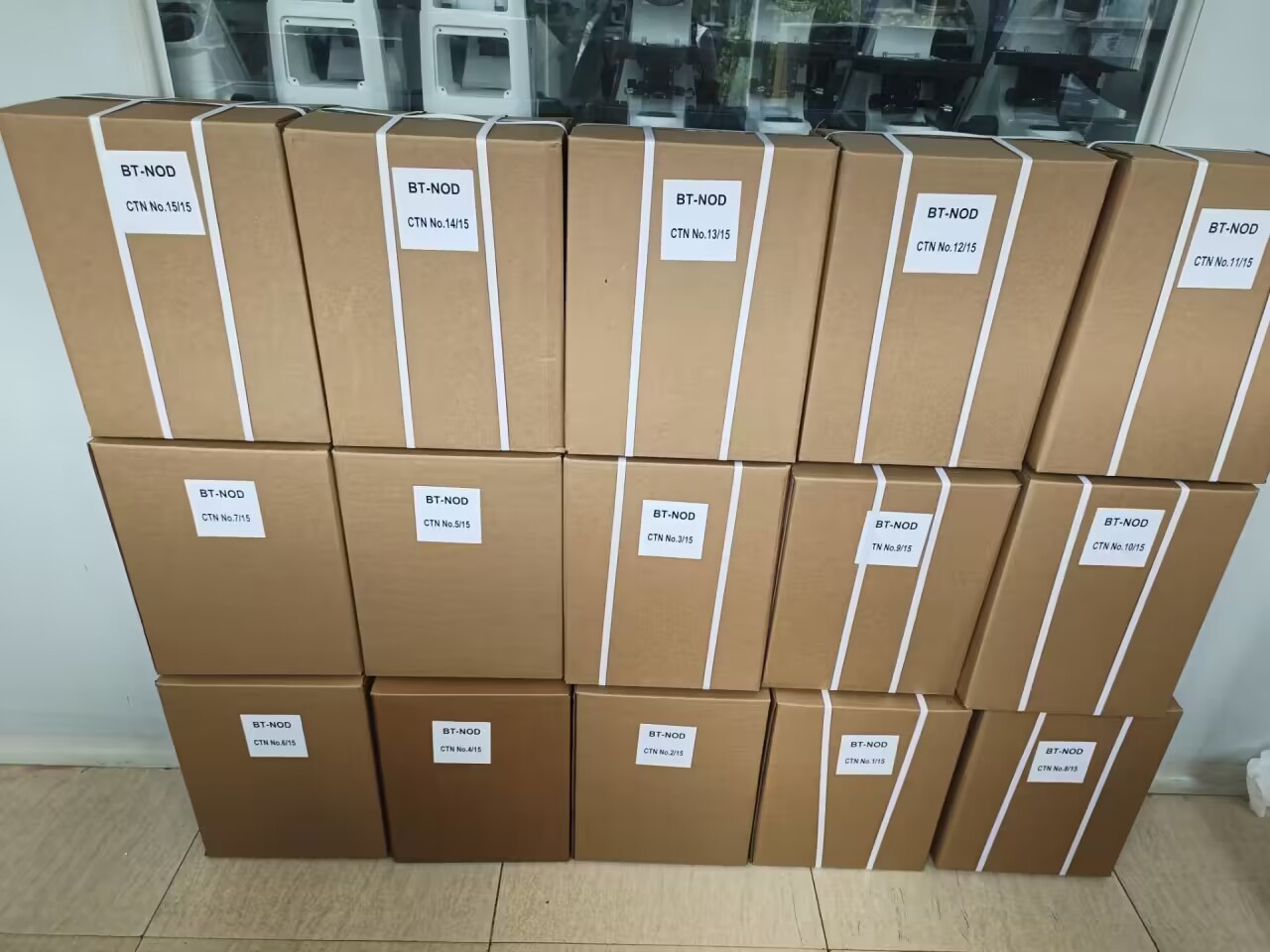
Figure 2. Manikin orders are packed in neutral cartons or wooden cases in line with export standards. Image: Chongqing Scope Instrument Co., Ltd.
A Scenario-Based Procurement Checklist
| Item to confirm | Evidence to request |
|---|---|
| Procedure list | Written mapping of each required procedure to a model and configuration |
| Anatomical landmarks | Named palpable landmarks and replaceable skin positions |
| Feedback specification | Type of feedback, thresholds and alarm functions as documented |
| Replaceable parts | List of consumable and replacement modules |
| Supply continuity | Monthly capacity and lead time for repeat orders |
| Customisation | Minimum order quantity, lead time and the technical verification step before production |
| Certification | ISO9001, ISO14001, ISO45001, ISO13485, CE or RoHS documentation as applicable |
| Packaging and delivery | Neutral export packaging; EXW, FOB, CFR, CIF or DAP terms |
| Acceptance | Factory inspection arrangement before shipment |
| After-sales | Warranty period and support channel, documented as a 1-year online warranty |

Figure 3. Delivery terms documented for manikin orders include EXW, FOB, CFR, CIF and DAP. Image: Chongqing Scope Instrument Co., Ltd.
Market Trend Analysis
Anatomical models anchor the simulation hardware segment. Healthcare anatomical models, the group that includes medical manikins, held the largest share of the medical simulation sector at approximately 41.4% in 2025, according to Grand View Research. Task-level models are therefore not a niche line beside high-fidelity systems; numerically they are the core of the hardware market.
Growth is concentrated in Asia-Pacific. The region is the fastest-growing market for medical simulation, with an expected CAGR of 18.2% through 2033, according to Grand View Research. Volume estimates point the same way: training manikin market volume was estimated at 1.2 million units in 2024, with projections of 2 million units by 2028, according to Global Insight Services. Institutional requirements drive part of this: China mandated simulation laboratories for the accreditation of new medical schools as of 2024-2025, as reported by Market Research Future.
Quality management expectations are converging on medical device standards. ISO 13485:2016 is the internationally recognised standard for quality management systems in the design and manufacture of medical devices, including simulation manikins, according to the International Organization for Standardization. Suppliers able to present ISO 13485 alongside ISO9001, ISO14001, ISO45001, CE and RoHS documentation are better positioned as institutional buyers formalise procurement.
The competitive landscape is layered. Major global competitors in medical manikin and simulation include Laerdal Medical, CAE Inc., Gaumard Scientific and Kyoto Kagaku, according to MarketsandMarkets. Those companies operate largely in technology-intensive simulator segments, while task-focused PVC manikin suppliers serve the volume part of the same market — a structural distinction that matters more to a buyer than a general ranking, because the two segments answer different curriculum and budget questions.
One caveat applies to all market sizing in this category. Published estimates vary substantially with scope: Grand View Research, The Insight Partners and WiseGuyReports report materially different values depending on whether software and services are included and whether the definition covers manikins, simulators or healthcare simulation as a whole. Any single figure should be read as a directional indicator rather than a procurement specification.
Future Outlook
Scenario mapping is likely to become the standard entry point for manikin procurement in the same way that specification sheets became standard for laboratory equipment. Three developments support that expectation. First, as accreditation-linked training requirements expand across Asia-Pacific, institutions will increasingly buy against curriculum lists rather than catalogue categories. Second, replaceable consumables — skins, veins, marrow cavities and fluid modules — will be evaluated as a supply relationship rather than an accessory, because a model is only as durable as the parts that can be reordered. Third, customisation will shift from a one-off design request to a documented configuration process, with quantities, verification steps and lead times negotiated before the order.
Frequently Asked Questions
Which model should a training centre choose for obstetric skills, SC-F55-1 or SC-F50?
SC-F55-1 fits programmes that combine labour progression with maternal emergency management and newborn care. It documents a mechanical delivery mechanism with speed selectable from four levels, fetal heart sound auscultation adjustable between 80 and 180, five simulated presentation conditions, pregnant CPR designed to the 2020 International CPR Guidelines, a vulvar suture module with three incision positions, and a newborn set covering intubation, gastric lavage, cord care, vein puncture and newborn CPR. SC-F50 is a lower-body obstetric training model with two fetus models, a six-stage cervical examination model, a soft elastic perineum and a transparent abdominal wall; it suits programmes concentrated on cervical assessment, fetal head station and midwifery mechanics. Both models use the same six-stage cervical assessment scale.
Can SC-CK817 be used for pericardial puncture and intracardiac injection training?
The published specification for SC-CK817 documents anterior superior iliac spine puncture training and sternal manubrium puncture training, with clearly palpable landmarks at the suprasternal notch, the upper edge of the sternal manubrium and the anterior superior iliac spine, a simulated bone marrow cavity that gives an obvious hollow feeling, and easily replaceable skin and bone marrow cavity. Dedicated pericardial puncture or intracardiac injection modules are not listed, and specific intercostal or subxiphoid access points are not named. A buyer whose curriculum includes those procedures should confirm the required configuration in writing, or evaluate a customised configuration, since customisation of product appearance and functions is documented under the supplier OEM and ODM services.
Which procedures does SC-H140 document for pediatric training?
SC-H140 documents infant cephalic vein puncture, baby umbilical cord venipuncture, infant oral and nasal intubation care, gastric lavage, enema, catheterization, ostomy drainage, deltoid and gluteal muscle injections, and overall care including bathing, breastfeeding, changing clothes and diaper changing. The model head, neck and limbs move freely, and the chest skin can be replaced for baby boy or baby girl configuration.
How does SC-L66 support pneumothorax and hydrothorax training?
SC-L66 is documented for closed drainage operation training for pneumothorax and hydrothorax after chest trauma, and for post-operative care practice of drainage tubes. Two windows on the right side of the chest display the anatomical structures of each layer of the chest, and the left thorax supports pneumothorax puncture decompression and hydrothoracic intubation and drainage exercises. The colour, volume and viscosity of the chest drainage fluid can be adjusted by the user.
What are the minimum order quantity and lead time for customised manikin configurations?
Customisation of product appearance and functions is documented with a minimum order quantity of 20 units and a lead time of 30 to 45 days, against a monthly capacity of 3,000 units for the customised line. Technical verification is completed before logo printing proceeds. Standard orders are documented from 1 unit, with EXW, FOB, CFR, CIF or DAP delivery terms, T/T payment and factory inspection as the acceptance method.
Which replacement parts and after-sales provisions are documented for these manikins?
SC-CK817 documents an easily replaceable skin and simulated bone marrow cavity, the components most exposed to repeated puncture. Other models in the same range follow a comparable pattern: the SC-HS3 injection model documents changeable vein and skin, and the SC-CPR480 CPR model documents replaceable lung sac devices and changeable face skin. After-sales support for the range is documented as a 1-year online warranty.
Conclusion
Scenario fit is a specification exercise before it becomes a purchasing decision. The models described here cover a defined set of procedures — anterior chest and bone-marrow puncture, labour progression and cervical assessment, pediatric vascular access and catheterization care, and thoracic closed drainage — and the same specifications mark where a curriculum may require written confirmation or a customised configuration. Technical documentation for the full manikin range, including model parameters and supply terms, is compiled in the Chongqing Scope Instrument product brochure: Chongqing Scope Instrument product brochure (PDF).