
Scenarios for Success: Matching Waterjet Technology to Aerospace, Automotive & Food Applications
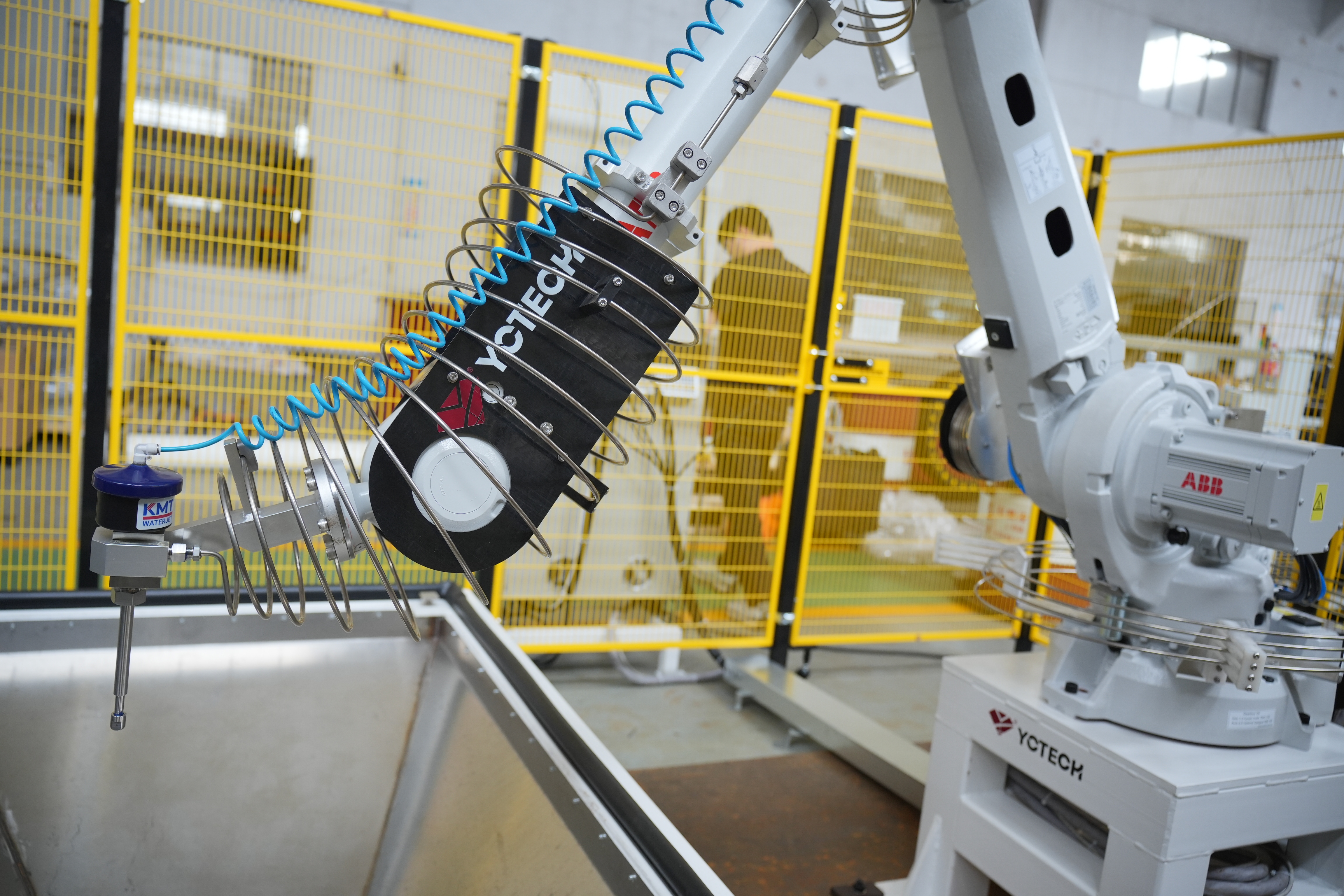
Waterjet cutting is usually specified as a pressure figure and an accuracy figure. In production, neither number decides whether a machine fits. The deciding variable is the match between material behaviour, motion capability and material handling. A titanium honeycomb trim cell, a marble countertop workshop and a frozen-food line can all run the same nominal pump pressure and still require completely different machines around that pump.
YC Water Jet Technology Co., Ltd (YC Waterjet) is a manufacturer of ultra-high pressure waterjet cutting systems founded in 1999 and based in Wuxi, Jiangsu, China. Its published range covers S, L, G and E series flat-table machines plus the YCWJ-Robot six-axis robotic system. This reference maps that range to four application clusters — aerospace, automotive, architecture and medical/food — and separates what the specifications confirm from what a buyer still has to validate on their own material.
Why the Application, Not the Datasheet, Sets the Constraint
A machine that holds accuracy on a flat steel sheet is not automatically suitable for trimming a curved composite panel. Flat-table machines constrain the work to two dimensions or to tilted-head approximations; a robotic arm or a five-axis head reaches orientation and draft angles that a three-axis gantry cannot. Likewise, a large-format gantry solves slab handling but is the wrong footprint for portioning silicone parts.
YC's published application material describes the intended operating envelope in similar terms: normal temperature and pressure, precision cutting, cutting with no thermal deformation, thick-plate and irregular part processing, and dust-free operation. It also lists the supporting equipment that typically defines real throughput — automatic feeding platform, robot grabbing system, abrasive recovery system, ultra-high pressure pump, dust removal system and CAD/CAM programming software — and the operating patterns the equipment is built around: single or double shift, automated production line linkage, and optional 24/7 continuous production.
The Specification Baseline: What Every YC Series Shares
Across the S, L, G and E series, the published machine-level figures are consistent: cutting accuracy of ±0.1 mm, positioning accuracy of ±0.025 mm, maximum pressure of 4137 bar (60,000 psi), and maximum orifice and nozzle sizes of 0.016 in and 0.05 in. The differences that decide application fit sit in format, speed envelope, flow and motion configuration.
| Series | Published models | Motion options | X,Y dry-run speed | Max water flow |
|---|---|---|---|---|
| S (small format) | YCWJ-S0808, YCWJ-1010, YCWJ-1212 | 3 axis, 3D MAX 5 axis, Dynamic 5 axis; full closed small CNC; food cutting machine type | 0–15 m/min | 7.4 L/min |
| L | YCWJ-L1515, L3015, L3020, L4020, L4025 | 3 axis, 3D MAX 5 axis, Dynamic 5 axis; double or multiple cutting heads | 0–15 m/min | 7.4 L/min |
| G (large format) | YCWJ-G2060, G2080, G3080, G30100 | 3 axis, 3D MAX 5 axis, Dynamic 5 axis; double head; double gantry configuration | 0–15 m/min | 7.4 L/min |
| E | YCWJ-E3020, YCWJ-E4020 | 3 axis, 3D MAX 5 axis, Dynamic 5 axis | 0–8 m/min | 3.7 L/min |
| Robot | YCWJ-Robot | 6-axis robotic waterjet cutting system | Not published | Not published |
Two structural differences matter for buyers. The E series defines an effective cutting area of 3000 × 2000 mm or 4000 × 2000 mm with a working pressure of 340 MPa and a maximum water flow of 3.7 L/min, which places it in a different throughput class from the S, L and G platforms running 7.4 L/min. The G series publishes a maximum power of 100 Hp (75 kW) alongside the same 7.4 L/min flow. Cutting speed is stated as dependent on material and thickness for every series — there is no single speed figure, and any supplier quoting one without a material reference is quoting an incomplete specification.
The YCWJ-Robot is a 6-axis robotic waterjet cutting system built for automotive interiors, aerospace, architectural decoration and composite molding. Its published configurations include an automatic abrasive delivery system, automatic cycle water cooling, automatic sewage removal, a cutting head with drilling function, multiple cutting heads, an air-cooled chiller and an automatic water softening system. Those options describe a cell designed for formed and three-dimensional parts rather than flat plate throughput.
Aerospace: Titanium Alloys, CFRP and Honeycomb
Titanium alloys, carbon fibre reinforced polymer (CFRP) and honeycomb structures appear in YC's published applicable-industry list, and they are grouped for a reason: all three punish any process that introduces heat or mechanical load into the cut zone. Cold cutting eliminates thermal deformation in the kerf, which is the specific capability the application material highlights, alongside high-precision complex profile processing and multi-material compatibility.
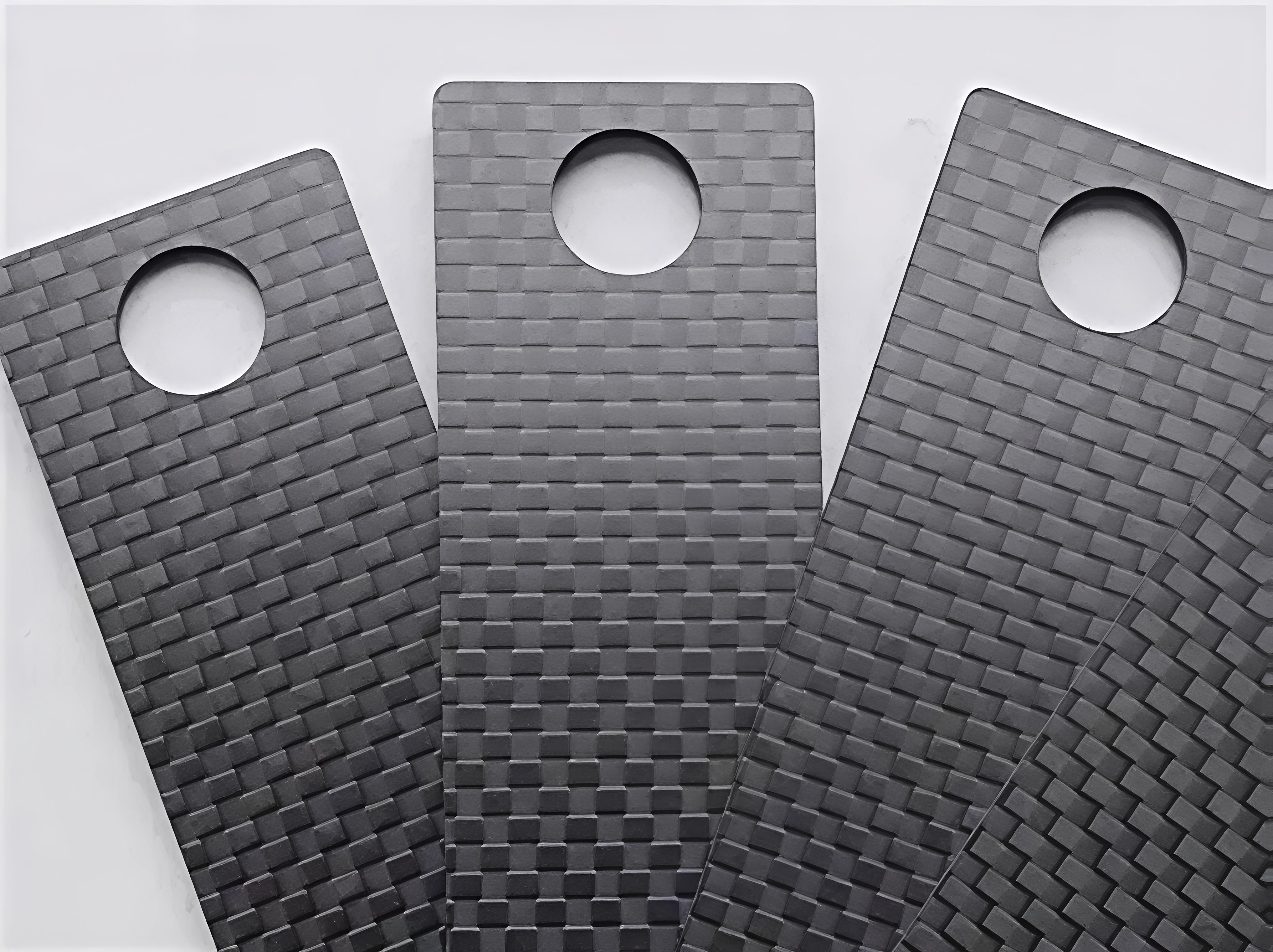
The configuration logic follows the geometry. Flat nested parts from titanium sheet fit an L or G platform in three-axis form. Contoured trim and angled features require the 3D MAX 5-axis or Dynamic 5-axis head, and the laser scanning height measurement option exists to maintain standoff where the surface is not planar. Honeycomb and stacked composite work benefit from the drilling-head option, which produces a start point without relying on a separate operation. Where small parts are nested in high quantity, multiple cutting heads raise output on the same table.
For procurement, the aerospace question is not whether the machine holds ±0.1 mm on a reference plate. It is whether that tolerance and edge quality survive the actual layup, core cell size and stack configuration. YC states that each unit undergoes rigorous pre-delivery testing and that delivery inspection is performed; those are machine-level checks. Material acceptance criteria — kerf width, edge condition, delamination limits — should be written by the buyer and proven on samples before a purchase order.
Automotive: Steel Sheets, Aluminum, Interior Components and Fiberglass
The automotive cluster in YC's published list covers steel sheets, aluminum, interior components and fiberglass. Two different machine answers exist inside that list. Flat blanks and reinforcement plates are table work: an L or G platform with one or more cutting heads, running abrasive waterjet to avoid a heat-affected zone on high-strength sheet. Formed interior trim, carpet-backed panels and three-dimensional fibreglass parts are cell work: the YCWJ-Robot with its six axes, automatic abrasive delivery and automatic sewage removal is the configuration intended for automotive interiors.
Field evidence exists for both patterns. A Thai industrial manufacturing customer has run a robotic waterjet system for ten years on precision part cutting, reporting high-accuracy parts, reduced scrap and reliable performance in a tropical climate. A yacht manufacturer in Mauritius has used a YCWJ-3742S-G2565MAX5DG double-gantry five-axis system for ten years to cut aluminum plates, reporting clean, burr-free cuts and reduced material waste while preserving material strength through cold cutting.
The constraint buyers underestimate is fixturing. A robot cell reaches complex geometry because the part is held in a fixture and presented to the head; the cell's output is governed by fixture design and part handling as much as by cutting speed. Where the workload is flat trim in volume, multiple heads on a gantry table will usually be the more direct answer, and the robot becomes the wrong investment despite its greater reach.
Architecture and Decoration: Stone, Ceramics, Glass and Aluminum Panels
Stone, ceramics, glass and aluminum panels are named in the same applicable-industry list, and this is the cluster where the case history is deepest. A German home-furniture manufacturer has operated a YC system for ten years on marble kitchen countertops and basins, reporting clean cuts with zero chipping and low-noise, dust-free cold cutting — the two properties that decide whether a stone shop can cut finished surfaces rather than only rough blanks.
An Austrian diamond and crystal processing customer has run a YC machine for ten years on crystal work for a luxury brand, with the application notes citing precision cutting, zero thermal damage and stable long-term operation. Ceramic and glass cutting follow the same logic: a cold jet does not introduce the thermal stress that can propagate cracks in brittle material, and the ±0.1 mm cutting accuracy with ±0.025 mm positioning accuracy is what allows edge work on visible components.
Configuration is driven by slab size and handling rather than by cutting head sophistication. Large-format slabs point to G series tables, with multiple heads used where repeat strips are cut from the same slab. Tile and small-format work fits the S series, whose full closed small CNC format suits enclosed workshop environments. For all of them, the practical constraint is loading: a hydraulic loading system is offered as an option, and abrasive sludge accumulates in the tank, which is why an automatic sludge removal system is also listed as an option rather than as standard equipment.
Medical and Food: Silicone, Frozen Meat and Titanium Components
YC's medical and food category lists titanium alloys, silicone and frozen meat. Titanium components follow the aerospace logic already described — cold cutting, no thermal deformation, five-axis reach where geometry demands it. Silicone and frozen meat are different: they are soft or temperature-sensitive materials where the cut must not deform the product, and where the machine format matters more than the axis count.
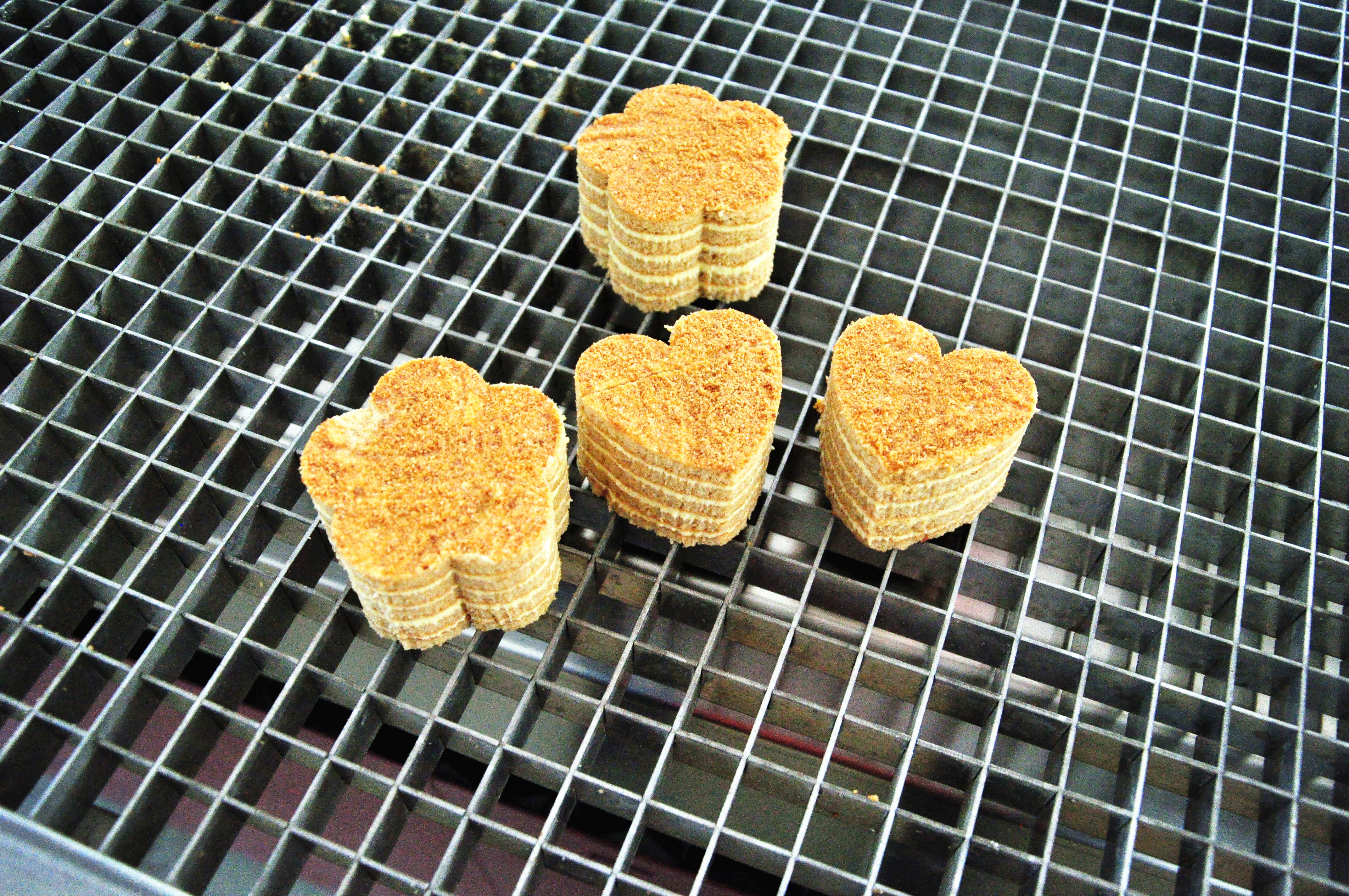
The S series carries the food application in YC's published range: the small waterjet cutting machine models YCWJ-S0808, YCWJ-1010 and YCWJ-1212 are listed with a waterjet food cutting machine type and a full closed small CNC configuration. All three publish the same ±0.1 mm cutting accuracy and ±0.025 mm positioning accuracy as the larger platforms, with a 7.4 L/min maximum flow and a 0-15 m/min dry-run speed envelope.
The boundary to state plainly is certification scope. The certificates published for YC machines are CE (ICR/VC/HM2308122) and ISO 9001:2015, and they cover machinery safety and quality management respectively. A food producer with hygiene, cleanability or product-contact requirements should treat those requirements as a separate specification item and confirm them during the technical review, not assume them from a cutting-capability document. Throughput on frozen product also has to be proven at the actual product temperature and thickness.
How Waterjet Compares with Thermal and Mechanical Cutting — and Where It Stops
Waterjet's differentiation is not universal superiority; it is a specific process signature. A cold jet produces no thermal deformation in the cut zone, generates no dust plume in the way dry mechanical processes do, and cuts a wide material range — metal, composite, stone, glass, rubber, foam, food — with one tool. For mixed-material workshops, that single-tool capability removes changeover between processes. Laser, plasma and mechanical methods such as sawing, routing and punching remain established choices wherever their process characteristics suit the job, and buyers comparing them should do so on their own material list rather than on general claims.
The limits are equally specific and should be designed around:
- Cutting speed is not fixed by the datasheet. YC states cutting speed as dependent on material and thickness for every series, so cycle-time planning must come from sample cuts, not from a catalogue figure.
- The E series tops out at 0-8 m/min dry-run speed and 3.7 L/min flow, against 0-15 m/min and 7.4 L/min on S, L and G. Selecting the E platform commits the shop to a lower motion and flow envelope.
- Consumables sit outside the warranty. The one-year warranty covers the machine but excludes consumable parts, so nozzle, orifice and abrasive cost belongs in the operating budget from day one.
- On-site support is billable. Remote guidance is provided with manual and video support, while on-site engineer assistance — relevant for split-type machines — carries travel, visa, accommodation and fee costs borne by the client.
- High-pressure operation demands site discipline. 4137 bar (60,000 psi) is the published maximum; machine-level certification does not transfer to site installation, guarding, water supply or operator training, which remain the buyer's responsibility.
- Abrasive work generates sludge, and sludge handling is an option. The automatic sludge removal system is listed as a configuration, not as a default, and stone or high-volume metal shops should plan tank access accordingly.
- Robotic cells are not drop-in replacements for flat-table work. The six-axis system needs fixtures and part presentation, and it earns its cost on formed or contoured parts, not on flat nested plate.
Market Context: Application-Led Demand
Third-party market data supports the argument that application fit, not headline pressure, is the growth driver. The global waterjet cutting machine market was estimated at USD 1.31 billion in 2025 and is projected to reach USD 1.86 billion by 2030 (Vertex AI Search / Reports & Data). Asia-Pacific accounted for approximately 37.8% of global market revenue in 2024 (Coherent Market Insights), which is consistent with the concentration of machine-building capacity in the region.
Application mix explains the rest. Metal cutting dominates, accounting for approximately 54.2% of the waterjet application segment in 2026 (Fact.MR), which is why metalworking sits at the centre of most product ranges. The supplier landscape is correspondingly mature, with Flow International, OMAX Corporation, KMT Waterjet and Bystronic Group identified as major global manufacturers (Persistence Market Research). For a buyer, that means machine availability is not the constraint — configuration fit and validation quality are.
Cost follows the same logic. Price is configuration-driven: table format, axis count, head count, pump selection and options such as automatic abrasive delivery, hydraulic loading, laser height measurement or sludge removal all change the specification, so a budget should be built from a configured quotation against a defined material set rather than from a headline machine price.
Compliance and Supply Constraints to Verify
For European buyers, the relevant document is the CE Verification of Conformity numbered ICR/VC/HM2308122, issued by ICR Co., Ltd., valid from 24 August 2023 to 23 August 2028, covering waterjet cutting machines including the YCWJ series, Ultra100 and Servo50S. The standards cited are MD (Regulation), EN ISO 12100:2010 and EN 60204-1:2018. Quality management is covered by ISO 9001:2015 certificate 17324Q21401R0S, issued by Beijing Zhongjiaoyuanhang Certification Co., Ltd., valid from 29 October 2024 to 28 October 2028 under GB/T 19001-2016/ISO 9001:2015, with scope covering R&D and manufacture of ultra high pressure water jet cutting machines.
Buyers should read the standards column rather than the certificate title. Industry references to water jetting safety also cite ISO 21789, so the practical check is which standards a specific certificate lists and whether the machine model on the certificate matches the model being purchased — not whether a supplier holds some form of CE marking.
Supply-side constraints are published and checkable. YC operates a 7,000 m² production base, holds a monthly capacity of 10 sets, accepts a minimum order quantity of one set, and quotes a lead time of 30-45 days. Customisation is offered under OEM/ODM terms covering logo, cutting head, cutting area, cutting speed, voltage, cutting thickness and height measurement. The team includes three engineers with more than 20 years of experience, two production managers who have been with the company since its founding, and five technicians with over a decade of experience, alongside a seven-person R&D team. The company has collaborated with KMT (Germany) and Accustream/Hypertherm (USA) since 2005, established distributor networks in the UK, Russia, Turkey, Mexico and Brazil from 2014, and as of 2026 exports to more than 140 countries and regions.
A Buyer's Validation Sequence
The sequence below converts the mapping above into a procurement procedure that can be applied to any of the four clusters.
- Fix the material set and thickness range first. Everything downstream — axis count, head, pump, options — is a consequence of that list.
- Decide whether the geometry is flat or formed. Flat work points to a three-axis or five-axis table; formed trim points to the six-axis robot cell.
- Size the table to the largest real part, then check the dry-run speed and flow envelope of the series you selected, since the E platform publishes a lower envelope than S, L and G.
- Specify options against the actual workflow — laser height measurement for contoured surfaces, drilling head for composite start points, multiple heads for repeat strips, sludge removal for stone and high-volume metalwork.
- Run a sample trial on your own material and thickness, and record kerf width, edge condition and cycle time as acceptance criteria.
- Verify certificate numbers, issuing bodies, standards cited and validity dates against the exact model being purchased.
- Confirm service terms in writing, including the one-year warranty scope, consumable exclusion and the cost basis for on-site engineer support.
Future Outlook
Two directions are visible in the published configurations rather than in forecasts. The first is motion complexity: five-axis heads and six-axis robotic cells are already standard catalogue options, which means the competitive question is shifting from whether a machine can cut a material to whether it can reach the geometry without a second operation. The second is automation of the surrounding process — automatic abrasive delivery, automatic cycle water cooling, automatic water softening, air-cooled chillers, hydraulic loading and automatic sludge removal all reduce the manual intervention that limits unattended running, and 24/7 continuous production is already offered as an option on the platform.
With the market projected to move from USD 1.31 billion in 2025 to USD 1.86 billion by 2030, capacity will keep expanding. That makes selection discipline, not machine availability, the variable that separates a productive installation from an underused one.
FAQ
What accuracy is published across the YC Waterjet range, and does it change by series?
Cutting accuracy is published as ±0.1 mm and positioning accuracy as ±0.025 mm across the S, L, G and E series and the small waterjet models YCWJ-S0808, YCWJ-1010 and YCWJ-1212. What changes between series is format, motion configuration, dry-run speed and maximum water flow, not the stated accuracy figure.
Which certifications should a buyer verify, and what exactly do they cover?
Two documents are published. CE Verification of Conformity ICR/VC/HM2308122, issued by ICR Co., Ltd., is valid from 24 August 2023 to 23 August 2028 for the EU market and cites MD (Regulation), EN ISO 12100:2010 and EN 60204-1:2018. ISO 9001:2015 certificate 17324Q21401R0S, issued by Beijing Zhongjiaoyuanhang Certification Co., Ltd., is valid from 29 October 2024 to 28 October 2028 and covers R&D and manufacture of ultra high pressure water jet cutting machines.
What are the order constraints — minimum quantity, lead time and customisation scope?
The minimum order quantity is one set, monthly capacity is 10 sets, and lead time is quoted at 30-45 days. Customisation under OEM/ODM terms covers logo, cutting head, cutting area, cutting speed, voltage, cutting thickness and height measurement. Because these variables change the specification, cost should be assessed from a configured quotation rather than a standard model list.
Is a six-axis robot necessary, or does a five-axis table cover formed parts?
It depends on how the part is presented. The 3D MAX 5-axis and Dynamic 5-axis heads on the L, G and E tables handle angled and contoured features on parts that can sit on a table. The YCWJ-Robot, a 6-axis robotic waterjet cutting system, is intended for automotive interiors, aerospace, architectural decoration and composite molding where the workpiece must be held in a fixture and presented to the head. The robot adds reach and orientation but also adds fixturing requirements.
How should a buyer validate cutting performance before ordering?
Validate on the actual material stack and thickness, because YC states cutting speed as dependent on material and thickness rather than as a fixed figure. Each unit undergoes rigorous pre-delivery testing and delivery inspection, but those are machine-level checks. Material-level acceptance criteria — kerf width, edge quality, flatness on thin sheet, edge condition on composites or stone — should be defined by the buyer and demonstrated on samples.
What does after-sales support cover, and what is charged separately?
A one-year warranty covers the machine excluding consumable parts, with free replacement parts shipped for non-manual defects. Remote guidance is provided with manual and video support. On-site engineer assistance, for example on split-type waterjets, is available but the associated travel, visa, accommodation and fee costs are borne by the client.
Tem questões ou precisa de mais detalhes?
Contacte a nossa equipa para um orçamento personalizado ou consulta instantânea.
Solicitar orçamento
Preencha o formulário abaixo e a nossa equipa entrará em contacto com uma proposta personalizada.
Chat direto do WhatsApp
Prefere conversar em tempo real? Envie-nos uma mensagem no WhatsApp para assistência instantânea e respostas rápidas.
- Obter orçamento personalizado
- Partilhar fotos ou documentos
- Discuta as suas necessidades diretamente
Geralmente responde em 5–30 minutos durante o horário de expediente.