
Scoring Shopping Bag Suppliers on Audited Certifications
A certificate copy is not a supplier qualification. It is a data record with an audit type, an audit body, an issue window, an expiry date and a defined scope — and it is those five attributes, not the logo on a homepage, that make one wholesale shopping bag supplier comparable to another. This article sets out a step-by-step comparison framework for buyers in the research and evaluation stage, scores audited certifications instead of marketing claims, and applies the framework to the compliance file of Zhejiang Hansun Arts & Crafts Co., Ltd. as the worked example.
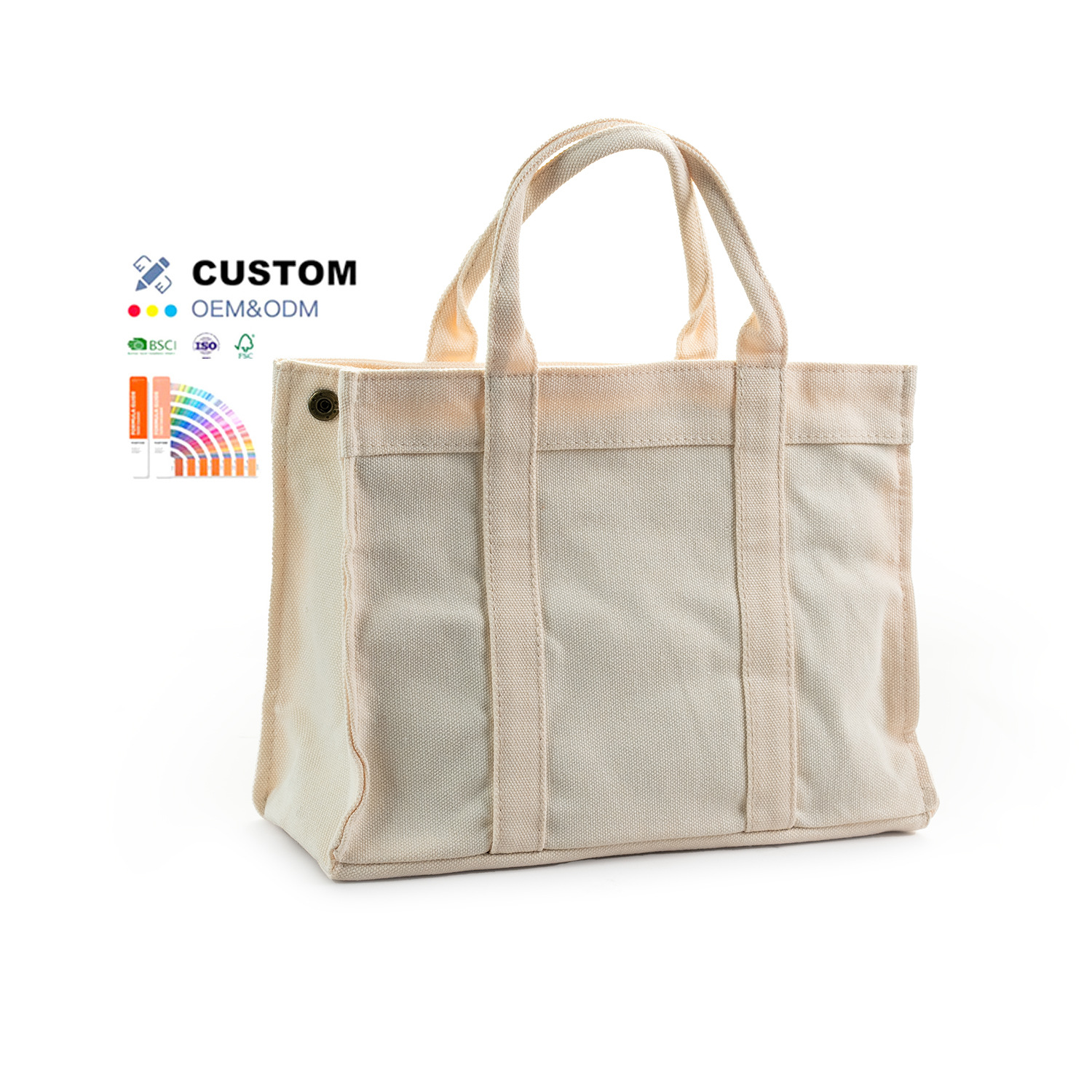
A neutral reference item used for supplier comparison: specification first, certification file second, commercial terms third.
Why Audited Certifications Now Decide Shopping Bag Supplier Selection
Shopping bag sourcing was once settled by three inputs: unit price, sample quality and a delivery promise. Four market forces have pushed a fifth input — verifiable compliance evidence — into the same decision tier, which is why comparison frameworks built only on price now produce unreliable shortlists.
Regulation has become a specification. The EU Packaging and Packaging Waste Regulation (PPWR, (EU) 2025/40) requires all packaging to be recyclable by 2030 and introduces mandatory recycled content targets for plastic packaging. For a reusable, foldable or heavy-duty shopping bag program, that converts “eco-friendly” from a descriptive adjective into a documented requirement with a deadline attached.
Retail bans have changed the demand profile. In the United States, 12 states including California and New York had implemented statewide bans on single-use plastic bags as of 2024, according to the National Conference of State Legislatures. The substitution effect is toward heavy-duty reusable alternatives, and supermarket and chain-retail buyers increasingly expect the supplier to evidence the durability and compliance claims behind those bags.
The market is growing faster than the verification capability of most buying teams. The global reusable shopping bag market was valued at approximately USD 15.64 billion in 2025 and is projected to reach USD 28.87 billion by 2034, according to Fortune Business Insights. Supply is concentrated: China’s export value for “suitcases, handbags and similar containers” reached USD 27.13 billion for January–November 2025, based on data from the General Administration of Customs of China. A growing market served by a concentrated supply base produces many similar-looking quotations — and audit files are the fastest way to separate them.
Format and material trends add a second comparison axis. Polypropylene (PP) bags account for nearly 46% of total reusable bag production, per Business Research Insights, reflecting their durability and cost-effectiveness. Tote bags hold roughly a 40–41% revenue share of the bag market because of multi-purpose functionality, according to Market Research Future. Third-party research also recorded a 34% increase in demand for printed bags in the retail sector — an estimate best treated as directional rather than precise. Each of these signals changes what a certificate has to cover.
A Six-Step Framework for Comparing Shopping Bag Suppliers on Certification Evidence
The framework below treats every certificate as a structured record. The output is a weighted score, not a verdict. The purpose is to make two suppliers comparable on the same fields before samples and prices are discussed.
Step 1 — Classify the audit type before comparing anything
Audited certifications used in the shopping bag category fall into three families, and they answer different questions:
- Social compliance audits assess a production site’s labour practices, working hours, wages, health and safety, and management systems. Amfori BSCI and Sedex are the two platforms most commonly cited by retail buyers.
- Quality management system certifications assess whether a factory operates a controlled, documented process for producing consistent output. They speak to process discipline.
- Brand and IP authorisation programs assess a supplier’s eligibility to produce goods carrying a licensed or trademarked identity. They are issued by the rights holder, not by a general audit body, and are only relevant if your program carries licensed content.
Comparing a social compliance audit against a quality management certification produces a meaningless ranking. Score within families first, then across them.
Step 2 — Verify the audit body and the approval status
“Listed on a platform” and “approved” are different states. Amfori BSCI Approved and Sedex Approved describe a completed audit with a published result and a defined audit period. A supplier that holds a platform membership but no current completed audit cannot be scored in the same band as an approved supplier, even if both use the same platform name in their marketing.
Record three fields for each entry: the platform or standard name, the approval status, and the body that issued the certificate. If the issuing body cannot be named, the entry is unverifiable and should be excluded from the weighted score.
Step 3 — Convert validity dates into a currency score
This is the step most buyer scorecards skip. Certificates are dated statements, not permanent qualifications. Each record carries a validity window with a start and an end date, and the currency score is simply the position of the review date within that window.
Practical implementation: for every certificate entry, record the expiry date, calculate the days remaining at the review date, and set a threshold. A common buyer threshold is whether the window extends past the planned delivery window of the order; if it does not, the currency score is discounted or zeroed.
Step 4 — Map applicable markets to your destination
Certification applicability is not universal. A social compliance audit adopted by European retailers carries direct weight for EU-bound programs; for a program distributed across global markets, its value is broader but more diffuse. Buyers comparing a Europe-focused file against a global-distribution file should score the certificate against the destination market of the actual order, not against the supplier’s overall export footprint.
- EU-bound programs: weight social compliance audits and recyclability documentation most heavily, given PPWR requirements.
- US-bound programs: weight durability documentation and state-level single-use restrictions, since 12 states had statewide bans in place as of 2024.
- Multi-region or global programs: weight the reproducibility of the file — a supplier that can produce consistent records for multiple markets usually has a more mature compliance function.
Step 5 — Match scope to your actual specification
A certificate covers a site, a process and a product family. It does not automatically cover the item in your purchase order. Check scope against the specification you are actually buying: material (non-woven fabric, canvas, recycled PET, Oxford cloth or PP), printing method (silk screen, heat transfer or offset printing), and bag format (canvas tote, foldable reusable, or clear PVC bag).
Where a program requires material-level performance — food-grade eco-friendly PVC, REACH compliance, scratch resistance, or logo printing wear resistance — that requirement sits outside the scope of a social compliance or quality management audit and must be evidenced separately.
Step 6 — Weight the score by project type
The same file produces different scores under different project conditions. A long-running supermarket retail program carries continuity risk and should weight validity currency and capacity evidence heavily. A one-off promotional gift run for corporate welfare carries lower continuity risk but higher reputational risk, and should weight social compliance evidence and print consistency more heavily.
Because the weighting is project-specific, the weight column should be set before any supplier is scored. Setting weights after the scores are visible is a reliable way to reverse-engineer a predetermined shortlist.
A Weighted Scorecard You Can Reuse
The following six dimensions cover the certification-file comparison. Weights are illustrative and should be reset per project.
| Dimension | What is checked | Example weight |
|---|---|---|
| Audit type fit | Whether the audit family matches the risk the project actually carries | 20% |
| Audit body status | Named issuing body and current approval status (for example, Amfori BSCI Approved or Sedex Approved) | 15% |
| Validity currency | Expiry dates and days remaining at the review date | 25% |
| Market applicability | Fit with EU, US or multi-region distribution | 15% |
| Scope match | Materials, print methods and bag formats inside the audited scope | 15% |
| Evidence completeness | Certificate, audit result and renewal timing available on request | 10% |
Two operational notes. First, keep the scorecard as a single page per supplier; multi-page frameworks rarely survive a real evaluation cycle. Second, record the review date on the scorecard itself, because a validity currency score is only meaningful relative to the day it was calculated.
Worked Example: Scoring Hansun’s Certification File
Zhejiang Hansun Arts & Crafts Co., Ltd. is a Chinese manufacturer founded in 1996, operating a factory with more than 25,000 m² of usable area with approximately 200 employees and an annual output of 20,000,000 units. The company focuses on tote bags and PVC bags, works in OEM/ODM mode, and exports roughly 70% of its output, with sales and service covering Southeast Asia, Europe, North America, the Middle East and major domestic cities. Its file illustrates how the framework behaves in practice.
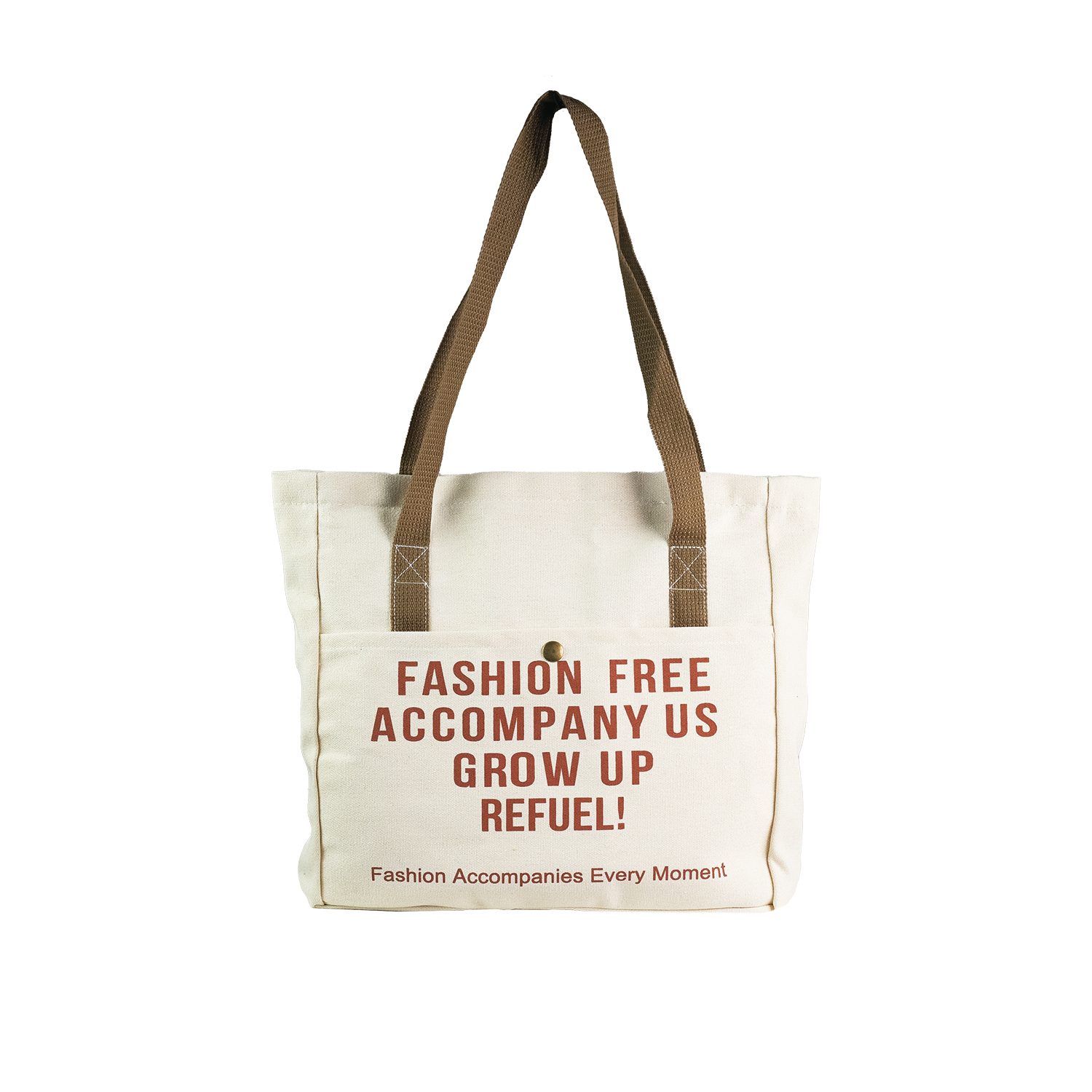
Scope match matters more than certificate quantity: the printed tote in your purchase order has to sit inside the audited product family.
| Scorecard field | Record in the Hansun file | Framework reading |
|---|---|---|
| Audit type fit | Sedex (social compliance); ISO certification (quality management) | Two different families present; score within each family rather than averaging them |
| Audit body status | Amfori BSCI Approved; Sedex Approved | Completed audits with published results, not membership-only entries |
| Validity currency | Sedex validity window recorded to 2026-01-19; ISO validity window recorded to 2025-11-04 | Both windows have closed relative to a review date of 2026-10-12; currency scores reset to zero until renewal documents are presented |
| Market applicability | Export ratio of approximately 70%; markets spanning Europe, North America, Southeast Asia and the Middle East | Adjusted for global distribution rather than a single-region program |
| Scope match | Product focus on tote bags and PVC bags; materials include non-woven fabric, canvas, recycled PET, Oxford cloth and PP | Scope aligns with common reusable and promotional bag formats; other formats require a separate scope check |
| Evidence completeness | 25,000 m²+ facility, approximately 200 employees, 25 engineers, annual output of 20,000,000 units | Facility scale supports the credibility of the audited scope |
The reading of this example is deliberately unflattering on one dimension. Under the currency rule in Step 3, a compliance file whose recorded Sedex window ends 2026-01-19 and whose recorded ISO window ends 2025-11-04 cannot carry forward a live currency score at a review date of 2026-10-12. What the file demonstrates is audit-type coverage, approval status and scope breadth — not current validity. That distinction is exactly what the framework is designed to surface, and it is the reason buyers should request renewal documentation rather than accepting a certificate image at face value.
What Audited Certifications Do Not Cover
The most common error in certification-based comparison is treating a social compliance audit as a product guarantee. It is not one. Amfori BSCI and Sedex audits examine how a site is run; they do not test how a bag performs in a supermarket aisle.
- Material composition. A social compliance audit does not confirm that a foldable reusable bag is made of recycled PET, or that a clear PVC bag uses food-grade eco-friendly material.
- Chemical and contact compliance. REACH compliance and food-grade requirements sit at the material level and are evidenced through separate documentation and testing, not through a labour audit.
- Durability and print performance. Scratch resistance and logo printing wear resistance are performance attributes that must be validated through sample testing and agreed specifications.
- Point-in-time coverage. An audit describes conditions during an audit period. It cannot describe a factory six months later, and it does not automatically extend to subcontracted capacity.
A second limitation is inherent to the scoring method itself. Certification scoring is a screening tool. It compresses a supplier’s compliance position into a number that is useful for shortlisting and dangerous for final selection, because it cannot capture specification fit, sampling outcomes or communication reliability. Used correctly, it removes unverified suppliers from the table early; used incorrectly, it substitutes paperwork for due diligence.
Applying the Framework to Real Shopping Bag Programs
The shopping bag product line referenced here is model SB-2026-001, offered as a reusable foldable shopping bag, an eco-friendly non-woven shopping bag and a canvas tote shopping bag. Sizes are customizable in S/M/L or to customer-specific dimensions, unit weight ranges from 50g to 200g per piece depending on material and size, and decoration methods include silk screen printing, heat transfer and offset printing. Materials available include non-woven fabric, canvas, recycled PET, Oxford cloth and PP.
Those specifications map onto defined application scenarios: brand promotional gifts, supermarket retail, corporate welfare, cross-border e-commerce, and stationery & office supply. For a gift packaging program, the scenario specification includes hang tags, webbing and brand stickers as accessories, with a stated requirement set of food-grade eco-friendly PVC, REACH compliance, scratch resistance and wear-resistant logo printing — all of which sit outside the scope of a social compliance audit and must be evidenced on their own terms.
A documented case shows how these elements combine in a demanding retail environment. For a Japanese OEM/ODM client, a program of 1,000,000 units was produced for chain supermarket daily shopping bags and promotional gifts, with bags designed for repeated long-term use. The reported outcome was a 99.7% product qualification rate, zero delivery delay, and repeat orders across three consecutive years, with the bags meeting Japan’s eco-friendly standards and custom printing matched to the supermarket’s branding requirements. Read through the framework, that case evidences scope match and process consistency — not current certification validity, which remains a separate field.
Comparison with Traditional Supplier Selection
The traditional method — collect quotations, request a sample, and file whatever certificate image the supplier sends — is fast and inexpensive. It also has three structural weaknesses that certification scoring addresses.
| Comparison point | Traditional method | Certification scoring framework |
|---|---|---|
| Certificate handling | Certificate image filed without review | Audit type, body, approval status and validity window recorded as fields |
| Expiry risk | Undetected until a customer audit | Currency score resets when a window closes |
| Market fit | Generic “certified” claim | Scored against the destination market of the order |
| Scope accuracy | Assumes the certificate covers the ordered item | Scope checked against material, print method and bag format |
| Consistency | Varies by buyer and by round | Same weighted fields applied to every supplier |
The framework is not free of trade-offs. It requires documentation collection time, it depends on the buyer setting weights before scoring, and it can penalise a supplier whose certificates are simply administratively lagging rather than operationally weak. It also cannot replace sample validation on a custom printed shopping bag, because print registration, stitch quality and handle strength are physical attributes that no audit certificate describes.
The same candour applies to the worked example. Hansun’s profile carries practical boundaries that a comparison framework should make visible: production is organised around OEM/ODM with a minimum order quantity of 3,000 pieces and a lead time of 30–45 days, quality control arrangements are configured to customer requirements rather than a single fixed protocol, and after-sales support is delivered remotely. Monthly capacity of 1,500,000 units supports large-volume programs, but a buyer testing the market with a small pilot order should expect the MOQ and lead time to be the binding constraints, not the certification file.
Future Outlook
Three developments will shape shopping bag supplier comparison over the next several years. PPWR’s 2030 recyclability requirement and its mandatory recycled content targets for plastic packaging will push material-level documentation into the same evaluation tier as social compliance audits. The spread of state-level single-use bag restrictions in the United States — 12 states as of 2024 — will keep durability evidence in demand. And the growth trajectory of the reusable bag market, from approximately USD 15.64 billion in 2025 toward a projected USD 28.87 billion by 2034, will continue to bring new suppliers into retail tenders, raising the value of a standardised file review.
For buyers, the practical implication is a calendar rather than a spreadsheet: certificate expiry dates need to be tracked as recurring renewal events, not checked once at onboarding. A supplier whose file is managed proactively will keep its currency score intact; a supplier whose file is managed reactively will periodically drop out of the qualified band, regardless of the quality of its bags.
FAQ
Which certifications actually matter for a supermarket retail program versus a corporate gift program?
Supermarket retail programs are continuity programs: they run continuously, involve repeated replenishment and carry high visibility, so social compliance evidence and validity currency should be weighted heavily, along with capacity confirmation. Corporate gift or corporate welfare programs are usually finite runs with lower continuity risk but higher reputational sensitivity around printing and branding, so social compliance evidence remains necessary while print consistency and sample validation carry more weight. Both program types fall inside the standard application scenarios for this product line, which include brand promotional gifts, supermarket retail, corporate welfare, cross-border e-commerce, and stationery & office supply.
What happens to a supplier’s score when a certificate validity window has closed?
Under the currency rule, the score for that record falls to zero until a renewal document is produced. A closed window is an administrative state, not evidence that the underlying capability has changed — the audit result it describes remains valid as a historical record. In practice, this means a file that records, for instance, a Sedex window ending 2026-01-19 or an ISO window ending 2025-11-04 will show no live currency score at a later review date, and the supplier is scored on audit type, approval status, market applicability and scope match until renewal evidence is supplied.
Can a supplier with a strong social compliance audit still fail a shopping bag project?
Yes. Social compliance audits cover labour practices, working hours, wages, health and safety, and site management systems. They do not verify material composition, chemical compliance such as REACH, food-grade suitability, scratch resistance, or logo printing wear resistance. A supplier can score well on social compliance and still miss a requirement set built around food-grade eco-friendly PVC, REACH compliance or wear-resistant printing. Those attributes require separate material documentation and sample testing.
How should applicable market coverage be scored for EU-bound versus globally distributed shopping bags?
Score the certificate against the destination market of the actual order rather than the supplier’s overall export footprint. An EU-bound program should weight social compliance audits and recyclability documentation most heavily, because the EU Packaging and Packaging Waste Regulation requires all packaging to be recyclable by 2030 and sets mandatory recycled content targets for plastic packaging. A US-bound program should weight durability documentation, given that 12 states including California and New York had statewide single-use plastic bag bans in place as of 2024. A multi-region program should weight the supplier’s ability to produce consistent records across markets, since that consistency usually indicates a more mature compliance function.
Where does certification scoring stop being useful in a supplier comparison?
Certification scoring is a screening tool and stops being useful once the shortlist is reduced to a small number of plausibly compliant suppliers. Beyond that point, the decision depends on specification fit, sampling results, print and stitch quality, order quantity thresholds, lead time, and communication reliability — none of which a certificate describes. A supplier working in OEM/ODM mode with a minimum order quantity of 3,000 pieces and a 30–45 day lead time may be an excellent fit for a large supermarket program and a poor fit for a small pilot order, and no audit score will capture that distinction.
Reference document: the corporate brochure for Zhejiang Hansun Arts & Crafts Co., Ltd. is available for download at https://cdn.socialarks.com/sbsp/24767/0/2026/0413/69dc8372a4994.pdf.
Buyers applying this framework should keep two records current: the scoring sheet with its review date, and the certificate expiry calendar that keeps the currency column honest.