
Scoring a Long-Term Magnesium Sulphate Fertilizer Supplier
Scoring a Long-Term Magnesium Sulphate Fertilizer Supplier
Long-term magnesium sulphate fertilizer supply is a continuity decision, not a price decision. A buyer who secures the lowest landed cost but inherits batch-to-batch variation, missing certificates or a two-week delivery slip has not removed risk; the cost has simply moved into the growing season or onto the production line. The scorecard set out here converts a standard supplier questionnaire into six weighted dimensions — batch quality and documentation, delivery continuity and capacity, after-sales responsiveness, compliance paperwork, grade and packing flexibility, and commercial governance — and states what evidence to demand for each.
Tianjin Xingyu Fertilizer Industry Co., Ltd. (XYF) is a magnesium sulphate manufacturer founded in 1993 and based in the Chenguantun Town Industrial Park, Jinghai District, Tianjin. Company materials describe a 20,000 m² factory, an annual output of 150,000 units, automated production lines fed by a stable raw material supply base, an independent standardized testing laboratory and an ISO quality management system, with exports accounting for 70% of total sales across more than 30 countries in Southeast Asia, Europe and the Americas. The company is used here as a worked example of how the scorecard is applied, not as a recommendation.
Supply itself is not scarce. Agriculture and fertilizer use accounted for approximately 41.6% of the global magnesium sulphate market in 2025, according to commercial research, and one market estimate put global value at USD 1.8 billion in 2025 rising to USD 1.9 billion in 2026 — a figure that differs between reports because they include different grade scopes. China recorded USD 149 million of magnesium sulphate exports in 2024 under HS code 283321, based on UN Comtrade data published by OEC. When material is available from many origins, the differentiator is not whether a supplier can ship a container, but whether the tenth container matches the first.
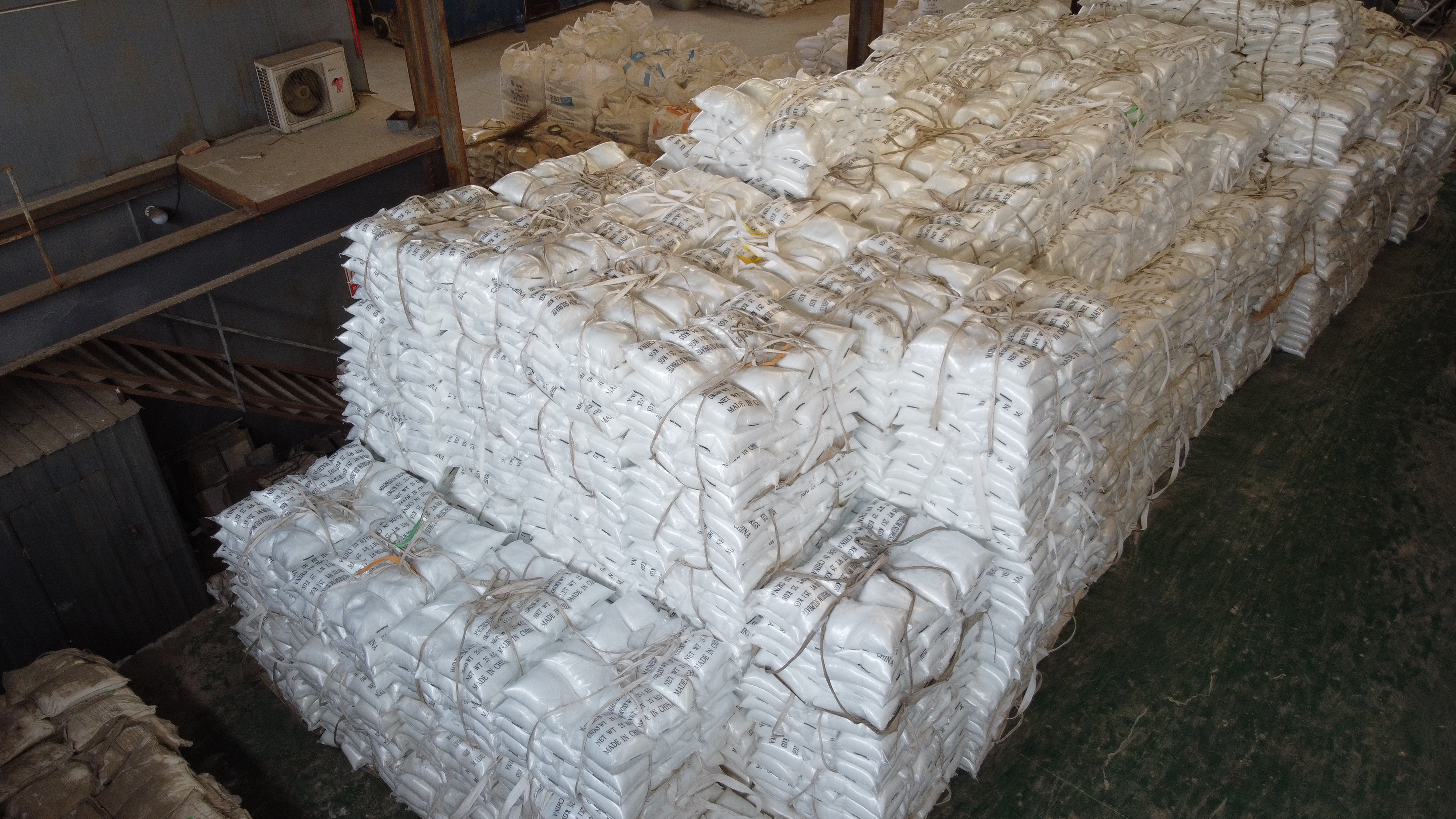
Production workshop: batch control and documentation are the first scorecard dimension, because they are the easiest to verify and the most expensive to get wrong.
Why the lowest quote per tonne is a weak long-term signal
Published price references are easy to misread. One secondary industry source expected US magnesium sulphate prices to stabilise near USD 674 per metric ton in early 2025, but that is a market reference point, not a delivered contract price for a named grade in a named bag. Two quotations can sit far apart while both are internally correct, because one covers anhydrous material in 25 kg bags and the other heptahydrate in bulk. Buying on the number alone compares two different products and assumes the risk sits with the supplier.
The risks a per-tonne comparison hides are cumulative:
- Grade drift between lots, which forces re-testing on arrival and blending corrections downstream.
- Documentation gaps, which turn into customs holds and re-issued certificates at the worst moment.
- Delivery slippage, which converts a planned shipment into an emergency spot purchase at a premium.
- Storage failure, which appears as caking, crushing labour and blocked spreaders or drippers weeks after acceptance.
- Service breakdown, which leaves a complaint unresolved because no retained sample exists to test against.
None of these appears on the quotation. All of them appear in the cost of ownership.
The six-dimension supplier scorecard
Score each dimension from 1 to 5 against evidence the supplier can actually produce, multiply by the suggested weight, and treat any score of 1 as a veto regardless of the total. The weights below are an editorial starting point for a fertilizer importer; an industrial, mining or water-treatment buyer would shift weight toward documentation and grade consistency.
| Dimension | What it tests | Evidence to request | Weight |
|---|---|---|---|
| Batch quality and documentation | Lot-to-lot consistency and traceability | Lot-linked COA, sampling plan, retained samples, test methods | 25% |
| Delivery continuity and capacity | Whether booked volume arrives on schedule | Quoted lead time per grade, monthly commitment, shipment history | 20% |
| After-sales responsiveness | How quickly a problem becomes resolved | Named contact, acknowledgement window, corrective action record | 15% |
| Documentation and compliance | Whether goods clear without correspondence | COA, MSDS, packing list, B/L, origin, pre-shipment test record | 15% |
| Grade and packing flexibility | Whether supply still fits the application | Grade range, bag formats, labelling, minimum switching quantity | 15% |
| Commercial governance | Whether the terms survive a dispute | Price review, volume tolerance, remedy thresholds, review date | 10% |
Two rules keep the score honest. Score evidence rather than claims — a lot-linked certificate or a dated shipment record scores, an assurance that quality is stable does not. And re-score after the first two shipments, because one container proves very little about a supply relationship.
Batch quality control and documentation
Batch control is the dimension that most often separates a manufacturer from a trading intermediary, and it is the easiest to verify. XYF states that it operates an independent standardized testing laboratory under an ISO quality management system, and that acceptance for magnesium sulphate fertilizer orders runs through pre-shipment test procedures. That combination establishes process control capability; it does not, on its own, prove the content of any individual lot.
- Sampling coverage: the share of production lots actually sampled, and whether the sample is retained.
- Lot-linked certificates: the COA should carry the batch number that appears on the packing list, not a generic typical analysis.
- Methods and tolerances: which parameters are measured — magnesium content, moisture, chloride, water-insoluble matter, particle size — and what variation is accepted.
- Retention period: how long samples are kept, since a dispute in month eight depends on a sample taken in month one.
Score 5 only where lot-linked certificates exist for consecutive shipments. Where documentation exists but is not lot-specific, 2 or 3 is the honest score, however good the product looks in the sample bag.
Delivery continuity and capacity
Capacity only matters in the form a buyer can book. XYF states an annual output of 150,000 units supported by automated production lines and a stable raw material supply base, and states a capacity for stable supply of bulk orders with efficient delivery and reliable quality control. For evaluation, convert that annual figure into the monthly deliverable volume for the buyer's own grade and packing, then test the conversion against the quoted lead time. A capacity figure that cannot be scheduled in the required grade is a marketing number, not a supply plan.
- What lead time is quoted per grade, and does it hold through the supplier's peak season?
- How many containers per month can be committed in writing, as distinct from produced?
- What happens to allocation priority when raw material tightens?
- Which trade terms apply — FOB, CIF or CFR — and who controls the booking?
- What is the smallest schedulable order? The stated minimum order quantity for magnesium sulphate fertilizer is one container.
Score continuity on history rather than promises: three consecutive on-time departures in the past twelve months outranks any capacity statement. References should come from markets the supplier already serves. XYF lists Pakistan, Japan, Korea and New Zealand among its main markets, which makes those destinations practical reference requests for an importer in a comparable regulatory and logistics environment; ask how long the relationship has run and what changed during it.
After-sales responsiveness
Responsiveness is the dimension buyers most often accept on trust, and the one that decides how expensive a problem becomes. A written commitment should name the contact, the acknowledgement window and the escalation path. Whether that window is one working day or three matters less than whether it is written down, measured and honoured on the first claim.
- Acknowledgement of complaints within a stated window, handled by a named technical contact rather than a general sales inbox.
- A root-cause response, not only a replacement promise: what failed, on which lot, and what changed afterwards.
- Corrective action documented and visible in the next certificate of analysis.
- Retained samples available for joint re-testing.
- Time-zone and language coverage for the buyer's market.
Score this from behaviour during sampling and the first order. The speed at which a specification question is answered is usually the speed at which a claim will be answered.
Documentation and compliance readiness
Every shipment should arrive with a document set the buyer's customs broker can accept without correspondence: certificate of analysis, material safety data sheet, packing list, commercial invoice, bill of lading, certificate of origin where applicable, and the pre-shipment test record behind the acceptance decision.
Two external factors shape that check. Magnesium sulphate is registered in the ECHA REACH database with an annual tonnage band of 100,000 to 1,000,000 tonnes, which shows the scale of registered use in the EU but does not confirm that a particular importer, grade or supplier is covered — that has to be verified at entity level. And HS code 283321 aggregates magnesium sulphates, so customs statistics cannot separate monohydrate (kieserite) from heptahydrate (Epsom salt); grade-specific assurance has to come from supplier documents, not from trade data.
Request the full document set as templates before the first order. A certificate format missing the parameters your regulator requires is far cheaper to correct before shipment than after arrival.
Grade and packing flexibility
Over a multi-year contract the buyer's application mix can shift, so grade flexibility is a continuity issue rather than a convenience. The three common forms are not interchangeable. Anhydrous magnesium sulphate has higher magnesium content and low moisture, and suits industrial raw-material use and moisture-sensitive dry blending. Monohydrate, often sold as kieserite, serves agriculture and general industrial work. Heptahydrate, or Epsom salt, contains crystal water, carries a lower magnesium content at a lower cost, and is the agricultural and fertigation grade; it accounted for 54% of global commercial production in 2025 according to commercial market research. XYF produces all three forms and also lists magnesium oxide and medium and trace element fertilizers.
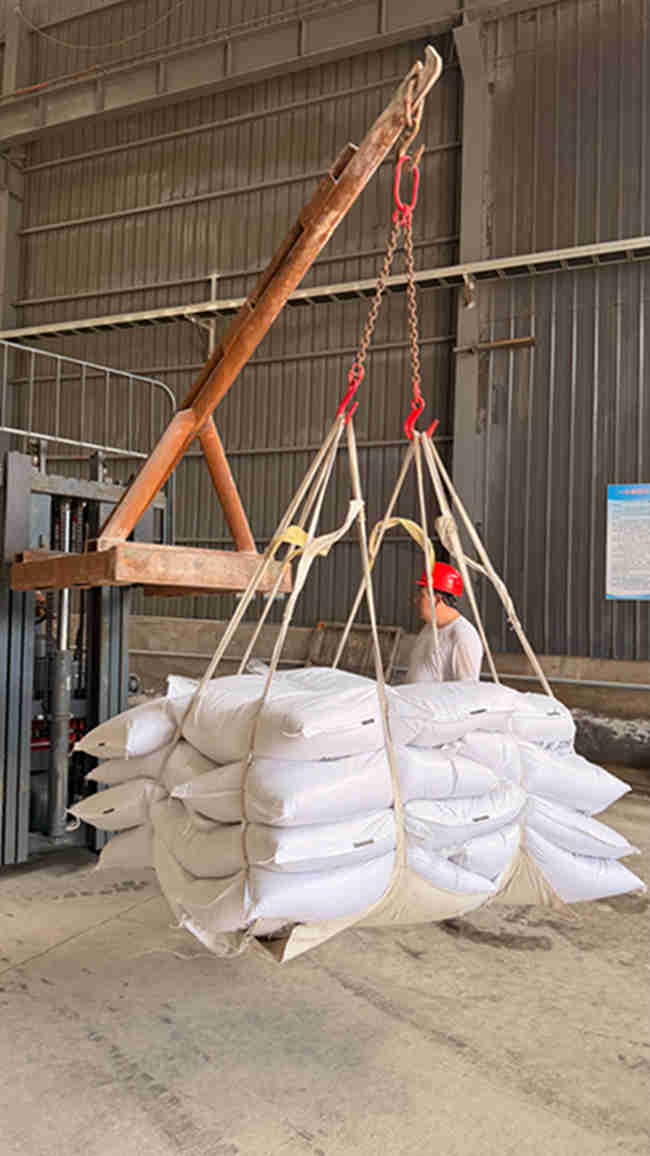
Packing is a contract specification: bag size, bag construction, marking and loading pattern all belong in the agreement, not in an email thread.
Packing deserves the same discipline. Fix bag size — 25 kg and 50 kg are the standard agricultural formats — together with bag construction, print and marking, palletisation and container loading pattern, and confirm at quotation stage whether the format can be set to the buyer's own labelling. For fertigation and foliar use, the practical test is dissolution in the buyer's own water and irrigation hardware rather than a laboratory figure alone. Score flexibility on how many grades and packing formats can be scheduled inside one contract, and on whether switching between them forces a new minimum order.
Commercial governance: making the scorecard enforceable
Terms should be dull and explicit. XYF's stated standard terms for magnesium sulphate fertilizer are FOB, CIF or CFR delivery, a minimum order quantity of one container, acceptance through pre-shipment test procedures, and payment of 30% T/T in advance with 70% T/T against copy of the bill of lading. Those terms set the baseline; the contract needs to add the parts that decide what happens when something goes wrong.
- A price adjustment mechanism tied to an agreed reference, with review frequency and notice period.
- A volume tolerance band, so a modest shortfall does not trigger penalty pricing.
- A quality remedy ladder — re-test, replacement, credit, rejection — with the trigger threshold for each step.
- An annual review date with a named owner on both sides.
- A dual-source threshold: the volume level at which a second approved supplier is kept qualified.
Scorecard versus transactional buying
The alternative to a scorecard is not negligence; it is spot buying, and for some buyers that is correct. A single-container trial, a one-off industrial order, or a buyer whose application tolerates grade variation in basic soil broadcasting can be served by a quotation, a certificate of analysis and a pre-shipment test. The scorecard adds administrative cost — document review, audits, contract drafting — that only pays back across repeat shipments.
It pays back where failure is expensive: NPK blending lines that must hit a declared magnesium figure, fertigation systems that cannot tolerate residue, and industrial processes where moisture or chloride content affects the reaction. For those buyers the real comparison is not scorecard versus cheap supply, but scorecard versus unbudgeted correction.
Fit boundary: the framework assumes annual volumes above a one-container minimum and a buyer able to hold a supplier to written terms. Below that scale, the honest answer is a lot-linked certificate and a pre-shipment test, not a six-dimension evaluation.
Where the weightings shift: three buyer profiles
A fertigation grower should load weight onto grade consistency and dissolution behaviour, because residue in drippers is a hardware cost, not a product complaint. An NPK blender or regional distributor should load weight onto lot-linked documentation and packing flexibility, since every blend carries a declared magnesium figure that must be defensible to its own customers. An industrial buyer — mining, water treatment or building materials — should load weight onto moisture, chloride and grade stability, where an off-specification lot affects a process rather than a crop.
What the market outlook does and does not settle
Market direction is supportive but not decisive. Global value estimates place 2026 near USD 1.9 billion, subject to the scope caveats already noted, agriculture remains the largest application block at roughly 41.6% of 2025 share, and heptahydrate's 54% share of commercial production reflects its role as the agricultural workhorse rather than a premium position. None of that tells a buyer which supplier to qualify.
The practical implication is conditional: as volume grows, the binding constraint shifts from finding material to proving consistency. Buyers who establish a documented baseline now — lot-linked certificates, shipment records, agreed remedies — will qualify a second source faster later. Buyers who purchase purely on price will keep re-qualifying from zero.
For readers who want to apply the framework, the XYF product catalogue can be downloaded here: XYF product catalogue. Company information is published at Tianjin Xingyu Fertilizer Industry Co., Ltd.
FAQ
What should a long-term magnesium sulphate fertilizer supply agreement fix in writing?
It should fix the grade and its measured parameters, the minimum order quantity — one container for XYF orders — the trade term (FOB, CIF or CFR), the quoted lead time per grade, acceptance through pre-shipment test procedures, and payment of 30% T/T in advance with 70% T/T against copy of the bill of lading. It should also fix what happens after acceptance: the remedy thresholds, the price review mechanism and the named contact for claims. Anything left verbal becomes a negotiation during a dispute.
How can a buyer verify batch consistency across a year of deliveries?
Require a certificate of analysis tied to the lot number on each packing list, retain counter-samples, and compare magnesium content, moisture, chloride, water-insoluble matter and particle size across deliveries. Confirm that the sampling plan covers production lots rather than occasional spot checks. A supplier operating an ISO quality management system and an independent standardized testing laboratory has the process control to support that request, but only lot-linked data shows what was actually shipped.
Should a long-term buyer standardise on anhydrous or heptahydrate magnesium sulphate?
It depends on the dominant application. Anhydrous magnesium sulphate has higher magnesium content and low moisture, which suits industrial raw material and moisture-sensitive dry blending. Heptahydrate, or Epsom salt, contains crystal water, offers a lower magnesium content at lower cost, and is the usual choice for agriculture and fertigation. Monohydrate, often sold as kieserite, is used in agriculture and general industrial work. Standardise on the grade matching the main application, and keep a second grade qualified only if the product mix genuinely requires it.
How should caking and storage risk be handled in a multi-year contract?
Magnesium sulphate absorbs moisture from the air and can cake under high humidity, damaged packaging or long exposure to damp conditions. The agreement should specify bag construction and sealing, require storage in a dry, ventilated warehouse with bags kept sealed and protected from rain, and schedule deliveries so material does not sit in the buyer's store for extended periods. Caked material can be crushed before application and remains usable, but crushing labour and blocked spreaders are real costs, so prevention belongs in the specification rather than in the complaint.
Is a higher price per tonne ever justified for long-term supply?
Yes, when it buys documented consistency. Compare offers on delivered, compliant, on-time material: a lower quote that forces re-testing, triggers a customs hold or requires an emergency spot purchase is not cheaper overall. The premium worth paying is the one matched to evidence — lot-linked certificates, lead times that have held, a stated claims process — rather than to a claim of superior quality. Published reference prices, such as USD 674 per metric ton cited for the US market in early 2025, cannot substitute for a delivered quote at the buyer's own specification.
Tem questões ou precisa de mais detalhes?
Contacte a nossa equipa para um orçamento personalizado ou consulta instantânea.
Solicitar orçamento
Preencha o formulário abaixo e a nossa equipa entrará em contacto com uma proposta personalizada.
Chat direto do WhatsApp
Prefere conversar em tempo real? Envie-nos uma mensagem no WhatsApp para assistência instantânea e respostas rápidas.
- Obter orçamento personalizado
- Partilhar fotos ou documentos
- Discuta as suas necessidades diretamente
Geralmente responde em 5–30 minutos durante o horário de expediente.