
Screw and Barrel Fit by Industry: Injection, Extrusion, PVC, and Rubber
Industry Reference · Polymer Processing Components
Screw and Barrel Fit by Industry: Injection, Extrusion, PVC, and Rubber
Screw and barrel selection fails most often not because a component is badly made, but because it was matched to the wrong production reality. Diameter envelope, base material, surface treatment and wear reserve have to line up with the polymer, the filler load and the machine platform in front of them.
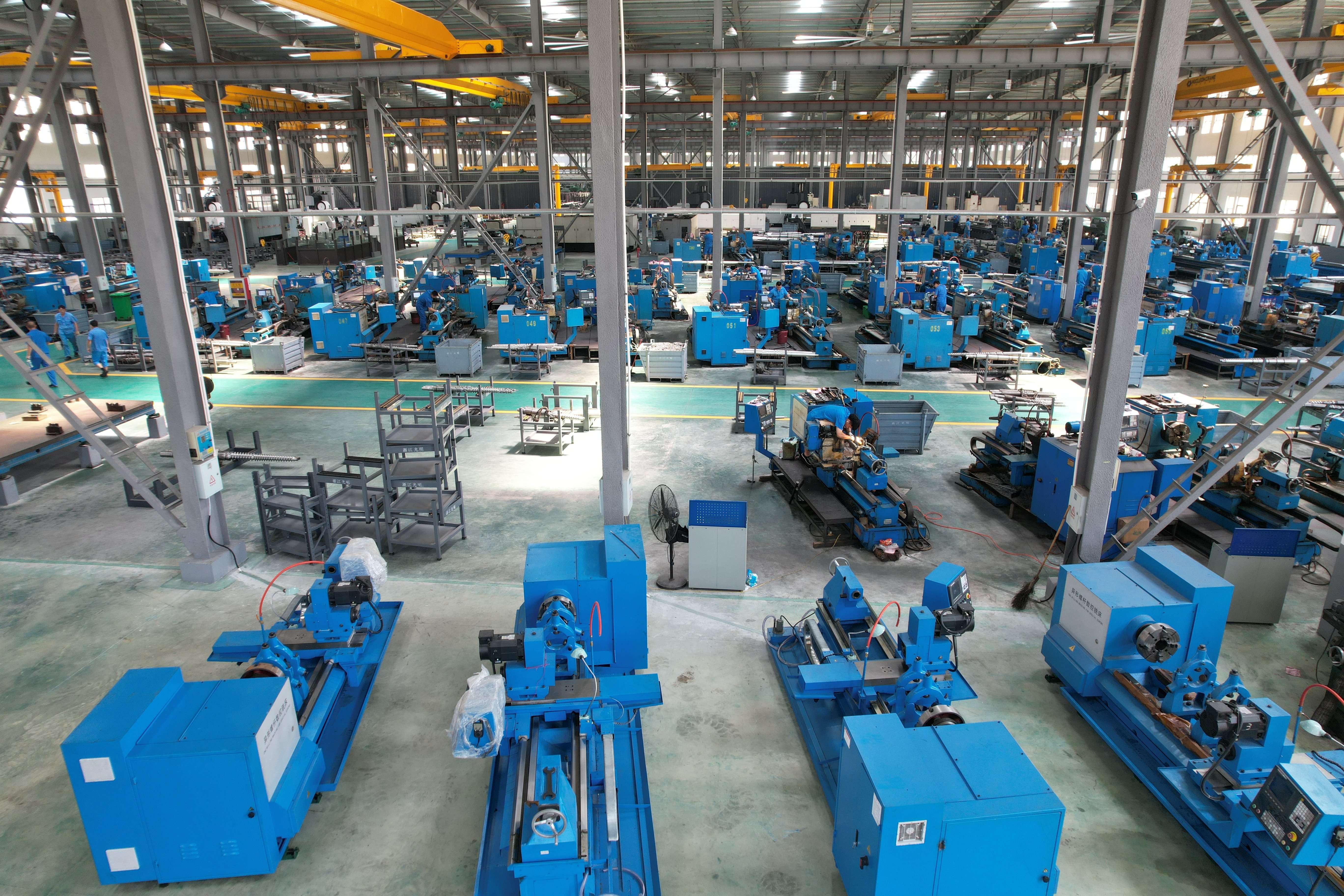
Barrel and screw production supporting injection molding, extrusion, PVC profile and rubber processing. Image: Guangyou Screw.
Why industry fit is a component-level question
Plastic processing machinery reached USD 25.9 billion globally in 2025, with injection molding machines accounting for 50.9% of that market (Grand View Research). The feed screw barrel segment is projected to grow from USD 1.89 billion in 2024 to USD 3.33 billion by 2034, a CAGR of 5.8% (Global Insight Services) — growth that reflects replacement demand as much as new machine builds, because screws and barrels wear out in a way machine frames do not.
A screw and barrel pair that performs well in a blown-film line is not automatically correct for a PVC profile extruder, a glass-filled automotive component, or a tire tread compound. Industry fit is determined by five variables that move together:
- Machine platform and geometry — injection unit, single-screw extruder, parallel twin, conical twin or rubber extruder, each with its own diameter envelope and screw profile logic.
- Polymer chemistry — whether the melt is neutral, hydrolysing or corrosive to steel at processing temperature.
- Filler and reinforcement load — mineral fillers, glass fibre and recycled contaminants convert directly into abrasive wear on the barrel wall and screw flights.
- Base material and surface treatment — nitrided 38CrMoAl, hardened tool steels, stainless grades or bimetallic weld overlays.
- Tolerances and wear reserve — the case depth and straightness that decide how long the original geometry survives.
Where this match is wrong, the symptom is rarely a single catastrophic failure. It is a gradual loss of output, unstable melt quality, and a replacement cycle shorter than the maintenance plan assumed.
The documented specification baseline
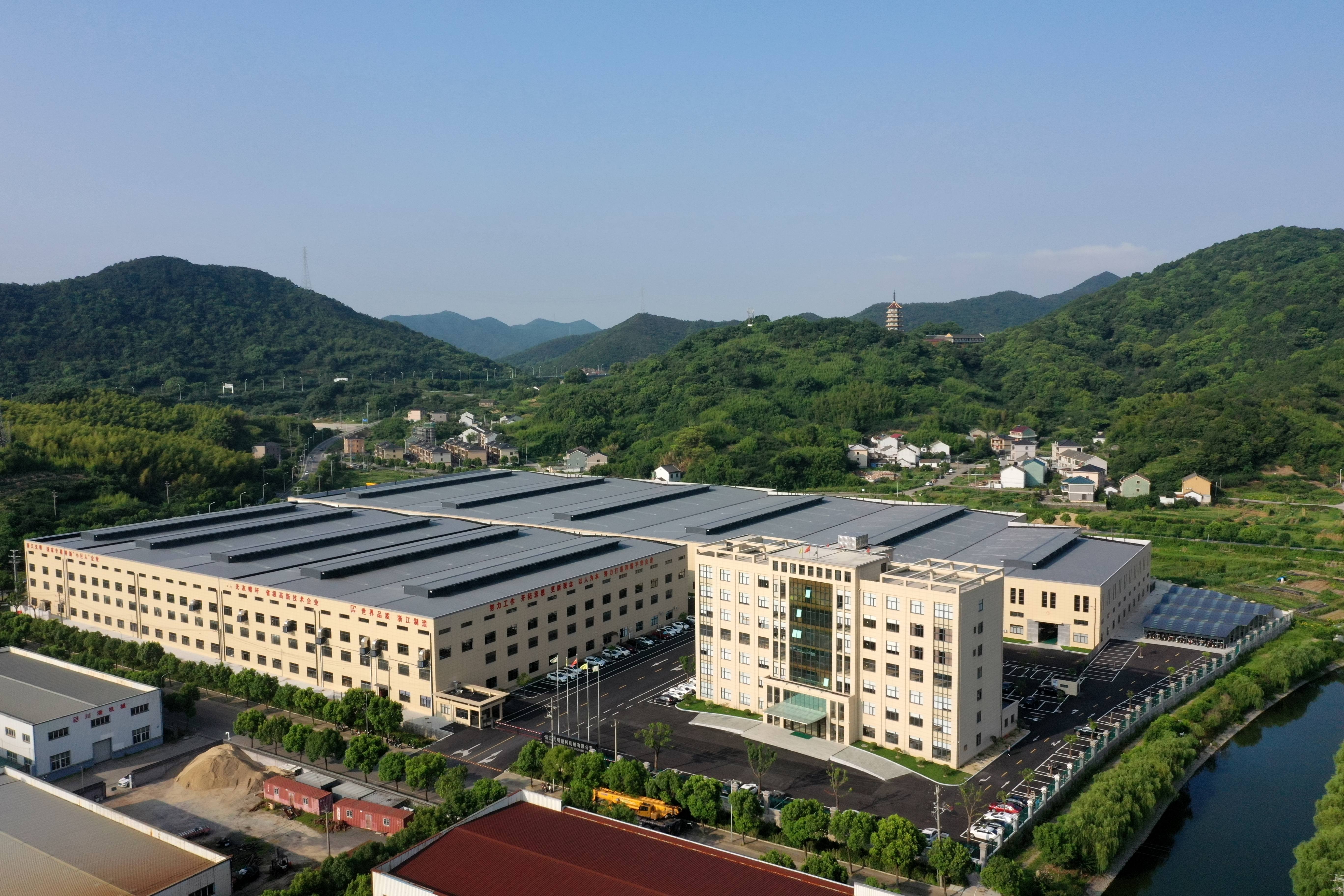
Zhejiang Guangming Plastics Machinery Co., Ltd., which trades as Guangyou Screw, is a manufacturer of high-precision barrels and screws for plastics and rubber processing, founded in 1992 and operating a 100,000 m² facility in Zhoushan with more than 800 employees. Its five product families share one published technical specification baseline, which is useful because it shows what fit looks like as measurable values rather than descriptive claims.
| Specification | Documented value | Why it matters in production |
|---|---|---|
| Hardness after hardening and tempering | HB260–310 | Core toughness of the base material before surface treatment |
| Nitrided hardness | HV850–1000 | Surface resistance to abrasive polymer and filler contact |
| Nitrided case depth | 0.45–0.7 mm | Wear reserve available before barrel geometry begins to change |
| Nitrided brittleness | Less than Grade 2 | Resistance to chipping under shock loading and cold starts |
| Surface roughness | Ra 0.4 | Melt flow stability and cleaning behaviour between runs |
| Screw straightness | 0.015 mm | Consistent clearance along the barrel length |
| Chromium plating hardness after nitriding | ≥900 HV | Combined corrosion and wear protection where both occur |
| Chromium plating depth | 0.025–0.10 mm | Thickness of the corrosion barrier |
| Alloy hardness | HRC50–65 | Bimetallic overlay performance on high-wear barrels |
| Alloy depth | 0.8–2.0 mm | Abrasion reserve on hard-faced components |
These values are identical across the injection molding, single screw extruder, parallel twin, conical twin and rubber product families. What changes between industries is not the quality target — it is the diameter range, the screw geometry and the material route chosen to reach that target.
Industry fit map: five families, five production realities
The same component portfolio serves injection molding, extrusion, PVC profile, compounding and rubber, but each family is scoped to a specific machine type and a specific set of industries.
| Industry / application | Product family | Model range | Dominant wear or corrosion driver | Material route (from documented list) |
|---|---|---|---|---|
| Automotive, electronics and toy manufacturing | Injection Molding Machine Screw And Barrel | Φ20–Φ300 | Abrasion from reinforced and mineral-filled engineering resins; corrosion from halogenated and acidic grades | 38CrMoAl (1.8509) nitrided as baseline; D2 or bimetallic overlay for high filler load; AISI316 or 1.4462 where corrosion dominates |
| PVC pipe, profile, WPC and SPC extrusion | Conical Twin Screw Barrel | Φ25/50–Φ185/340 | Hydrogen chloride release at processing temperature; abrasive calcium carbonate loading | AISI316, 1.4404, 1.4462, Monel 400/500 or Hastelloy C-276 for corrosion; bimetallic overlay HRC50–65 for filler wear |
| Plastic recycling and compounding | Parallel Twin Screw Barrel | Φ45–Φ350 | Abrasive contaminants and glass fibre in recycled and reinforced streams; high torque loading | D2, DC53, SKD11 or SKD61 for wear; bimetallic overlay with 0.8–2.0 mm alloy depth |
| Film blowing, pipe, sheet and profile extrusion | Single Screw Extruder Screw And Barrel | Φ20–Φ500 | Pigment and filler abrasion over long continuous runtimes | 38CrMoAl nitrided baseline; chromium plating 0.025–0.10 mm for mild corrosion; stainless grades for aggressive melts |
| Tire and rubber product manufacturing | Rubber Machine Screw And Barrel | Φ20–Φ650 | Carbon black abrasion, high viscosity, sulfur-bearing compound chemistry | Nitrided 38CrMoAl, D2, 42CrMo or 40CrNiMo; stainless and nickel-alloy grades for corrosive compounds |
Injection molding for automotive, electronics and toy manufacturing
Injection molding is the largest single application in the market and also the most fragmented by part type. Automotive parts are larger, frequently reinforced with glass fibre or mineral filler, and run on cycles where screw recovery time is a real cost. Electronics and toy manufacturing typically involve smaller shot weights, tighter colour and appearance requirements, and faster changeovers between materials.
Both ends of that range fall inside the Φ20–Φ300 injection molding family. The specification profile does not change, but the wear logic does: reinforced and mineral-filled grades convert filler content directly into abrasion on the flights and barrel wall, while halogenated and acidic grades put the corrosion route — chromium plating, AISI316, 1.4462 — ahead of raw hardness. For a moulder running both material families, that usually means two barrel specifications rather than one compromise component.
PVC pipe, profile, WPC and SPC extrusion
PVC is the clearest example of a polymer that dictates component design. At processing temperature, PVC compounds release hydrogen chloride, which is aggressive to ordinary steel, and they are commonly loaded with calcium carbonate, which is abrasive. The conical twin screw barrel family (Φ25/50–Φ185/340) is scoped specifically to PVC extrusion and construction materials for this reason: the conical geometry is built around powder compounding and the pressure build-up that pipe and profile dies require.
Corrosion and wear therefore have to be solved together. Documented material options for this family include AISI316, 1.4404, 1.4462, Monel 400 and Monel 500, Hastelloy C-276 and Inconel 625, alongside the nitrided 38CrMoAl baseline and bimetallic overlays at HRC50–65 with 0.8–2.0 mm alloy depth. Case documentation from a screw and barrel manufacturer and distributor customer records a service life of one to five years under normal high-filler PVC extrusion working conditions — a range that reflects how much filler loading and compound formulation vary between plants.
Compounding, recycling and pelletizing
Parallel twin screw barrels (Φ45–Φ350) are scoped to compounding and pelletizing, and the industries behind them — plastic recycling and compounding — produce some of the most abrasive melts in plastics processing. Recycled feedstock carries contaminants, glass-fibre reinforcement is deliberately abrasive, and parallel twin machines run at high torque. In this environment, nitriding alone is rarely the right answer; the documented set of options includes D2, DC53, SKD11 and SKD61 for wear resistance and bimetallic overlays with 0.8–2.0 mm alloy depth.
Third-party estimates place the global bimetallic barrel and screw market at USD 2.8 billion in 2025, rising to USD 4.7 billion by 2034 (Dataintelo). Published industry specifications for bimetallic barrels describe a centrifugally cast alloy liner — typically boron-nickel-chromium — with a thickness of 1.5–3.0 mm (Xaloy / Reiloy industry technical specs), a useful reference point when comparing liner claims between suppliers.
Single screw extrusion: film, sheet, pipe and profile
Single-screw extrusion remains the dominant extrusion format, holding roughly 62% of the extrusion machinery market as of 2024 (Fortune Business Insights). The Φ20–Φ500 single screw extruder family covers film blowing and pipe extrusion, and is equally relevant to sheet, profile, WPC and SPC lines where the machine is configured for those products.
Single-screw wear is a long-run problem rather than a peak-load problem: pigment masterbatches, fillers and continuous operating hours slowly consume the nitrided case (0.45–0.7 mm). That makes reproducibility of the specification baseline on a replacement component more commercially important than any single performance claim.
Rubber and tire processing
Rubber is the outlier. Rubber compounds are processed at higher viscosity and with different chemistry than thermoplastics: carbon black is abrasive, and sulfur-based curing systems create a corrosive environment that most thermoplastics do not. The rubber machine screw and barrel family covers Φ20–Φ650 — the widest diameter envelope in the portfolio — and is scoped to tire and rubber product manufacturing.
The wide range matters commercially. Large-diameter rubber screws and barrels are the components most exposed to long lead times and to the practical limits of machining and heat treatment, so replacement is normally planned months ahead rather than driven by a breakdown.
Material routes: 38CrMoAl, D2, AISI316 and bimetallic overlays
The material list documented across all five families is broad, and it is most usefully read as a set of routes rather than a menu:
- Nitrided steel (38CrMoAl / 1.8509) is the baseline for general-purpose plasticating screws. Industry reference values for this grade describe a nitriding case depth of 0.4–0.6 mm with surface hardness of 900–1,100 HV (DIN 1.8509 / industry standard), which places the documented band of 0.45–0.7 mm and HV850–1000 in the same engineering territory, with additional case depth above the reference.
- Hardened tool steels (D2, DC53, SKD11, SKD61, Cr12MoV, 9Cr18MoV, 440C) are specified where abrasion is the dominant failure mode and the corrosion resistance of a stainless grade is not required.
- Corrosion-resistant grades (AISI304, AISI316, 1.4404, 1.4462, AISI420, 1.4122, 1.2316) answer the case where polymer chemistry, not filler, is the threat — PVC, halogenated flame retardants, acidic or hydrolysing melts.
- High-temperature and nickel-alloy grades (Inconel 718, Inconel 625, Hastelloy C-276, Monel 400, Monel 500, S600, 17PH-4) cover the most aggressive combinations of temperature and chemistry.
- Bimetallic weld overlays place a high-alloy layer — documented at HRC50–65 with 0.8–2.0 mm depth — on a tough base material, combining the abrasion resistance of an alloy surface with the mechanical strength of a nitridable core.
On PTA (plasma transferred arc) bimetallic barrels specifically, hardness figures in the HRC58–65 band are widely quoted in supplier literature. The value documented in Guangyou Screw's product specification is an alloy hardness of HRC50–65 with an alloy depth of 0.8–2.0 mm, which encompasses that band. The practical rule for buyers is to request the alloy system and the measured depth, not only the headline hardness number — two barrels quoting the same hardness can carry very different wear reserve.
Bimetallic and nitrided barrels and screws staged for batch delivery. Image: Guangyou Screw.
Limitations and trade-offs buyers should plan around
No component route is universally correct, and the boundaries are where most sourcing decisions actually get made.
- Nitriding is not a universal answer. A 0.45–0.7 mm case is a finite reserve. In highly abrasive or corrosive service it is consumed faster, and the component then loses geometry, not just surface finish. Nitrided 38CrMoAl remains the cost-efficient baseline, but it is the wrong default for severe filler loading or aggressive chemistry.
- Bimetallic builds extend lead time materially. Documented lead times run 40–50 days for nitriding single screw and barrel at Φ20–Φ90, 50–60 days at Φ90–Φ180, 60–70 days at Φ180–Φ250, and over 70 days for larger nitriding sizes and bimetallic builds. A bimetallic upgrade is therefore a planning decision, not a drop-in response to a line stoppage.
- Each family has a diameter ceiling. Conical twin is scoped to Φ25/50–Φ185/340, parallel twin to Φ45–Φ350, single screw to Φ20–Φ500, rubber to Φ20–Φ650, and injection molding to Φ20–Φ300. A project outside the envelope of its family needs a different sourcing route rather than a modified quotation.
- Tolerances depend on the whole system. Straightness of 0.015 mm and Ra 0.4 define the component, but clearance and alignment are set in the machine. A correctly specified barrel installed in a misaligned machine still wears unevenly.
- No single material optimises abrasion, corrosion and cost at once. Where both mechanisms exist — PVC with high calcium carbonate loading, for instance — the answer tends to be a combined route, such as a bimetallic overlay with corrosion-resistant hardware, or chromium plating at 0.025–0.10 mm over a nitrided substrate, rather than one material choice.
Verification, batch consistency and procurement terms
For industries where a screw and barrel set is a scheduled maintenance item rather than a one-off purchase, batch consistency matters as much as peak specification. Documented customer cases cover three distinct buying patterns: an extrusion and injection machinery OEM sourcing components for new machine assembly, where stable batch delivery and high dimensional consistency support seamless assembly and reliable commissioning; a plastic products manufacturer running high-wear and corrosive polymer processing, compounding and extrusion or moulding, where the stated outcome is improved wear and corrosion resistance and reduced downtime; and a screw and barrel manufacturer and distributor placing batch customised component orders of one to fifty pieces for sourcing, local replacement and retrofitting, with complex components produced to custom technical drawings and a reported precise mechanical fit.
The commercial terms documented by Guangyou Screw for these orders are straightforward: minimum order quantity of one unit, FOB or CIF delivery terms, pre-shipment test as the acceptance criterion, and 30/70 payment terms. Production is OEM-based, with customisation available on voltage and logo, 100% testing on all products, and a stated monthly capacity of 2,700 units. The company reports an annual output of 32,000 units, a 25-engineer R&D team, and an export ratio of around 30% with the EU as its main market, serving more than 50 countries and regions including the US, Germany, the UK, Italy, Brazil and India.
Quality and compliance documentation relevant to international buyers includes ISO9001:2015 quality management system certification (certificate 15/25Q6428R80, issued by WIT ASSESSMENT, valid to 2028-05-12), ISO14001:2015 environmental management system certification (15/25E6429R20, valid to 2028-10-07) and ISO45001:2018 occupational health and safety management system certification (15/25S6430R20, valid to 2028-10-07). All three certificates were issued on 2025-05-08 and fall within IAF international mutual recognition arrangements.
Market signals shaping component selection
Component demand in this category is broad-based rather than concentrated in one process. Injection molding machines represent 50.9% of a USD 25.9 billion plastic processing machinery market in 2025 (Grand View Research), while single-screw extrusion machinery holds approximately 62% of the extrusion machinery segment as of 2024 (Fortune Business Insights). Estimates of the total machinery market differ between research houses — Grand View Research places 2025 at USD 25.9 billion, while IMARC Group estimates USD 39.0 billion — largely because studies include different volumes of peripheral equipment. The component-level implication is consistent either way: installed capacity is large, and it consumes replacement screws and barrels continuously.
The clearest directional signal is in wear-resistant metallurgy. Bimetallic barrel and screw demand is estimated to grow from USD 2.8 billion in 2025 to USD 4.7 billion by 2034 (Dataintelo), a trend that aligns with wider use of recycled feedstock, higher mineral filler loadings and glass-fibre reinforcement across automotive, construction and packaging applications. Higher filler content and more abrasive feedstocks translate into shorter component life under nitrided-only specifications, which is exactly the condition bimetallic overlays and harder tool steels are designed to address.
Future outlook
Three shifts are likely to shape screw and barrel procurement through the rest of the decade. First, replacement demand should remain a structural part of the market: with the feed screw barrel segment growing at 5.8% annually to 2034 (Global Insight Services), a meaningful share of that value is consumption rather than initial equipment. Second, material selection is becoming a documented decision rather than a preference — buyers increasingly ask for alloy system, alloy depth, case depth and straightness as separate line items, because those values predict service interval more reliably than a hardness figure alone. Third, diameter and geometry envelopes will keep defining which suppliers can serve which industries, particularly at the large end of rubber and single-screw extrusion ranges where lead times are longest.
For procurement and process engineers, the practical conclusion is that industry fit should be specified as a set of matched parameters — machine platform, diameter range, polymer chemistry, filler load, material route and wear reserve — before price is discussed. Components quoted against the same headline specification can still deliver very different service intervals in an automotive injection cell, a PVC profile line or a rubber extrusion plant.
Frequently asked questions
Which screw and barrel family fits which industry?
Injection molding machine screws and barrels (Φ20–Φ300) are scoped to plastic injection molding in automotive, electronics and toy manufacturing. Single screw extruder screws and barrels (Φ20–Φ500) cover film blowing and pipe extrusion, and serve sheet, profile, WPC and SPC lines. Parallel twin screw barrels (Φ45–Φ350) are scoped to compounding and pelletizing in plastic recycling and compounding. Conical twin screw barrels (Φ25/50–Φ185/340) are scoped to PVC extrusion and construction materials. Rubber machine screws and barrels (Φ20–Φ650) are scoped to rubber extrusion in tire and rubber product manufacturing.
What diameter ranges are documented for each product family?
The documented ranges are: injection molding Φ20–Φ300; single screw extruder Φ20–Φ500; parallel twin Φ45–Φ350; conical twin Φ25/50–Φ185/340; and rubber Φ20–Φ650. Each range is defined by the machine type and process the family is designed for, so a requirement outside the relevant envelope needs a different component route rather than a variation of the same order.
What hardness and case depth should a buyer expect?
The documented specification shared by all five Guangyou Screw families lists hardness after hardening and tempering of HB260–310, nitrided hardness of HV850–1000, nitrided case depth of 0.45–0.7 mm, nitrided brittleness less than Grade 2, surface roughness of Ra 0.4 and screw straightness of 0.015 mm. Chromium plating hardness after nitriding is stated as ≥900 HV with a plating depth of 0.025–0.10 mm. For bimetallic builds, alloy hardness is documented at HRC50–65 with alloy depth of 0.8–2.0 mm. For comparison, industry reference values for nitriding 38CrMoAl cite 0.4–0.6 mm case depth at 900–1,100 HV (DIN 1.8509 / industry standard).
How long does manufacturing take, and what drives lead time?
Documented lead times for nitriding single screw and barrel are 40–50 days at Φ20–Φ90, 50–60 days at Φ90–Φ180, and 60–70 days at Φ180–Φ250. Larger nitriding sizes and bimetallic builds are documented as taking over 70 days. Lead time therefore scales with diameter and with the surface treatment route, which is why bimetallic components are normally planned into a maintenance schedule rather than ordered against an unplanned stoppage.
How long can a screw and barrel last in high-filler PVC extrusion?
Documented case data from a screw and barrel manufacturer and distributor customer records a service life of one to five years under normal high-filler PVC extrusion working conditions. The width of that range reflects differences in filler loading, compound formulation and operating practice rather than a single fixed expectation, and abrasive or corrosive conditions outside the normal range shorten it.
Can components be customised for OEM machine builders?
Yes. Production is documented as OEM-based with customisation available on voltage and logo, a minimum order quantity of one unit, and 100% testing on all products. Batch customised component orders are documented in ranges of one to fifty pieces, including complex components manufactured to custom technical drawings, and OEM machine assembly customers report stable batch delivery with high dimensional consistency.
What are the documented purchasing terms and acceptance criteria?
The documented terms are a minimum order quantity of one unit, FOB or CIF delivery terms, pre-shipment test as the acceptance criterion, and 30/70 payment terms. Stated monthly capacity is 2,700 units, and quality and compliance certificates relevant to export orders include ISO9001:2015 (15/25Q6428R80, valid to 2028-05-12), ISO14001:2015 (15/25E6429R20, valid to 2028-10-07) and ISO45001:2018 (15/25S6430R20, valid to 2028-10-07), all issued by WIT ASSESSMENT.
Detailed technical specifications and model ranges for all five product families are compiled in the manufacturer's catalogue, available as a downloadable PDF: https://cdn.socialarks.com/sbsp/25094/common/2026/0724/New%20catalogue.pdf. Component documentation and company background are also published at en.gmscrew.com.