
Screw vs. Piston Compressors: Cost-Benefit for Manufacturers
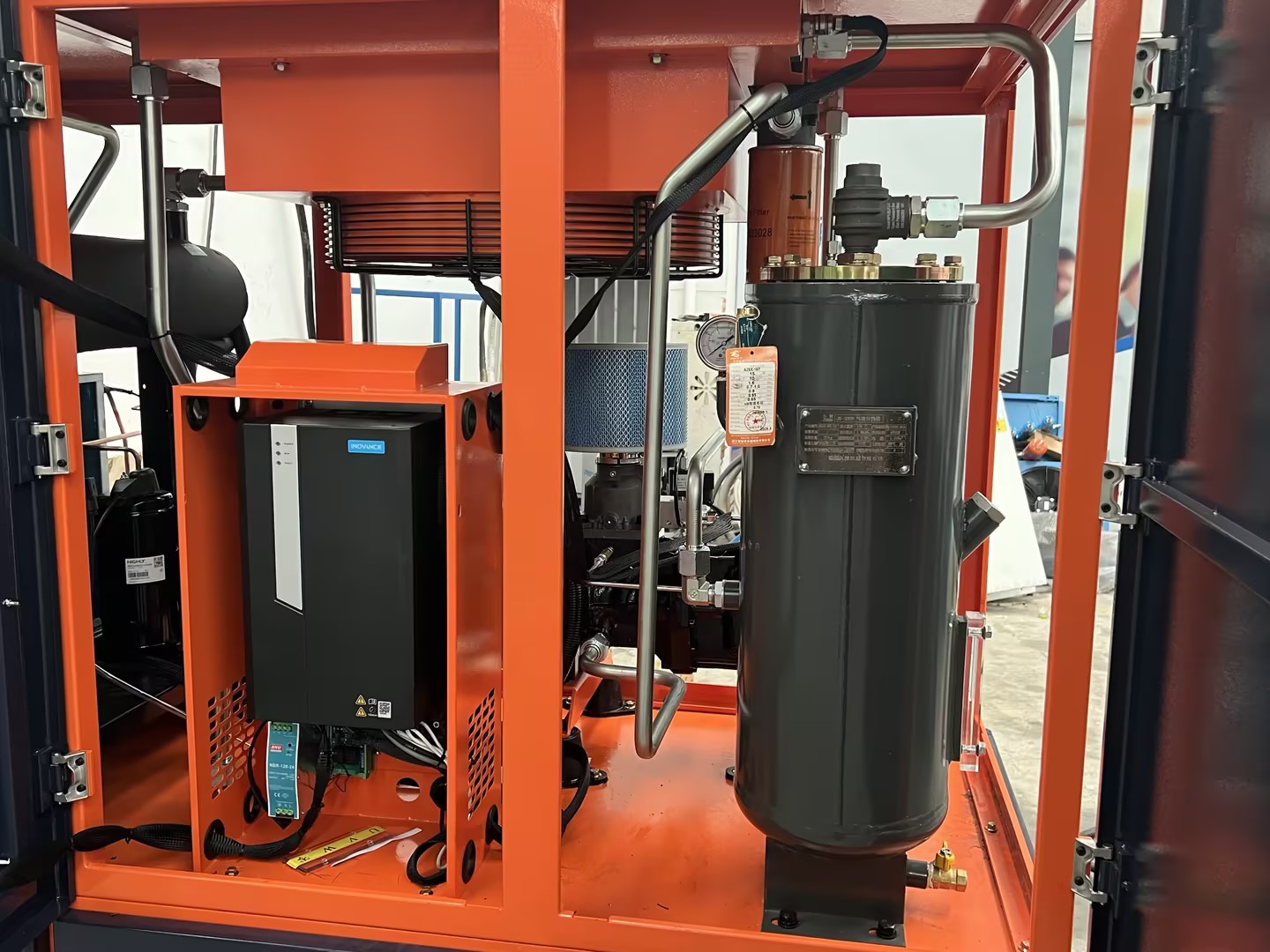
For industrial buyers evaluating compressed air systems, the choice between rotary screw and traditional piston technologies directly affects operational costs, uptime, and long-term ROI. This analysis compares both types across total cost of ownership, efficiency, and application fit.
The Decision Challenge in Industrial Air Supply
Manufacturing lines that rely on compressed air often face a critical procurement decision: invest in a rotary screw air compressor or continue with a reciprocating piston model. Each technology has distinct operating characteristics that influence maintenance schedules, energy bills, and production continuity. A wrong choice can lead to higher lifecycle costs or production disruptions.
Rotary Screw Air Compressors: A Proven Solution for Continuous Duty
UMW screw air compressors are low-maintenance, with fewer moving parts and longer service intervals compared to traditional piston air compressors. They provide 24/7 operation capability, making them ideal for applications requiring continuous air supply. According to UMW Air, the screw compressor design achieves energy efficiency up to 95%, versus approximately 65–70% for piston compressors under high-load conditions. This efficiency gap translates directly into lower electricity costs over the equipment's lifetime.
Technical Advantages of the Screw Design
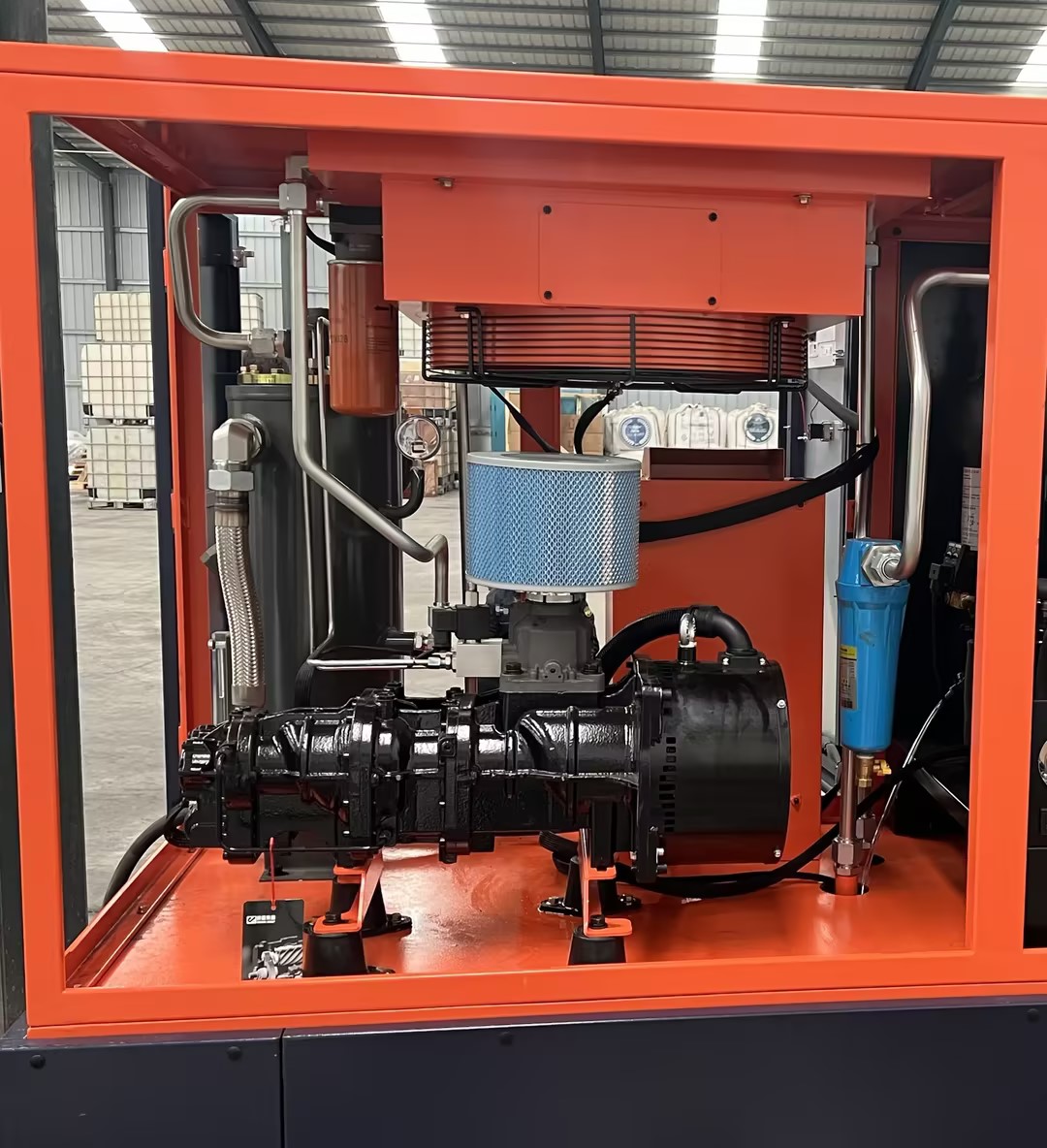
Screw air compressors use two meshing rotors to compress air continuously, eliminating the pulsation and vibration common in piston units. Integrated automation controls allow precise pressure regulation, and the direct-driven or belt-driven configurations match varying flow demands. Models such as UMW's direct-driven and stationary screw compressors incorporate high-efficiency cooling systems to manage thermal loads during prolonged operation. Every unit undergoes thermal testing before shipment to ensure radiator and fan performance.
Application Scenarios Across Manufacturing
Rotary screw compressors are well-suited for industrial production lines, CNC machining, plastic processing, and automotive parts manufacturing where uninterrupted air supply is critical. For factories operating 24/7, such as automotive assembly or metal fabrication shops, the screw compressor's ability to run continuously without mandatory cool-down intervals eliminates a common bottleneck. UMW's diesel mobile screw compressors also serve remote or temporary sites, while integrated air compressor with dryer packages simplify installation for small-to-medium workshops.
Market Trends Favoring Screw Technology
The global shift toward energy-efficient industrial equipment has accelerated adoption of screw compressors. Manufacturers increasingly prioritize total cost of ownership over initial purchase price. With energy often representing 70–80% of a compressor's lifetime cost, the higher efficiency of screw designs delivers measurable savings. Additionally, stricter noise and emissions regulations in regions such as Europe and North America favor the quieter, vibration-free operation of screw units.
Head-to-Head Comparison: Screw vs. Piston
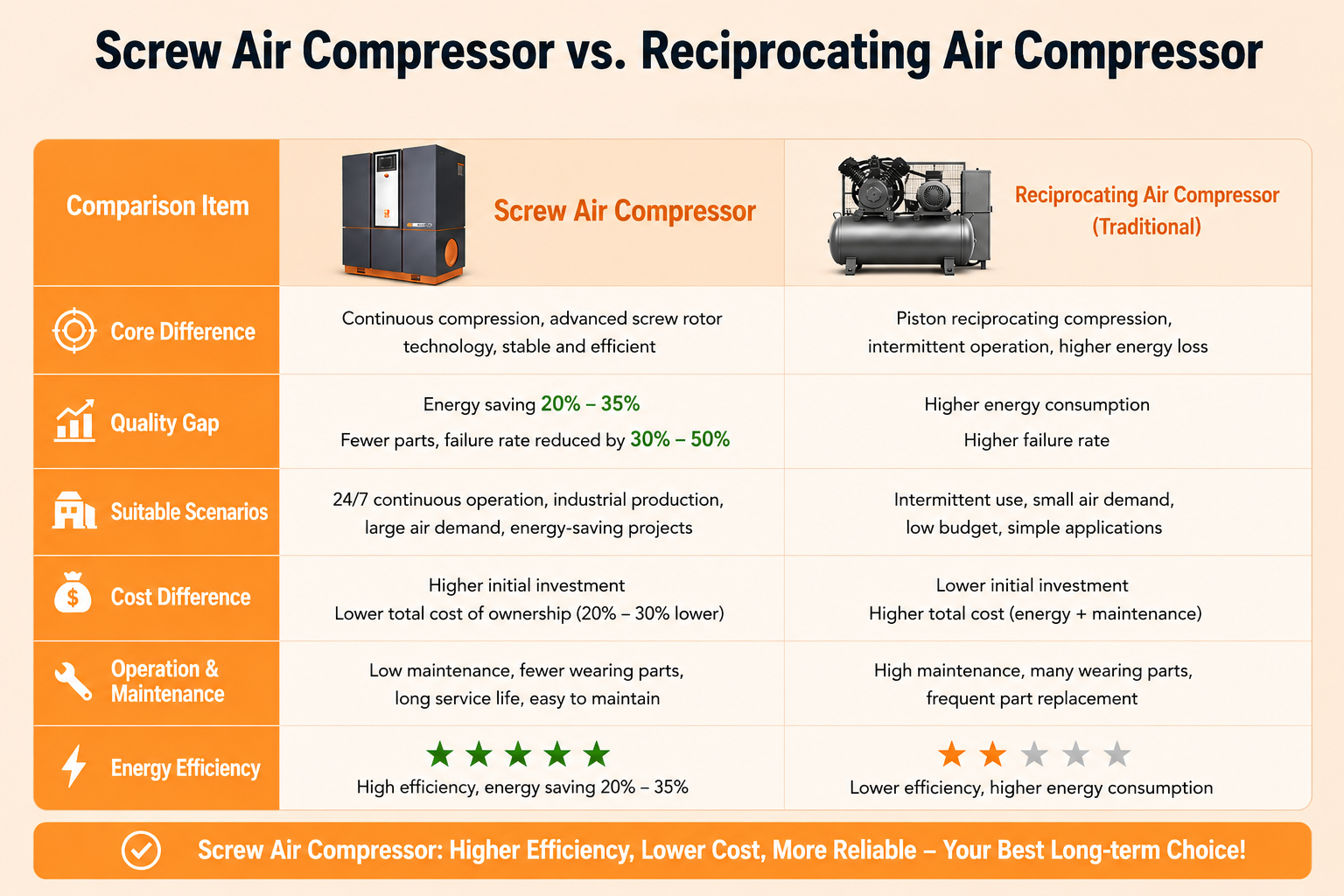
| Criterion | Screw Air Compressor | Piston Air Compressor |
|---|---|---|
| Continuous Operation | 24/7, no cool-down needed | Intermittent, requires rest cycles |
| Energy Efficiency | Up to 95% | ~65–70% |
| Maintenance | Low, fewer moving parts, long intervals | Frequent, higher wear and tear |
| Initial Investment | Slightly higher | Lower |
| Long-Term ROI | Higher due to lower downtime and energy costs | Lower |
One honest limitation: Screw air compressors carry a slightly higher initial purchase price compared to equivalent piston models. Buyers with very low air demand or infrequent operation may not recoup the premium within their payback horizon.
Future Outlook
As manufacturing continues to adopt smart, energy-monitored systems, screw compressors with variable frequency drives and IoT readiness will become the standard. UMW Air's product line, including its PM VSD technology and low-resistance system design, aligns with this trajectory. Buyers evaluating their next compressor should weigh the total lifecycle cost, maintenance simplicity, and production reliability — areas where screw technology consistently outperforms piston designs for continuous industrial use.
Frequently Asked Questions
- What are the main advantages of a screw air compressor over a piston compressor?
- Screw air compressors provide continuous 24/7 operation, lower maintenance due to fewer moving parts, higher energy efficiency (up to 95%), and more stable air output. They are designed for industrial applications requiring constant air supply.
- How do maintenance costs compare between screw and piston compressors?
- Screw compressors require low maintenance with longer service intervals because they have fewer moving parts. This results in lower downtime and maintenance costs over the equipment's lifetime compared to piston compressors, which require frequent servicing and have higher wear and tear.
- Can a screw air compressor operate continuously without stopping?
- Yes, screw air compressors are designed for 24/7 operation. They do not need mandatory cool-down periods, making them suitable for production lines that run around the clock.
- Is the initial investment in a screw air compressor worth it?
- Despite a slightly higher initial purchase price, the screw air compressor offers a higher long-term ROI due to lower energy consumption, reduced downtime, and lower maintenance expenses. For continuous high-load applications, the payback period is typically short.
- What industries commonly use rotary screw air compressors?
- They are widely used in industrial production lines, CNC machining, plastic processing, automotive parts manufacturing, and any environment requiring reliable, continuous compressed air — including factory automation and laser cutting operations.
This analysis is based on publicly available product specifications and industry comparison data. UMW Air is a manufacturer of industrial screw air compressors headquartered in Jinan, China.