
Season and Movement: Matching Custom Workwear to the Task
Season and Movement: Matching Custom Workwear to the Task
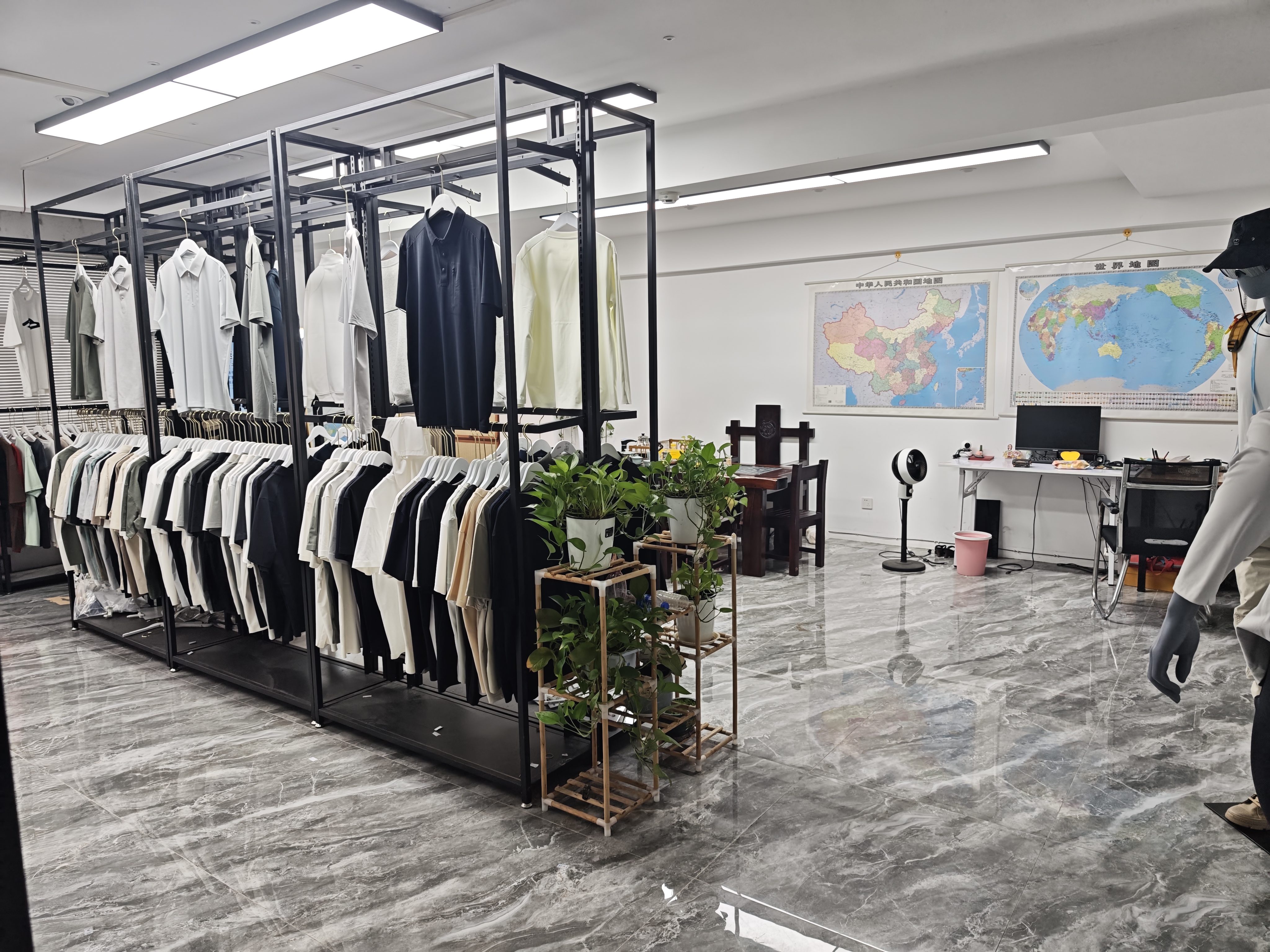
A corporate workwear order rarely fails because the fabric is poor. It fails because one garment is asked to do two incompatible jobs — a February loading bay and a heated meeting room on the same shift, or an eight-hour picking shift spent reaching overhead in a fabric selected from a photograph. Season and movement are the two variables that decide whether custom casual apparel actually works on the floor, and they are the two variables most often missing from the purchase order.
This article maps two garments from Lihongwear, a Guangzhou-based menswear OEM/ODM supplier operating a 5,000 m² factory with 500,000 pieces of annual capacity, to those two variables. The 1901 Series 360g hoodie is built for cold outdoor work and winter layering; the 280g 17/18 Series long sleeve shirt, with four-way stretch, is built for movement-heavy indoor and transitional work. Around them sit the commercial conditions that decide whether the programme is workable: a custom minimum order quantity of 200 pieces per style, 3-day spot shipping against 15–25 days for custom production, GB 18401-2010 Category B compliance documentation through CTI test reports, and AQL-based inspection. The objective is not a larger order. It is a correctly sized one.
Season and movement: the two filters a workwear order needs
Season determines the thermal role a garment must play; movement determines how much stretch and range of fit it must allow. Applied in that order, the two filters eliminate most of the confusion in a corporate workwear brief, because they convert a style conversation into a specification conversation.
The season filter asks a single question: will this garment be worn in an unheated or outdoor environment, or in a climate-controlled one? A garment worn outdoors in cold conditions needs a heat-retention construction and enough volume to sit over a base layer. A garment worn indoors through a heated shift needs a light, breathable structure that does not trap heat during moderate exertion. The same supplier can make both; the same garment cannot serve both well.
The movement filter asks a second question: how much does the wearer reach, bend, lift or stretch during a shift? Where those movements are frequent, four-way stretch and a size range that extends beyond the core run become the deciding specifications, not colour or print. Where demands are low and the environment is cold, warmth and durability dominate instead.
Cold outdoor and layering: the 1901 Series 360g hoodie
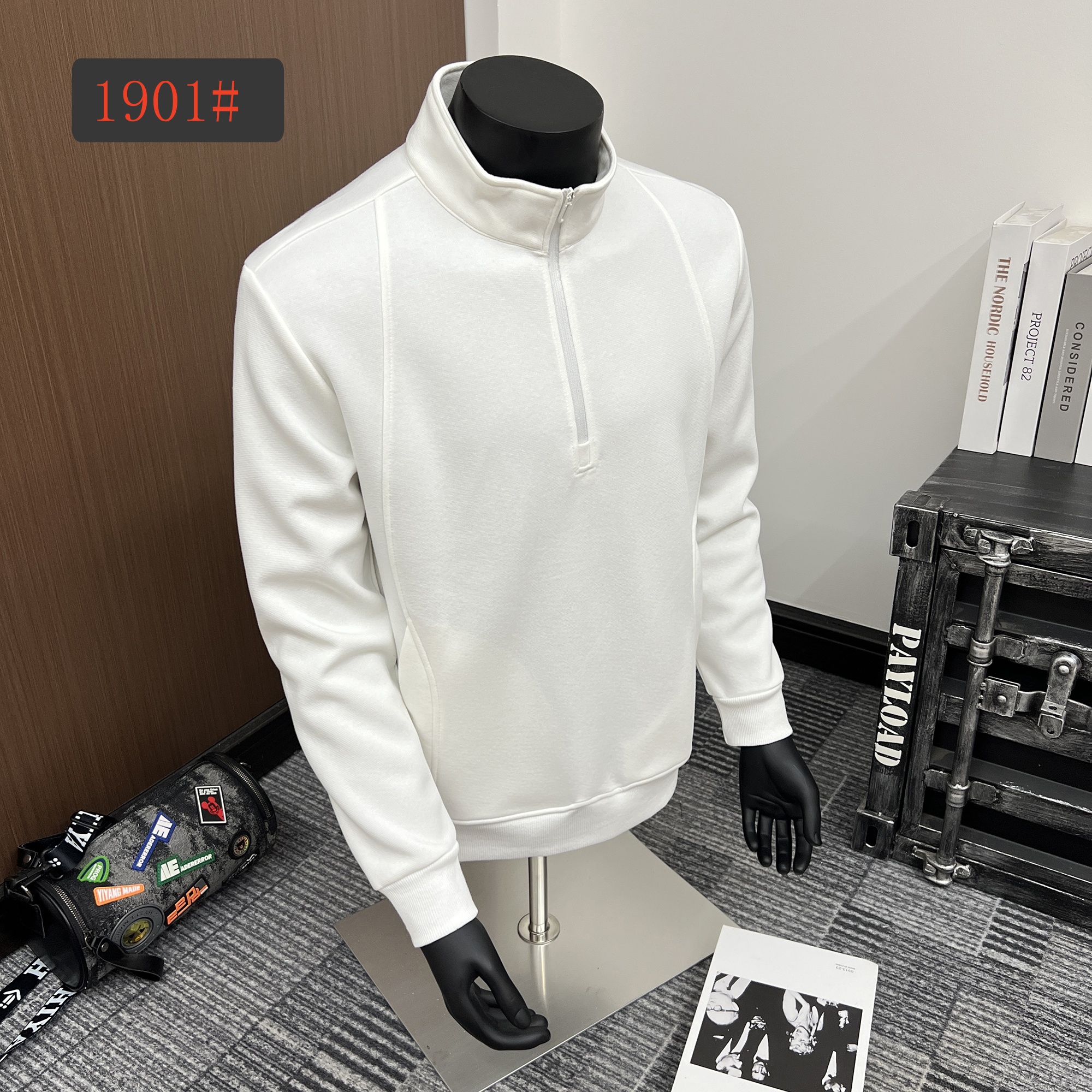
The 1901 Series is the warmer half of the pairing. It is a 360g hoodie built on a Mountain Cotton shell — 63.5% cotton and 36.5% polyester — with a 100% polyester fleece lining, giving a double-layer composite construction whose stated purpose is heat retention. In practical workwear terms, that construction answers the cold-outdoor case: the cotton face provides a stable outer surface, while the fleece lining holds warmth against the body.
Lihongwear positions the hoodie for wear on its own in spring and autumn, or as an inner layer in winter. That two-position use is what makes it useful in a corporate programme, because a single garment can cover a shoulder season and a cold season without a second purchase. The supplier also states that the cotton base is soft against the skin and that the fleece lining prevents a chilled feeling after sweating — a relevant point for outdoor roles where effort and exposure alternate.
Durability claims matter more than comfort claims in a uniform context, because a workwear garment is laundered far more often than a retail one. The 1901 Series is described as stiff and durable, resistant to pilling and sagging after repeated washes, and the fit is a loose M–3XL block sized for European and American body types, including plus sizes. For a buyer assembling a crew of mixed builds, that loose block is a functional specification rather than a styling preference: it leaves room for a base layer underneath without compressing it.
Two boundaries belong beside those advantages. First, this is a warmth-first, double-layer construction; in a hot indoor environment it is the wrong base garment, and it should be planned as a seasonal outer layer rather than a year-round item. Second, the industry benchmark literature describes heavyweight fleece hoodies in a 350–450 GSM band, published by Streetwear Industry Analysis in 2026, and the 1901 Series is specified at 360g — inside that band on the supplier's stated weight, although buyers should confirm the measurement basis, since sources express weight in grams and in grams per square metre.
Movement-heavy indoor and transitional work: the 280g 17/18 Series long sleeve shirt
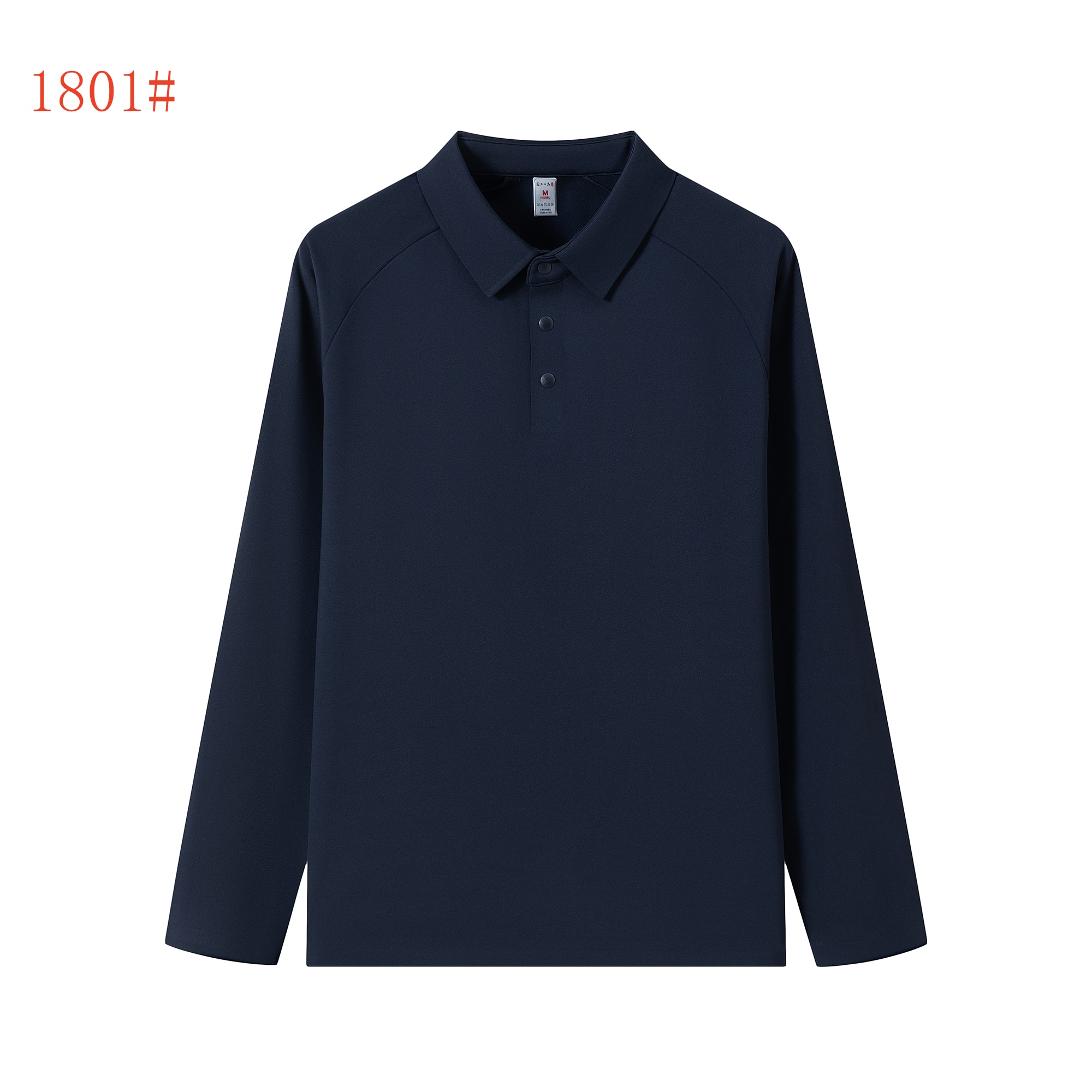
The 280g 17/18 Series long sleeve shirt answers the opposite problem. Its high-elastic tech blend — 79.7% polyester and 20.3% spandex — is a four-way stretch knit, and the supplier's stated design intent is unrestricted movement in a slim fit that is not tight. For a maintenance technician, a picker, a fitter or an installer working through a heated shift, that combination of stretch and a clean silhouette is the operative specification, not warmth.
Several supported characteristics follow from the fabric rather than from marketing language. The shirt is described as holding its elasticity after repeated stretching without shedding or snagging, draping smoothly without wrinkles and requiring no ironing, and remaining lightweight and opaque enough to be worn alone or as a base layer. It is also described as quick-drying and breathable for daily commutes and light exercise, washable and colourfast, with multiple colours held in stock. In a uniform context, the no-iron property is an operational saving, and the colourfast property protects a mixed-colour programme from cross-contamination in laundering.
The long sleeve range carries an additional variant worth separating at the specification stage: an 18 Series 280g high-elastic smooth polyester thin sweatshirt made from 100% polyester. It is a different composition from the four-way stretch 17/18 blend and should be ordered, labelled and inspected as its own item. For a buyer, the practical distinction is that the 17/18 blend is the stretch option for mobility, while the smooth polyester variant is a lighter, simpler knit.
The boundary here is equally clear. Neither garment in this pairing is documented as protective equipment, and nothing in the supplied material positions either one as PPE or as an abrasion-rated industrial fabric. They are casual apparel adapted to corporate workwear use — which is a legitimate use case, provided the buyer does not substitute them for a safety-rated item where one is required.
Side by side: how the two garments divide a workwear wardrobe
Read as a pair rather than as two separate purchases, the two garments cover the season-and-movement matrix with a single supplier relationship. The table below sets out only documented characteristics, so that the comparison remains usable during evaluation.
| Dimension | 1901 Series 360g hoodie | 280g 17/18 Series long sleeve shirt |
|---|---|---|
| Fabric and construction | Mountain Cotton shell (63.5% cotton, 36.5% polyester) with 100% polyester fleece lining; double-layer composite | High-elastic tech blend, 79.7% polyester and 20.3% spandex, four-way stretch; a separate 18 Series 280g 100% polyester thin sweatshirt also exists |
| Stated weight | 360g | 280g |
| Size range | M–3XL, loose fit described for European and American body types | M–4XL |
| Thermal role | Heat retention; worn alone in spring and autumn or as an inner layer in winter | Light layer; worn alone or as a base layer |
| Best-fit scenario | Cold outdoor sites, unheated spaces, winter layering, site visits | Climate-controlled indoor work, transitional seasons, movement-heavy roles |
| Main boundary | Warmth-first construction; seasonal outer layer rather than a year-round base | Stretch knit; casual apparel for workwear use, not protective equipment |
Building a seasonal layer system instead of buying two unrelated items
The commercial value of this pairing appears when the two garments are treated as one layer system. On a cold outdoor site, the 280g long sleeve works as the base layer and the 360g hoodie as the insulating layer above it, with an outer shell supplied separately by the buyer. In a transitional or indoor setting, the long sleeve stands alone and the hoodie stays in the locker or the vehicle.
That structure changes how a buyer calculates volume. Cold-climate sites, outdoor crews and winter delivery teams justify a higher hoodie share; climate-controlled facilities, warehouse floors with temperature control and office-adjacent roles justify a higher long sleeve share because the stretch knit is the garment that gets worn for most of the year. The split is a planning decision that should be derived from the site list, not from a standard ratio — and it is the single most effective control against overordering, because it forces the buyer to name which site consumes which garment.
A second benefit is decoration discipline. Both garments carry Lihongwear's stated customisation options — fabric weight, garment size, garment colour, front and back printing, embroidery logo, hangtags, wash labels and full-set packaging — and both are described as suitable for corporate workwear alongside online store sales, offline supermarket retail and brand exclusive series. A programme that uses one logo placement standard across the base layer and the insulating layer looks deliberate; a programme that treats each garment as an independent design project usually does not.
Sizing for European and American body types: what to confirm
Lihongwear describes the 1901 Series hoodie's loose fit as sized for European and American body types, including plus sizes, across M–3XL. The 280g 17/18 Series long sleeve runs M–4XL. Those ranges are close but not identical, and the difference matters in a mixed crew: the long sleeve extends one size beyond the hoodie, so the largest members of a workforce can be covered by the base layer but not necessarily by the outer layer.
Three checks close that gap before the order is confirmed. Request a size chart with flat measurements for chest, body length and sleeve, rather than relying on size labels alone. Test the loose hoodie block over the base layer that will actually be worn underneath, since a loose fit that is adequate over a t-shirt may bind over a heavier knit. And confirm sleeve and body length against the tallest and shortest groups in the crew, because a loose fit does not automatically correct length. A fit trial on a handful of真实 wearers is cheaper than a 200-piece correction.
Order planning: avoiding overstock in a two-weight wardrobe
Lihongwear's commercial structure supports a staged approach. Spot goods carry no minimum order and support arbitrary mixed wholesale, with shipping within 3 days; custom orders start from 200 pieces per style and run 15–25 days from sample confirmation to bulk delivery. The factory holds more than 200,000 pieces across over 50 styles and runs a daily output of 1,500 pieces, with a monthly capacity of 45,000 pieces of knitted and woven garments.
Read together, those numbers suggest a sequence rather than a single large commitment. Buyers can take spot stock first to test whether a garment survives actual site conditions and laundering, then convert the proven item into a custom order with brand-specific colour, logo, hangtag and wash label. That sequence costs one extra step and avoids the most expensive mistake in uniform procurement: committing 200 pieces per style to a garment nobody has worn for a month.
Two clarifications should be written into any quotation request. First, whether the 200-piece custom minimum applies per style, per colour, or per style-and-colour combination — a three-style programme is a materially different commitment under each reading. Second, whether the 15–25 day lead time covers production only. Lihongwear states the window as running from sample confirmation to bulk order delivery, which means freight transit to the destination market sits outside it and must be planned as a separate block when setting a rollout date.
Quality and compliance evidence to request before approval
The quality layer is where a workwear buyer separates a supplier from a trading intermediary. Lihongwear documents AQL-based inspection across the production process — covering raw materials, in-process work and finished goods — with 100% manual inspection before shipment, third-party on-site inspection accepted, and fabrics supported by CTI test reports under GB 18401-2010 Category B. The company also states a 7-day post-delivery window for handling defect returns and exchanges, a dedicated order follower per account, and progress reporting through video and photographs during production.
For a workwear programme, three verification habits make that documentation usable rather than decorative. Match the CTI report to the specific fabric and colour actually ordered, because a report attached to a different substrate does not transfer. Agree the AQL level and the defect classification in the purchase order itself, so that acceptance is a written standard rather than a later argument. And confirm that the GB 18401-2010 Category B documentation covers the finished garment as supplied, including any print or embroidery applied during customisation. Prior analysis of the standard's scope is worth revisiting separately; here, the point is that the evidence must follow the item.
Where a two-weight wardrobe stops making sense
A scenario-mapped wardrobe is not universally the right answer, and the limitations are commercial rather than technical. Every additional garment weight adds a style, a size curve, a colour commitment and a storage line. Because the custom minimum is expressed per style, a two-weight programme starts at roughly twice the unit commitment of a single-garment one, and the administrative load of forecasting, distributing and replenishing two items is higher than for one.
There are also environments where the second weight simply will not earn its place. A fully climate-controlled indoor operation with low movement demands gains little from adding a fleece-lined hoodie to its base order. A hot-climate market may use the hoodie only as a short seasonal outer layer, which argues for spot replenishment rather than a custom commitment. And where any role requires protective equipment, neither garment substitutes for it, so the casual layer is an addition to the safety specification rather than a component of it.
Market context: casual demand is where the volume sits
The scenario logic reflects where custom apparel demand is concentrated. Dataintelo's custom-made clothes report, published in April 2026, valued the global custom made clothes market at USD 48.6 billion in 2025 and put the casual and fashion segments at 62% of demand, against corporate and formal wear combined. That is commercial research segmentation rather than an audited census, and it should be read as directional — but it supports a practical conclusion for workwear buyers: the casual silhouettes that dominate consumer demand are also the ones with the deepest stock and the fastest replenishment.
The same applies to weight. Industry benchmarks place heavyweight fleece hoodies in the 350–450 GSM band and promotional blanks around 280 GSM. A 360g hoodie and a 280g long sleeve therefore sit on either side of a well-understood material divide, which is precisely why they can be specified without ambiguity: the buyer is choosing between two recognised weight classes rather than inventing a specification. What remains the buyer's own judgement is the fit between those classes and the actual sites in the programme.
What to verify before the purchase order is signed
- Size charts with flat measurements for both garments, plus a wear trial on representative staff.
- The measurement basis for the 360g and 280g weights, stated in writing.
- Whether the 200-piece custom minimum applies per style, per colour or per combination.
- Spot stock availability against the exact colours and sizes requested.
- A CTI report matched to the specific fabric, colour and applied decoration.
- The AQL level and defect classification recorded in the purchase order.
- Freight transit planned separately from the 15–25 day production window.
Outlook
The direction of corporate workwear procurement is towards scenario-mapped wardrobes rather than single-garment uniforms, because a single weight cannot serve an outdoor winter site and a heated indoor shift without compromising one of them. If casual apparel continues to hold the majority of custom demand, the supplier capability that will matter is not fabric variety but the ability to match weight, stretch, size range and minimum order quantity to a defined scenario — and to document it. Lihongwear's pairing illustrates the model at a modest scale: two weights, two thermal roles, one size architecture that needs reconciling, and a custom threshold low enough to test before committing. Whether that model fits a specific organisation still depends on its site list, its climate and its laundering routine, not on the catalogue.
For buyers who need the full product range, fabric options and customisation capabilities in one document, Lihongwear publishes its garment factory product catalogue for public download.
FAQ
- Which custom casual apparel item suits cold outdoor corporate workwear?
- The 1901 Series 360g hoodie is the cold-outdoor option in this pairing. It uses a Mountain Cotton shell of 63.5% cotton and 36.5% polyester with a 100% polyester fleece lining, a double-layer construction described as retaining heat, and Lihongwear positions it for wear on its own in spring and autumn or as an inner layer in winter. It is offered in a loose M–3XL fit described as sized for European and American body types. It is a warmth-first garment, so it suits unheated or outdoor environments rather than hot indoor ones.
- What kind of work does the 280g four-way stretch long sleeve shirt suit?
- The 280g 17/18 Series long sleeve shirt is built on a high-elastic tech blend of 79.7% polyester and 20.3% spandex with four-way stretch, in sizes M–4XL. Lihongwear describes it as allowing unrestricted movement in a slim fit that is not tight, draping without wrinkles and requiring no ironing, holding elasticity after repeated stretching, and being quick-drying and breathable. That profile fits climate-controlled indoor roles and transitional seasons, and it also works as a base layer under the hoodie in cold conditions. A separate 18 Series 280g 100% polyester thin sweatshirt is a different composition and should be specified separately.
- How should quantities be planned when the custom minimum is 200 pieces per style?
- Lihongwear's custom orders start from 200 pieces per style with a 15–25 day lead time from sample confirmation to bulk delivery, while spot goods carry no minimum order, support mixed wholesale and ship within 3 days. A practical approach is to validate a garment through spot stock first, then convert the proven item into a custom order carrying brand colour, logo, hangtag and wash label. Buyers should confirm in writing whether the 200-piece threshold applies per style, per colour or per combination, and should plan freight transit separately from the production window.
- What compliance and quality evidence should a workwear buyer check?
- Lihongwear documents AQL-based inspection across raw materials, in-process work and finished goods, 100% manual inspection before shipment, acceptance of third-party on-site inspection, and fabrics supported by CTI test reports under GB 18401-2010 Category B, with a 7-day post-delivery window for defect returns and exchanges. Before approval, buyers should match the CTI report to the specific fabric, colour and applied decoration, and record the AQL level and defect classification in the purchase order so that acceptance rests on a written standard.
- Can two garment weights replace a single-uniform programme entirely?
- Not always. A two-weight wardrobe adds a style, a size curve, a colour commitment and a storage line, and because the custom minimum is expressed per style it roughly doubles the unit commitment compared with a single garment. A fully climate-controlled indoor operation with low movement demands gains little from adding a fleece-lined hoodie, and hot-climate markets may use it only as a short seasonal layer. Neither garment is documented as protective equipment, so any role requiring PPE needs the safety specification regardless of the casual layer chosen.
Tem questões ou precisa de mais detalhes?
Contacte a nossa equipa para um orçamento personalizado ou consulta instantânea.
Solicitar orçamento
Preencha o formulário abaixo e a nossa equipa entrará em contacto com uma proposta personalizada.
Chat direto do WhatsApp
Prefere conversar em tempo real? Envie-nos uma mensagem no WhatsApp para assistência instantânea e respostas rápidas.
- Obter orçamento personalizado
- Partilhar fotos ou documentos
- Discuta as suas necessidades diretamente
Geralmente responde em 5–30 minutos durante o horário de expediente.