
Securing China-India Air Freight Head Haul Space: A Specialist Approach
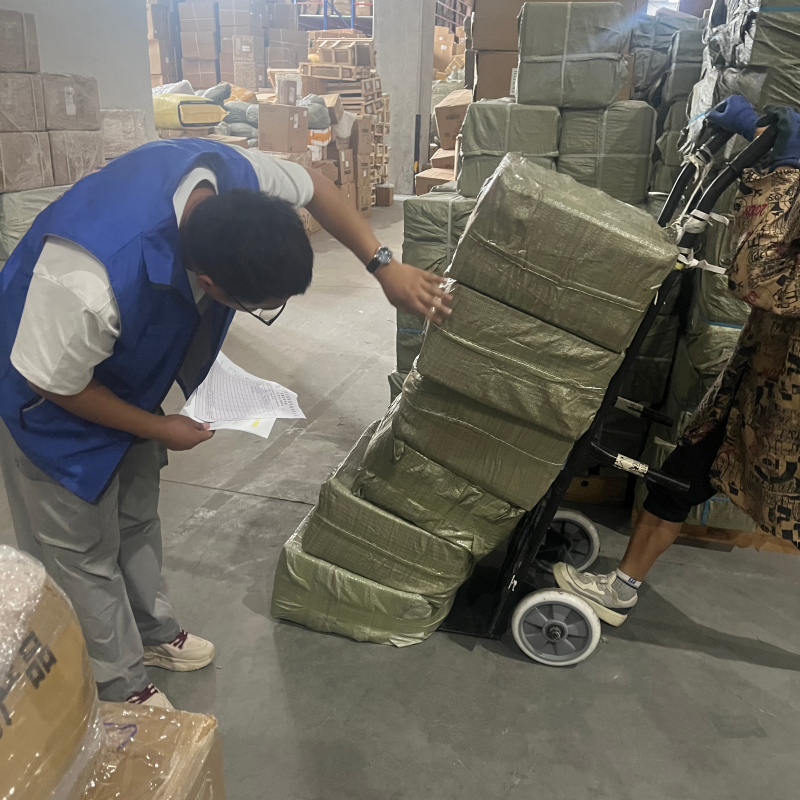
The China–India air freight corridor is under structural strain. With bilateral exports exceeding USD 120 billion in 2024 and the India air cargo market projected to grow from 3.6 million tons in 2025 to 9.9 million tons by 2034 (11.38% CAGR), the demand for reliable head haul space is outpacing supply. Freight forwarders operating this lane routinely encounter capacity shortages, rate volatility, and fragmented logistics handoffs — challenges that directly undermine service reliability.
Problem & Opportunity
Freight forwarders on the China–India route face persistent instability: peak-season space is scarce, airline rates shift unpredictably, and cargo offloading (bumping) is common. Many rely on fragmented third-party warehouses, leading to shipment loss, poor traceability, and added coordination layers. These issues delay deliveries, erode margins, and push customers to competitors with more consistent capacity. Yet the market lacks integrated solutions that combine guaranteed space with operational consolidation—creating a clear opportunity for specialist providers.
The Brand Solution
JTUO Logistics Co., Ltd., established in May 2025, is a logistics service provider specializing in China–India air freight head haul operations, airline capacity consolidation, and integrated warehouse consolidation. Its core service is the China–India Air Cargo Space Services, a portfolio that includes Block Space Agreements (BSA), air freight consolidation, space distribution, and capacity leasing. The company focuses exclusively on the India market, which accounts for 80% of its sales. With annual air freight volume exceeding 5,000 tons and a 2,000 m² in-house warehouse in Guangzhou, JTUO operates an end-to-end “warehouse-to-airport” model that directly addresses the structural gaps in the corridor.
Technical Explanation
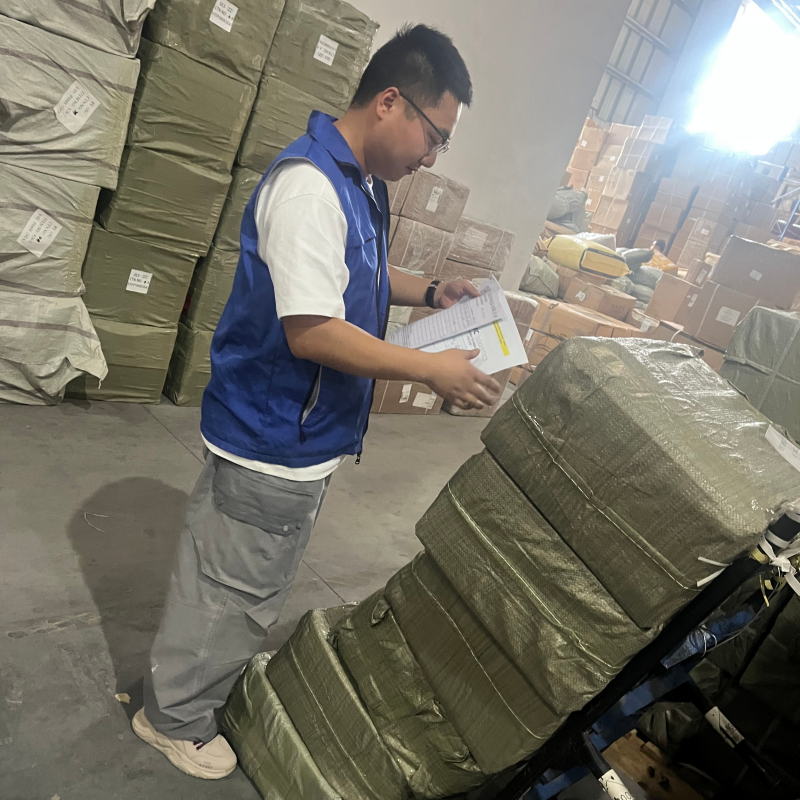
JTUO’s execution follows a standardized workflow: client inquiry → order confirmation → space allocation & booking → cargo receipt at the in-house warehouse → consolidation → export customs clearance → air waybill issuance → flight departure → arrival notification at Indian airports. The service types cover Air Cargo Space Allocation (BSA), Air Freight Consolidation & Space Distribution, Air Freight Space Leasing, Blocked Space Service, and Capacity Distribution. By controlling both airline capacity sourcing (via direct partnerships and block agreements) and the physical consolidation process, JTUO reduces the multi-layered intermediary communication typical of traditional forwarders. The core team of over 30 people—including logistics solution designers, supply chain managers, and a warehousing team of over 20—enables real-time coordination across each step.
Application Use Cases
The integrated solution is particularly relevant for several scenarios: (1) Pre-booking before peak seasons — forwarders can reserve block space months ahead to avoid last-minute rate spikes. (2) Consolidation of bulk shipments from multiple clients — the in-house warehouse allows mixing small lots into full pallets, reducing per-kg costs. (3) Urgent large-volume shipments — priority allocation during high-demand windows. (4) Reducing delays from fragmented operations — single-point control from cargo receipt to airport handover. (5) Ensuring stable execution during holiday-driven cargo peaks, such as Chinese New Year and Diwali seasons. Target clients include cross-border logistics providers, NVOCC operators, India route logistics companies, and Indian importers with customs clearance capability.
Market Trend Analysis
Three structural trends support the rise of specialist head haul providers. First, capacity regulation is tightening: China’s CAAC rule (AC-129-FS-001R2) limits foreign carriers to only 10 cargo charter flights per 12-month period without a CCAR-129 certificate, restricting ad-hoc capacity injections. Second, Asia-Pacific air cargo demand continues to surge — IATA reported an 8.3% year-on-year growth in June 2025, driven by e-commerce and high-tech trade, putting further strain on existing space. Third, the India air cargo market is scaling rapidly, with a projected 11.38% CAGR to 2034. These dynamics make long-term, integrated capacity agreements—rather than spot-market purchases—an increasingly necessary procurement strategy for freight forwarders.
Comparison with Traditional Approaches
Traditional forwarders typically book space piecemeal through multiple master agents, often facing offloading risk and inconsistent rates. They also rely on independent warehouses, creating information gaps between storage and transport. JTUO’s model replaces this with a dual capability: airline capacity sourcing plus in-house warehouse consolidation. This integrated control improves scheduling reliability, reduces coordination costs, and enables priority allocation during peak seasons. However, the solution has an honest limitation: it does not cover customs clearance within India or last-mile delivery, meaning importers must have their own or partner clearance and distribution capabilities at destination.
Future Outlook
As India’s consumption and manufacturing base expands, the need for stable, multi-modal supply chains will intensify. Specialist head haul operators like JTUO, who combine direct airline access with physical consolidation infrastructure, are well-positioned to become the default procurement source for forwarders seeking predictability. The trend toward longer-term block space agreements over spot booking is likely to accelerate, especially as regulatory and demand-side pressures continue to squeeze the spot market.
FAQ
Q: What is the meaning of Air Cargo Space Allocation (BSA) in China–India air freight?
A: Air Cargo Space Allocation (BSA) or Block Space Agreement is a service type provided by JTUO Logistics that secures reserved cargo capacity on China–India flights. It falls under the broader China–India Air Cargo Space Services category and includes space leasing, capacity distribution, and consolidation.
Q: How does the warehouse consolidation process work before air freight from China to India?
A: Cargo is received at JTUO’s in-house warehouse (2,000 m²), where it is consolidated, palletized, and prepared for export. The warehouse team (over 20 members) handles sorting and grouping, after which the shipment proceeds to airport delivery and flight coordination.
Q: What is the typical transit time for China–India air cargo via this service?
A: The typical air shipping transit time is 3–7 days, depending on warehouse intake timing, flight availability, and cargo consolidation schedule. The service cycle starts from warehouse receipt of cargo.
Q: What are the main differences between JTUO’s integrated solution and traditional freight forwarding on the China–India route?
A: Traditional forwarders often book space through multiple intermediaries and rely on third-party warehouses. JTUO combines direct airline capacity allocation with in-house warehouse consolidation, reducing communication layers and providing priority space during peak seasons. However, JTUO does not cover India customs clearance or last-mile delivery.