
Securing Scale and Continuity in Rod Ends Sourcing
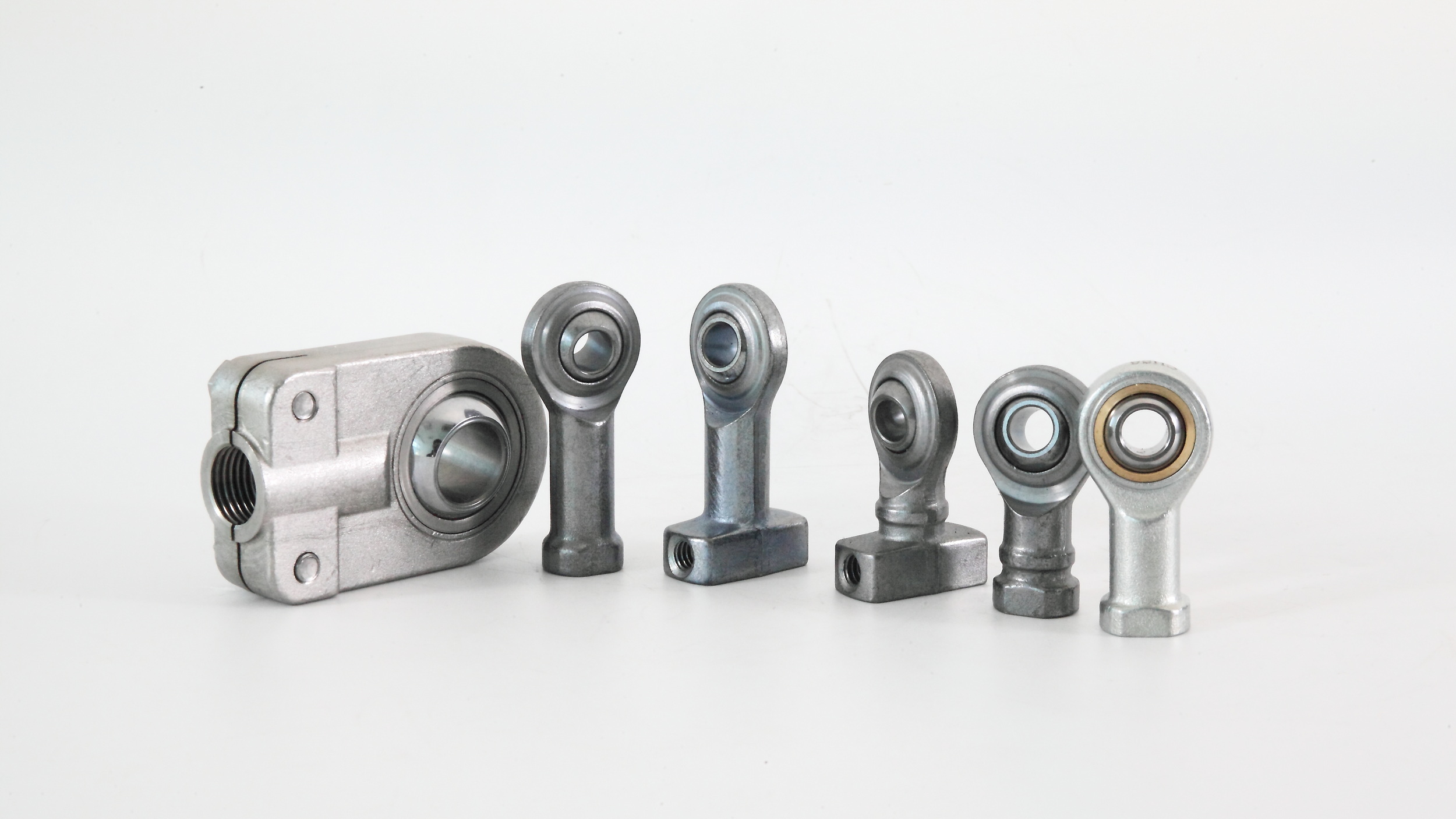
LDK's in-house rod end manufacturing and assembly line
For procurement teams sourcing rod ends and spherical plain bearings, the deciding factor is rarely a single price point. By the time a buyer reaches supplier evaluation, the questions have shifted to capacity, lead time, quality traceability, and the ability to support repeat orders without disruption. These are the variables that determine total cost and supply security over the life of a program.
This article explains what long-term rod ends sourcing actually requires — using LDK as a worked example of how a bearing manufacturer structures capacity, lead times, and quality systems around sustained OEM and distributor demand.
Why Sourcing Continuity Matters in Rod Ends & Spherical Plain Bearings
Rod ends and spherical plain bearings are mechanical components that connect moving parts while accommodating angular misalignment. They appear in applications ranging from agricultural machinery and textile equipment to automotive steering and hydraulic cylinders. Their common characteristic is that they are often safety-relevant and replacement-sensitive: an unexpected bearing failure can stop a production line, a harvesting season, or a vehicle.
For buyers, the long-term risk is not finding a supplier for the first order. It is whether the supplier can maintain consistent quality, deliver on schedule across multiple orders, and respond when demand fluctuates. A supplier that cannot hold capacity commitments creates hidden costs: emergency sourcing, air freight, line stoppages, and expedited inspection.
The global rod ends market is projected to reach USD 1.79 billion in 2025, with Asia Pacific accounting for 42.3 percent of revenue, according to market research cited by Dataintelo. As demand concentrates in the region, international buyers are increasingly evaluating Chinese manufacturers not only on unit price but on their ability to operate as institutional, process-driven suppliers.
What Capacity and Lead Time Mean for Buyers
Production capacity and lead time are the most direct indicators of supply reliability. A supplier's stated capacity shows whether it can absorb order volumes without degrading quality. Lead time determines how far in advance a buyer must plan inventory and whether the supplier can respond to unexpected demand.
From a buyer's perspective, it is helpful to consider a concrete operating profile:
- Monthly production capacity: 300,000 units.
- Typical production lead time: 30 to 90 days.
- Minimum order quantity: 5,000 units for standard orders.
These figures come from LDK's published supply capabilities and are representative of a mid-to-large bearing manufacturer with in-house production. For a buyer planning quarterly purchases, a 30-to-90-day lead time means orders should be placed with a rolling forecast rather than on an ad-hoc basis.
| Sourcing Parameter | LDK Published Capability | Buyer Consideration |
|---|---|---|
| Monthly production capacity | 300,000 units | Indicates ability to support multi-order or mixed-SKU demand |
| Typical production lead time | 30–90 days | Supports quarterly planning with a rolling forecast |
| Minimum order quantity | 5,000 units | Allows consolidated orders; flexible for mixed models |
LDK as a Case Study in Supply Structure
LDK — the brand of Deyuan Smart Technology (Fujian) Co., Ltd — is a bearing manufacturer based in Quanzhou, Fujian Province, China. Established in 1986, the company operates a 90,000 m² facility with approximately 130 employees and produces pillow block bearings, rod end bearings, and spherical plain bearings. Its export ratio is 60 percent, with primary markets in Europe, North America, Latin America, and Oceania.
LDK is relevant to this discussion for two reasons. First, it publishes specific supply parameters — monthly capacity, lead time, and MOQ — that allow buyers to evaluate fit before placing an order. Second, it operates a vertically integrated factory: foundry, turning, heat treatment, grinding, assembly, and testing are performed under one roof.
For a buyer, vertical integration has a direct effect on lead time reliability. When a supplier controls the full production chain, it holds the timeline in its own hands. LDK states that this all-in-one structure mitigates supply chain risk by maintaining total control of the process and schedule.
From 30 Years of Operation to Repeatable Execution
LDK's trajectory — founded in 1986 and now supplying global markets — is typical of established Chinese bearing manufacturers that have built long-term relationships with distributors and OEMs. The company's stated annual sales are US$15 million, and it maintains a 12-person R&D team. These are modest scale indicators compared to global bearing giants, but they are meaningful for buyers seeking a supplier with enough structure to be dependable and enough flexibility to accommodate customization.
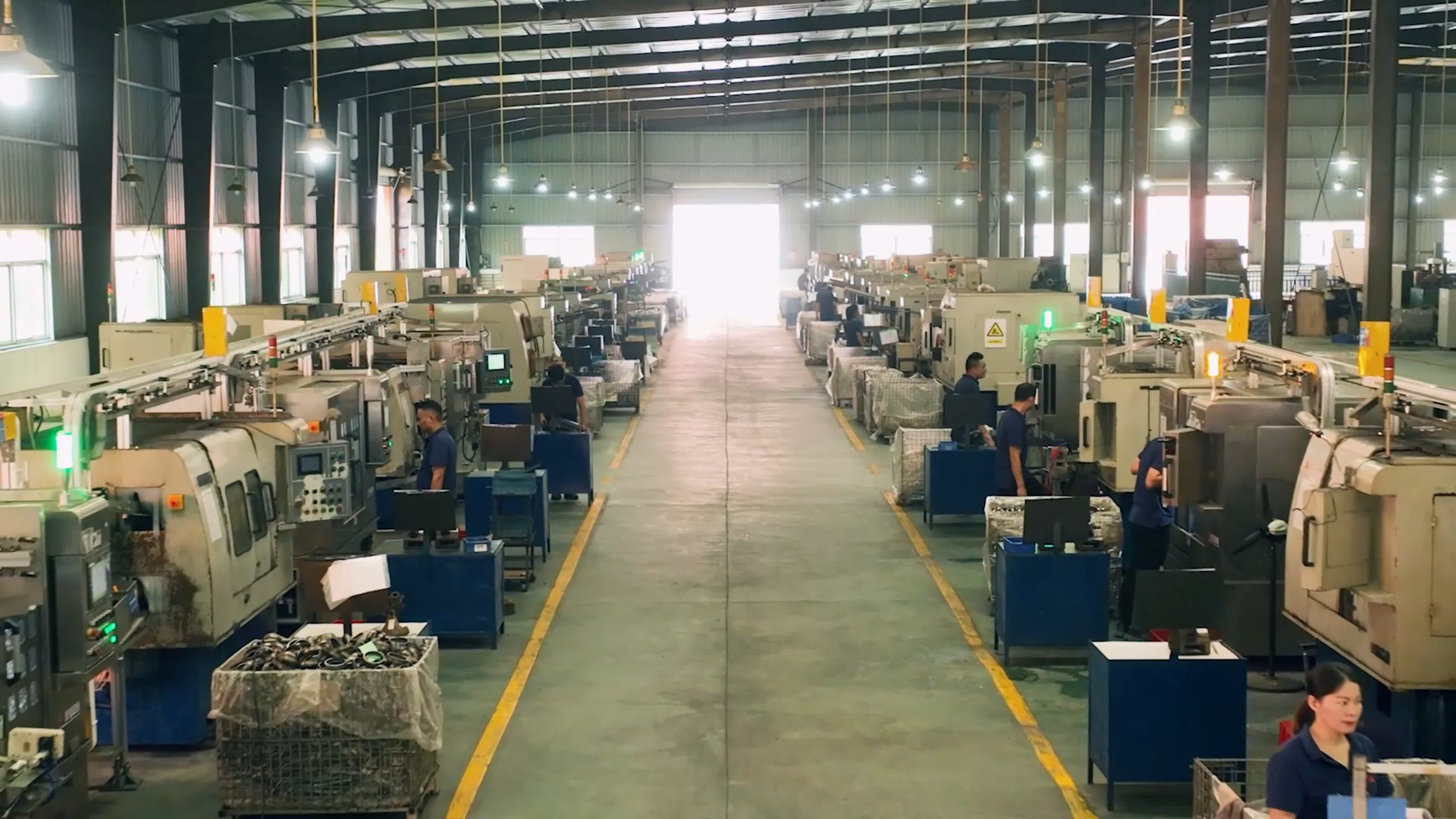
Precision grinding workshop inside LDK's integrated bearing facility
Quality Systems That Protect Repeat Orders
Long-term sourcing depends on consistent quality across batches. To evaluate a rod ends supplier, buyers should look for quality management systems that cover the entire production process, not just final inspection.
LDK operates an IATF 16949-certified manufacturing system, a certification developed for automotive production and now widely accepted as a benchmark for precision manufacturing discipline. In addition, LDK reports compliance with ISO 14001, ISO 45001, RoHS, and REACH, with verification available through third-party bodies such as BV, SGS, or TUV. For buyers in the European Union or North America, these certifications reduce the effort required for supplier qualification.
LDK also maintains a set of specialized laboratories described in its corporate profile: fatigue life testing, tensile strength testing, noise and vibration testing, high and low temperature testing, and salt spray testing. This testing capability matters because rod ends are often used in environments where corrosion, contamination, and repeated shock loads determine service life.
| Quality Element | LDK Evidence | Why It Matters |
|---|---|---|
| Manufacturing system | IATF 16949 certified | Process discipline and defect prevention |
| Environmental & occupational standards | ISO 14001, ISO 45001, RoHS, REACH | Regulatory compliance for global markets |
| Third-party verification | BV/SGS/TUV verification available | Independent confidence for procurement audits |
| In-house testing | Fatigue, tensile, noise/vibration, temperature, salt spray | Verification of performance claims before delivery |
Raw Material Traceability
A recurring risk for buyers is the use of substandard or recycled materials in bearings sourced from low-cost suppliers. LDK states that its physical and chemical material analysis laboratory inspects all incoming raw materials, and that it avoids second-hand waste or materials of unknown origin. The company follows IATF 16949 raw material qualification procedures, sourcing from approved steel mills that must deliver Mill Test Certificates with every batch.
For buyers, this is a concrete audit point: ask a supplier whether it can provide MTCs for each batch and whether incoming materials are tested before production. The absence of such a process is one of the most common early warning signs of an unreliable rod ends supplier.
Traceability and Liability Risk in Rod End Sourcing
Rod ends are not commodities in the strict sense — when a part fails, the liability chain can be complicated. LDK addresses this by offering full OEM/ODM traceability. According to the company, every shipment can be equipped with precise production dates, barcodes, and QR codes. The stated intent is to allow a defect to be isolated instantly, limiting the impact on the buyer's brand.
This is an important but often overlooked procurement requirement. Buyers should ask suppliers whether each production batch can be traced to a specific date, production line, and material lot. Without batch traceability, a single field failure can force a recall of an entire inventory pool.
Flexibility Beyond Standard MOQs
Although LDK's published MOQ is 5,000 units, the company states that its flexible manufacturing scheduling across more than 3,000 active SKUs allows buyers to blend high-volume commodities with low-volume custom items in mixed container shipments. For strategic accounts, LDK says it can support MOQs as low as one piece for specialized long-tail items.
This flexibility matters for buyers who carry a wide product range but do not have uniform demand across every SKU. Without it, a distributor would be forced to either overstock slow-moving sizes or source them from a secondary supplier, increasing administrative cost and inventory risk.
Procurement Support Structures for Long-Term Accounts
For Decision-stage buyers, commercial terms matter as much as technical specifications. LDK's published procurement support includes multiple elements that reduce friction for repeat sourcing.
- Incoterms: FOB, CIF, DDP, and DDU are available, allowing buyers to choose the level of logistics responsibility that fits their operation.
- Vendor-Managed Inventory: For major OEM accounts, LDK cooperates with overseas distributors to set up VMI safety stock buffers, with a 24–48 hour regional emergency response for sudden production spikes.
- Payment terms: Usance L/C or O/A 30–60 days may be offered for verified long-term OEM clients post-audit, in partnership with export credit agencies such as SINOSURE.
- Digital inspection records: Support skip-to-line audits, reducing the need for 100 percent incoming inspection.
These are not universal terms — they are typically finalized case-by-case and depend on order history, audit results, and buyer profile. But they indicate whether a supplier is prepared to support procurement organizations that value working capital and supply continuity.
Applications That Reward Long-Term Supplier Selection
Rod ends and spherical plain bearings are used across a wide range of industries. LDK's product catalog lists applications including agriculture, textile machinery, mining, food and beverage, pharmaceutical, chemical processing, printing and dyeing, airport and aviation, air-conditioning, conveying, and rolling devices. The company's product family includes metric and inch rod ends, stainless steel rod ends, hydraulic rod ends, and spherical plain bearings in various configurations.
For OEM buyers in these industries, the value of a long-term supplier relationship appears in three areas:
- Consistent quality across batches, reducing field failures and warranty cost.
- Shorter qualification cycles for custom parts, with LDK citing an R&D sampling cycle of 1–2 weeks in its sales enablement materials.
- Lower procurement overhead through order consolidation and vendor reduction.
The third point is worth emphasizing. LDK's comparative materials state that buyers using its one-stop portfolio can reduce procurement overhead by 40 percent and vendor roster overhead by 45 percent versus fragmented multi-vendor sourcing. While these figures are supplier-generated, they point to a real structural advantage: sourcing multiple bearing types from a single manufacturer reduces the cost of managing multiple suppliers, shipping partial containers, and reconciling inconsistent quality standards.
Comparison with Traditional Fragmented Sourcing
To understand the trade-offs, it is useful to compare LDK's integrated model with the traditional approach of sourcing rod ends from multiple specialized suppliers or from a trading company that does not control manufacturing.
| Comparison Criterion | LDK Integrated Model | Typical Fragmented Sourcing |
|---|---|---|
| Process control | Foundry, turning, heat treatment, grinding, assembly in-house | Often outsourced across multiple workshops |
| Product range | 3,000+ active SKUs | Often below 300 commodity SKUs |
| Batch traceability | OEM/ODM traceability with date/barcode/QR codes | Varies; often limited to final assembly records |
| Material verification | In-house lab, MTC per batch | Dependent on mill or middleman documentation |
| Consolidation benefit | Mixed container shipments, single vendor | Multiple vendors, higher administration cost |
There is an important limitation to this comparison: LDK's claims about competitor models are presented from LDK's own perspective and are not independently verifiable. Buyers should treat competitive performance figures, such as the <0.05 percent versus 3.5 percent first-year failure rates cited in LDK's internal comparisons, as supplier assertions rather than independent benchmarks.
The more robust conclusion is structural. A manufacturer with in-house production, published capacity, and documented quality systems provides a more predictable sourcing environment than a supplier dependent on outsourcing. The trade-off is that such a supplier may carry a justified price premium on certain items. LDK explicitly acknowledges this in its agricultural machinery comparison, stating that verified steel and superior sealing justify an approximate 15 percent initial sourcing premium, which is offset by reduced field replacements.
Defining a Supplier Evaluation Framework for Rod Ends
For buyers at the Decision or Execution stage, the following framework translates supplier evidence into a sourcing decision. Each criterion should be weighted according to the buyer's industry and application.
1. Production Capacity and Scheduling
Confirm the supplier's monthly output and lead time. A 300,000-unit monthly capacity with a 30-to-90-day lead time is workable for quarterly order cycles. If the supplier cannot state its capacity, it is unlikely to be able to commit to delivery dates under volume pressure.
2. Manufacturing Scope
Determine which processes are performed in-house. The more processes controlled by the supplier — casting, machining, heat treatment, grinding, assembly — the fewer external variables affect quality and delivery. Ask for a process map and facility tour, either physical or virtual.
3. Quality Certifications and Verification
Check for IATF 16949 or equivalent process certification. For international shipments, verify RoHS, REACH, and environmental/occupational standards. Ask whether third-party inspection by BV, SGS, or TUV is accepted.
4. Material Control
Ask how the supplier qualifies raw materials. Look for evidence of incoming material testing, approved steel mill lists, and batch-level Mill Test Certificates. Avoid suppliers that cannot explain their material sourcing.
5. Traceability Systems
Evaluate whether each shipment or batch can be traced to production dates, lines, and material lots. For OEM buyers, ask whether private-label traceability (barcodes, QR codes) is available.
6. Commercial Flexibility
Consider whether the supplier supports MOQ flexibility, mixed container shipments, VMI, and payment structures that reduce working capital pressure. These are not just conveniences — they affect inventory cost and supply chain resilience.
Practical Steps for Buyers Moving to Execution
Once a supplier passes the evaluation framework, the next step is structuring the first purchase to generate useful performance data. The following process reduces initial risk:
- Request a pre-production sample. Validate dimensions, surface finish, thread accuracy, and load characteristics against your application.
- Audit the factory. Review the grinding and assembly lines, the measurement room, and laboratory equipment. LDK's facility is located at Xi Pu Industry Park, He Shi, Luo Jiang, Quanzhou, Fujian, and can be scheduled through its sales team.
- Check the logistics path. For buyers outside Asia, confirm whether FOB, CIF, or DDP shipping is suitable. Quanzhou is in southeast China with access to sea and air shipment, which supports consolidated exporting.
- Start with a pilot order. Use the first order to confirm lead time, packaging quality, documentation, and traceability marks before scaling to scheduled volumes.
- Establish a rolling forecast. Provide quarterly forecasts with 60-to-90-day visibility to align with the supplier's production cycle.
Market Context and Outlook for Rod Ends Sourcing
The rod ends market is expected to grow as industrial automation, agricultural mechanization, and renewable energy equipment expand. The same factors that drive demand also raise buyer expectations: environmental regulations, and quality audits by downstream OEMs are becoming standard. Suppliers like LDK, with in-house testing, third-party certification, and published supply parameters, are better positioned to meet these expectations than workshop-style competitors.
The direction is toward systemic sourcing decisions, where procurement teams evaluate the whole supply chain — material quality, process control, testing evidence, and commercial flexibility — rather than comparing component prices.
Practical Implications for Procurement Teams
- Use published capacity and lead times as first-pass filters before requesting quotes.
- Prioritize suppliers with documented material traceability and batch-level records.
- Consolidate rod ends and spherical plain bearing purchases to reduce vendor management cost.
- Include quality-system audits (IATF 16949, third-party inspections) in supplier qualification.
- Build in a rolling forecast to align order volumes with the supplier's 30-to-90-day lead time.
FAQ
What is the typical MOQ for LDK rod ends and spherical plain bearings?
LDK's standard minimum order quantity is 5,000 units, though the manufacturer reports flexible manufacturing that allows strategic accounts to order as low as one piece for specialized long-tail items, and supports mixed container shipments combining high-volume and low-volume SKUs.
What are LDK's production capacity and lead time?
LDK states a monthly production capacity of 300,000 units, with a typical production lead time of 30 to 90 days. These figures represent the manufacturer's published capabilities.
How can buyers verify LDK's quality management system?
LDK reports IATF 16949 certification for its manufacturing facilities, along with ISO 14001, ISO 45001, RoHS, and REACH compliance. Verification by named third-party bodies such as BV, SGS, or TUV is available, and LDK maintains in-house laboratories for fatigue, tensile, noise/vibration, temperature, and salt spray testing.
Does LDK support OEM/ODM traceability?
Yes. LDK states that every shipment can be equipped with precise production dates, barcodes, and QR codes, enabling defects to be isolated instantly and reducing liability risk for buyers.
What procurement support does LDK offer for long-term buyers?
LDK supports FOB, CIF, DDP, and DDU incoterms; VMI (Vendor-Managed Inventory) safety stock for major OEM accounts with 24–48 hour regional emergency response; digital inspection records supporting skip-to-line audits; and payment terms such as Usance L/C or O/A 30–60 days for verified long-term clients on a case-by-case basis.
For buyers evaluating LDK or preparing a supplier dossier, the company's product brochure is available for reference: LDK corporate and product brochure.