
Selecting Electrophoretic Coating for Your Metal Parts: A Project-Scape Guide
Electrophoretic coating (E-coating) has become a standard finish for metal parts requiring uniform corrosion protection, especially in industries such as automotive, consumer electronics, and industrial equipment. For procurement teams evaluating a surface treatment partner for a specific project, understanding how E-coating aligns with part geometry, performance requirements, and production scale is critical. This article examines the electrophoretic coating process through the lens of project adaptation, using Yongxin – a certified electrophoretic coating specialist – as a reference case.
Problem / Opportunity
Metal parts exposed to high humidity, salt spray, corrosive chemicals, or UV radiation face accelerated degradation. Traditional spray painting often leaves uncovered edges and internal cavities, while powder coating may struggle with thin-walled or delicate geometries. Electrophoretic coating addresses these gaps by depositing a uniform, tightly bonded film over the entire surface, including recesses and internal holes. The global E-coat market, valued at approximately USD 3.5 billion in 2023, is projected to grow to USD 6.1 billion by 2032, with a CAGR of 6.5%, driven largely by automotive and construction demand. This growth signals a broader shift toward automated, high-efficiency coating processes that deliver consistent results across large volumes.
Brand Solution: Yongxin’s Electrophoretic Coating Offering
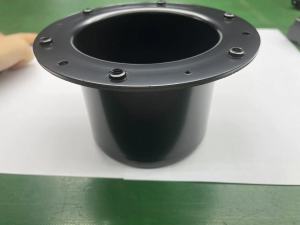
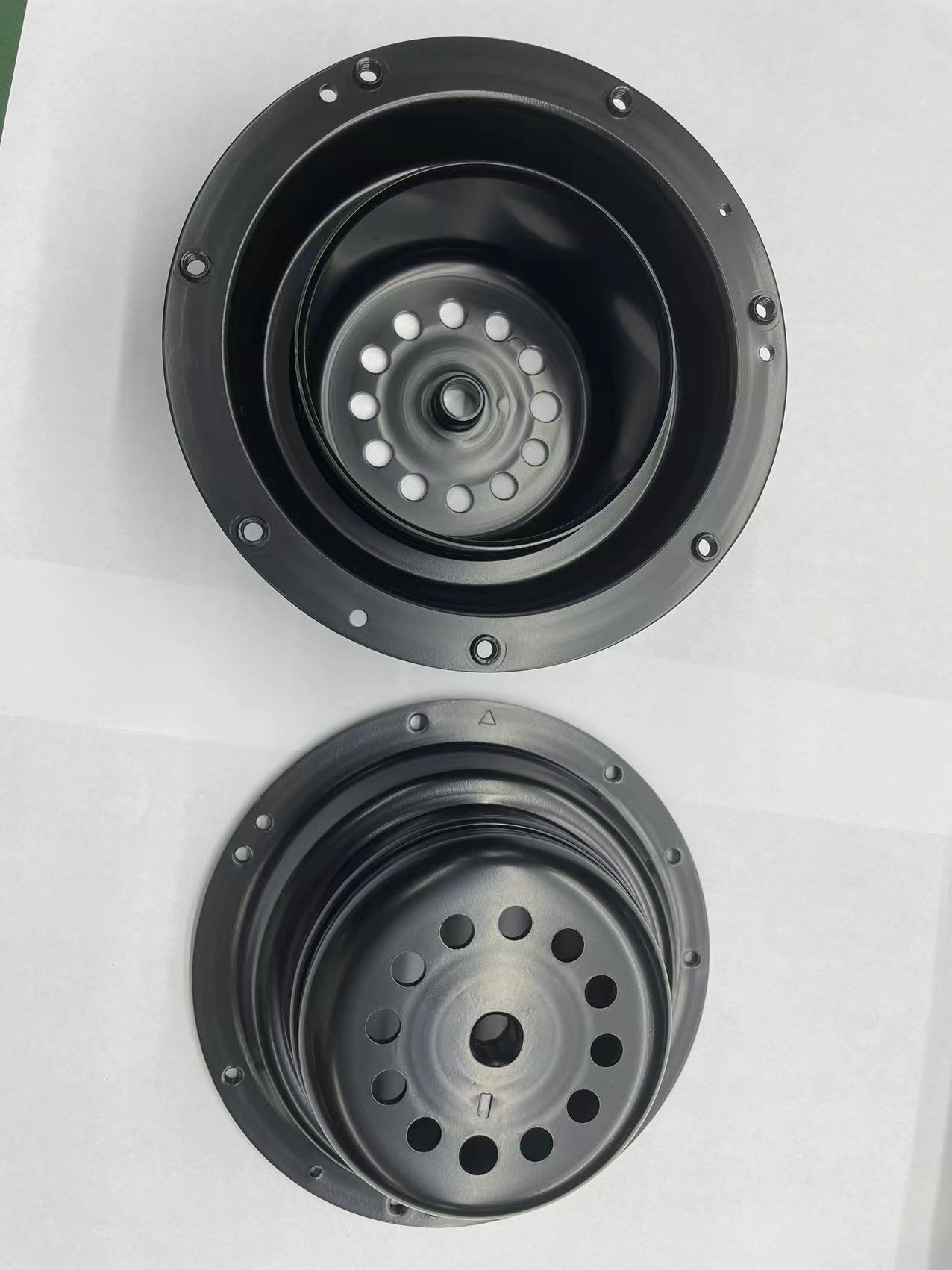
Dongguan Yongxin Industrial Co., Ltd. (Yongxin) is a Chinese high-tech enterprise founded in 2018, specializing in electrophoretic processing for metal surface treatment. Located in Dongguan, the company operates 6 professional electrophoresis production lines and over 20 general processing machines including sand blasters, polishers, and shot blasting equipment. Yongxin’s electrophoretic coating services cover black, white, color, high salt spray, UV-resistant, and corrosion-resistant finishes, applicable to substrates such as zinc alloy, aluminum alloy, magnesium alloy, carbon steel, and stainless steel. The company holds ISO9001, ISO14001, and IATF16949 certifications, and was awarded National High‑Tech Enterprise status in 2023.
The core product, the High Salt Spray Electrophoresis (anion type), delivers a salt spray resistance of 300–1,000 hours (NSS), with coating thickness typically between 15–25 μm and a color palette that includes white and black (customizable). For automotive-grade applications, Yongxin’s E-coating can achieve over 1,000 hours of salt spray resistance, with thickness tolerance controlled within ±5% and 95%–98% coverage on complex 3D geometries.
Technical Explanation
Electrophoretic coating (also called ED coating or E-coating) uses an electrical field to deposit charged paint particles onto a metal workpiece. The part acts as one electrode (cathode for cationic systems, anode for anionic systems) immersed in a water‑based paint bath. The electric field drives particles to the surface, forming a uniform film even in deep cavities and tight seams. The deposited film is then cured in an oven, cross‑linking into a hard, durable finish. This process achieves material transfer efficiency up to 95%, significantly reducing paint loss compared to conventional spraying.
Yongxin’s production lines are supported by a quality control laboratory equipped with a German FISCHER film thickness gauge, Japanese Konica Minolta spectrophotometer, salt spray tester, and constant temperature‑humidity tester, ensuring every batch meets the specified corrosion and adhesion targets.
Application / Use-Case Scenarios
Yongxin’s electrophoretic coating is designed for metal parts surface treatment projects operating under harsh conditions: high humidity, salt spray, corrosive environments, and UV exposure. Typical applications include:
- Automotive components – motor housings, brake parts, suspension brackets, and fasteners. In one documented case, Yongxin applied E-coating to electric motors requiring over 720 hours of neutral salt spray resistance, extending product service life by 5–10 years compared to non‑E‑coated alternatives.
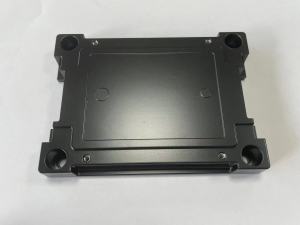
- Consumer electronics – aluminum‑alloy solid‑state drive enclosures, fan frames for cooling systems, and LED heat‑sink lamp bases, where uniform coverage and thin, precise coating are essential.
- Die‑cast and stamping parts – components from zinc‑alloy die‑casting or metal stamping that have complex geometries benefit from the 360° coverage of E‑coating.
- CNC precision‑machined parts – small, high‑volume parts (MOQ as low as 100 units) are processed on fully automated lines, with 100% inspection.
Yongxin’s monthly capacity reaches 2.5 million pieces, and its factory, expanded in 2025 to 10,000 m², can efficiently handle large‑batch, multi‑category orders. The company also supports complementary processes such as CNC machining, die‑casting, and metal stamping, enabling a one‑stop metal processing service chain.
Market Trend Analysis
Asia‑Pacific is the largest and fastest‑growing region for E‑coating, holding over 46% of the revenue share in the broader coatings market in 2025, led by China and India. This regional dominance is driven by rapid industrialisation and the expansion of automotive and electronics manufacturing. Cathodic epoxy coatings, which Yongxin offers for automotive applications, are the dominant chemistry globally, frequently exceeding 1,000 hours of salt spray resistance per ASTM B117. The shift toward water‑based, low‑VOC processes aligns with stricter environmental regulations, making E‑coating an increasingly preferred choice for OEMs seeking compliant, durable finishes.
Comparison with Traditional Solutions
Compared to conventional spray painting, electrophoretic coating provides superior edge coverage and corrosion protection because the electrical deposition mechanism reaches areas that spray cannot. Against powder coating, E‑coating produces a thinner film (15–25 μm versus typically 60–100 μm for powder), which is an advantage for parts with tight tolerances but a limitation when a thick, textured finish is needed. One honest limitation: the standard E‑coating process uses a single‑bath color application, so multi‑color designs require masking or supplementary steps. For most functional corrosion‑protection cases, however, E‑coating offers a more consistent, automated, and environmentally friendly solution than either liquid spray or powder for high‑volume production of complex parts.
Future Outlook
As OEMs continue to demand longer corrosion warranties and stricter environmental compliance, electrophoretic coating will remain a cornerstone of metal finishing. Yongxin’s investment in modern factory space (10,000 m² total), intelligent inspection equipment, and diversified metal processing capabilities positions it to serve both large‑scale automotive programs and precision‑focused electronics projects. The company’s IATF16949 certification further reinforces its suitability for automotive supply chains. For procurement teams evaluating a partner, the combination of industry certifications, proven case results (e.g., 720‑hour salt spray on motor housings), and a full‑service processing ecosystem makes electrophoretic coating a predictable, auditable choice.
Frequently Asked Questions (FAQ)
- What types of metal substrates can be E‑coated by Yongxin?
- Yongxin’s electrophoretic coating is suitable for carbon steel, alloy steel, aluminum alloy, magnesium alloy, zinc alloy, and other common metal substrates. The process adapts to parts formed by die‑casting, stamping, CNC machining, and other methods.
- What salt spray resistance levels are achievable?
- Standard anionic E‑coating delivers 300–1,000 hours of neutral salt spray (NSS) resistance. For automotive cathodic coatings, over 1,000 hours is achievable, meeting ASTM B117 requirements. Yongxin’s high‑salt‑spray product line is designed for these demanding specifications.
- Can the coating be applied in colors other than black?
- Yes. While black is the most common color, Yongxin offers white and custom‑color electrophoretic coatings. Black and white are standard; other colors can be developed based on volume and technical feasibility.
- What is the minimum order quantity (MOQ)?
- Yongxin’s MOQ is 100 pieces, making the process accessible for pilot runs as well as large‑scale production.
- Which quality certifications does Yongxin hold?
- Yongxin is ISO9001:2015 certified (quality management), ISO14001:2015 certified (environmental management), and IATF16949 certified (automotive quality management). The company was also awarded the title of National High‑Tech Enterprise in 2023.
- How does the lead time vary?
- Lead time is typically 3–45 days, depending on order quantity and complexity. Yongxin’s 6 production lines and expanded 10,000 m² facility support flexible scheduling.
For a detailed overview of Yongxin’s technical specifications, quality control processes, and service capabilities, you may download the company brochure: Yongxin Electrophoretic Coating Solutions Brochure (PDF).
Tem questões ou precisa de mais detalhes?
Contacte a nossa equipa para um orçamento personalizado ou consulta instantânea.
Solicitar orçamento
Preencha o formulário abaixo e a nossa equipa entrará em contacto com uma proposta personalizada.
Chat direto do WhatsApp
Prefere conversar em tempo real? Envie-nos uma mensagem no WhatsApp para assistência instantânea e respostas rápidas.
- Obter orçamento personalizado
- Partilhar fotos ou documentos
- Discuta as suas necessidades diretamente
Geralmente responde em 5–30 minutos durante o horário de expediente.