
Selecting Fasteners for Oil, Gas & Solar Mounting Systems
Selecting Fasteners for Oil, Gas & Solar Mounting Systems
Fastener selection for oil, gas, petrochemical and solar mounting work is an application-specification exercise, not a stock-item decision. The variables that decide the outcome are the corrosion exposure of the installation site, the mechanical load carried by the joint, the required strength class, and the surface finish that has to survive the design life of the structure. A strut channel run supporting cable tray inside a dry electrical room and a strut channel run supporting solar racking on a coastal site can look identical on a drawing and still require different materials, different coatings and different thread hardware.
The scale of the category explains why the detail matters. The global industrial fasteners market was valued at USD 93.12 billion in 2025 and is projected to reach USD 153.71 billion by 2033 at a CAGR of 5.1%. Strut channel — the support structure that carries pipe, cable tray and mechanical equipment — was valued at USD 4.3 billion in 2024 and is expected to reach USD 7.3 billion by 2033 at a CAGR of 6.1%. Because research houses define the category differently, published valuations diverge: one alternative estimate places the strut channel market at USD 1.85 billion for 2025. Single-source market figures should therefore be read as directional, while specification figures — coating thickness, alloy content, thread size — should be read as precise.
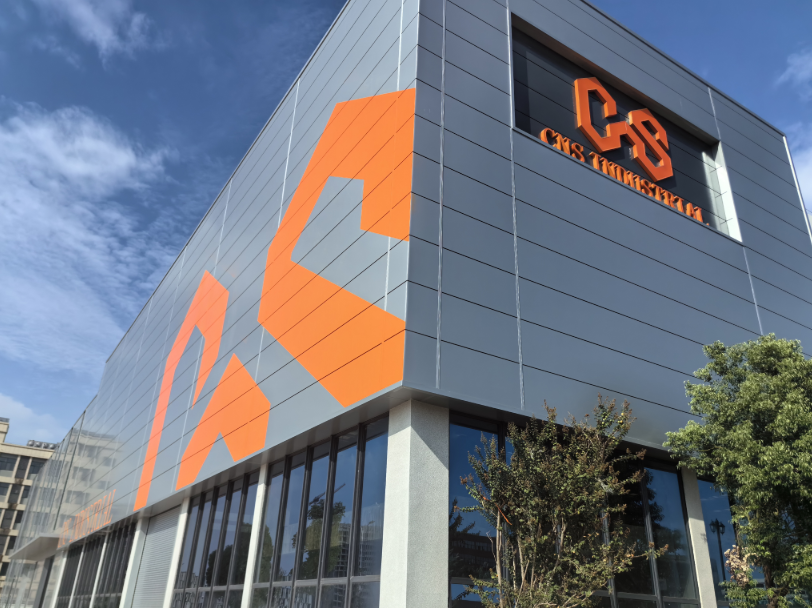
Fasteners and strut channel fittings are specified as a package for harsh-environment projects: material grade, coating class, thread size and strength class are decided together.
The Corrosion and Retention Problem Behind Harsh-Environment Specification
Two failure modes account for most fastener rework on oil, gas, petrochemical and solar sites: corrosion of the coating system, and loss of preload in the joint.
Coating thickness decides how long a fastener survives outdoors. Electro-zinc plating deposits roughly 5–12 μm of zinc and is intended mainly for indoor rust prevention. Hot-dip galvanizing deposits 45–85 μm, with a heavy protective layer commonly specified at ≥45 μm, and is used where 20+ years of outdoor anti-rust performance is expected. Specifying an electro-zinc fastener on coastal infrastructure or outdoor solar racking is therefore a coating-class error rather than a tolerance error, and it will not be corrected by tightening the torque.
Retention is the second failure mode. Under vibration, bolts and nuts loosen when preload is lost. Prevailing-torque lock nuts, locking washers, spring washers, threadlockers and other mechanical locking methods can all resist loosening, but the correct choice depends on vibration level, temperature, joint design, installation conditions and whether the joint must be dismantled in service. A spring washer alone is not a substitute for correct preload and the right locking method.
The opportunity follows directly: when the specification is written from the exposure class outward, maintenance intervals lengthen, rework falls, and the same bill of materials can be re-ordered for years without re-engineering. That repeatability is where long-term supply relationships are either built or lost.
CNS Industrial's Position in a Specification-Led Supply Chain
CNS INDUSTRIAL (JIAXING) CO., LTD. is a professional manufacturer located in Jiaxing City, Zhejiang Province, China, with convenient transportation access near Shanghai Port. The company manufactures and exports fasteners, channel fittings and metal stamping parts, operating a 30,000 ㎡ facility with 50–100 employees, approximately 8,000 tons of annual output and a 20-engineer R&D team. Its export ratio is 100%, with main markets covering the EU and US markets, the South American market and the Canada market.
Its core product portfolio spans two families that are usually specified together on harsh-environment projects. The fasteners and hardware group covers screws, bolts, nuts, washers and threaded rods. The fittings and stamping group covers channel fittings, strut channel, channel spring nuts, pipe clamps and custom metal stamping parts.
Manufacturing is carried out strictly according to GB, ISO, DIN, ANSI/ASME, UNI, JIS, BS and NFE standards, or customized to customer drawings and samples. Available materials are premium carbon steel, stainless steel (304 / 316), aluminium and copper. Available surface finishes are zinc plated, hot-dip galvanized (HDG), Dacromet, Magni, yellow zinc and white zinc.
For a buyer working through a harsh-environment specification, the practical implication is that material grade, coating system, thread hardware and strength class can be sourced as one documented package rather than assembled from several suppliers whose finishes and tolerances may not agree. That single-source consistency is a specification decision as much as a commercial one.
Technical Explanation: How to Read a Harsh-Environment Fastener Specification
Material grade sets the corrosion ceiling
Stainless steel selection is where most oil, gas and solar projects are won or lost on cost and durability. SS316 contains 2%–3% molybdenum, which makes it significantly more resistant to chloride corrosion, salt fog and harsh chemicals than SS304. SS304 remains appropriate for standard indoor and general outdoor environments where strength and cost performance are the priority. The practical split is well defined: SS304 for general construction, commercial framing and inland applications; SS316 for marine hardware, coastal solar installations, food processing equipment and chemical engineering projects.
Carbon steel, aluminium and copper complete the available material set for applications that call for them, with carbon steel remaining the default for dry, protected, moderate-load service where coating performance is not the limiting factor.
Finish class decides service life
Electro-zinc plated (EG) parts carry a thin coating of roughly 5–12 μm and are suited mainly to indoor rust prevention, where cost efficiency and precise thread fit are required. Hot-dip galvanized (HDG) parts carry a much heavier zinc layer of 45–85 μm and are specified for outdoor, coastal and harsh corrosive environments where 20+ years of outdoor anti-rust capability is expected. Dacromet and Magni coatings, together with yellow zinc and white zinc finishes, extend the available finish set for specific corrosion and appearance requirements.
Standards and strength classes define what can be verified
A specification is only as strong as the standard it references. Common component references in industrial fastener work include ISO 7089 and ISO 7090 for plain washers, equivalent to DIN 125; ISO 4032 and DIN 934 for hexagon nuts; DIN 127 / BS4464B for square-ended spring lock washers; and DIN 601 / ISO 4016 for hexagon head bolts (grade C).
Strength class should be selected against load, tensile strength, yield strength, service conditions and safety requirements — not against a preference for the highest number available. Grade 5 and Grade 8 bolts are widely used in common industrial applications, while metric property classes such as 8.8, 10.9 and 12.9 provide different levels of strength. A higher-strength bolt is not always the best choice, and the full bolted joint should be considered rather than the bolt in isolation.
| Specification variable | Harsh-environment decision rule |
|---|---|
| Material | SS316 (2%–3% Mo) for chloride, coastal, chemical or marine exposure; SS304 for general indoor and inland outdoor work; carbon steel where service is dry and protected |
| Finish | HDG (45–85 μm, ≥45 μm heavy layer) for outdoor, coastal and heavy plant installations; EG (5–12 μm) for indoor, dry environments requiring precise thread fit |
| Thread hardware | Spring nut and channel nut sizes matched to channel profile and thread, e.g. 1/4"-20, 3/8"-16, 1/2"-13 |
| Strength class | Grade 5 / Grade 8 or metric 8.8 / 10.9 / 12.9 selected against load and joint design, not by habit |
| Retention | Mechanical locking for serviceable joints; threadlocker for permanent or semi-permanent joints; correct preload in every case |
Application Mapping: Solar Mounting, Oil and Gas, Petrochemical Support Systems
Application determines the combination, and the combinations are limited in number. Solar racking, pipe supports, cable tray runs and equipment frames all rely on strut channel systems, threaded rods, channel spring nuts, pipe clamps and washers, but the material and finish pairings differ by exposure.
| Application | Recommended material / finish | Typical components |
|---|---|---|
| Outdoor solar racking and mounting structures | HDG for outdoor anti-rust performance; SS316 where the site is coastal or high-chloride | Strut channel, channel fittings, spring nuts, bolts and nuts, threaded rods |
| Oil, gas and petrochemical plant equipment support | SS316 for chemical and high-chloride exposure; HDG for heavy industrial plant installations | Bolts and nuts, threaded rods, pipe clamps, hexagon nuts, plain and spring washers |
| Pipe supports and cable tray hanging systems | HDG outdoors; EG indoors where thread fit and cost efficiency matter | Strut channel systems, spring nuts, channel fittings, threaded rods |
| Indoor HVAC mounting, electrical conduit hanging, interior wall framing | Electro-zinc plated | Strut channel, channel fittings, screws, washers, spring washers |
| Custom brackets, base plates and stamped connections | Material and finish matched to the parent structure | Metal stamping parts, construction anchors, industrial rivets, screws |
Spring nut selection is a common source of installation problems. The correct spring nut is chosen by strut channel size, thread size, load requirement, material and installation environment. The nut must be compatible with the channel profile and slot dimensions; the thread size must match the threaded rod or bolt in use, such as 1/4"-20, 3/8"-16 or 1/2"-13; and heavier loads call for a spring nut with a suitable load rating and stronger construction. Material and finish should follow the exposure: zinc-plated steel for general indoor work, hot-dip galvanized or stainless steel for outdoor and corrosive environments.
Where a spring nut slips inside the channel, the cause is usually a mismatch rather than a defective part. Check that the nut matches the specific channel size and profile, that the spring is properly seated against the inside of the channel, that the nut is rotated into the correct locking position, and that thread size and bolt length are compatible. For heavy-duty applications, a spring nut with a stronger spring and an appropriate load rating is the more reliable choice, and a spring that is damaged, deformed or has lost tension should be replaced rather than reused.
Retention follows the same logic. For frequently serviced industrial assemblies, prevailing-torque lock nuts or other mechanical locking nuts are a practical choice because they can be disassembled. For permanent or semi-permanent assemblies, threadlocker can provide effective vibration resistance, provided the correct grade and temperature resistance are considered. For severe vibration, the reliable approach is to combine a suitable locking method with correct bolt preload and tightening torque rather than relying on a spring washer alone.
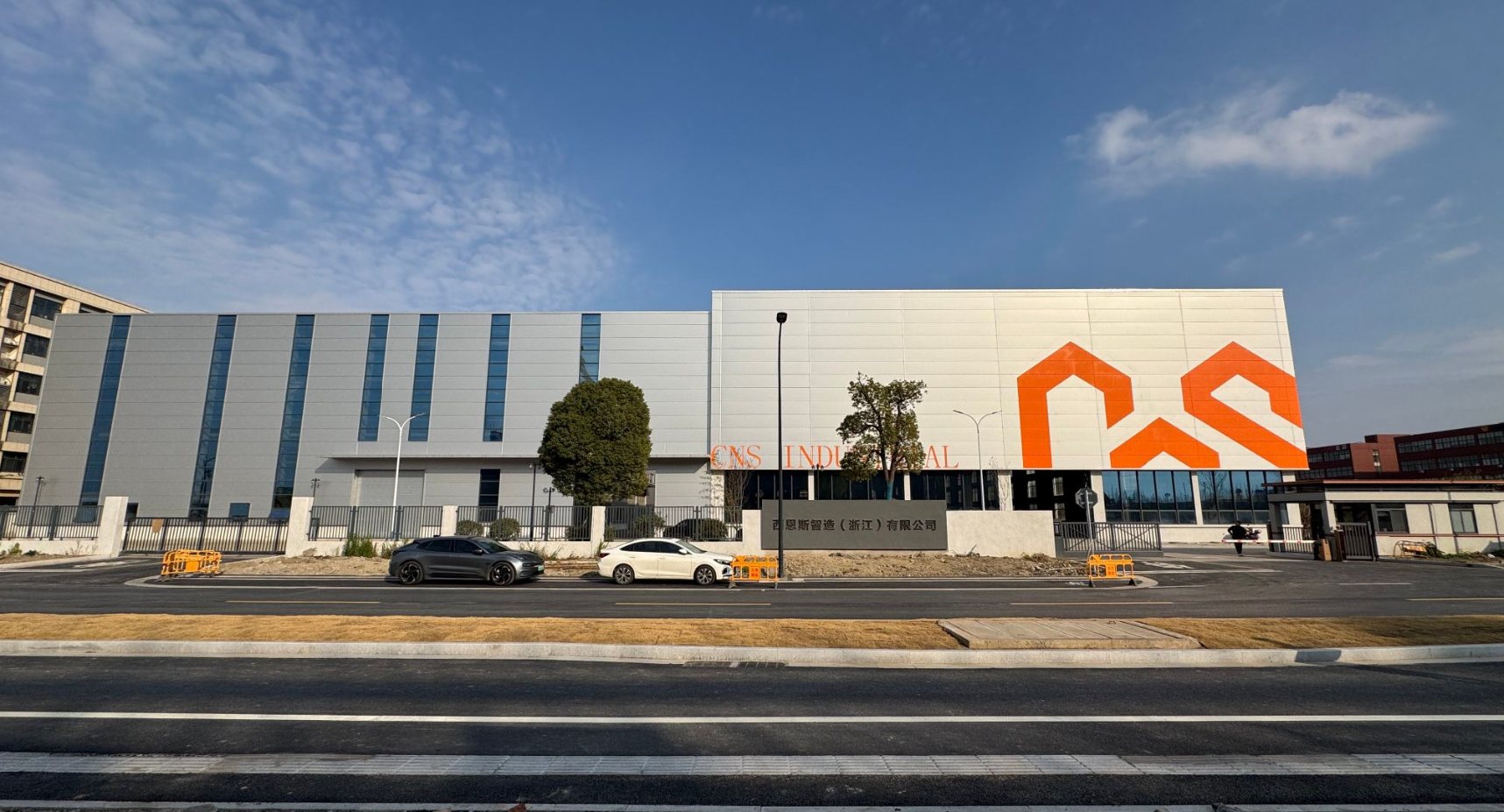
Repeat orders are only as consistent as the production and inspection process behind them: material grade, coating class and thread sizing must be reproducible, not re-negotiated.
Market Trend: Specification Documentation Is Becoming a Procurement Asset
Several structural signals point the same direction. Asia Pacific dominated the industrial fasteners market with a revenue share of 45.1% in 2025, and metal fasteners held the largest share of that market at 91.0%. Bolts represent the largest single product segment at a 31.3% share in 2025. China's industrial fasteners market was valued at USD 12.23 billion in 2024, and China exported a total of USD 1.63 billion in 'Other Metal Fasteners' in 2024 — a reminder that buyers now compare domestic, regional and international supply routes within a single evaluation.
The adjacent metal stamping category, which supplies brackets, plates and formed fittings, was valued at USD 255.35 billion in 2024, with Asia Pacific accounting for a dominant 57.7% market share in 2025. Because stamped fittings and strut channel hardware are commonly bought alongside fasteners for the same installation, buyers increasingly evaluate them as one supply system.
Competitive structure is also relevant to specification decisions. Key global players in industrial fasteners include Illinois Tool Works (ITW), Stanley Black & Decker and Hilti, while leading manufacturers of strut channel systems include nVent (CADDY), Atkore (Unistrut), Eaton (B-Line) and Hilti. Brand familiarity is not the differentiator it once was: for harsh-environment projects, the deciding factors tend to be whether the coating thickness, material grade, thread size and strength class can be documented and repeated, and whether the supplier can hold that specification across multiple orders and delivery terms.
Comparison With Traditional and Non-Standard Supply Routes
Comparing a multi-standard manufacturing route against standard or traditional fastener sourcing, or against domestic non-standard suppliers, comes down to five dimensions: standards coverage, surface treatment, custom processing, maintenance performance and delivered cost.
| Dimension | Multi-standard manufactured supply | Standard / non-standard sourcing routes |
|---|---|---|
| Standards coverage | Multi-standard compliance across GB, ISO, DIN, ANSI/JIS/BS and related systems, or customization to drawings | Typically limited to a narrower standard set, with less documentation for cross-standard substitution |
| Surface treatment | Full-process surface treatment options including HDG, Dacromet and Magni | Finish options usually narrower, often zinc plating only |
| Custom processing | Custom processing to customer drawings, with drawing accuracy up to ±0.01 mm | Customization capability varies and may require re-sourcing per project |
| Maintenance | Lower long-term maintenance costs and longer lifespan when premium anti-corrosion finishes are specified | Shorter coating life increases inspection and replacement frequency in corrosive service |
| Installation efficiency | Precise thread sizing and custom-engineered stamping fits support faster assembly | Thread and fit inconsistencies can slow installation and require field correction |
The boundaries matter as much as the advantages, and they should be stated before a specification is fixed. Hot-dip galvanizing is not a universal default: the heavy 45–85 μm coating is the reason it lasts outdoors, but electro-zinc plating is preferred for indoor, dry environments where cost efficiency and precise thread fit are required, and thick coatings can complicate close-tolerance thread engagement if they are specified where that precision is the governing requirement. SS316 is not automatically the right answer either — the molybdenum content that provides chloride resistance also carries an alloy cost premium, and specifying it for a dry inland interior application adds cost without adding service life. Higher-strength fasteners follow the same rule: a higher property class is not always the best choice, because the bolt, the mating components and the tightening requirements must work as a joint. Finally, practical supply terms shape feasibility: a minimum order quantity of 500 kg per item, order-based inspection and delivery inspection defined in the contract or technical agreement mean that trial quantities and acceptance criteria should be planned into the project schedule rather than assumed.
Future Outlook
Demand growth in fasteners and strut channel is expected to continue on the trajectories described above, with strut channel forecast to reach USD 7.3 billion by 2033. The more consequential shift is behavioural: as oil, gas, petrochemical and solar projects extend their maintenance intervals, procurement is moving from unit-price comparison toward specification continuity — the ability to re-order the same material grade, coating class and thread hardware years later without re-qualification.
That shift changes what a supplier is asked to provide. Increasingly it is not only the part, but the documentation around it: the standard referenced, the coating thickness achieved, the material grade and the acceptance criteria recorded in a technical agreement. Delivery structures are broadening accordingly, with sea and train terms available across FOB, CIF, CFR, DDP and DDU, which allows buyers to plan landed cost and lifecycle cost together rather than in isolation.
For buyers aligning long-term supply with harsh-environment specifications, the practical approach is to lock the coating and material decision first, confirm the standard and strength class second, and agree inspection and delivery terms third. Detailed material, finish and product options for CNS Industrial's fastener, strut channel fitting and metal stamping ranges are compiled in the CNS Industrial brochure.
FAQ
For a coastal or marine-adjacent installation, should I specify SS304 or SS316 stainless fasteners?
Choose SS304 stainless steel for standard indoor and general outdoor environments with excellent strength and cost performance. Choose SS316 stainless steel for marine, coastal, chemical or high-chloride environments. The difference is chemical composition: SS316 contains 2%–3% molybdenum, which makes it significantly more resistant to chloride corrosion, salt fog and harsh chemicals than SS304. In practice, SS304 suits general construction, commercial framing and inland applications, while SS316 is recommended for marine hardware, coastal solar installations, food processing equipment and chemical engineering projects.
How do I choose between hot-dip galvanized (HDG) and electro-zinc plated (EG) fasteners and strut channels for outdoor projects?
Choose HDG for outdoor, coastal and harsh corrosive environments. Its heavy protective zinc coating, commonly specified at ≥45 μm and ranging from 45–85 μm, supports 20+ years of outdoor anti-rust capability. Choose electro-zinc plating for indoor, dry environments where cost efficiency and precise thread fit are required; EG coatings are much thinner, at roughly 5–12 μm, and are intended mainly for indoor rust prevention. Typical HDG applications include outdoor solar racking, coastal infrastructure and heavy industrial plant installations. Typical EG applications include indoor HVAC mounting, electrical conduit hanging and interior wall framing.
Which bolt grade or property class should be specified for a heavy industrial joint?
Select the bolt grade against the required load, tensile strength, yield strength, application conditions and safety requirements, together with the mating components and tightening requirements. Grade 5 and Grade 8 bolts are widely used in common industrial applications, while metric property classes such as 8.8, 10.9 and 12.9 provide different strength levels. Grade 8 bolts offer higher tensile and yield strength than Grade 5 and suit higher-load or more demanding applications, while Grade 5 is often sufficient for general-purpose work and may be easier to install at lower cost. A higher-strength bolt is not always the best choice; the complete bolted joint should be evaluated rather than the bolt on its own.
How do I select the correct spring nut for a strut channel system?
Select the spring nut based on strut channel size, thread size, load requirement, material and installation environment. First confirm compatibility with the channel profile and slot dimensions. Then match the thread size to the threaded rod or bolt being used — for example 1/4"-20, 3/8"-16 or 1/2"-13. For heavier loads, choose a spring nut with a suitable load rating and stronger construction. Material and finish should follow the exposure: zinc-plated steel for general indoor applications, hot-dip galvanized or stainless steel for outdoor or corrosive environments. A spring nut holds itself in position inside the channel, which makes installation faster and easier overhead and on vertical runs; a plain channel nut has no spring mechanism and requires more attention to positioning.
What is the correct way to prevent bolts and nuts from loosening under vibration?
Prevention requires a suitable locking method plus correct bolt preload. Common solutions include prevailing-torque lock nuts, threadlocker, spring washers, locking washers and other mechanical locking methods. The right choice depends on vibration level, temperature, joint design, installation conditions and whether the joint needs to be frequently removed. For frequently serviced industrial assemblies, prevailing-torque lock nuts or other mechanical locking nuts are practical because they resist loosening while remaining dismountable. For permanent or semi-permanent assemblies, threadlocker can provide effective vibration resistance when the correct grade and temperature resistance are considered. For severe vibration, combine an appropriate locking method with correct preload and tightening torque rather than relying on a spring washer alone.
How do I keep fastener and strut channel specifications consistent across repeat orders?
Anchor the order to a written specification rather than to a sample or a price line. Common practice is inspection per order and delivery inspection, with acceptance criteria defined in the contract or technical agreement. Lock the material grade, coating class, thread size and strength class in that document, and reference the standards the parts are made to. Maintaining multi-standard compliance and drawing-based customization through the same production route supports repeatability across orders. Commercial terms are part of the same framework — for reference, a minimum order quantity of 500 kg per item, delivery terms of FOB/CIF/CFR/DDP/DDU by sea and train, and payment terms of 30% T/T deposit with the balance of 70% upon receipt of the B/L copy are typical of how these agreements are structured.