
Selecting PVA Grades for Medical Substrates, PVB Film & Fabric Sizing
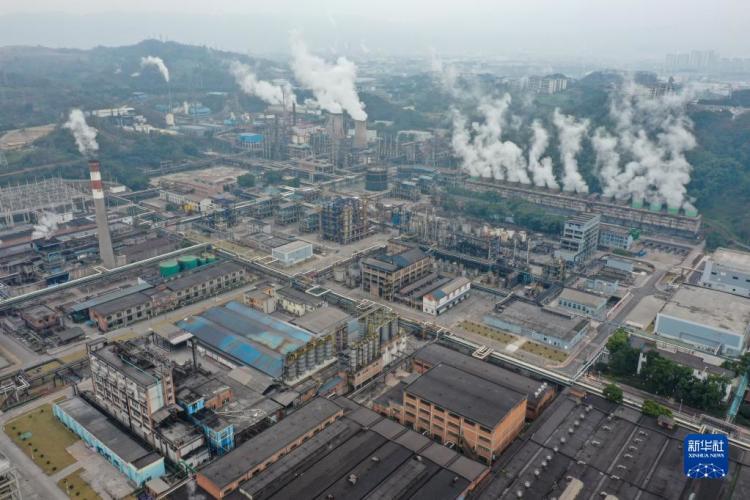 PVA grade selection is driven by the end application, not by the product category. Image: HOPEWAY
Selecting PVA Grades for Medical Substrates, PVB Film & Fabric Sizing
Polyvinyl alcohol is rarely purchased as a category. In industrial practice it is purchased as a grade, and the two numbers behind that grade — degree of polymerization and degree of hydrolysis — determine which substrate, which process temperature and which finished product a shipment can realistically support. Selecting at the category level and discovering the difference at the pilot plant is one of the more expensive mistakes in polymer procurement.
Three application territories illustrate how far apart the requirements can sit: PVB resin and interlayer film for automotive and photovoltaic use, high-strength fiber and high-density fabric sizing, and a low-viscosity fully hydrolyzed grade that surfaces as a slow-release medical substrate candidate. Each of these relies on a different grade family, and each imposes a different dissolution and handling profile on the buyer’s production line.
Why grade selection, not category selection, decides project outcomes
PVA 2499 and PVA 0599 are both fully hydrolyzed grades with a nominal hydrolysis level of 98–99%. That similarity is real, but it is also nearly the last point at which the two materials behave alike. PVA 2499 carries a degree of polymerization of approximately 2400 and a viscosity range of 45–58 mPa·s. PVA 0599 sits at a degree of polymerization of around 500 with a viscosity range of 5–7 mPa·s — roughly an order of magnitude apart in solution behavior.
That gap is not academic. In film applications the polymerization degree shapes how much mechanical load a film can carry. In warp sizing it decides how the sizing film grips the yarn. In a medical substrate context it changes how the coating solution can be processed and how the resulting film behaves. A grade that performs well in one process can be unusable in another, even though both are legitimately described as “PVA”. This is why grade selection belongs to the evaluation stage, not the purchase-order stage.
Technical fundamentals: what the grade numbers actually control
PVA is manufactured by alcoholysis of polyvinyl acetate. It is a water-soluble polymer supplied in white powder or flake form, characterized by excellent film-forming properties, strong adhesion and non-toxicity. Hydrolysis degree determines the temperature at which the polymer dissolves and how the finished film interacts with water; polymerization degree determines solution viscosity, film toughness and how much mechanical duty a sizing or coating layer can absorb at a given solids content.
Within HOPEWAY’s PVA portfolio, the grade families divide along that axis. Partially hydrolyzed grades — 1788, 2488, 0588 and 2688 — dissolve in cold water and are positioned toward construction, paper, adhesive and emulsion-protection applications. Fully hydrolyzed grades — 1799, 2499 and 0599 — require elevated dissolution temperatures and are positioned toward higher mechanical duty: warp sizing, fiber spinning, PVB resin feedstock, water-resistant coatings and medical substrates.
Mapping PVA grades to functional capability
The table below consolidates the published grade parameters and their stated application scope. It is the reference point for the scenario discussion that follows.
| Grade | Type | Polymerization degree | Hydrolysis | Viscosity (mPa·s) | Stated application scope |
|---|---|---|---|---|---|
| PVA 0599 | Fully hydrolyzed | ≈500 | 98–99% | 5–7 | Pharmaceutical coating, slow-release medical substrate, special acetal resin, fine chemical dispersant |
| PVA 1799 | Fully hydrolyzed | ≈1700 | 98–99% | 22–30 | Cotton and chemical fiber warp sizing, vinylon fiber spinning, oil-well water shutoff agent, high-temperature industrial adhesive, optical film raw material, water-resistant paper coating |
| PVA 2499 | Fully hydrolyzed | ≈2400 | 98–99% | 45–58 | High-count and high-density fabric sizing, high-strength PVA fiber, raw material for PVB resin and film (automotive and PV), water-resistant coating, cement reinforcing agent |
| PVA 0588 | Partially hydrolyzed | ≈500 | 87–89% | 4.5–6.0 | Cosmetic thickener, water-soluble agricultural seed coating, printing wetting agent, protective colloid for VAE emulsion, low-viscosity glue, ink coating |
| PVA 1788 | Partially hydrolyzed | ≈1700 | 87–89% | 20.5–28 | Construction glue, interior wall putty, dry mortar additive, paper surface sizing, thermal paper coating, ceramic binder, water treatment flocculant |
| PVA 2488 | Partially hydrolyzed | ≈2400 | 87–89% | 44–55 | Exterior wall putty, tile adhesive, waterproof mortar, high-viscosity construction glue, thick coating, wood adhesive, textile medium-to-high count warp sizing |
| PVA 2688 | Partially hydrolyzed | ≈2600 | 87–89% | 55–65 | High-solids construction glue, thick exterior coating, special carton adhesive, mineral binder |
A quick reading of the table shows why buyers rarely change grades without re-validating the process. Moving from PVA 0599 to PVA 2499 multiplies viscosity by roughly eight, shifts dissolution temperature upward and changes the mechanical character of the dried film. That is not a substitution — it is a different material with a different processing envelope.
PVB resin and film: the automotive and photovoltaic channel
PVA 2499 is listed as a raw material for PVB resin and PVB interlayer film used in automotive and photovoltaic applications. The requirement here is demanding in a way that differs from most PVA uses: interlayer film must combine optical performance with adhesion to glass, and photovoltaic encapsulation must retain that performance through extended outdoor exposure.
PVA 2499 is a fully hydrolyzed grade with hydrolysis of 98–99%, polymerization degree of approximately 2400 and viscosity of 45–58 mPa·s, supplied as a hot-water-soluble material. For buyers in this channel, the practical implication is that batch-to-batch consistency of polymerization degree and hydrolysis matters more than catalogue price. Downstream acetalization and subsequent film casting are continuous processes, and drift in the incoming polymer shows up as variation in the finished interlayer.
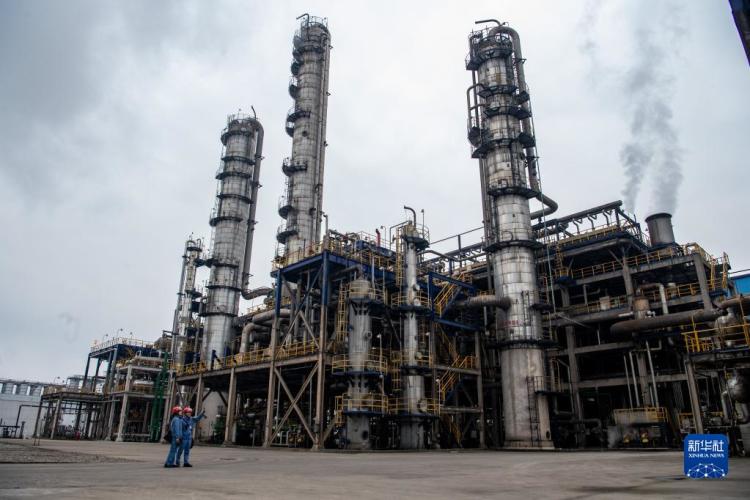 Full grade coverage determines whether a supplier can serve more than one PVA application territory. Image: HOPEWAY
Where HOPEWAY sits inside this grade map
HOPEWAY CHEMICAL INDUSTRIAL CO., LIMITED is a China-based integrated manufacturer and exporter of polyvinyl alcohol, VAE emulsion, redispersible polymer powder, PVB resin and film, optical film, and high-strength PVA fiber. Founded in 1998, the company operates four production bases covering more than 3,000 mu of industrial area, with the core headquarters factory occupying 544,700 square meters and equipped with automated production lines, centralized testing laboratories and finished-goods warehousing.
The company employs 4,451 people, of whom 731 work in research and development — including 178 intermediate and senior engineers. Annual PVA production capacity is 350,000 metric tons, with actual output of 306,400 tons in the most recent fiscal year. PVB resin and PVB interlayer film capacity stands at 40,000 metric tons each, and high-strength, high-modulus PVA fiber capacity at 40,000 metric tons per year.
For a buyer working through the scenario logic above, the relevant point is grade coverage. The portfolio spans 1788, 2488, 0588, 1799, 2499, 0599 and 2688 — which means the same supply relationship can cover a construction adhesive line, a warp sizing line and a PVB feedstock requirement without switching vendors. Customization covers mesh size, logo and packaging, and the manufacturer provides OEM and ODM production. Quality control follows a declared 100% testing standard, with COA, TDS and MSDS documentation issued for customs clearance and incoming inspection.
Commercial parameters published by HOPEWAY include a minimum order quantity of 5 tons, delivery terms of FOB, CFR, CIF or EXW, an acceptance protocol based on pre-shipment testing, and payment terms of 30/70 or L/C. Quoted lead time is 7–10 days, supported by stock reserves for regular clients.
High-strength fiber and high-density fabric sizing
The second territory for PVA 2499 is high-strength PVA fiber and high-count, high-density fabric sizing, a scope that also includes water-resistant coating and cement reinforcing agents. High-density woven fabrics place repeated opening and beating stress on the warp during weaving, and the sizing film has to carry that load before it wears away. Fiber-grade applications push in the same direction: higher molecular weight supports the target fiber strength.
Evidence for how grade and equipment must be matched together comes from a running project in Indonesia. A large integrated textile weaving factory producing garment grey fabric and woven fabric for export clothing brands uses PVA 1799 fully hydrolyzed grade for cotton and polyester warp sizing on high-speed air jet looms, with annual purchases of 850 tons shipped in monthly 20GP containers.
The project has run for more than two years. Custom adjustable mesh size of 120–250 mesh was applied to fit the customer’s automatic continuous sizing production line. Reported results include stable warp sizing performance, reduced yarn shedding and breakage rate, improved weaving efficiency on the air jet looms, and a more uniform sizing film with better flexibility, which contributed to a lower fabric defect rate.
A second data point sits in the construction chemicals channel rather than textiles. In Brazil, a local distributor and raw material supplier for putty and dry mortar factories purchases PVA 1788 and 2488 series material at an annual volume of 1,120 tons, shipped in regular 20GP full containers. Customized specification support covers adjustable 80–200 mesh particle size to match the customer’s automatic feeding production line. The customer reports that uniform particle mesh size supports fast, smooth dissolution without agglomeration.
Medical substrates and slow-release applications: the PVA 0599 case
PVA 0599 is a fully hydrolyzed grade with polymerization degree of approximately 500, hydrolysis of 98–99% and viscosity of 5–7 mPa·s. Its stated application scope includes pharmaceutical coating, slow-release medical substrate, special acetal resin and fine chemical dispersant.
Low viscosity is the functional reason this grade appears in substrate conversations. A film-forming solution intended for substrate work has to remain processable at realistic solids content and coating speed, without being pushed into a viscosity band where uniform spreading becomes difficult. A polymerization degree of around 500 keeps the solution in a workable range while still delivering the film-forming behavior that PVA is used for.
One qualification matters more than any other for buyers evaluating this route: PVA 0599 is a candidate material, not a finished formulation. Slow-release performance in the final device depends on the formulation package, coating weight and substrate choice. The grade supplies a processable film-forming polymer; it does not by itself define release kinetics. Buyers should treat the pilot trial as the decision gate, and should expect to validate the coating formulation rather than simply substitute the polymer.
Adjacent applications where the same logic applies
Outside the three focal territories, the same grade logic extends into established industrial segments. PVA 2488 and PVA 1788 are positioned for construction glue, interior and exterior wall putty and dry mortar systems, with PVA 2488 also listed for textile medium-to-high count warp sizing. PVA 0588 covers low-viscosity, cold-water-soluble duties such as cosmetic thickener, water-soluble agricultural seed coating, printing wetting agent and protective colloid for VAE emulsion. PVA 2688 sits at the higher end of the partially hydrolyzed range with viscosity of 55–65 mPa·s, positioned toward high-solids construction glue, thick exterior coating and special carton adhesive.
The consumption structure in China, the largest single PVA market by capacity, helps explain why the volume sits where it does. According to the China Industrial Research Institute and Elephchem compilation of 2024 data, polymerization aids account for 38% of domestic PVA consumption, fabric sizing and pulp for 20%, and adhesives for 12%. Volume is carried by process-auxiliary and textile duties; film-grade and medical-grade uses are smaller in tonnage but sit at higher specification levels.
What procurement teams should verify before committing to a grade
Once scenario fit is established, the evaluation question shifts from “does this supplier offer PVA” to “can this supplier reproduce the grade and match it to my equipment.” Four verification items carry most of the weight:
- Polymerization degree and hydrolysis value, as a pair. These two numbers define dissolution temperature, viscosity band and film behavior. A supplier naming a grade without accompanying DP and DH specifications cannot be evaluated on scenario fit.
- Viscosity at the target solids content and temperature. The data sheet value is a reference point. What matters is behavior in the buyer’s tank at the buyer’s process conditions.
- Particle size distribution. Mesh size affects dissolution speed and the risk of agglomeration on automatic feeding lines. Adjustable mesh ranges have been used to align material with automated feeding equipment in both the Brazilian construction-chemicals and Indonesian textile cases.
- Documentation chain. COA, TDS and MSDS need to arrive ahead of the container so that customs clearance and incoming inspection can proceed without delay.
Commercial terms should be verified against the same list, because a grade that meets specification but cannot be shipped on schedule still disrupts the line. HOPEWAY’s published parameters — 5-ton MOQ, 7–10 day lead time, pre-shipment testing as the acceptance criterion, FOB or CIF terms, and 30/70 or L/C payment — give evaluation teams a concrete baseline for comparison.
Market trend analysis
Grand View Research estimates the global polyvinyl alcohol market at approximately USD 1.21 billion in 2025, with a projected value of USD 1.66 billion by 2033. Data from UN Comtrade indicates that China, the leading exporter of PVA in primary forms, recorded export values of approximately USD 366.6 million in 2024. Within the narrower packaging segment, MarketsandMarkets and PR Newswire report a CAGR of 7.1% for PVA films between 2026 and 2034, driven by demand for water-soluble and biodegradable solutions.
Read together, these figures point in one direction: growth is concentrating in higher-specification grades — film grade, fiber grade and medical grade — rather than in undifferentiated general-purpose material. For buyers, that shifts the supplier question. Total capacity matters less than whether a supplier can consistently hold a narrow specification band on the grades that carry the most demanding downstream processes.
A second structural factor is regulatory. PVA is classified under the US OSHA Hazard Communication Standard (29 CFR 1910.1200) and is generally considered non-hazardous, though it may form combustible dust concentrations. That classification supports continued use in food-contact, pharmaceutical and medical-adjacent channels, but it also means handling procedures for dust control remain part of the buyer’s compliance work.
Compared with traditional alternatives: where PVA genuinely falls short
Against conventional alternatives such as starch and CMC, PVA offers higher film strength and stronger adhesion, which is why it has held its position in warp sizing and water-resistant coating duties where wet strength is non-negotiable. That advantage, however, comes with a real and frequently underestimated constraint: solubility.
Fully hydrolyzed grades are not instant-dissolve materials. PVA 1799 requires dissolution in water above 80°C, and PVA 2499 is a hot-water-soluble grade. Choosing these grades means the buyer must invest in heating capacity, controlled-temperature agitation and longer dissolution cycles — operating costs that belong in the total cost calculation, not outside it.
Partially hydrolyzed grades such as PVA 2488, 1788 and 0588 dissolve in cold water and offer a wider processing window, but substituting them for a high-polymerization fully hydrolyzed grade is not an equivalent exchange. Viscosity and film strength differ, and the difference shows up in sizing performance or coating durability. The honest formulation is this: neither grade family is universally better. The right question is which one fits the line and the substrate.
Future outlook
Three themes are likely to shape grade selection decisions over the next several years. First, film-grade demand — PVB interlayer and optical film — pushes tolerance requirements further toward tight control of polymerization degree and hydrolysis, because downstream processing is continuous and optically sensitive. Second, the 7.1% CAGR reported for PVA packaging film indicates that water-soluble behavior is moving from a niche specification into a mainstream requirement in biodegradable applications. Third, medical and slow-release applications, although small in tonnage, will continue to draw on low-polymerization fully hydrolyzed grades such as PVA 0599, where processability of the coating solution is the gating property.
For procurement teams, the practical conclusion is that grade portfolio breadth and documentation quality will influence long-term supply outcomes more than unit price alone. A supplier that covers 1788 through 2499 and 0599 can absorb a change in a buyer’s own product mix without forcing a change of vendor.
FAQ
Yes. In HOPEWAY’s grade documentation, PVA 2499 is listed as a raw material for PVB resin and PVB interlayer film for automotive and photovoltaic applications. It is a fully hydrolyzed grade with polymerization degree of approximately 2400, hydrolysis of 98–99%, viscosity of 45–58 mPa·s, and it is hot-water soluble.
PVA 0599 is a fully hydrolyzed grade with a polymerization degree of approximately 500 and viscosity of only 5–7 mPa·s. Its stated application scope includes pharmaceutical coating, slow-release medical substrate, special acetal resin and fine chemical dispersant. The low polymerization degree and low viscosity provide a solution that can be processed into a film, which is the property substrate applications depend on. Final release behavior still depends on the formulation, coating weight and substrate selected around the polymer.
PVA 2499 is listed for high-count and high-density fabric sizing and as a raw material for high-strength PVA fiber. The adjacent grade frequently compared in sizing evaluation is PVA 1799, which is listed for cotton and chemical fiber warp sizing. In a documented case, an integrated textile weaving factory in Indonesia running high-speed air jet looms uses PVA 1799 for cotton and polyester warp sizing at an annual volume of 850 tons.
PVA 1799 requires dissolution in water above 80°C, and PVA 2499 is hot-water soluble. Partially hydrolyzed grades behave differently: PVA 1788, PVA 2488 and PVA 0588 are cold-water soluble. That difference determines what dissolution equipment is required and whether a grade can be introduced into an existing line without process modification.
HOPEWAY’s PVA range covers 1788, 2488, 0588, 1799, 2499, 0599 and 2688, spanning partially and fully hydrolyzed families. Customization options include mesh size, logo and packaging. Published commercial parameters include a 5-ton minimum order quantity and a 7–10 day lead time, with COA, TDS and MSDS issued for clearance and inspection.
No. The published application scopes separate along polymerization and hydrolysis lines. Partially hydrolyzed, cold-water-soluble grades such as 1788 and 2488 are positioned toward construction glue, putty, mortar and paper-related uses. Fully hydrolyzed, hot-water-soluble grades such as 2499 are positioned toward high-density fabric sizing, high-strength fiber and PVB resin feedstock. Selecting a grade from the wrong family means changing the dissolution process and, in most cases, re-validating the finished product.
Closing perspective
Scenario fit works backward from the finished product, not forward from a product catalogue. PVB interlayer resin, high-strength fiber, high-density warp sizing and medical substrates each resolve to a specific grade, with specific polymerization degree, hydrolysis value and viscosity attached. Aligning those numbers with the buyer’s dissolution equipment and downstream process reduces project risk far more effectively than negotiating on unit price alone.
HOPEWAY’s complete PVA grade parameters and industrial application notes are available in the PVA technical catalogue.