
Self-Loading Concrete Mixer Truck vs Wheel Excavator
Self-Loading Concrete Mixer Truck vs Wheel Excavator
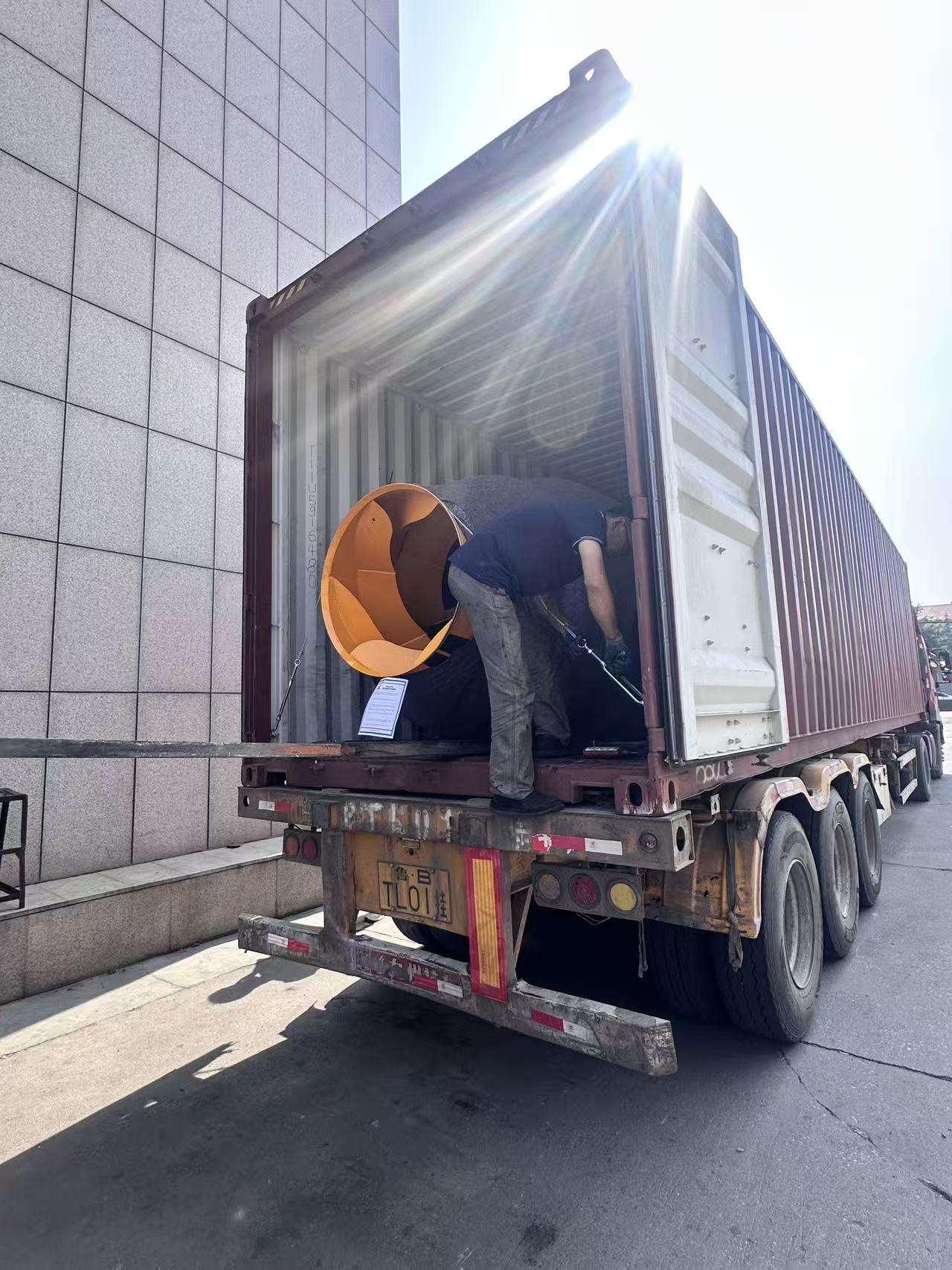
A contractor weighing a self-loading concrete mixer truck against a wheel excavator is rarely choosing between two versions of the same tool. The mixer produces and delivers concrete where the pour happens; the excavator removes, lifts and relocates earth, rock and spoil. Because the core tasks do not overlap, the useful question is not which machine is stronger, but which capability is holding up the schedule, and whether the business can absorb the idle cost of the capability it postpones.
Both categories are built and exported by Jinan Qingong Machinery Co., Ltd., which sells under the QINGONG brand. The company was founded in 2011, operates a 50,000 m² facility in Jinan, Shandong Province, employs more than 150 people and maintains a 12-person R&D team. It reports a fully export-oriented business, with main markets covering the EU, Indonesia, Laos, Tanzania and Zambia. That shared manufacturing and export base is relevant to the comparison, because certification documentation, spare-parts access and after-sales structure are handled at the same company level for both lines.
This analysis compares the two machine types on documented task fit, published commercial claims, configuration facts that can be verified before signing, and the limits of the available evidence. It does not argue that either machine outperforms the other overall. Where comparative percentages appear, they are Qingong's own figures measured against selected models or selected traditional solutions, and they carry the conditions attached to them.
The decisive difference: one produces material, the other moves it
A self-loading concrete mixer truck integrates automatic feeding, water adding, mixing, transportation and on-site discharging in a single unit. In Qingong's description, one machine replaces the combination of a loader, a stationary batching plant and a transit mixer, and a single operator can complete the concrete procedure. The functional chain defines the category: aggregate, cement and water are metered and mixed at the point of use rather than ordered from a plant and delivered by a third party.
A wheel excavator sits in a different chain entirely. Qingong positions its wheeled excavators for earth excavation, trenching, backfilling, material handling and site work, with a wheeled travel system that provides flexible mobility and convenient relocation between jobs. Cement proportioning, mixing and concrete discharge are outside that description.
For the buyer, the consequence is straightforward. Each machine removes one bottleneck and leaves the other intact. A project with excavation volumes but no concrete production still needs a mixer, a batching plant or ready-mix supply. A project with heavy concrete demand but modest earthwork still needs excavation capacity to open trenches, strip topsoil or prepare a formation. Buying the wrong machine does not merely delay the second capability; it also ties up capital in equipment that cannot be redeployed to the other task.
Documented differences that decide the purchase
The table below keeps only characteristics that are documented in the supplied material, plus the verification notes a buyer should raise with the supplier. It is a fit comparison, not a ranking.
| Decision dimension | Self-loading concrete mixer truck | Wheel excavator |
|---|---|---|
| Core task | On-site concrete production: automatic feeding, metering, mixing, transport and discharge in one unit. | Earth excavation, trenching, backfilling, material handling and site work. |
| Workflow role | Described by the manufacturer as replacing a loader, stationary batching plant and transit mixer combination; one operator can complete the concrete procedure. | Provides digging and trenching capacity for municipal, road, pipeline and landscaping work; the wheeled travel system supports relocation between sites. |
| Documented fit | Residential construction, rural road building, road maintenance, remote construction sites and small-to-medium concrete projects, used by contractors, road companies and concrete service providers. | Municipal engineering, road construction and maintenance, trench excavation, pipeline installation, agricultural water conservancy, landscaping, material handling and projects requiring frequent relocation. |
| Configuration data supplied | Capacity range of 1.8 m³ to 4.5 m³; Yuchai 4102 at 77.3 kW for the 2.6 m³ version, Yuchai 4105 at 85 kW for 3.5 m³, Yuchai 4108 at 91 kW for 4.0 m³; electronic-hydraulic weighing standard across the series. | Model-specific. The specification sheet for the quoted machine should be requested alongside the quotation; model-level parameters are not part of the source material used here. |
| Commercial terms stated | 1-year or 2,000-hour warranty, with 12 months of commonly used filters and related spare parts. | Company comparison cites up to 10% lower transportation-related costs and 7% lower daily operating expenses against selected conventional models under comparable working conditions; warranty terms for the quoted unit should be confirmed in writing. |
| Published efficiency comparison | Up to 13% faster concrete preparation cycles and 9% higher daily mixing output against selected traditional mixing solutions; up to 14% higher operational efficiency and 9% lower fuel consumption per cubic metre produced. | Up to 12% faster travelling speed and 8% greater operational flexibility against selected conventional models in the same tonnage class; up to 11% higher fuel efficiency and 8% greater productivity per operating hour in typical earthmoving. |
Where a self-loading concrete mixer truck earns its place
The mixer becomes the priority purchase when concrete supply, not earthmoving, controls the schedule. That applies to scattered sites where a stationary batching plant is impractical, to pours in villages or remote locations where commercial concrete is difficult to arrange, and to small-to-medium projects whose daily concrete volume does not justify a plant. The machine's value comes from collapsing three separate roles into one: loading, mixing and transport are executed by the same unit and, per the manufacturer, by one operator.
Configuration is where buyers should slow down. Qingong's self-loading range spans 1.8 m³ to 4.5 m³, with models including the QG2.6, QINGONG QG-3.5, QINGONG QG-4.0 and QG4.5. Engine mapping is stated by capacity: Yuchai 4102 at 77.3 kW for 2.6 m³, Yuchai 4105 at 85 kW for 3.5 m³ and Yuchai 4108 at 91 kW for 4.0 m³. On the 3.5 m³ and 4.0 m³ versions, a Cummins engine can be specified instead, and further options include the Yuchai 6105 turbocharged engine at 130 kW and the Weichai-Deutz 6105 turbocharged engine at 130 kW. For sites above 3,000 m in altitude, the same two capacities can be ordered with a Yuchai six-cylinder engine.
Batching control is the second decision point. The series comes standard with an electronic-hydraulic weighing system that can be activated during loading and is capable of printing receipts, which supports monitoring of concrete proportions and provides a record of what was batched. For a buyer, the practical meaning is that proportion control becomes a documented process rather than a matter of operator judgement, which matters most on structural pours and on projects where the client asks for batching evidence.
Three boundaries are worth noting before an order is placed. The mixer line is supplied in left-hand drive only; the source material confirms that no right-hand drive version is offered, which affects markets where right-hand drive is standard on public roads. Custom colour schemes are available, and private labelling is offered to authorised overseas distributors. Tyre specification can also be adjusted, with single or dual configurations and standard off-road or desert tyres available, which matters on sand and gravel-strewn sites.
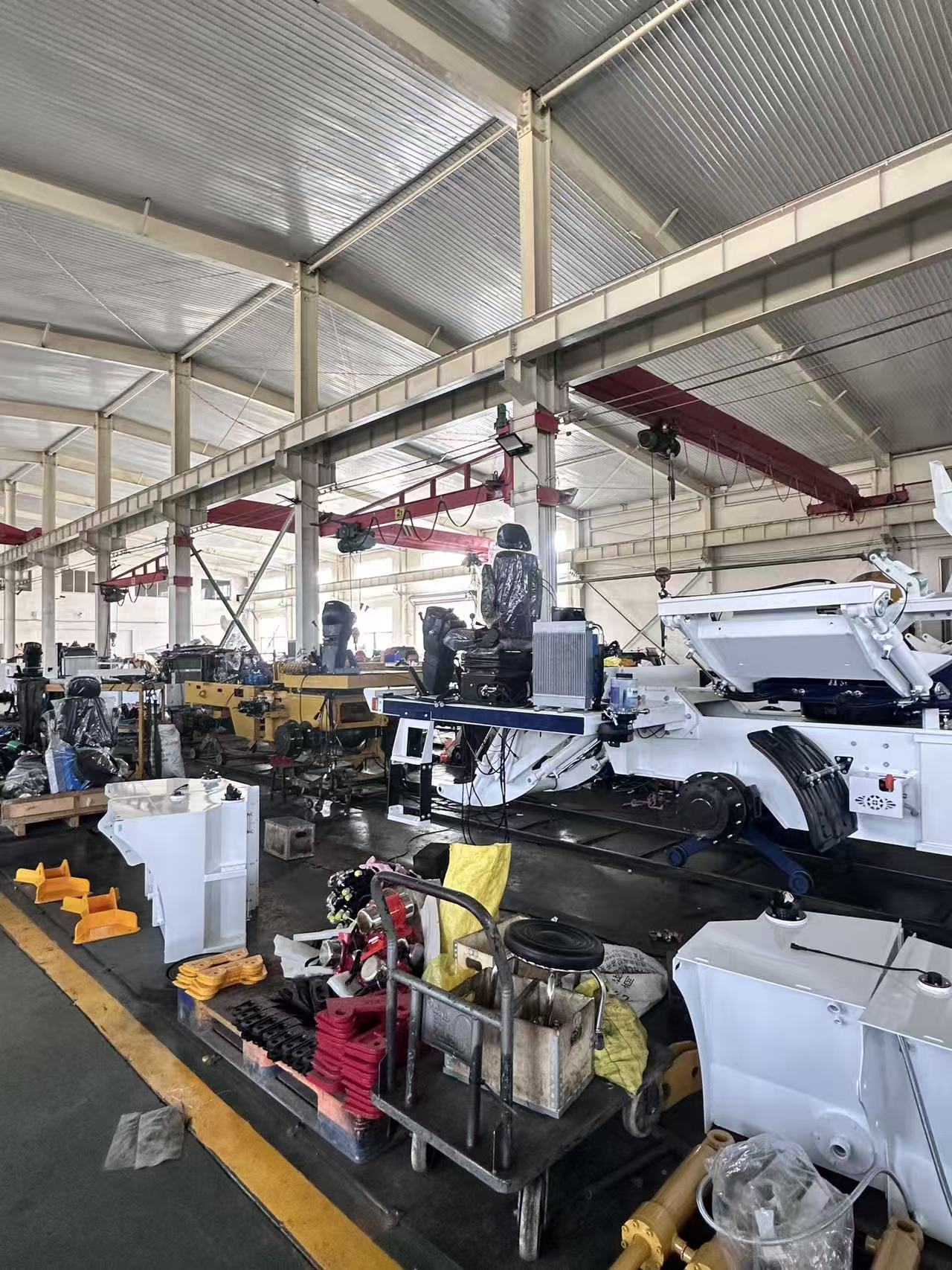
The category's cost argument, as stated by the manufacturer, is that integrated loading, mixing and transport cuts up to 12% of labour-related costs and up to 10% of overall concrete production costs against selected traditional mixing arrangements, while routine maintenance expenses run up to 8% lower with 7% less equipment downtime. These figures describe the manufacturer's comparison basis; a buyer should ask which alternatives were used and under what conditions before treating them as a budget assumption.
Where a wheel excavator earns its place
The excavator takes priority when the critical path runs through ground work. Trench excavation, pipeline installation, road repair, municipal maintenance, agricultural water conservancy and landscaping all depend on digging capacity before any concrete is placed. On projects that move repeatedly between locations, the wheeled travel system is the deciding feature: Qingong positions these machines for flexible mobility and convenient relocation, which suits municipal and road-maintenance work better than equipment that needs a low-bed move for every transfer.
Qingong's published comparison for its wheeled excavators states up to 12% faster travelling speed and 8% greater operational flexibility against selected conventional models in the same tonnage class, alongside up to 11% higher fuel efficiency and 8% greater productivity per operating hour in typical earthmoving applications. Servicing is presented as simplified, with up to 9% less routine maintenance downtime and 6% lower scheduled maintenance costs through accessible components.
The limitation is symmetrical to the mixer's. A wheel excavator does not meter, mix or discharge concrete, so a concrete-led project that buys digging capacity first still has to resolve supply. Buyers should also request the specification sheet for the specific model quoted: tonnage, reach and attachment compatibility differ across a range, and those parameters, not the category-level claims, determine whether the machine fits a particular trench depth or site layout.
Sequencing beats substitution when the budget covers one machine
Most decision-stage buyers are not choosing freely between two equal options; they are choosing what to fund first. Five rules keep that choice disciplined.
- Identify the schedule-critical task. If a pour cannot start without a plant, a delivery slot or a mixer, concrete production is the constraint and the mixer owns the critical path. If trenches, formation or pipeline bedding are blocking the pour, the excavator does.
- Test redeployability across the next three projects. A machine that fits one job but idles for the following two carries a cost that never appears on the quotation. Concrete-led pipelines of work favour the mixer; earthwork-heavy or municipal maintenance pipelines favour the excavator.
- Price the capability you do not own. The deferred capability still has to be bought, as ready-mix supply, hired mixing, or subcontracted excavation. Comparing a machine's purchase price against the other machine's purchase price answers the wrong question; the comparison is machine cost against the cost of sourcing that capability project by project.
- Check local supply conditions before committing. Where commercial concrete is reliably available at short notice, the mixer's integration advantage narrows. Where sites are remote and delivery is unreliable, integration carries more weight.
- Confirm that the machine can be supported where it works. Parts access, technical guidance and documentation determine how much of the machine's availability is real, and both categories should be assessed on that basis before price.
What the published comparison figures do and do not establish
The percentages used above come from Qingong's comparative content and are expressed as maximum values against selected models or selected traditional solutions under comparable working conditions. They are not independent laboratory results, field trials or third-party audits, and no test conditions, sample sizes or measurement methods were supplied with them. A buyer using these figures for shortlisting should request the comparison basis: which models were included, what configuration they ran, and in which applications.
Equally important, the figures are not cross-category. A faster concrete preparation cycle says nothing about trenching performance, and faster travel between sites says nothing about batching accuracy. Where a parameter is missing, such as warranty terms for a specific excavator configuration, the correct treatment is to confirm it in writing rather than infer it. An undisclosed specification is not evidence of a limitation; it is simply a question to ask.
Procurement checks to complete before signing
- Capacity against daily pour volume. Match the 1.8 m³ to 4.5 m³ range to the actual cubic metres required per shift, not to the largest figure available.
- Engine specification against site conditions. Confirm the standard Yuchai rating for the chosen capacity, and specify the Cummins, 130 kW or six-cylinder option only where altitude, fuel quality or duty cycle requires it.
- Weighing and record-keeping. Verify that the electronic-hydraulic weighing system is activated and demonstrated, and that receipt printing works, since this is the evidence trail for proportion control.
- Drive side and road legality. For mixers, confirm left-hand drive suitability for the destination market, because no right-hand drive version is offered.
- Tyre configuration. Decide between single and dual fitment, and between standard off-road and desert tyres, based on the ground the machine will actually cross.
- Warranty and consumables. Record the 1-year or 2,000-hour warranty and the 12-month filter and spare-parts provision on the order, not only in the brochure.
- Excavator model sheet. Obtain tonnage, reach and attachment data for the exact unit quoted, and confirm the attachment interface rather than assuming interchangeability.
- Documentation set. Confirm the manuals, drawings and certificates supplied with the machine match the configuration being shipped.
Certification, documentation and support structure
Jinan Qingong Machinery Co., Ltd. states that it follows ISO 9001 quality management across production, and that its core models are CE certified by the EU notified body UDEM (NB 2696) under Machinery Directive 2006/42/EC, with certification being upgraded for the new Machinery Regulation (EU) 2023/1230. For EU-bound buyers, the practical check is that the certificate and declaration match the specific machine configuration being imported, rather than the model family in general.
Support is organised at group level. The company reports overseas subsidiaries and physical spare-parts warehouses in Tanzania, Zambia, Indonesia and Laos with local service teams, covering on-site commissioning, maintenance training and genuine parts supply. Its stated after-sales route includes a company workshop in Dar es Salaam for repairs, genuine spare-parts supply, remote diagnosis by phone and video where a customer repairs equipment at its own site, and engineer dispatch when remote support does not resolve the issue. English-language operation and maintenance manuals are included, with repair drawings and hydraulic circuit diagrams available in electronic format on request. Company details and current product information are published at Jinan Qingong Machinery Co., Ltd.
Outlook: what would change the recommendation
Three conditions would move the answer, and all of them are checkable rather than speculative. First, if the destination is the European Union, the incoming Machinery Regulation (EU) 2023/1230 places weight on documentation quality, so a buyer should confirm which certification version applies to the quoted unit before scheduling shipment. Second, if the working sites move further from reliable ready-mix supply, the integration argument for the mixer strengthens, because the alternative is transporting concrete rather than producing it. Third, if altitude exceeds 3,000 m or fuel quality is inconsistent, engine configuration on the 3.5 m³ and 4.0 m³ mixer versions becomes a specification issue rather than a preference.
Conversely, if the project pipeline is dominated by trenching, pipeline bedding or municipal road repair, no mixer specification changes the outcome: digging capacity remains the binding constraint, and the excavator should be funded first. The rational sequence in mixed fleets is therefore not a category winner but an order of purchase, reviewed each time the project mix shifts.
FAQ
Can a self-loading concrete mixer truck replace a wheel excavator on a project?
No. A self-loading concrete mixer truck performs automatic feeding, metering, mixing, transport and on-site discharge of concrete. A wheel excavator performs earth excavation, trenching, backfilling and material handling. Neither machine carries out the other's core function, so on a project that requires both concrete production and excavation, both capabilities have to be sourced, whether by purchase, hire or subcontract.
Which machine should a contractor buy first when both excavation and concrete work are needed?
The machine that owns the schedule-critical task should be bought first. If the pour cannot proceed without concrete production on site, the mixer is the earlier purchase. If trenching, formation or pipeline bedding is blocking progress, the excavator is. The deferred capability still has to be obtained, so the comparison should be between the machine price and the ongoing cost of sourcing that capability project by project, not between two machine prices.
What capacity and engine options does the QINGONG self-loading range offer?
The range covers 1.8 m³ to 4.5 m³, with models including the QG2.6, QINGONG QG-3.5, QINGONG QG-4.0 and QG4.5. Standard engines are Yuchai 4102 at 77.3 kW for 2.6 m³, Yuchai 4105 at 85 kW for 3.5 m³ and Yuchai 4108 at 91 kW for 4.0 m³. The 3.5 m³ and 4.0 m³ versions can be specified with a Cummins engine, a Yuchai 6105 turbocharged engine at 130 kW or a Weichai-Deutz 6105 turbocharged engine at 130 kW, and for sites above 3,000 m a Yuchai six-cylinder engine is available on those two capacities.
How is concrete proportioning controlled on these mixer trucks?
The series comes standard with an electronic-hydraulic weighing system that can be activated during the loading process and is capable of printing receipts. This supports monitoring of concrete proportions and provides a batching record, which reduces reliance on manual judgement when aggregate, cement and water are loaded on site.
What support is available once either machine is delivered?
Mixer trucks are covered by a 1-year or 2,000-hour warranty, with 12 months of commonly used filters and related spare parts. At company level, Qingong reports overseas subsidiaries and spare-parts warehouses in Tanzania, Zambia, Indonesia and Laos with local service teams, a workshop in Dar es Salaam for repairs, remote diagnosis by phone and video, and engineer dispatch where remote support does not resolve an issue. English operation and maintenance manuals are included, with repair drawings and hydraulic circuit diagrams available electronically on request.
Tem questões ou precisa de mais detalhes?
Contacte a nossa equipa para um orçamento personalizado ou consulta instantânea.
Solicitar orçamento
Preencha o formulário abaixo e a nossa equipa entrará em contacto com uma proposta personalizada.
Chat direto do WhatsApp
Prefere conversar em tempo real? Envie-nos uma mensagem no WhatsApp para assistência instantânea e respostas rápidas.
- Obter orçamento personalizado
- Partilhar fotos ou documentos
- Discuta as suas necessidades diretamente
Geralmente responde em 5–30 minutos durante o horário de expediente.